
Lying on the floor doing crunches is inefficient—it limits your range of motion and robs your abs of the constant tension needed for real growth. An abdominal bench tilts your torso, loading the rectus abdominis through a full, gravity-resisted arc that floor work simply cannot replicate. The right bench turns a wimpy crunch into a compound movement that engages the entire core, from the top of the set to the final, shaking rep.
I’m Min — the co-founder and writer behind Gadgets Feed. I’ve spent countless hours analyzing skeletal steel frames, foam densities, and weight ratings across dozens of benches to separate the rock-solid from the wobbly nuisances that waste your time and risk your lower back.
The adjustable backrest angle, leg-roller placement, and overall footprint define whether a bench unlocks advanced decline work or stays a flat plank. This guide delivers the proven factors that separate a truly effective setup from a wasted corner of the room, helping you identify the best abdominal bench for your specific wall space and training volume.
How To Choose The Best Abdominal Bench
An abdominal bench is a simple machine—a padded board with a leg anchor—but small design differences dictate whether it delivers results or collects dust. Focus on four variables that directly impact your rep quality and spinal safety.
Decline Angle Range and Locking Mechanism
The entire purpose of an abdominal bench is to put your torso on a decline so gravity works against your upper body. A bench that only offers a 30-degree decline is fine for beginners, but a unit that reaches 45 degrees or steeper provides the progressive overload your abs need to grow. Look for multiple lockable positions, not just a single pinned setting. A slip-prone pin or friction knob can dump you mid-rep—steel pull-pins with positive stops are the safest bet.
Leg Roller Quality and Adjustability
The leg roller is the anchor that keeps your lower body planted during decline crunches and sit-ups. A roller that is too wide or poorly padded allows your legs to slide, transferring tension to your hip flexors and stealing work from your abs. Rollers covered in thick, high-density foam with a diameter of at least four inches hold your shins securely without bruising. Adjustable roller height is a must for accommodating different inseam lengths—if the roller digs into your ankle bone or floats above your calf, the bench is a mismatch for your body.
Frame Stability and Floor Grip
A lightweight bench that wobbles during decline crunches is dangerous. Look for a base that uses at least 14-gauge steel tube with a wide, triangular footprint. The bench should not rock when you shift your weight during a full sit-up. Rubber end caps are essential for grip on tile, hardwood, or garage concrete. A heavy-duty frame also prevents the bench from sliding forward as you pull against the leg anchor—a common failure point on budget units that weigh under 15 pounds.
Pad Length, Width, and Foam Composition
Your back, shoulders, and glutes need full contact with the pad during decline work. A backrest that is shorter than your torso forces your hips to overcorrect, straining the lower back. Look for a pad length of at least 36 inches for users over five-foot-ten. The foam should be closed-cell, high-density material that does not compress to the board after fifty reps. A pad that is too soft (low-density polyurethane) causes instability, forcing your stabilizer muscles to fire incorrectly, which reduces the direct load on the rectus abdominis.
Quick Comparison
On smaller screens, swipe sideways to see the full table.
| Model | Category | Best For | Key Spec | Amazon |
|---|---|---|---|---|
| Finer Form Adjustable Sit Up Ab Bench | Premium | Dedicated decline ab work | 1100 lbs capacity | Amazon |
| STACOO Weight Bench | Premium | Heavy-duty full-body training | 1300 lbs capacity | Amazon |
| REP AB-3100 | Premium | Versatile FID compact design | 700 lbs capacity | Amazon |
| XDDIAS Workout Bench | Mid-Range | Tailored multi-angle adjustment | 900 lbs capacity | Amazon |
| GIKPAL Adjustable Weight Bench | Mid-Range | Added leg extension & preacher pad | 770 lbs capacity | Amazon |
| PASYOU Adjustable Weight Bench | Mid-Range | Wide seat & fast setup | 660 lbs capacity | Amazon |
| FitinOne Adjustable Folding Weight Bench | Budget | Ultra-compact folding storage | 660 lbs capacity | Amazon |
In‑Depth Reviews
1. Finer Form Adjustable Sit Up Ab Bench
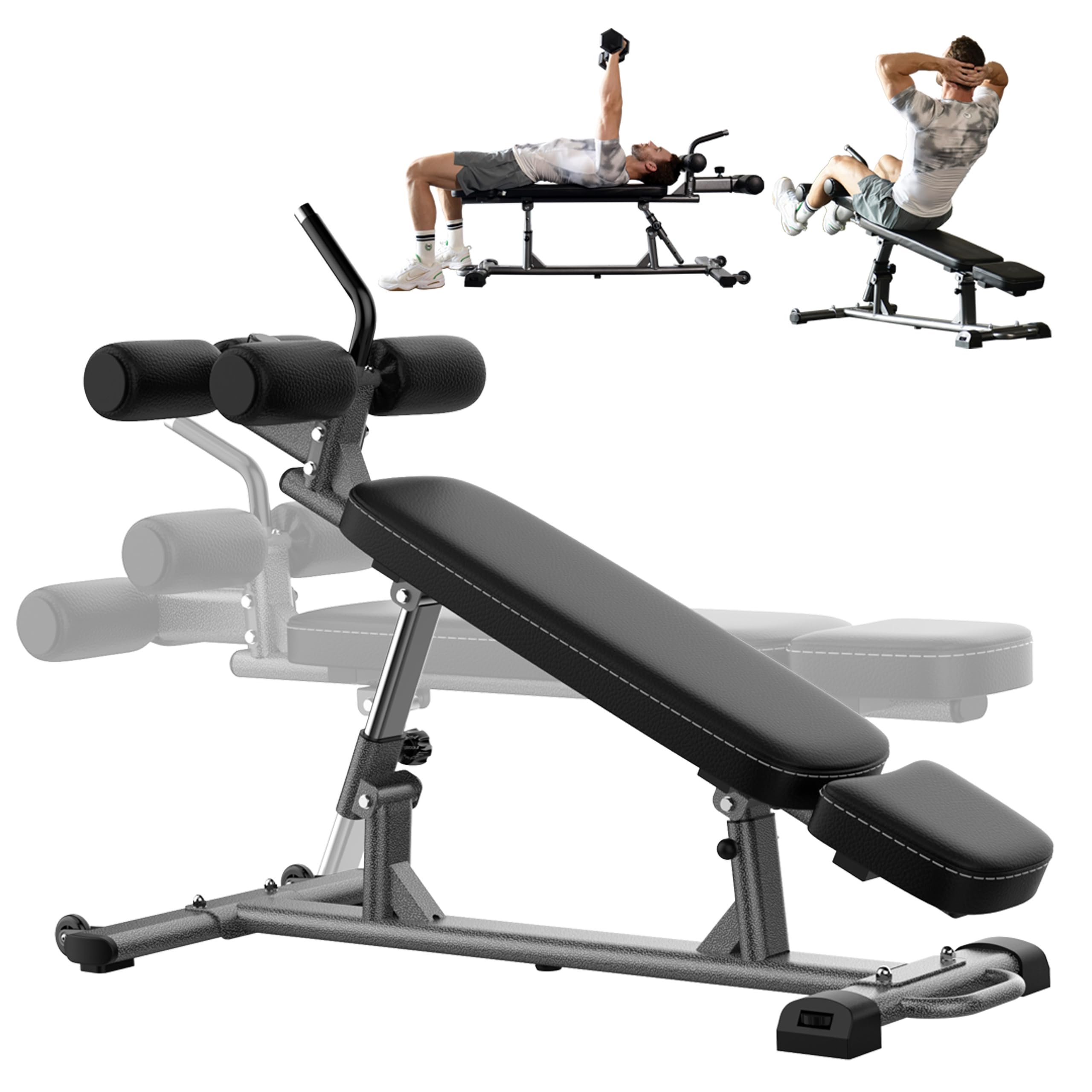
This bench is engineered specifically for decline ab work, which makes it the most category-relevant pick on the list. The extended 57.5-inch backboard accommodates tall users with full-spine support, and the adjustable foot roller locks your legs in place without digging into your shins. The semi-commercial steel frame carries an 1100-pound rating, so aggressive reverse crunches and weighted sit-ups produce zero frame flex or wobble.
The 2-in-1 design lets you drop the backrest flat for dumbbell bench press, but the dedicated reverse crunch handle is the standout feature—it forces you to pull from your lower abs rather than yanking with your neck. The wide-base stance prevents the bench from sliding forward during decline sit-ups, an issue that plagues lighter benches. Assembly takes roughly one hour, and the built-in wheels make repositioning painless.
Where this bench excels is the balance between raw stability and ab-specific ergonomics. The pad uses high-density foam that does not flatten out over a 30-minute ab circuit, and the upholstery is thick enough to resist tearing from daily use. For anyone serious about building a visible six-pack through progressive decline training, this bench eliminates every excuse for poor form.
Why it’s great
- Purpose-built for decline crunches and reverse crunches
- 600+ pound capacity ensures no wobble during heavy work
- Extra-long backboard supports taller athletes completely
Good to know
- Assembly instructions could be clearer about bolt placement
- Bench is best as a dedicated ab station, not a full flat bench
2. STACOO Weight Bench
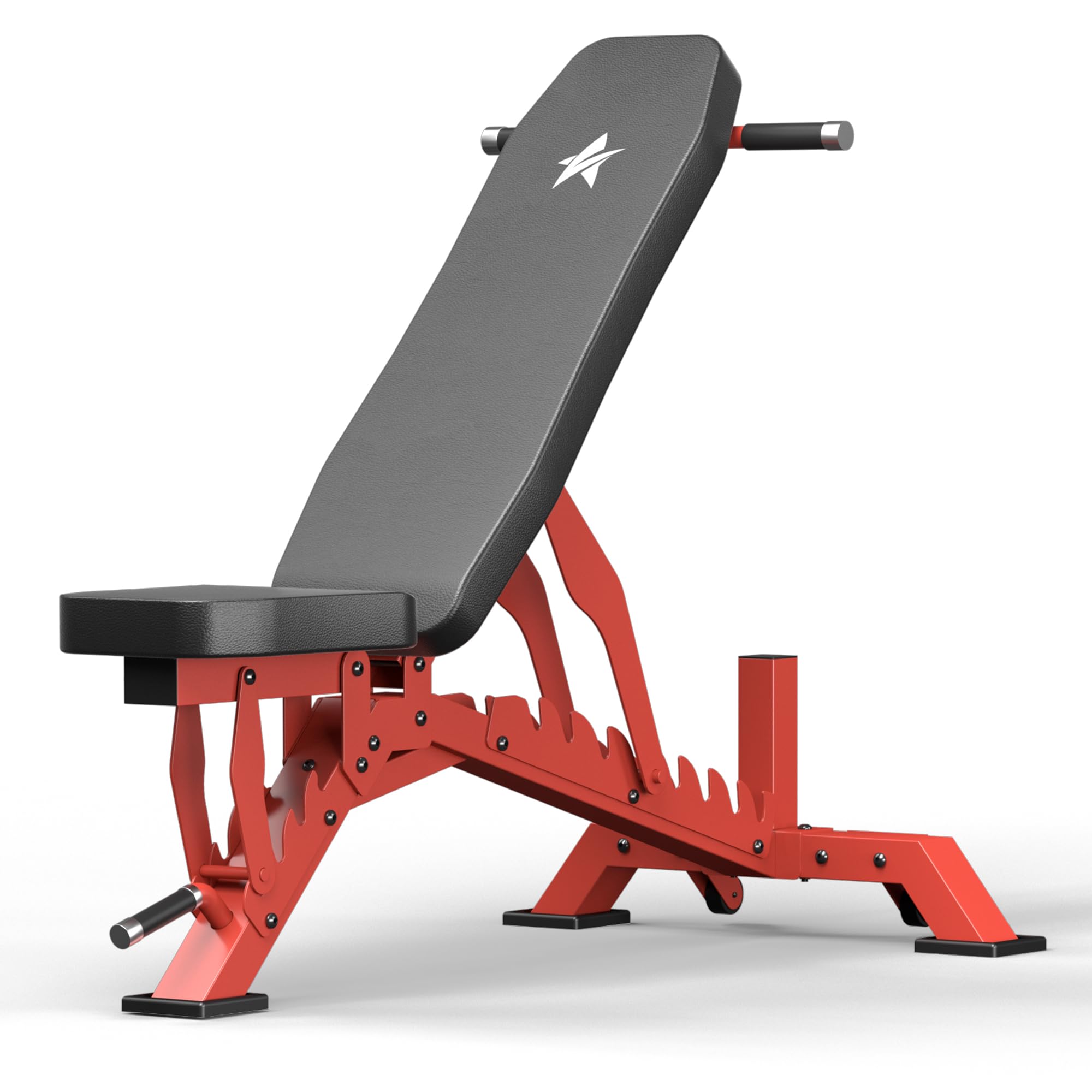
The STACOO bench achieves an industrial-strength 1300-pound capacity thanks to a triangular support frame and double-track reinforcement. While it functions as a versatile flat/incline bench, the 33-inch extra-long backrest and adjustable decline angle make it an excellent platform for crunches and sit-ups. The 2.4-inch high-density memory foam cushion prevents hip discomfort during high-rep decline sets, a common fail point on benches with thinner padding.
Adjustability is quick and tool-free: an eight-position backrest and four-position seat let you dial in the exact decline angle that targets your upper versus lower rectus abdominis. The dual-track silent wheels and built-in handle make it easy to roll this bench out of the way when not in use. The rubber foot pads grip aggressively on any floor surface, eliminating the forward slide that undermines decline crunches on budget benches.
Serious lifters will appreciate that the frame shows zero wobble under a 250-pound user performing explosive movements. The sweat-proof PU leather wipes clean instantly, and the overall build quality feels commercial-grade rather than home-gym compromise. If your training includes heavy barbell work alongside dedicated ab isolation, this bench handles both roles without sacrificing stability.
Why it’s great
- Oversized memory foam pad ensures tailbone comfort
- Wheels and handle make repositioning effortless
- Eight backrest angles allow precise decline targeting
Good to know
- Assembly is involved; power tools speed the process
- Frame is heavy and not ideal for frequent room-to-room carry
3. REP Adjustable Weight Bench AB-3100

The REP AB-3100 is the gold standard for a foldable FID (Flat-Incline-Decline) bench that does not sacrifice stability for storage. The 75-pound, 14-gauge steel frame locks into seven backrest positions, including a decline angle that supports full sit-ups and leg raises. The vinyl upholstery is rugged and sweat-resistant, and the high-density foam pad strikes a balance between firm support and comfort during longer core workouts.
Unlike budget foldable benches that develop hinge play over time, the AB-3100 uses a ratcheting ladder system that holds the backrest rigidly in position with zero deflection during decline crunches. The vertical storage footprint is a game-changer for apartment gyms—the bench stands on end and occupies barely 12 inches of wall depth. The leg gap under the seat is adequate for anchoring your feet during decline reps, though the bench lacks a dedicated foot roller.
This bench shines for users who need one piece of gear for bench press, rows, shoulder work, and decline core training. The 700-pound capacity is conservative for the frame—REP overbuilds their steel, and many users report comfortable handling of loads well above the rating. It is not the cheapest option, but the build quality eliminates the creaks and wobbles that make ab benches feel unsafe during max-effort crunches.
Why it’s great
- Folds vertically for ultra-compact storage
- Ratcheting ladder backrest is rock-solid with no play
- Versatile FID design handles full-body workouts plus abs
Good to know
- No integrated leg roller for decline stability
- At 75 pounds, moving it regularly is a two-hand job
4. XDDIAS Workout Bench

With six independently adjustable components—backrest, headrest, seat, preacher curl pad, lower hook feet, and handle—the XDDIAS bench offers extreme customization for finding the perfect decline angle. The headrest adjusts between seven and nine inches, which directly impacts head positioning during decline crunches; an elevated headrest reduces neck strain and keeps tension on the abdominals. The 900-pound alloy steel frame is overbuilt for its price tier, eliminating any side-to-side sway during weighted sit-ups.
The leg extension and curl attachment add lower-body versatility, but the abdominal-specific feature is the multi-position backrest with ten locking levels. You can start with a shallow decline for warm-up crunches and ratchet down steeply for high-intensity farmer’s walks on the bench. The preacher curl pad is easily detachable, and removing it gives you unimpeded access for decline sit-ups without a bulky pad in the way.
Assembly takes around 35 minutes, and the tools are included. The foam padding is thick enough for comfortable tailbone support, though the upholstery could be more breathable for sweaty summer sessions. Users over six-foot-two note that the leg roller sits slightly low, but the adjustable hook feet help compensate. For the price, this bench delivers a range of adjustability that normally belongs on benches costing twice as much.
Why it’s great
- Six adjustable contact points for perfect ergonomic fit
- Adjustable headrest reduces neck strain during decline reps
- 900-pound frame is exceptionally stable for the mid-range tier
Good to know
- Round bars near the foot roller can catch shoes
- Seat does not move into a decline position itself
5. GIKPAL Adjustable Weight Bench

The GIKPAL bench packs a 770-pound capacity, a leg extension attachment, and a preacher curl pad into a package that competes at a mid-range price point. The extended headrest is a critical design choice for ab work—it prevents your head from dropping off the back of the pad during decline sit-ups, which both protects your cervical spine and keeps tension on the target muscle. The locking pin system allows quick angle changes between flat, incline, and decline positions without fumbling with knobs.
Where this bench differentiates itself is the dedicated leg developer arm. While many benches offer leg attachments that feel flimsy, the GIKPAL unit uses a steel arm with resistance band posts, adding curl and extension options that supplement core work. The compact folded size is deceptive—it stows away in under 12 inches of floor space, which matters for anyone who transitions from living room to home gym daily.
Some users report that the leg roller padding could be thicker for comfortable anchoring during decline crunches. The bench also feels slightly light at 35 pounds, meaning it can slide on slick floors if you are aggressive with your sit-ups. Placing a rubber mat underneath solves the traction issue. For someone building a home gym on a tight budget, this bench delivers core-specific functionality that cheaper generic benches omit entirely.
Why it’s great
- Extended headrest protects the neck during decline work
- Integrated leg developer adds lower-body training versatility
- Large steel frame offers great stability for the category
Good to know
- Leg roller padding feels thin on longer sets
- Bench needs a rubber mat to prevent sliding on smooth floors
6. PASYOU Adjustable Weight Bench
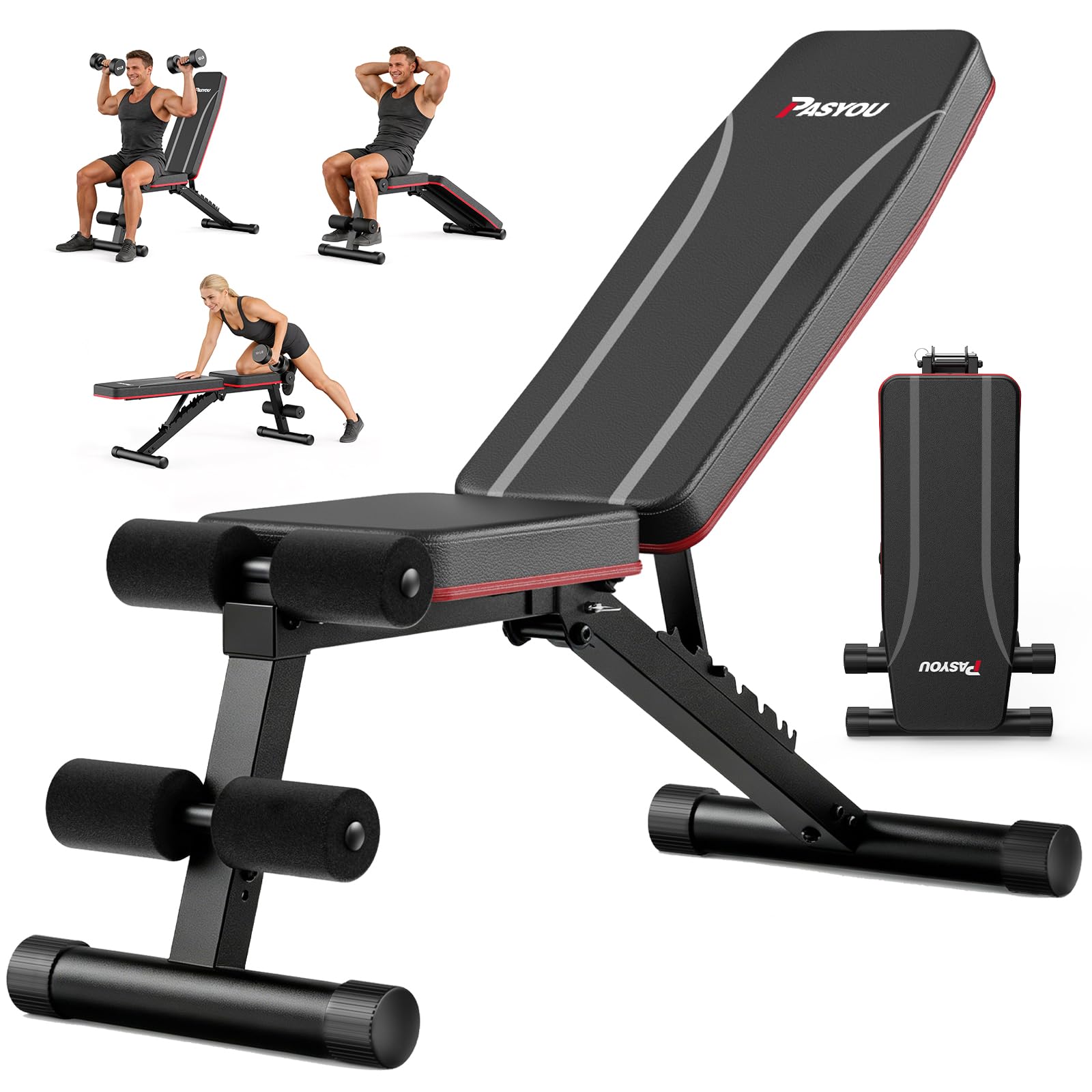
The PASYOU bench arrives 95% pre-assembled, requiring only two push-pins to lock the legs and backrest into place. That out-of-box speed matters when you want to start training without spending an evening with wrenches. The 13.9-inch wide seat and 29.5-inch extended backrest provide generous contact area, which is rare at this tier—most benches in the same category skimp on width, forcing your hips to hang off the edge during decline crunches.
The 24-pound frame is one of the lightest on the list, making it the best choice for users who need to move the bench between rooms or take it to a park for outdoor training. The foldable design collapses to a slim profile that slides under a couch or bed. The high-density foam padding is rated for comfort during full-ab circuits, though the 660-pound capacity means this bench is best suited for bodyweight and light dumbbell ab work rather than heavy loaded decline sets.
Adjustability covers flat, incline, and decline positions, though the decline angle is less aggressive than dedicated ab benches. The non-slip PU leather surface breathes reasonably well and cleans up with a damp cloth. A few taller users note that the backrest could be longer for full head-to-glute support during supine work, but the overall stability on carpet is good. For the price, this bench offers a practical entry point into decline training without overcommitting on space or budget.
Why it’s great
- Out-of-box assembly takes under 60 seconds
- Wide seat prevents hip slip during decline reps
- Lightweight and folds thin for compact storage
Good to know
- Decline angle is moderate, not steep
- 660-pound rating limits heavy loaded ab work
7. FitinOne Adjustable Folding Weight Bench
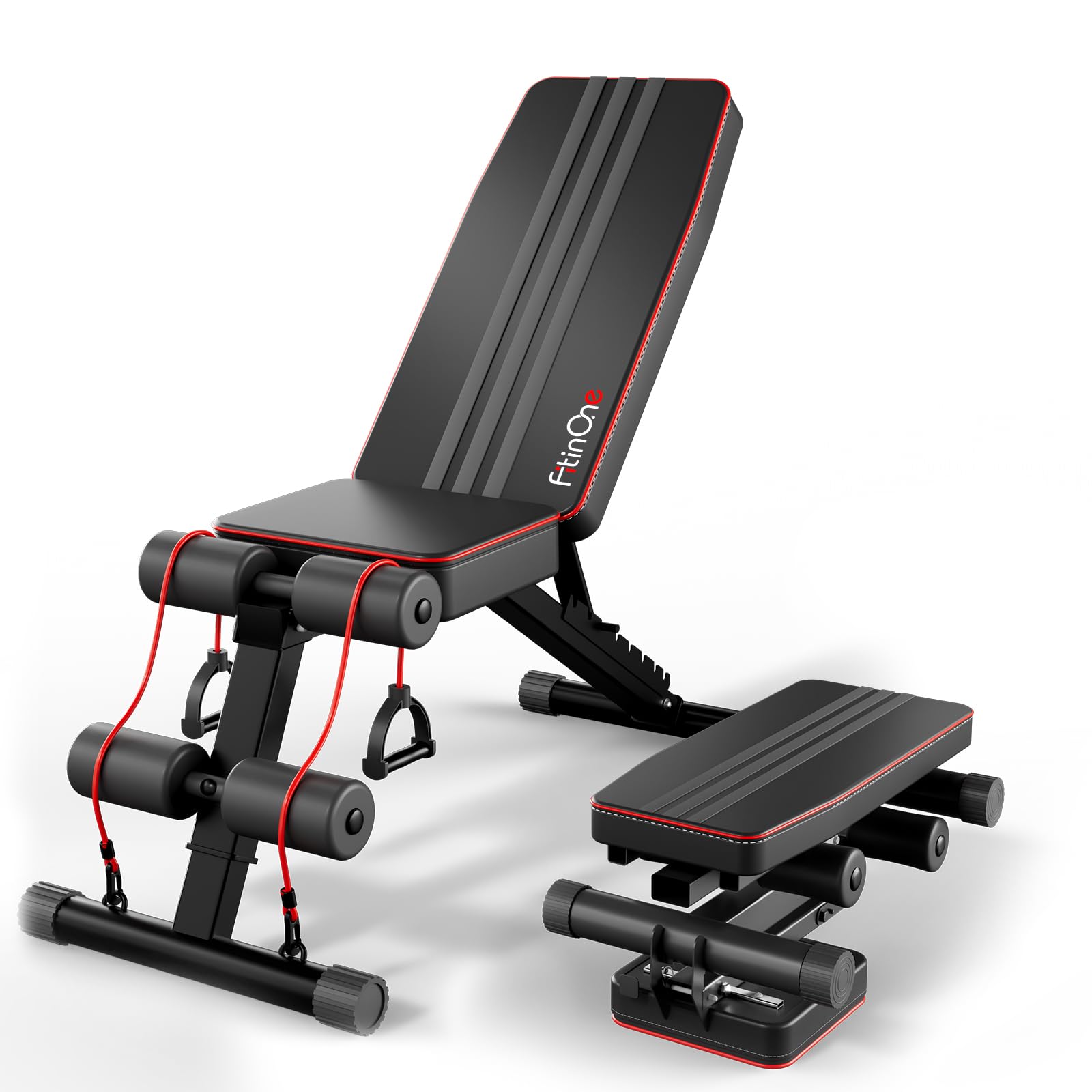
The FitinOne bench strips away every non-essential feature to deliver the absolute minimum viable platform for decline and flat ab work. The 9-kilogram (20-pound) frame folds in three seconds flat and occupies about 20 percent of the space of a traditional bench—it slides entirely under a standard bed or into a shallow closet. The 660-pound capacity is surprisingly high for such a lightweight build, achieved through a reinforced triangular steel structure that maximizes rigidity without adding mass.
The 50-millimeter thick cushion uses high-elasticity foam that resists bottoming out during decline sit-ups, though the overall pad width is narrower than premium benches. The faux leather covering is sweat-proof and wipes clean easily, a practical consideration for ab training that leaves a puddle on the pad. Assembly takes about ten minutes out of the box, and the frame comes 90 percent pre-assembled with only the leg supports needing attachment.
Where this bench compromises is in leg roller design—the anchor system is functional but not heavily padded, so users with sensitive shins may want to wear long pants during decline crunches. The backrest adjustment is limited to three positions rather than the six or eight found on pricier models. For a dedicated abdominal bench that disappears into storage after your core workout, the FitinOne delivers exactly what its name promises: it fits in one spot and gets out of the way quickly.
Why it’s great
- Extremely compact fold fits under furniture instantly
- 660-pound capacity for a sub-20-pound frame is impressive
- Sweat-proof cover simplifies post-workout cleanup
Good to know
- Only three backrest adjustment positions
- Leg roller padding is thinner for comfort
FAQ
Can I use an abdominal bench for exercises other than crunches?
How much weight capacity do I need for an ab bench?
What does FID stand for in weight bench terminology?
Final Thoughts: The Verdict
For most users, the best abdominal bench winner is the Finer Form Adjustable Sit Up Ab Bench because it is built specifically for decline ab work with a rock-solid frame, an adjustable foot roller, and a reverse crunch handle that forces perfect form. If you need a compact bench that folds away into a vertical sliver of space, grab the REP AB-3100. And for a budget-friendly unit that disappears under the bed after a session, nothing beats the FitinOne Adjustable Folding Weight Bench.