
A basement air conditioner isn’t a luxury — it’s the difference between a usable home theater or workshop and a damp, stale storage zone that smells like old concrete. Standard window units struggle below grade because they fight against low airflow and high humidity, leaving you with a room that feels clammy even when the thermometer reads 72°F. The right portable unit doesn’t just lower temperature; it actively strips moisture from the air, preventing mold growth and making the space feel genuinely comfortable.
I’m Min — the co-founder and writer behind Gadgets Feed. After analyzing over forty portable AC models specifically for below-grade use cases, I’ve focused this guide on drainage systems, BTU-to-square-foot ratios that account for concrete insulation loss, and noise profiles that won’t disrupt a basement office or media space.
Basements trap moisture and resist temperature change more than any other room in the house, so selecting the right equipment requires understanding BTU derating, self-evaporative technology, and hose configurations. This guide breaks down everything you need to confidently pick the best basement air conditioner for your specific layout and humidity load.
How To Choose The Best Basement Air Conditioner
Basement cooling is fundamentally different from upstairs cooling. The walls are concrete, the air moves slowly, and moisture seeps in from the surrounding soil. You need a unit that compensates for these conditions rather than one designed for a breezy living room.
BTU Rating and Room Size — The Basement Discount
Standard BTU charts assume average insulation and typical airflow. A basement needs 10 to 20 percent more BTU capacity than the square footage suggests because concrete slabs radiate coolness in winter but trap heat in summer, and below-grade spaces have minimal natural air exchange. For a 400-square-foot basement, an 8,000 BTU unit might work upstairs but will struggle down there — aim for 10,000 BTU or higher to overcome the thermal mass of the surrounding earth.
Drainage and Humidity Control — The Hidden Enemy
Basements are naturally humid. A portable AC that lacks a robust self-evaporating system will fill its internal tank within hours, triggering an automatic shutoff that leaves you sweating. Look for units that advertise “drainage-free cooling” or “self-evaporating operation” with a rated capacity of at least 40 pints per day. If your basement humidity regularly exceeds 85 percent, consider a dual-hose model with a continuous drain option so you never wake up to a warm, wet room.
Noise Levels — Below-Grade Acoustics Amplify Sound
Concrete walls and low ceilings turn the mechanical hum of a compressor into a resonant drone. A unit that registers 55 dB on the spec sheet can sound noticeably louder in a basement than it would in an upstairs bedroom. Prioritize models that advertise sleep-mode noise levels at or below 45 dB, especially if the basement doubles as a guest room, home office, or media area. Inverter compressors reduce vibration and eliminate the jarring on-off cycling of traditional piston compressors.
Quick Comparison
On smaller screens, swipe sideways to see the full table.
| Model | Category | Best For | Key Spec | Amazon |
|---|---|---|---|---|
| Whynter ARC-1230WN | Premium Dual-Hose | Large basements up to 600 sq ft | 14,000 BTU / 12.3 CEER / 87 pints/day | Amazon |
| ZAFRO Smart Inverter | Inverter Dual-Hose | Energy savings and quiet operation | 16,000 BTU / 500 m³/h airflow / 42 dB | Amazon |
| Gasbye Dual Hose | DC Inverter | Ultra-high efficiency (13.6 CEER) | 14,000 BTU / 45 dB / 13.6 CEER | Amazon |
| YLEOOB 16,000 BTU | Smart Portable | Large rooms with WiFi control | 16,000 BTU / 730 sq ft / 42 dB Sleep | Amazon |
| Augsmile 16,000 BTU | Leak-Proof Design | Stable structure and low noise | 16,000 BTU / 450 m³/h / 40 dB | Amazon |
| EUHOMY 12,000 BTU | Smart 4-in-1 | Mid-size basements and app control | 12,000 BTU / 550 sq ft / 110 pints/day | Amazon |
| Ftocase 10,000 BTU | Budget Portable | Small basements under 450 sq ft | 10,000 BTU / <50 dB Sleep / CEER 7.0 | Amazon |
| LG LW8024RD | Window Unit | Basements with standard windows | 8,000 BTU / 53 dB / 350 sq ft | Amazon |
| Uhome 8,000 BTU | Value Portable | Budget-friendly small spaces | 8,000 BTU / <55 dB / 40 pints/day | Amazon |
In-Depth Reviews
1. Whynter ARC-1230WN

The Whynter ARC-1230WN uses a dual-hose “hose-in-hose” design that prevents the heat leakage common in single-hose portables, making it exceptionally efficient for basements where every BTU counts. Its inverter compressor operates at a 12.3 CEER rating, which means it delivers 20 percent more cooling per watt than traditional fixed-speed units — a critical advantage when the unit runs for extended hours below grade.
With 14,000 BTU of cooling power and a rated capacity of 87 pints per day of dehumidification, this unit handles the dual burden of lowering temperature and stripping moisture simultaneously. The NetHome Plus app lets you monitor and adjust settings from anywhere, and Alexa integration means you can control the climate without walking down the stairs. Owners consistently report that the unit maintains a steady, comfortable temperature in spaces up to 900 square feet of open area.
The auto-drain function exhausts condensate automatically, so there’s no water tank to empty during normal operation. The unit is heavy at roughly 80 pounds, so installation is a two-person job, but once in place, the smooth-rolling casters make seasonal repositioning manageable. The window kit extends up to 82 inches and fits sliding windows as well as casement styles common in basement egress windows.
Why it’s great
- Inverter compressor with 12.3 CEER for reduced energy draw
- Patented auto-drain removes up to 87 pints of moisture per day
- Smart app and voice control for convenient remote operation
Good to know
- Heavy unit requires two people for safe installation
- Window panel may need cutting to fit non-standard openings
2. ZAFRO Smart Inverter Portable Air Conditioner
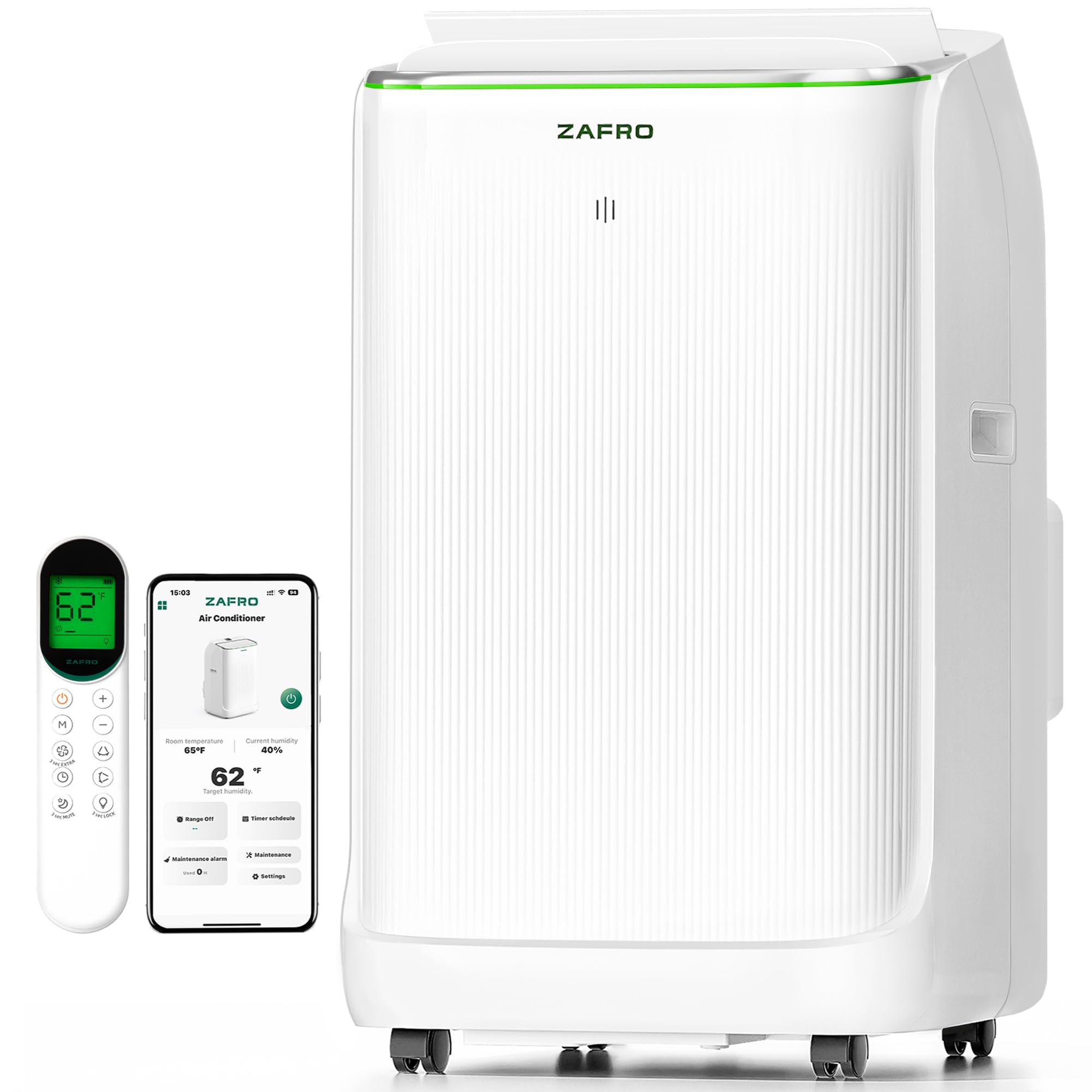
The ZAFRO Smart Inverter employs a genuine inverter compressor with a dual-hose setup that delivers 500 cubic meters per hour of airflow while maintaining a noise floor as low as 42 dB in sleep mode. For basement media rooms or home offices, this combination of high-velocity cooling and whisper-quiet operation transforms what was once a humid, echoey space into a comfortable work environment.
The self-evaporating system provides up to 72 hours of drainage-free operation in environments with humidity below 90 percent, which covers the vast majority of basement conditions. When humidity spikes, a drain hose is included for continuous gravity drainage. The app control includes scheduling, power-off memory, and a filter-clean reminder — small touches that matter when the unit is installed in a less-frequented part of the house.
Six operating modes — Cool, Dry, Fan, Sleep, Extra, and Eco — allow precise tailoring for summer heatwaves, damp spring days, or transitional weather. The Extra mode locks the temperature at 61 degrees Fahrenheit and runs at full compressor power to provide instant relief during extreme heat, eliminating the uneven cooling that plagues single-hose units in concrete-walled spaces.
Why it’s great
- Inverter compressor with CEER 12.8 for top-tier efficiency
- Self-evaporating system works up to 72 hours without draining
- Six modes including Extra mode for rapid temperature drop
Good to know
- Window panel may feel thin and allow some air gap
- App interface has minor bugs like indicator light control
3. Gasbye Dual Hose Portable Air Conditioner
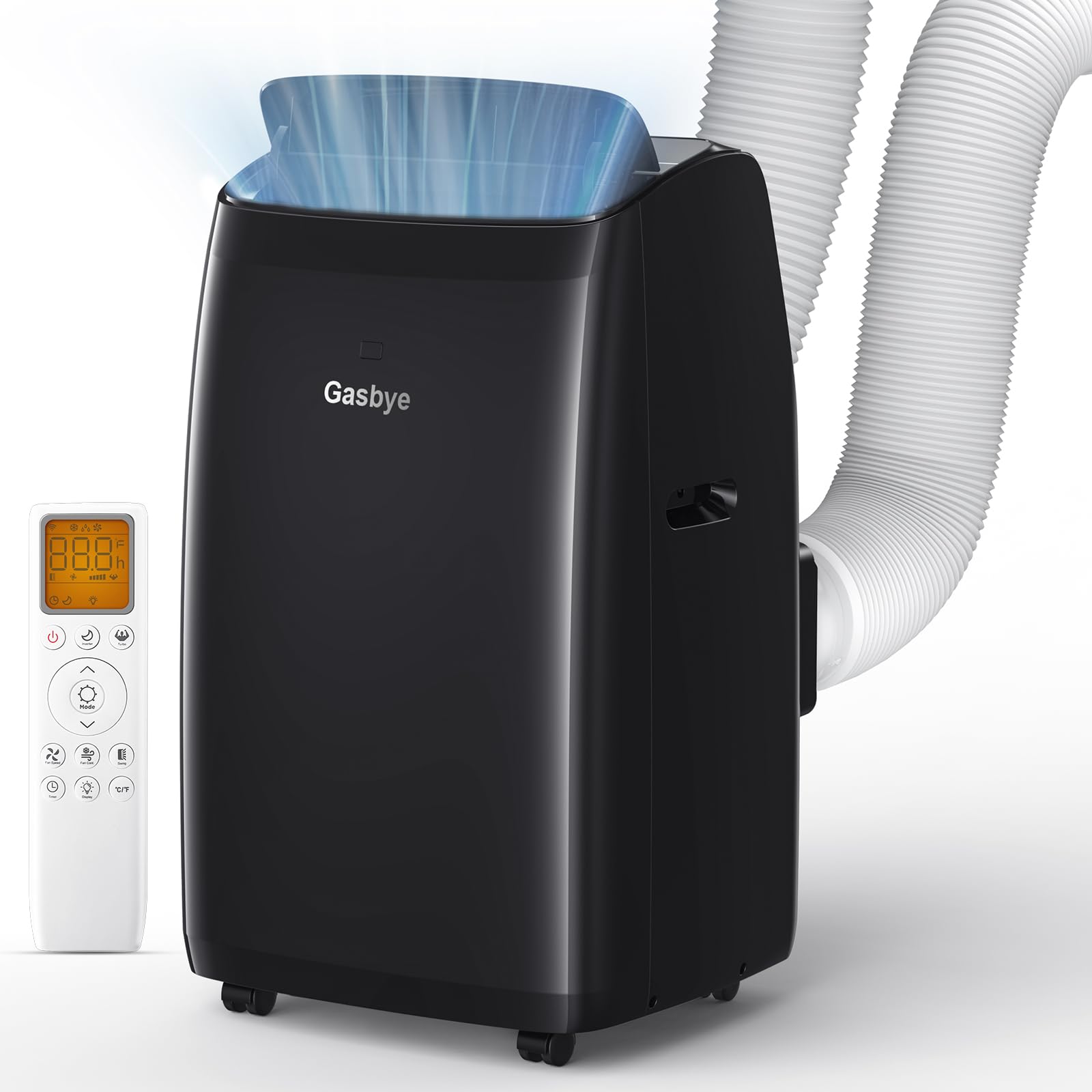
The Gasbye Dual Hose unit achieves a remarkable 13.6 CEER rating — the highest in this guide — meaning it converts nearly every watt into effective cooling rather than wasted heat. Its Full DC Inverter compressor actively reduces frequency to 50 percent load within two minutes of reaching temperature, dropping noise to around 45 dB while cutting power consumption from 1,300 watts in Turbo mode to as low as 500 watts in Inverter mode.
This model is physically larger than many competitors at 15.5 inches deep, 17.7 inches wide, and 29.3 inches tall, which reflects genuine 14,000 BTU ASHRAE capacity rather than inflated specs. For basement installations where space allows, this size translates directly into faster cooling and more stable temperature hold. The dual-hose configuration eliminates negative pressure, preventing warm, humid air from being sucked in through basement cracks and window gaps.
Gasbye includes a backlit remote control and a display-off feature for undisturbed sleep, plus a three-year quality guarantee that provides full refund or free replacement if the unit doesn’t meet expectations. Customer service responses typically arrive within 12 hours, and the company ships replacement window brackets free of charge for oversized openings.
Why it’s great
- Highest CEER of any unit reviewed at 13.6
- True full-size build with genuine BTU rating
- Three-year warranty with responsive customer support
Good to know
- Large footprint requires significant floor space
- Remote control range is limited and line-of-sight dependent
4. YLEOOB 16,000 BTU Portable Air Conditioner
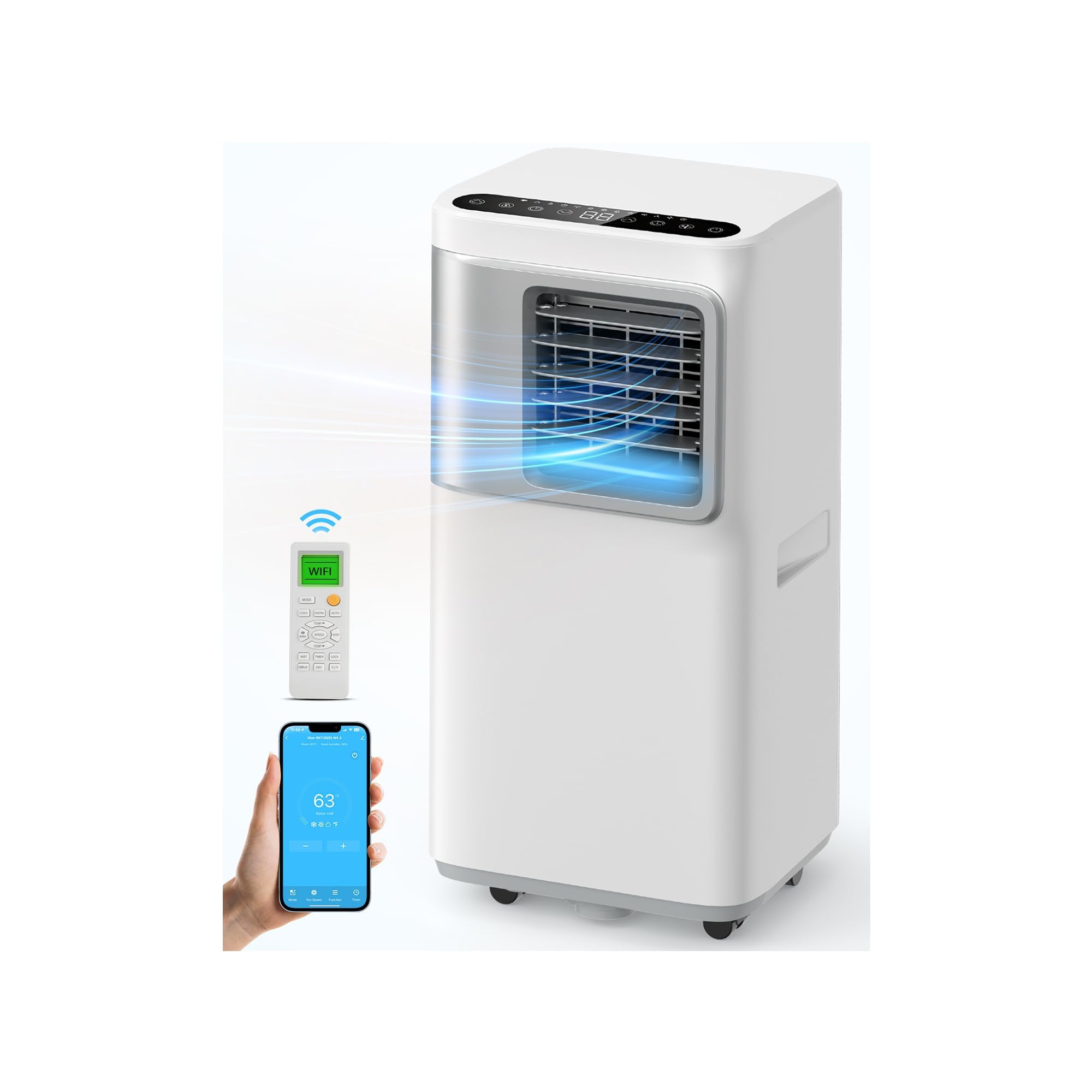
The YLEOOB 16,000 BTU unit is engineered to cool rooms up to 730 square feet, making it one of the highest-capacity portables in this roundup. Its 5-in-1 design bundles cooling, dehumidification, three-speed fan, intelligent sleep mode, and a 24-hour timer into a single chassis. The auto-swing function distributes air vertically and horizontally, reducing the hot spots that plague basement spaces with uneven ceiling heights.
Sleep mode operates below 42 dB — quieter than a typical library — and automatically adjusts temperature throughout the night to maintain comfort without waking occupants. The built-in water self-evaporation system eliminates the need for manual draining during daily use, even in high-humidity conditions. This is a critical feature for basements where running a drain hose to a floor drain isn’t always practical.
WiFi and app support allow you to program 24/7 schedules, monitor energy usage, and pre-cool the basement before you head downstairs. The four 360-degree heavy-duty wheels and hidden side handles make this unit easy to reposition between the workshop and the living area as seasons change.
Why it’s great
- High 16,000 BTU capacity for large basements
- Drainage-free self-evaporation system
- WiFi scheduling and energy monitoring via app
Good to know
- Some users report smaller physical size than expected from photos
- Best suited for targeted cooling rather than whole-floor distribution
5. Augsmile 16,000 BTU Portable Air Conditioner
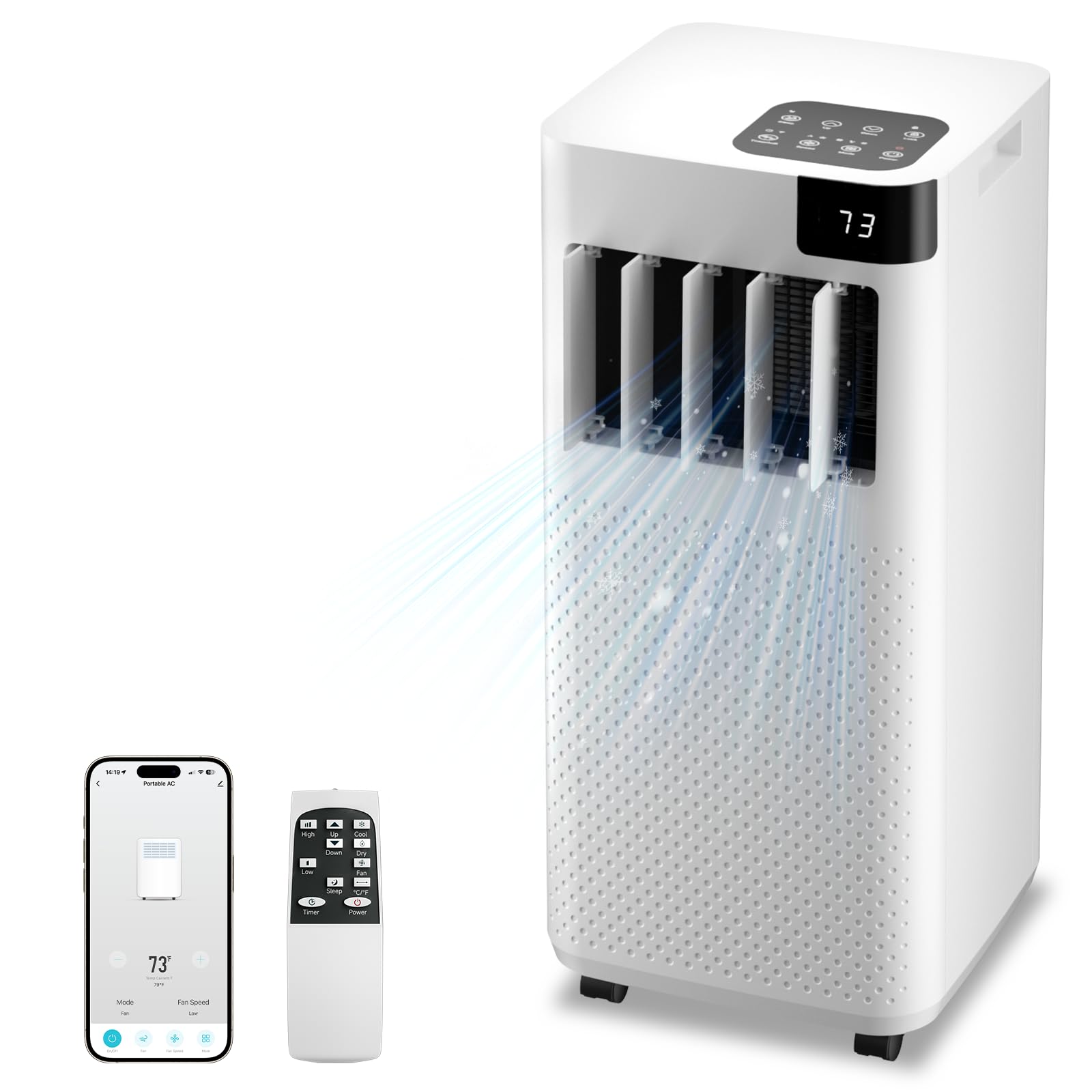
The Augsmile 16,000 BTU unit packs high capacity into a relatively compact footprint — 11.42 inches deep, 12 inches wide, and 27.56 inches tall — while maintaining a noise floor of just 40 dB through its noise-reduction compressor and optimized piping. For basement home theaters or recording spaces where every decibel matters, this unit delivers strong 450 m³/h airflow without the mechanical rumble that echoes off concrete walls.
The leak-proof structure uses stable construction to prevent water leakage, a concern in basements where spills can damage flooring or stored items. Setup takes roughly 10 minutes with no tools required for sliding windows between 25 and 50 inches. Smooth-rolling casters and side handles make room-to-room mobility effortless when you need to shift cooling from the storage area to the living space.
Five operating modes include a dedicated sleep mode that turns off the LED display to keep the room dark. The 24-hour smart timer lets you schedule automatic power-off to save energy during unoccupied hours. WiFi connectivity via the mobile app allows pre-cooling before you descend the stairs on a hot afternoon.
Why it’s great
- Ultra-quiet 40 dB operation for noise-sensitive spaces
- Compact dimensions for tight basement layouts
- Leak-proof structure prevents water damage
Good to know
- Annual energy consumption is higher than inverter models
- Window kit may require cutting for exact fit
6. EUHOMY 12,000 BTU Portable Air Conditioner
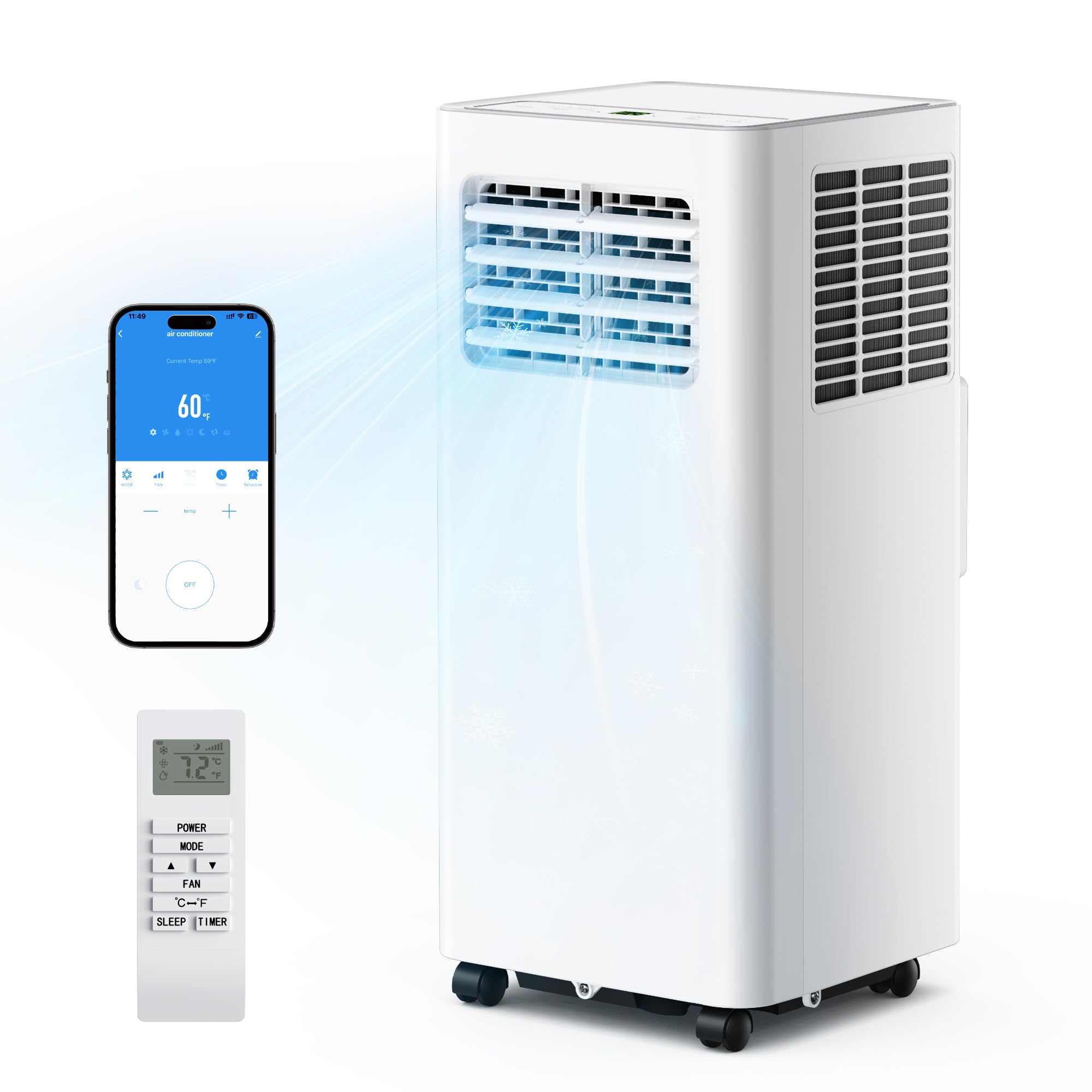
The EUHOMY 12,000 BTU unit delivers a combination of smart features and aggressive dehumidification at a mid-range price point. Its dehumidifier mode removes up to 110 pints of moisture per day — higher than many larger units — making it an excellent choice for basements that feel damp even when the temperature is acceptable. The upgraded compressor achieves 300 CFM airflow and a CEER of 7.3, keeping energy consumption reasonable for extended run times.
Triple control options — app, remote, and touch panel — provide flexibility depending on where you install it. The sleep mode runs around 50 dB with a light-off display, and the 24-hour timer allows you to match the cooling schedule to your daily basement usage patterns. The I-Sense feature on the remote lets the unit focus cooling toward the remote’s location, which is useful if you’re sitting on the opposite side of the room from the unit.
Setup requires no tools for the mesh filter, which slides out for easy cleaning. The sealed exhaust hose and adjustable window kit accommodate sliding windows from 19 to 50 inches. Some users note that the hose feels slightly flimsy and the window seal isn’t completely airtight, but the cooling performance and humidity control remain strong.
Why it’s great
- Industry-leading 110 pints per day dehumidification
- Smart app, remote, and touch panel control
- I-Sense remote focuses cooling where you sit
Good to know
- Hose and window kit feel less durable than premium models
- Airflow is fixed downward with no oscillation
7. Ftocase 10,000 BTU Portable Air Conditioner
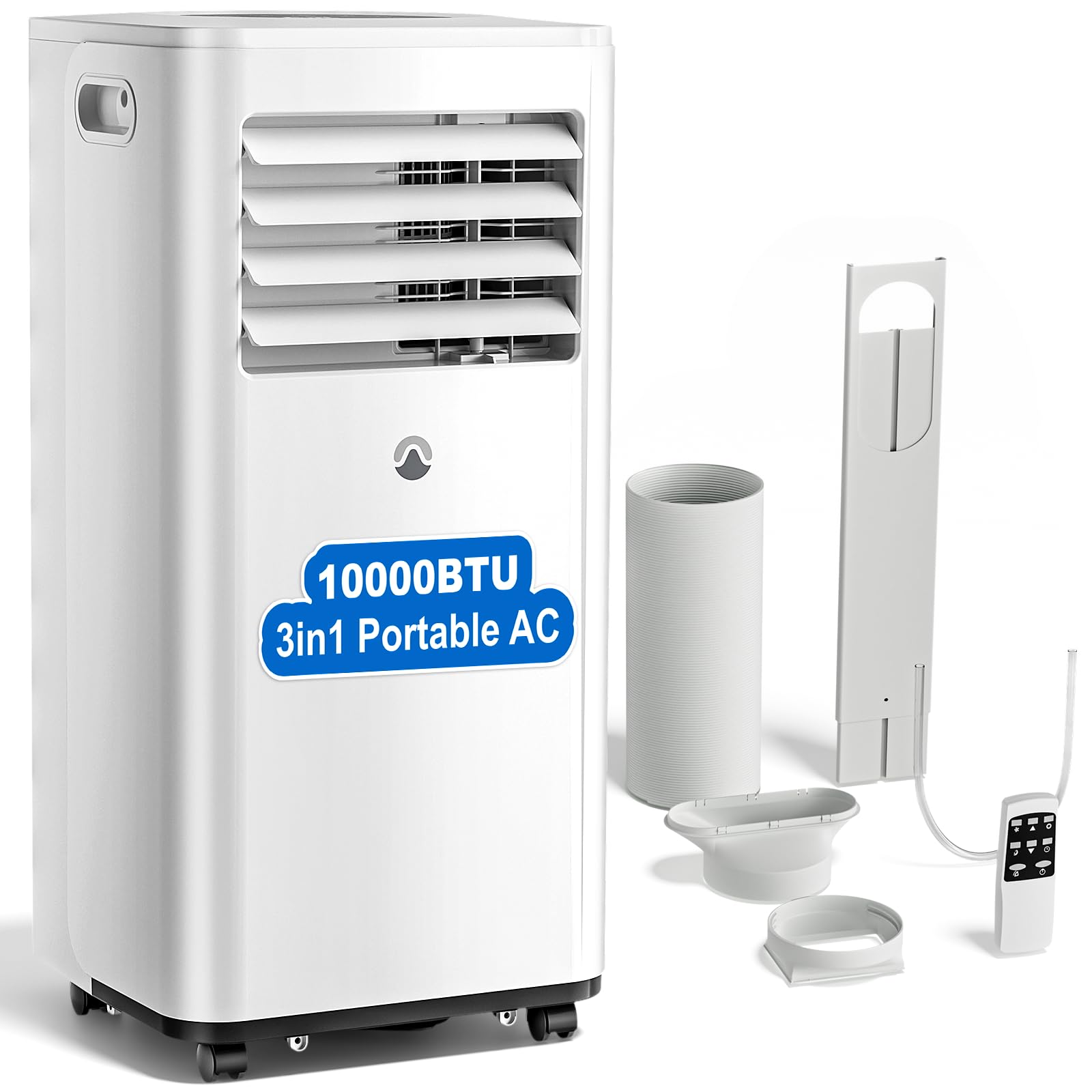
The Ftocase 10,000 BTU unit is a solid mid-range option for smaller basements up to 450 square feet where maximum capacity isn’t required but reliable cooling and dehumidification still matter. The 3-in-1 design switches between air conditioning, fan-only circulation, and dehumidifier mode, giving you flexibility for days when the basement feels sticky but the outdoor temperature is mild.
Sleep mode operates below 50 dB with a CEER of 7.0, making it reasonably energy-efficient for overnight use in a basement guest room or home office. The top-mounted LED display and included remote control keep operation simple. The built-in water-full alert prevents unexpected shutdowns by notifying you when the internal tank needs attention, though the self-evaporating system handles typical basement humidity without frequent emptying.
Assembly takes roughly 30 minutes with the included window kit, which fits vertical and horizontal sliding windows from 36.61 to 49.6 inches. The 360-degree caster wheels and hidden side handles make repositioning easy. Owners consistently describe the noise as typical for a portable AC — noticeable but not disruptive, and suitable as background sound for sleep.
Why it’s great
- Good balance of cooling power and price for small basements
- Sleep mode under 50 dB for overnight use
- Easy 30-minute assembly with included window kit
Good to know
- No window insulation provided in the box
- Shorter exhaust hose limits placement options
8. LG LW8024RD Window Air Conditioner
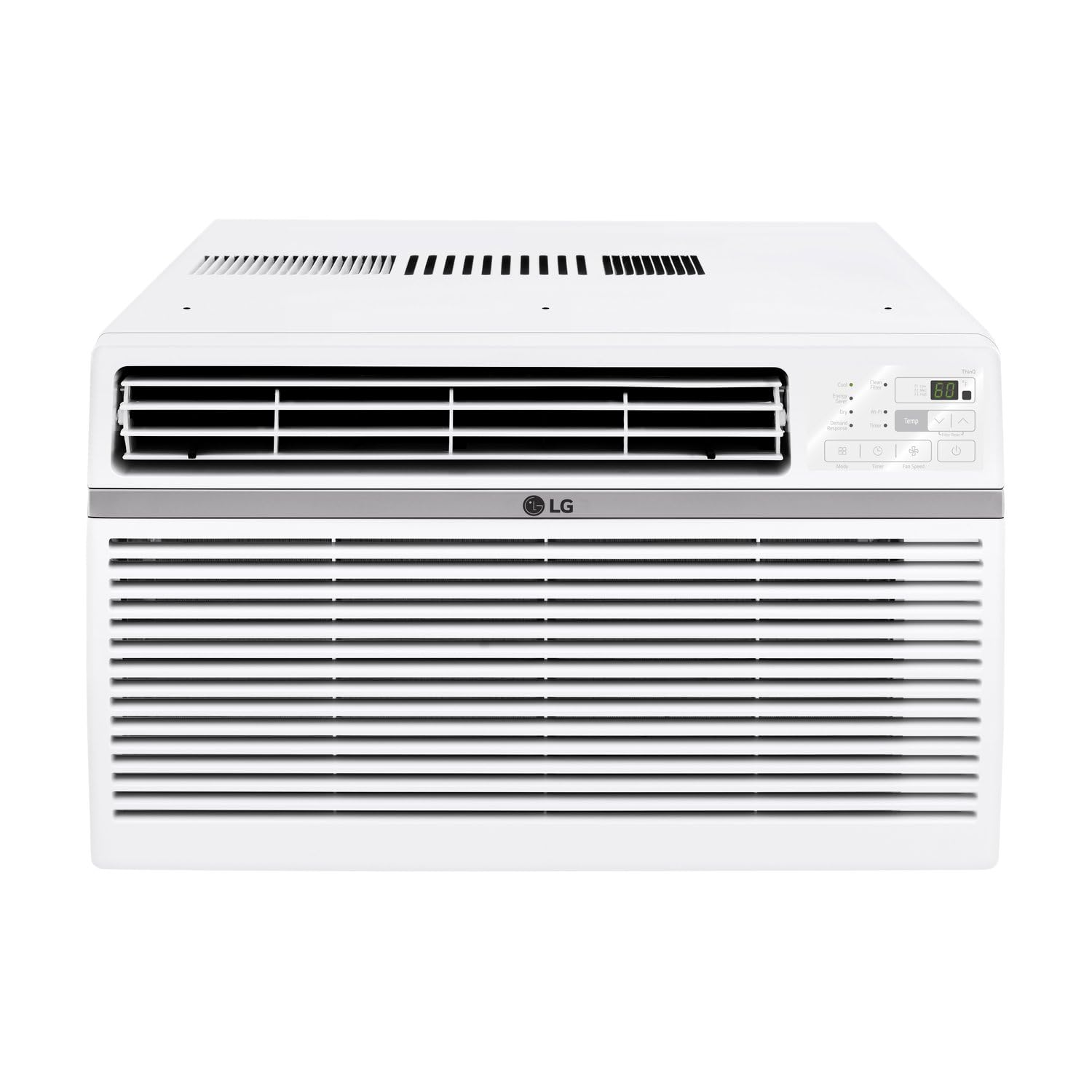
The LG LW8024RD is a traditional window-mounted unit that works well in basements with standard vertically-opening windows. Its 8,000 BTU rating cools rooms up to 350 square feet, and the low-noise performance of 53 dB in low mode makes it one of the quieter window units available. For basement spaces where a portable unit’s floor footprint is a problem, a window installation frees up valuable square footage.
Three cooling and fan speeds plus Auto Cool mode provide granular control over temperature and airflow. The Auto Restart feature automatically returns the unit to its previous settings after a power outage — a practical feature for basements where circuit breakers can trip during storms. The included remote control allows adjustments without walking over to the window, and the filter light reminder tells you when the washable filter needs cleaning.
Installation is standard for a window unit and requires proper support since the unit rests on the window sill. LG’s reputation for reliability is generally reflected in user feedback, though a small number of owners report premature failures. The unit does not offer dehumidifier-only mode, so it relies on its cooling cycle to pull moisture from the air.
Why it’s great
- Quiet operation for a window unit at 53 dB low mode
- Auto Restart after power outages
- Compact window mount saves floor space in small basements
Good to know
- No dedicated dehumidifier mode for humidity control
- Some units have reported reliability issues after extended use
9. Uhome 8,000 BTU Portable Air Conditioner

The Uhome 8,000 BTU portable is an entry-level option for small basement spaces up to 200 square feet where the primary goal is supplemental cooling rather than whole-room climate control. Its 3-in-1 functionality covers cooling, dehumidifying, and fan-only modes, with the dehumidifier removing up to 40 pints of moisture per day — enough to keep a small basement from feeling sticky.
The bucket-less self-evaporating operation means you don’t need to manually drain water during normal use, which reduces maintenance for a space you don’t visit daily. The washable filter lifts out easily for cleaning under a faucet, and the built-in rolling wheels make it simple to move between the storage area and the workspace. The 24-hour adjustable timer lets you set cooling from 60 to 86 degrees Fahrenheit in one-degree increments.
Noise levels are around 55 dB, which owners describe as audible but acceptable for background sound. Some users note that the faceplate looks inexpensive and the high fan setting is noticeably loud, but the cooling performance is effective for the price tier. For a spare basement room used occasionally, this unit delivers functional cooling without a significant investment.
Why it’s great
- Self-evaporating design eliminates manual draining
- Washable filter with easy tool-free removal
- Portable with rolling wheels for repositioning
Good to know
- Noise level around 55 dB may be disruptive for sleep
- Build quality feels less premium than mid-range options
FAQ
How many BTU do I need for a basement that’s 500 square feet?
Should I get a dual-hose or single-hose portable AC for a basement?
Will a window AC unit work in a basement egress window?
Can I use a portable air conditioner in a basement without windows?
How often do I need to empty the water tank on a basement AC?
Final Thoughts: The Verdict
For most users, the best basement air conditioner is the Whynter ARC-1230WN because it combines dual-hose efficiency, inverter quietness, and aggressive dehumidification in a package that handles the unique demands of below-grade spaces without second-guessing. If you want maximum energy savings and the quietest possible operation, grab the Gasbye Dual Hose with its industry-leading 13.6 CEER. And for a smart, mid-range option that lets you monitor humidity and temperature from anywhere, the EUHOMY 12,000 BTU offers exceptional dehumidification at a reasonable price point.