
Finding a helmet that keeps your head cool without turning into a wind tunnel of noise has become the defining challenge for serious riders. The standard vents on most lids just recycle hot, stale air, and after thirty minutes in stop-and-go traffic, the discomfort becomes a genuine safety concern.
I’m Min — the co-founder and writer behind Gadgets Feed. My research focuses on how forced-air ventilation systems, multi-density EPS channels, and aerodynamic spoiler designs actually perform under real riding conditions, separating engineered cooling from simple marketing claims.
This guide evaluates nine helmets by how effectively they move air across the scalp, manage humidity, and reduce wind noise at speed — all to help you choose the right air conditioned motorcycle helmet for your daily commute or weekend tour.
How To Choose The Best Air Conditioned Motorcycle Helmet
Not every helmet labeled “ventilated” actually moves meaningful volumes of air. True cooling in a motorcycle helmet depends on three interlocking systems: the intake and exhaust vent architecture, the EPS channel layout that routes air over your head, and the shell material’s ability to stay cool against your skin. Focusing on just one of these while ignoring the others is the fastest path to an expensive, foggy mistake.
Vent Architecture: Ram-Air vs. Passive Flow
Ram-air intakes, usually positioned on the chin bar and forehead, actively force outside air into the helmet at speed. Passive vents rely on negative pressure created by rear exhaust ports to draw hot air out. The most effective cooling helmets combine both: large front intake ports with a spoiler-integrated exhaust system that creates a Venturi effect. Look for adjustable intake vents you can close in colder weather — fixed open vents make the helmet unusable below 50°F.
EPS Channel Density and Pathing
The expanded polystyrene (EPS) liner doesn’t just absorb impact — its internal channel pattern determines how far air travels before exiting. Deeper, wider channels route more volume but reduce foam thickness. Premium helmets use multi-density EPS where softer foam near the channels absorbs low-speed impacts while denser foam around the crown handles high-energy strikes. Check whether the channel paths align with the vent openings you’ll actually use; mismatched alignment is a common flaw in entry-level models.
Shell Material and Thermal Transfer
Polycarbonate shells are heavier and retain more heat. Fiberglass composite and multi-layer laminates (like Shoei’s AIM or ScorpionEXO’s Ultra-TCT) are lighter and dissipate heat faster. A cooler shell surface means less radiant heat reaching your scalp, especially under direct sun. Polycarbonate helmets in the budget tier can still ventilate well if the EPS channel design is aggressive, but expect more thermal buildup during long stops.
Quick Comparison
On smaller screens, swipe sideways to see the full table.
| Model | Category | Best For | Key Spec | Amazon |
|---|---|---|---|---|
| Shoei Neotec 3 | Modular Premium | Long-distance touring | Multi-density AIM shell + QSV-2 sun shield | Amazon |
| LS2 Helmets Advant X | Modular Mid-Range | Versatile commuting | KPA shell, 180° modular, 1,600g ±50g | Amazon |
| ScorpionEXO R1 Air | Full Face Premium | Sport riding & track days | Ultra-TCT shell, Ram-Air intake, 1,383g | Amazon |
| ILM MF509 | Full Face Premium | All-day comfort & anti-fog | Pinlock70 lens, dual visor, ABS/EPS | Amazon |
| Bell Powersports Qualifier Forced Air | Full Face Mid-Range | Integrated air system compatibility | Forced air port, Ionic+ padding, PC shell | Amazon |
| HAX Force | Full Face Mid-Range | E-bike & daily commutes | ABS+PC composite, dual cert, 4.63 lbs | Amazon |
| ILM 861A | Full Face Value | Budget-conscious riders | Dual visor, Pinlock ready, 2.29 kg | Amazon |
| AAREG Bluetooth Modular | Modular Value | Built-in Bluetooth convenience | DOT/ECE, 7 vents, dual visor, ABS | Amazon |
| BEON B503 | Full Face Entry | First-time helmet buyers | ABS shell, DOT/ECE, 100g weight | Amazon |
In‑Depth Reviews
1. Shoei Neotec 3 Modular Motorcycle Helmet
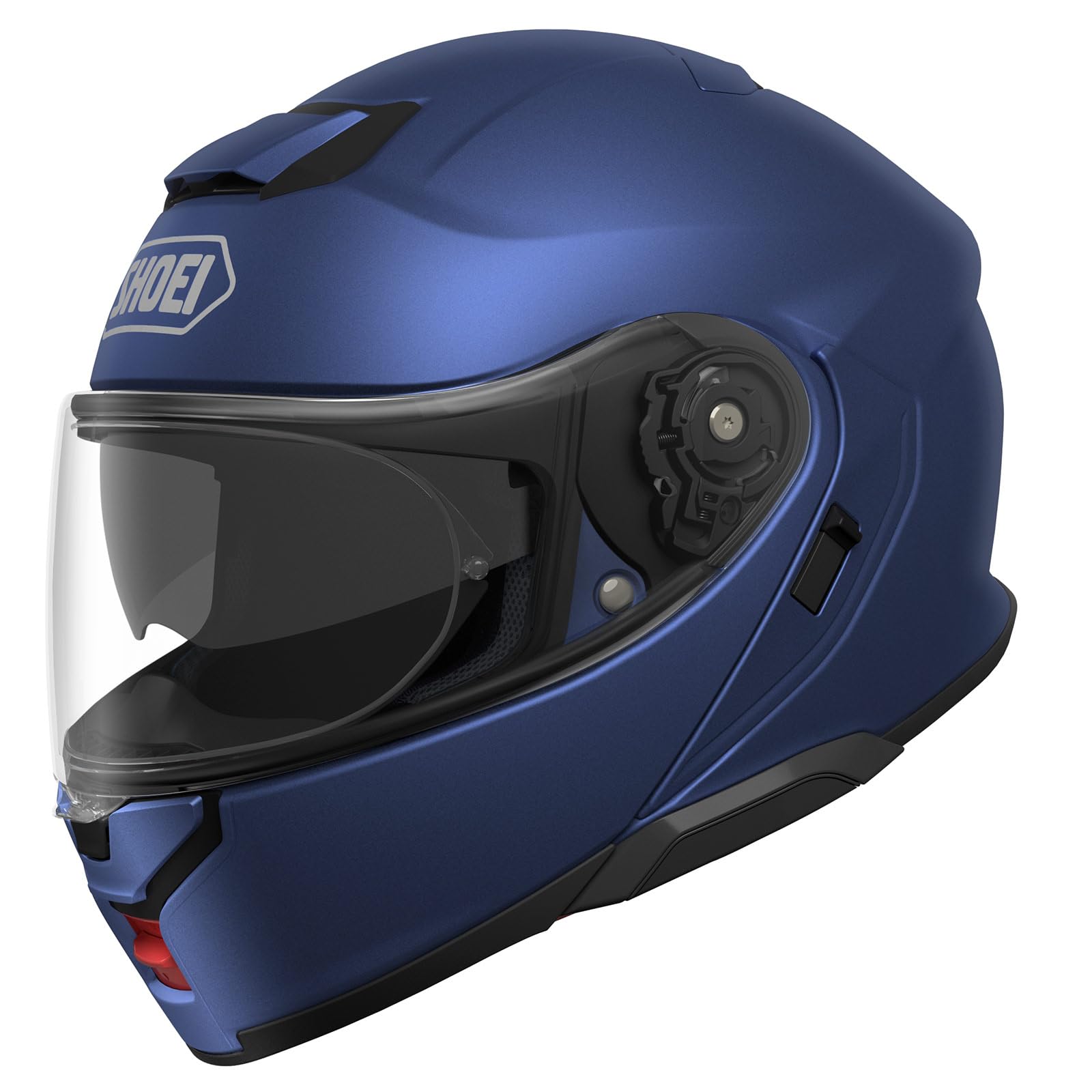
The Shoei Neotec 3 sets the benchmark for how a modular helmet should manage airflow and noise simultaneously. Its AIM (Advanced Integrated Matrix) shell uses a hybrid fiberglass-and-resin layup that keeps weight to 4.2 pounds while dissipating heat far better than polycarbonate alternatives. The multi-density EPS liner is sculpted with deep channels that align perfectly with the chin bar and forehead intake vents, creating a consistent flow path from front to back without turbulent dead zones.
The QSV-2 sun shield mechanism glides smoothly and covers a wide field of view, while the CNS-3C Pinlock shield resists fogging even when transitioning from a cool garage into humid summer air. Wind noise at 70 mph remains lower than most full-face lids, thanks to the wind tunnel-optimized chin skirt and neck curtain. The micro-ratchet chin strap is secure and intuitive, though some riders find the initial strap tension a bit snug under the jaw.
For riders clocking hours in variable temperatures, the Neotec 3’s ventilation system is its standout feature — the top exhaust spoiler actively pulls hot air out even at low speeds, which is rare for a modular design. The flip-up mechanism operates with a reassuring mechanical click and stays locked without any play. If your budget allows, this is the benchmark for integrated cooling and quiet ergonomics.
Why it’s great
- Excellent wind-tunnel-optimized venting with active rear exhaust
- Very low wind noise for a modular helmet at highway speeds
- High-quality Pinlock shield and smooth sun visor mechanism
Good to know
- Premium price point reflects top-tier materials and engineering
- Some users report the chin strap is short and tight initially
- Visor reinstallation can be fiddly without clear instructions
2. LS2 Helmets Advant X Modular Helmet
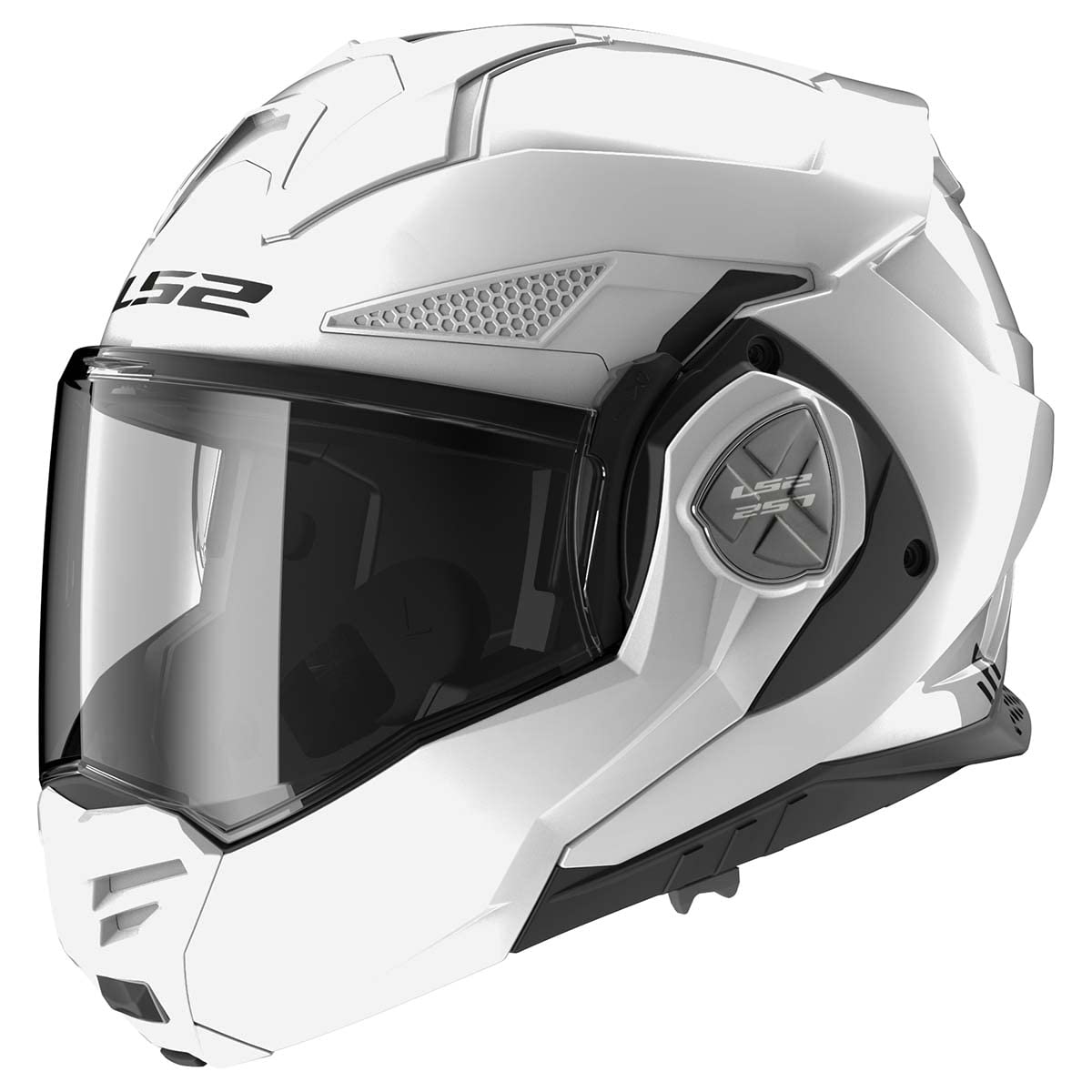
The LS2 Advant X strikes an impressive balance between modular convenience and forced-air ventilation. Its Kinetic Polymer Alloy (KPA) shell keeps the helmet at roughly 1,600 grams — remarkably light for a modular — and the 180-degree flip-up chin bar stays out of the wind when open, reducing buffeting. The EPS liner is dual-density with channels that feed directly from the adjustable chin vent and two-position top intake, routing air past the temples and out through the rear spoiler exhaust.
The Pinlock Max insert comes included, which is a welcome cost saving, and the built-in sun visor operates via a smooth slider on the left temple. The face shield clicks through positive detents and seals tightly against the gasket, minimizing the whistle that plagues cheaper modulars. The technical fabric liner wicks moisture effectively during humid rides and is fully removable for washing.
Riders with intermediate oval head shapes will find the Advant X snug from the start, but the brand warns that the helmet runs small — sizing up is recommended if you are between measurements. The ratchet chin strap takes a couple of wears to break in but locks securely. This is the smartest mid-range modular for riders who want modular flexibility without the weight penalty that usually comes with it.
Why it’s great
- Very lightweight KPA shell for a modular helmet
- Smooth 180-degree flip-up mechanism with no wind drag
- Effective dual-density EPS channel ventilation
Good to know
- Runs small; order at least one size larger than usual
- Ratchet chin strap feels short and tight under the jaw
- Road noise is slightly above average for a modular
3. ScorpionEXO R1 Air Full Face Motorcycle Helmet

The ScorpionEXO R1 Air is engineered for riders who demand the airflow of a track helmet with everyday usability. Its Ultra-TCT shell — a multi-layer weave of fiberglass, aramid, and poly-resin — combines impact resilience with a remarkably low weight of 1,383 grams in medium. The Ram-Air intake system on the forehead channels air through sculpted EPS channels that exit through a four-port spoiler exhaust, creating a Venturi effect that pulls heat and humidity out even at moderate speeds.
The KwikWick interior is moisture-wicking and quick-drying, and the inflatable Airfit cheek pad system lets you dial in the snugness around the jaw to compensate for changes in liner density over time. The Clear MaxVision Pinlock shield comes with a dark smoke spare and an anti-fog insert, so you have two setups ready for day and night riding. Emergency release cheek pads add a safety layer that track-day riders will appreciate.
Wind noise is noticeably higher than the Shoei Neotec 3 — earplugs are advisable on long highway stretches — but the trade-off is cooling that rivals helmets costing twice as much. The integrated speaker pockets accommodate most Bluetooth systems without pressure points. For sport riders who prioritize ventilation above all else, the R1 Air delivers the most aggressive airflow in this lineup.
Why it’s great
- Superb Ram-Air ventilation with four-port exhaust spoiler
- Extremely lightweight at 1,383 grams for a full-face
- Inflatable cheek pads for customizable fit
Good to know
- Wind noise is significant at highway speeds, needs earplugs
- Fit can be snug for rounder head shapes
- Manufacturing date stamps should be checked for freshness
4. ILM Motorcycle Helmets MF509 Dual Visor
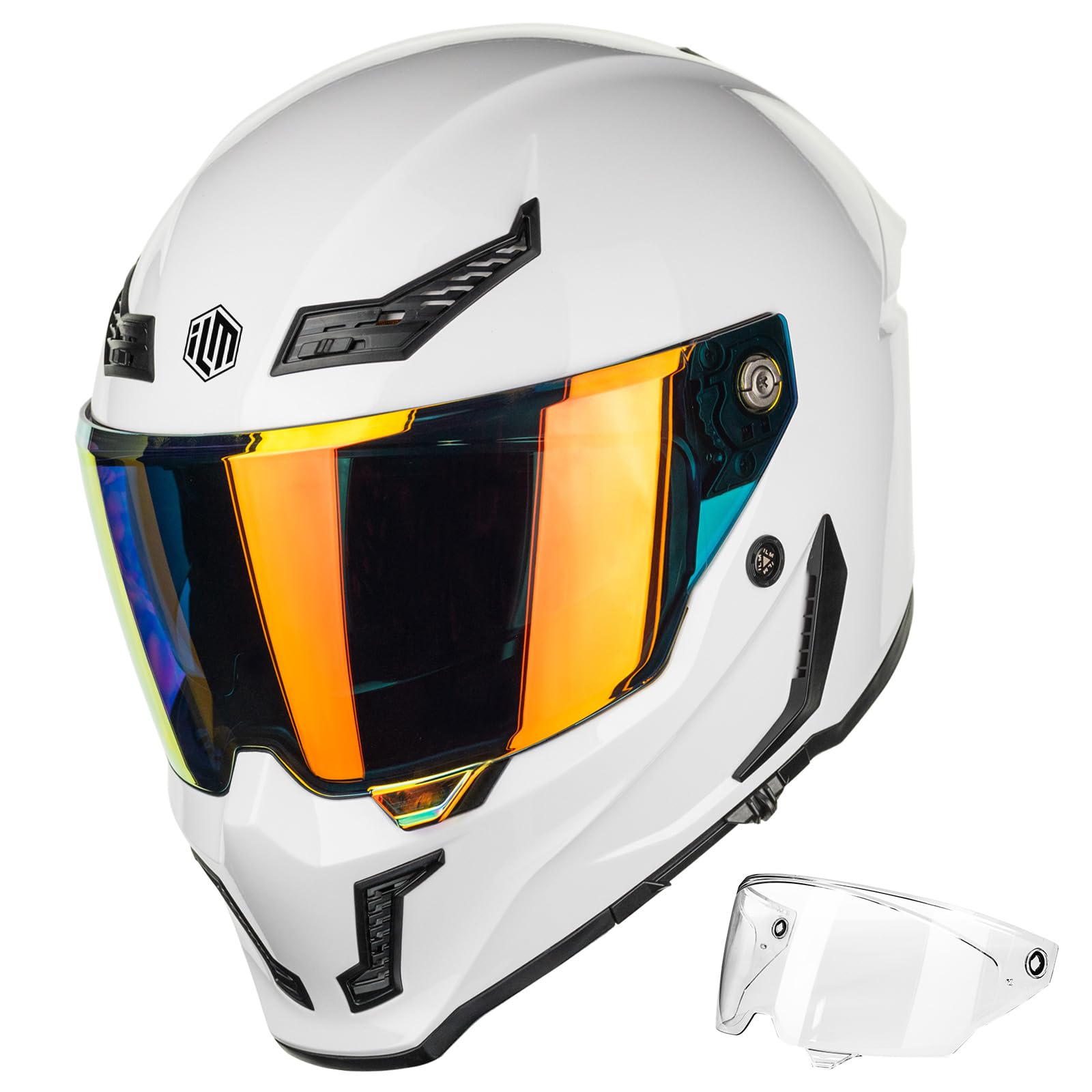
The ILM MF509 punches above its price tier with a ventilation system that rivals brands costing twice as much. The ABS shell is paired with a black EPS liner that has deep, wide channels at the brow, crown, and exhaust positions, allowing air to sweep across the full circumference of the head. The dual-visor system includes an outer clear shield with Pinlock70 pins factory-installed, plus an internal drop-down sun visor that works well even with eyeglasses.
The Pinlock70 lens is the standout here — it resists fogging for the entire ride in conditions that would fog a standard shield within minutes, making this helmet ideal for chilly morning commutes that warm up by midday. The chin vent produces noticeable airflow even when cracked open partially, and the top vent toggle is easy to operate with thick winter gloves. The interior uses hypoallergenic padding that wicks sweat effectively and is fully removable for washing.
Wind noise is average for the price segment — not whisper-quiet but not intrusive enough to demand earplugs under 60 mph. The Italian-designed shape works well for intermediate oval head profiles, and the two-set head model system (European and American sizing) helps achieve a better factory fit. This is the strongest value option for Pinlock-equipped riders who prioritize fog-free vision and steady airflow.
Why it’s great
- Excellent Pinlock70 anti-fog performance included stock
- Deep EPS channels provide consistent full-head airflow
- Hypoallergenic and washable interior padding
Good to know
- Visor screw lips can loosen and sag over time
- Slightly noisier than premium full-face alternatives
- Nose clearance is tight for riders with longer faces
5. Bell Powersports Qualifier Forced Air Motorcycle Helmet

The Bell Qualifier Forced Air is a unique entry in this category because it includes a dedicated port on the chin bar that connects to an external air system, commonly found on dune buggies and adventure rigs. The polycarbonate shell is basic but functional, and the Ionic+ padding does a legitimate job of managing sweat and odor during hot rides. The forced air adapter plugs in securely and delivers a steady stream of cool air directly to the rider’s face and upper chest area.
Without the external air system engaged, the Qualifier still ventilates reasonably well through its standard forehead and chin vents. The three-shell sizing system (covering XS to 3XL through shell swaps rather than just padding changes) provides a more consistent fit across the size range. The clear shield is anti-scratch coated and offers good optical clarity, though there is no built-in sun visor — you will need to swap shields or wear sunglasses underneath.
For riders who already own an integrated air system (like on a Can-Am Spyder or sand rail), this is the obvious choice. The forced air port is well-engineered and does not leak when disconnected. For everyone else, the Qualifier is a competent mid-range full-face but not the strongest standalone ventilator compared to similarly priced helmets with deeper EPS channels. The snug fit reported by several owners means you should size up if between measurements.
Why it’s great
- Integrated forced air port works perfectly with external systems
- Ionic+ padding actively fights odor in hot conditions
- Three-shell sizing for better fit across the size range
Good to know
- Passive ventilation is average without the forced air system
- No integrated sun visor requires shield swapping
- Fit tends to run tight; check sizing carefully
6. HAX Force Aerodynamic Full Face Helmet

The HAX Force manages to deliver dual DOT and ECE 22.06 certification at a price point where most helmets only clear one standard. The ABS+PC composite shell is impact-resistant and 4.63 pounds in weight — not the lightest, but the trade-off comes in the form of a well-designed EPS channel system that moves air effectively through the chin, forehead, and top exhaust ports. The oversized visor provides excellent peripheral vision, which is rare at this tier.
The dual-visor system includes a UV-protective outer shield and a retractable internal sun visor that works with eyeglasses. The hypoallergenic liner is removable and breathable, handling summer sweat without becoming saturated. The included carrying case adds practical value, and the Pinlock-ready shield (lens sold separately) means you can upgrade to anti-fog performance without replacing the entire helmet.
Several riders report that the medium runs slightly large for a standard medium head size, so careful measurement against the provided size chart is essential. Wind noise is controlled well for the price, and the aerodynamic spoiler reduces head movement at highway speeds. For budget-conscious riders who want modern safety certifications and functional ventilation, the HAX Force is the most complete package in its tier.
Why it’s great
- Dual DOT and ECE 22.06 certification at a competitive price
- Oversized visor improves peripheral awareness
- Functional EPS channel system moves air well
Good to know
- Medium size runs large; measure carefully before ordering
- Heavier than composite shell alternatives at 4.63 lbs
- Pinlock lens is sold separately, not included
7. ILM Full Face 861A Dual Visor Motorcycle Helmet

The ILM 861A is a no-frills full-face helmet that invests its budget in the basics that matter most: a solid ABS shell, high-density EPS foam, and a dual-visor system that works reliably. The outer clear visor is Pinlock EVO compatible (pins included, lens sold separately), which lets you add anti-fog performance if needed. The retractable inner sun visor uses a side toggle that is easy to operate even with one gloved hand.
Ventilation comes from a single chin intake and a top vent that can be opened or closed, plus a passive rear exhaust integrated into the spoiler. The airflow is modest compared to more expensive helmets, but it is sufficient for commuting and moderate-temperature riding. The quick-release chin strap is smooth and the cheek pads are removable for emergency extraction. The liner is also removable and washable, which helps extend the helmet’s life through sweaty seasons.
Several long-term users note that the 861A runs large, so ordering a smaller size than your usual is a common recommendation. Wind noise becomes noticeable above 50 mph, particularly with the top vent open. At this price point, the trade-off is understandable — you get a DOT-certified dual-visor helmet with decent ventilation and the option to upgrade to Pinlock later. It is a reliable entry point for riders building their safety gear on a tight budget.
Why it’s great
- Dual-visor system with Pinlock EVO compatibility
- Removable and washable liner for easy maintenance
- Quick-release chin strap is smooth and reliable
Good to know
- Ventilation is modest compared to mid-range options
- Wind noise increases significantly above 50 mph
- Fits large; order one size smaller than normal
8. AAREG Bluetooth Modular Motorcycle Helmet

The AAREG Bluetooth Modular is designed for riders who want integrated audio without the hassle of aftermarket installation. The built-in Bluetooth module pairs quickly with smartphones and handles music, calls, and FM radio through speakers embedded in the ear pockets. Sound quality is adequate for a helmet system, with enough volume to hear over wind noise at moderate speeds, though the microphone placement requires some adjustment for clear voice pickup.
The modular flip-up chin bar converts the helmet from full-face to open-face configuration, which gives immediate ventilation relief in stop-and-go traffic. The shell uses a polymer carbon fiber and ABS blend that keeps weight manageable, and the seven vent openings (including a chin intake, top intake, and rear exhaust) provide above-average airflow for the price tier. The dual-visor system includes a clear outer shield and a retractable internal sun visor.
Fit consistency is the main variable here — several buyers report that the helmet runs large, and the hook-and-loop closure system feels less secure than the ratchet or quick-release mechanisms found on premium helmets. The included anti-fog sticker helps, but the ventilation design still allows fogging at low speeds in cold weather. For riders who prioritize convenience of built-in Bluetooth and modular flexibility over premium fit and finish, this is a functional choice.
Why it’s great
- Integrated Bluetooth with music, calls, and FM radio
- Modular flip-up chin bar for on-demand ventilation
- Seven vents provide solid airflow for the price
Good to know
- Hook-and-loop closure is less secure than quick-release
- Helmet tends to run large; size down if between sizes
- Fogging can occur at low speeds despite anti-fog sticker
9. BEON B503 Full Face Motorcycle Helmet
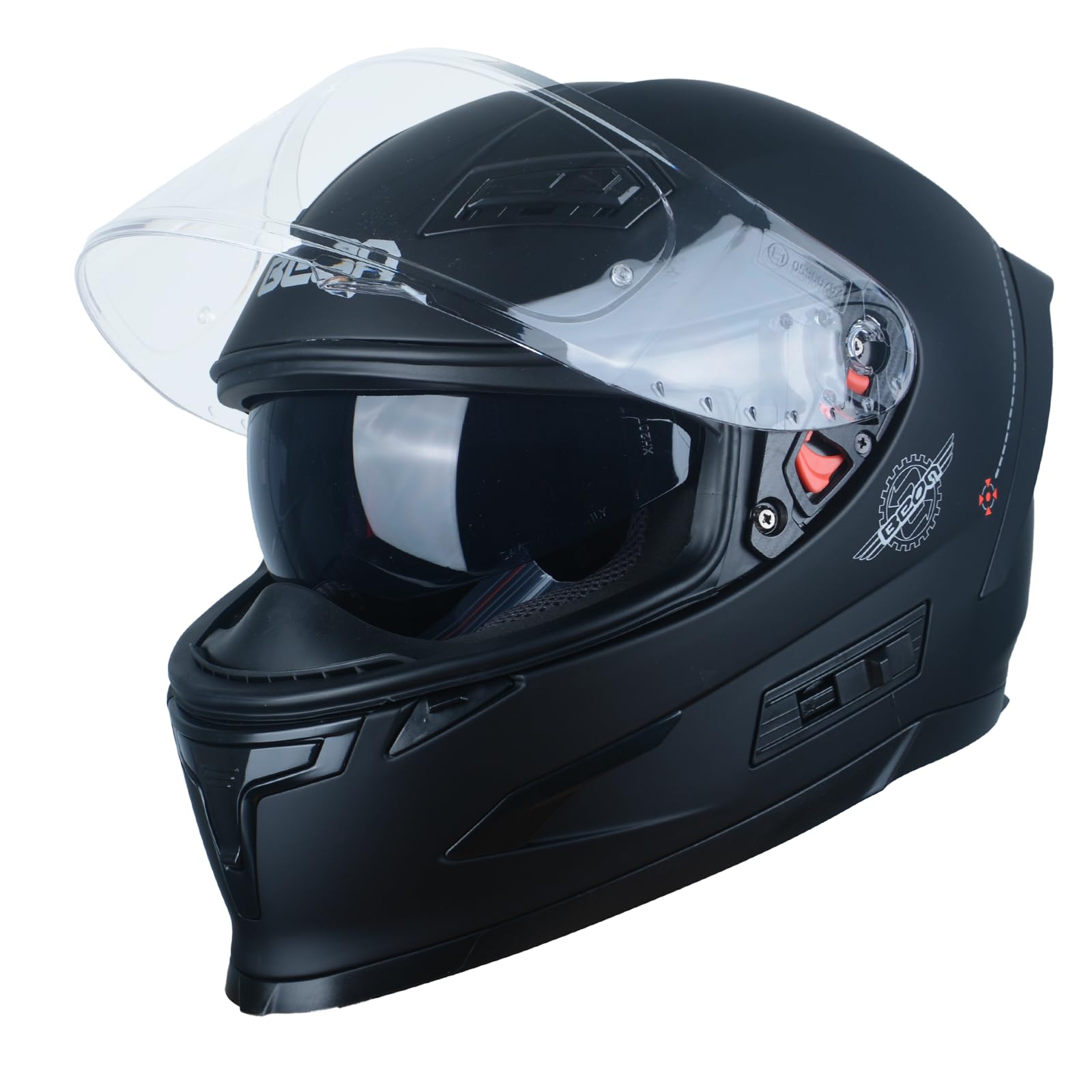
The BEON B503 proves that effective ventilation does not require a premium budget. The ABS shell and high-density EPS liner include multiple adjustable vents on the chin and top that can be toggled open or closed. The rear spoiler design reduces neck pull at speed while housing a passive exhaust port that draws warm air out. For a helmet at this entry-level price point, the airflow is genuinely functional — reviewers note that it keeps them comfortable up to 100 mph with manageable wind noise.
The dual-shield system includes a clear outer visor with an anti-fog-ready inner lens and a retractable internal sun visor operated by a side toggle. The visor mechanism feels robust and clicks into position securely. The metal quick-release buckle is simple to use with gloved hands and provides a positive closure. The inner liner is skin-friendly, removable, and washable, which adds long-term value.
The B503 runs snug initially, but the liner breaks in after about a week of regular use. Some riders report fogging at speeds under 20 mph, which is common for helmets at this level. The shell weight is listed as 100 grams in the specs (almost certainly an error in the product listing; realistic weight is closer to the 3-pound range for a full-face ABS shell). For first-time buyers or riders on a strict budget, the BEON B503 delivers dual certification and a dual-visor system that outperforms its price category.
Why it’s great
- Dual DOT and ECE certification at the lowest price point
- Functional dual-visor system with retractable sun shield
- Adjustable chin and top vents provide usable airflow
Good to know
- Fogs at speeds under 20 mph in humid conditions
- Snug initial fit requires break-in period
- Listed weight spec appears inaccurate; heavier than stated
FAQ
How does forced-air ventilation differ from regular vents in a helmet?
Can I add a forced-air system to a helmet that doesn’t have a dedicated port?
Why does my helmet fog up even with the vents open?
Is a heavier helmet with more vents always cooler than a lighter one?
Final Thoughts: The Verdict
For most riders, the air conditioned motorcycle helmet winner is the Shoei Neotec 3 because its AIM composite shell and wind tunnel-optimized venting deliver the quietest, most consistent airflow across all speed ranges. If you want modular flexibility without the weight penalty, grab the LS2 Advant X. And for aggressive sport riding where maximum airflow takes priority over everything else, nothing beats the ScorpionEXO R1 Air.