
Building an astrophotography rig used to mean buying a telescope, a heavy equatorial mount, a dedicated guide camera, a main imaging camera, a laptop, and a tangled pile of cables that could ruin a night’s sleep. That era is over. The market has split into two distinct paths — and picking the wrong one wastes money and clear skies.
I’m Min — the co-founder and writer behind Gadgets Feed. I spend my time dissecting the gap between marketing spec sheets and real-world capture success for every camera that claims to track a nebula, dissecting sensor quantum efficiency curves, cooling delta metrics, and autoguiding integration quality across a market where a missed sub‑spec can cost a full night of data.
This guide stacks 11 dedicated astro cameras and full‑frame mirrorless bodies against one another — sorting by sensor cooling, pixel scale, and mount compatibility — to help you decide which best astrophotography cameras actually deliver clean stacks of data under suburban light pollution without a steep learning curve.
How To Choose The Best Astrophotography Cameras
The biggest mistake beginners make is equating high‑resolution terrestrial camera specs with astro‑readiness. A 45‑MP full‑frame sensor captures gorgeous landscapes, but without active cooling, thermal noise accumulates during a five‑minute sub‑exposure, burning out faint nebula detail. The choice between a dedicated astronomy camera and a modified mirrorless body depends on three factors: cooling, pixel scale relative to your telescope, and whether you want one‑button stacking or full post‑production control.
Sensor Cooling and Dark Current
A cooled camera uses a Peltier thermoelectric element to drop the sensor temperature 35 to 45 degrees Celsius below ambient. Every 6‑degree reduction halves dark current noise, which is the random electron leakage that creates grainy backgrounds in long exposures. Dedicated astro cameras like the ZWO ASI183MC‑Pro or the DWARFLAB Dwarf 3 rely on this to produce clean Ha (hydrogen‑alpha) detail. Uncooled mirrorless cameras, such as the Sony a7 III or Canon EOS R8, rely on short sub‑exposures and stacking software to chase out the same noise, which still works but demands more time and more frames per target.
Pixel Size and Focal Ratio Matching
The standard rule in astrophotography is to match your pixel size (in microns) to your telescope’s focal ratio so that each star image covers at least two to three pixels — this avoids under‑sampling (blocky stars) or over‑sampling (dimmer signal per pixel). A 2.4‑micron pixel camera like the ZWO ASI183MC‑Pro paired with a fast f/4 astrograph resolves fine detail in the Orion Nebula, whereas a 4.34‑micron pixel camera, like the Sony a7 III, works better with longer focal lengths and larger pixels that soak up more photons in short exposures. Always calculate your pixel scale (arcseconds per pixel = pixel size in microns × 206.265 / focal length in mm) before committing to a sensor.
Integrated Smart Telescopes vs. Traditional Rigs
Smart telescopes such as the DWARFLAB Dwarf 3 and the ZWO Seestar S30 Pro bundle a dedicated astro sensor, a wide‑field optical tube, an alt‑az or equatorial mount, and on‑board image processing into a single 3‑to‑5‑pound package. These systems require no computer, no polar alignment surgery, and no separate guide scope — a user powers on, connects an app, and starts capturing deep‑sky data in minutes. The trade‑off is limited aperture (typically 20‑40mm) and fixed focal length, which prevents imaging very faint galaxies beyond magnitude 12. Traditional cameras on equatorial mounts, like the Canon EOS R5 on a Star Adventurer, allow interchangeable optics and longer focal lengths for high‑resolution views of small targets such as the Horsehead Nebula.
Quick Comparison
On smaller screens, swipe sideways to see the full table.
| Model | Category | Best For | Key Spec | Amazon |
|---|---|---|---|---|
| ZWO ASI183MC‑Pro | Dedicated Astro | Deep‑sky color capture | 20.1 MP, 2.4 µm pixels, TEC cooling (−45°C) | Amazon |
| Canon EOS R5 | Full‑Frame Mirrorless | High‑resolution landscapes + astro | 45 MP, 4.39 µm pixels, 8K video, IBIS | Amazon |
| Fujifilm X‑H2 | APS‑C Mirrorless | Versatile hybrid stills/video + astro | 40.2 MP, 3.04 µm pixels, 8K/30p, 7‑stop IBIS | Amazon |
| Sony Alpha 7 IV | Full‑Frame Mirrorless | All‑rounder stills + astro timelapse | 33 MP, 5.1 µm pixels, 4K 60p, 693 AF points | Amazon |
| Nikon D850 | DSLR | Landscape astro and tracked deep‑sky | 45.7 MP, 4.35 µm pixels, 9 fps, tilting touchscreen | Amazon |
| Nikon Z 7II | Full‑Frame Mirrorless | Ultra‑high‑res timelapse and wide‑field | 45.7 MP, 4.35 µm pixels, dual card slots, USB‑C power | Amazon |
| Sony a7 III | Full‑Frame Mirrorless | Entry‑level tracked astro on a budget | 24.2 MP, 5.93 µm pixels, 15‑stop DR, 10 fps | Amazon |
| Canon EOS R8 | Full‑Frame Mirrorless | Lightweight astro hybrid rig | 24.2 MP, 6 µm pixels, 4K 60p uncropped, 1053 AF zones | Amazon |
| Fujifilm X‑E5 | APS‑C Mirrorless | Compact carry‑every‑day astro companion | 40.2 MP, 3.04 µm pixels, 7‑stop IBIS, film sim dial | Amazon |
| ZWO Seestar S30 Pro | Smart Telescope | One‑tap deep‑sky for beginners | 4K dual camera, 8K mosaic, 160mm f/5, 128GB storage | Amazon |
| DWARFLAB Dwarf 3 | Smart Telescope | Portable all‑in‑one astro rig | 4K tracking, dual lens, 3 lb, EQ mode, cloud processing | Amazon |
In‑Depth Reviews
1. ZWO ASI183MC‑Pro

The ZWO ASI183MC‑Pro is a cooled color astronomy camera built specifically for deep‑sky imaging through a telescope on a motorized equatorial mount. Its 20.1‑MP Sony IMX183 sensor with 2.4‑micron pixels resolves fine detail in small nebulae and galaxies, while the integrated two‑stage TEC cooler drops the sensor temperature 40–45°C below ambient to suppress thermal noise during 300‑second sub‑exposures. The USB 3.0 interface delivers 19 fps at full resolution, and the 256 MB DDR3 buffer eliminates amp glow artifacts even during long capture sessions.
This camera connects to 1.25‑inch and 2‑inch focusers using the included T‑threaded nosepiece and 2‑inch adapter, and it integrates seamlessly with the ASIAIR Plus controller for untethered operation. The red anodized CNC aluminum body holds up to heavy field use without adding bulk. A separate 12V at 3A power supply is required for the TEC cooler, and the electronics side runs off the USB bus.
For imagers moving from a DSLR to a dedicated astro camera, the 183MC‑Pro offers a massive reduction in dark current noise and a pixel scale well‑suited to f/4 to f/6 astrographs. It supports FITS, SER, and RAW output, and the native driver set works with ASCOM, SharpCap, and N.I.N.A. for full automation. The 12‑bit ADC keeps data well‑gradated for demanding Ha and OIII processing.
Why it’s great
- Deep TEC cooling dramatically reduces dark current noise
- High 20.1 MP resolution captures fine detail in small targets
- USB 3.0 with large buffer enables fast, artifact‑free frame transfer
Good to know
- Requires an equatorial mount and separate telescope
- 12V TEC power supply not included in the box
2. Canon EOS R5

The Canon EOS R5 brings a stacked, back‑side illuminated 45‑MP full‑frame sensor that delivers extraordinary dynamic range and low‑noise performance at ISO 100‑800 — ideal for tracked wide‑field astro landscapes and deep‑sky composites. The DIGIC X processor powers 8K RAW internal recording, 4K up to 120 fps, and Dual Pixel CMOS AF II covering 100% of the frame with eye control focus. The 5‑axis IBIS provides up to 8 stops of shake correction, useful for handheld Milky Way foregrounds.
For astrophotographers, the R5’s large 4.39‑micron pixels collect more photons per pixel than smaller sensors, reducing the number of sub‑exposures needed for a clean stack. The camera supports electronic shutter at 20 fps, USB‑C power delivery for all‑night timelapse sessions, and a weather‑sealed magnesium alloy body that withstands dew and light rain in the field. Overheating concerns during 8K recording are real, but for long‑exposure imaging the body stays cool.
The RF mount opens access to fast primes such as the RF 14‑35mm f/4L and RF 24‑105mm f/4L, both with excellent coma correction. Users coming from a 5D Mark IV will notice the brighter EVF, faster burst rates, and vastly improved low‑light autofocus. The single CFexpress Type B slot paired with an SD UHS‑II slot offers flexibility, but CFexpress cards are still costly for high‑resolution RAW sequences.
Why it’s great
- High‑resolution 45 MP full‑frame sensor with wide dynamic range
- Excellent IBIS for stable foregrounds and tracked images
- USB‑C power allows extended timelapse sessions
Good to know
- No built‑in sensor cooling; thermal noise builds on long subs
- Battery life is moderate — plan for external power or spare packs
3. Fujifilm X‑H2

The Fujifilm X‑H2 is the world’s first APS‑C camera to hit 40.2 megapixels, using the back‑side illuminated X‑Trans CMOS 5 HR sensor and X‑Processor 5 engine. For astrophotographers, the 3.04‑micron pixel pitch creates a pixel scale that pairs naturally with f/2.8 to f/4 lenses for deep‑sky imaging — resolving the North America Nebula with crisp edge detail. The 7‑stop in‑body image stabilization helps during untracked wide‑field shots, and the native ISO 125 base reduces noise floor before stretching.
The X‑H2 records 8K/30p 10‑bit 4:2:2 internally via CFexpress Type B, and Pixel Shift Multi‑Shot combines 20 frames into a 160‑MP DNG RAW file for archival‑grade color fidelity. The camera’s large grip and robust weather sealing make it comfortable for all‑night sessions, and the X‑Fujinon 16‑80mm f/4 R OIS WR kit lens covers a practical 24‑122mm full‑frame equivalent for both Milky Way panoramas and tracked deep‑sky.
Film Simulation modes including Velvia and Astia produce appealing straight‑out‑of‑camera colors for astro‑landscapes, but raw capture is recommended for stacking. The deep learning AI subject detection recognizes celestial patterns during daylight, though it is not night‑sky optimized. The 15 fps mechanical burst and 20 fps electronic shutter (1.29x crop) help with International Space Station transits, and the 1/180,000 sec top speed freezes fast‑moving aircraft in lunar occultation sequences.
Why it’s great
- 40.2 MP APS‑C sensor offers extremely high resolution in a compact body
- Pixel Shift Multi‑Shot produces 160‑MP files for maximum detail
- 7‑stop IBIS assists untracked night landscapes
Good to know
- 3.04 µm pixel size may oversample with slower telescopes (f/8 or higher)
- No active cooling; long subs require stacking software
4. Sony Alpha 7 IV

The Sony Alpha 7 IV centers on a 33‑MP Exmor R back‑illuminated CMOS sensor paired with the BIONZ XR processor, delivering 15 stops of dynamic range and smooth 4K 60p 10‑bit 4:2:2 oversampled from 7K. The 5.1‑micron pixel size offers a sweet spot for full‑frame astro — large enough to collect light efficiently in 60‑second subs, yet dense enough to resolve the Veil Nebula’s filaments with a 200mm lens on a star tracker.
Real‑time Eye AF for humans, animals, and birds works reliably in low light down to −4 EV, making it easy to lock focus on the Milky Way core during composited portraits. The 693‑point phase‑detection AF array covers 93% of the sensor, and the S‑Cinetone color profile simplifies video work. Dual card slots (CFexpress Type A + SD UHS‑II) give flexibility, and the weather‑sealed body handles humid nights without complaint.
Battery life is outstanding for a mirrorless camera — up to 2,000 shots per charge in real‑world conditions — which is critical for all‑night timelapse sequences. The articulating 3‑inch touchscreen works well at awkward tripod angles, and the menu system is noticeably improved over third‑generation Alpha cameras. For the price, the a7 IV provides the best stills‑to‑video‑to‑astro balance in Sony’s full‑frame lineup, though it lacks the dedicated cooling of a purpose‑built astronomy camera.
Why it’s great
- Excellent battery life for all‑night imaging sessions
- Real‑time Eye AF works reliably in very low light
- Large 5.1 µm pixels collect light efficiently in short subs
Good to know
- 4K 60p introduces a 1.5x crop that may limit wide‑field framing
- No active cooling; thermal noise increases on exposures over 60 seconds
5. Nikon D850

The Nikon D850 is widely regarded as the best DSLR ever made for astrophotography. Its back‑side illuminated (BSI) 45.7‑MP full‑frame sensor with no optical low‑pass filter delivers exceptional dynamic range — capable of pulling faint IFN (integrated flux nebula) out of the background sky without introducing banding. The 4.35‑micron pixel pitch pairs naturally with fast f/1.4 primes for wide‑field Milky Way and well with f/2.8‑f/4 telephotos for tracked deep‑sky.
The optical viewfinder is invaluable for battery‑efficient composition in daylight, but the tilting touchscreen is a real advantage during night shoots, allowing focus magnification without contorting under the camera. The 9 fps continuous shooting at full resolution helps capture International Space Station transits and lunar occultations. The focus‑shift shooting mode automates focus bracketing for ultra‑sharp star stacks over a layered landscape.
Nikon’s 64‑6400 native ISO range runs clean up to 3200, and the 8K / 4K timelapse intervalometer is built‑in, eliminating the need for an external shutter release. The D850 accepts EN‑EL15b batteries that drive over 1,800 frames in real use. The dual card slot takes one XQD and one UHS‑II SD, and the body is fully weather‑sealed. It is a heavy camera compared to mirrorless alternatives, but the robustness and battery endurance still make it a favorite among track‑mounted shooters.
Why it’s great
- BSI 45.7‑MP sensor with remarkable dynamic range and low noise
- Built‑in intervalometer and focus shift shooting for automated astro work
- Excellent battery life for extended night sessions
Good to know
- Heavy and bulky compared to mirrorless alternatives
- No active cooling; thermal noise appears on subs longer than 60 seconds
6. Nikon Z 7II

The Nikon Z 7II packs a 45.7‑MP BSI full‑frame sensor with no AA filter, similar to the D850 but mounted in a mirrorless body with native Z‑mount optics that enable faster wide‑angle designs. For astrophotographers, the Z 7II excels at wide‑field tracked compositions — the Z 20mm f/1.8 S shows almost zero coma, and the Z 14‑24mm f/2.8 S captures the Milky Way core with pinpoint stars across the entire frame. The in‑body 5‑axis stabilization works during untracked overhead shots but should be disabled on a star tracker to avoid drift.
The dual card slots accept CFexpress/XQD and UHS‑II SD, giving the backup security that many wedding astro‑landscape shooters require. The vertical battery grip (MB‑N11) doubles shoot time for all‑night timelapse, and the USB‑C power delivery ports keep the camera running indefinitely. The 4K 60p video with eye‑detection AF is useful for aurora time‑lapse and twilight transition sequences.
Buffer capacity is 3.3 times the original Z 7, handling 77 frames of 14‑bit lossless compressed RAW before slowing down. The 493‑point phase‑detection AF works reliably in moonlight down to about −3 EV. The main trade‑off is battery life — the EN‑EL15c gives only about 420 shots on a charge — so a grip or external USB‑C battery is essential for a full night out. The FTZ adapter’s compatibility with over 360 F‑mount Nikkor lenses expands the optic pool.
Why it’s great
- 45.7‑MP BSI sensor with exceptional resolution for large prints
- Dual card slots (CFexpress + SD) for secure field backup
- Nikon Z‑mount lenses offer extraordinarily low coma
Good to know
- Battery life is limited; plan on external USB‑C power for all‑night shoots
- IBIS should be turned off on a tracking mount to avoid subtle drift
7. Sony a7 III

The Sony a7 III remains a benchmark for budget full‑frame astrophotography. The 24.2‑MP Exmor R CMOS sensor with 5.93‑micron pixels offers outstanding light‑gathering ability — each pixel is large enough that a 30‑second untracked exposure at f/2.8 reveals the Andromeda Galaxy’s core without excessive noise. The 15‑stop dynamic range gives headroom for pulling faint dust lanes out of the black sky while keeping the Milky Way core properly exposed.
The 693 phase‑detection AF points cover 93% of the sensor, and real‑time Eye AF for people and animals works even in starlight, making it easy to combine sharp subjects with a Milky Way background. The 5‑axis IBIS provides 5 stops of correction for handheld foreground shots. The battery life is exceptional (about 710 shots per charge), so a single NP‑FZ100 can last a full night of timelapse intervals.
The kit 28‑70mm f/3.5‑5.6 lens is functional but slow for astro — upgrading to a fast prime like the 20mm f/1.8 G or 35mm f/1.8 FE dramatically improves results. The a7 III lacks a multi‑interface shoe that newer Sony bodies use, and the menu system is notoriously complex. For dedicated astro use on a star tracker, the large pixels are a clear advantage, though you will need to stack more frames than with a cooled camera due to rising thermal noise in 90+ second subs.
Why it’s great
- Very large 5.93 µm pixels produce high SNR in shorter exposures
- Excellent battery life — one charge covers a full night of imaging
- 15‑stop dynamic range allows aggressive stretching in post
Good to know
- Kit lens is too slow for serious astro; budget for fast primes
- No active cooling; thermal noise becomes visible in subs over 60 seconds
8. Canon EOS R8

The Canon EOS R8 is Canon’s lightest full‑frame RF‑mount mirrorless camera, using a 24.2‑MP CMOS sensor with the DIGIC X processor from the R6 II. At 461 grams, it is one of the few full‑frame cameras that can be used on a lightweight star tracker like the Star Adventurer 2i without exceeding payload capacity. The 6‑micron pixel pitch is a strong match for moderate‑sized pixels that collect signal quickly, reducing the number of stacked frames needed for a clean result.
The Dual Pixel CMOS AF II system with 1,053 AF zones supports subject detection for people, animals, and vehicles, and the 40 fps electronic shutter (with AF tracking) makes short work of International Space Station passes or erupting solar activity. The vari‑angle 1.62‑million‑dot LCD makes overhead framing comfortable on a tripod, and the 0.39‑inch OLED EVF runs at 120 fps for real‑time exposure preview of dim objects.
For video‑centric astro shooters, the R8 delivers uncropped 4K 60p oversampled from 6K, as well as 180 fps Full HD slow motion for recording star twinkle or aurora movement. Canon Log 3 expands dynamic range. The R8 lacks in‑body image stabilization, so a lens with OIS or a solid tripod is essential for foregrounds. Battery life is extremely short — about 290 shots per CIPA rating — so a USB‑C power bank is mandatory for all‑night use.
Why it’s great
- Ultra‑lightweight body (461 g) works perfectly on small star trackers
- Large 6 µm pixels gather light efficiently in shorter sub‑exposures
- Uncropped 4K 60p with Canon Log 3 for video astro work
Good to know
- Poor battery life; requires external USB‑C power or multiple spare packs
- No IBIS — lens stabilization or a robust tripod is necessary
9. Fujifilm X‑E5
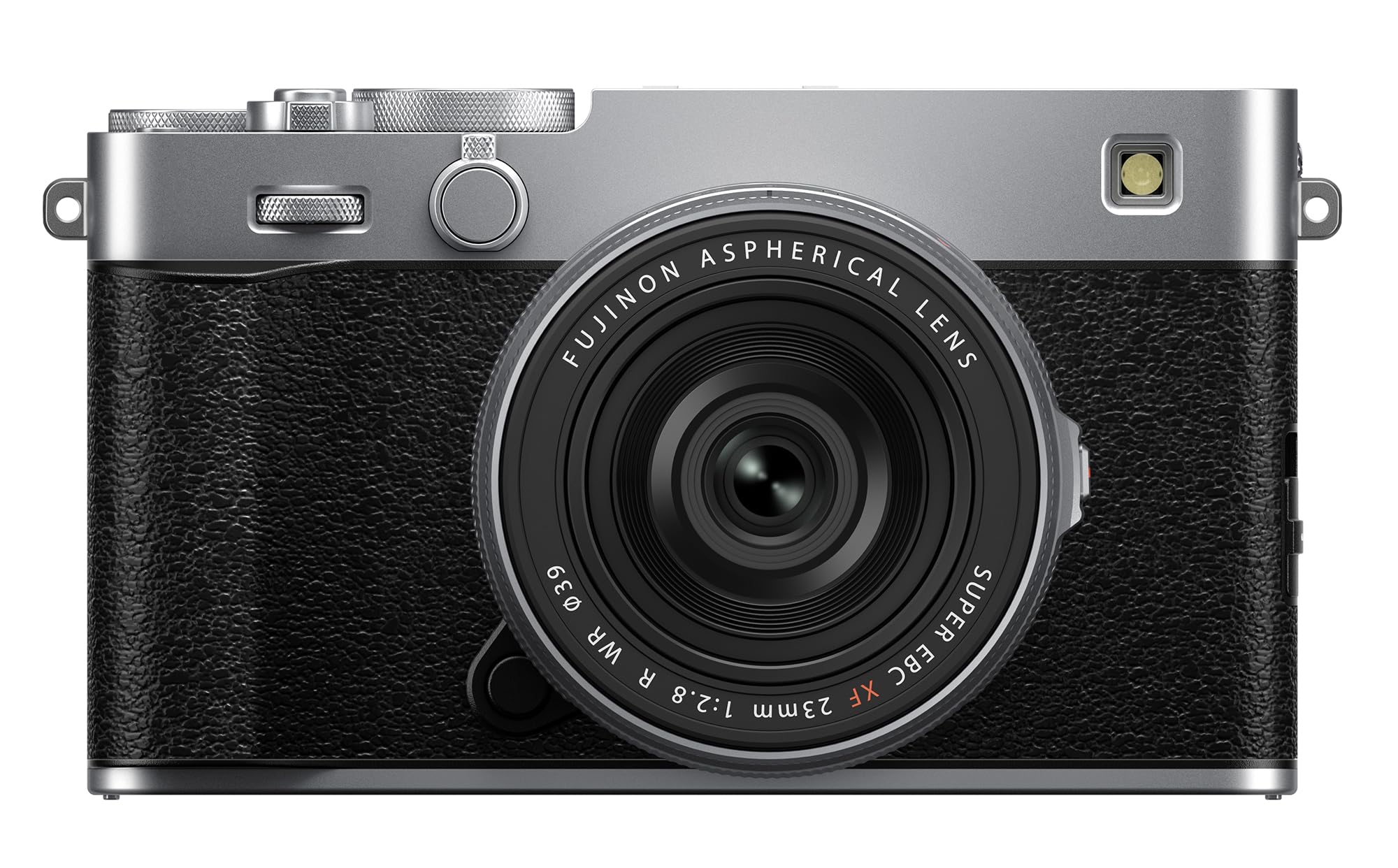
The Fujifilm X‑E5 combines a 40.2‑MP X‑Trans 5 HR sensor and 7‑stop in‑body image stabilization in a compact rangefinder‑style body weighing only about 430 grams. The 3.04‑micron pixel pitch on the APS‑C sensor is fine enough to resolve intricate structures in bright emission nebulae when using a fast telephoto lens, while the IBIS system provides 6 stops of edge‑to‑edge correction for handheld night landscapes. The Film Simulation dial under the aluminum top plate — a first for Fujifilm — offers custom recipe slots for instant recall of astro‑optimized color profiles.
The X‑E5 uses the X‑Processor 5 for deep‑learning AI subject detection that recognizes birds, animals, cars, planes, and trains, though it is not optimized for night‑sky tracking. The lower base ISO of 125 yields a clean noise floor for wide‑field astro. The two‑step digital teleconverter crops to 1.4x or 2x in‑camera without reducing resolution, effectively increasing focal length for smaller targets.
The 23mm f/2.8 R WR pancake lens provides a 35mm full‑frame equivalent field of view that favors environmental astro shots rather than deep‑sky close‑ups. The X‑E5 lacks weather sealing, and the NP‑W235 battery delivers only about 380 shots per charge. The camera’s small size makes it an ideal everyday carry for spontaneous dark‑sky outings, but a battery grip is not an option, so a power bank via USB‑C is the only way to extend session length. The film simulation dial is a clever aesthetic touch, but it mostly appeals to shooters who want the Fuji color science in a pocketable body.
Why it’s great
- Very compact and light, perfect for spontaneous astro outings
- 40.2 MP sensor and 7‑stop IBIS produce high‑res handheld night landscapes
- Film simulation dial with custom recipe slots for color‑graded astro images
Good to know
- Not weather‑sealed — must protect from dew and rain
- Battery life is modest; USB‑C power bank advised for long sessions
10. ZWO Seestar S30 Pro
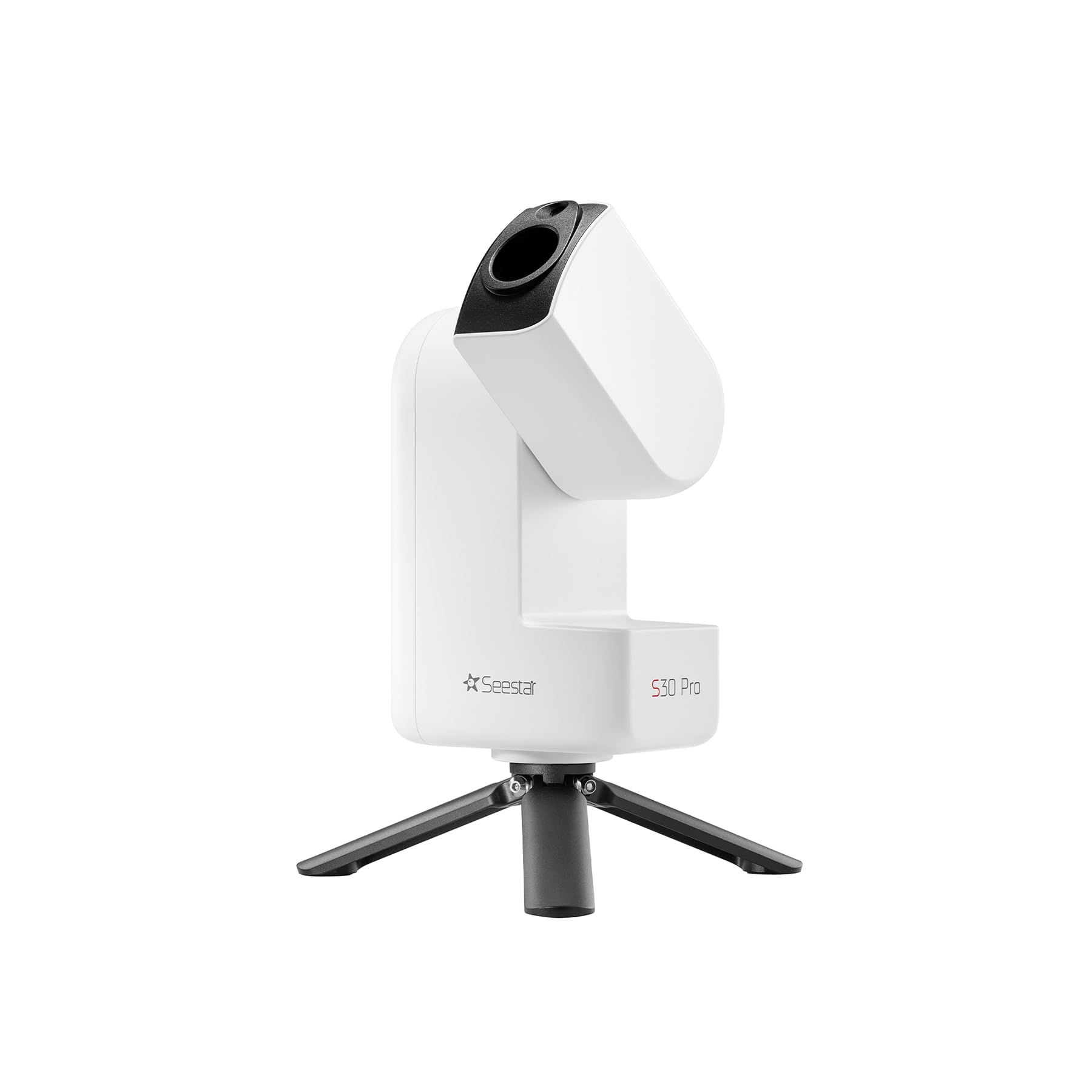
The ZWO Seestar S30 Pro is an all‑in‑one smart telescope that combines a 4K dual‑camera imaging system, an alt‑az/equatorial mount, and an 8K mosaic stitching engine into a single 3.6‑pound package. The primary IMX585 sensor handles deep‑sky objects, while the secondary IMX586 wide‑angle camera captures Milky Way panoramas and star trails. The 160mm f/5 apochromatic optical train reduces chromatic aberration around bright stars, and the built‑in dual filters cut light pollution and infrared overexposure.
One‑tap operation through the Seestar app gives beginners access to four intelligent imaging modes: deep‑sky, Milky Way, star trails, and planetary. Automatic noise reduction and AI scene recognition separate the sky from the foreground, keeping the Milky Way crisp while preserving landscape detail. The internal 128 GB of storage and anti‑dew heating allow all‑night autonomous sessions without external gear.
The S30 Pro also functions as a long‑range camera for birdwatching and landscapes. The main limitation is the fixed 160mm focal length, which cannot be changed — users cannot zoom in on small galaxies or zoom out to a wider field than the sensor allows. The app occasionally drops connection, and the scenery mode struggles with terrestrial subjects. For a beginner who wants great deep‑sky photos without learning polar alignment or stacking, the S30 Pro delivers immediately.
Why it’s great
- Truly one‑tap operation — set it up, start imaging in minutes
- 8K mosaic stitching and built‑in filters produce stunning images from suburban skies
- Anti‑dew heating and 128 GB storage enable all‑night sessions
Good to know
- Fixed 160mm focal length — cannot image small, faint galaxies
- App can experience occasional connection drops
11. DWARFLAB Dwarf 3
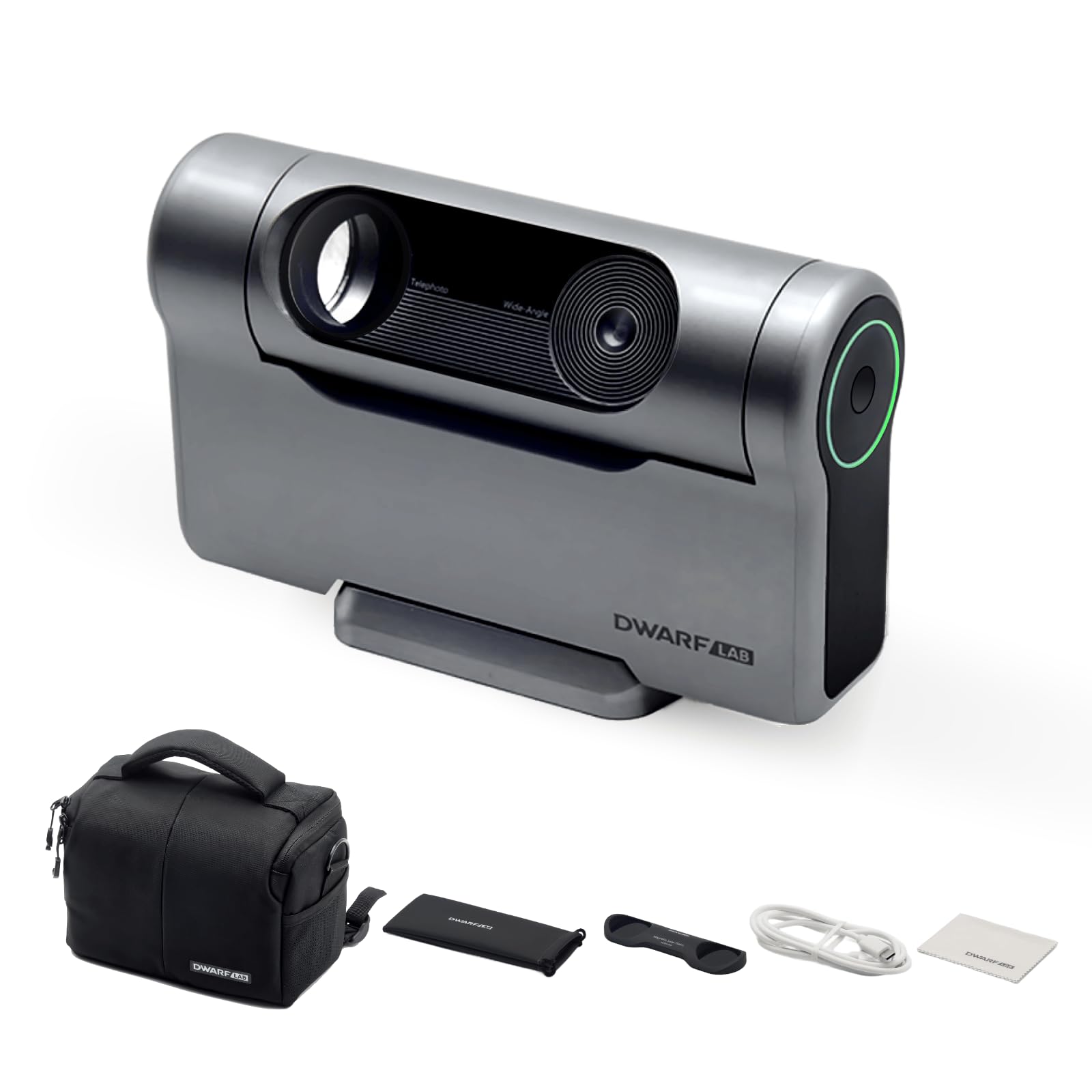
The DWARFLAB Dwarf 3 is the world’s most portable smart telescope at only 3 pounds (1.35 kg) — small enough to fit into a standard backpack alongside camping gear. Its dual‑lens arrangement pairs a telephoto optic for deep‑sky and terrestrial subjects with a wide‑angle lens for Milky Way panoramas and star trails, and the built‑in 4K auto‑tracking system follows celestial objects without manual intervention. The internal Alt‑Az and EQ mount modes support both casual and serious imaging.
Cloud‑powered image processing through the DWARFLAB app handles live stacking, denoising, and color correction in real time. Users do not need a laptop, polar alignment tools, or stacking software — the Dwarf 3 outputs finished JPEGs and FITS files ready for further processing. The magnetic filter system includes a dual narrowband filter for hydrogen‑alpha nebulae, and the included carrying bag, wipe cloth, and USB‑C cable make it a complete portable package.
Customer reviews consistently praise the Dwarf 3’s ability to produce impressive images even under Bortle 6‑7 light pollution. The app can be glitchy during initial connection, and power loss during long sequences can complicate on‑board processing. The Dwarf 3 targets photographers from ages 6 to 98, but enthusiasts seeking sub‑arcsecond resolution on very small targets will eventually want a larger aperture scope. For spontaneous dark‑sky trips and quick sessions in the backyard, the Dwarf 3 delivers an experience that no traditional rig can match.
Why it’s great
- Extremely portable at 3 lbs — fits in a standard backpack
- Cloud‑powered live stacking and processing produce finished images in minutes
- Dual‑lens design covers deep‑sky, Milky Way, and terrestrial subjects
Good to know
- App can have occasional initial connection issues
- Limited aperture and focal length not suitable for very faint galaxies
FAQ
Can I use a standard mirrorless camera for deep‑sky astrophotography without a telescope?
Why does sensor cooling matter more for astrophotography than for regular photography?
What is the difference between a smart telescope and a traditional astrophotography rig?
Final Thoughts: The Verdict
For most users, the best astrophotography cameras winner is the ZWO ASI183MC‑Pro because it offers proper TEC cooling and high 20.1‑MP resolution at a price that undercuts larger‑sensor cooled cameras, making it the ideal dedicated deep‑sky upgrade for anyone who already owns a telescope and equatorial mount. If you want a hybrid camera that handles both pro‑grade stills and tracked wide‑field astro without a separate scope, grab the Canon EOS R8 or the Sony Alpha 7 IV. And for beginners who value one‑tap simplicity and the ability to produce gorgeous nebula photos on the first night, nothing beats the ZWO Seestar S30 Pro.