
The low-tire warning light is stubborn, and dealer replacement quotes often hit triple digits per corner before labor. Aftermarket TPMS sensors have matured into a reliable alternative that delivers identical function — precise pressure and temperature data straight to your dash — at a fraction of the cost. The challenge today isn’t finding a sensor; it’s picking the right frequency, form factor, and programming workflow for your specific vehicle.
I’m Min — the co-founder and writer behind Gadgets Feed. I’ve spent hundreds of hours analyzing TPMS sensor specifications, compatibility matrices, battery chemistries, and real-user validation across hundreds of vehicle models to build this guide.
The market now offers sensors that are pre-programmed for direct fitment, sensors that clone existing IDs to skip relearn, and universal blanks that a shop can configure in seconds. My focus is on which specs actually matter for long-term reliability when you buy best aftermarket tpms sensors for your daily driver or fleet vehicle.
How To Choose The Best Aftermarket TPMS
Selecting an aftermarket TPMS sensor is less about brand loyalty and more about matching three variables: your vehicle’s TPMS protocol, the sensor’s programming path, and the physical valve stem design that fits your wheels. Ignore these, and even a high-quality sensor will sit uselessly on the shelf or fail to sync after installation.
Pre-Programmed vs. Universal Blank vs. Clone-Capable
Pre-programmed sensors come ready to install for specific makes and model years — they are ideal if you know your vehicle is covered and you lack a dedicated TPMS programming tool. Universal blanks (like the Schrader EZ-Sensor or Autel MX) arrive empty and require a compatible scan tool to write vehicle-specific data, but they offer broader coverage and future-proof reuse. Clone-capable sensors replicate the original sensor’s exact ID, bypassing the vehicle’s relearn procedure entirely — a huge time-saver if you’re replacing individual failed sensors without resetting the whole system.
Dual-Frequency (315MHz + 433MHz) Coverage
North American vehicles typically use 315MHz, while many Asian and European models operate on 433MHz. Buying a dual-frequency sensor eliminates the risk of ordering the wrong band. Nearly every premium aftermarket sensor now packs both frequencies into a single unit, giving you a universal fallback if you switch vehicles later or if the shop misidentifies your car’s protocol.
Valve Stem Material: Rubber vs. Aluminum
Rubber snap-in valve stems are lighter, cheaper, and easier to install, but they are more prone to ozone cracking and dry rot over a five-year window. Aluminum valve stems resist corrosion better, especially in regions with road salt, and support higher torque specs for a leak-free seal. However, some aftermarket sensors with bulky aluminum stems can protrude enough to contact curb edges — a genuine concern for low-profile wheel setups.
Quick Comparison
On smaller screens, swipe sideways to see the full table.
| Model | Category | Best For | Key Spec | Amazon |
|---|---|---|---|---|
| Autel MX 1-Sensor 4-Pack | Universal Programmable | Shops & Enthusiasts | 100% ID cloneable; 315/433 MHz | Amazon |
| Schrader EZ-Sensor 33700 | OEM-Grade Blank | Technician Install | 200 MPH rated; 115 PSI max | Amazon |
| GEARWRENCH Universal Programmable | Universal Cloneable | DIY with Scan Tool | 100% ID clone; rubber snap-in stem | Amazon |
| MUCAR VENU 5 | Infinitely Reprogrammable | Multi-Vehicle Owners | 0.1 bar accuracy; IP67 rated | Amazon |
| Masoll Gen 2 + Relearn Tool | External Cap Sensor | Quick DIY Install | Screw-on cap; includes EL-50448 tool | Amazon |
| A-Premium Pre-Programmed 4-Pack | Pre-Programmed Internal | GM Direct Fit | NXP chip; ±0.06 Bar accuracy | Amazon |
| Masoll Pre-Programmed Dual-Antenna | Pre-Programmed Internal | GM Truck/SUV Value | Dual antenna; 1.5 psi accuracy | Amazon |
In‑Depth Reviews
1. Autel MX 1-Sensor 4-Pack
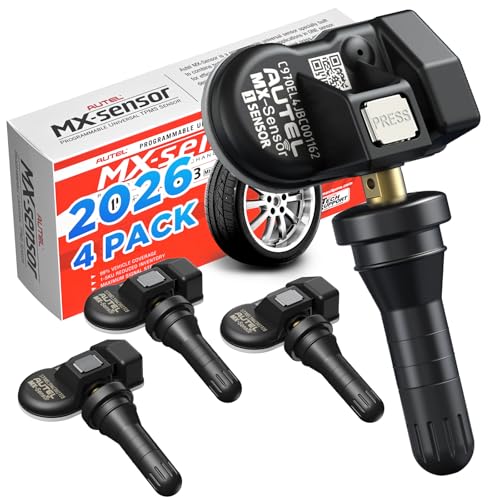
The Autel MX 1-Sensor is the gold standard for universal TPMS coverage because one SKU replaces 99% of direct OE sensors across American, Asian, and European vehicles. The dual-frequency 315/433 MHz chip eliminates frequency mis-picks, and the press-in design with interchangeable rubber or metal valve stems fits virtually any wheel. Each sensor weighs only 11 grams, reducing rotational mass strain, and the automotive-grade battery is SAE J1205/J1206 certified for reliability.
What sets the MX apart is its 100% clone capability: if you program the sensor with the original unit’s ID using a compatible Autel tool like the TS408 or TS508, the vehicle’s ECU accepts it immediately without a relearn procedure. This is a massive convenience for DIYers replacing a single dead sensor. The sensor supports wireless batch programming of up to 20 units simultaneously, making it a favorite among high-volume tire shops.
The only real cost is needing an Autel-brand programming tool — third-party scanners cannot write data to these sensors. That tool investment pays for itself quickly if you maintain multiple vehicles, but one-off buyers should factor in the added expense. The battery delivery is rated for 4-6 years of typical use, and the sensor withstands -40°C to 125°C without drift.
Why it’s great
- 100% cloneable ID skips relearn step entirely
- Press-in design with two valve stem options
- Proven long-term reliability across many customer reports
Good to know
- Requires Autel-specific tool for programming
- Higher upfront cost for the sensor set
- Rubber stem variant less durable than OEM metal
2. Schrader EZ-Sensor 33700 4-Pack
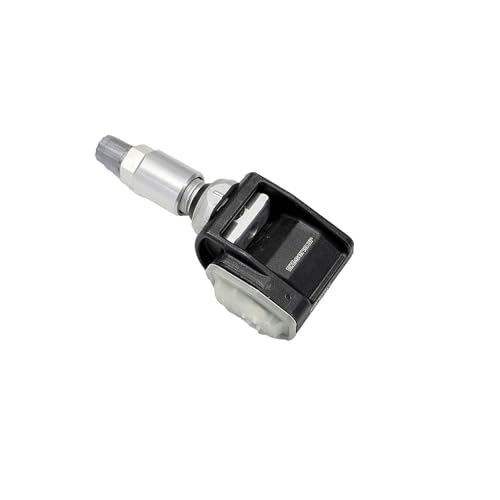
Schrader is the OE supplier for many major automakers, and the 33700 EZ-Sensor carries that factory-level engineering into the aftermarket. These sensors arrive as blank units that must be programmed with a compatible tool before installation, which means a tire shop or experienced technician is the intended installer. The sensor supports all common frequencies (314.9, 315, and 433 MHz) and uses an adjustable aluminum valve stem that torques to 53 in-lbs for a reliable seal.
Performance ratings are class-leading: a maximum speed rating of 200 MPH and a pressure ceiling of 115 PSI cover everything from passenger sedans to heavy-duty trucks running higher tire pressures. The sensor replicates OE auto-locate technology, meaning once programmed and installed, the vehicle automatically recognizes which wheel position each sensor occupies without additional scanning. This future-proofs compatibility against newer OE TPMS protocols that are becoming more position-aware.
The downside is the strict non-DIY nature — if you don’t own or have access to a compatible TPMS programming tool, this sensor is not a weekend project. Some users reported that the initial sync can be quirky, requiring a highway-speed drive to finalize the pairing. But for a shop that sees a mix of makes daily, the 33700 is the most versatile blank sensor available at this price.
Why it’s great
- OE-grade build quality from a top OEM supplier
- Handles high-speed and high-pressure applications
- Adjustable aluminum valve stem resists corrosion
Good to know
- Not a DIY product — requires shop programming
- Blank format adds installation steps
- Some vehicles need a long relearn drive
3. GEARWRENCH Universal Programmable 4-Pack
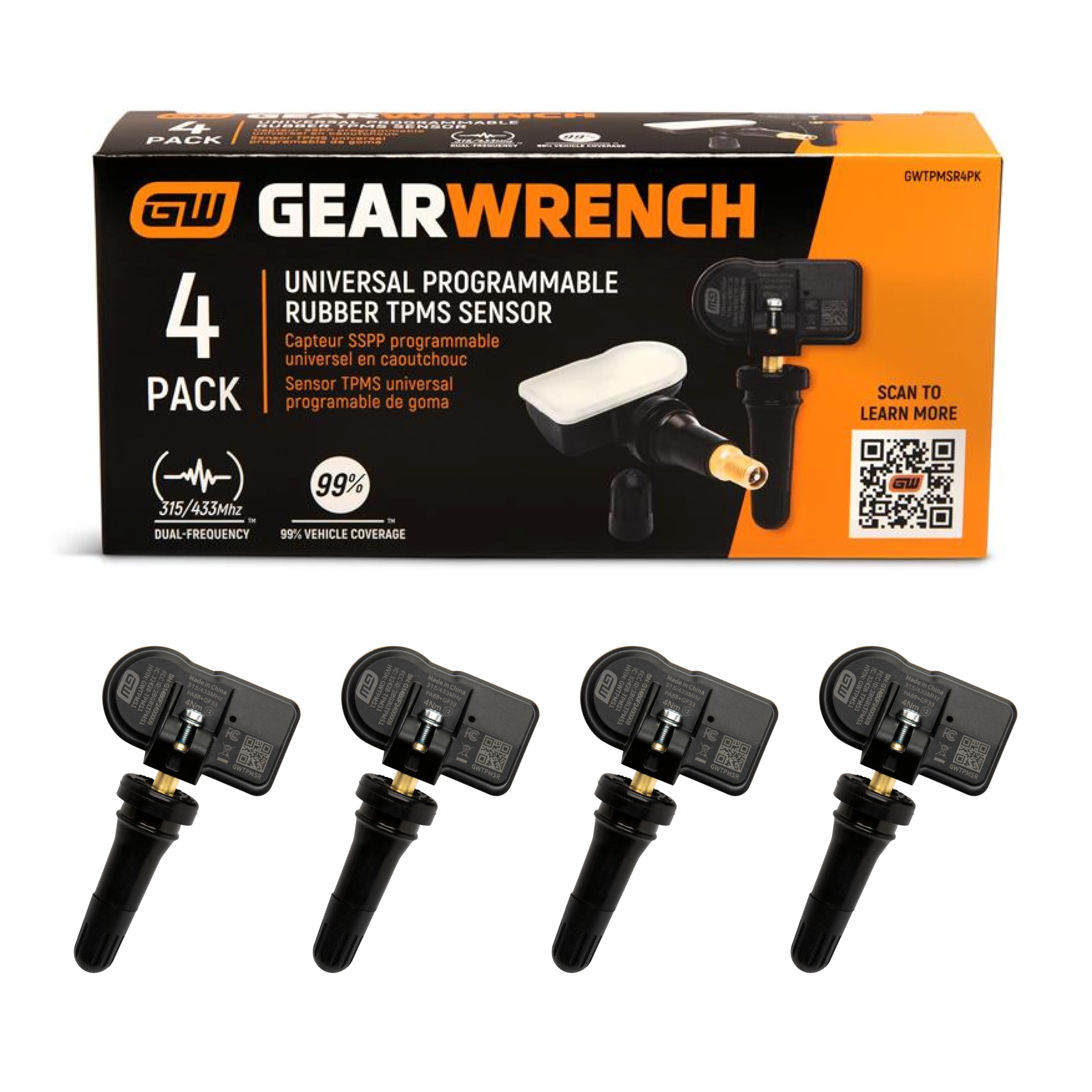
GEARWRENCH enters the universal TPMS space with a sensor that prioritizes ID cloning over frequency flexibility. The sensor supports 315 MHz and 433 MHz in one package, but its defining feature is the ability to replicate the exact OE sensor ID so the vehicle’s ECU accepts it without a full relearn cycle. This is a major advantage for DIYers who have access to a compatible GEARWRENCH programming tool but don’t want to spend an hour following the vehicle’s relearn dance.
The rubber snap-in valve stem design keeps weight low around 5.1 ounces for the set and simplifies installation — you press the sensor into the wheel band and fasten the stem nut. Customer feedback highlights the stable signal transmission and the absence of warning light dropouts after installation, which is a common complaint with cheaper budget sensors. The pressure and temperature readings match OE behavior, and the battery life is competitive in this segment.
The tradeoff for the rubber stem is long-term durability. Rubber valves are more susceptible to cracking after years of UV exposure and ozone, especially in warmer climates. Additionally, the sensor is optimized for GEARWRENCH’s own TPMS diagnostic tools, so using a third-party programmer may not unlock the full clone feature set. For a dedicated home mechanic with the right tools, this is a strong value play.
Why it’s great
- 100% ID clone eliminates need for relearn
- Lightweight rubber snap-in stem for easy install
- Reliable signal with no dropouts reported
Good to know
- Rubber stem less durable than metal over time
- Best performance with GEARWRENCH programming tools
- Limited to direct TPMS systems only
4. MUCAR VENU 5 Sensor 4-Pack
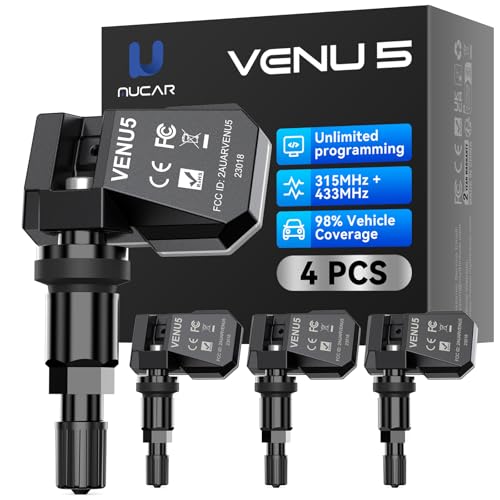
The MUCAR VENU 5 is built for users who manage multiple vehicles or a small fleet because the sensor is infinitely reprogrammable using the MUCAR T261 or VENU iPro tool. You can rewrite vehicle-specific data an unlimited number of times, meaning one set of sensors can transfer from a retired vehicle to a new purchase without buying new hardware. The dual-frequency 315/433 MHz design plus a measurement accuracy of 0.1 bar (roughly 1.45 psi) provides precision that matches OE specifications.
Hardware quality stands out with an IP67 waterproof rating and a metal housing that resists corrosion. The sensor uses a screw-mounted valve stem replacement method, which avoids the common frustration of a pressed-in stem that seizes over time. The temperature tolerance spans -40°C to 125°C, ensuring reliable performance in northern winters and desert summers alike. The included documentation and video guides reduce the learning curve for first-time users.
The main catch is that the VENU 5 requires either the T261 or VENU iPro to program — it will not work with generic universal TPMS tools. Additionally, the metal housing adds a bit of weight compared to all-rubber competitors, though not enough to affect wheel balance noticeably. For a pro-sumer or small shop that wants one sensor inventory for everything, the MUCAR is a compelling option.
Why it’s great
- Unlimited reprogramming for multi-vehicle use
- IP67 waterproof metal construction
- High 0.1 bar measurement precision
Good to know
- Only programmable with MUCAR T261 / VENU iPro
- Metal body slightly heavier than rubber units
- Instructions could be clearer on required tools
5. Masoll Gen 2 External TPMS + Relearn Tool
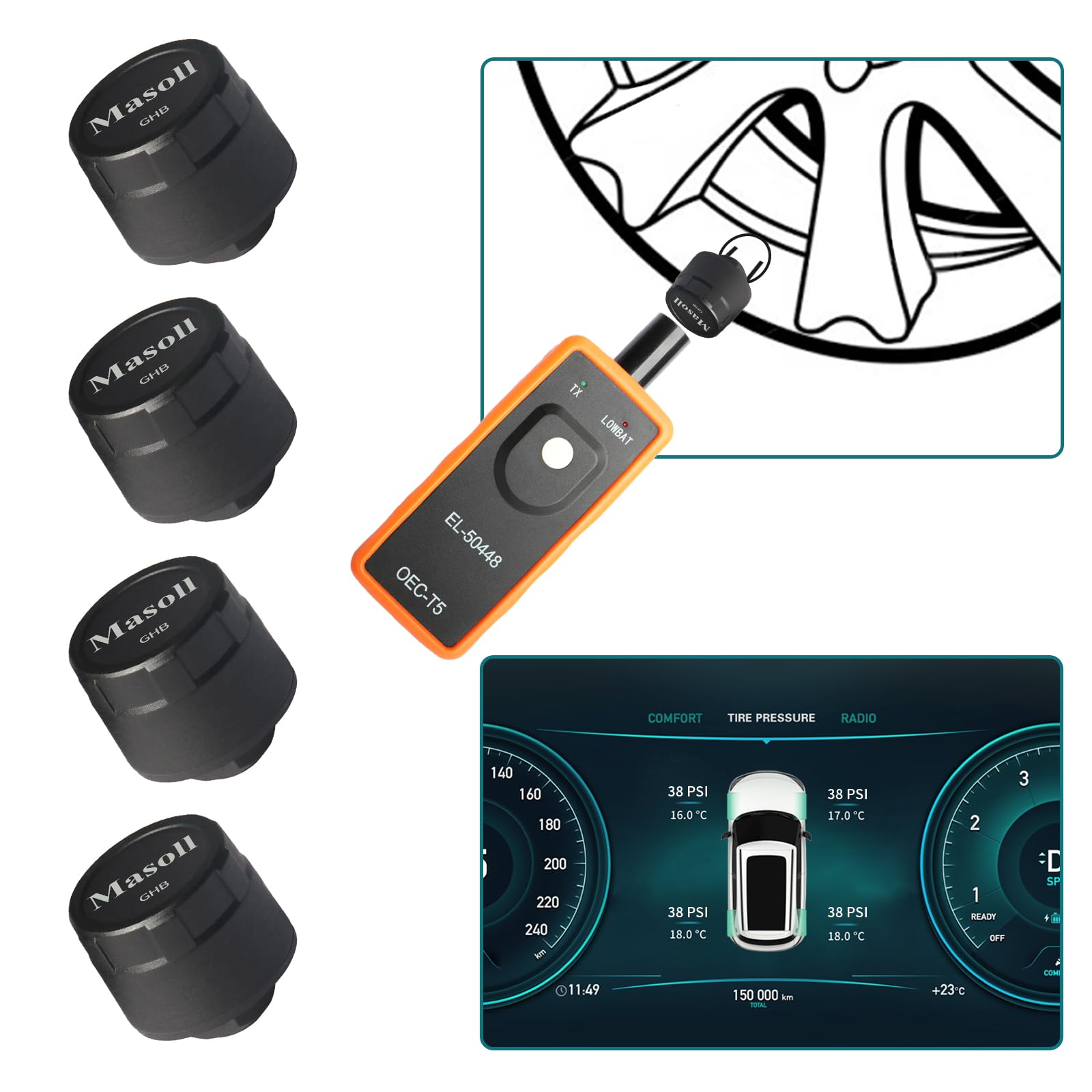
Masoll’s Generation 2 external TPMS sensor trades the internal mount for a screw-on cap design that requires zero tire dismounting. You simply thread the sensor onto the valve stem and use the included EL-50448 relearn tool to sync it with the vehicle’s ECU. This is the fastest path to silencing a persistent TPMS light — customers report a 5-minute installation from opening the box to seeing live pressure readings on the dash.
The external form factor has real advantages for fleet or trailer applications where internal sensors would require a separate set of wheels. The sensor uses a replaceable battery with roughly 2 years of life, and the 1.5 PSI accuracy is sufficient for standard passenger and light truck use. The kit includes anti-theft nuts and spare o-rings, addressing the two biggest concerns with external sensors: theft and seal leakage.
However, external sensors are inherently more vulnerable. The bulky cap protrudes beyond the wheel’s sidewall envelope, making contact with curbs a real risk — some users reported snapping the cap off in tight parking situations. There is also a cosmetic tradeoff: the sensor’s appearance is functional but not subtle. For a quick, no-mechanic solution on a secondary vehicle or trailer, this is hard to beat.
Why it’s great
- No tire dismount needed — screw-on installation
- Includes relearn tool for complete DIY kit
- Replaceable battery extends usable life
Good to know
- Bulky cap can scrape curbs and break off
- Battery life shorter than internal sensors
- External design raises theft concern
6. A-Premium Pre-Programmed 4-Pack
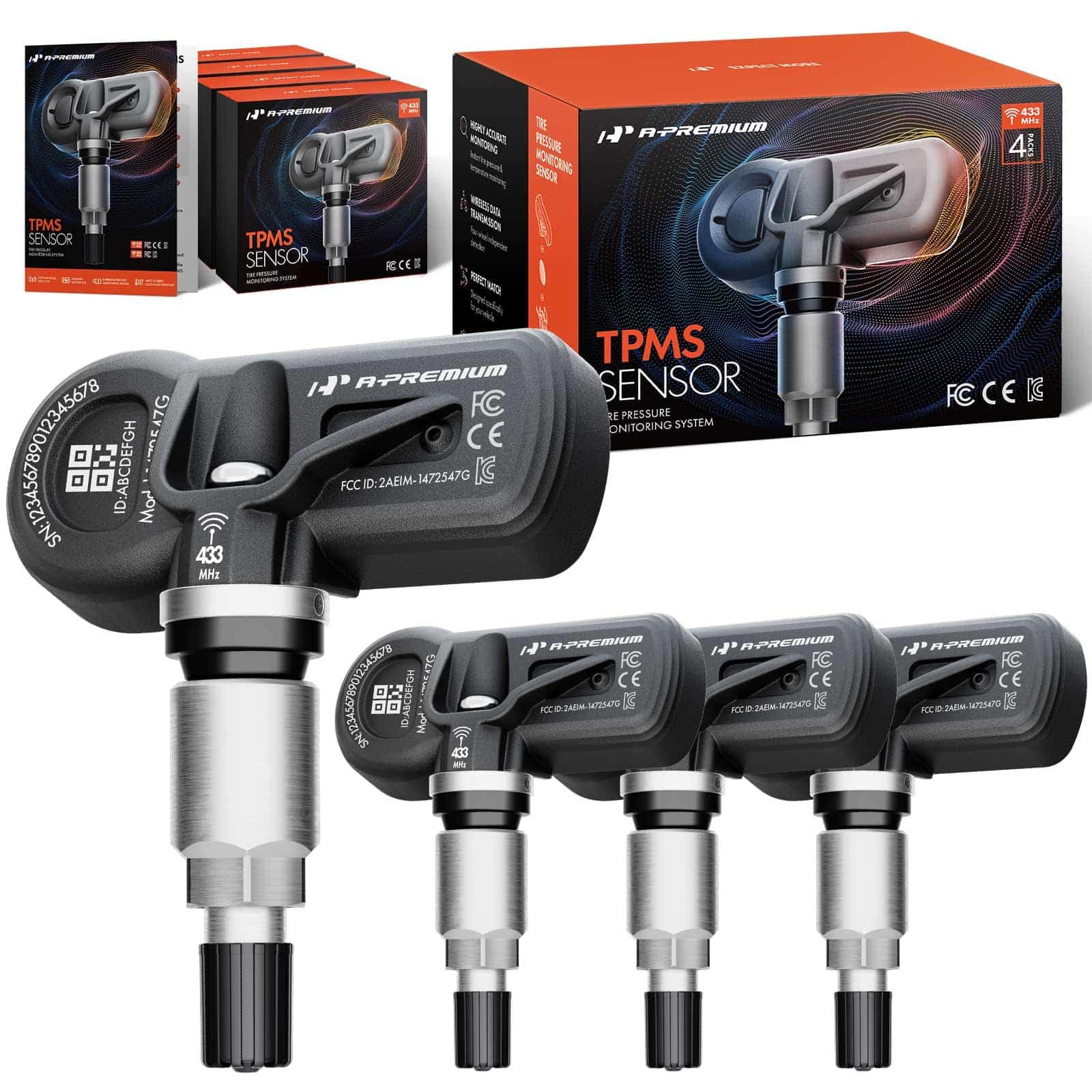
The A-Premium set is pre-programmed for a wide range of GM vehicles including the Chevrolet Silverado, GMC Sierra, Cadillac Escalade, and Buick Enclave. The sensor uses an NXP chip — a reputable semiconductor brand found in many OE modules — and delivers a measurement accuracy of ±0.06 Bar, which translates to roughly 0.87 PSI. This level of precision is better than most aftermarket sensors and on par with factory equipment.
The valve stem is upgraded to aluminum, a smart choice for trucks and SUVs that see road salt and harsh conditions. The included compatibility list covers model years up to 2024 for most GM platforms, and the sensor is FCC and IC certified to SAE J2657 standards. Customers report that installation at a tire shop was straightforward and the sensors synced immediately after a standard relearn procedure using the vehicle’s built-in menu.
The limitation is that these are GM-specific and will not work on Ford, Toyota, or European vehicles without significant adaptation. Additionally, the “pre-programmed” label can be misleading — the sensors still require a relearn process with the vehicle’s ECU after installation, which means you either need the factory relearn sequence or a compatible TPMS scan tool. For GM owners looking for a drop-in replacement at a reasonable cost, this is a solid match.
Why it’s great
- High-precision NXP chip for accurate readings
- Aluminum valve stem resists corrosion
- Extensive GM model year compatibility
Good to know
- GM-only compatibility limits cross-platform use
- Relearn process still required after install
- Not a true plug-and-play without a scan tool
7. Masoll Pre-Programmed Dual-Antenna 4-Pack
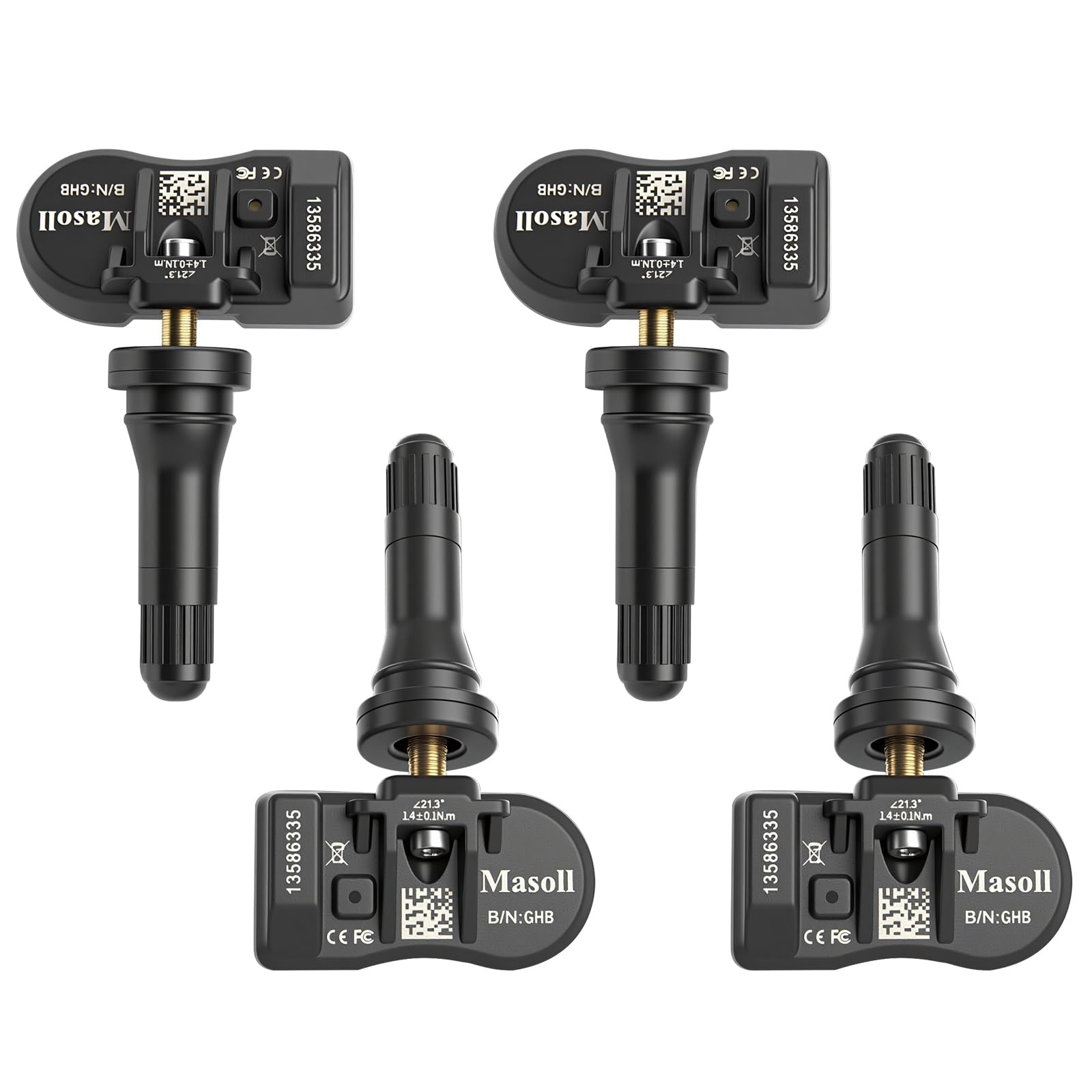
Masoll’s dual-antenna design addresses a specific pain point for full-size trucks and SUVs: signal strength at longer distances. The twin-antenna architecture ensures consistent communication with the vehicle’s receiver even when mounted on a long-wheelbase pickup like the Silverado 3500 or a large SUV like the Yukon XL. The sensor is pre-programmed for GM vehicles after 2006 and covers a broad list of OE part numbers including 13598771, 15268606, and 20964159.
The internal CR2050 automotive-grade battery is rated for over 5 years of typical operation and handles extreme temperatures from -40°F to 257°F without performance degradation. The measurement accuracy is specified at ±1.5 PSI, which is adequate for pressure monitoring and warning light clearance, though not as tight as some premium sensors. The rubber valve stems come from a top-tier manufacturer and feature seamless molding to resist corrosion and prevent leaks.
The biggest value angle is the price — this is the most affordable pre-programmed 4-pack in this guide, making it a strong choice for owners of older GM vehicles where the cost of OE replacements would exceed the car’s value. The tradeoff is that the sensor is pre-programmed but still requires a relearn procedure using a TPMS scan tool or the vehicle’s built-in method. A small number of users noted that the sensor’s plastic housing feels less robust than metal alternatives, but the 24-month warranty provides a safety net.
Why it’s great
- Dual-antenna design improves signal in large vehicles
- Affordable 4-pack for GM models post-2006
- Long-lasting CR2050 battery rated for 5+ years
Good to know
- Relearn procedure still required after install
- Plastic housing less impact-resistant than metal
- Limited to GM vehicles only
FAQ
Can I install aftermarket TPMS sensors without a programming tool?
How long do aftermarket TPMS sensor batteries typically last?
Will a universal TPMS sensor work on my Ford, Toyota, or BMW?
Final Thoughts: The Verdict
For most users, the best aftermarket tpms winner is the Autel MX 1-Sensor 4-Pack because it combines universal dual-frequency coverage, 100% ID cloning to skip relearn, and proven long-term reliability backed by SAE certifications. If you want a zero-mechanic installation that requires no tire dismount, grab the Masoll Gen 2 External Set. And for shop-grade durability and a 200 MPH rating, nothing beats the Schrader EZ-Sensor 33700.