
The faint, unsettling odor of natural gas or propane lingers long after the burner clicks off. Whether it’s a pilot light that won’t stay lit, a small stove-top leak, or the residual smell from a gas water heater, that persistent gas scent signals more than annoyance — it points to volatile organic compounds and unburned hydrocarbons circulating through your living space. Standard air purifiers equipped only with basic particulate filters do almost nothing against these gaseous molecules. Eliminating gas smell requires a specific combination of activated carbon mass, potassium permanganate media, and a powerful fan system that can pull in and trap airborne chemicals before they settle into fabrics and upholstery.
I’m Min — the co-founder and writer behind Gadgets Feed. This guide is built on hundreds of hours of cross-referencing independent lab results, filter composition breakdowns, and real-user reports from homes dealing with gas stoves, propane heaters, and minor gas-line odors to identify exactly which air purifiers can actually handle chemical gas load, not just dust and pollen.
After analyzing nine leading models across four filtration tiers — from standard HEPA-and-carbon combos to advanced UltraHEPA and activated-carbon powerhouses — I’ve isolated the true standouts for tackling that stubborn chemical gas stench. The best air purifier for gas smell must pack a heavy-duty carbon bed or specialized chemical-adsorbing media far beyond what typical home units offer.
How To Choose The Best Air Purifier For Gas Smell
Gas smell is not particulate matter — it’s a gaseous chemical compound (mercaptan added to natural gas, plus unburned hydrocarbons). A unit that scores high on dust removal can be completely ineffective here. You need to evaluate the machine specifically on its ability to adsorb and neutralize gases, not just trap dust and pollen.
Filter Media: Carbon Weight and Potassium Permanganate
Standard thin carbon pre-filters found on budget HEPA units contain maybe a few ounces of activated carbon. That layer will saturate within hours when exposed to continuous gas smell. Look for units that advertise a thick, dense carbon bed, or better yet, a dual-media filter that combines activated carbon with potassium permanganate. Potassium permanganate chemically oxidizes gas molecules — it doesn’t just trap them physically. The AirDoctor series and the Coway Airmega 250 incorporate this approach with meaningful carbon mass.
Airflow and Sealed Filtration Path
Even the best carbon filter is useless if the machine’s airflow path allows gas molecules to bypass the media. A sealed system forces all incoming air through the entire filter stack. Units with gasketed filter trays and positive-pressure designs — like the Rabbit Air A3 and the Nuwave OxyPure ZERO — prevent untreated air from sneaking around the edges. Also consider fan speed: gas smells often originate in kitchens or utility rooms near the source, so a high-CADR unit (around 300+ CFM) will cycle the room air quickly and capture the gas before it disperses.
Room Size vs. Continuous Operation
Gas smell can be intermittent or constant depending on the source. A unit rated for a room twice the size of your actual space will clean the air faster and then run at a quieter speed to maintain freshness. Over-speccing the coverage area ensures the carbon filter sees the gas molecules more frequently per hour, increasing the effective adsorption rate before the filter saturates. This is a case where bigger is genuinely smarter.
Quick Comparison
On smaller screens, swipe sideways to see the full table.
| Model | Category | Best For | Key Spec | Amazon |
|---|---|---|---|---|
| Rabbit Air A3 | Premium | Large rooms, odor removal | 20.3 dBA, 12-mo filter life | Amazon |
| AirDoctor AD3500 | Premium | Chemical & gas adsorption | UltraHEPA + potassium permanganate | Amazon |
| AirDoctor AD2000 | Premium | Medium rooms, VOCs | UltraHEPA at 0.003 microns | Amazon |
| Nuwave OxyPure ZERO | Premium | Zero-waste, large area | 2,002 sq ft, washable filters | Amazon |
| Sans True HEPA | Premium | Extra-large rooms, quiet | 35 dB auto-mode, UV-C layer | Amazon |
| Coway Airmega 250 | Mid-Range | Large rooms, VOCs & odor | 1,860 sq ft, washable pre-filter | Amazon |
| Winix 5520 | Mid-Range | Smart features, auto mode | Air quality indicator, 23.5 dB | Amazon |
| Whirlpool WPT80P | Budget | Small rooms, pet odor | 220 sq ft, whisper-quiet | Amazon |
| LEVOIT Core 300-P | Budget | Bedroom, moderate needs | 56W motor, 24 dB sleep mode | Amazon |
In‑Depth Reviews
1. Rabbit Air A3 SPA-1000N

The Rabbit Air A3 sits at the top of the gas-smell hierarchy largely because of its six-stage filtration system and the optional Odor Remover filter, which is specifically engineered to tackle smoke, cooking fumes, and gas-related VOCs. At 1,070 square feet of coverage, it’s suitable for open-concept kitchens or combined living spaces where gas stoves sit. The whisper-quiet operation at 20.3 dBA means it won’t compete with conversation or sleep, and the wall-mountable design saves valuable floor space near the stove.
What sets the A3 apart for gas smell is the smart NFC filter tracking and customizable filter selection. You can swap in the Odor Remover cartridge, which contains a proprietary carbon blend optimized for chemical adsorption rather than just general household odors. The app allows you to monitor particulate concentration and filter life, giving you tangible feedback on whether the gas smell is actually being reduced. Multiple long-term users report effective clearing of cigar and cooking smoke within minutes in rooms up to 200 square feet.
The price point is high, but the 12-month filter life under continuous 24/7 operation makes the annual operating cost relatively low compared to units requiring quarterly carbon changes. The sealed filtration path ensures that gas molecules cannot bypass the carbon layer — a critical detail often overlooked in cheaper designs. For anyone serious about eliminating gas smell in a living area, this is a set-and-forget solution.
Why it’s great
- Interchangeable specialty filter targets gas odors directly
- Wall-mountable, ultra-quiet at 20.3 dBA
- 12-month filter life reduces long-term costs
Good to know
- Premium initial investment
- App required for full smart features
2. AirDoctor AD3500
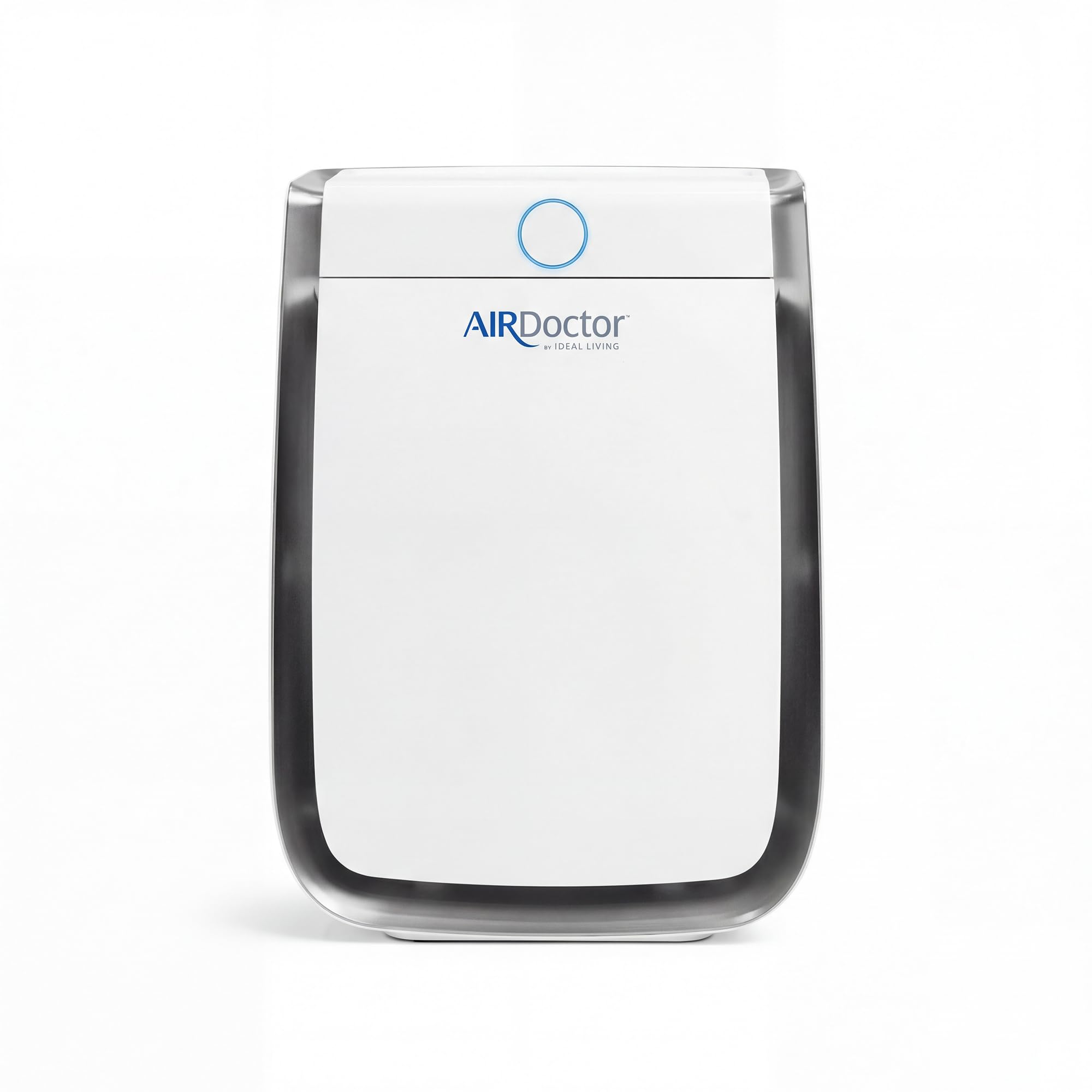
The AirDoctor AD3500 combines hospital-grade UltraHEPA filtration — capturing 99.99% of particles at 0.003 microns — with a Premium Activated Carbon filter infused with potassium permanganate. This dual-chemical approach is what makes it the strongest contender for gas smell removal. The potassium permanganate doesn’t simply trap mercaptan molecules; it oxidizes them, chemically breaking down the sulfur-based odor compounds into harmless byproducts. That chemical reaction is the difference between a filter that smells like gas after a week and one that continues neutralizing it.
Coverage is generous at 2,520 square feet, and the AD3500 cleans a 630-square-foot room in 15 minutes. The Halo display shows real-time PM2.5 levels, and the auto mode adjusts fan speed accordingly — ramping up when it detects a spike from stove use or a gas appliance. Genuine carbon filters are recommended every six months, and the UltraHEPA lasts a full year. Owners report that the unit eliminates 90% of cooking odors and noticeably reduces stale, stuffy air in bedrooms.
Build quality is robust at 24 pounds, and the unit feels premium compared to lighter plastic competitors. The auto mode is responsive enough to catch cooking events before the smell becomes noticeable. For anyone prioritizing chemical and gas adsorption — including natural gas, propane, and general VOCs — the AD3500 delivers the most aggressive filter media composition in this lineup.
Why it’s great
- Potassium permanganate oxidizes gas molecules
- UltraHEPA captures 0.003 micron particles
- Real-time PM2.5 display with auto boost
Good to know
- Replacement filters are expensive
- Large footprint at 24 pounds
3. AirDoctor AD2000
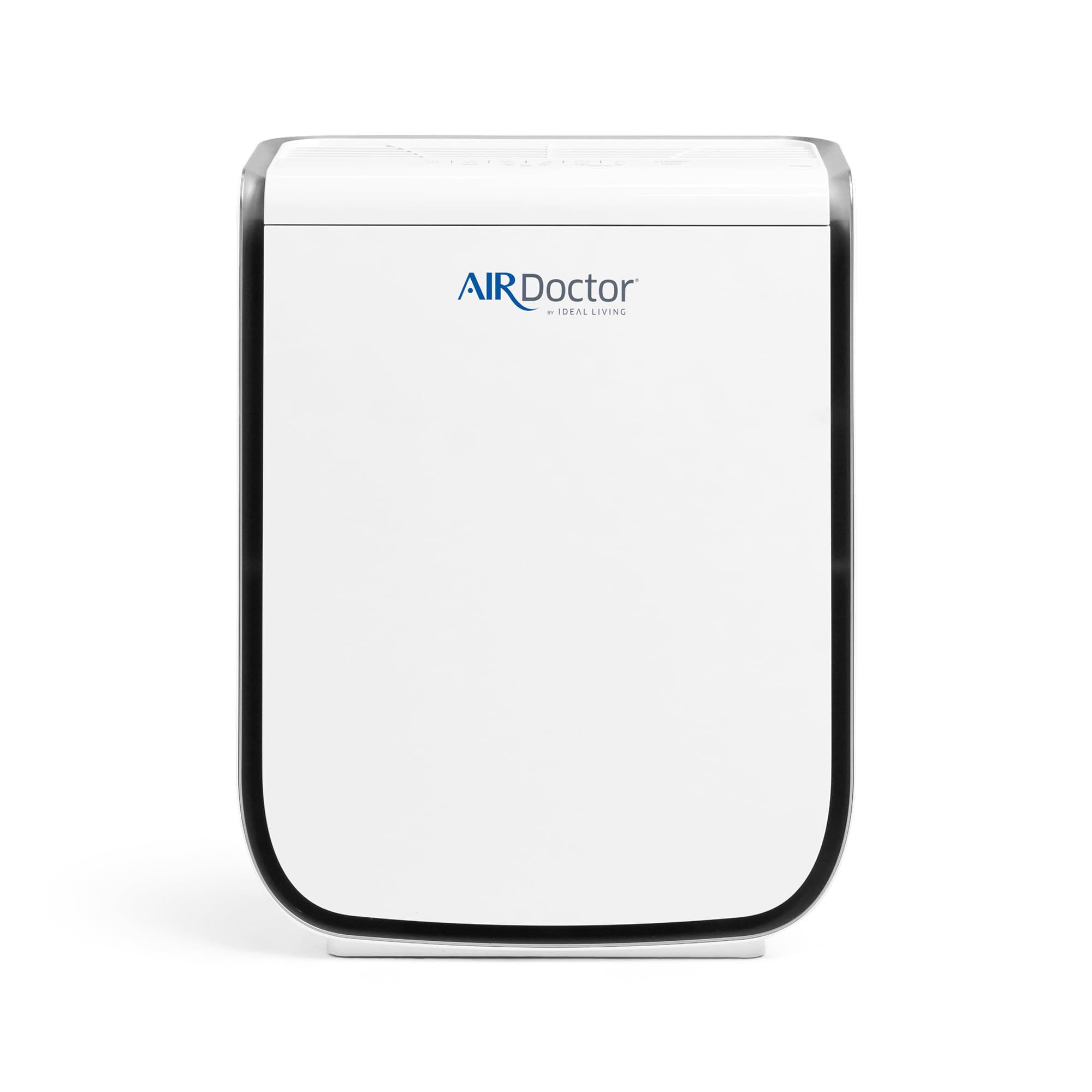
The AirDoctor AD2000 is essentially the smaller sibling of the AD3500, sharing the same UltraHEPA and Premium Activated Carbon filter technology but scaled for rooms up to 1,220 square feet. For gas smell applications in medium bedrooms, home offices, or kitchens with a separate dining area, this unit offers the same potassium permanganate chemical oxidation at a lower upfront cost. The three-stage filtration — pre-filter, activated carbon with potassium permanganate, and UltraHEPA — mirrors the AD3500’s approach in a more compact 12.9-pound chassis.
Real-world feedback highlights its effectiveness against VOCs and stubborn odors. One customer reported that a new couch’s VOC smell was virtually gone the next day. The auto mode uses a PM2.5 sensor to ramp fan speed as needed, and the Halo display provides color-coded air quality feedback. The unit operates quietly enough for sleep, and the timer and filter indicator simplify maintenance. Replacement filters are required every six months for the carbon and yearly for the UltraHEPA, which is standard for this tier.
Where the AD2000 falls slightly short for gas smell versus the AD3500 is raw coverage and total carbon mass. The carbon bed is proportionally smaller, meaning it may saturate faster if the gas smell source is constant (e.g., a perpetually leaking pilot light or a gas dryer in a small laundry room). For intermittent gas exposure from cooking, however, the AD2000 is an excellent mid-range entry that punches well above its weight class.
Why it’s great
- Potassium permanganate media for gas oxidation
- UltraHEPA standard at an accessible price
- Compact and quiet for bedrooms
Good to know
- Smaller carbon mass than AD3500
- 6-month carbon filter replacements
4. Nuwave OxyPure ZERO

The Nuwave OxyPure ZERO breaks the throwaway-filter mold entirely. Its dual 4-stage filtration system relies on washable Bio-Guard filters and stainless-steel pre-filters, which means zero recurring filter purchases. For gas smell, the relevant stage is the ozone emission removal filter, which uses a catalytic process to eliminate toxic ozone and also helps break down gaseous odors. The Bio-Guard 360 filter and Bio-Guard filters further trap and neutralize chemical pollutants, including smoke and VOCs.
Coverage reaches up to 2,002 square feet, and the unit includes 30°, 60°, and 90° adjustable vents, allowing you to direct airflow toward the gas source. The auto mode uses a particulate sensor to adjust fan speed, and the night-time mode drops to a near-silent 21.41 dB. Multiple customer reports confirm that the unit eliminates allergy symptoms, construction dust, and cooking smoke effectively. The filter life is rated at over 10 years because the Bio-Guard filters are washable — a massive long-term cost saving.
The trade-off is that the OxyPure ZERO does not use activated carbon or potassium permanganate in the traditional sense. Its electrostatic filter media relies on polarized fibers to attract particles and some gaseous molecules. For extremely persistent natural gas or propane smells, the chemical adsorption may be less aggressive than a dedicated carbon-plus-permanganate system. However, for intermittent gas kitchen odors combined with general dust and smoke, the ZERO’s zero-waste approach and adjustable airflow make it a compelling choice.
Why it’s great
- Washable filters — zero replacements, huge savings
- Adjustable 30°-90° airflow vents
- Ozone removal and catalytic odor breakdown
Good to know
- No replaceable activated carbon for heavy gas loads
- Does not auto-restart after power outage
5. Sans True HEPA Air Purifier

The Sans True HEPA Air Purifier covers 1,854 square feet with a three-stage system that pairs a medical-grade True HEPA filter with a heavy-duty activated carbon layer and an additional UV-C light layer for microbial control. The activated carbon is the primary line of defense for gas smell, and customer reports note that the unit detects and clears kitchen and shower drain odors within an hour. The auto-mode sensor adjusts fan speed in real time, and the sleep mode reduces noise to a whisper while dimming all display lights.
What distinguishes the Sans is its focus on noise-free operation — the lowest setting is genuinely whisper-quiet, and multiple long-term users report they forget it’s running. The 5-year warranty adds peace of mind for a premium investment, and the filter swap takes under 60 seconds. The UV-C layer is an extra bonus that reduces bacterial and mold growth on the filter itself, which matters in humid kitchens where gas appliances sit.
For gas smell specifically, the carbon layer depth is adequate for intermittent stove or heater odors, but the Sans does not advertise potassium permanganate or a specialized chemical media. The UV-C layer does not contribute to gas removal. Buyers dealing with persistent raw natural gas leaks may find the carbon bed saturates faster than dedicated chemical-adsorption units. For general household air cleaning with strong odor detection, however, the Sans is a polished, capable machine.
Why it’s great
- Ultra-quiet operation on low setting
- UV-C light reduces filter bacteria growth
- 5-year warranty and fast filter swaps
Good to know
- No potassium permanganate for chemical-heavy gas
- Premium price point
6. Coway Airmega 250

The Coway Airmega 250 is one of the most consistent performers in the mid-range, and its HyperCaptive filtration system — a washable pre-filter, an activated carbon filter, and a true HEPA filter — is well-regarded for reducing VOCs and odors. Coway claims 99% reduction of VOCs and odors, which directly addresses the gaseous components of gas smell. The real-time air quality indicator uses a 24/7 pollution monitor that automatically adjusts between Smart Mode and Rapid Mode based on detected pollution levels.
Coverage is rated at 1,860 square feet, and the unit cleans a 930-square-foot room in 30 minutes. One owner with respiratory issues reported that the Airmega 250 effectively scrubbed air in a large NYC apartment, handling Canadian wildfire smoke in about an hour. The single large filter design simplifies replacement — only one filter set per year at roughly , which is extremely cost-efficient for a unit at this coverage tier. The washable pre-filter extends the life of the main filter by catching larger particles first.
For gas smell, the Airmega 250’s activated carbon layer is effective against cooking fumes and old-house odors, but the carbon mass is not as deep as the AirDoctor or Rabbit Air offerings. Users note that it responds well to auto-detecting smoke and ramping up fan speed. The unit does not include potassium permanganate, so for heavy, continuous gas exposure, it may require more frequent carbon replacement. For standard gas stove odors and occasional leaks, it’s a balanced, reliable choice.
Why it’s great
- Low annual filter cost (~)
- Smart auto mode with real-time AQI display
- Washable pre-filter extends main filter life
Good to know
- Carbon layer thinner than premium units
- No WiFi connectivity
7. Winix 5520
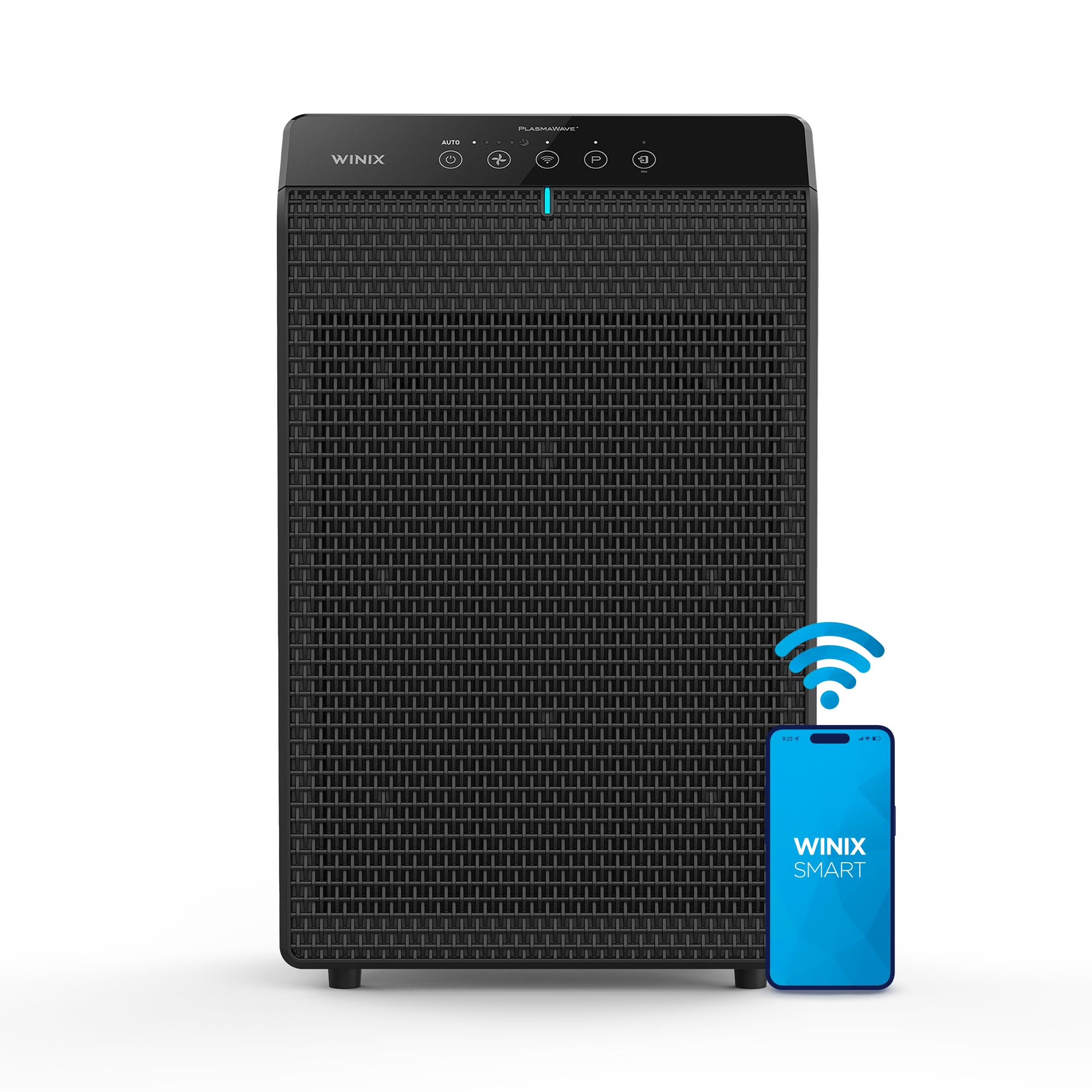
The Winix 5520 brings smart-home integration to gas smell mitigation with Wi-Fi connectivity, Amazon Alexa and Google Home compatibility, and the Winix Smart App for remote monitoring. Its four-stage filtration includes a washable fine mesh pre-filter, an AOC carbon filter designed specifically for odor and VOC reduction, a True HEPA filter, and Winix’s signature Plasmawave technology — an ionizer that helps break down airborne pollutants including some gases. The advanced odor control carbon filter targets VOCs from cooking, pets, and smoke.
Coverage is robust at 1,882 square feet, and the unit is AHAM Verified at 392 square feet for standard performance metrics. The air quality indicator uses LED lights to display real-time conditions, and the auto mode adjusts fan speed based on sensor readings. Sleep mode automatically activates when the room is darkened and returns to auto mode when light returns. At 23.5 dB on the slowest speed, it’s nearly silent.
For gas smell, the AOC carbon filter is more substantial than the thin pre-filter carbon layers found on many budget units, but it’s still a relatively compact carbon sheet. The Plasmawave ionizer can help neutralize some chemical odors, though ionizers are less effective than direct chemical adsorption for heavy mercaptan loads. Some users reported that Alexa integration is not fully seamless, and the app has security concerns. As a standalone unit with strong smart features, the 5520 is a good mid-range pick for smart-home users with moderate gas odor needs.
Why it’s great
- Wi-Fi app control with Alexa/Google Home
- Washable pre-filter extends filter life
- Auto sleep mode with light sensor
Good to know
- Alexa integration has limitations
- Carbon filter is compact, not deep-bed
8. Whirlpool WPT80P Whispure

The Whirlpool WPT80P Whispure is a budget-friendly entry from a major appliance brand, covering 220 square feet with a True HEPA filter and an activated carbon filter. The proprietary Whishield technology claims to eliminate 99.99% of bacteria that may grow on the filter, which helps keep the filter from becoming a secondary odor source. The primary role of the carbon filter here is to reduce common household odors from pets, smoking, and cooking — including gas-related smells at a small scale.
Customer reports consistently highlight its effectiveness in small spaces: one user noted it completely eliminated litter box odor next to the box, while another confirmed it handles dog smells, cooking odors, and smoke. The unit operates at a calm white noise level on high and is virtually silent on lower settings. The sleep mode runs at a low fan speed for energy efficiency. At 9.3 pounds, it’s light enough to move between rooms as needed.
For gas smell specifically, the Whispure is best deployed in a utility room, small kitchen, or laundry room where a gas water heater or dryer sits. The 220-square-foot rating means it’s not designed to handle open-concept living areas or large kitchens. The carbon filter is effective for intermittent, mild gas odors, but it will saturate quickly if exposed to a continuous gas leak. It’s a reliable, compact option for targeted gas odor removal at an entry-level cost.
Why it’s great
- Whishield anti-bacterial filter prevents mold
- Quiet operation, good for small rooms
- Trusted Whirlpool brand with 5-year warranty
Good to know
- Small 220 sq ft coverage
- No air quality indicator display
9. LEVOIT Core 300-P

The LEVOIT Core 300-P is one of the most popular entry-level air purifiers on the market, and its versatility extends to gas smell when paired with the right filter. The unit ships with a 3-in-1 original filter (pre-filter, HEPA-grade, and activated carbon), but what makes it relevant for gas smell is Levoit’s optional Toxin Absorber filter, which is specifically designed to target smog, toxins, and VOCs. If you switch to that filter, the Core 300-P becomes a capable small-room gas odor fighter.
The 56W high-torque motor delivers 143 CFM CADR and covers up to 1,073 square feet once per hour or a 222-square-foot room 4.8 times per hour. Sleep mode drops to a near-silent 24 dB. Customers report it clears kitchen smells in about 20 minutes on high, and the compact 7.9-pound design makes it easy to move to the kitchen or utility room when needed. The display can be fully darkened for sleep, and the timer offers 2/4/6/8-hour settings.
For gas smell, the Core 300-P is a capable entry-level option only if you use the Toxin Absorber filter — the standard original filter’s thin carbon layer is not sufficient for heavy gas odors. The unit’s CADR is modest compared to premium units, so it works best in small-to-medium rooms near the gas source. The off-brand filter warning is important: stick with genuine Levoit Toxin Absorber filters to maintain the sealed airflow path. It’s the budget pick that punches above its size with the right filter choice.
Why it’s great
- Compact and lightweight at 7.9 pounds
- Toxin Absorber filter targets VOCs and gas
- Very quiet sleep mode at 24 dB
Good to know
- Standard filter has minimal carbon for gas
- Requires upgrade to Toxin Absorber filter
FAQ
Can a standard HEPA filter remove natural gas smell from the air?
How often should I replace the carbon filter when fighting gas odors?
Is an ionizer or UV-C light helpful for removing gas smell?
What’s the best placement for an air purifier targeting gas smell from a stove?
Final Thoughts: The Verdict
For most users, the air purifier for gas smell winner is the AirDoctor AD3500 because its potassium permanganate-infused carbon filter chemically oxidizes gas molecules rather than merely trapping them — a critical distinction when dealing with the sulfur-based compounds in natural gas. If you want zero long-term filter costs and exceptional coverage, grab the Nuwave OxyPure ZERO with its washable Bio-Guard filters and adjustable airflow vents. And for a smaller, more targeted solution in a utility room or small kitchen, the Whirlpool WPT80P delivers solid gas-odor reduction at an entry-level price backed by a major appliance warranty.