
Loose floor tiles, chipped bathroom corners, and cracked kitchen backsplashes are the kind of home headaches that escalate fast. A weak bond means you are constantly re-sticking, re-caulking, or facing the dreaded prospect of a full tile replacement job. The right adhesive doesn’t just stick—it stops the problem permanently, matching the cure time and substrate compatibility to your specific project so you never have to touch that tile again.
I’m Min — the co-founder and writer behind Gadgets Feed. I have spent countless hours dissecting the technical specifications of construction and repair materials, analyzing everything from viscosity levels and full cure times to VOC compliance and pressure-sensitive adhesion, so you can get the strongest possible bond for your tile project without wasting money on the wrong formula.
Whether you are injecting adhesive under a hollow floor tile, repairing a visible chip with a color-matched epoxy, or installing a brand new backsplash, this guide breaks down the top contenders for the best adhesive for tiles in 2025 across repair, installation, and commercial-grade categories.
How To Choose The Best Adhesive For Tiles
Not every adhesive is built for every tile scenario. The best choice depends on whether you are filling a chip, re-bonding a loose floor tile, or installing a whole new wall. You have to balance the adhesive chemistry (epoxy, acrylic, or pressure-sensitive) with the substrate (concrete, plywood, or existing tile) and the environment (wet or dry, high-traffic or decorative).
Evaluate the Cure Time and Working Time
Adhesives for tiles fall into two camps: fast-curing epoxies that set in minutes and pressure-sensitive or latex-based adhesives that offer a longer open time. For small chip repairs, a 24-hour full cure epoxy that hardens into a durable, waterproof finish is ideal. For laying an entire floor of vinyl plank or LVT, you want a pressure-sensitive adhesive that gives you 30 minutes to an hour of working time so you can reposition tiles before the bond sets. A product that cures too fast for a large area leads to disaster.
Check the Substrate Compatibility and VOC Compliance
Porcelain, ceramic, natural stone, vinyl, and fiberglass each require a specific adhesive formulation. Using the wrong one on a non-porous porcelain tile with an acrylic-based glue will result in zero adhesion. For indoor residential and commercial use, solvent-free and low-VOC adhesives like the ROBERTS 7350 are mandatory for air quality. The product data sheets will list compatible materials—read them. An adhesive rated for wood subfloors may fail completely on concrete.
Quick Comparison
On smaller screens, swipe sideways to see the full table.
| Model | Category | Best For | Key Spec | Amazon |
|---|---|---|---|---|
| cocomfix Tile Repair Kit | Epoxy Repair | Color-matched chip & crack repair | 7 pigment color-matching system | Amazon |
| Ankita Tile Repair Kit | Epoxy Repair | DIY chip & crack repair with color match | Water-resistant paste formula | Amazon |
| Fix-A-Floor PRO Pack | Floor Injection | Re-bonding loose & hollow floor tiles | 24-hour full cure with micro syringe injector | Amazon |
| MusselBound Adhesive Tile Mat | Peel & Stick Mat | No-mortar wall tile installation | 15 sq ft per roll with built-in spacers | Amazon |
| Lucida Surfaces CoreBond | Flooring Adhesive | Pressure-sensitive LVT & vinyl plank installation | Solvent-free, 40 sq ft per quart coverage | Amazon |
| Titebond GAL FASTGRB FRP | FRP Adhesive | Bonding plastic sheets to porous surfaces | Non-flammable, quick grab | Amazon |
| ROBERTS 7350 Universal | Flooring Adhesive | Commercial-grade LVT & VCT installation | Microban protection, 1 gallon pail | Amazon |
In‑Depth Reviews
1. Fix-A-Floor Loose Tile Repair Adhesive PRO Pack
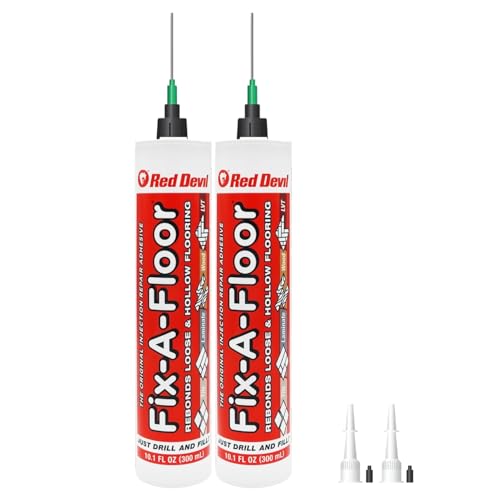
The Fix-A-Floor PRO Pack is the definitive solution for loose and hollow floor tiles that make that awful clicking sound underfoot. It comes with two 10.1-ounce tubes of a specialized co-polymer adhesive, a micro syringe injector, two 14-gauge blunt steel needles, and two 2.5mm diamond drill bits—everything you need to drill through the grout line and inject adhesive directly underneath the tile. Customers report that the adhesive flows like a runny white glue and cures rock-hard within 24 hours, effectively re-bonding ceramic, porcelain, marble, and stone tiles to concrete subfloors.
The working mechanism is straightforward: drill small holes in the grout, attach the micro syringe, and inject the adhesive into the void. The product’s formulation is non-toxic and eco-friendly, and it dries clear, so the repair is nearly invisible. Multiple verified purchasers used it to fix tiles after hurricane damage, and they confirmed that after the full cure time, the tiles were completely solid with no further movement. It is a true DIY-friendly system that bypasses the need for messy mortar or professional removal.
The main caveat is that the included drill bits and needle tips have received mixed feedback—some buyers found them too fragile and switched to a standard 3/16-inch carbide bit. The adhesive is also very runny, which makes it effective at penetrating voids but also prone to leaking out if the drill hole is in a spot with no cavity. You need a caulking gun (specifically a standard model, not a skeleton or high-thrust gun) to apply consistent pressure. For large jobs, budget approximately one tube per two 12-inch tiles.
Why it’s great
- Complete injection kit with micro syringe and diamond drill bits eliminates guesswork
- 24-hour full cure produces a permanent bond that handles foot traffic immediately
- Works on multiple substrates including concrete, wood, ceramic, and natural stone
Good to know
- Included drill bits may break quickly; a standard carbide bit is a better upgrade
- Runny adhesive can leak out if not injected precisely into a void
2. ROBERTS Universal Resilient Flooring & Vinyl-Backed Carpet Tile Adhesive

The ROBERTS 7350 is a 1-gallon pail of acrylic latex, solvent-free, pressure-sensitive adhesive that is considered the gold standard for luxury vinyl tile (LVT), luxury vinyl plank (LVP), vinyl composition tile (VCT), and vinyl-backed carpet tile. It is powered by Microban product protection, which helps fight the growth of stain-causing bacteria and product degradation over time—an important feature for commercial or high-humidity installations. The adhesive is rated for concrete, APA-grade plywood, steel, marble, terrazzo, and existing well-bonded vinyl tile floors, making it exceptionally versatile.
Users consistently highlight the long working time—approximately six hours before the adhesive dries clear—which allows for careful positioning and repositioning of tiles. It dries with a strong, pressure-sensitive bond that holds vinyl flooring firmly in place even in heavy-traffic areas, including trailers exposed to snow, mud, and rain. The adhesive spreads easily with a standard trowel, and multiple reviewers noted that after six months of abuse, there was zero lifting or edge curl. The product is designed for indoor residential and commercial use, and its low-odor profile makes it comfortable to work with indoors.
The primary drawback is that the lid can leak during shipping if it is not taped shut, so check the seal upon arrival. Cleanup requires mineral spirits if the adhesive dries, so you must wipe away excess immediately with a damp cloth. One gallon covers a substantial area, but for a full room of carpet tiles, you may need two pails. The adhesive is not recommended for self-stick tile removal or for floating floor systems, and it should not be applied to radiant-heated subfloors exceeding 85 degrees Fahrenheit.
Why it’s great
- Microban antimicrobial protection prevents long-term product staining and degradation
- Long six-hour working time allows careful tile placement without rushing
- Bonds to a wide range of subfloors including concrete, plywood, and steel
Good to know
- Pail lid may leak in transit unless securely taped
- Cleanup is difficult once dry; must use mineral spirits for dried residue
3. cocomfix Tile Repair Kit
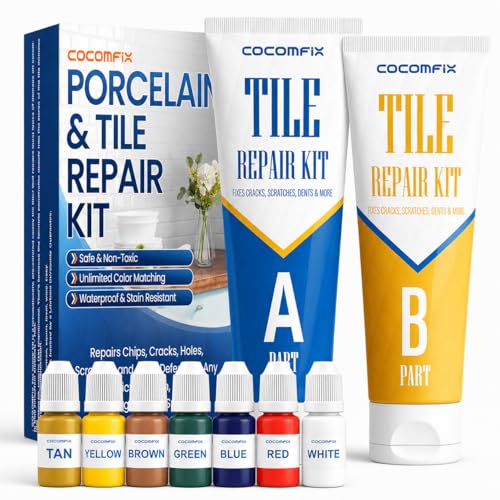
The cocomfix Tile Repair Kit is an epoxy-based repair system designed specifically for fixing chips, cracks, holes, and scratches on ceramic, porcelain, acrylic, fiberglass, and natural stone tiles. The kit includes seven primary pigments—red, yellow, blue, white, green, tan, and brown—that allow you to custom blend the exact shade needed to match vintage brown tiles or modern grey surfaces. The advanced epoxy formula cures into a high-gloss, waterproof, and heat-resistant finish that does not yellow over time, making it suitable for bathroom floors and kitchen walls that see daily foot traffic and moisture.
The color-matching process requires patience. Customers report that the included color guide provides basic direction, but achieving an invisible repair often requires multiple test batches. Once you nail the shade, however, the cured epoxy fills the defect seamlessly, and the high-gloss finish blends with the surrounding tile’s sheen. The formula is non-toxic and low-odor, so it is safe to use around family and pets. The product is beginner-friendly—the kit includes all necessary tools and step-by-step instructions for a professional-looking DIY repair.
The main limitation is that the epoxy’s sheen cannot be adjusted to perfectly match matte or satin-finished tiles. If your tile has a low-gloss surface, the repair spot may reflect light differently and remain slightly visible. The paste-like consistency requires careful application to avoid creating a raised bump that needs sanding. Some users found that sanding the cured epoxy removed the color from the surrounding tile, making the patch more noticeable. This kit is ideal for small, contained repairs rather than large-area restoration.
Why it’s great
- Seven-pigment color-matching system can replicate almost any tile color with practice
- Waterproof, heat-resistant, and non-yellowing epoxy that holds up in high-moisture areas
- Non-toxic, low-odor formula safe for indoor use around children and pets
Good to know
- Color matching requires experimentation and may need several attempts to perfect
- Cured epoxy sheen cannot be altered, making it visible on matte tile surfaces
4. MusselBound Adhesive Tile Mat with Spacers
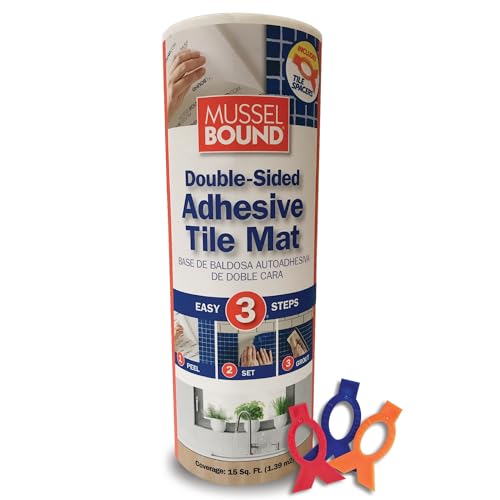
The MusselBound Adhesive Tile Mat redefines wall tile installation by replacing messy mortar with a double-sided adhesive mat that you peel, stick onto the wall, and then press your real ceramic or porcelain tiles onto. Each 12-inch-wide by 15-foot-long roll covers 15 square feet and includes custom-engineered tile spacers (1/6-inch, 1/32-inch, and 1/8-inch) for uniform grout lines. The mat’s bond is strong enough to hold tiles up to 1 square foot in size, and you have the freedom to gently lift and realign tiles within the working window before the adhesive sets permanently.
Customers who used the MusselBound mat for backsplashes and laundry room projects were impressed by how quickly the installation went—no mixing, no drying time, and you can grout immediately after placing the tiles. The mat adheres exceptionally well to clean drywall and can be removed without damaging the drywall if you make a mistake. Multiple users appreciated that the product enables a clean, dust-free project with zero mortar cleanup. It is noticeably more design-flexible than peel-and-stick tile sheets because you can use any individual wall tile you want, from hexagon mosaics to subway tiles.
This product has a notable limitation: it is not recommended for wet applications like shower walls or submerged areas. The adhesive mat is designed for aesthetic vertical applications—kitchen backsplashes, behind stoves, and decorative feature walls. Your walls must be impeccably clean and smooth for the mat to achieve proper adhesion; any dust, grease, or texture will compromise the bond. At its price point per square foot, it is more expensive than traditional thinset mortar, but the time saved and the lack of mess make it a compelling option for small, weekend DIY projects.
Why it’s great
- No mortar mixing, no drying time, and immediate grouting capability saves hours
- Strong initial grab allows installation of real ceramic tiles without adhesive ooze
- Removable from drywall without damage, forgiving for beginner mistakes
Good to know
- Not suitable for wet areas like showers or steam rooms
- Walls must be perfectly clean and smooth for the mat to hold effectively
5. Ankita Tile Repair Kit
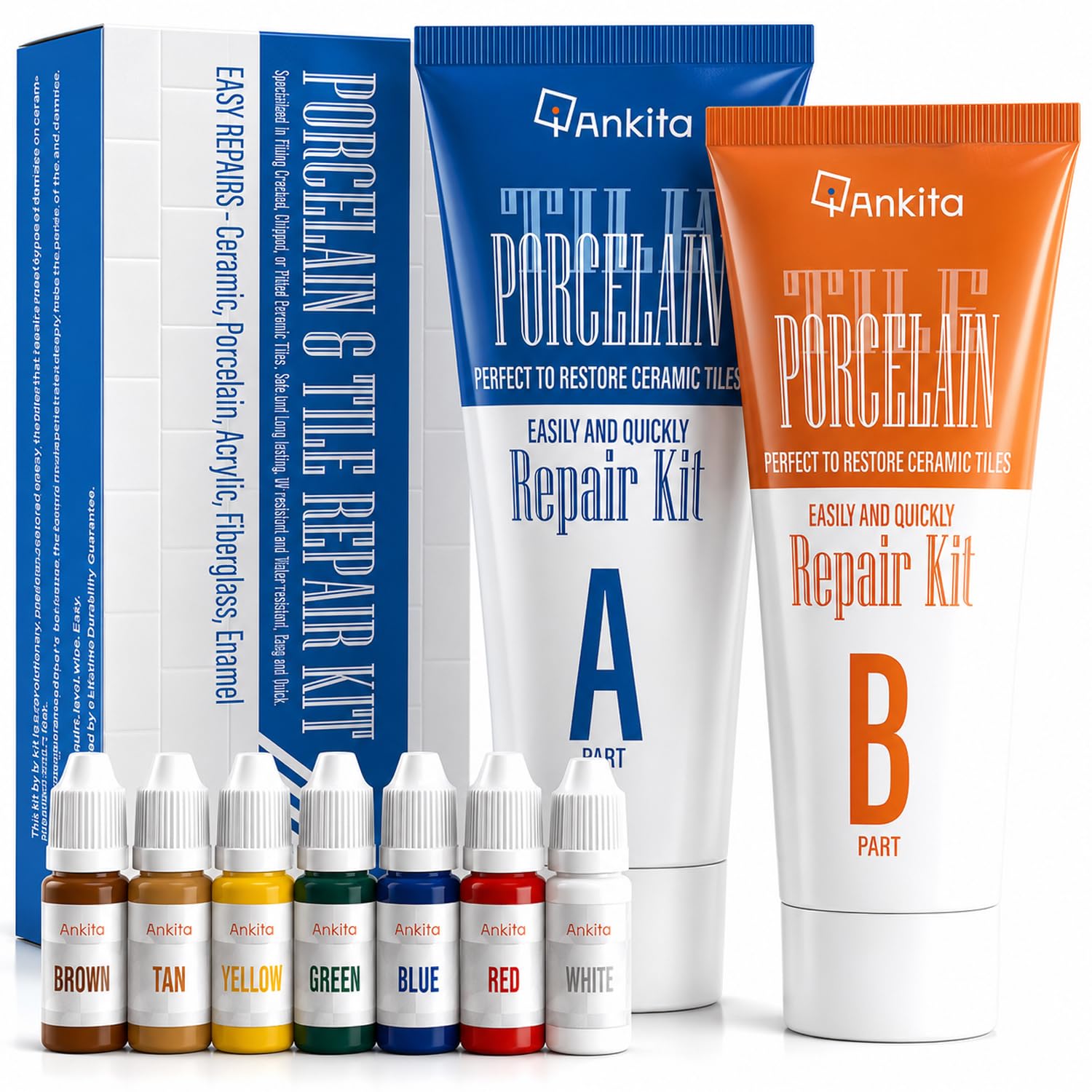
The Ankita Tile Repair Kit is a two-part epoxy paste designed for fixing chips, cracks, scratches, and holes on ceramic, porcelain, and acrylic surfaces. It comes with seven pigments for color matching and is targeted at DIY homeowners who want to avoid costly professional tile replacement. The epoxy cures into a water-resistant finish that tolerates heat, scratches, and stains, making it suitable for bathroom tub surrounds, kitchen backsplashes, fiberglass shower walls, and laminate floors. Customers consistently note that the color matching is the most challenging part of the process, but once you achieve a good blend, the repair becomes nearly invisible.
Verified buyers report that this epoxy works great for cracks in floor tiles, with one user repairing a chipped 24×12-inch kitchen tile so seamlessly that the fix was indistinguishable from the original surface. The paste formula is easy to apply with the included tools, and beginners can follow the step-by-step instructions to create a smooth finish. The product is specifically built for small-area repairs—the kit’s unit count is 1, and it is not intended for filling large gaps or entire tile replacements. The water resistance level is rated as “Water Resistant,” not fully waterproof, so immersion applications are not recommended.
The most common complaint is that the color and texture do not always blend perfectly, with one frustrated user describing the result as looking like white Silly Putty over cracks. The epoxy also requires several hours to cure fully, so you need to avoid disturbing the repair area during that window. Sanding the cured epoxy can be challenging because the abrasive action may remove the color from the surrounding tile. This kit is best for small cosmetic fixes where you are willing to spend time experimenting with pigment ratios to get the precise shade.
Why it’s great
- 7-color pigment system provides extensive custom-blending capability for unique shades
- Easy-to-apply paste formula cures into a durable, scratch-resistant finish
- Cost-effective alternative to professional tile replacement for small repairs
Good to know
- Color matching is difficult and may take several attempts to get right
- Requires multiple hours of curing time before the area can be used
6. Lucida Surfaces CoreBond Pro-Grade Solvent Free Vinyl Flooring Pressure Sensitive Adhesive
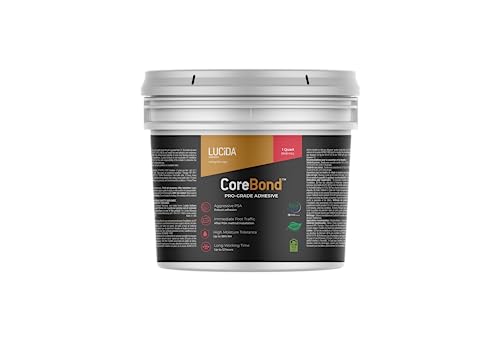
The Lucida Surfaces CoreBond is a solvent-free, pressure-sensitive adhesive formulated specifically for LVT, vinyl plank, VCT, carpet tile, quartz tile, and fiberglass-backed sheet flooring. It comes in a 1-quart can and covers approximately 40 square feet, making it an entry-level option for small residential projects like a bathroom floor or a motorhome renovation. The clear, liquid consistency spreads easily with a trowel and has a working time of 30 minutes to 1 hour, depending on environmental conditions. Customers report that the adhesive is super sticky and remains tacky even after a week of being uncovered, which is a strong indicator of its pressure-sensitive performance.
Verified purchasers used this adhesive successfully to replace vinyl tiles in a motorhome, noting that it was easy to apply and easy to wipe up excess with a damp cloth. The product is rated for both residential and heavy-traffic commercial applications, so it can handle significant foot traffic once the tiles are set. The solvent-free formulation means no harsh chemical odors, making it comfortable to work with in enclosed spaces. The adhesive bonds to porous and non-porous substrates, providing flexibility across different subfloor materials.
The biggest practical limitation is the coverage: 40 square feet per quart is suitable for a small room, but larger areas will require multiple quarts or a switch to a gallon-sized option. The working time of 30 minutes to 1 hour is relatively short for a pressure-sensitive adhesive, so you need to work efficiently. Wet adhesive can be cleaned up with a damp cloth, but dried adhesive requires mineral spirits, so immediate cleanup is essential to avoid a labor-intensive removal process. The product is not designed for ceramic or porcelain tile installation—it is strictly for resilient vinyl flooring types.
Why it’s great
- Solvent-free and low-odor, safe to use in indoor spaces without ventilation concerns
- Super sticky formulation provides strong initial grab and long-lasting tack
- Easy cleanup with a damp cloth when wet; versatile across vinyl and carpet tile types
Good to know
- Coverage is limited to 40 sq ft per quart, insufficient for large room installations
- Only compatible with resilient flooring types, not for ceramic or porcelain tile
7. Titebond GAL FASTGRB FRP Adhesive
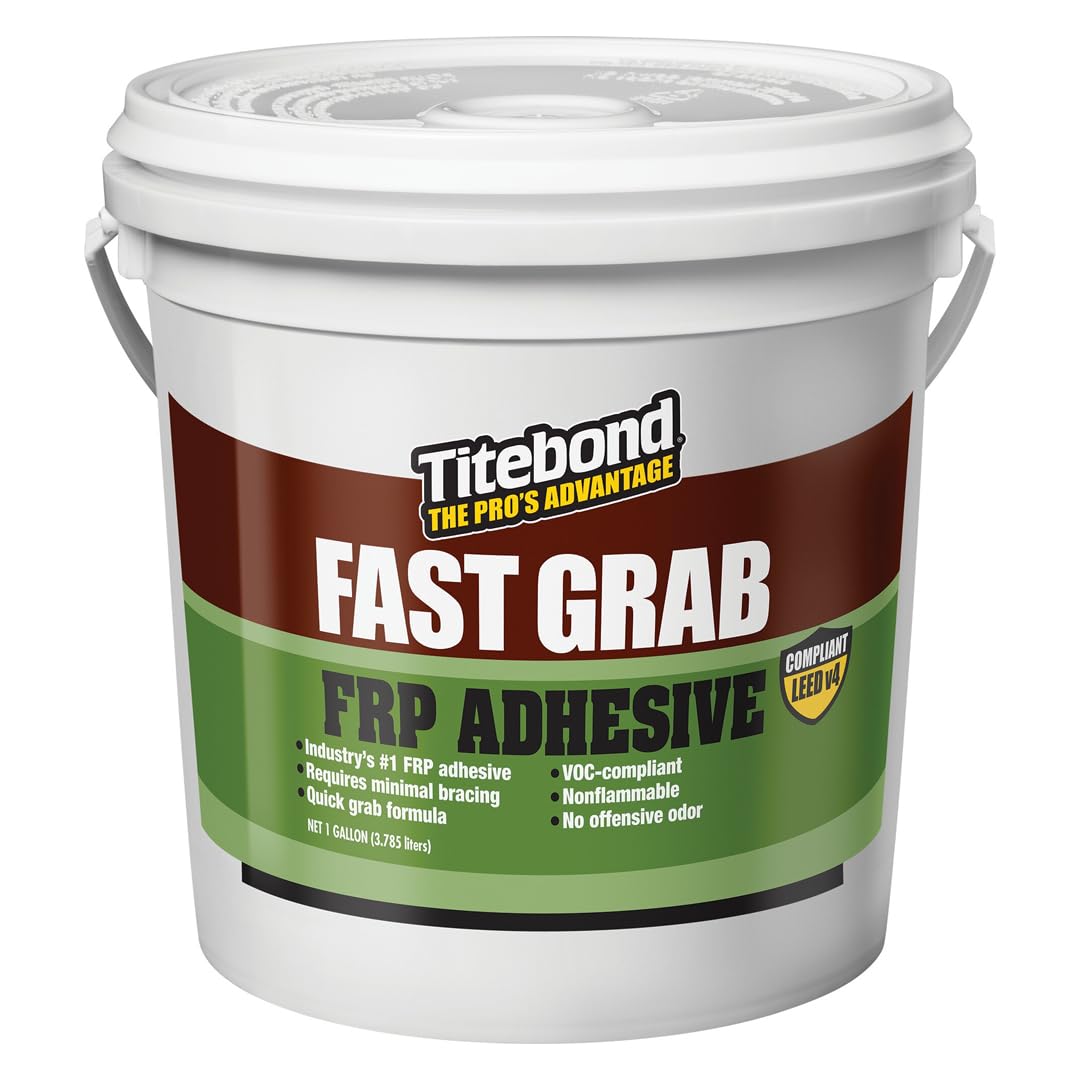
The Titebond GAL FASTGRB is a specialty construction adhesive designed for bonding fiberglass-reinforced plastic (FRP) panels to common porous building materials like wallboard, plywood, and concrete. It comes in a cartridge format and offers a “quick grab” property that significantly reduces the need for bracing during installation—a crucial feature when working with FRP sheets in commercial kitchens, restrooms, or cargo trailer conversions. The adhesive is non-flammable and emits almost no offensive odor, which is unusual for a high-strength construction adhesive. Customers have used it to repair cracked plaster and to install plastic shower walls, and they consistently report that the bond is very strong and durable.
Verified buyers highlight the adhesive’s consistent hold with no edge pop-up or leakage, as well as its rapid drying time compared to traditional panel adhesives. One user applied it between wallboard and a plastic shower wall in a cargo trailer conversion and experienced zero issues with adhesion or odor. Another reviewer noted that when applied with a 1/8-inch notch trowel, a single gallon cartridge covers approximately four full-size FRP sheets, though the coverage can be slightly less than expected depending on the application technique. The consistency is a medium-viscosity liquid that stays where you put it without running excessively.
This adhesive is not water-resistant, so it should not be used in areas that will be submerged or exposed to constant standing water. The product is specifically formulated for bonding plastic (FRP) to porous materials—it is not designed for ceramic tile, porcelain, or vinyl flooring. Some users reported frustration with the adhesive sticking to everything except the intended surface, which may indicate that the substrate preparation was insufficient or that the wrong trowel notch size was used. For its intended niche of FRP-to-wallboard bonding, however, the FASTGRB is a top-tier performer that minimizes bracing and delivers a very strong, long-lasting bond.
Why it’s great
- Quick grab property drastically reduces the need for temporary bracing during installation
- Non-flammable and almost odorless, safe for use in enclosed commercial spaces
- Very strong bond to wallboard, plywood, and concrete for FRP panel applications
Good to know
- Not water-resistant, so unsuitable for wet or submerged environments
- Specifically formulated for FRP and plastic-to-porous bonds, not for ceramic tiles
FAQ
Can I use a vinyl flooring adhesive to stick ceramic tiles to a wall?
How long does an epoxy tile repair take to cure before I can walk on it?
What does “solvent-free” mean in tile adhesives and why does it matter?
Is a peel-and-stick tile mat strong enough for heavy kitchen backsplash tiles?
Final Thoughts: The Verdict
For most users, the best adhesive for tiles winner is the Fix-A-Floor PRO Pack because it is the only product on this list that solves the specific problem of loose and hollow floor tiles without requiring tile removal. If you need a commercial-grade adhesive for installing vinyl or LVT flooring, grab the ROBERTS 7350. And for color-matched cosmetic chip repair on visible wall tiles, nothing beats the custom blending ability of the cocomfix Tile Repair Kit.