
A sprinkler valve that sticks open or refuses to close turns a lush lawn into a mud pit or a brown patch overnight. The solenoid clicks, but the water keeps flowing because the diaphragm assembly is worn, the bleed screw is loose, or the valve body itself has warped. Choosing the wrong replacement means digging up the same manifold box twice — once to install it, again when it fails mid-season.
I’m Min — the co-founder and writer behind Gadgets Feed. I track irrigation component reliability data, compare diaphragm materials and solenoid pull ratings, and cross-reference customer longevity reports across dozens of automatic valve models to separate real durability from marketing claims.
This guide breaks down seven automatic sprinkler valves by connection type, flow control precision, and build material so you can match the right valve to your specific system layout. Whether you are replacing a leaky unit or building a new zone from scratch, understanding the spec sheet matters. After comparing hundreds of reviews and technical specs, here is the definitive breakdown of what makes a best automatic sprinkler valve.
How To Choose The Best Automatic Sprinkler Valve
An automatic sprinkler valve is a simple electromechanical gate: a solenoid lifts a plunger, water pressure pushes the diaphragm open, and when the solenoid de-energizes, the diaphragm seals shut. The complexity lies in materials, flow control range, and whether the valve incorporates an anti-siphon assembly. You need to match the valve to your pipe diameter, water chemistry, and controller voltage before you glue or thread anything.
Connection Type — Slip vs. Threaded vs. Anti-Siphon
Slip (solvent-weld) valves bond directly to PVC pipe and are the most compact option for manifold boxes where space is tight. Threaded NPT (National Pipe Tapered) valves screw onto male adapters or pipe nipples, making future replacement easier because you can unscrew the valve without cutting pipe. Anti-siphon valves combine a check valve mechanism with the main valve body and must be installed at least six inches above the highest sprinkler head — they are required by code in many jurisdictions to prevent backflow contamination.
Solenoid Voltage and Pull Force
Nearly all residential automatic valves use a 24 VAC solenoid rated between 350 mA and 500 mA inrush. A weak solenoid (under 0.2 A holding current) may fail to lift the plunger against high inlet pressure, especially on long wire runs where voltage drop occurs. If your controller is more than 200 feet from the valve, look for a solenoid with a higher pull rating or use a heavier gauge irrigation wire (14/2 or 12/2) to maintain 24 VAC at the solenoid terminals.
Diaphragm Material and Metering System
The diaphragm is the single most failure-prone component in a sprinkler valve. Buna-N (nitrile rubber) diaphragms resist mineral buildup and perform well in hard water up to 140°F. Santoprene (TPV) diaphragms offer better flex-fatigue life but can degrade faster in water with high chlorine content. A stainless steel metering pin (found on premium Irritrol and Toro valves) resists abrasion from sediment far longer than plastic pins, keeping the valve opening consistent over thousands of cycles.
Quick Comparison
On smaller screens, swipe sideways to see the full table.
| Model | Category | Best For | Key Spec | Amazon |
|---|---|---|---|---|
| Orbit Brass Anti-Siphon Valve | Premium Manual | Backflow prevention, brass durability | Heavy-cast brass body, 3/4 in. FPT | Amazon |
| Rain Bird DASASVF100 | Anti-Siphon Pro | Professional anti-siphon, flow control | Buna-N diaphragm, 0.2–40 GPM range | Amazon |
| Irritrol 2713APR | Premium Anti-Siphon | Long-term reliability, stainless bonnet | Stainless steel bonnet, floating metering | Amazon |
| Toro 250 Valve | High Pressure | Up to 150 psi systems | Zytel body, self-cleaning SS pin | Amazon |
| Rain Bird DV Inline Valve | Budget Inline | Low-cost replacement, solvent-weld | Double-filtered pilot, 1 in. slip | Amazon |
| Irritrol 2400S Slip Valve | Value Slip | Easy servicing, threaded bonnet | Santoprene diaphragm, SS metering | Amazon |
| Orbit 4-Station Controller | Timer + Valve | Complete zone control bundle | 4 zones, 24 VAC, 300mA transformer | Amazon |
In‑Depth Reviews
1. Toro 250 Valve NPT Female Valve with Flow Control, 1″

The Toro 250 takes the top slot because it solves the two most common valve failures — debris-clogged metering orifices and diaphragm leaks — with an all-stainless steel self-cleaning metering pin and a one-piece rubber diaphragm. The glass-filled Zytel cap and body handle up to 150 psi, which is critical for systems on sloped terrain where static pressure spikes at lower elevation valves. A 35-year-old original 250 series can be rebuilt with this same unit, which tells you the design geometry hasn’t changed because it didn’t need to.
The manual flow control adjusts down to zero, so you can balance zones or shut off a single valve without running back to the controller. The heavy-duty solenoid has a proven pull-in force that reliably operates even on long 500-foot wire runs where voltage drop is a known issue. Several reviewers mention swapping the top assembly onto an old Toro body and restoring full sealing — the modularity alone saves the labor of cutting and re-gluing PVC pipe.
For new installs, the 1-inch NPT female ports thread directly onto standard male adapters. The flow control knob has positive detents, so it stays where you set it even under vibration from pump start-ups. If you want a valve that outlasts your controller and handles dirty water conditions without sticking, this is the pick.
Why it’s great
- Self-cleaning stainless steel metering pin resists sediment jamming.
- 150 psi maximum operating pressure handles high-head systems.
- Interchangeable top assembly lets you rebuild without replacing pipe.
Good to know
- Glass-filled Zytel body is lighter than brass but less puncture-resistant.
- Flow control knob can be stiff on first rotation out of the box.
2. Irritrol 2713APR Electric Anti-Siphon Valve, 1″

The Irritrol 2713APR packs a full stainless steel bonnet and the patented Floating Metering System, which uses a spring-loaded metering pin instead of a fixed orifice. This design compensates for pressure fluctuations across the zone — the pin moves with water flow to maintain a consistent valve opening, eliminating the surging that happens when a neighbor’s system draws down the line pressure. The anti-siphon assembly is built into the valve body, so no additional backflow preventer is needed above ground.
Both internal and external bleed modes are present: the internal bleed lets you flush debris through the valve without turning the solenoid, and the external bleed screw opens the diaphragm manually for full flow during system winterization. Reviewers consistently report using the same 2713APR for over twenty years, replacing only the diaphragm kit. The stainless bonnet resists the corrosion that eventually eats through plastic bonnet threads on cheaper valves.
Installation requires 1-inch NPT threads above ground with the valve positioned six inches above the highest sprinkler. The flow control is adjustable from full open to fully closed, and the captured plunger solenoid prevents the plunger from dropping out during reassembly. For a valve that sits exposed to sun and rain, the 2713APR’s metal construction adds years of UV and impact resistance that all-plastic bodies lack.
Why it’s great
- Floating metering pin compensates for variable supply pressure.
- Stainless steel bonnet eliminates thread stripping over time.
- Proven 20-year lifespan with simple diaphragm swaps.
Good to know
- Must be installed above ground — not suitable for buried manifold boxes.
- Slightly heavier (1.2 lbs) than plastic-bodied anti-siphon valves.
3. Rain Bird DASASVF100 Professional Grade Anti-Siphon Valve, 1″

The DASASVF100 earns the anti-siphon crown because Rain Bird designed the reverse-flow pathway to reduce diaphragm stress — water entering the valve pushes against the underside of the diaphragm in the opposite direction of traditional designs, so the sealing surface experiences less peel force during closure. The result is a tighter shutoff over thousands of cycles, especially in systems with hard water that accelerates diaphragm hardening.
The Buna-N diaphragm handles water temperatures up to 140°F and resists the swelling that Santoprene can exhibit in high-iron water. Flow range from 0.2 to 40 GPM covers both low-flow drip zones and high-output rotor zones from the same valve body. The manual bleed screw replaces the need for a separate bleed knob — a single quarter turn opens the valve for flushing or manual operation. Professional installers in the reviews note that the DASASVF100 is the brand they sell to customers because the failure rate is significantly lower than entry-level anti-siphon units.
Threaded female NPT x female NPT 1-inch ports accept both brass and PVC fittings. The encapsulated solenoid is fully potted, preventing moisture ingress that causes solenoid burnout in coastal or high-humidity environments. If you need a code-compliant anti-siphon valve that delivers consistent operation from zone to zone, this is the standard.
Why it’s great
- Reverse-flow design reduces diaphragm stress for longer seal life.
- 0.2 GPM minimum supports drip irrigation without additional regulation.
- Encapsulated solenoid resists moisture damage in outdoor enclosures.
Good to know
- Some units report slight leakage from the flow control stem on initial install.
- Flow control knob is unlabeled — no positive-stop indicator for repeat settings.
4. Orbit 51016 3/4″ FPT Brass Manual Anti-Siphon Sprinkler Valve
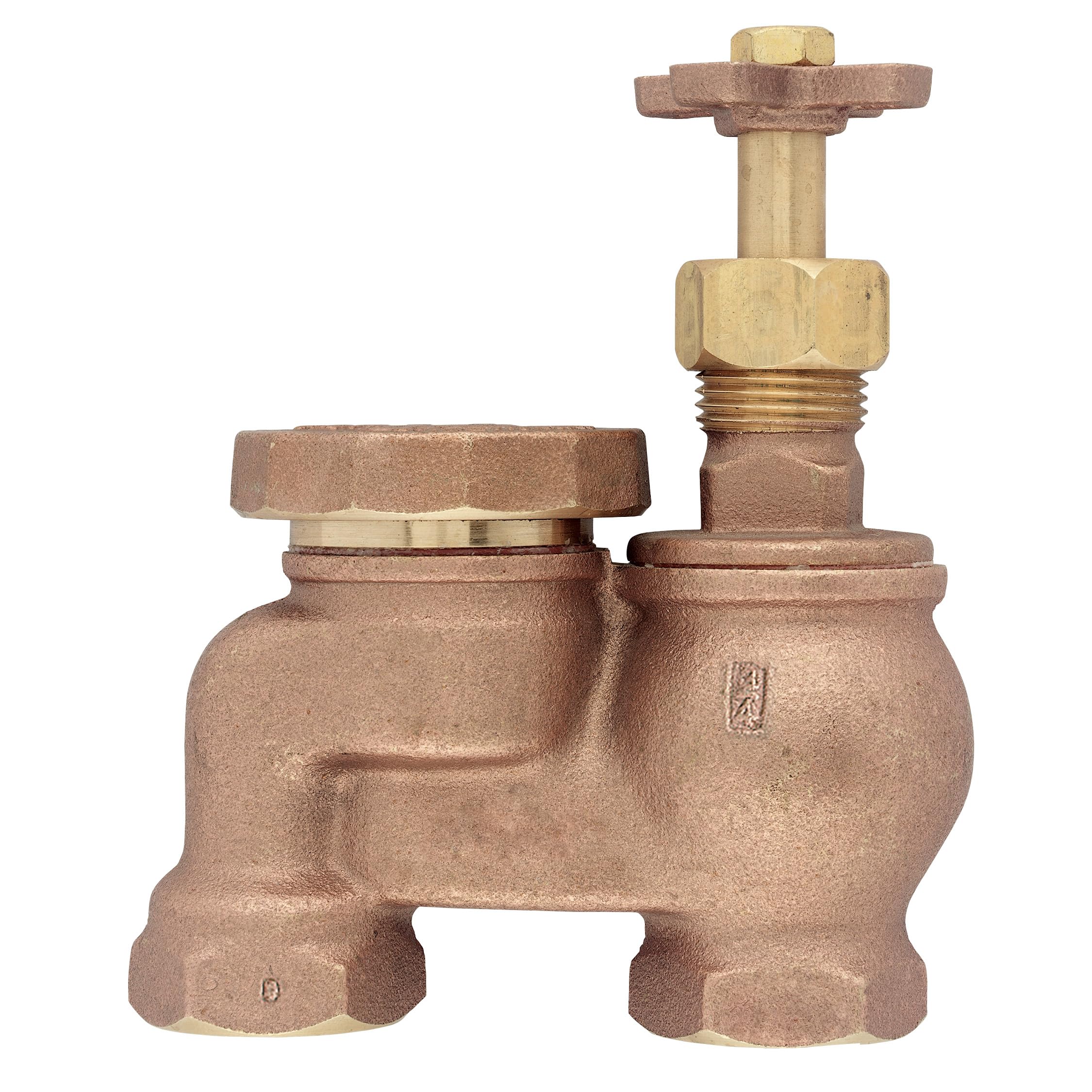
This Orbit is the only brass-bodied valve on the list, and for above-ground anti-siphon duty the 1.8-pound cast brass shell is nearly indestructible. Brass handles UV exposure indefinitely without becoming brittle, and the female iron pipe threads are cut with a sharper profile than plastic threads — you can tighten brass fittings to full torque without cracking the body. The 3/4-inch port size is ideal for residential zones where 1-inch valves are overkill and restrict flow less than 1/2-inch barbs.
Note that this is a manual valve — it has no solenoid, so it will not operate from an automatic controller. The anti-siphon mechanism is integrated into the body, meeting code requirements without a separate backflow device. The full-flow handle rotates a solid brass ball that provides a true positive shutoff with no diaphragm to leak. Several reviewers mention using this valve as a master shutoff at the system manifold because the brass ball valve seals more reliably than plastic diaphragm valves over winter freeze-thaw cycles.
The trade-off for the brass durability is the lack of automation. You turn the handle by hand to start and stop watering. If you have a garden bed that needs occasional manual irrigation or a system that uses a hose-end timer, this valve is a lifetime purchase. The price is above basic plastic valves, but the brass body will outlast multiple plastic replacements.
Why it’s great
- Solid brass body handles years of direct sun without degradation.
- Full-port ball valve design provides maximum flow with zero restriction.
- Positive shutoff with no diaphragm to rupture or harden.
Good to know
- Manual operation only — no solenoid for timer control.
- 3/4 inch ports may require bushing adapters for 1 inch pipe systems.
5. Rain Bird DV Inline Valve 1 in. Slip | 100-DV-SS

The Rain Bird DV inline valve is the go-to for budget-conscious manifold builds where every dollar counts. The slip-by-slip 1-inch configuration glues directly onto PVC pipe — no threaded adapters needed — which keeps the overall manifold footprint smaller. The double-filtered pilot-flow design uses a primary screen at the inlet and a secondary screen at the pilot orifice, stopping debris before it reaches the diaphragm chamber.
The external bleed screw lets you flush the system during spring start-up without disassembling the valve. Internal bleed is also present, allowing spray-free manual operation when you open the solenoid manually. Several reviewers mention reusing the valve body and swapping the internal assembly from a new DV100 into an old glued-in body — a 10-minute repair that avoids cutting and re-gluing pipe. The 24 VAC solenoid draws a standard 350 mA inrush, compatible with every major controller brand.
Downsides include the plastic bonnet threads, which can strip if over-tightened, and the lack of a flow control knob — water output is either fully on or off. For simple zone on/off duty where you do not need per-zone balancing, this valve delivers reliable operation at the lowest entry cost. It is not built for high-pressure systems above 100 psi.
Why it’s great
- Lowest price point for a brand-name 1-inch automatic valve.
- Dual-filter screens prevent pilot orifice clogging in dirty water.
- Internal assembly swaps in minutes without cutting pipe.
Good to know
- Plastic bonnet threads can strip if over-torqued.
- No flow control knob — cannot balance zone flow rates.
6. Irritrol 2400S Slip Globe Valve, 1″

The Irritrol 2400S brings the threaded bonnet design — unscrew the bonnet to access the diaphragm and metering components without removing the valve body from the pipe. This is a significant serviceability advantage over glued bonnet valves where the entire cap must be replaced if threads strip. The Santoprene double-beaded diaphragm is overmolded with a rigid support ring, reducing the chance of the diaphragm slipping out of alignment during reassembly.
The full stainless steel metering system covers the pilot screw, metering pin, and spring — no plastic parts in the flow path that can erode over time. Both internal and external bleed are present, allowing manual operation by either turning the solenoid or using the bleed screw. Reviewers with 20-year-old Irritrol systems confirm that the 2400S’s dimensions match the original, meaning you can swap in a new valve without re-piping the manifold.
The slip (solvent-weld) ends require PVC primer and cement for installation — you cannot easily remove the valve once glued. Plan your manifold layout carefully because the slip connection is permanent without cutting. At its price point, the 2400S offers better internal materials than the Rain Bird DV100, particularly the stainless metering system, for only a minimal premium.
Why it’s great
- Threaded bonnet allows full internal access without removing the body.
- Stainless steel metering system resists sediment wear.
- Double-beaded diaphragm seals more reliably than single-bead designs.
Good to know
- Slip connection is permanent — cannot unscrew for replacement.
- Santoprene diaphragm may degrade faster in high-chlorine water.
7. Orbit Easy Dial 4-Station Irrigation Controller, 28964

The Orbit Easy Dial is not a valve, but it is the controller that activates any 24 VAC automatic valve on this list. With four stations, it supports up to four valves — enough for a typical residential front-and-back lawn system. The dial interface eliminates menus and submenus; you rotate to the station number, set the run time, and move on. Two independent watering programs allow separate schedules with four start times each, which is essential for cycle-and-soak patterns on clay soil.
The Budget dial adjusts all station run times simultaneously from 10% to 200% without reprogramming each zone — useful when seasonal weather shifts require a quick global adjustment. The 300mA transformer powers one solenoid valve at a time, which is standard for residential controllers. The indoor-rated unit fits in a garage or basement; for outdoor mounting you need the Orbit 57095 weatherproof cabinet.
Pairing this controller with a valve from the list above gives you a complete automatic system. The controller supports manual zone run for testing and a rain delay feature that pauses all watering for up to 72 hours. If you are building a new system from scratch, this controller provides the simplest programming experience for the money, and the 4-zone capacity covers most small-to-medium properties.
Why it’s great
- Physical dial programming requires no phone or app.
- Budget dial changes all run times simultaneously by percentage.
- Two independent watering programs with four start times each.
Good to know
- Indoor only — requires separate cabinet for outdoor installation.
- 300mA transformer limits each zone to a single valve operation.
FAQ
Can I mix slip and threaded valves on the same manifold?
What does the anti-siphon valve prevent and do I need one by code?
Why does my new valve click but not open or close fully?
How do I winterize a sprinkler valve to prevent freeze damage?
Can a 24 VAC sprinkler valve run on a 12-volt battery system?
Final Thoughts: The Verdict
For most residential systems, the best automatic sprinkler valve is the Toro 250 because its self-cleaning stainless steel metering pin and 150 psi rating eliminate the two most common failure modes — sediment jamming and diaphragm rupture under high pressure. If you need an anti-siphon valve for above-ground code compliance, the Rain Bird DASASVF100 has the best diaphragm longevity with its reverse-flow design. And for the best value in a solvent-weld inline valve, the Rain Bird DV100 offers reliable performance at the lowest entry cost, with the added benefit of a swappable internal assembly that avoids pipe modification during repairs.