
A 12-inch chop saw is the backbone of any serious framing or demolition job, delivering the raw power needed to slice through stacked dimensional lumber, thick steel angle iron, and masonry with a single, decisive pull of the trigger. The difference between a frustrating afternoon fighting binding blades and a productive session of clean, square cuts comes down to motor torque, spindle lock reliability, and the rigidity of the base.
I’m Min — the co-founder and writer behind Gadgets Feed. For this guide, I analyzed spindle RPM ratings, amp draw curves, fence flatness, and arbor lock mechanisms across nine models to determine which units actually earn their space on a job site or in a workshop.
After reviewing the raw cutting capacity, bevel range, and dust management systems, the results point to a clear leader in the 12 inch chop saw category that balances brute force with practical daily usability.
How To Choose The Best 12 Inch Chop Saw
Choosing the right 12-inch chop saw means looking past just the blade size and amp rating. The real differentiators lie in the bevel mechanism, the sliding system, and the ease of making repeatable angle adjustments. This guide breaks down the key specs that separate a precision tool from a frustrating one.
Motor Power and Torque Delivery
A 15-amp motor is the standard for this category, but not all 15-amp motors deliver torque the same way. Look for a motor that maintains high RPM under load rather than one that bogs down when cutting through dense hardwood or multiple studs at once. A no-load speed between 3,800 and 5,000 RPM is a good benchmark, but the real test is how the motor holds speed when the blade engages the material.
Bevel and Miter Mechanisms
Single-bevel saws tilt only to the left, requiring you to flip the workpiece for mirrored cuts. Dual-bevel saws tilt both left and right, which massively speeds up crown molding work and compound cuts. A saw with 9 or more positive miter stops at common angles (15°, 22.5°, 30°, 45°) saves setup time and reduces measurement errors. The detent override feature on premium models lets you fine-tune between stops.
Sliding vs. Fixed Chop Action
A fixed chop saw is lighter and more rigid, ideal for repeated straight cuts on material up to about 4 inches thick. A sliding saw adds forward-backward rails, dramatically increasing the cross-cut capacity—handy for cutting wide boards or decking in a single pass. The trade-off is added weight and more complex mechanisms that can develop play over time. For heavy framing work, a rigid fixed saw wins; for versatility, sliding is the answer.
Base and Fence Construction
The base material and fence design determine how straight and stable your cuts remain over the life of the saw. Cast aluminum bases are lighter than steel and resist corrosion, but high-end models often use precision-machined steel or stainless steel fences for maximum flatness. A tall sliding fence is critical for supporting crown molding in the nested position. A fence that wobbles or bends under clamp pressure will ruin accuracy.
Quick Comparison
On smaller screens, swipe sideways to see the full table.
| Model | Category | Best For | Key Spec | Amazon |
|---|---|---|---|---|
| Metabo HPT C12RSH3 | Dual-Bevel Sliding | Precision Woodworking | 4,000 RPM, 9 detent stops | Amazon |
| DEWALT DWS716 | Dual-Bevel | Professional Framing & Trim | 14 positive stops, 48° bevel | Amazon |
| DEWALT DWS715 | Single-Bevel | High-Volume Straight Cuts | 2×8 capacity at 90° | Amazon |
| VEVOR Sliding Saw | Dual-Bevel Sliding | Large-Scale Woodworking | 60T blade, 5,000 RPM | Amazon |
| SKIL 3821-01 | Compound | Quick Setup & Portability | 4,500 RPM, laser guide | Amazon |
| DOVAMAN 12-Inch | Dual-Bevel Sliding | Budget Dual-Bevel | 4.2 x 13 in capacity | Amazon |
| MarvTool JS-1207C3 | Dual-Bevel Sliding | Lightweight DIY Projects | 39.6 lbs, 3,800 RPM | Amazon |
| Genesis GMS1015LC | Compound | Entry-Level Value | 9 miter stops, laser guide | Amazon |
| Metabo HPT C10FCG2 | Single-Bevel | Portable Light Framing | 24.2 lbs, 5,000 RPM | Amazon |
In‑Depth Reviews
1. Metabo HPT C12RSH3
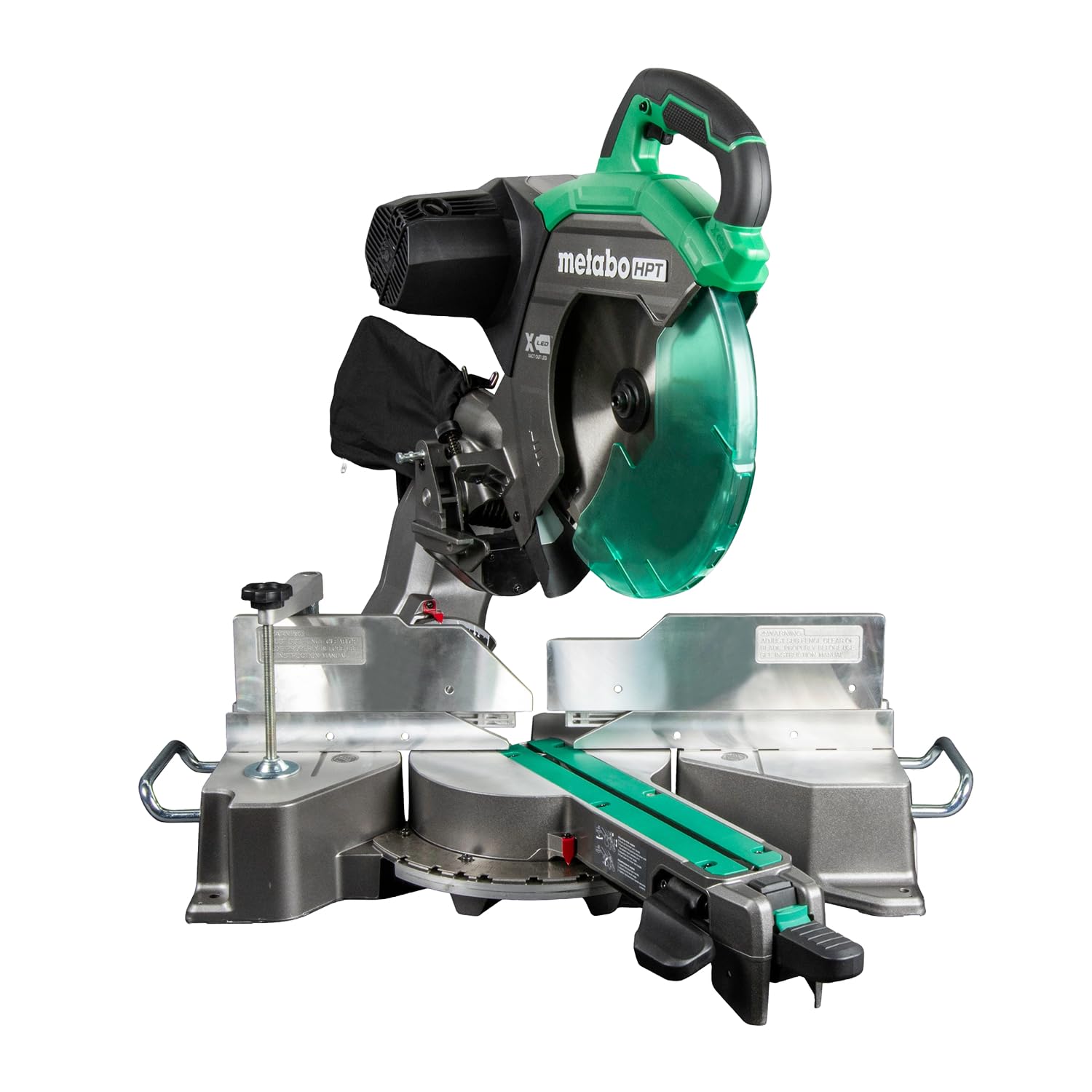
The Metabo HPT C12RSH3 delivers a compelling blend of dual-bevel flexibility and sliding rail capacity without the sticker shock of the top-tier German competitors. Its 4,000 RPM no-load speed is paired with a forward-rail design that lets you place the saw flush against a wall, saving critical bench space in tight workshops. The Xact Cut Shadow Line projection system eliminates the parallax errors common with lasers, marking the exact kerf path regardless of ambient light.
Users consistently report that the saw maintains excellent accuracy for fine furniture work right out of the box, though the sliding mechanism can feel slightly sticky on the first few pulls—this typically eases with use. The 9 miter detent stops lock firmly into position, and the bevel range of 45° both left and right covers the vast majority of compound cutting scenarios. The included dust bag is underwhelming, but the saw pairs well with a shop vac connected to the exhaust port.
At 53.6 pounds, this saw is a stationary workshop tool rather than a daily job-site hauler. The trade-off is a rigid base that resists flex during heavy cuts. For anyone needing dual-bevel capability and a reliable sliding system without entering the premium tier, this saw represents the best balance of accuracy and investment in the category.
Why it’s great
- Dual-bevel 45° left and right for fast compound cuts without flipping workpiece
- Forward-rail design saves bench space and allows wall placement
- Xact Cut Shadow Line is more accurate than laser systems in bright conditions
Good to know
- Sliding mechanism can be slightly sticky before break-in
- Stock dust collection bag is inadequate for fine sawdust
- Some units require minor calibration for perfect 90°
2. DEWALT DWS716

The DEWALT DWS716 is the reference standard for professionals who demand repeatable accuracy across long production runs. Its stainless steel miter detent plate features 14 positive stops, meaning every pull to a common angle clicks into the same exact position every time—critical for trim carpenters building identical cuts all day. The double-bevel design tilts 48° left and right, giving you the flexibility to cut complex crown molding profiles without reorienting the workpiece.
The tall sliding fence supports crown molding up to 6-5/8 inches in the nested position, and the cam lock miter handle with detent override lets you fine-tune between detents without fighting the mechanism. At 48.3 pounds, it’s lighter than many dual-bevel competitors, making it feasible to transport between job sites when paired with the appropriate stand. The included 12-inch carbide-tipped blade is sharp enough to deliver clean cuts on day one, though serious users will upgrade to a dedicated finishing blade.
Users upgrade to this saw from older 10-inch models and consistently report that the increased cutting capacity and the smoothness of the bevel adjustments justify the move. The dust collection is improved over previous generations but still not perfect. For a professional framer or trim carpenter who needs a saw that will hold its calibration for years, the DWS716 is the gold standard.
Why it’s great
- 14 positive miter stops deliver industry-leading repeatable accuracy
- Double-bevel 48° left and right for efficient crown molding work
- Stainless steel detent plate resists wear and corrosion
Good to know
- Dust collection is improved but still not dust-free
- Short power cord requires an extension cord for most setups
- Higher price point than single-bevel alternatives
3. DEWALT DWS715
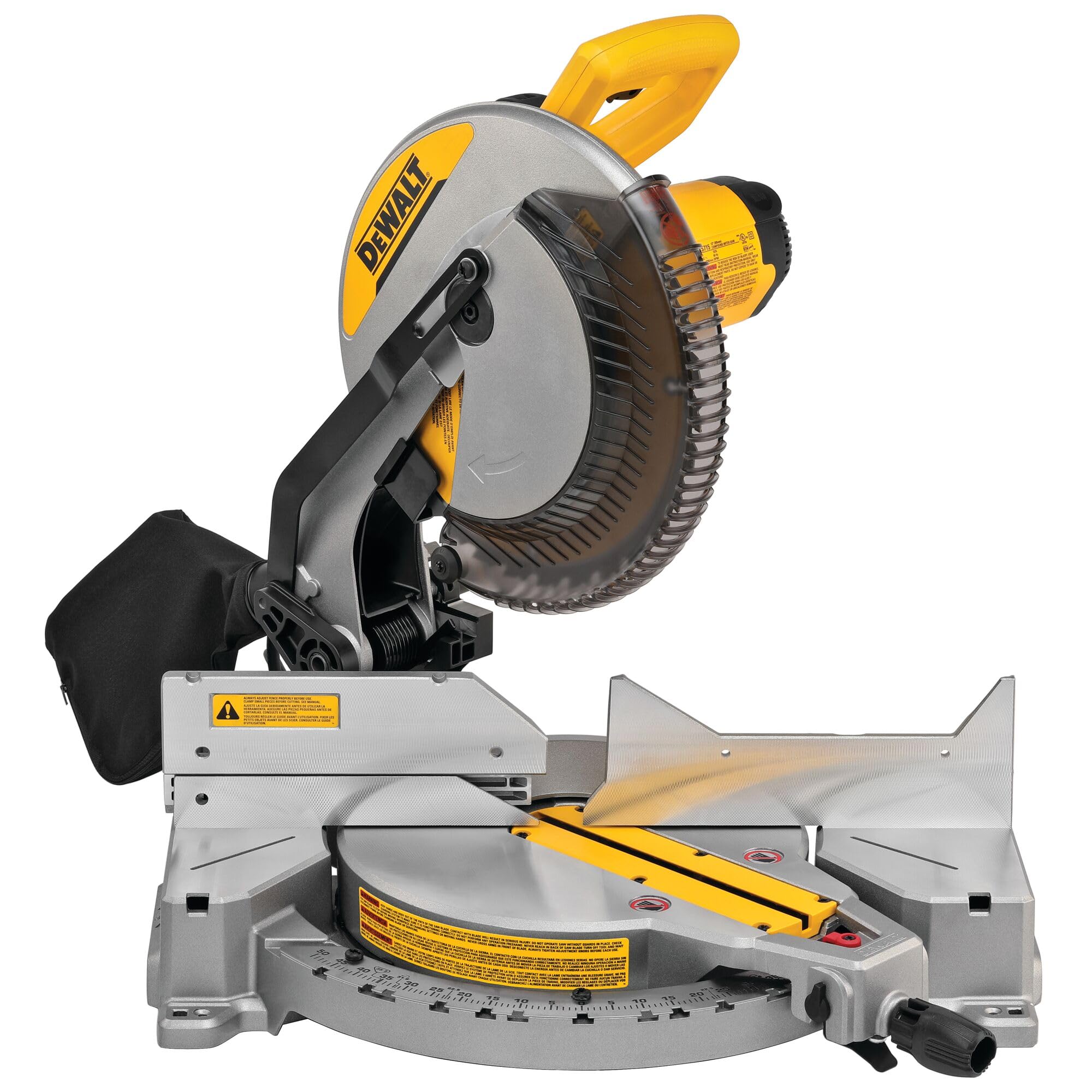
The DEWALT DWS715 strips down the dual-bevel complexity of its sibling and focuses pure energy on straight, powerful cuts through thick material. Its 15-amp motor drives through 2×8 dimensional lumber at 90° and 2×6 at 45° without hesitation, making it the go-to choice for framing crews who need a reliable workhorse. The single-bevel design tilts 48° left and 3° right, which is enough for standard bevel work but requires workpiece flipping for mirrored cuts.
The machined base fence support provides a flat, rigid reference surface that holds calibration over time, and the stainless steel detent plate includes 14 positive stops for quick angle changes. Users report that the saw arrives accurate to a machinist square right out of the box, saving valuable setup time on the job. The included vertical clamp holds material securely against the fence, reducing the risk of kickback during heavy cuts.
At 42.8 pounds, it’s lighter than the dual-bevel DWS716, making it more portable for daily transport. The trade-off is the single-bevel limitation, but for professionals who primarily cut at 90° and 45° angles, this saw eliminates unnecessary complexity. The dust bag is functional but small, and pairing with a shop vac is recommended for cleaner operation.
Why it’s great
- Effortlessly cuts 2×8 lumber at 90° with no bogging
- Arrives accurate out of the box, minimal calibration needed
- Lighter than dual-bevel counterparts for job-site portability
Good to know
- Single-bevel requires flip for mirrored cuts
- Short power cord needs an extension for most work
- Dust bag fills quickly during production cutting
4. VEVOR Sliding Compound Miter Saw
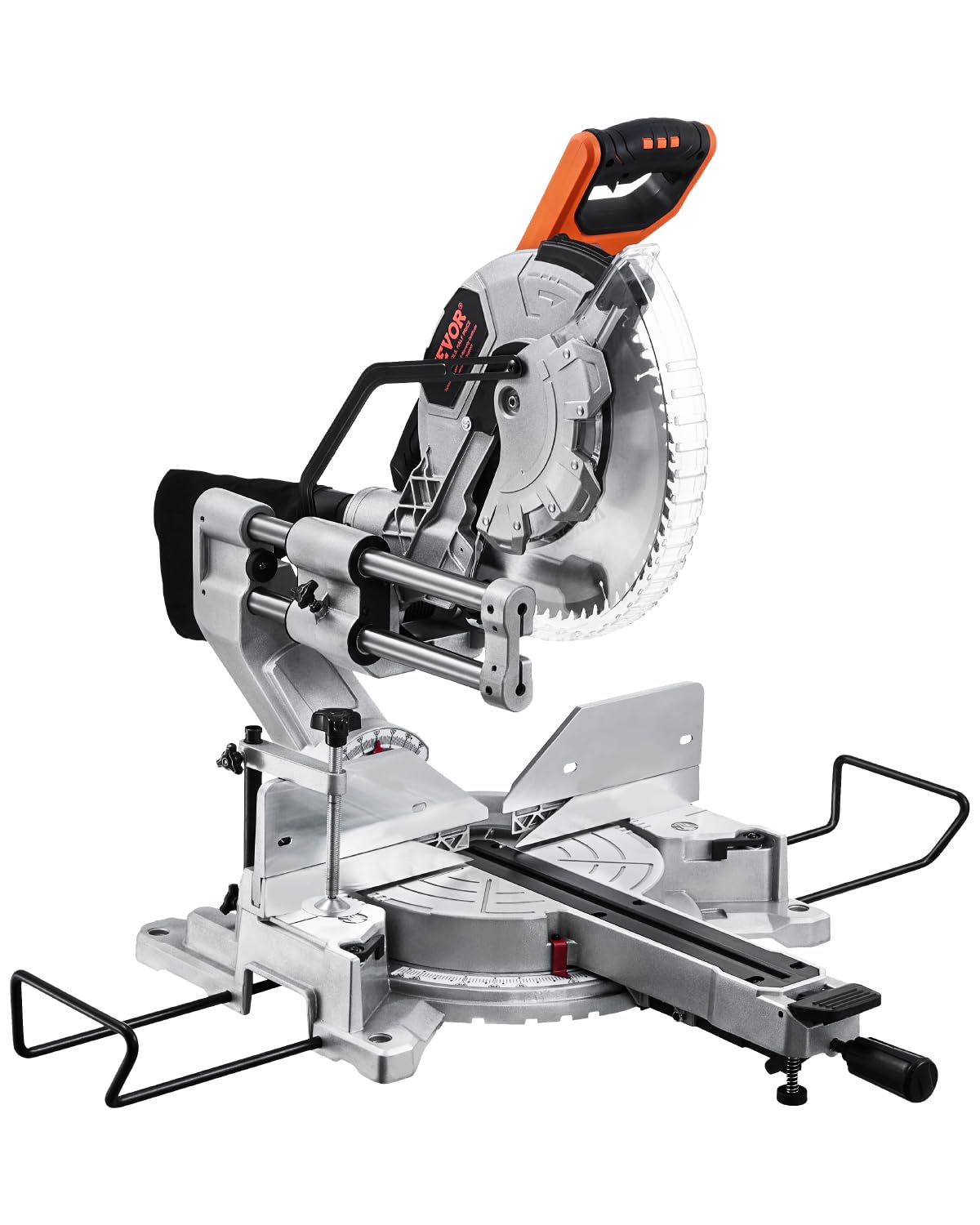
The VEVOR Sliding Compound Miter Saw brings dual-bevel sliding capability to a price point that typically buys only a fixed single-bevel saw. Its 60-tooth carbide blade cuts smoothly through hardwood, composite decking, and laminates right out of the box, and the axial sliding system provides a generous cross-cut range for wide boards. The advanced LED guide system projects a clear cut line, though some users report that it can be knocked out of alignment by kickback events.
The upgraded aluminum base is lighter than cast iron, contributing to a 46.4-pound total weight that is manageable for occasional transport between garage and driveway. The motor delivers 5,000 RPM, which is on the higher end of the category, translating to fast cuts through dense material. The dual-bevel range of 0-45° left and right provides the flexibility needed for complex crown molding and picture frame assemblies.
While the build quality does not match the precision of the DEWALT DWS716, the VEVOR saw delivers surprisingly accurate cuts for its category. The dust discharge port has a tendency to clog with soft woods and fine sawdust, and the included 32-tooth blade for the dust test clogged quickly. Upgrading to a higher-tooth blade and connecting a shop vac solves both issues.
Why it’s great
- Dual-bevel sliding at a fraction of premium brand pricing
- Includes a quality 60-tooth blade for smooth cuts from day one
- Aluminum base is lighter and more corrosion-resistant than steel
Good to know
- LED alignment can shift after kickback events
- Dust collection clogs easily with soft wood
- Customer service response times can be slow
5. SKIL 3821-01

The SKIL 3821-01 is designed for the user who values fast setup and portability over complex dual-bevel mechanisms. Its Quick-Mount system locks onto the compatible SKIL miter saw stand (3302-02) in seconds, creating a stable cutting platform that can be broken down and stored just as quickly. The laser guide is integrated into the handle with an on/off switch, allowing you to align cuts without bending or guessing.
The 15-amp motor spins at 4,500 RPM and cuts through 4×4 lumber with ease, making it suitable for framing, deck repairs, and general construction. The table extension with left and right extension rails supports longer workpieces without sagging, and the 9 positive miter stops at common angles speed up repetitive angle cuts. At 42.5 pounds, it’s reasonably portable, though it lacks the sliding mechanism found on more expensive models.
Users consistently praise the laser for eliminating guesswork, and the saw holds its calibration well for a mid-range tool. The stock blade is functional but not exceptional—upgrading to a higher-quality finishing blade noticeably improves cut quality on trim work. The dust bag is adequate for light use, but heavy cutting generates enough debris to require a shop vac connection.
Why it’s great
- Quick-Mount system integrates seamlessly with SKIL stands
- Laser guide has an on/off switch on the handle for convenience
- Extension rails support long workpieces without sagging
Good to know
- Fixed design limits cross-cut capacity compared to sliding saws
- Stock blade is fine for construction but not finish work
- Online warranty registration system can be problematic
6. DOVAMAN 12-Inch Dual-Bevel Miter Saw

The DOVAMAN 12-Inch Dual-Bevel Miter Saw offers a sliding rail system and dual-bevel capability at a price that undercuts major brand alternatives by a wide margin. Its 15-amp motor produces 3,800 RPM and delivers a maximum cutting capacity of 4.2 x 13 inches, enough to handle 4×4 posts and wide decking boards in a single pass. The laser guide provides a clear reference line for alignment, and the base features 9 common angle presets for quick setup.
Users building decks and large outdoor structures report that this saw handles the workload without bogging down, cutting through pressure-treated lumber consistently. The included 40-tooth TCT blade is adequate for general construction but may leave a rougher edge on hardwoods. The package includes extra carbon brushes, a support clamp, and dust bag, which adds long-term value for users who plan to use the saw intensively.
The build quality is noticeably less refined than premium brands—the plastic handle can feel less durable, and some units require slight calibration adjustment after shipping. However, for the price, the DOVAMAN delivers dual-bevel sliding functionality that simply does not exist at this price point from established brands. It’s a solid choice for serious DIYers and hobbyists who need versatility without a professional budget.
Why it’s great
- Dual-bevel sliding saw at a price that competes with fixed models
- Cuts 4x4s like butter with no motor bogging
- Includes extra carbon brushes and support clamp
Good to know
- Fit and finish is less refined than premium brands
- Plastic handle may not survive heavy impacts
- Needs calibration check after shipping
7. MarvTool JS-1207C3
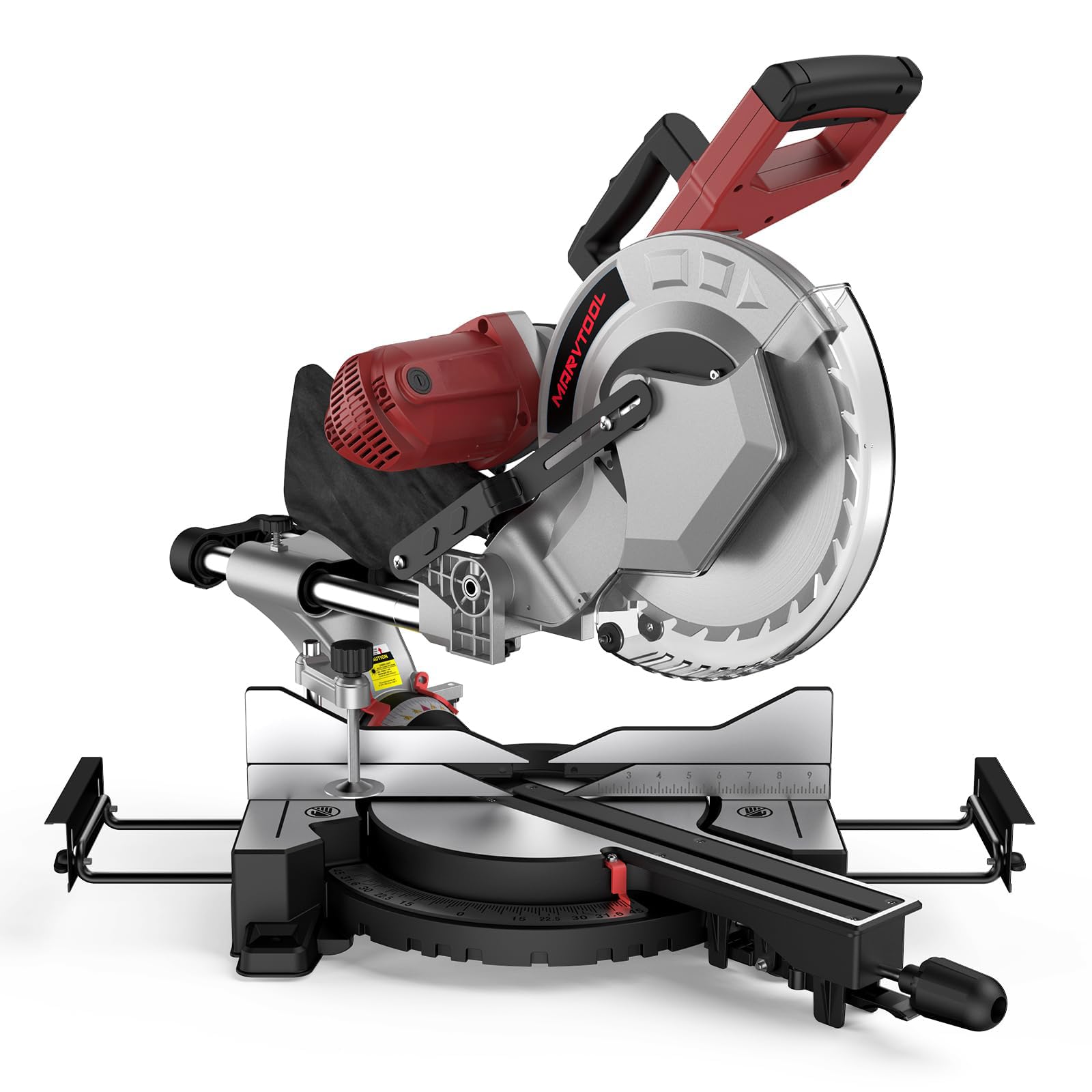
The MarvTool JS-1207C3 prioritizes a lightweight design (39.6 lbs) that makes it one of the most portable sliding dual-bevel saws in the category. Despite the reduced weight, it maintains a 15-amp motor delivering 3,800 RPM and a sliding rail system that handles cross-cuts on wider boards. The dual-bevel capability tilts 45° left and right, providing the same compound cutting flexibility as heavier competitors.
The included 36-tooth TCT blade is adequate for general cutting, and the extension tables provide valuable support for longer workpieces. Users report that the saw cuts straight and square for trim work and DIY projects, and the lightweight design makes it ideal for small home workshops where the saw needs to be moved and stored frequently. The transparent blade guard provides good visibility of the cut line, though there is no laser guide—users must rely on the blade kerf alignment or add a third-party system.
The compact design, when locked into the base using the release knob, takes up minimal storage space. The dust collection bag is basic but functional. For a homeowner or hobbyist who needs a dual-bevel sliding saw but lacks a dedicated workshop bench, the MarvTool offers a practical light-duty solution.
Why it’s great
- Extremely lightweight at 39.6 lbs for a sliding dual-bevel saw
- Compact storage when head is locked into base
- Dual-bevel 45° left and right for compound cutting
Good to know
- No laser guide, requires manual blade kerf alignment
- Stock 36T blade is basic, upgrade recommended for finish work
- Not designed for heavy professional daily use
8. Genesis GMS1015LC

The Genesis GMS1015LC is a 10-inch saw (not a 12-inch) included here for value comparison, offering a laser guide and 9 positive miter stops at a very accessible price point. Its 15-amp motor is powerful enough for cutting 2x4s and 4x4s, and the compound miter design allows for bevel cuts up to 45° left. The die-cast aluminum base provides a stable platform that resists flexing during operation.
The integrated laser guide provides a clear reference line that significantly improves cut accuracy for beginners, and the 9 positive stops at common angles speed up repetitive cuts for trim and molding work. Users report that the saw cuts baseboards and trim well and is easy to assemble and use for home projects. The included 60-tooth carbide blade is a welcome upgrade over cheaper stock blades, delivering smoother cuts out of the box.
It is important to note that this saw is designed strictly for wood and wood composites—not for cutting metal, as the plastic components near the motor can melt under the heat generated by metal cutting. The dust bag is poorly designed, with debris tending to slide back out, but connecting a shop vac to the standard exhaust port resolves this issue.
Why it’s great
- Excellent value for beginners needing a reliable miter saw
- 60T carbide blade provides smoother cuts than typical stock blades
- Laser guide improves accuracy for less experienced users
Good to know
- 10-inch blade, not suitable for 12-inch capacity needs
- Not designed for cutting metal, plastic components can melt
- Dust bag is poorly designed, shop vac recommended
9. Metabo HPT C10FCG2
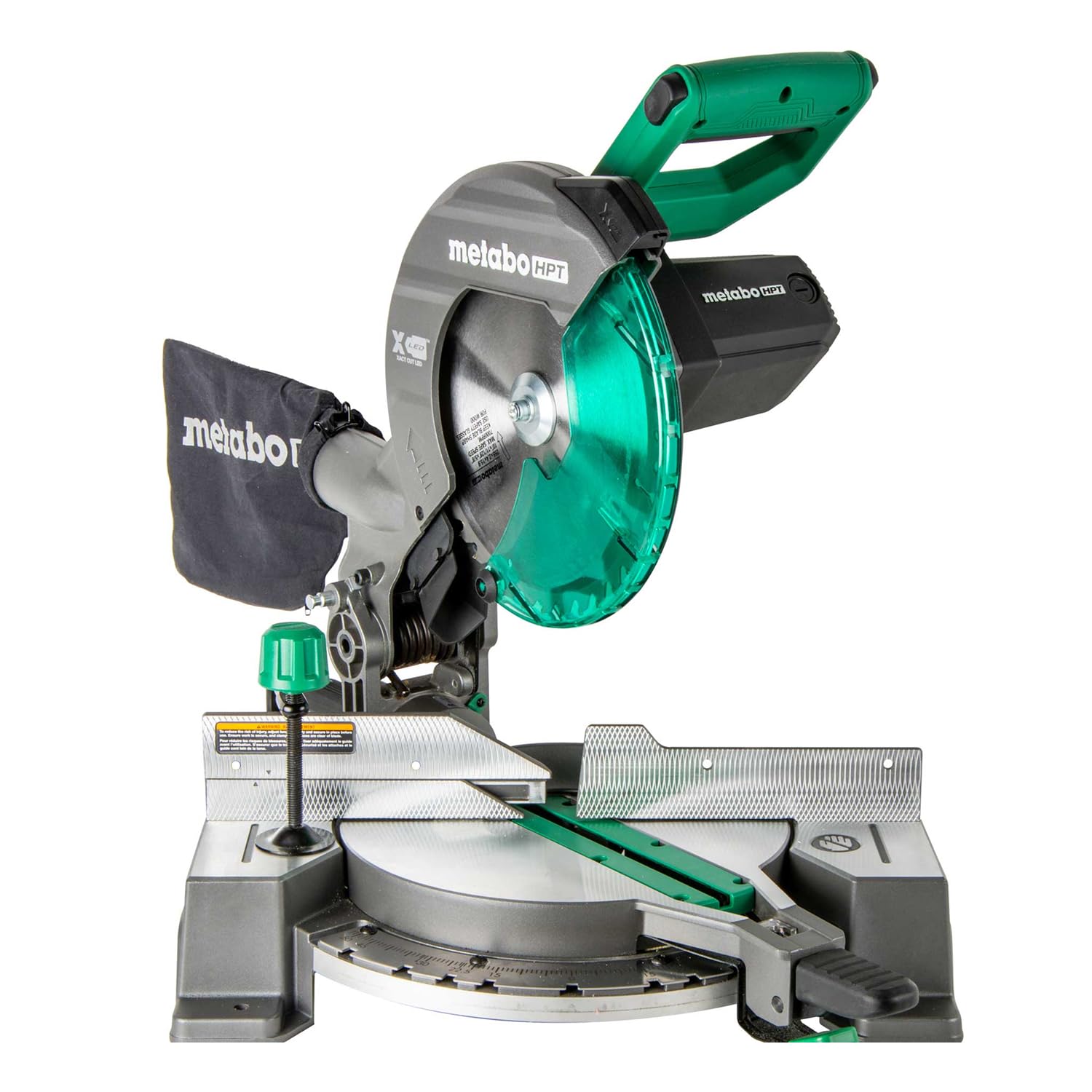
The Metabo HPT C10FCG2 is a 10-inch single-bevel compound miter saw that prioritizes portability above all else, weighing just 24.2 pounds. This makes it the lightest saw in the comparison by a significant margin, ideal for contractors who carry their tools up multiple flights of stairs or into attics. Despite the light weight, the 15-amp motor delivers a no-load speed of 5,000 RPM and cuts through dimensional lumber and trim with authority.
The Xact Cut Shadow Line system projects a blade-shadow cut line that remains accurate in any lighting, outperforming laser guides that wash out in bright sunlight. The miter range covers 0-52° left and right, and the single bevel tilts 0-45° left. Users report that the saw is accurate out of the box, cuts square, and handles trim work and light framing with ease. The vice clamping system secures workpieces firmly against the fence for safer operation.
The trade-off for the light weight is a smaller 10-inch blade capacity and a single-bevel design. For users who primarily cut 2x4s, baseboards, and trim, the 10-inch size is sufficient, but anyone regularly cutting 4×4 posts or wide stock will want a 12-inch model. The dust collection is adequate for a saw of this size, and the 5-year warranty from Metabo HPT adds peace of mind.
Why it’s great
- Ultra-lightweight at 24.2 lbs, best for high-portability needs
- Xact Cut Shadow Line works in any lighting without batteries
- Accurate out of the box with minimal setup required
Good to know
- 10-inch blade, not suitable for 12-inch capacity requirements
- Single-bevel requires workpiece flip for mirrored cuts
- Missing blade wrench in some units, check package on arrival
FAQ
What is the difference between a chop saw and a miter saw?
Can a 12-inch miter saw cut through a 6×6 post?
Should I choose a laser guide or a shadow line system?
What does dual bevel mean and why would I need it?
Final Thoughts: The Verdict
For most users, the 12 inch chop saw winner is the Metabo HPT C12RSH3 because it delivers dual-bevel sliding capability with reliable accuracy at a price that undercuts premium competitors while maintaining professional-grade build quality. If you need the absolute reference standard for repeatable precision and heavy daily use, grab the DEWALT DWS716. And for budget-conscious buyers who still want dual-bevel sliding functionality, nothing beats the value of the DOVAMAN 12-Inch.