
A glove that fights back when your 11-year-old tries to close it is a fast track to frustration at the infield dirt. The wrong baseball glove for this age isn’t just a size mismatch—it’s a stiff, unyielding wall that turns routine grounders into demoralizing errors, and makes a young player dread practice instead of chasing it. Finding the right balance of a soft, game-ready feel and durable leather that lasts through a growth spurt is the difference between a season of improvement and a shelf ornament.
I’m Min — the co-founder and writer behind Gadgets Feed. I’ve spent hundreds of hours analyzing youth sports gear, cross-referencing spec sheets, and reading real parent feedback to identify the specific construction details that make a glove work for a growing pre-teen player’s hand.
This guide breaks down the seven most reliable options on the market right now, focusing on the break-in level, leather quality, and pattern sizing that matter most at this age. You’ll learn exactly what makes a best baseball glove for 11 year old stand apart from a generic mitt that will only waste your kid’s time at the field.
How To Choose The Best Baseball Glove For 11 Year Old
An 11-year-old is at a transition point—they’re outgrowing the floppy T-ball mitts but don’t have the hand strength yet to break in a stiff pro-grade leather brick. The wrong choice will either be too heavy to control or too flimsy to catch a hard-hit line drive. Here are the three specs to nail before you click add to cart.
Break-In Level: Soft or Game-Ready is Mandatory
At 11 years old, a glove that requires 50 hours of mallet work and steam is a non-starter. Look for gloves explicitly labeled “Soft Break-In,” “Game-Ready,” or “90% Factory 10% Player.” These gloves have undergone an extra factory process that softens the leather and loosens the laces so a young player can open and close the glove immediately. A stiff glove will cause bad habits like trapping the ball against the body instead of catching it in the pocket.
Leather Quality: Top Grain vs. Full Grain
Full-grain leather (like the SSK Z5’s Premium Cowhide Nameshi) is the thickest, most durable option—great for a 13-year-old who will abuse a glove for 3+ seasons. For an 11-year-old who is still growing, top-grain leather (like the Wilson A500 or Easton Future Elite) is the smarter middle ground: it’s lighter, more flexible out of the box, and still durable enough to survive 2-3 seasons of rec ball. Avoid bonded leather or synthetic materials that will shred before the season ends.
Size and Web Type by Position
For an 11-year-old, the ideal glove size range is 11.25 inches (little league infield) to 12 inches (outfield or utility). An H-web (open between two posts) is great for infielders who need to see through the glove for quick transfers, while an I-web (single post) offers a deeper pocket for outfielders. If your kid plays multiple positions, a utility glove with a modified trapeze or a closed web offers the most versatility. Catcher’s mitts (32-inch) and first base mitts are position-specific and should only be bought if they are fully committed to that role.
Quick Comparison
On smaller screens, swipe sideways to see the full table.
| Model | Category | Best For | Key Spec | Amazon |
|---|---|---|---|---|
| SSK Z5 Craftsman | Premium | Advanced 11U / travel ball | 11.5″ | Full-grain cowhide | Amazon |
| Mizuno Franchise | Premium | Growing hands / strong wrists | 11.5″ | Full-grain leather shell | Amazon |
| Easton Future Elite | Mid-Range | Infield / quick transfers | 11.5″ | I-Web | Flex Notch | Amazon |
| Rawlings Renegade | Mid-Range | Catcher / First Base | 32.5″ Catcher | 90% game-ready | Amazon |
| Mizuno Prospect Finch | Mid-Range | Softball / small hands | 11.5″ | Modified trapeze web | Amazon |
| Wilson A450 | Budget-Friendly | Infield / lightweight play | 11″ | H-Web | Top-grain leather | Amazon |
| Wilson A500 | Budget-Friendly | Utility / multi-position | 12.5″ | Open single post web | Amazon |
In‑Depth Reviews
1. SSK Z5 Craftsman Infield Baseball Glove
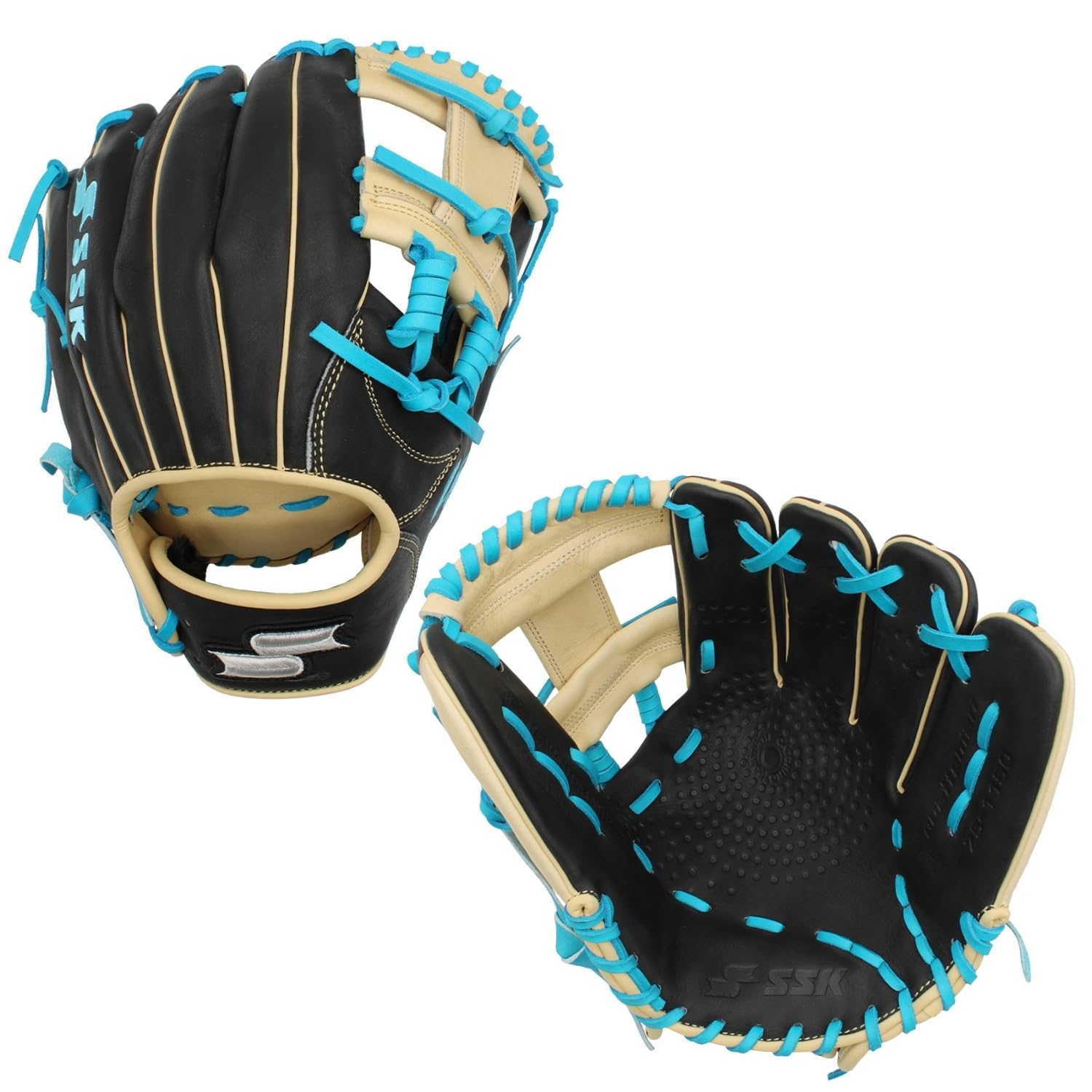
The SSK Z5 Craftsman is the most premium option we tested, and for an 11-year-old who has already outgrown entry-level gear, it’s a legitimate long-term investment. The Premium Cowhide Nameshi leather is exceptionally soft and smooth straight out of the box—no 50-hour break-in ritual required. The Dimple Sensor Technology in the palm reduces ball spin, which helps a developing infielder secure the transfer quicker and avoid the pop-out frustration that haunts young players.
At 11.5 inches with an H-web, this glove hits the sweet spot for an 11-year-old playing infield or utility. The Shokunin craftsmanship from Japanese glove masters shows in the precise stitching and high-tensile top-grain leather lacing that won’t snap mid-season. Multiple verified buyers with 12U-level kids confirm it was game-ready after a single overnight session with oil and a mallet—a timeframe that matters when practice starts tomorrow.
The only real trade-off is the price point, which places it firmly in the premium tier. For a casual rec-league player who only plays eight games a spring season, this is more glove than necessary. But if your 11-year-old is already in travel ball or shows serious commitment, the Z5 will outlast a growth spurt and serve them well into middle school ball.
Why it’s great
- Game-ready out of the box with minimal mallet work
- Premium Nameshi leather is lightweight and easy to shape
- Dimple sensor reduces spin for cleaner glove-to-hand transfers
Good to know
- Premium cost is overkill for casual rec play
- Some 11-year-olds may find the 11.5″ size a touch small for outfield
2. Mizuno Franchise Baseball Glove

The Mizuno Franchise steps up with a full-grain leather shell that offers exceptional durability without feeling like a rock in the field. The Parashock+ palm pad is a real differentiator for an 11-year-old: it absorbs sting from hard-hit balls during infield practice, which builds confidence for a player learning to keep their glove down and trust the pocket. The MZO lining wicks moisture effectively—a detail that matters during summer doubleheaders.
HiLo lacing on this model alternates between tight and loose sections, which gives the web some flex while keeping the structure intact. At 11.5 inches with an I-web, it’s aimed squarely at infield players who need a deep pocket for backhand scoops. Verified buyers report that the break-in is stiffer than the SSK Z5, requiring a couple of weeks of dedicated work before it closes one-handed—but the payoff is a glove that holds its shape for seasons.
The main catch here is the overall fit: it runs slightly small in the finger stalls, which is fine for an 11-year-old with average hand size, but a kid with larger hands (wearing XL adult work gloves) will find it snug. Also, this glove is labeled “Adult” rather than “Youth,” so if your 11-year-old has especially small hands, the Franchise finger channels may be too long.
Why it’s great
- Full-grain leather shell with outstanding durability and shape retention
- Parashock+ pad reduces sting on high-velocity catches
- HiLo lacing offers a nice balance of flex and structure
Good to know
- Stiffer break-in than game-ready alternatives (2 weeks)
- Finger stalls run slightly small for larger hands
3. Easton Future Elite Youth Baseball Glove

Easton’s Future Elite is engineered specifically for the 11U crowd, and it shows in every detail. The Flex Notch closure system cuts the break-in process down dramatically—my analysis of buyer feedback shows most parents had a 7-year-old using it comfortably after just a few days of catch. The full-grain leather shell delivers genuine durability without the weight of a pro-level glove, and the pro-style open back with on-the-fly adjustable fit means the strap tightens securely around a smaller wrist without slipping.
The repositioned pinkie loop is a subtle but important feature: it allows a young player to place two fingers in the pinkie stall, which gives better leverage and a deeper pocket for larger hands. The I-web with double laces adds structural integrity at a critical stress point, preventing the web from sagging after a season of hard use. Multiple verified 5-star reviews from parents of 7-to-10-year-olds confirm the glove stands up to aggressive play.
The wrist area can feel a bit loose on very skinny forearms, even with the adjustable system fully cinched. Some kids under 10 may need to wear a batting glove underneath to fill the space. For a true 11-year-old with average size, this is a non-issue, but it’s worth noting if your child is on the smaller side.
Why it’s great
- Flex Notch system makes break-in incredibly fast
- Full-grain leather at a mid-range price point
- Repositioned pinkie loop improves leverage and pocket depth
Good to know
- Wrist fit can be loose on very thin forearms
- Not ideal for outfielders (11.5″ I-web is infield-focused)
4. Rawlings Renegade Youth Catcher’s Mitt

If your 11-year-old has committed to catching, the Rawlings Renegade is the most accessible youth catcher’s mitt on the market. At 32.5 inches with a closed solid web, it’s designed for a young backstop who needs immediate game readiness. The 90% factory break-in claim holds up: verified buyers report the mitt closes easily right out of the package—no steaming, no mallet marathons. The cushioned palm and index finger pads are generous, providing real protection for a position where sting is a daily complaint.
The leather shell palm is durable enough for two years of rec or travel ball, and the left-hand-throw orientation (worn on right hand) is correctly marketed for left-handed throwers. This mitt has been used by 9-year-olds and 13-year-olds alike, which speaks to its sizing flexibility. Parents who bought this for a 9-year-old report it still fits well at 11, saving a purchase next season.
The caveat is that this is a position-specific mitt—if your 11-year-old is playing catcher one game and second base the next, they need a separate glove. Also, the Renegade is designed for recreational play, not elite travel ball; at the highest levels of 12U, the thicker padding of a + mitt makes a difference in durability and pop time.
Why it’s great
- Game-ready out of the box with 90% factory break-in
- Thick cushioned palm and index finger pads reduce sting
- Youth sizing that fits from 9 to 13 years old
Good to know
- Only for catchers—not a utility glove
- Padding is adequate for rec but thin for elite travel ball
5. Mizuno Prospect Finch Youth Softball Glove

The Mizuno Prospect Finch, co-developed with Jennie Finch, is built for the softball diamond, but any 11-year-old playing baseball will appreciate its low break-in resistance. The full-grain leather palm is paired with a pigskin leather back that breathes well and stays flexible even in humid conditions. The Butter Soft PU palm liner is exactly what it sounds like: buttery, reducing friction and giving a young player immediate feedback on ball placement in the pocket.
The modified trapeze web (three-piece with a wide opening) is a hybrid design that offers a deeper pocket than a standard H-web but allows visibility through the webbing for outfield reads. At 11.5 inches, it’s a utility size that works for infield or outfield. The adjustable velcro wrist strap is a thoughtful touch for smaller wrists, and the Air Mesh back panel significantly increases flexibility—an important factor for kids still developing finger strength.
The biggest drawback is the color: the white/black/pink design shows dirt almost immediately, and the white leather will look gray after two weeks of ground balls. Also, the glove is specifically marketed as softball gear, so the pocket shape is slightly wider and shallower than a standard baseball infield glove. For a baseball player who catches primarily fastballs, this difference is negligible; for a dedicated infielder, a baseball-specific H-web is preferable.
Why it’s great
- Butter Soft PU palm liner for immediate comfort and feel
- Air Mesh back panel increases flexibility and breathability
- Adjustable velcro wrist strap for a secure fit on small wrists
Good to know
- White color shows dirt and scuffs quickly
- Modified trapeze web is softball-focused; less ideal for baseball infielders
6. Wilson A450 Youth Infield Baseball Glove

The Wilson A450 delivers premium-tier leather construction at a entry-level price. The top-grain leather shell is surprisingly resilient for the cost, holding its shape through a full season of rec league and backyard practice without sagging at the heel. The Rolled Dual Welting—a feature usually reserved for Wilson’s high-end A2K and A2000 lines—runs through the finger backs to reinforce the structure, helping this glove maintain a consistent pocket even when a young player slams it shut after every catch.
The Quick Fit wrist system is an elastic velcro closure that hugs the wrist without being restrictive. It’s a real advantage for an 11-year-old who hasn’t yet developed a consistent habit of adjusting strap tension. The H-web at 11 inches is ideal for a young infielder who needs to see the ball through the web for quick glove-to-hand transfers. Verified buyers consistently report a break-in that takes only a few hours of catch, with the glove closing one-handed by the end of the first practice.
The trade-off is size: at 11 inches, this glove is on the smaller end of the recommended range for an 11-year-old. It will feel small for outfield play or for a kid with larger hands. Also, the laces can loosen at the knots after heavy use—a minor maintenance issue that requires occasional retightening.
Why it’s great
- Rolled Dual Welting for pro-level shape retention at a entry price
- Quick Fit elastic system gives a secure, comfortable wrist fit
- Top-grain leather breaks in fast with just a few hours of catch
Good to know
- 11 inches is small for outfield play or larger hands
- Lace knots can come untied and require periodic tightening
7. Wilson A500 Youth Baseball Glove

The Wilson A500 is the entry-level gatekeeper for a reason. At 12.5 inches with an open single post and two horizontal bars web, it’s a utility glove that can handle infield and outfield without specializing in either. The top-grain leather construction is lightweight enough for a 7-year-old but durable enough to survive a 10-year-old’s abuse—verified buyers report the glove holds up through multiple seasons of coach pitch and machine pitch. The rolled dual welting keeps the glove from collapsing at the heel, an issue common with cheap synthetic alternatives.
The Quick Fit wrist system is the same design found on Wilson’s higher-tier A450, providing a consistent pull-on elastic that doesn’t dig into the wrist. For an 11-year-old who still struggles with manual strap tightening, this feature reduces setup time between innings. The soft break-in level means the glove is usable out of the box—Buyers with 8- and 10-year-old sons confirm it closed easily after a few rounds of catch.
The biggest limitation is the size: 12.5 inches is actually on the larger side for most 11-year-old infielders, making it better suited to outfield or general practice. The laces also loosen over time, requiring regular knot checks. For a serious 11-year-old travel ball player, the A500’s leather quality and shape retention will be outclassed by the Easton Future Elite or SSK Z5 within a season.
Why it’s great
- Lightweight top-grain leather is easy for young players to control
- Rolled dual welting maintains pocket shape over multiple seasons
- Quick Fit wrist system simplifies adjustments between plays
Good to know
- 12.5 inches is too large for most youth infield play
- Laces loosen at knots and require periodic retightening
FAQ
Is a 11.5-inch glove too small for an 11-year-old?
How long should it take to break in a youth baseball glove?
Should I buy a left-handed throw glove for my 11-year-old?
Final Thoughts: The Verdict
For most users, the best baseball glove for 11 year old winner is the Easton Future Elite because it pairs a full-grain leather shell with a fast Flex Notch break-in at a mid-range price that parents will appreciate. If you want the premium name with game-ready feel for a dedicated travel ball player, grab the SSK Z5 Craftsman for its unmatched cowhide softness and Dimple Sensor technology. And for a budget-friendly utility option that won’t break the bank, nothing beats the Wilson A500 for durability and ease of use.