
A splitting maul that can’t chew through a knot and a pickaxe that bounces off tree roots are two separate frustrations that kill a workday. Combining a sharp axe with a digging pick into a single, balanced tool means you switch between clearing brush and breaking soil without swapping gear or losing momentum.
I’m Min — the co-founder and writer behind Gadgets Feed. I’ve spent hundreds of hours reading across forestry, landscaping, and survival forums, analyzing steel grades, handle materials, and head geometries to find the tools that actually hold up under repeated hard strikes.
Whether you need to split firewood, dig post holes, or grub out stubborn roots, finding the right best axe and pickaxe comes down to head weight, handle resilience, and the specific cutting or digging geometry that matches your workload.
How To Choose The Best Axe And Pickaxe
The line between a great dual-purpose tool and a backyard ornament is drawn by head weight, handle construction, and the specific cutting or digging geometry. A mattock cutter that is too light bounces off hardpan clay, while a splitting maul that is too heavy exhausts you before the wood pile is done. Matching the tool to your primary task — root grubbing, log splitting, or trail clearing — is the first filter.
Head Weight and Material
A 4-pound head offers a good balance of momentum and control for most users, while a 5- or 6-pound head delivers more kinetic energy per swing on large logs and dense soil. Forged carbon steel heads hold an edge longer than stamped steel, but high-carbon alloy steel is the real benchmark for impact resistance and edge retention. A 45-60 HRC hardness range is ideal for an axe and pickaxe head.
Handle Durability and Shock Control
Fiberglass handles are weather-resistant and will not rot or splinter, but they can transmit more vibration to your hand over extended use. Hickory handles absorb shock naturally and are easier to field-replace, but they require oiling and can crack in extreme dryness. Modern designs like Fiskars’ IsoCore system use dual-layer rubber over a fiberglass core to cut transmitted shock by roughly half compared to a standard wood handle.
Dual-Head Design vs. Dedicated Tools
Pure cutter mattocks pair a vertical blade for slicing roots with a horizontal adze for digging, making them the go-to for land clearing. Splitting mauls use a wedge-shaped head that drives through grain rather than cutting across it, which is better for firewood. A multi-tool kit like the IUNIO offers interchangeable heads but trades single-piece durability for portability.
Quick Comparison
On smaller screens, swipe sideways to see the full table.
| Model | Category | Best For | Key Spec | Amazon |
|---|---|---|---|---|
| Truper 5 lb Cutter Mattock | Mattock | Root grubbing & trenching | 5 lb forged steel head | Amazon |
| Fiskars Pro IsoCore Pick | Pickaxe | Hard soil & compacted gravel | 5 lb / IsoCore shock control | Amazon |
| Fiskars 36″ Super Splitting Axe | Splitting Axe | Medium to large firewood | 6 lb / FiberComp handle | Amazon |
| Hooyman Splitting Maul | Splitting Maul | High-volume wood splitting | 1045 forged steel / H-Grip | Amazon |
| Husqvarna S2800 Splitting Axe | Splitting Axe | Large log splitting | 5 lb head / non-stick coating | Amazon |
| THKFWD Camping Hatchet | Hatchet | Camping & kindling splitting | 3.75 lb / forged carbon steel | Amazon |
| IUNIO Survival Tool Kit | Multi-tool | Car emergency & off-road | 19-in-1 / adjustable handle | Amazon |
In‑Depth Reviews
1. Truper 5 lb Cutter Mattock
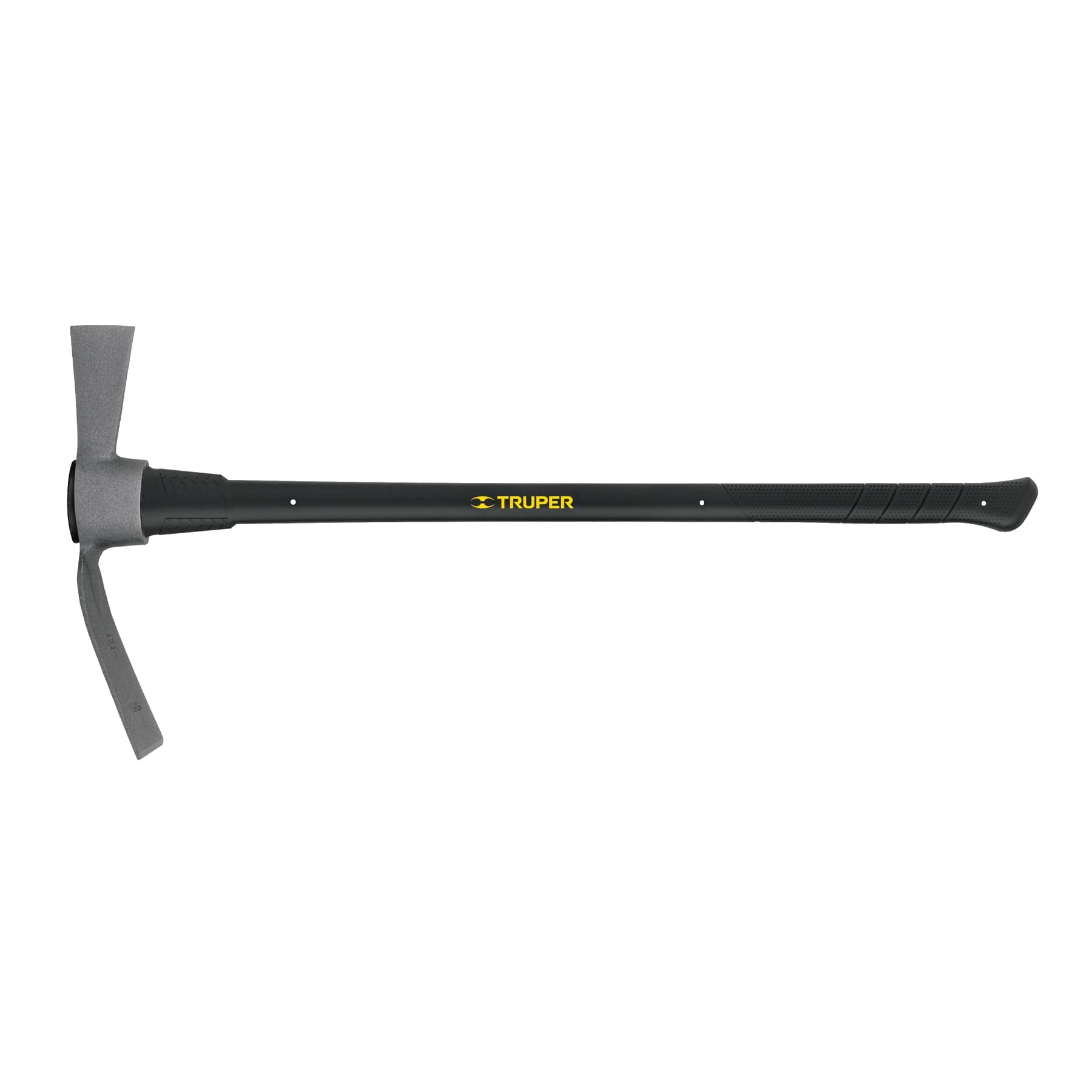
The Truper Cutter Mattock combines a sharp vertical blade for slicing through roots with a wide horizontal adze for heavy digging. At 5 pounds, the forged high-carbon steel head delivers enough mass to break hard clay and chop through 3-inch roots without bouncing. The 36-inch fiberglass handle will not rot or splinter, and the shock-absorbing grip noticeably dampens vibration during extended ground work.
Customer reports confirm the handle withstands extreme prying pressure from a 285-pound user without snapping. The blade arrives sharp but can benefit from a quick file pass for the keenest edge. Several users noted that the flat adze bent slightly after repeated prying against buried rocks, though the tool remained fully functional. For clearing land and digging post holes, this head design is more effective than a standard Pulaski on deep-rooted vegetation.
The weight is manageable for full-day use, though breaks are recommended. The fiberglass construction and rubberized grip make this a durable investment that multiple reviewers describe as generational. It is the straightforward, no-nonsense choice for anyone who needs a dedicated digging and root-cutting tool that punches above its price tier.
Why it’s great
- 5 lb forged head provides momentum to break hard clay and cut roots
- Fiberglass handle resists weather and extreme prying loads
- Shock-dampening grip reduces fatigue during long work sessions
Good to know
- Flat adze may bend slightly under extreme rock prying
- Heavy enough to require regular breaks for average users
2. Fiskars Pro IsoCore Garden Pick

The Fiskars Pro IsoCore Pick is engineered to reduce the jarring impact that makes pickaxe work so punishing. Its patented IsoCore system uses a dual-layer handle to transfer less than half the shock of a standard wood handle, which directly translates to longer, more productive sessions when breaking up compacted gravel or dense clay. The 5-pound alloy steel head strikes a refined balance — heavy enough to drive through hard surfaces, light enough to control on the backswing.
The textured non-slip grip and slip-reducing flare at the base keep the handle securely in hand even when swinging overhead. The riveted head attachment is designed for the toughest commercial landscaping environments. Customer reviews consistently highlight its performance on rocky soil and tree roots, with one reviewer describing it as feeling “like using Mjolnir.” The flat edge on the back of the head is not designed for cutting and remains blunt, so this is a pure digging and prying implement.
The 36-inch handle is slightly short for very tall users, but most find it provides excellent leverage without sacrificing swing control. After heavy use over multiple seasons, the head shows minimal wear, and the rubber handle layer stays bonded. For anyone whose primary task is breaking ground rather than splitting wood, this pick offers premium vibration damping and a lifetime warranty.
Why it’s great
- IsoCore shock control dramatically reduces arm fatigue
- Textured grip prevents slipping during wet or sweaty work
- Riveted forged head stays tight under heavy use
Good to know
- 36-inch handle may feel short for users over 6 feet tall
- Back edge is blunt and not intended for cutting or chopping
3. Fiskars 36″ Super Splitting Axe
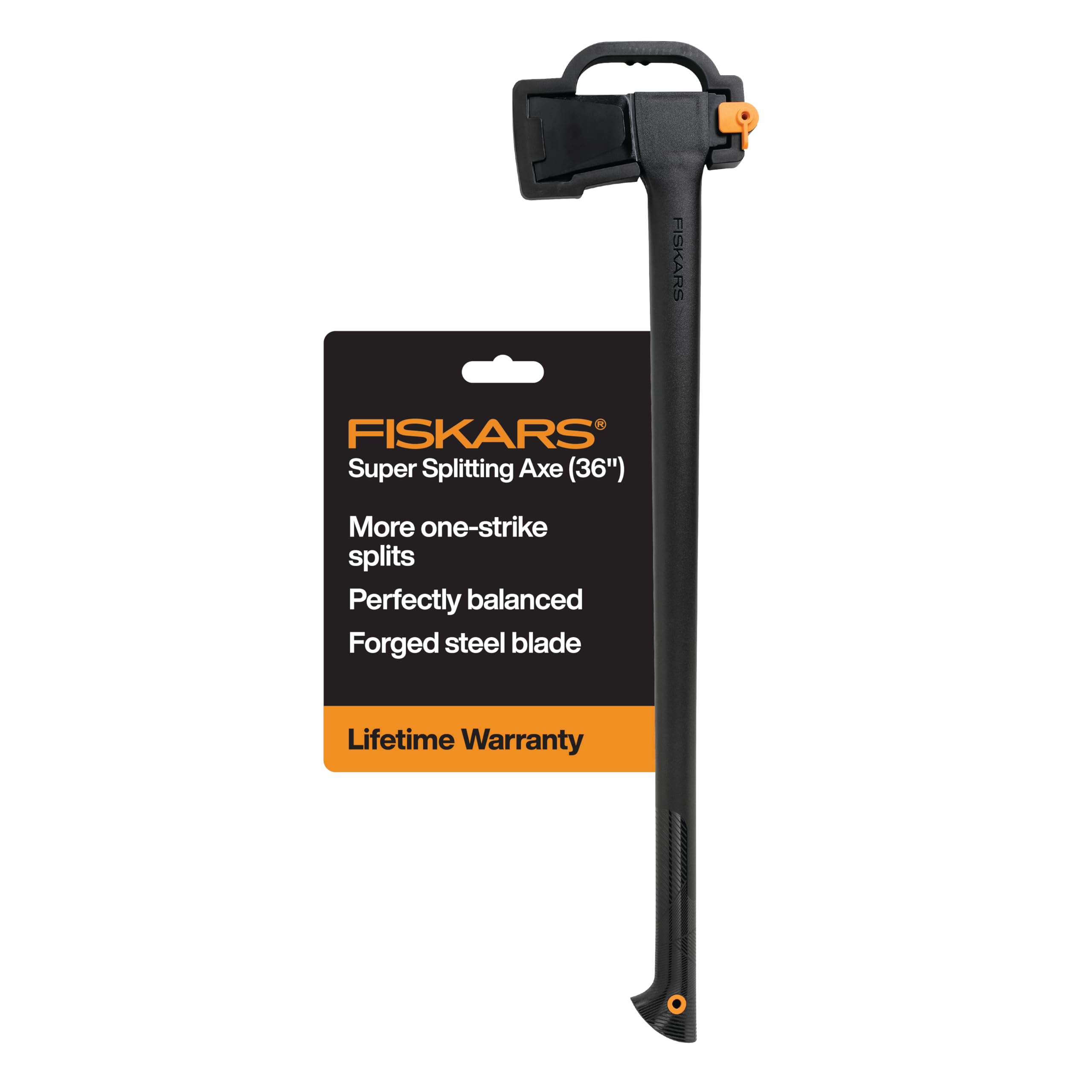
The Fiskars Super Splitting Axe is built for one thing: turning medium to extra-large logs into firewood with fewer swings. Its 6-pound convex-ground blade bites deep and then self-extracts thanks to the head geometry, which reduces the stuck-axe frustration common on splitting mauls. The FiberComp handle is virtually unbreakable according to the manufacturer, and the weight distribution is tuned to generate amplified force from a natural swing arc.
Users consistently note the blade arrives extremely sharp and retains its edge through multiple cords of wood. The 36-inch length is ideal for taller users who need the added leverage to split larger rounds. The handle effectively damps vibration, lowering fatigue significantly compared to a traditional wooden handle. Multiple customers report using this axe for felling small trees as well as splitting, which speaks to its versatility within the splitting category.
The handle design survives powerful misses into dirt and rocks without cracking. Some users wish the head were replaceable, but Fiskars backs the entire tool with a lifetime warranty. For anyone splitting firewood regularly — from a few logs for a campfire to cords for a wood stove — this axe delivers consistent one-strike splits and a confidence-inspiring build that justifies its premium mid-range status.
Why it’s great
- Convex blade geometry splits cleanly and self-extracts easily
- FiberComp handle is light, strong, and absorbs shock
- Excellent weight distribution for taller users
Good to know
- Not designed as a dedicated digging tool or pickaxe
- Head is not user-replaceable
4. Hooyman Splitting Maul

The Hooyman Splitting Maul packs an 8-pound head and a 36-inch handle into a package that costs significantly less than many competitors. The 1045 high-strength forged steel head features a convex grind with a 45-60 HRC hardness, which means it holds an edge well and resists chipping even on knotty rounds. The V-shaped splitting geometry is designed to force logs apart on impact rather than just wedging into them.
The no-slip H-Grip handle turns tacky when wet, providing a secure hold in rain or snow. The fiberglass core is interlocked and epoxy-sealed into the eye of the head, a construction method that prevents the handle separation failure common on cheaper mauls. Customers report nearly 100% split rates on accurate strikes, and the weight does the work — the lift-and-drop technique is recommended for best results rather than a full baseball swing.
Some users noted the rubber covering near the head shows wear after heavy use, though no head-separation failures have been reported. The maul includes a limited lifetime warranty. For the price, this tool delivers a high splitting-force-to-dollar ratio that makes it a smart pick for anyone facing a large wood pile on a tight budget.
Why it’s great
- 8 lb head provides massive splitting momentum on large rounds
- H-Grip stays secure in wet conditions
- Epoxy-sealed handle joint prevents head separation
Good to know
- Rubber handle covering may show wear near the head over time
- Heavy maul requires proper lift-and-drop technique
5. Husqvarna Wood Splitting Axe S2800

The Husqvarna S2800 is a splitting axe designed for users who prefer a dedicated tool with a reputation for balance and build quality. Its 5-pound stainless steel head features a non-stick coating that reduces friction, helping the blade glide through wood instead of binding. The fiberglass composite handle is lighter than wood and will not warp or rot, and the overall weight distribution is tuned for controlled, accurate strikes.
Customers praise the feel of the tool in hand, describing it as well-balanced and compact enough to use in tight spaces. The blade is not razor-sharp out of the box, which is typical for a splitting axe since the wedge action does the work, not the edge. Several users mention the 28-inch handle is a bit short for users over 6 feet, potentially reducing leverage on very large rounds. A lifetime warranty backs the purchase.
The non-stick coating makes a real difference when splitting resinous softwoods like pine, which would gum up a bare steel blade. The composite handle survived a direct impact from a falling 40-inch oak log with only a slight bend, an impressive testament to its durability. While the shorter handle may not suit every user, the S2800 is a refined, high-quality splitting axe for those who prioritize swing precision over raw leverage.
Why it’s great
- Non-stick coating prevents binding on resinous woods
- Composite handle is light, durable, and weather-resistant
- Superb balance and swing feel for a dedicated splitter
Good to know
- Handle is short for tall users; limits leverage on large rounds
- Blade edge is not designed for chopping or cutting
6. THKFWD Camping Hatchet

The THKFWD Camping Hatchet fills the lightweight, packable role in this lineup. Its 3.75-pound forged carbon steel head is heat-treated for improved density and edge retention, and the 22.3-inch beechwood handle provides a traditional feel with a polished aesthetic. The compact size is ideal for campers and hikers who need to split kindling, process small branches, or hammer in tent stakes.
The hatchet comes with a leather sheath and a sharpening stone, which adds value out of the box. The convex blade edge arrives well-polished and ready for use. Some users experienced the head loosening after heavy use, but the design allows for easy reseating, and the seller replaces defective units quickly. Customer service was responsive for the few who needed it.
The beechwood handle is attractive and comfortable, though it requires the same care as any wooden tool — keep it dry and oiled periodically. While not the tool for splitting full cords of firewood or breaking rocky soil, this hatchet excels at camp chores and small-scale splitting. It is a functional, good-looking option for the outdoor enthusiast who values portability.
Why it’s great
- Compact 22.3-inch length is easy to pack for camping
- Includes leather sheath and sharpening accessories
- Forged carbon steel head holds a good edge
Good to know
- Wooden handle requires maintenance to prevent drying
- Head may loosen and need reseating after heavy use
7. IUNIO Survival Tool Kit

The IUNIO Survival Off-Roading Tool Kit is a modular system that packs a shovel, axe, pickaxe, ice pick, and trekking pole attachments into a single MOLLE-compatible bag. Each tool head attaches to adjustable aluminum extension tubes, allowing the user to build the right tool for the task at hand. The high-carbon steel and aluminum alloy construction is well-rated for a multi-tool, though it naturally cannot match the heft of a single-piece forged head.
This kit is designed for car emergencies, overlanding, and camping where space is at a premium. The pickaxe head broke through Rocky soil and caliche during testing, exceeding expectations for a modular tool. The shovel head is adjustable and the weld quality is excellent. The kit also includes a safety hammer, whistle, ferro rod, and compass, effectively serving as a compact survival kit in tool form.
The trade-off for modularity is feel — the assembled tool has more flex than a solid-handle pickaxe, and the extension bars can scratch each other stored in the bag. One customer reported a missing safety hammer, which customer support resolved. For anyone who needs axe and pickaxe functionality as part of a portable survival kit rather than for daily farm or forestry work, this is the most versatile solution available.
Why it’s great
- Interchangeable heads replace multiple full-size tools
- Compact MOLLE bag saves trunk and pack space
- High-carbon steel heads hold up to rocky soil digging
Good to know
- Modular design lacks the rigidity of a single-piece tool
- Extension bars may scratch each other during transport
FAQ
Can I use a splitting axe for digging roots?
How often should I sharpen an axe or pickaxe?
Is a fiberglass handle better than a wooden handle for rough use?
Final Thoughts: The Verdict
For most users, the best axe and pickaxe winner is the Truper 5 lb Cutter Mattock because its forged 5-pound head and fiberglass handle excel at both root cutting and digging without breaking the bank. If you prioritize reduced fatigue on digging projects, grab the Fiskars Pro IsoCore Pick for its industry-leading shock absorption. And for high-volume firewood splitting at a compelling value, nothing beats the Hooyman Splitting Maul.