
Salt spray, rolling decks, and the constant threat of an accidental drop overboard define the unique demands placed on marine optics. Standard binoculars fog up, corrode, or simply slip from wet hands, turning a promising day on the water into a frustrating battle against the elements. The right pair transforms that struggle into crisp, steady sightings of buoys, approaching vessels, and distant shorelines.
I’m Min — the co-founder and writer behind Gadgets Feed. I’ve spent countless hours cross-referencing waterproof ratings, prism materials, and low-light performance metrics to separate the truly seaworthy from the marketing jargon.
Whether you’re piloting a fishing skiff or standing watch on a cruiser, finding the best boating binoculars means prioritizing optical clarity that survives the marine environment without compromise.
How To Choose The Best Boating Binoculars
The marine environment punishes standard optics with moisture, salt, and constant motion. Selecting binoculars for boating requires focusing on specific construction and optical traits that land-based use simply doesn’t demand. Ignoring these factors means risking a fogged lens or a corroded internal mechanism when you need them most.
Waterproofing and Fogproofing Standards
Not all waterproof claims are equal. For boating, look for binoculars with O-ring seals and nitrogen or argon purging. An IPX7 rating confirms the unit can withstand submersion in one meter of water for 30 minutes — essential for surviving a splash over the side. Fogproofing means the internal air has been replaced with dry gas, preventing condensation when moving between the cool cabin and warm deck air.
Magnification and Objective Lens Size
The 7×50 combination is widely considered the marine standard. The 7x magnification provides a wide, stable field of view that compensates for boat motion, while the 50mm objective lenses gather substantial light for dawn, dusk, and overcast conditions. Higher magnification like 10x amplifies hand tremors and vessel movement, making steady viewing difficult without a tripod.
Build Quality and Grip
Rubber armoring is non-negotiable on a boat. It absorbs shock from drops and provides a slip-resistant grip even when wet. Look for nitrogen-purged bodies, floatable designs if you’re prone to drops, and prisms made from BaK-4 glass for superior light transmission and edge-to-edge clarity.
Quick Comparison
On smaller screens, swipe sideways to see the full table.
| Model | Category | Best For | Key Spec | Amazon |
|---|---|---|---|---|
| Barska Floatmaster 7×50 | Floating | Safety against overboard drops | Fully Multi-Coated, 367ft FOV | Amazon |
| Evil Eye 10-30×50 Zoom | Zoom | Variable magnification scouting | BAK7 Prism, 10-30x, 800g | Amazon |
| Bushnell H2O Xtreme 10×42 | Roof Prism | Compact travel and everyday boating | IPX7, BaK-4 Prism, Fully Multi-Coated | Amazon |
| Steiner Marine 7×50 | Porro Prism | Entry-level dedicated marine use | Sports Auto Focus, 7.14mm Exit Pupil | Amazon |
| Nikon Monarch M5 8×42 | Premium ED | Color accuracy and low-light detail | ED Glass, Dielectric Coatings, 19.5mm Eye Relief | Amazon |
| Steiner Military-Marine 7×50 | Tactical | Extreme durability and shock resistance | Floating Prism, 11 G Impact, Makrolon Housing | Amazon |
| ZEISS Terra ED 10×42 | High-End | Ultimate optical clarity and brand pedigree | ED Glass, 88% Light Transmission, Hydrophobic Coating | Amazon |
In‑Depth Reviews
1. Barska Floatmaster 7×50 Marine Binoculars
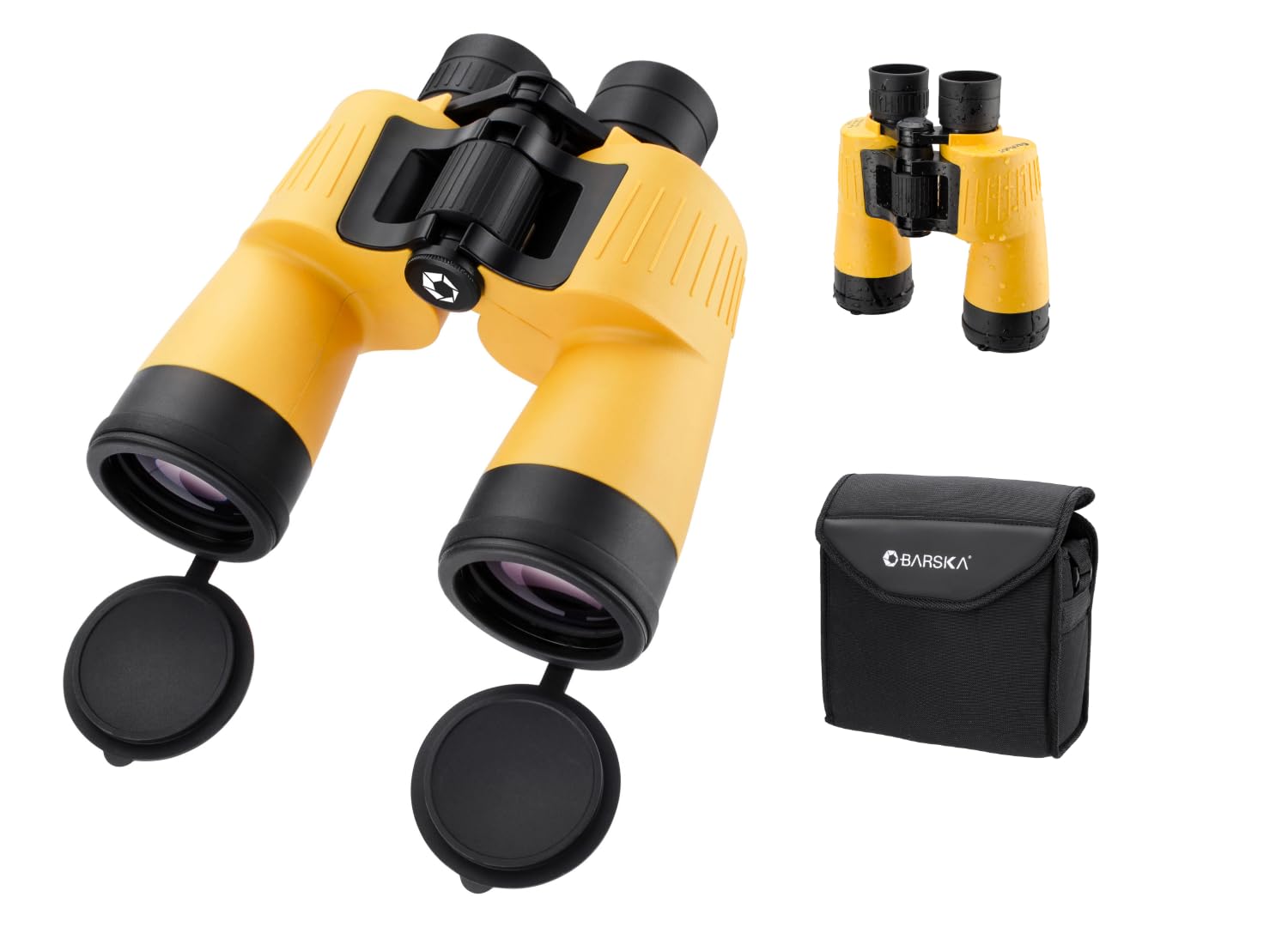
The Barska Floatmaster 7×50 delivers a truly unique safety feature for boaters: it floats. If these binoculars go over the side, they bob on the surface rather than sinking to the bottom, a peace-of-mind advantage no standard marine model can match. The 7×50 configuration provides a 367-foot field of view at 1000 yards, which is ideal for scanning horizons without excessive shake.
Nitrogen purging makes the unit fogproof and waterproof, while the fully multi-coated optics ensure bright, clear images from sunrise to sunset. The 23mm of eye relief is generous for users who wear glasses, and the lightweight rubber armor provides a secure grip even in wet conditions. Multiple verified owners confirm the performance rivals more expensive models, with one boater equipping all three of his vessels with this unit.
Some users report the center focus knob requires two fingers to turn and the binoculars struggle to focus on objects closer than 75-80 feet. The weight is noticeable compared to roof-prism designs, but for pure marine-focused value with built-in flotation, this is the most practical choice on the list.
Why it’s great
- Floating design prevents loss overboard
- Excellent low-light performance from 50mm objectives
- Fully multi-coated lenses produce sharp, bright images
Good to know
- Focus knob can be stiff, requiring two fingers
- Minimum focus distance is about 75-80 feet
- Heavier than compact roof-prism binoculars
2. Bushnell H2O Xtreme 10×42 Binoculars

Bushnell’s H2O Xtreme 10×42 is a rugged roof-prism binocular built for the marine environment, carrying an IPX7 waterproof rating that means it can survive a dunk in one meter of water for 30 minutes. The fully multi-coated glass surfaces and BaK-4 prisms deliver substantially brighter and clearer images than the standard H2O series, which is a meaningful upgrade for boating where light conditions change rapidly.
The compact roof-prism body is significantly more portable than traditional porro-prism marine binoculars, making it easier to stow in a glove box or tackle bag. The rubber armor is textured with soft grip panels, providing reliable handling even when your hands are wet. At just over 700 grams, this is a binocular you can comfortably carry around your neck for hours during a day on the water.
One notable omission is a tripod adapter socket, so you won’t be mounting these for long-term stationary observation. The 10x magnification can amplify the feeling of boat movement compared to 7x models, but the overall optical quality at this price point is excellent. Reviewers consistently praise the clarity and value, with many noting it’s a significant upgrade over decades-old optics.
Why it’s great
- IPX7 waterproof construction for submersion protection
- Compact roof-prism design for easy storage
- Bright, clear optics with BaK-4 prisms and multi-coatings
Good to know
- No tripod adapter socket for stationary mounting
- 10x magnification can accentuate boat motion
- Neck strap is basic and may need upgrading for comfort
3. Steiner Marine 7×50 Binoculars

The Steiner Marine 7×50 is purpose-built for the watery environment, featuring a Sports Auto Focus system that delivers a sharp 3D image from 20 yards to infinity after a single eyepiece adjustment per user. This eliminates the need to constantly refocus as targets move at varying distances, a genuine advantage when scanning from a moving deck. The 7×50 configuration with a 7.14mm exit pupil provides outstanding low-light performance, making it ideal for dawn departures or twilight returns.
Steiner’s Floating Prism System uses flexible silicone lens mounts that absorb severe shock and impact without losing alignment, ensuring the optics survive the inevitable drops and bumps of life aboard a boat. The rubber armor is ergonomically designed with ridges and pads for a secure, comfortable hold. Multi-coated optics deliver high-contrast images with true-to-life color reproduction that multiple users describe as superior to comparable Nikon and Bushnell models.
The primary trade-off is weight — these are substantial porro-prism binoculars that are not ideal for hiking or long treks ashore. The narrow field of view relative to some competitors is also noted by experienced users. The Heritage Warranty covers defects for the lifetime of the product, which adds significant long-term confidence for a marine investment.
Why it’s great
- Sports Auto Focus eliminates constant refocusing
- Floating Prism System absorbs shock and maintains alignment
- Excellent low-light performance with 7.14mm exit pupil
Good to know
- Heavier than many alternatives for its class
- Field of view is narrower than some competitors
- Neck strap is thin and could be more comfortable
4. Nikon Monarch M5 8×42 Binoculars
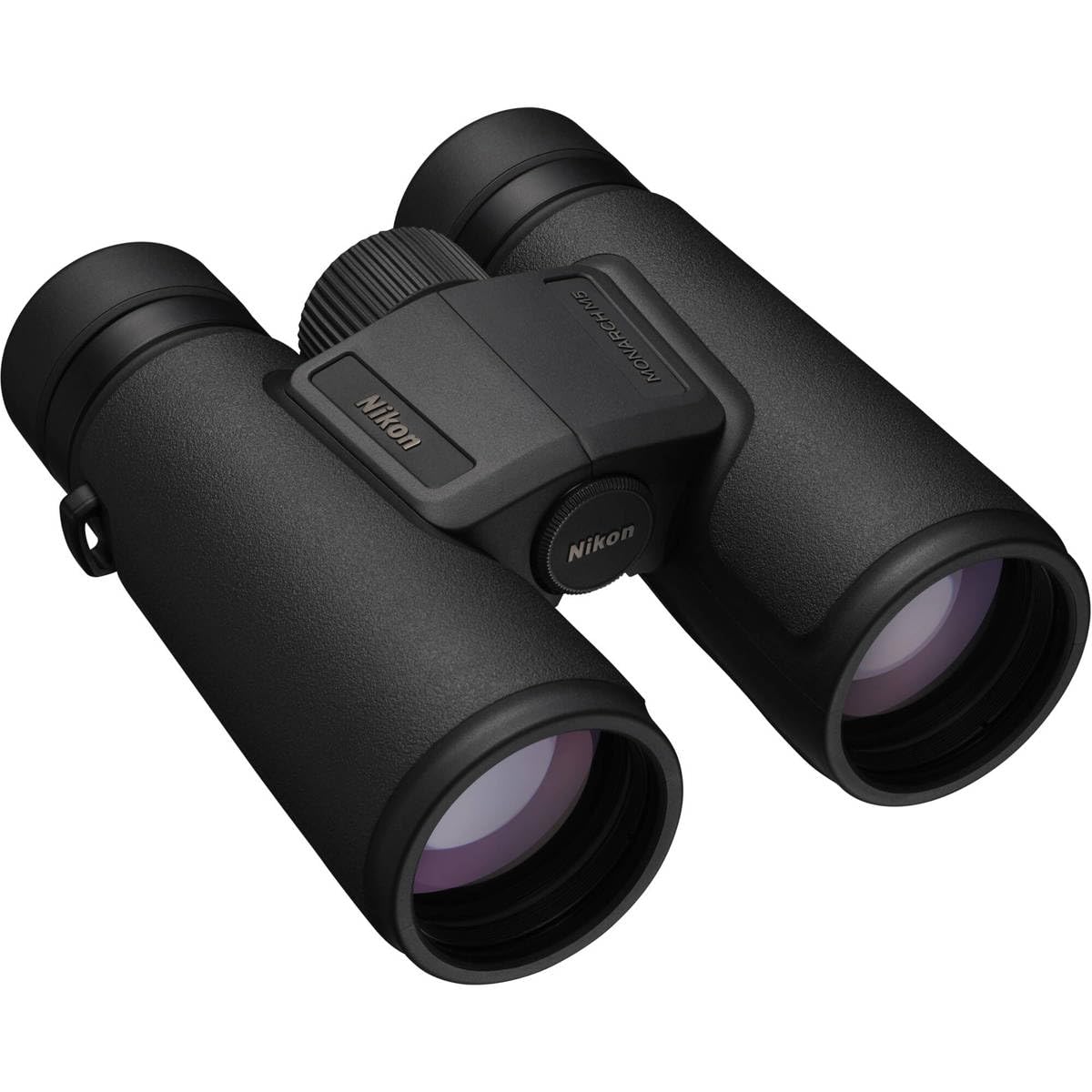
The Nikon Monarch M5 8×42 brings Extra-low Dispersion (ED) glass to the table, which virtually eliminates chromatic aberration and color fringing for a view that is crystal-clear and true-to-life in any boating lighting condition. Dielectric high-reflective multilayer prism coatings enhance light transmission to 88% or more, producing bright, natural colors even in the low-light conditions commonly encountered at dawn and dusk on the water. The 8×42 configuration is a versatile compromise, offering a wide field of view for tracking other vessels while keeping the image steady in rolling seas.
The nitrogen-purged housing with O-ring seals ensures waterproof and fogproof performance that can handle salt spray and sudden downpours. The rubber-armored body provides shock resistance and a secure grip, while the turn-and-slide eyecups with 19.5mm of eye relief deliver comfortable viewing for eyeglass wearers. The large center focus knob enables precise adjustment, and the close-focus capability down to 8.2 feet allows inspection of onboard equipment or charts.
Some users note the field of view is not as wide as premium alternatives like the Nikon Monarch M7, and the weight is moderate for a roof-prism design. However, the optical quality at this price point is exceptional, with reviewers calling it an excellent lighter-weight alternative to high-end European glass. It is an outstanding general-purpose marine binocular that prioritizes color fidelity and clarity.
Why it’s great
- ED glass eliminates chromatic aberration for pure color accuracy
- Dielectric high-reflective coatings for exceptional brightness
- Long 19.5mm eye relief comfortable for eyeglass wearers
Good to know
- Field of view is narrower than the higher-end M7 model
- Moderate weight for a roof-prism binocular
- Not as compact as pure travel-oriented models
5. Steiner Military-Marine 7×50 Binoculars

The Steiner Military-Marine 7×50 is built to a standard few other binoculars can touch, with a Makrolon polycarbonate chassis rated to withstand 11 Gs of impact. The Floating Prism System uses flexible silicone mounts to absorb severe shocks, keeping the optics perfectly aligned even after hard drops on a fiberglass deck. This is a binocular engineered for the harshest conditions, making it the most durable option for serious boaters who cannot afford optical failure.
The Sports-Auto-Focus system works identically to the standard Steiner Marine model, delivering sharp focus from 20 yards to infinity after a single per-eye calibration. The 7×50 configuration with a 7.1mm exit pupil provides a bright, steady image in low light, and the wide 387-foot field of view at 1000 yards is excellent for scanning. The NBR Long Life rubber armoring provides a non-slip, oil-resistant grip that remains secure even in wet conditions.
Weight is the most discussed drawback — these are heavy binoculars that are best kept aboard the boat rather than carried on extended hikes. Some users note the objective lens covers are well-designed, but the rear eyepiece caps are less secure. The “No Questions Asked” transferable lifetime warranty is a significant value-add, making this a buy-it-for-life product for the serious mariner who demands absolute reliability.
Why it’s great
- 11 G impact-rated Makrolon housing is exceptionally tough
- Floating Prism System maintains alignment after shock
- Sports-Auto-Focus provides instant sharpness from 20 yards to infinity
Good to know
- Very heavy compared to roof-prism alternatives
- Rear eyepiece caps are flimsy and can be lost easily
- Not ideal for mobile or hiking use due to weight
6. Evil Eye 10-30×50 Zoom Binoculars

The Evil Eye 10-30×50 Zoom binoculars offer a unique value proposition for boaters who want variable magnification in a single unit. The 10x low end is suitable for general scanning, while the 30x high end pulls in distant landmarks, buoys, and wildlife with impressive detail. The 50mm objective lenses are paired with BaK-7 prisms and FMC (Fully Multi-Coated) glass to control glare and maintain brightness across the zoom range.
The binoculars are O-ring sealed and fogproof, with rubber armor for a non-slip grip. At 800 grams (1.76 lbs), the weight is manageable, and the included tripod adapter interface provides stability for sustained high-magnification viewing. The large center focus knob is smooth and responsive, and the diopter system allows fine-tuning for individual vision differences. The package includes four lens caps and a messenger bag for protection.
Several users report the zoom mechanism works well, but the 30x setting requires a steady hand or tripod for a stable image, which limits handheld use on a moving boat. One unit arrived damaged in transit, though the vendor replaced it quickly. The 12mm eye relief is shorter than ideal for eyeglass users. This is a capable scouting tool for calm conditions, but it lacks the dedicated marine build of purpose-built 7×50 models.
Why it’s great
- Versatile 10-30x zoom range for varying distances
- BaK-7 prisms and FMC glass for good light control
- Includes tripod adapter interface for stable high-magnification viewing
Good to know
- Higher zoom settings amplify boat motion significantly
- 12mm eye relief is short for eyeglass wearers
- Not as rugged as dedicated marine porro-prism designs
7. ZEISS Terra ED 10×42 Binoculars

The ZEISS Terra ED 10×42 sets a benchmark for optical refinement in the mid-premium price tier, delivering 88% light transmission through a Schmidt-Pechan prism system with ED glass and a hydrophobic multi-coating. The result is an image that is brilliantly clear, high-contrast, and color-true even in adverse weather conditions — a direct benefit for boaters who operate in changing light and occasional spray. The 60-degree apparent angle of view is wide and immersive, making it easy to track moving targets.
The fiberglass-reinforced polycarbonate casing is waterproof and built to handle the rigors of marine use, while remaining lightweight and compact for easy stowage. The large focus wheel is smooth and fast, naturally falling under the index finger for quick adjustments. The hydrophobic coating actively repels water droplets from the lenses, ensuring a clear view during rain or spray without constant wiping.
The 10×42 configuration is better suited for calmer waters where you can brace yourself, as the higher magnification will amplify wave-induced shake. Some eyeglass wearers report that the 18mm eye relief is adequate but not as generous as the Nikon Monarch M5. The price is a significant investment, but users consistently describe the optical experience as noticeably superior to competitors in the sub- range, with a clarity that reveals details other binoculars miss.
Why it’s great
- 88% light transmission with ED glass for exceptional clarity
- Hydrophobic coating repels water from lenses
- Fast focus wheel and 60-degree wide apparent field of view
Good to know
- 10x magnification amplifies motion on rolling seas
- Eye relief is adequate but shorter than some competitors
- Premium price places it as a significant investment
FAQ
Can I use standard binoculars on a boat?
What does 7×50 mean for boating?
Why do some marine binoculars use individual focus?
Final Thoughts: The Verdict
For most users, the best boating binoculars winner is the Barska Floatmaster 7×50 because it combines the essential 7×50 marine configuration with a unique floating design that eliminates the fear of losing optics overboard. If you want exceptional optical clarity and color accuracy for wildlife spotting in calm conditions, grab the Nikon Monarch M5 8×42. And for absolute battlefield-grade durability with a lifetime warranty that truly protects your investment, nothing beats the Steiner Military-Marine 7×50.