
A pair of waders that fails on the first trip doesn’t just ruin a fishing or hunting session — it sinks your entire gear budget. The difference between a deal and a dud in the budget wader category often comes down to three things: seam construction, material thickness, and the boot-to-wader connection. Paying less shouldn’t mean staying wet.
I’m Min — the co-founder and writer behind Gadgets Feed. After analyzing hundreds of customer reports and technical spec sheets across the most popular sub- wader models, I’ve mapped exactly which compromises matter and which ones you can safely ignore.
The real challenge is finding best budget waders that deliver reliable waterproofing, a useful temperature range, and a fit that actually matches the size chart without guesswork.
How To Choose The Best Budget Waders
Picking the right waders in this price band starts with ignoring marketing and focusing on materials that actually stop water. Here’s what separates a solid budget buy from a regret.
Bootfoot vs. Stockingfoot — The First Fork
Bootfoot waders have integrated rubber boots, which simplifies entry but limits fit precision and ankle support. Stockingfoot waders end in a neoprene sock that goes inside separate wading boots — they offer better customization for foot size and boot shape, plus you can swap boots if one wears out. For budget buyers, bootfoot models usually cost less overall.
Seam Construction Dictates Lifespan
The most common failure point in budget waders is the seam. Look for double-stitched seams reinforced with bonded or taped backing. PVC-coated nylon tends to resist abrasion better at the knees and seat than lightweight polyester shells. A patch kit included in the box is a strong signal the manufacturer expects field repairs — that’s actually a good sign.
Insulation vs. Breathability Trade-off
Neoprene waders trap body heat but trap sweat too — they’re best for cold-water winter fishing and duck hunting. Breathable fabric waders let moisture escape, making them usable in warmer months, but they rely on layering for warmth. A 4.5mm neoprene thickness paired with boot insulation rated in grams (200g to 800g) tells you the temperature range the wader was designed for.
Quick Comparison
On smaller screens, swipe sideways to see the full table.
| Model | Category | Best For | Key Spec | Amazon |
|---|---|---|---|---|
| Dark Lightning Breathable Chest Waders | Stockingfoot | Warm-weather hiking & fly fishing | Nylon breathable fabric, elastic straps | Amazon |
| HISEA 800G Insulated Bootfoot Waders | Bootfoot | Extreme cold & duck hunting | 4.5mm neoprene + 800g Thinsulate boots | Amazon |
| FROGG TOGGS Amphib Stockingfoot | Stockingfoot | Cold-water winter fishing | Neoprene construction, 3mm thickness | Amazon |
| HISEA 200G Bootfoot Waders | Bootfoot | Versatile cold-weather hunting & fishing | 4.5mm neoprene + 200g Thinsulate boots | Amazon |
| Trudave Stockingfoot Waders | Stockingfoot | Beginners & tide pooling | Lightweight nylon, waterproof zipper pocket | Amazon |
| FROGG TOGGS Rana II Bootfoot | Bootfoot | Shallow water & pier use | PVC-coated nylon, felt sole boot | Amazon |
| Kylebooker Stockingfoot Hip Waders | Stockingfoot | Backpacking & boat launching | Lightweight breathable fabric | Amazon |
In‑Depth Reviews
1. Dark Lightning Breathable Insulated Chest Waders
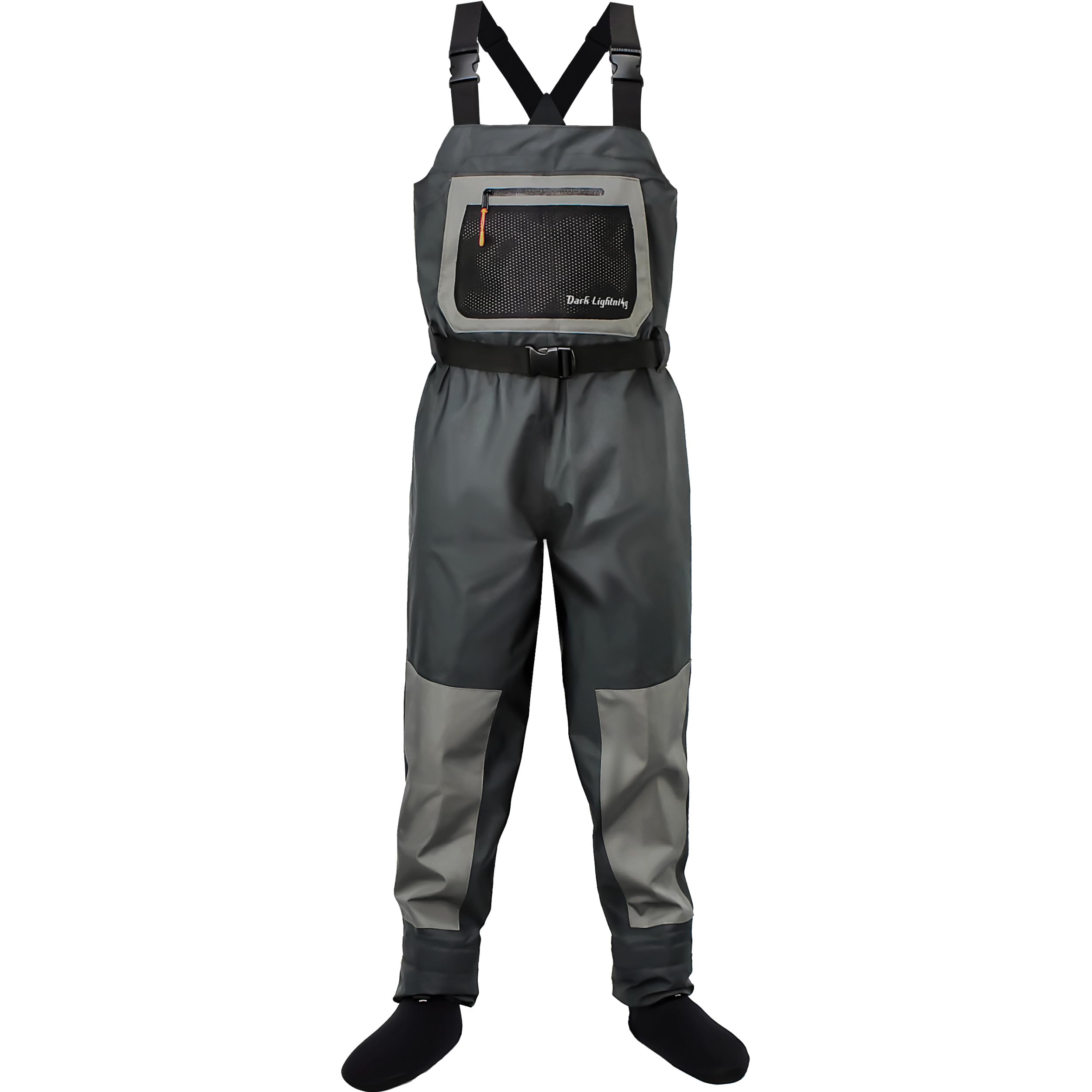
The Dark Lightning waders hit the sweet spot between breathability and durability for a stockingfoot design at this price. The nylon fabric feels substantial without the stiffness of budget PVC models, and the elastic shoulder straps stay planted during hikes — a common complaint with cheaper suspender systems. A 6’2”, 230-pound tester reported a perfect fit in size XL with size 13 wading boots.
Field reports show no leaks after extended use in moving water and brush. The front waterproof pocket actually keeps a phone dry, and the hand-warmer material on the exterior helps on cool mornings without adding bulk. Multiple users praised the breathability during 3-mile hikes — you won’t soak yourself from the inside out the way neoprene waders force you to.
The included patch kit is a thoughtful addition, though most users haven’t needed it. The one caveat: the size chart runs snug for stocky builds in the crotch and hip area, so users with a wider waist should consider sizing up to the XXL. For warm-weather fly fishing and general use across four seasons, this is the most versatile budget pick available.
Why it’s great
- Breathable nylon fabric prevents overheating on long hikes
- Elastic shoulder straps stay secure without constant adjustment
- Large waterproof front pocket and hand-warmer material
Good to know
- Fit is snug on stocky body types below the waist
- Stockingfoot design requires separate wading boots
2. HISEA Chest Waders with 800G Insulated Boots

The 800-gram Thinsulate insulation in the boots makes this the warmest option in the lineup — users report staying comfortable in 15°F water for four hours straight. The 4.5mm neoprene body traps heat aggressively, and the double-stitched seams with bonded tape provide genuine waterproofing. A user at 6’2”, 280 pounds confirmed the fit worked well in cold Colorado River conditions.
The integrated LED light system inside the storage pouch is a unique addition for pre-dawn duck blind setups. Reinforced knees add durability for kneeling on rocky banks. Multiple long-term reviews confirm the waders hold up over a full season of regular use, with zero leak complaints from the boot-to-neoprene connection — the failure point that kills most budget bootfoot models.
The biggest drawback is heat management: these waders are too warm for summer use, and the neoprene causes significant sweat buildup during hikes. Boots run large — a size 9 fits more like a 10.5, so check the size chart carefully. The chest belt tends to slide off the back, and the included hanger broke quickly for some users. Despite those quirks, this is the best cold-weather option in the budget tier.
Why it’s great
- 800g Thinsulate boots keep feet warm in freezing water
- 4.5mm neoprene provides serious cold insulation
- Reinforced knees and integrated LED light for dark conditions
Good to know
- Too hot for any activity above 50°F
- Boots run significantly larger than size chart suggests
3. FROGG TOGGS Amphib Stockingfoot Neoprene Chest Wader

FROGG TOGGS has a reputation for delivering reliable waterproofing at accessible prices, and the Amphib stockingfoot model continues that trend. The neoprene construction is thick enough for cold-water fishing, and multiple reviewers report staying bone dry after full-day sessions in northeastern US waters through winter. A size XL fits a 6’4”, 220-pound frame with size 13 feet comfortably.
Durability is the standout story here — one user reported 30 to 100 uses before any seam issues appeared, and another kept a previous pair going for over eight years with simple field repairs. The neoprene provides excellent insulation, but the lack of breathability means you’ll sweat quickly if you’re active. The foot sizing runs slightly loose, which helps when fitting wading boots over the neoprene sock.
The Velcro shoulder straps are the weakest link — they’re functional but lack the adjustability and security of buckle systems found on slightly pricier models. The high-rise waist design works well for shorter users who struggle with waders that sit too low. For anyone who fishes cold water regularly and wants a proven brand without spending premium dollars, this is the safe bet.
Why it’s great
- Proven long-term durability — one pair lasted 8+ years
- Thick neoprene insulation for cold-water fishing
- High-rise fit accommodates shorter body types
Good to know
- Velcro shoulder straps are less secure than buckle systems
- Sweats heavily during active use or warmer weather
4. HISEA Chest Waders with 200G Boots

The 200-gram Thinsulate insulation strikes a middle ground — warm enough for 30°F conditions with wind, but not so bulky that you overheat during the walk in. The 4.5mm neoprene body matches the same core material as the premium HISEA model, but with lighter boot insulation. Users confirm zero leaks after 25 minutes in waist-deep water, and the armor-weld double-stitched seams hold up against brush.
The shell and hand-warmer pockets are particularly well-designed, with eight shell holders on the front and a built-in zippered pocket for valuables. The quick-release buckle suspenders make entry and exit simple, even with cold hands. Customer service is a strong point — one user who developed a leak at the boot after a full year received a replacement with no hassle.
The boots themselves are the compromise: the soles are thin enough that you feel rocks underfoot, and there’s minimal ankle support compared to dedicated wading boots. Sizing runs small, so order up at least one full size. The removable neoprene sock inside the boot takes effort to adjust but helps with insulation. For beginners who want a bootfoot design that works across fall and spring without extreme cold, this is a smart mid-range choice.
Why it’s great
- 200g Thinsulate boots provide good warmth without overheating
- Excellent pocket layout with shell holders and zippered storage
- Responsive customer service and warranty coverage
Good to know
- Boots run small — size up at least one full size
- Thin boot soles transmit ground texture clearly
5. Trudave Fishing Waders, Stockingfoot

At just over 3.4 pounds, the Trudave stockingfoot waders are among the lightest options in this roundup — a clear advantage for anyone hiking into fishing spots. The nylon fabric breathes well enough for warm-weather use, and the front leg seams are designed to allow easy knee bending without restriction in the inner thigh. An ergonomic high-density neoprene sock foot adds durability at the connection point.
The waterproof zipper pocket on the chest is a genuinely useful feature at this price point, keeping a phone or license dry without adding bulk. The adjustable elastic suspenders and quick-release waist buckles make fitting straightforward, though the sizing runs slightly larger than the chart suggests — a small fit a tester at 5’9”, 160 pounds with a size 10.5 shoe perfectly. Multiple users confirmed zero leaks after initial use, and the included mesh storage bag keeps things organized.
The primary trade-off is material feel: the nylon doesn’t have the abrasion resistance of heavier neoprene or PVC-coated fabrics, so it’s better suited to open water and tide pools than dense brush. The stockingfoot design requires separate wading boots, which adds to the total cost. For warm-weather fishing, tide pooling, or as a lightweight backup pair, the Trudave is a solid entry-level option.
Why it’s great
- Extremely lightweight at 3.45 pounds for hiking access
- Waterproof zipper pocket protects phone and license
- Knee-bend design allows unrestricted movement
Good to know
- Nylon fabric is less abrasion-resistant than neoprene or PVC
- Stockingfoot design adds cost for separate wading boots
6. FROGG TOGGS Rana II PVC Bootfoot Chest Wader

The Rana II is the most no-frills option here, built around a simple concept: thick PVC-coated nylon that realistically stops water where it meets. Multiple buyers report zero leaks even in cold spring river conditions, and the felt-soled boots provide useful traction on slippery rocks. The price point makes this an attractive option for occasional use or as a spare pair for guests.
The PVC coating is the key differentiator — unlike rubber or thin polyester, this material resists the coating separation that plagues cheaper Cabella’s models. The bootfoot design means no separate boots needed, and the fit leaves enough room for insulating layers underneath. Tall women with medium feet reported accurate sizing and a long inseam that works for tube sitting.
The compromises are significant for anyone planning long days on the water. The PVC material is heavy and doesn’t breathe at all — you’ll sweat in direct sun or during walking. The boots fit small, with size 13 feeling closer to a 12. The felt soles are not ideal for muddy banks or overland hiking. For short pier sessions or shallow river wading where weight doesn’t matter, this is a functional budget choice.
Why it’s great
- Thick PVC coating resists separation better than rubber alternatives
- Felt soles provide solid grip on slick rocks
- Accurate sizing for tall frames with long inseams
Good to know
- PVC material is heavy and completely non-breathable
- Boots run small — size up for true fit
7. Kylebooker Breathable Stockingfoot Hip Waders

The Kylebooker hip waders cover a different use case entirely — they stop at the waist rather than the chest, making them ideal for shallow water access, boat launching, and backpacking where weight matters. The breathable fabric is significantly lighter than full chest waders, and the stockingfoot design pairs well with hiking sandals or lightweight boots for remote fishing spots.
Users consistently praise the insulation value despite the thin material — the neoprene stocking booties keep feet warm and dry when paired with appropriate footwear. Compatibility with Korkers wading boots was confirmed by multiple fly fishermen. The fit runs true to size for average builds, with a small size working well for a 5’6” user. The lightweight construction makes them packable in a day pack without consuming all your gear space.
The limits are clear: these are not chest waders, so deep-water crossings will overtop them. The breathable fabric is less durable against brush and thorns than thicker neoprene options. The XLarge size was reported as tight over jeans at the upper thigh, so users with larger legs may need to check the sizing carefully. For the specific scenario of shallow wading or boat access where full chest coverage is unnecessary, the Kylebooker hip waders are a smart pick.
Why it’s great
- Extremely lightweight and packable for backpacking
- Breathable fabric prevents overheating in warm conditions
- Compatible with popular wading boots like Korkers
Good to know
- Hip-height design limits use to shallow water only
- Upper thigh fit is tight on larger leg sizes
FAQ
Should I pick bootfoot or stockingfoot waders on a budget?
How do I know if budget waders will fit my shoe size?
Can budget neoprene waders be used in summer?
Final Thoughts: The Verdict
For most users, the best budget waders winner is the Dark Lightning Breathable Chest Waders because they pair genuine breathability with reliable waterproofing and a versatile four-season design. If you need extreme cold-weather performance, grab the HISEA 800G Insulated Bootfoot Waders. And for lightweight backpacking or shallow-water access where full chest coverage isn’t needed, nothing beats the Kylebooker Breathable Stockingfoot Hip Waders.