
A heavy telephoto lens makes every heartbeat visible in the viewfinder. You brace your arm, hold your breath, and still the frame wobbles. A monopod is the single most effective stabilizer for mobile sports, wildlife, and event shooters who need to move fast without hauling a tripod.
I’m Min — the co-founder and writer behind Gadgets Feed. I sift through hundreds of spec sheets and real-world user reports to isolate the hardware that actually delivers on its load rating and lock integrity. This guide exists to save you the research time and get you straight to the monopod that matches your kit.
Whether you shoot with a mirrorless body and a long zoom or a full-frame DSLR with a heavy prime, choosing the right support changes your keep rate. Read on for my curated list of the best camera monopod options spanning budget-friendly aluminum to pro-grade carbon fiber builds.
How To Choose The Best Camera Monopod
Buying a monopod looks simple until you account for your gear’s weight, your shooting style, and the environments you work in. The wrong choice adds fatigue or fails under load. Focus on the specs that matter most for your rig.
Payload Capacity and Your Gear
Every monopod lists a maximum load, but that number assumes the weight is centered and the legs are fully retracted. A long lens extending off-axis adds leverage that stresses the locks. Match the monopod’s payload to at least double the weight of your heaviest camera-lens combination to maintain stability.
Locking Mechanisms: Twist vs. Flip
Twist locks are sleeker, quieter, and less likely to snag on gear, making them a favorite for video shooters and hikers. Flip locks offer faster setup and a more positive physical lock feel, which matters when you are adjusting height repeatedly during a sports event. Both can be reliable if the build quality is there.
Foot Design and Terrain
Rubber feet grip indoor floors and rock, but they slip on wet grass or loose dirt. A monopod with interchangeable spiked feet gives you bite in soft ground. Some models include a removable tripod base that transforms the monopod into a standing support for static shots.
Quick Comparison
On smaller screens, swipe sideways to see the full table.
| Model | Category | Best For | Key Spec | Amazon |
|---|---|---|---|---|
| Sirui AM-404FL | Aluminum | Heavy telephoto support | Max load 26.4 lb / 12 kg | Amazon |
| Manfrotto Element MII | Aluminum | Travel-friendly build | Folded length 16.9 in / 43 cm | Amazon |
| Avella CD324 | Carbon Fiber | Lightweight video work | Weight 1.2 lb / 0.54 kg | Amazon |
| NEEWER TP41 | Aluminum | Budget value pick | Weight 0.88 lb / 401 g | Amazon |
| Manfrotto 290 Carbon Fiber | Carbon Fiber | Pure lightweight stability | Weight 1.1 lb / 0.5 kg | Amazon |
| NEEWER Professional 70.5″ | Aluminum | Studio and event hybrid | Max load 13.2 lb / 6 kg | Amazon |
| IFOOTAGE A400 | Aluminum | Studio space-saving stand | Base diameter 15.75 in | Amazon |
In‑Depth Reviews
1. Sirui AM-404FL

The Sirui AM-404FL handles a 26.4 lb payload, which covers a pro DSLR with a 600mm f/4 lens and still leaves headroom. The 4-section aluminum pole extends to 74.8 inches, and the patented quick-release mounting screw lets you flip between 1/4-inch and 3/8-inch threads without tools.
Its removable tripod base extends 15 cm, giving you three modes: fixed monopod, standalone extension rod, or a low-angle tripod. The built-in 360-degree panning collar on the upper section means you can track a moving subject without a separate ball head, saving weight and complexity.
Real-world users report reliable performance in salt spray, mud, and rain over dozens of hours, with the locks maintaining their grip. The included carrying bag adds convenience for location shoots. This is the monopod for shooters who carry heavy glass and refuse to compromise on stability.
Why it’s great
- Class-leading 26.4 lb payload handles the heaviest telephoto rigs.
- Tool-free thread switching between 1/4″ and 3/8″ mounts.
- Detachable base creates a useful low-angle tripod.
Good to know
- Aluminum construction is heavier than carbon fiber alternatives.
- Pan collar is basic; you may still want a fluid head for smooth video.
2. Manfrotto Element MII MMELMIIA5BK

The Manfrotto Element MII collapses to just 16.9 inches, making it one of the most packable monopods for travel photographers. Its 5-section aluminum pole uses ergonomic twist locks that extend to 159 cm, and the 15 kg payload is strong enough for a mirrorless body with a 70-200mm f/2.8.
At only 0.5 kg, it barely registers in a backpack. The included wrist strap adds security during hikes, and the convertible 1/4-inch to 3/8-inch screw accommodates both direct camera mounting and monopod heads. The base is a flat rubber foot with no tripod legs, keeping weight to a minimum.
Users praise its fast setup and lock reliability with setups like a Nikon Z8 paired with a 180-600mm lens. The trade-off is that at full extension, the thinner sections introduce some flex, so it is best kept under 12 kg for critical sharpness.
Why it’s great
- Very short folded length fits in carry-on bags and daypacks.
- Twist locks are quiet and snag-free for video work.
- 15 kg payload covers most enthusiast DSLR and mirrorless kits.
Good to know
- Thinnest leg section flexes noticeably under heavy loads at full height.
- No removable spike feet for soft ground.
3. Avella CD324 Carbon Fiber Video Monopod
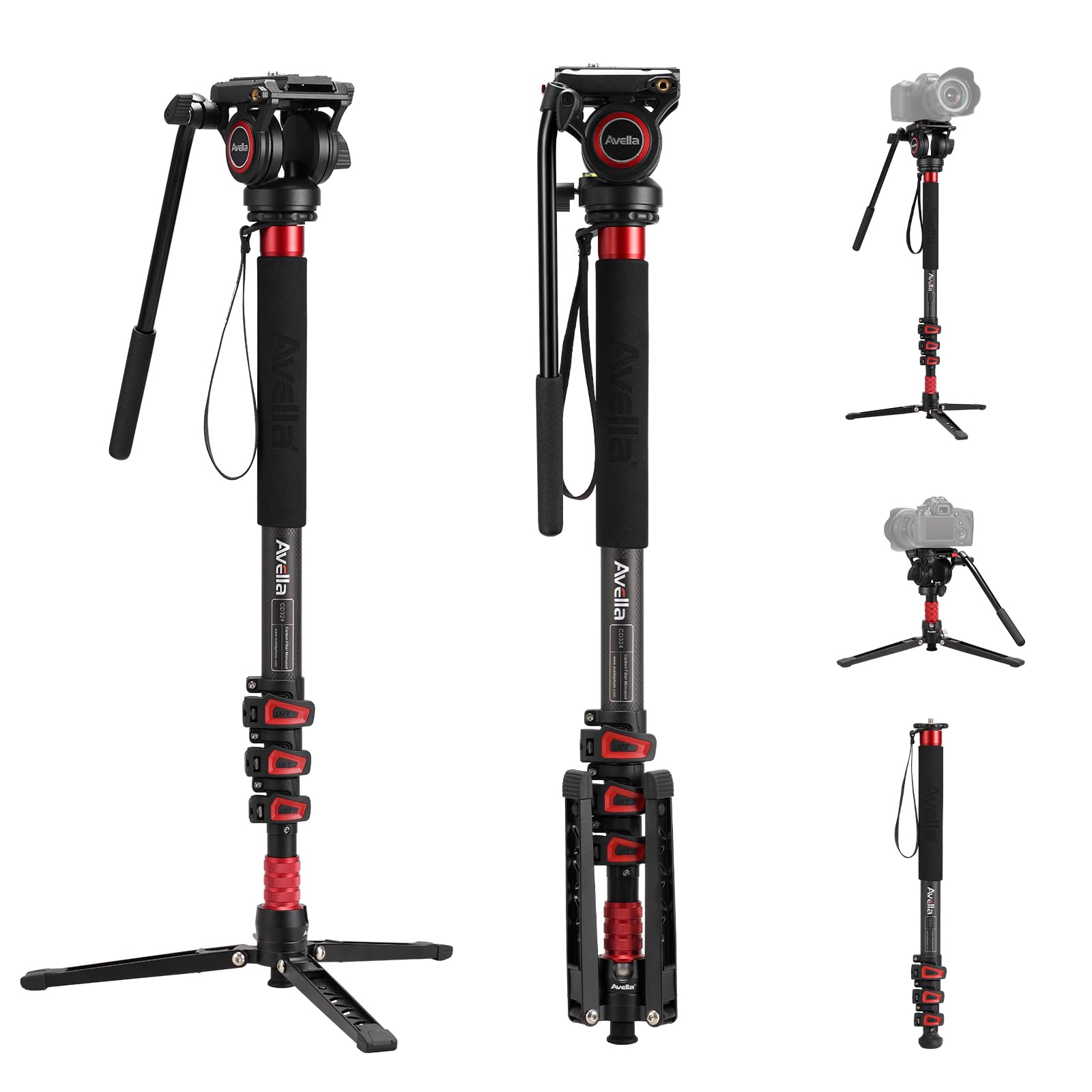
The Avella CD324 uses a 4-section carbon fiber leg set that weighs just 1.2 lb while supporting 13.2 lb of gear. It extends to 71.25 inches and folds down to 27.55 inches, balancing portability with a working height that suits most shooters. The flip-lock mechanism allows quick, fumble-free adjustments in the field.
A pre-installed fluid head with a removable pan bar gives you smooth horizontal and vertical movement, and the collapsible three-foot support base includes a vertical lock knob. You can tilt the monopod 15 degrees and rotate 360 degrees around the base for low-angle or overhead shots without resetting the legs.
The kit includes a Y-style key to tighten the flip locks if they loosen over time, plus a 6-year warranty. Users running Canon 7D and Nikon D850 bodies with heavy lenses report a major reduction in camera shake, though the fluid head requires periodic tightening for heavier payloads.
Why it’s great
- Carbon fiber construction saves significant weight for hiking and travel.
- Included fluid head and removable base deliver a complete kit.
- Flip locks enable fast height changes during action shooting.
Good to know
- Fluid head can loosen under very heavy zoom lenses.
- Base plate is not Arca-Swiss compatible without an adapter.
4. NEEWER TP41
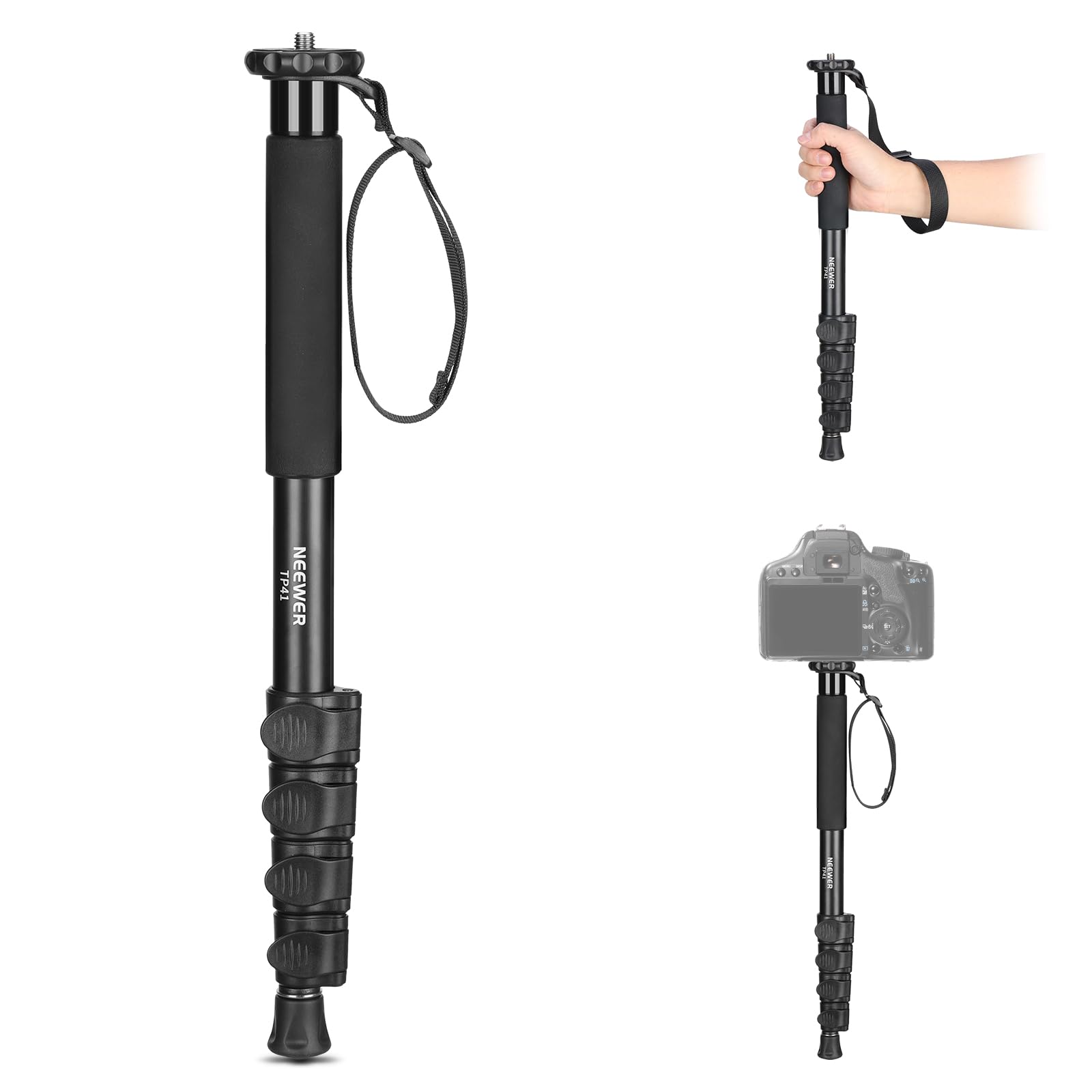
The NEEWER TP41 weighs just 0.88 lb and folds to 17.3 inches, making it the lightest and most compact option in this list. Despite the low weight, the aluminum alloy pole supports up to 17.6 lb — enough for a DSLR with a Sigma 150-600mm lens according to verified users. The 4-section design uses flip locks for rapid extension to 155 cm.
Interchangeable feet are a standout for the price: a nonslip rubber foot for indoor floors and a steel spike for grass or sand. The dual 1/4-inch and 3/8-inch screw adapter covers most camera and gimbal mounts, including action cams and phone holders.
A few users reported the rubber foot detaching after limited use, so checking the screw tightness before going into the field is wise. For the weight and cost, however, the TP41 delivers surprising sturdiness and is a strong entry-level pick or backup monopod.
Why it’s great
- Extremely lightweight and compact at under 0.9 lb and 17 in folded.
- Interchangeable rubber and spike feet adapt to indoor and outdoor terrain.
- Supports heavy telephoto lenses despite the budget price.
Good to know
- Rubber foot can unscrew and be lost if not checked before use.
- Thin leg sections may wobble under maximum load at full height.
5. Manfrotto 290 Carbon Fiber 4-Section Monopod
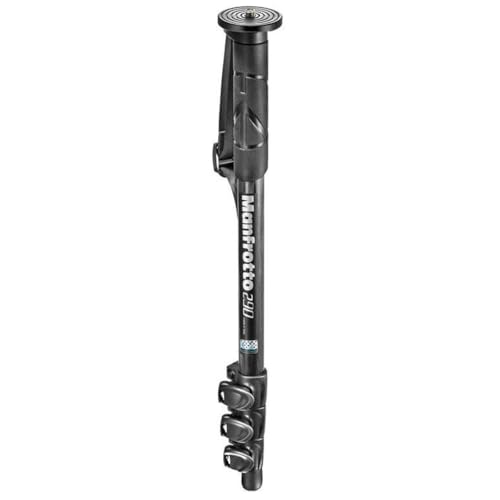
The Manfrotto 290 Carbon Fiber monopod is a pure, no-frills support built for photographers who prioritize low weight and reliability. At 1.1 lb, the 4-section carbon fiber pole uses adjustable aluminum leg locks, a rubber leg warmer, and an angled wrist strap. It extends to 59.45 inches, which is shorter than many competitors, but tall shooters report it reaches eye level when paired with a ball head on a full-frame body with a grip.
The lever locks are faster to operate than twist locks and give a positive click when engaged. The 10 kg payload covers most prosumer setups, and the carbon fiber dampens vibration better than aluminum, which helps sharpen long-exposure and telephoto shots.
Users consistently note the build quality and convenience for birding and sports, but the rubber foot wears quickly if used as a trekking pole. This monopod shines when you need a lightweight, fast-adjusting pole that fits in a carry-on.
Why it’s great
- Carbon fiber construction weighs only 1.1 lb.
- Lever locks are quick to operate and secure.
- Excellent vibration damping for sharper images with long lenses.
Good to know
- Maximum height is 59.45 in, which may be short for very tall users.
- Rubber foot is not replaceable and wears down if used on rough terrain.
6. NEEWER Professional 70.5″ Camera Monopod with Fluid Head
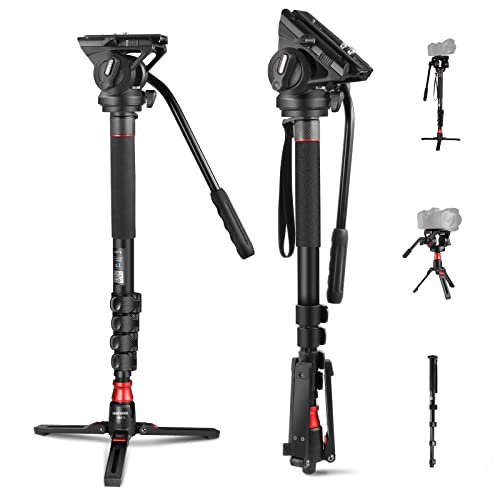
The NEEWER Professional 70.5-inch monopod comes as a complete system with a fluid video head, a detachable tripod base, and a carrying bag. The 5-section aluminum column extends to 179 cm and folds to 63 cm. The fluid head supports 360-degree pan and -70 to +90 degree tilt with damping control and a removable pan handle.
The tripod base swivels 360 degrees and tilts 45 degrees, letting you set the monopod at an angle on uneven ground or use the base alone as a desktop tripod. A side 1/4-inch thread lets you attach a monitor or LED light, which is useful for hybrid photo-video shooters. The 13.2 lb payload supports most mirrorless rigs and smaller DSLR setups.
Users commend the sturdiness for event photography in low light without flash, and the ability to quickly switch between monopod and tripod modes. The total weight is higher than a bare pole, so it is less suited for ultralight hiking than pure carbon models.
Why it’s great
- Complete system with fluid head and tripod base out of the box.
- Angled tripod base provides stability on slopes and uneven terrain.
- Side accessory mount for monitors or microphones.
Good to know
- Heavier than bare monopods; not ideal for ultralight travel.
- Fluid head damping is basic compared to standalone video heads.
7. IFOOTAGE A400 Round Base Monopod Light Stand
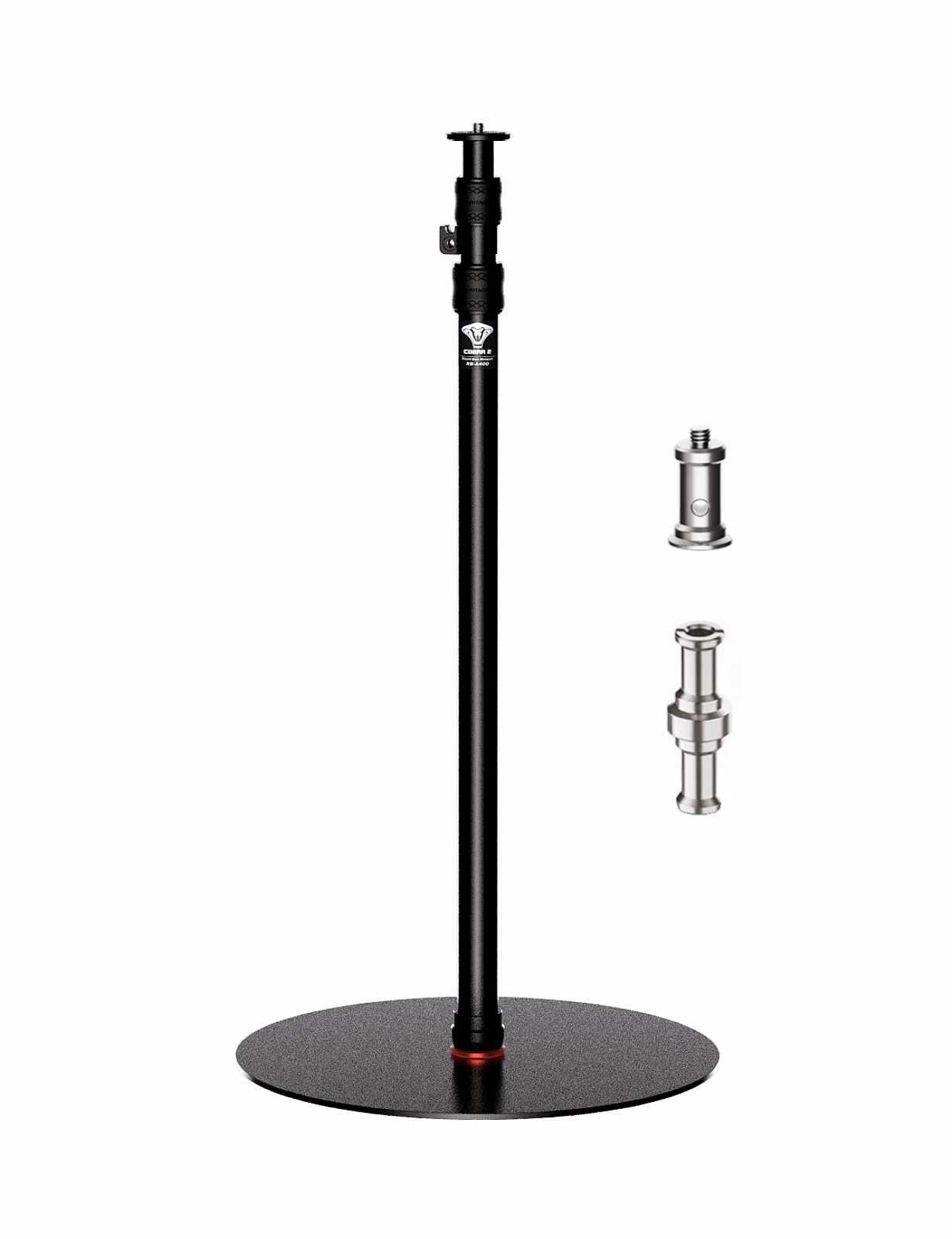
The IFOOTAGE A400 is a different breed of monopod — it replaces standard tripod legs with a 15.75-inch round flat base that slides under furniture and eliminates tripping hazards in tight studios. The 5 mm aluminum chassis supports up to 22 lb, making it a sturdy platform for studio lights, projectors, or a camera rig.
Quick-twist locks on the single column let you adjust height from 30.3 to 79.4 inches. The top comes with a 3/8-inch screw, a 1/4-inch adapter, and a light adapter, so it works with cameras, fluid heads, and video lights interchangeably. The military-grade aluminum has a corrosion-resistant finish for long life.
Studio users praise the stable yet compact footprint, noting that it frees up floor space and improves workflow in small sets. The main caveat is that the base is not practical for outdoor fieldwork or hiking. It is a purpose-built tool for controlled environments.
Why it’s great
- Round flat base eliminates tripod leg tripping hazards in tight studios.
- 22 lb payload handles heavy studio lights and pro cameras.
- Includes multiple adapters for camera, light, and accessory mounting.
Good to know
- Round base is not suitable for outdoor or uneven terrain.
- Heavy at 6.4 kg; not designed for travel or hiking.
FAQ
Can I use a monopod with a gimbal?
How tall should my monopod be?
Is carbon fiber worth the extra cost?
Do I need a fluid head on a monopod?
Final Thoughts: The Verdict
For most users, the best camera monopod winner is the Sirui AM-404FL because its 26.4 lb payload and detachable base cover both heavy telephoto work and low-angle shooting without swapping gear. If you want a lightweight travel companion that packs tiny, grab the Manfrotto Element MII. And for video shooters needing a complete kit with a fluid head and tripod base, nothing beats the NEEWER Professional 70.5″.