
Scoring that perfect mid-century modern look isn’t about throwing a lava lamp in the corner. It’s about nailing the specific silhouette, the tapered leg, the starburst detail, and the hand-blown glass that defined the most optimistic era of American design. Building a 1960s-inspired space means committing to clean lines, organic shapes, and a palette that swings from muted walnut to pops of burnt orange and multicolored chrome.
I’m Min — the co-founder and writer behind Gadgets Feed. I’ve spent months combing through consumer reviews and technical specs to isolate the accessories and furniture pieces that genuinely carry that authentic retro DNA without sacrificing modern durability.
Whether you’re outfitting a den from scratch or just want one statement piece, this guide cuts through the noise to find the best 1960s home decor that actually delivers on the atomic-age promise.
How To Choose The Best 1960s Home Decor
Authentic 1960s decor relies on three pillars: material honesty, exaggerated geometry, and warm lighting. Knowing how to evaluate these elements prevents you from buying a piece that looks modern and cheap rather than retro and intentional.
Material and Construction
Genuine mid-century pieces used solid walnut, teak, or birch — not cheap particleboard. When shopping today, look for acacia wood, walnut laminate over sturdy engineered wood, or real birch legs. Chrome and brass accents should feel substantial, not flimsy. Avoid any item that uses shiny black plastic in place of metal.
Silhouette and Geometry
The 1960s loved sharp angles and atomic-age shapes. Look for splayed or tapered legs on furniture, teardrop or starburst patterns on wall decor, and dome or egg-shaped lampshades. A square box with straight legs isn’t mid-century — it’s industrial. The silhouette should feel as if it’s reaching outward or upward, not just sitting there.
Lighting Temperature and Dimmability
Retro lighting isn’t about task brightness. It’s about creating a warm, enveloping glow. Prioritize lamps with dimmable functionality and warm color temperatures (2700K–3000K). Stepless dimming is ideal — it lets you adjust from low ambient mood lighting to a brighter reading level without harsh blue light.
Quick Comparison
On smaller screens, swipe sideways to see the full table.
| Model | Category | Best For | Key Spec | Amazon |
|---|---|---|---|---|
| Modway Transmit Bookcase | Bookcase | Statement Shelving | 52.5″H x 45″W Walnut Laminate | Amazon |
| Christopher Knight Evelyn Chair | Arm Chair | Accent Seating | 30.5″W Birch Wood Legs | Amazon |
| 2BHOME Turntable Stand | Furniture | Vinyl Storage | Acacia Wood, 26.45 lbs | Amazon |
| Karjoefar Floor Lamp | Floor Lamp | Layered Lighting | Dual E26 Sockets, 3 Temps | Amazon |
| Infinity Instruments Orb Clock | Wall Clock | Atomic-Age Accent | 15″ Diameter, Multi-Color Orbs | Amazon |
| Glivpny Mushroom Lamp | Table Lamp | Ambient Glow | Stepless Dimmable, 2700K | Amazon |
| Dawnwake Mushroom Lamp | Desk Lamp | Petite Accent | Stained Ceramic Base, 0–100% Dim | Amazon |
In‑Depth Reviews
1. Modway Transmit Mid-Century Offset Cube Bookcase

This offset cube design is the single most versatile foundation for a 1960s room. Its splayed and tapered dowel legs — the hallmark silhouette of the era — elevate the entire piece off the ground, giving it that floating, weightless quality that defined mid-century woodworking. The walnut wood grain laminate over engineered particleboard offers a convincing look without the cost of a vintage find.
At 52.5 inches tall and 45 inches wide, the Transmit bookcase commands a wall without overwhelming the space. The seven open display shelves are perfectly proportioned for books, pottery, or a curated collection of retro tchotchkes. The offset cubes break up the monotony of a standard grid, creating visual rhythm that draws the eye across the room.
Assembly requires patience — the parts are labeled clearly but the cam-lock dowels need precise tightening, especially at the top box. Once assembled, the 60-pound structure feels rock-solid. The curved corners on the shelves add a subtle organic touch that distinguishes this from a flat, rectangular unit. This is the anchor piece every 1960s room needs.
Why it’s great
- Authentic splayed-leg silhouette on a large shelf
- Walnut laminate is faithful to the period palette
- Generous display area for a statement wall
Good to know
- Time-consuming assembly with many parts
- Engineered wood, not solid hardwood
2. Christopher Knight Home Evelyn Mid Century Arm Chair

The Evelyn chair nails the two non-negotiable details of a 1960s accent chair: splayed birch wood legs and tufted upholstery. The walnut finish on the legs matches the darker wood tones common in period furniture, while the dark gray fabric is a safe neutral that lets bolder decor shine around it. The waffle stitch pattern on the seat and back adds texture that would feel at home in a Mad Men waiting room.
With a seat height of 17.75 inches and an overall width of 30.5 inches, this chair is compact — it makes a statement without swallowing the room. The foam fill is firm and supportive, though some users noted that the seat depth feels better for average to smaller adults. Assembly takes about 20 minutes: attach the four legs and flip it over.
Weighing in at a manageable size, this chair works best as a pair flanking a console table or as a single accent in a reading nook. The birch legs are the real star here — they are what sell the silhouette. After six months of regular use, the upholstery shows some wear, so consider it a medium-use piece rather than a daily driver for a high-traffic family room.
Why it’s great
- Real tapered birch legs in walnut finish
- Tufted waffle stitch adds premium texture
- Quick 20-minute assembly
Good to know
- Compact dimensions may not suit taller users
- Upholstery can show wear with heavy daily use
3. 2BHOME Wooden LP Record Player Stand

This stand bypasses cheap particleboard by using solid acacia wood — a material choice that immediately signals quality. The warm, natural grain of acacia brings a rich texture that complements both chrome turntables and walnut-framed records. Its three-tier design offers a large tabletop for a full-size turntable, a middle shelf for a receiver or amp, and four compartments below that hold between 100 and 160 vinyl LPs.
The splayed solid wood legs give this piece the retro stance you want, while the cut-out handle makes repositioning easy — useful if you rearrange your listening corner frequently. An integrated cable management hole keeps power cords hidden, preserving the clean aesthetic. Assembly is straightforward, though you should use a screwdriver with care to avoid stripping the wood.
At 26.45 pounds, this stand has substantial heft, which is important for dampening vibrations from your turntable’s motor. Some users reported small chips on the wood surface upon arrival, but the natural grain hides minor imperfections well. The warm acacia finish pairs beautifully with orange or olive accent pieces, making this a functional anchor for a fully realized 1960s listening room.
Why it’s great
- Solid acacia wood with warm, natural grain
- Holds 100+ records with organizational compartments
- Vibration-dampening weight for turntables
Good to know
- Wood can chip if mishandled during assembly
- Not a heavy hardwood — acacia is prone to dents
4. Karjoefar 2-Light Floor Lamp

Dual E26 sockets set this lamp apart — you get the equivalent of two light sources in one slim profile. That matters in a 1960s room where layered lighting is critical for creating depth. The white linen drum shade softens the output, while the black and gold metal details echo the era’s love of contrasted finishes. Each bulb has its own pull chain, giving you independent control over each light source.
The included 9W LED bulbs switch between 3000K (warm), 4500K (neutral), and 6500K (cool), with a memory function that remembers your last setting. For a period-correct mood, stick with 3000K. The weighted base prevents tipping, and the 6.8-foot cord offers flexible placement. Assembly takes under 10 minutes — the pole sections snap together with no tools required.
Some users wished the bulbs were fully dimmable, but the three-step color temperature cycling via the foot pedal is a practical compromise. The rolled shade can appear puckered straight out of the box, though it relaxes over time. At this build quality, the Karjoefar delivers more light output than most retro floor lamps at double the price, making it the smart choice for a room that needs both ambiance and illumination.
Why it’s great
- Two independent light sources in one slim profile
- Memory function remembers last color temperature
- Tool-less snap-together assembly
Good to know
- Bulbs are not continuously dimmable
- Shade can arrive with slight creases from packaging
5. Infinity Instruments Orb Spoke Starburst Wall Clock
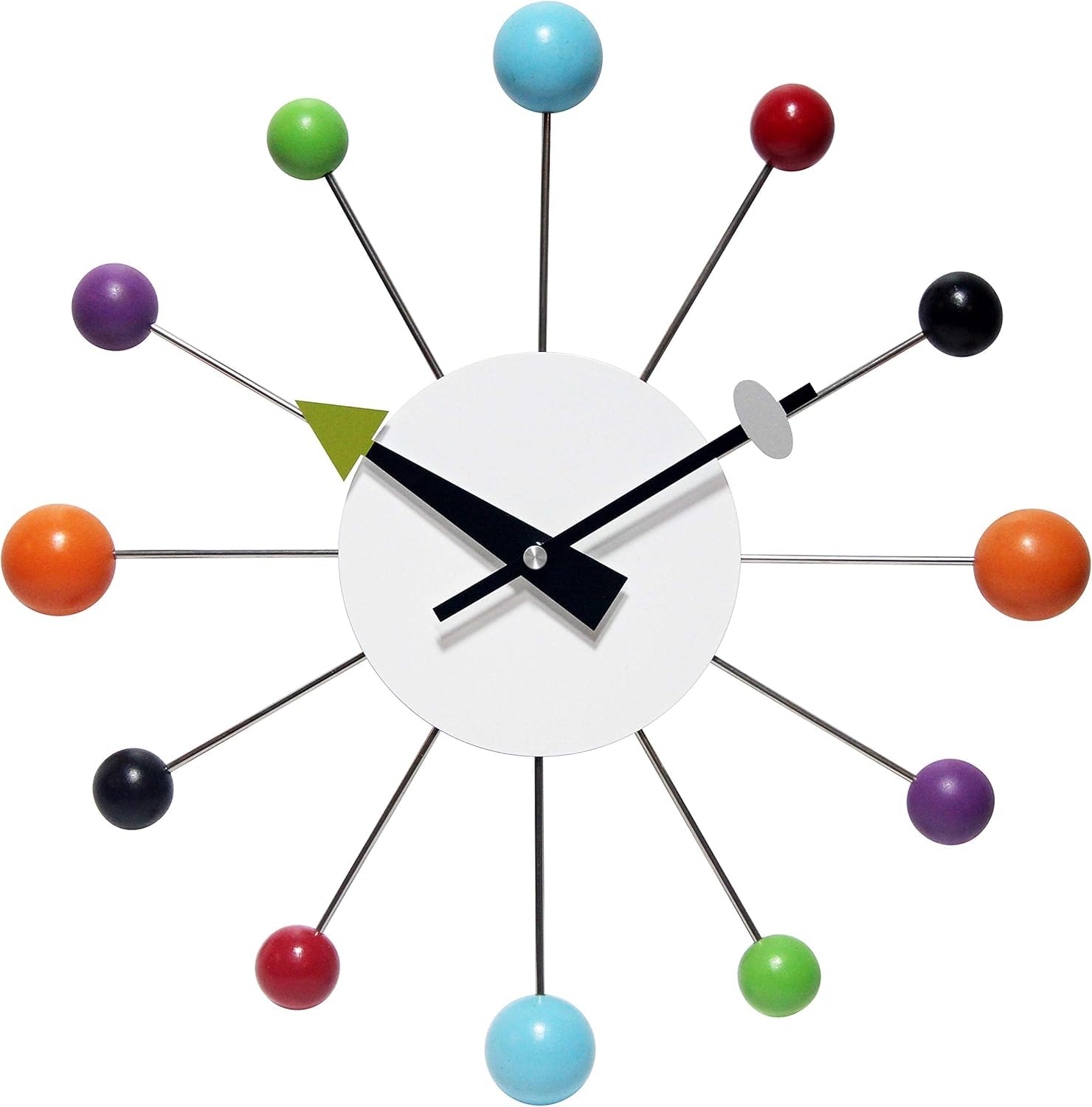
A starburst clock is arguably the single most recognizable symbol of 1960s atomic-age design. The Infinity Instruments Orb Spoke version earns its spot by adding multicolored spherical tips to the sunburst spokes — a playful twist on the standard gold or silver rod design. At 15 inches across, it commands attention on a wall without overwhelming adjacent decor.
The metal frame and chrome finish feel premium, and the assembly is a simple two-minute task: slide the spokes into the central hub and hang it. The quartz movement is nearly silent, which is important since the whole point is the visual statement, not a ticking disturbance. It requires one AA battery (not included).
This is not a precision timepiece — the quartz movement has some acceptable drift — but that misses the point. The Orb Spoke clock is a decorative anchor that brings instant retro credibility to any room. Pair it with a walnut console table or mid-century credenza for a complete period vignette. The rainbow orbs catch light beautifully, casting small colored reflections during the day.
Why it’s great
- Iconic starburst shape with fun multi-color spheres
- Silent quartz movement won’t disrupt ambiance
- Lightweight and quick to assemble
Good to know
- Not a highly accurate timekeeper
- Fragile construction when handling
6. Glivpny Mushroom Table Lamp
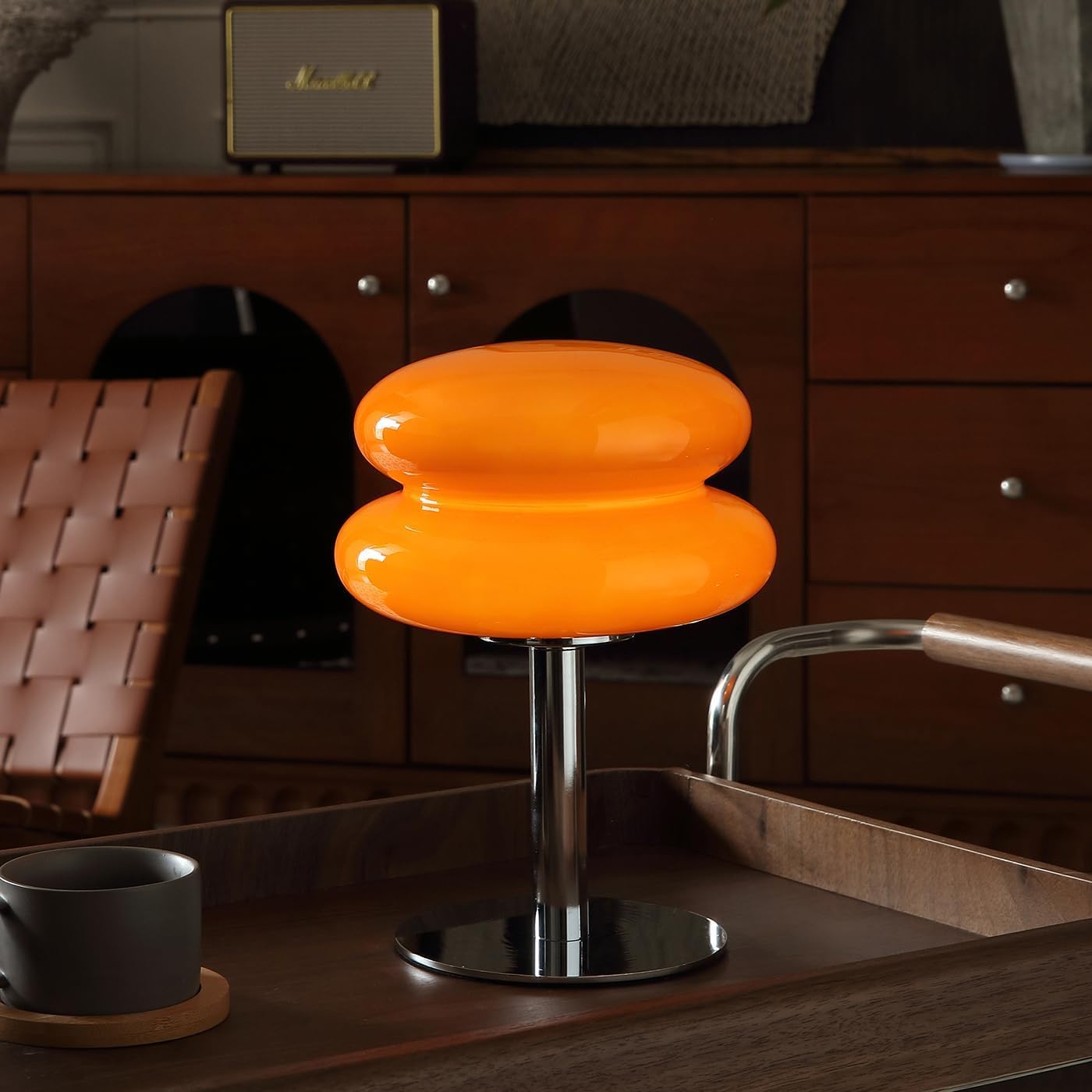
The egg-tart-shaped glass shade of the Glivpny lamp is a dead ringer for the sculptural table lamps that populated 1960s side tables. The hand-blown glass creates subtle variations in thickness that scatter light beautifully, and the polished chrome base provides the necessary metallic contrast. This lamp delivers warm, diffused light that transforms a room without harsh glare.
Stepless dimming is the standout feature here — a simple rotating control on the base lets you dial in brightness from a soft nightlight glow to a comfortable reading level. The included G9 LED bulb is efficient and flicker-free at all settings. Assembly is straightforward: screw the glass shade onto the base and plug it in.
At 5 feet from the outlet, the cord can feel short for some placements, so plan its location accordingly. The lamp is best suited for a nightstand, entryway console, or bookshelf where its compact silhouette can be appreciated up close. The orange glass shade casts a particularly warm hue that pairs well with dark wood and brass accessories. This is the lamp that makes guests ask where you found it.
Why it’s great
- Hand-blown glass shade is unique to each lamp
- True stepless dimming from low to moderate brightness
- Chrome base adds authentic mid-century shine
Good to know
- Cord length is shorter than average
- Not suitable as a primary room light source
7. Dawnwake Mushroom Table Lamp
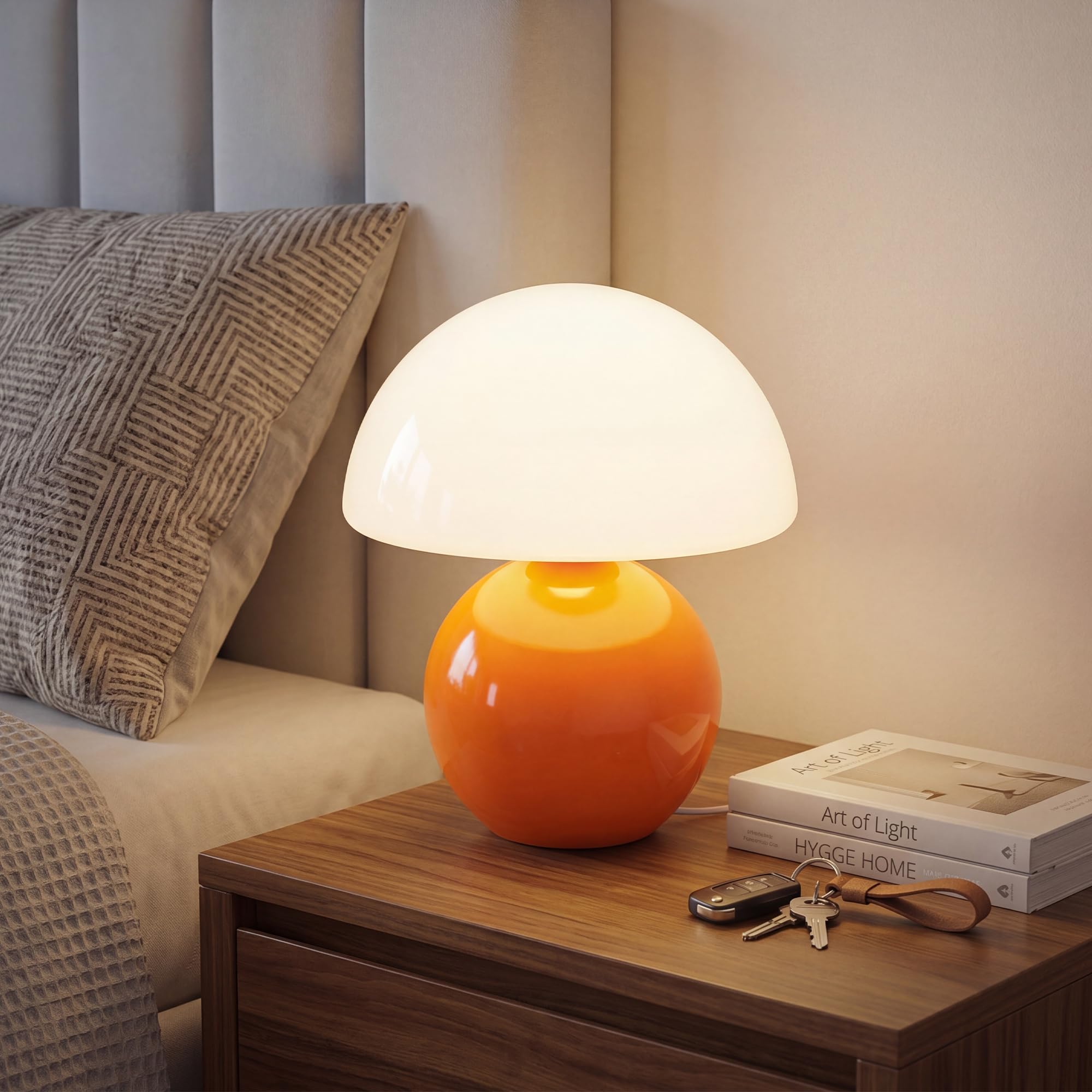
Where the Glivpny lamp uses metal and glass, the Dawnwake opts for a stained ceramic base and hand-blown glass shade — a combination that leans into the earthy side of 1960s design. The ceramic base has a glazed finish that comes in muted colors (orange, sage green, cream), giving it a handcrafted feel that feels more mid-century artist studio than factory production line.
The fully stepless dimmer is controlled via a switch on the power cord, allowing you to adjust brightness from zero to 100 percent without any sudden jumps. At its lowest setting, the lamp produces a barely-there glow perfect for a nursery or late-night ambiance; at its highest, it provides enough light for reading a book placed on a nightstand. The included G9 LED bulb is warm-toned and flicker-free.
Assembly takes about 30 seconds — just screw the shade onto the base. Some users reported that the max brightness is lower than expected, so this is strictly an accent or mood lamp, not a task light. The color of the ceramic base can vary from the product photos, especially with the green option, which is more of a muted sage than a bright apple green. If you want an affordable, genuinely cute entry-level piece that channels the 60s mushroom lamp trend, this is the one.
Why it’s great
- Stained ceramic base feels handcrafted and authentic
- Cord switch offers full 0–100% dimming control
- Ultra-simple assembly in under a minute
Good to know
- Max brightness is lower than typical desk lamps
- Base color may differ slightly from online photos
FAQ
Is 1960s decor the same as mid-century modern?
How do I mix 1960s decor with modern furniture?
What wall color best complements 1960s furniture?
Are reproduction 1960s lamps safe for daily use?
Final Thoughts: The Verdict
For most users, the best 1960s home decor winner is the Modway Transmit Bookcase because it delivers the essential architectural foundation of the era — splayed legs and warm walnut grain — with enough shelf space to anchor an entire room. If you want a lighting piece that transforms the mood, grab the Glivpny Mushroom Lamp. And for an easy, high-impact accent that doesn’t require any assembly or cord management, nothing beats the Infinity Instruments Orb Clock.