
Falling off a bike or sliding across asphalt at speed is not a matter of if, but when. The difference between walking away and a life-altering injury often comes down to a single piece of gear strapped to your torso. Chest and back protectors have evolved far beyond simple foam pads into sophisticated, multi-layer armor systems designed to absorb, dissipate, and deflect impact forces that would otherwise shatter bone.
I’m Min — the co-founder and writer behind Gadgets Feed. My deep market research and analysis of NIJ-rated materials, CE certification standards, and real-world crash test data ensure you only get the most effective protection for your money.
After countless hours researching impact-absorption technologies, ventilation systems, and fitment across hundreds of reviews, I’ve narrowed the field to the elite selections for the best bulletproof armor that offers genuine, life-saving protection without sacrificing mobility or comfort.
How To Choose The Best Bulletproof Armor
Choosing chest and back armor isn’t like buying a jacket. You are selecting a system that lives between your body and the ground. Weight, coverage area, ventilation, and certification level all directly influence whether you actually wear it every ride and whether it saves you when you crash. Focus on these three pillars.
Certification Standards: Level 1 vs. Level 2 Impact Absorption
The CE standard (EN 1621-1 and EN 1621-2) dictates the maximum transmitted force during a controlled impact. Level 1 armor transmits less than 18 kN of force. Level 2 armor halves that threshold to under 9 kN. For high-speed motorcycle crashes or rocky MTB trails, Level 2 is the minimal viable option—it absorbs roughly twice the energy before transfer to your ribs or vertebrae.
Material Science: Viscoelastic Foam vs. Hard Shell vs. Grid Tech
Traditional foam armor stiffens in cold weather, becoming dangerously rigid. Viscoelastic (VPD) formulations remain soft and pliable at body temperature but lock up instantly on impact. Hard shell designs use polymeric shells over foam to distribute point loads over a wider area. Grid technology—like Alpinestars’ Nucleon Cell or Leatt’s 3DF AirFit—creates honeycomb-like structures that ventilate heat while absorbing impact through cell wall deformation. Match the material to your climate and crash environment.
Fit, Ventilation, and Modular Integration
Armor only protects if it stays in place during a crash. Adjustable shoulder straps, kidney belts, and compression socks are essential for a secure fit. High-temperature sports (motocross, downhill biking) demand perforated shells and airflow channels to prevent heat exhaustion. Lastly, consider compatibility with neck braces—models that integrate or pair seamlessly with a BNS (Bionic Neck Support) system prevent dangerous neck hyperextension during a roll.
Quick Comparison
On smaller screens, swipe sideways to see the full table.
| Model | Category | Best For | Key Spec | Amazon |
|---|---|---|---|---|
| Leatt Fusion 3.0 Vest | Premium Vest | Integrated neck brace + body armor combo | CE Level 2 certified, 1015400101-Parent | Amazon |
| Leatt Body Protector 6.5 | Premium Jacket | Full torso coverage with kidney belt | 3DF AirFit soft foam, 2.87 lbs | Amazon |
| Leatt Brace Chest Protector 6.5 Pro | Chest Protector | Lightweight chest + side impact panels | 3DF AirFit foam, polypropylene shell | Amazon |
| POC Spine VPD 2.0 Jacket | Ski/MTB Jacket | Multi-sport: skiing, MTB, motorcycle | Viscoelastic Polymer Disc (VPD), 2.53 lbs | Amazon |
| Alpinestars A-10 V2 Full Chest Protector | Modular Chest | Modular design with BNS compatibility | Grid cell system, 2 lbs | Amazon |
| Alpinestars Bionic Plus V2 Jacket | Motorcycle Jacket | Best ventilation + Level 2 back protector | Nucleon Cell Level 2, 1.8 lbs | Amazon |
| Spec Ops Tool Gear SF-18 Charlie 2.0 | Work Vest | Tool carrying with weight redistribution | Modular MOLLE system | Amazon |
In‑Depth Reviews
1. Leatt Fusion 3.0 Vest
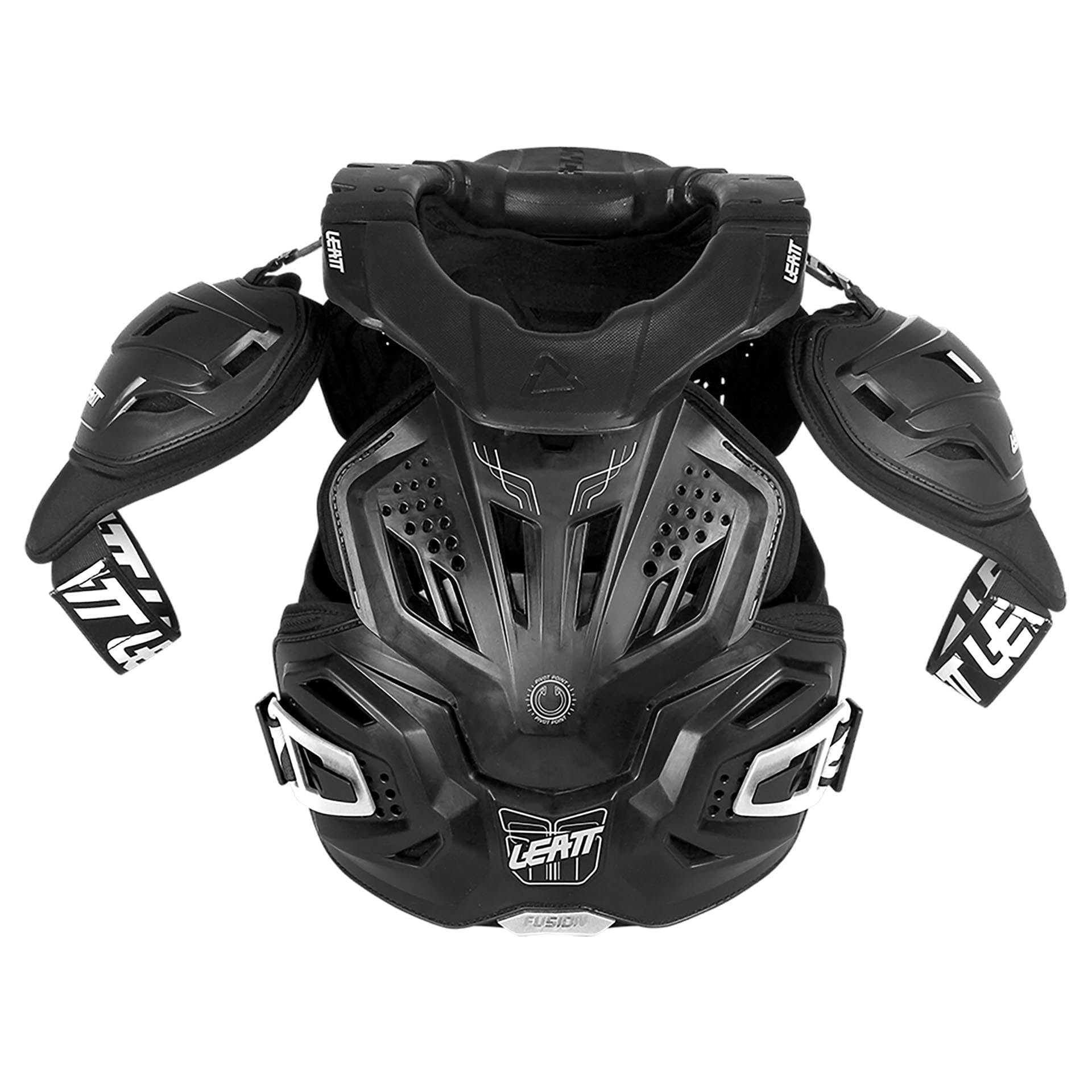
The Leatt Fusion 3.0 Vest represents the pinnacle of integrated safety for aggressive off-road riders. Unlike separate chest protectors and neck braces that can shift or collide during a crash, this vest fuses a high-impact body armor core with a built-in neck brace system. The body armor is stouter than a traditional chest protector—users have survived multiple motocross crashes and even a 10-foot cliff fall without spinal injury, directly crediting the vest’s unified design for preventing neck hyperextension.
Materially, the Fusion line uses a stout plastic composite shell over a dense impact foam that far exceeds CE Level 2 requirements. The shoulder attachment points are secure when properly assembled, though some units shipped with defective shoulder adapters that detach during normal riding—a quality control issue that Leatt’s warranty repair covers but requires shipping the entire vest to the manufacturer. The L/XL fits a 6’2″ 190 lb frame at the tightest strap setting, which may feel slightly loose for riders who prefer a compression-like fit.
One notable compromise is shoulder mobility: the integrated shoulder pads float freely rather than anchoring to the vest, which can make them ineffective during a slide. The lower back and kidney area also lacks coverage—many users pair this vest with a separate Leatt kidney brace for complete torso protection. Despite these quirks, the sheer survivability data from real-world crashes makes this the gold standard for riders who want their neck and spine protection locked together in one cohesive system.
Why it’s great
- Unified neck brace and body armor eliminates dangerous gap between separate components
- Stout impact shell with Level 2 energy absorption saved users in 10-foot falls and high-speed motocross crashes
- Easy on/off compared to separate chest protector + neck brace setups
Good to know
- Some units ship with defective chest plate shoulder attachments that detach during use
- Floating shoulder pads may not stay in place during a slide
- L/XL strap maxes out at tightest setting for taller riders; lower back/kidney area exposed
2. Leatt Body Protector 6.5
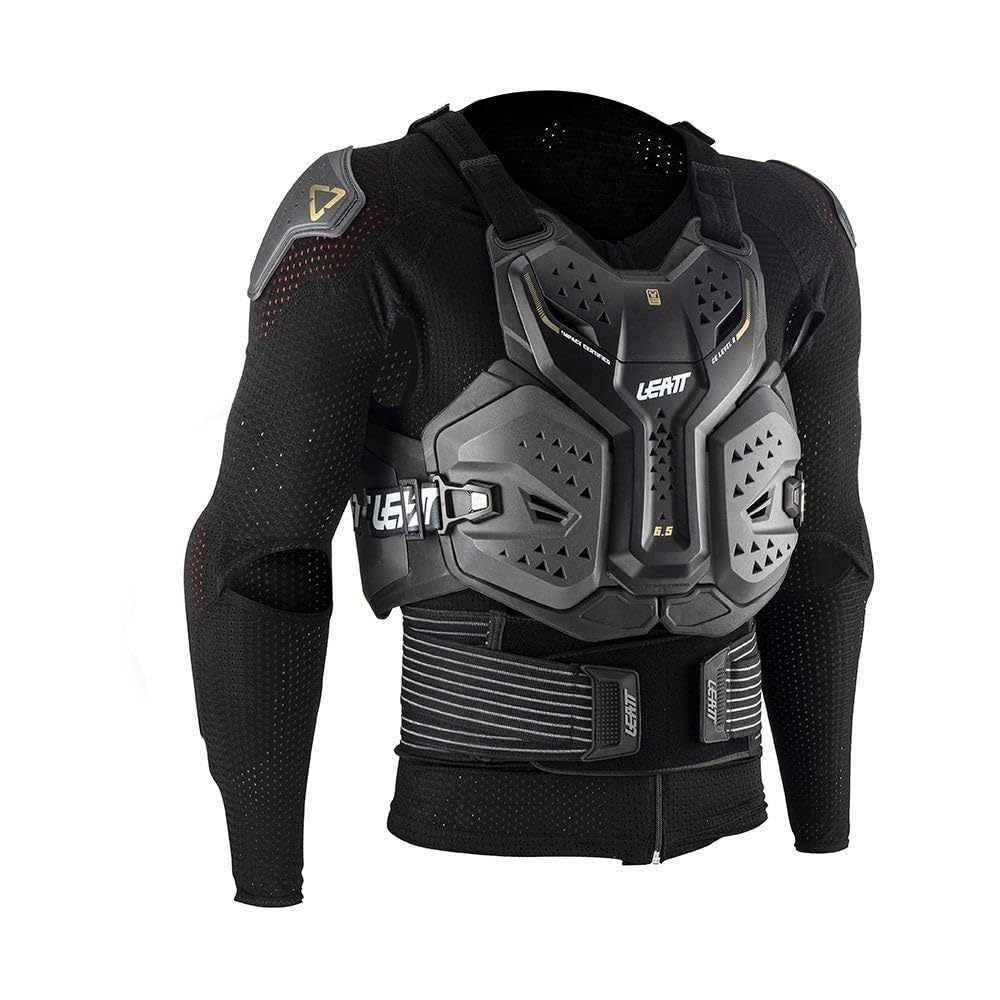
The Leatt Body Protector 6.5 is a full-impact jacket designed for riders who want coverage from the shoulders down to the kidneys. It uses Leatt’s 3DF AirFit ventilated soft impact foam—a material that remains flexible at body temperature but stiffens instantly on high-energy impact. The vest survived a severe mountain bike crash without any transmitted injury, and the separate modular central zip-up compression sock integrates built-in elbow and shoulder protection that can be removed for washing or replacement.
Weighing 2.87 pounds, it is heavier than dedicated chest protectors, but the weight distribution across the kidney belt and adjustable shoulder straps makes it feel lighter during actual riding. The hard shell over foam construction provides excellent chest and side rib protection, with flank panels specifically engineered for side impacts. Riders report that the kidney belt tends to ride up during aggressive riding, and the suit requires a shirt underneath to prevent chafing at the armpits.
The build quality is notably superior to budget Chinese armor—the shell is molded from dense polypropylene and the foam is CE certified. Compatibility with the Leatt 5.5 Neck Brace is seamless, making this a top choice for riders who already own Leatt neck protection. It is bulky and warm in hot weather, but for enduro, motocross, and downhill MTB where the stakes are highest, the 6.5 delivers peace of mind that few other jackets can match.
Why it’s great
- Full coverage: shoulders, chest, ribs, back, elbows, and kidneys in one jacket
- 3DF AirFit foam hardens on impact while remaining ventilated and flexible at riding temperature
- Modular compression sock separates armor from mesh under-layer for easy cleaning
Good to know
- Kidney belt rides up during aggressive riding and needs frequent readjustment
- Bulky design requires a looser jersey to fit over it
- Higher price point compared to chest-only protectors
3. Leatt Brace Chest Protector 6.5 Pro

The Leatt 6.5 Pro Chest Protector is the stripped-down, lightweight sibling of the full jacket, focusing exclusively on chest, back, and flank coverage without the full jacket’s sleeves and kidney belt. It uses a lightweight polypropylene hard shell backed by 3DF AirFit ventilated foam that is CE tested for impact certification. The multi-layer, multi-plate design with adjustable over-the-shoulder straps ensures a close, comfortable fit that stays in place during aggressive riding.
Despite feeling heavier in the hand than it actually is (3.1 pounds for the shell alone), riders report that once strapped on, the weight disappears. The ventilation slots run vertically across the entire shell, maximizing airflow during hot summer rides. Leatt integrated removable front and rear plates specifically designed to allow a neck brace to be worn either over or under the shirt, making this one of the most versatile chest protectors on the market for neck brace compatibility.
A critical limitation is shoulder coverage—the 6.5 Pro’s shoulder plates are minimal and lean forward, leaving the deltoids and outer shoulder exposed during a fall. Riders above 6’2″ and 255 lbs may find the 2XL too small, as the straps max out before achieving a secure fit. For riders who primarily need chest, back, and side protection and already own a neck brace, this is a lightweight, proven solution that has already saved users in real crashes without a scratch.
Why it’s great
- Lightweight and comfortable—users forget they are wearing it during rides
- Excellent ventilation slots keep core temperature down in hot weather
- Removable front/rear plates for seamless neck brace integration over or under the shirt
Good to know
- Shoulder coverage is limited and may not protect deltoids in a slide
- Size 2XL runs small; larger riders may not achieve a snug fit
- Feels heavier when held than when worn; some may prefer the full jacket coverage
4. POC Spine VPD 2.0 Jacket

The POC Spine VPD 2.0 Jacket is a multi-sport impact vest that crosses from mountain biking into skiing and snowboarding with equal confidence. It uses POC’s Viscoelastic Polymer Disc (VPD) technology—flexible pads that mold to the body at room temperature but lock into rigid impact panels upon sudden force. The jacket covers the entire spine with a large guard that extends well down the lumbar region, plus integrated shoulder pads and a zippered front panel for easy on/off.
For winter sports, the VPD jacket acts as an extra insulating layer on chairlifts, but the foam has a critical weakness: at ambient temperatures below 25°F, the pads become rock hard rather than pliable. This can make the monolithic chest plate dangerous on an upward blow to the collarbone or neck during a ragdoll fall. Skiers rave about the protection during NASTAR racing (preventing pole hit bruises) and high-speed crashes where the jacket saved users from serious injury, but the cold-stiffness issue is a real limitation for dedicated cold-weather use.
The 2.53-pound weight makes it one of the lighter full-coverage armor jackets on the market. It fits comfortably under a loose jersey or ski jacket, and a 5’8″ rider in a 38-inch jacket fits a size Medium perfectly. The shoulder pads tend to dig into the collarbone when reaching overhead, and there is no integrated forearm protection—users who want full limb coverage need separate guards. For riders in moderate climates who want one vest for MTB and motorcycle use, this is a formidable choice with proven crash survivability.
Why it’s great
- Versatile across MTB, skiing, snowboarding, and motorcycle riding
- Large spine guard provides excellent coverage down to the lumbar region
- Lightweight construction at 2.53 lbs; disappears under a jersey or jacket
Good to know
- VPD foam becomes rock hard below 25°F, potentially dangerous on upward blows
- Shoulder pads dig into collarbone during overhead reach activities
- No forearm guards or kidney belt; separate protection pieces needed for full coverage
5. Alpinestars A-10 V2 Full Chest Protector

The Alpinestars A-10 V2 is a chest-and-back protector engineered around the brand’s embedded grid technology—a cellular structure under the hard shells that absorbs and dissipates impact forces by deforming the grid walls rather than transferring energy directly to the body. The hard shells themselves are molded from a high-performance polymeric material blend that allows for significant weight savings while maintaining structural rigidity. At just 2 pounds, it is one of the lightest full-coverage protectors available.
The second-generation (V2) design closes the gaps between plastic and foam that existed in the V1, creating a more form-fitting contour that molds to the rider’s torso. The shell features perforation zones and air channels that provide exceptional breathability—riders in hot California climates report comfort even during long rides. The modular design allows for the addition of the Alpinestars BNS (Bionic Neck Support) system, making this a future-proof platform if you plan to add neck protection later.
One sizing note: the XXL fits a 42-inch chest and 200 lb rider perfectly snug, while the XL/2XL works for muscular riders at 5’8″ and 175 lbs. The adjustable elastic closure system and buckle straps hold the armor securely in place without rattling or shifting. A minor cosmetic annoyance is that the white logo is painted rather than molded, but functionally this protector delivers Level 2 certified impact protection in a package that breathes better than most mesh-base competitors.
Why it’s great
- Grid technology under shell absorbs and dissipates impact better than solid foam alone
- Exceptional ventilation with perforated shells and air channels—great for hot weather riding
- Modular design accepts Bionic Neck Support system for future upgrades
Good to know
- Printed white logo may peel or wear over time; cosmetic concern only
- XXL sizing same as XL—no additional length or width for truly large torsos
- All-plastic construction may feel less premium than fabric-backed competitors
6. Alpinestars Bionic Plus V2 Protection Jacket
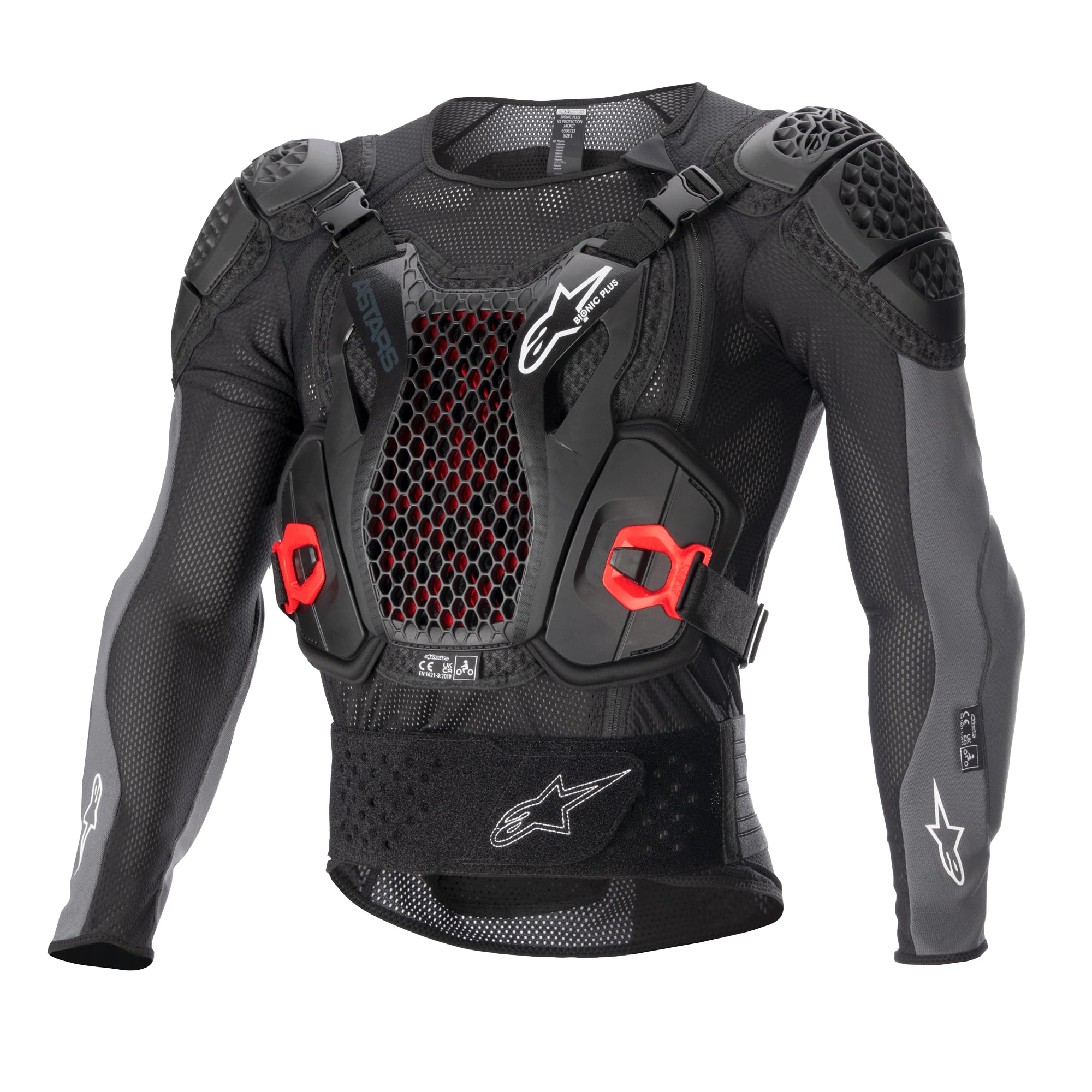
The Alpinestars Bionic Plus V2 Protection Jacket is an ultra-lightweight full-torso armor system that punches well above its price tier. It combines a CE-certified Level 2 Nucleon Cell back protector (the highest impact absorption rating for back armor) with a chest protector made from Alpinestars’ Cell Technology foam. The entire jacket weighs only 1.8 pounds, making it lighter than many standalone chest protectors while still offering back, shoulders, and chest coverage.
The Nucleon Cell back protector uses a flexible honeycomb structure with a “flexion channel” that allows the spine protector to bend with your back while maintaining stiffness at impact. The chest protector features a highly perforated shell for ventilation, and the padded chassis with adjustable shoulder straps and an elastic closure system ensures the jacket stays tight against the body without restricting movement. One user survived a 15-20 foot slide on asphalt wearing nothing but this jacket under a hoodie, crediting the armor for preventing any road rash or impact injury.
Fit is snug and true to size—it is designed to be worn as a base layer under a jersey or hoodie. The closure system uses buckles rather than zippers, which some riders find more secure but less convenient for quick removal. The jacket is CE certified to EN 1621-1:2012 (shoulder and chest), EN 1621-2:2014 (back), and EN 1621-3:2018 (chest) standards, making it one of the most comprehensively certified options available. For riders on a tighter budget who refuse to compromise on back protection, this is the smartest purchase in the category.
Why it’s great
- Ultra-lightweight at 1.8 lbs with full back, chest, and shoulder coverage
- CE Level 2 Nucleon Cell back protector with flexion channel for natural spine movement
- Proven crash protection—survived a 15-20 foot asphalt slide without injury
Good to know
- Buckle closure system is less convenient than a zipper for quick on/off
- Fits tightly as a base layer, may not accommodate bulky clothing underneath
- Some units may have minor cosmetic blemishes from manufacturing
7. Spec Ops Tool Gear SF-18 Charlie 2.0 Tactical Tool Vest

The Spec Ops Tool Gear SF-18 Charlie 2.0 is not ballistic armor in the traditional sense—it is a modular MOLLE-based tool vest designed for tradespeople, carpenters, and DIY professionals who need to carry heavy tools without destroying their backs. The vest prioritizes weight redistribution, using a padded chassis and adjustable straps to shift the load from the shoulders to the hips, dramatically reducing fatigue during a full workday. Users with back and knee injuries report that this vest feels lighter than a traditional tool belt despite carrying more tools.
The MOLLE (Modular Lightweight Load-carrying Equipment) system on the front and sides allows for infinite customization of pouches, holsters, and pouches. The vest comes with several standard pouches, but the real strength is the ability to add aftermarket MOLLE attachments for specific tools. The fit is highly adjustable—users can dial in waist belt tension first, then adjust the shoulder straps with assistance or over a table mirror for a precise fit. Side pouches are notably durable and resist tearing even under heavy loads.
One critical sizing issue: a second purchase of the same size was reported to fit smaller than the first, suggesting batch-to-batch variation in manufacturing. The vest also runs warm in hot weather due to the padded construction, and it is not designed as impact armor—it will not protect against falls or blunt force trauma. For a contractor who wants to organize tools while protecting their lower back from strain, this vest is a game-changer. For impact protection, you need a separate armor system underneath.
Why it’s great
- Exceptional weight redistribution reduces back and knee strain during long workdays
- Full MOLLE system for unlimited customization of tool pouches and attachments
- Durable construction with heavy-duty side pouches that hold up to carpentry tools
Good to know
- Not impact armor—offers no protection against falls or blunt force
- Batch-to-batch size variation reported; same size may fit differently
- Padded construction retains heat; not ideal for hot outdoor work environments
FAQ
Is Level 2 back protection worth the extra weight?
Can I wear a chest protector under my jersey or jacket?
How do I properly clean and maintain impact armor?
Final Thoughts: The Verdict
For most riders, the best bulletproof armor winner is the Leatt Fusion 3.0 Vest because it integrates neck brace protection directly into the body armor, eliminating the dangerous gap that can cause neck hyperextension during a crash. If you want maximum torso coverage with a kidney belt and full back protection, grab the Leatt Body Protector 6.5. And for riders on a tighter budget who refuse to compromise on Level 2 back protection, nothing beats the Alpinestars Bionic Plus V2 Protection Jacket.