
The transition from padded, arch-supported footwear to a zero-drop, thin-sole shoe is one of the most jarring changes your feet can experience. Most people who try barefoot shoes for the first time report a distinct moment when their toes finally splay naturally against the ground — and then immediately wonder why they spent years squeezing into tapered sneakers. The goal is to rebuild foot strength, improve balance, and let your feet function as nature intended, without sacrificing style or protection on pavement.
I’m Min — the co-founder and writer behind Gadgets Feed. I’ve spent countless hours analyzing sole thickness measurements, toe-box volume data, and ground-feel feedback across dozens of barefoot footwear models to find the ones that actually deliver on their promise of natural movement and long-term comfort.
This guide focuses on barefoot shoes for everyday wear that balance professional styling with the anatomical freedom your feet need to stay healthy during long hours on hard surfaces.
How To Choose The Best Barefoot Shoes For Everyday Wear
Barefoot shoes are not a one-size-fits-all category. The right pair depends on the shape of your foot, the surfaces you walk on most, and how much ground feedback you truly want. Most buyers underestimate the importance of a proper transition period and overestimate how much sole protection they actually require on concrete. Here are the three filters that separate a smart purchase from a disappointing one.
Sole Thickness and Flexibility
The defining spec of any barefoot shoe is its sole thickness. A true minimalist shoe measures between 3mm and 8mm at the forefoot. Anything thicker dampens ground feel and can prevent your foot’s natural proprioception from activating. Look for a sole that you can easily twist and fold with one hand. Stiffer soles indicate unnecessary support that works against the barefoot principle.
Toe Box Volume and Shape
A wide, foot-shaped toe box is non-negotiable. Your toes need room to splay outward, not be forced into a tapered point. Measure the width of your foot at its widest point and compare it against the shoe’s internal width at the same location. Many brands now publish this data. A cramped toe box defeats the entire purpose of transitioning to barefoot footwear and can cause or worsen bunions over time.
Transition Period and Foot Strength
Switching from conventional shoes with arch support and heel elevation to zero-drop thin soles requires patience. Pain or soreness in the calves and Achilles tendon during the first two weeks is normal. Start by wearing your barefoot shoes for one to two hours a day, then gradually increase duration over a month. Sudden full-time wear can cause plantar fasciitis or tendon strain. Listen to your feet — they need time to rebuild the intrinsic muscles that modern shoes have allowed to weaken.
Quick Comparison
On smaller screens, swipe sideways to see the full table.
| Model | Category | Best For | Key Spec | Amazon |
|---|---|---|---|---|
| FLUX FOOTWEAR Adapt Runners | Premium | All-day walking and flat feet | ~6mm stack height | Amazon |
| Merrell Men’s Wrapt Sneakers | Premium | Casual wear and wide footbeds | ~10mm stack height | Amazon |
| Xero Shoes Phoenix Knit Ballet Flat | Mid-Range | Professional and dressy environments | ~5mm FeelTrue® sole | Amazon |
| Merrell Vapor Glove 6 Leather | Mid-Range | Office and trail crossover | ~6mm stack height | Amazon |
| Xero Shoes Prio Suede | Mid-Range | Versatile athletic and daily wear | ~5.5mm FeelTrue® sole | Amazon |
| Hike Footwear HF Signature | Budget | Lightweight casual and errands | ~4mm sole thickness | Amazon |
| Hike Footwear HF Stride | Budget | Senior balance and bunion relief | ~4mm sole thickness | Amazon |
In‑Depth Reviews
1. FLUX FOOTWEAR Adapt Runners for Women and Men
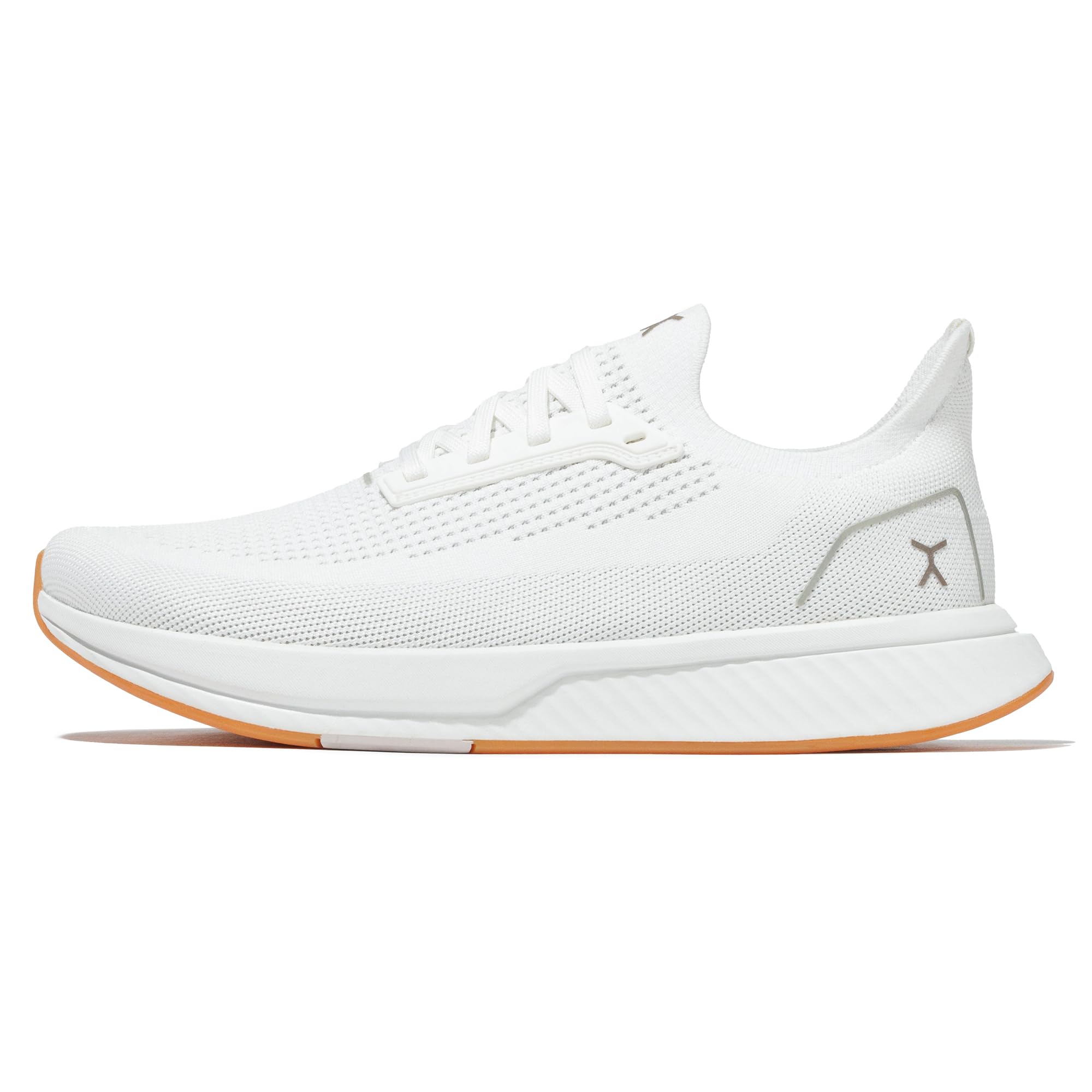
FLUX FOOTWEAR built the Adapt Runner around a simple premise: a shoe that disappears on your foot while protecting it from the ground. The ~6mm stack height keeps you connected to the surface without transmitting every pebble’s sharp edge. Multiple reviewers with flat feet and post-surgery ankles report that this shoe eliminated foot pain during 15,000-step workdays, which is a strong indicator that the zero-drop platform and wide toe box work as intended.
The construction prioritizes durability over weight savings. Unlike many barefoot shoes that sacrifice longevity for a featherlight feel, the Adapt Runner uses a denser outsole compound that holds up to daily pavement pounding. Some users note that the heel cup initially feels tight and the shoe runs slightly small, so ordering half a size up is a common recommendation. The replaceable insoles add versatility for users who prefer a bit more or less ground feel depending on the day.
For anyone who needs a single pair of barefoot shoes that can handle walking commutes, casual runs, and all-day standing, the Adapt Runner delivers a rare combination of structural integrity and minimalism. The price is in the premium tier, but the build quality and comfort justify the investment for daily drivers.
Why it’s great
- Durable outsole holds up to heavy daily use
- Wide toe box allows natural splay without pressure points
- Replaceable insoles for customizable ground feel
Good to know
- Runs small — order half a size up
- Heel cup may feel tight during initial break-in
2. Merrell Men’s Wrapt Sneakers
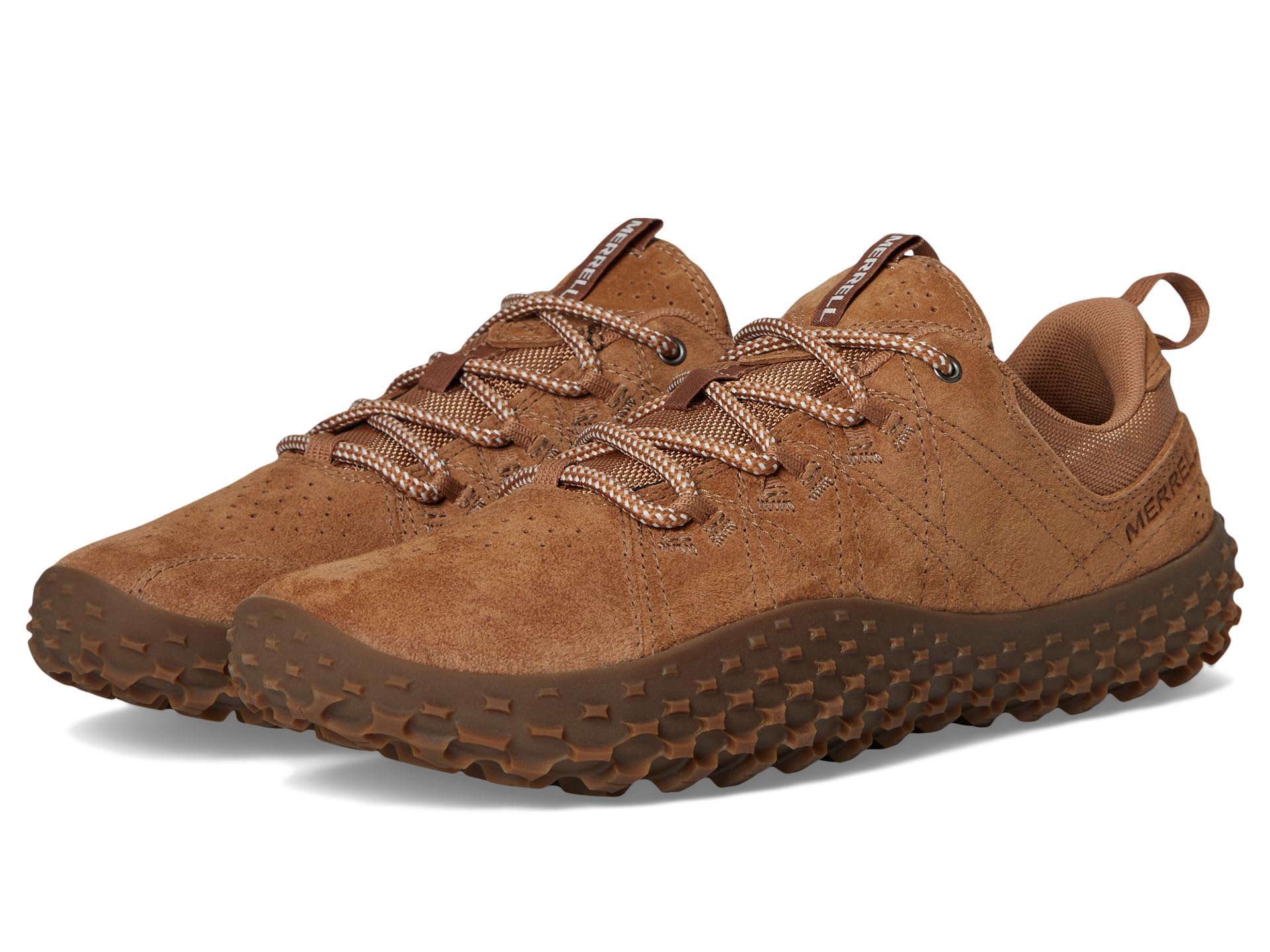
Merrell’s Wrapt Sneakers sit at the intersection of barefoot philosophy and mainstream styling. The ~10mm stack height is thicker than purist barefoot shoes, which makes this model an ideal bridge for people transitioning from traditional footwear or those who spend most of their day on unforgiving concrete. The wide footbed prevents toe pinching, and users with rheumatoid arthritis report that the generous toe box reduces pain during long periods of standing.
Build quality is typical of Merrell — durable stitching and a solid outsole that grips well on grass and dry pavement. The aesthetic is more conventional than most barefoot shoes, meaning you can wear these to a casual office or dinner without drawing attention. Reviewers note that the tongue tends to shift during hikes and the tread picks up gravel, but for everyday pavement duty, these issues rarely surface. The lace seam can roll under if not carefully tied, so pay attention during the first few wears.
The Wrapt is not a strict minimalist shoe by stack height, but its zero-drop platform and anatomical toe box make it a practical everyday option for people who need more underfoot protection than a traditional barefoot shoe provides. If your daily route includes both sidewalk and light trail, this is a versatile middle ground.
Why it’s great
- Wide footbed accommodates RA and bunions comfortably
- Mainstream style blends into casual dress codes
- Zero-drop platform with extra stack for concrete protection
Good to know
- Tread picks up gravel on loose surfaces
- Tongue may shift during more active movement
3. Xero Shoes Women’s Phoenix Knit Barefoot Ballet Flat
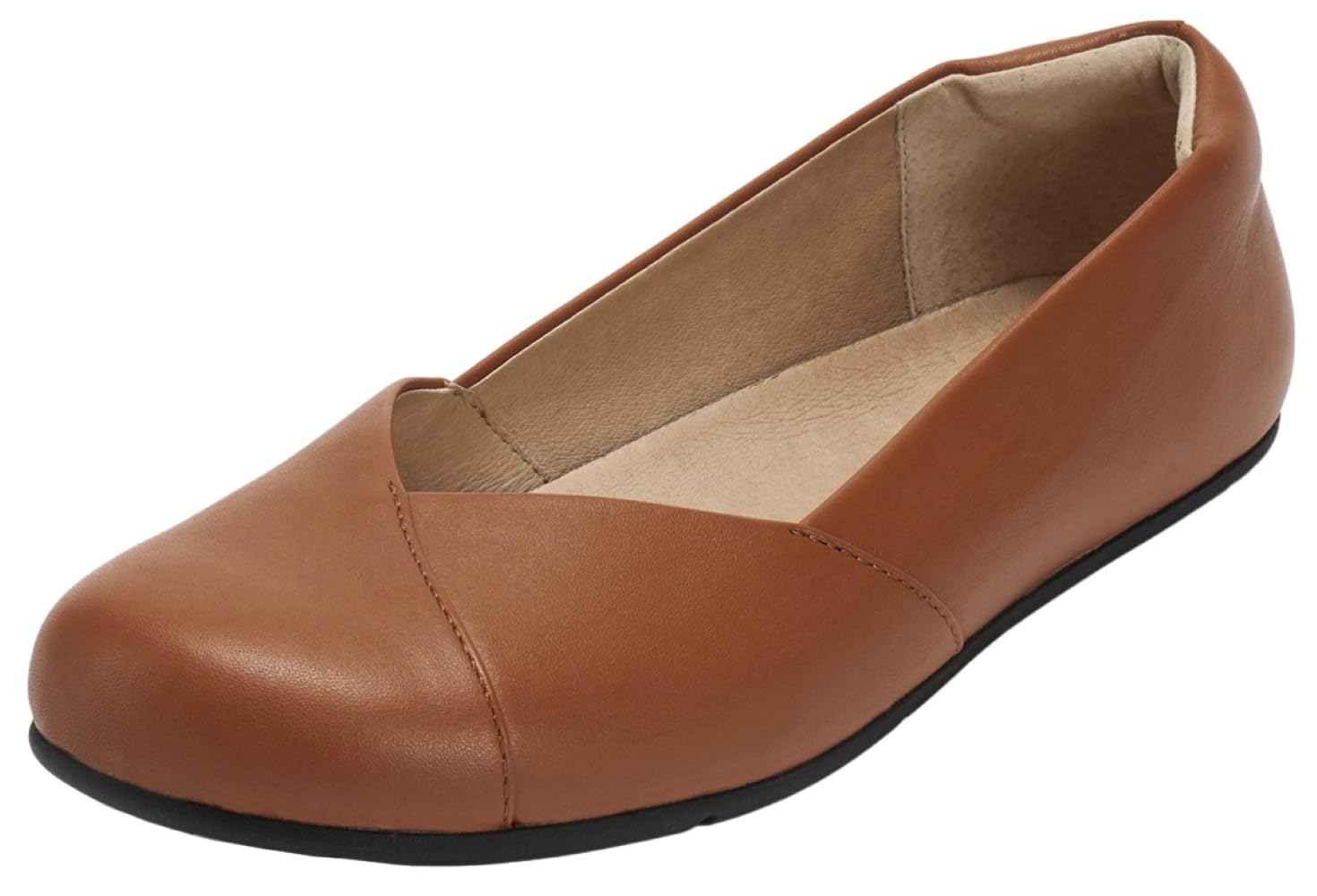
Finding a barefoot shoe that looks polished enough for a professional setting without violating the minimalist ethos is rare. The Xero Shoes Phoenix Knit Ballet Flat manages this trick with a soft leather upper and a streamlined silhouette that reads as a classic ballet flat. The ~5mm FeelTrue® sole delivers excellent ground feel, and the heel pillow prevents the shoe from slipping off during walking — a common annoyance with flat footwear.
Reviewers who work 12-hour shifts on their feet praise the Phoenix for eliminating arch fatigue without needing support. The toe box is wider than typical fashion flats but not as aggressively shaped as some athletic barefoot models. Some users with very wide feet find it still too narrow in the toe area, so check Xero’s sizing chart carefully. The neutral pink and beige color options coordinate with most office attire, making this a rare barefoot shoe that passes the dress code test.
Durability is solid for a lightweight flat, but the glued construction means that repeated exposure to wet conditions can shorten its lifespan. For dry indoor environments, however, the Phoenix delivers the most office-appropriate barefoot experience currently available.
Why it’s great
- Professional styling that passes office dress codes
- Heel pillow prevents slipping during walking
- Thin sole provides excellent sensory feedback
Good to know
- Toe box may be too narrow for very wide feet
- Glued construction not ideal for wet conditions
4. Merrell Men’s Vapor Glove 6 Leather Trail Running Shoe
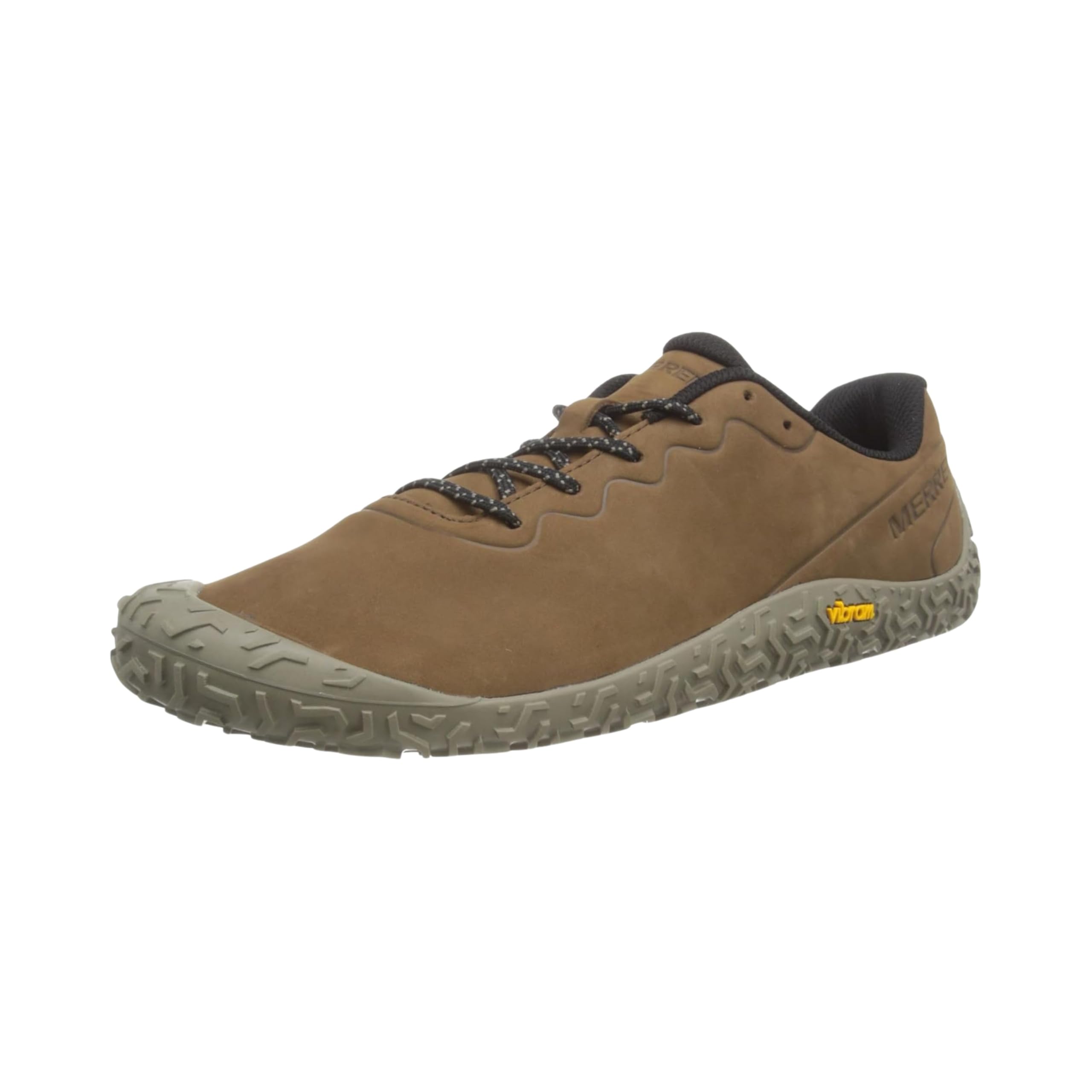
The Merrell Vapor Glove series has long been a benchmark in the barefoot community, and the 6 Leather version brings a refined upper to a proven platform. The ~6mm stack height keeps you low to the ground, while the Vibram outsole provides reliable traction on pavement and packed dirt. The leather construction adds durability and a slightly more polished look compared to the mesh versions, making this shoe viable for office environments that tolerate athletic footwear.
Users transitioning from other barefoot brands note that the Vapor Glove fits narrow-to-medium feet best. If you have wide feet, the toe box may feel restrictive, especially after extended wear. The leather upper molds to the foot over time but does not stretch significantly, so get the fit right from day one. Several long-term Merrell customers report that this generation feels tougher than previous editions, with less breakdown at the seam points.
For the price, the Vapor Glove 6 Leather offers a durable, low-profile option that works across multiple daily scenarios — from office commutes to weekend trail walks. It’s not the widest or the most minimalist, but it’s one of the most consistent performers in the mid-range bracket.
Why it’s great
- Vibram outsole provides reliable all-surface traction
- Leather upper improves durability over mesh versions
- Proven barefoot geometry from Merrell’s long-running series
Good to know
- Toe box is narrow — not ideal for wide feet
- Leather does not stretch significantly after break-in
5. Xero Shoes Men’s Prio Suede Barefoot Athletic Sneaker
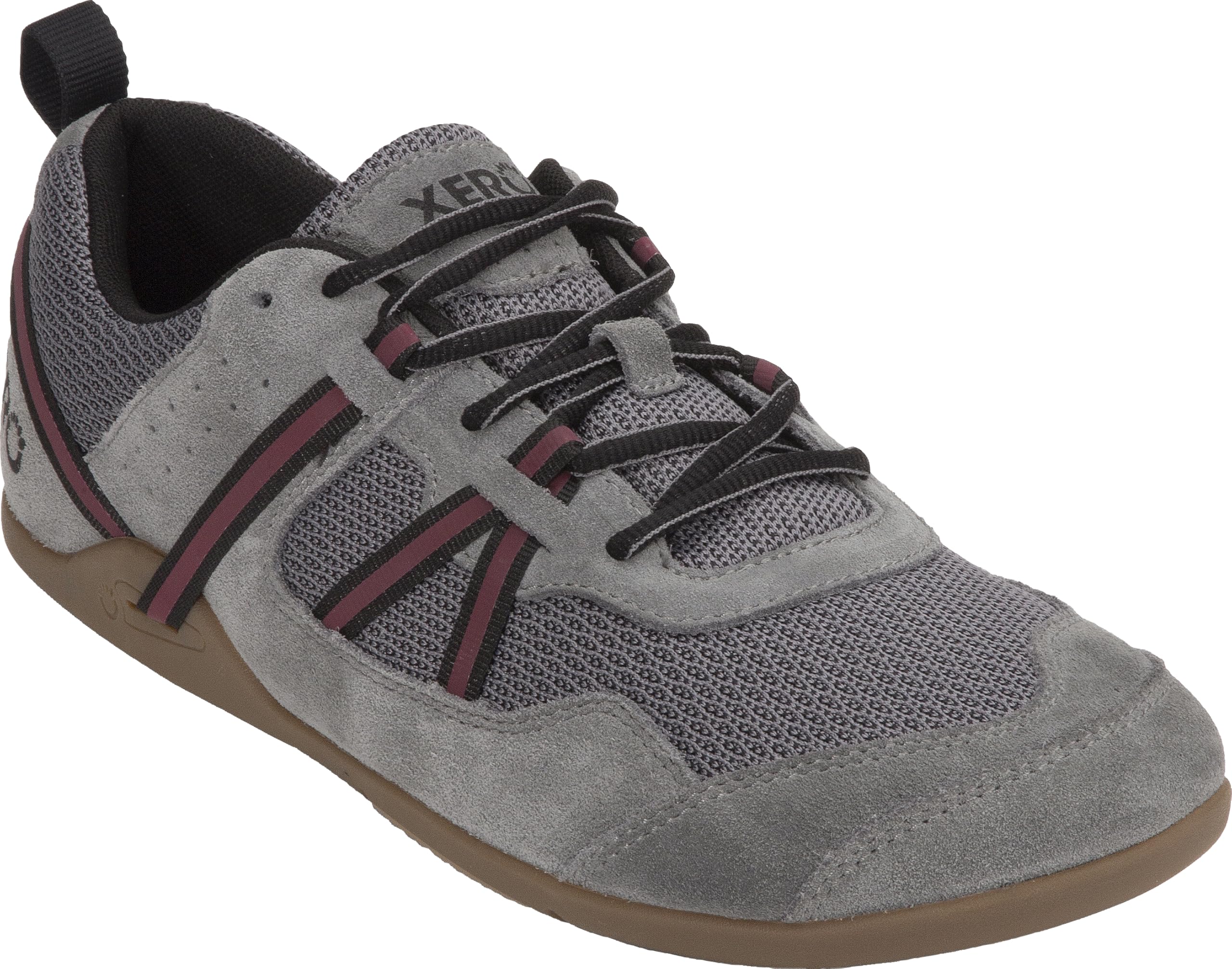
The Xero Prio Suede takes the athletic Prio platform and dresses it in a more casual material. The ~5.5mm FeelTrue® sole is Xero’s signature — thin enough to feel the ground texture underfoot but with a rubber lug pattern that handles light trails and wet pavement. The suede upper gives the shoe a warmer, less technical appearance that pairs well with jeans and chinos, expanding its use beyond the gym.
Users transitioning from conventional athletic shoes appreciate the Prio’s secure fit from the Huarache-style strap and lacing system, though a few reviewers note that those straps are the weakest link in long-term durability. The wide toe box is a highlight — multiple customers with bunions and wider forefeet report that this is one of the few barefoot shoes that doesn’t compress their toes. The suede material breathes well in warm weather but offers minimal insulation for cold months.
At its mid-range price point, the Prio Suede delivers strong value for someone who wants one shoe for the gym, the coffee shop, and the weekend hike. Just watch the sizing, as some users find it runs slightly large.
Why it’s great
- Wide toe box accommodates bunions and wider feet
- Suede upper improves casual style over athletic mesh
- Thin sole with rubber lugs for mixed-surface traction
Good to know
- Huarache strap system may be a durability weak point
- Too breathable for cold-weather use without thick socks
6. Hike Footwear HF Signature
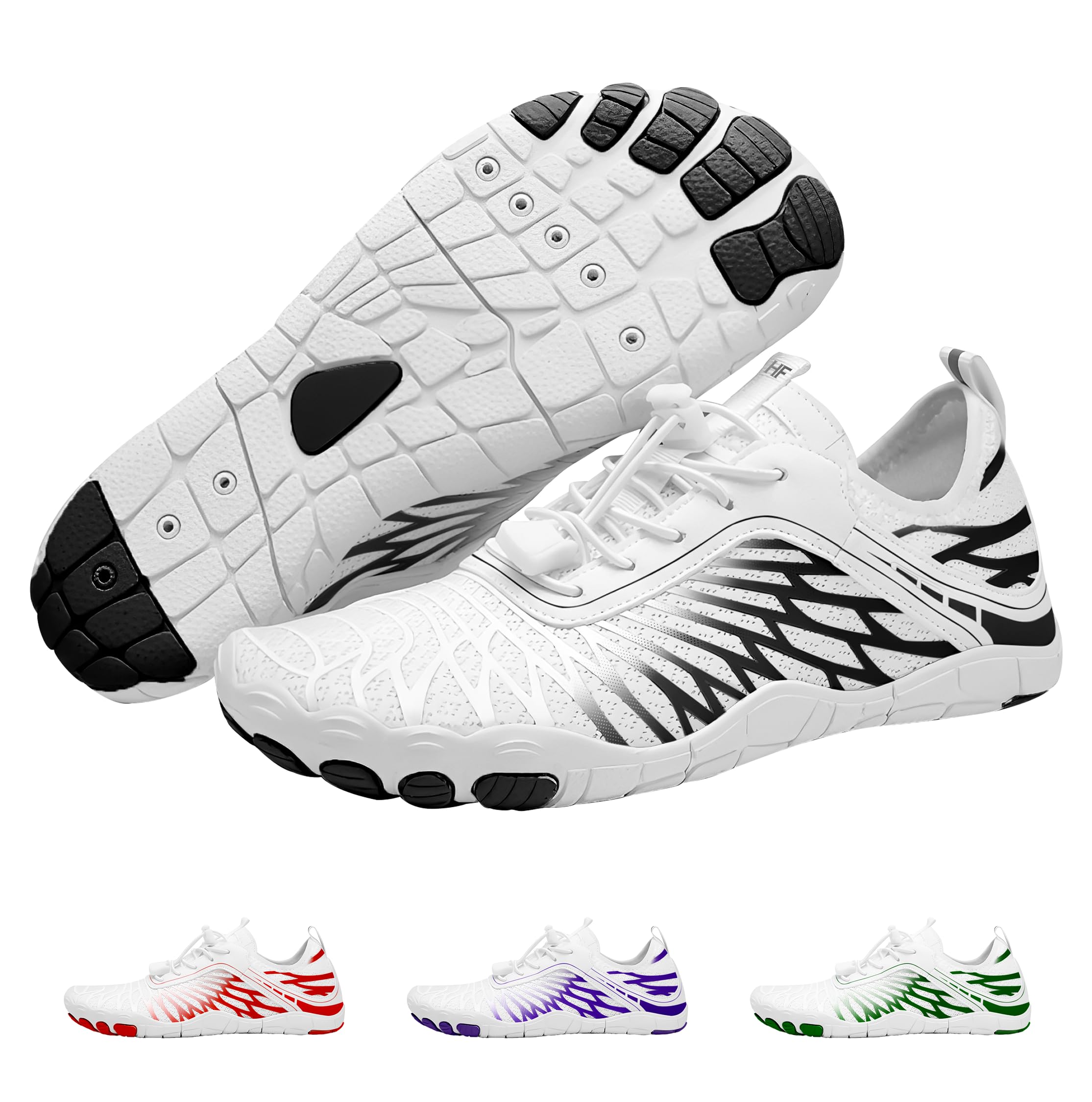
The Hike Footwear HF Signature is one of the most accessible entry points into barefoot footwear. The ~4mm sole is genuinely thin — you will feel pebbles and pavement texture clearly — but the rubber outsole provides enough protection for paved surfaces and light gravel. The upper is a soft, breathable knit that feels more like a slipper than a structured shoe, which many reviewers love for casual errands and indoor wear.
Users report that this shoe is extremely lightweight — barely noticeable on the foot. The roomy toe box allows natural splay, and several customers note improved balance after switching from conventional sneakers. However, this is not a shoe built for heavy trail use or high-mileage running. The knit upper lacks structural support for lateral movements, and the thin sole offers minimal protection from sharp objects. Reviewers also mention that the fit tends to run true to size, but the stretch laces may need adjustment for a secure lockdown.
For the budget-conscious buyer who wants to test the barefoot waters without a significant financial commitment, the HF Signature delivers a genuine minimalist experience. It works best for short walks, indoor movement, and as a house shoe.
Why it’s great
- Genuinely thin 4mm sole for maximum ground feel
- Extremely lightweight and breathable knit upper
- Room toe box allows full natural splay
Good to know
- Not suitable for trail running or heavy activity
- Knit upper offers minimal structural support
7. Hike Footwear HF Stride
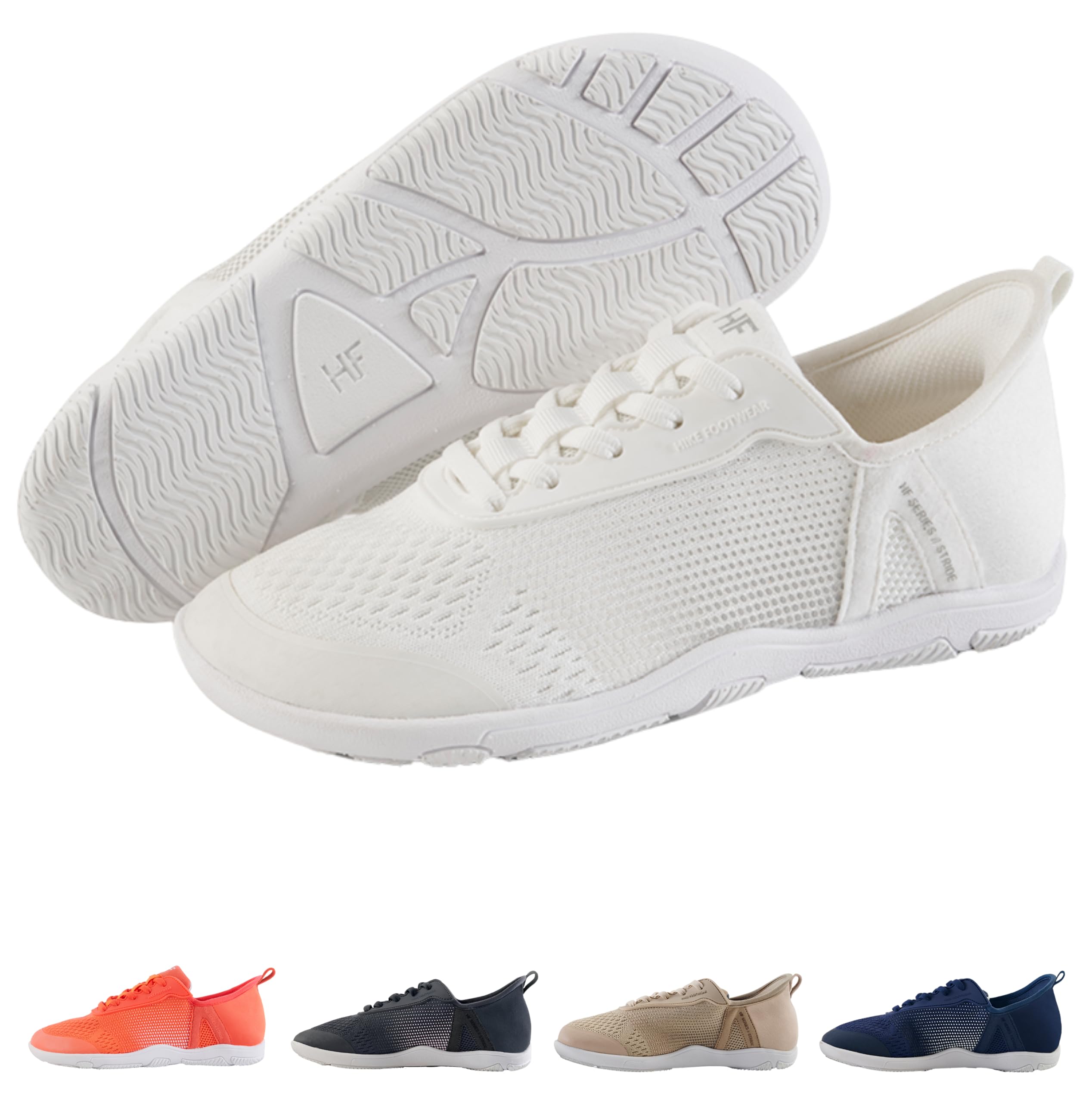
The Hike Footwear HF Stride shares the same minimalist DNA as the Signature but with slight tweaks to accommodate older feet and those with specific foot conditions. The ~4mm sole is similarly thin, and the wide toe box is specifically praised by customers dealing with bunions and arthritis. One review from a 74-year-old user highlights improved balance and reduced pressure on the toes — a meaningful endorsement for seniors exploring barefoot footwear.
Construction is comparable to the Signature model — a soft, flexible knit upper with a flexible rubber outsole. The fit runs slightly small, with multiple reviewers advising half-size or full-size up, especially if you plan to wear socks. The lack of arch support is intentional, but some users transitioning from supportive shoes may experience initial foot fatigue. The stretch lace closure works well for slip-on convenience but doesn’t lock the heel as securely as traditional lacing.
The HF Stride is an excellent budget option for seniors, people with foot deformities, or anyone who wants a low-cost entry into minimalist footwear for indoor and light outdoor use. Just size up and be patient with the transition period.
Why it’s great
- Wide toe box provides relief for bunions and arthritis
- Thin sole improves balance and ground connection
- Lightweight and easy to slip on with stretch laces
Good to know
- Runs small — order at least half a size up
- No heel lockdown from stretch lace closure
FAQ
How long does it take to transition to barefoot shoes?
Can barefoot shoes help with bunions and flat feet?
What sole thickness should I start with as a beginner?
Final Thoughts: The Verdict
For most users, the barefoot shoes for everyday wear winner is the FLUX FOOTWEAR Adapt Runners because it combines a durable construction with just enough stack height for concrete protection while maintaining genuine ground feel and a wide toe box. If you want a more office-appropriate silhouette, grab the Xero Shoes Phoenix Knit Ballet Flat. And for a budget-friendly entry point, nothing beats the Hike Footwear HF Signature.