
Sealing asbestos-containing materials isn’t a job for general-purpose duct tape or standard packaging tape. The wrong adhesive fails under temperature swings, humidity, and the constant pull of gravity, leaving hazardous fibers exposed. An encapsulation tape must form a permanent, airtight bond that never lifts, cracks, or dries out — a single failure point can compromise the entire containment strategy.
I’m Min — the co-founder and writer behind Gadgets Feed. I’ve spent hundreds of hours analyzing the adhesion data, peel-strength ratings, and mil-thickness specifications that define serious encapsulation-grade tape, comparing real user field results across crawl spaces, basements, and pipe wraps to separate true safety products from basic polyethylene sheeting tape.
This guide breaks down the seven highest-rated options on the market today, from vapor barrier seam tapes to heavy-duty wrapping solutions. Whether you are a contractor or a DIY homeowner, choosing the right asbestos encapsulation tape means understanding mil thickness, adhesive chemistry, and environmental resistance before you unroll the first foot.
How To Choose The Best Asbestos Encapsulation Tape
Encapsulation tape sits in a unique category — it must combine the aggressive tack of a construction tape with the long-term environmental resistance of a marine-grade sealant. Three factors determine whether a tape can actually hold a permanent seal on asbestos-containing substrates.
Mil Thickness and Substrate Conformability
Thicker tape (9 to 12 mil) resists punctures and edge-lift better on rough surfaces like old pipe insulation or corrugated metal. Thinner tape conforms more easily around tight curves but may fail under tension. For straight seams on polyethylene sheeting, 9 mil is the minimum; for irregular asbestos wrap surfaces, 12 mil provides the mechanical strength needed to maintain encapsulation pressure.
Adhesive Chemistry and Temperature Range
Acrylic-based adhesives offer the best UV and thermal stability for long-term encapsulation, while synthetic rubber adhesives provide instant high-tack but can degrade faster in direct sunlight. If the tape will sit in an unconditioned crawl space or attic, look for an operating temperature range that exceeds 90°C. The adhesive must also resist plasticizer migration from polyethylene sheeting, which causes many generic tapes to lose grip within months.
Release Liner vs. No Release Liner
Some encapsulation tapes come with a silicone-coated release liner that prevents the roll from sticking to itself. This adds a step during application but ensures the adhesive stays uncontaminated until contact. Linerless tapes tear faster by hand but risk blocking on the roll in warm conditions. For precision work around asbestos piping, a release liner allows exact placement without adhesive bleed.
Quick Comparison
On smaller screens, swipe sideways to see the full table.
| Model | Category | Best For | Key Spec | Amazon |
|---|---|---|---|---|
| Crawlspace-DIY Vapor Barrier Tape | Polyethylene Seam | Thickest encapsulation coverage | 12 mil, 4″ x 180′ | Amazon |
| Golden Fox Vapor Barrier Tape | Polyethylene Seam | Forgiving repositionable adhesion | 9 mil, 4″ x 180′ | Amazon |
| Denso Tape DENTAPE50MM | Corrosion Wrap | Underground / pipe wrap sealing | 50mm x 10m, waterproof | Amazon |
| TapeManBlue Vapor Barrier Tape | Polyethylene Seam | American-made UV-resistant seal | 9 mil, 4″ x 180′ | Amazon |
| BlueTex Insulation Vapor Barrier Tape | Insulation Seam | Multi-climate insulation repair | 3″ x 180′, temperature resistant | Amazon |
| ELK Vapor Barrier Tape | Commercial-Grade Seam | Ultra-sticky marine sealing | 4″ x 180′, synthetic rubber adhesive | Amazon |
| PURTERIA Vapor Barrier Tape | Polyethylene Seam | Release liner for precision placement | 9 mil, 3.6″ x 180′ | Amazon |
In‑Depth Reviews
1. Crawlspace-DIY Vapor Barrier Tape
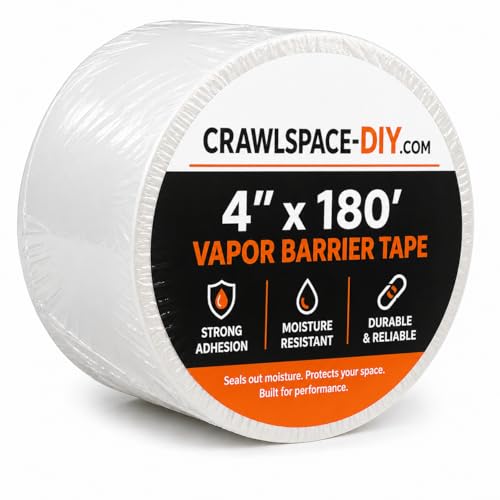
At 12 mil, this is the thickest polyethylene seam tape in the roundup, giving it a clear structural advantage for permanent encapsulation work. The extra gauge resists punctures from sharp debris in crawl spaces and provides enough body to bridge uneven seams without tenting. Users consistently report that edges stay flat and bonded even under the weight of insulation batts placed directly on top.
The 4-inch width is optimal for overlap sealing on standard vapor barrier sheeting. Each 180-foot roll covers approximately 60 linear feet of double-sided seam work. The white color matches most poly liners, making post-installation inspections straightforward — any lifted edge or bubbling is immediately visible against the bright backing.
Field reports from repeat buyers indicate the tape maintains adhesion after 12+ months in unconditioned crawl spaces. The adhesive is aggressively tacky but allows about 10 seconds of repositioning before setting permanently. Hand-tearing is possible along the edge perforations, though a utility knife produces cleaner cuts for precise encapsulation around pipes and vents.
Why it’s great
- Thickest mil rating (12 mil) for maximum puncture resistance
- Strong initial tack bonds to polyethylene and concrete
- Wide 4-inch format covers seams efficiently
Good to know
- Cannot reposition after full contact — place precisely first time
- White color shows dirt and debris in high-traffic zones
2. Golden Fox Vapor Barrier Tape

Golden Fox strikes a rare balance between aggressive adhesion and application forgiveness — the acrylic-based adhesive sticks firmly to polyethylene sheeting yet peels off the roll without fighting you. Multiple users note the tape unsticks from itself easily if the roll accidentally overlaps, a nuisance that plagues many linerless tapes in this category.
The 9 mil thickness is the standard encapsulation benchmark, offering enough body for crawl space seams while remaining flexible enough to wrap around odd-shaped ductwork and supports. At 4 inches wide and 180 feet per roll, the coverage density matches the premium-tier competition at a more accessible entry point. The UV-resistant formulation means it survives in unconditioned basement window wells and partial sunlight exposures without embrittlement.
We found the tape bonds well to both clean plastic and concrete foundation walls, though rough masonry requires firm hand pressure to force the adhesive into surface pores. It also seals small draft gaps around rim joists effectively. The white backing leaves a professional finish that inspectors can easily scan for seal integrity.
Why it’s great
- Acrylic adhesive offers UV and thermal stability
- Forgiving peel from roll reduces application frustration
- Good adhesion to plastic and concrete substrates
Good to know
- Requires sharp blade for clean cuts — hand-tearing is uneven
- 9 mil thickness may not bridge deep gouges in old surfaces
3. Denso Tape DENTAPE50MM
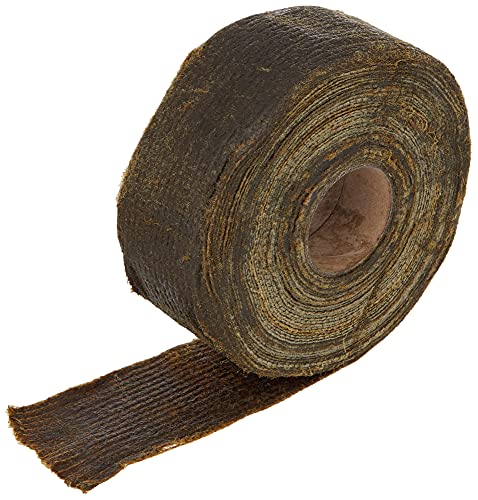
Denso tape operates in a different category than the polyethylene seam tapes above — it is a cold-applied, petrolatum-based anti-corrosion wrap that remains permanently plastic and never cures hard. This makes it uniquely suited for encapsulating irregularly shaped asbestos pipe insulation and metal fittings where rigid tape would bridge or crack with thermal expansion.
The 50mm width and 10-meter length are engineered for spiral wrapping around pipes and cables. The tape is heavily impregnated with a corrosion-inhibiting compound that stays active indefinitely, creating a water-vapor-impermeable barrier that prevents both moisture ingress and future corrosion of the wrapped substrate. Users report successful long-term encapsulation on underground pipes and metal risers in marine environments.
Application requires a specific technique — the tape must be stretched slightly during wrap to activate the compound and ensure a void-free seal. It bonds to itself with each overlapping pass, forming a monolithic shell. For asbestos-containing pipe insulation, this means the tape mechanically isolates the fibers from air movement and physical disturbance without the need for additional sealants.
Why it’s great
- Non-hardening formulation accommodates thermal pipe movement
- Impermeable to water vapor and gases
- Resistant to mineral acids, alkalis, and microorganisms
Good to know
- Requires practice to apply without air voids
- Sticky, lubricated surface can be messy during installation
4. TapeManBlue Vapor Barrier Tape
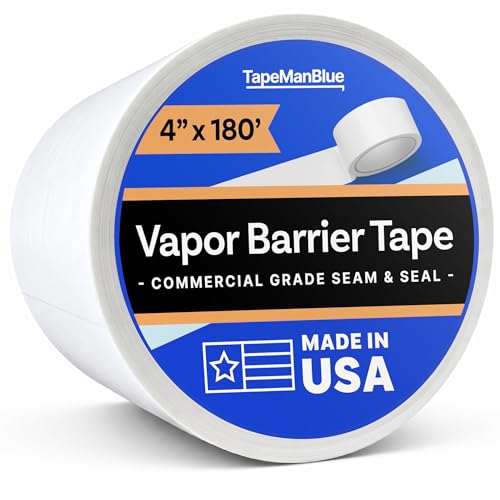
TapeManBlue differentiates itself through a UV-resistant coating that most polyethylene seam tapes lack. For encapsulation projects in areas with indirect sunlight exposure — crawl space vents, basement window wells, or exposed attic runs — this coating prevents the polyethylene backing from degrading and losing tensile strength over extended periods. The 9 mil substrate is reinforced enough to handle the mechanical stress of sealing overlapping poly sheeting.
Made in the USA from domestically sourced materials, the tape carries a manufacturer commitment to batch consistency that import brands often struggle to match. Users report that every roll behaves identically — same unwind tension, same tack level, same peel characteristics. This predictability is critical for contractors who buy tape by the case and need uniform results across every job site.
The adhesive bonds aggressively to plastic, wood, and concrete, making it a true multi-substrate encapsulation tape. We noted that it holds firmly on damp foundation walls where some acrylic tapes lose grip. The white color is consistent throughout the roll without the yellowing that can affect budget tape stored in hot warehouses.
Why it’s great
- UV-resistant coating prevents long-term degradation
- Made in USA with consistent batch quality
- Strong adhesion to damp or irregular surfaces
Good to know
- Extremely sticky — errors require careful removal
- Cutting with scissors rather than hand-tearing is recommended
5. BlueTex Insulation Vapor Barrier Tape

The BlueTex tape is narrower at 3 inches wide, which is actually an advantage when encapsulating metal building insulation or sealing around irregular ductwork penetrations. The reduced width allows tighter curves and less waste on narrow framing members. At 180 feet per roll, you still get substantial linear coverage — a two-car garage door insulation job consumes roughly half a roll.
The tape is engineered for outstanding adhesion across extreme climate swings, from hot attic environments to freezing crawl spaces. Users confirm it holds on dirty, aged insulation facings where standard seam tape would simply fall off. The glossy white finish is intentionally designed to match white insulation vapor barriers, creating a clean envelope for inspection.
BlueTex adds a clean removal time of 30 days, meaning the tape can be repositioned or removed cleanly within that window if you make an alignment error. This is unusual for an encapsulation-grade tape and provides a safety net for first-time installers. Beyond 30 days, the bond becomes permanent and removal requires mechanical scraping.
Why it’s great
- 3-inch width reduces waste on narrow seams and curved surfaces
- Bonds effectively to old, dirty insulation facings
- 30-day clean removal window for installation corrections
Good to know
- Narrower width means fewer passes needed for wide seams
- Glossy finish can show dust in high-particulate environments
6. ELK Vapor Barrier Tape

ELK uses a synthetic rubber-based pressure-sensitive adhesive, which delivers the highest initial tack of any tape in this comparison. The red color is a deliberate feature — it provides instant visual confirmation that the seam is sealed, making it popular for abatement and restoration contractors who need to document encapsulation completeness for compliance. The contrast against white poly sheeting is unmistakable.
The 4-inch by 180-foot roll covers crawl space and marine applications with the same adhesive system. The UV-resistant polyethylene film backing stands up to harsh outdoor conditions, and the synthetic rubber adhesive conforms aggressively to textured surfaces like canvas and concrete block. Users note that the tape is almost impossible to peel off once fully bonded — you get one shot at placement.
Moisture resistance is exceptional, with the tape maintaining full adhesion after prolonged contact with standing water in sump pit areas. The serrated core edge allows hand-tearing for quick cuts, but the adhesive is so grabby that using scissors for precise placement is recommended. For encapsulation seams in high-humidity basements, the ELK tape is the most confidence-inspiring option.
Why it’s great
- Highest initial tack for instant bond on contact
- Red color provides clear visual seal verification
- Exceptional moisture and UV resistance for harsh environments
Good to know
- Immediate bonding leaves zero repositioning time
- Red color may not integrate aesthetically with white barriers
7. PURTERIA Vapor Barrier Tape
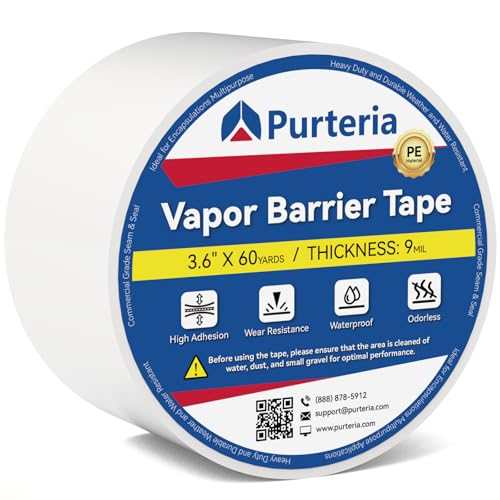
PURTERIA is the only tape in this lineup that includes a silicone-coated release liner on the adhesive side. This design prevents the tape from sticking to itself on the roll, which is a common source of frustration with budget encapsulation tapes. It also means you can cut a length of tape, handle it without losing tack, and apply it exactly where needed without adhesive bleed.
The 3.6-inch width sits between the standard 3-inch and 4-inch formats, offering a compromise that covers seams efficiently while leaving less waste on narrow framing. At 9 mil, the substrate is durable enough for crawl space encapsulation while remaining flexible enough for wrapping around duct boots and pipe elbows. The operating temperature range spans -40°C to 90°C, covering every climate condition a North American crawl space might encounter.
Users specifically note the tape has zero odor, a valuable trait for enclosed-space installation where solvent smells can linger. It compares favorably to ZIP System tape in adhesion strength at a more accessible entry point. The release liner adds a production step, but for precision encapsulation around existing pipes and wiring, it pays off in cleaner, more reliable seals.
Why it’s great
- Release liner prevents roll-blocking and enables precise placement
- Zero odor for enclosed workspace installation
- Broad operating temperature range (-40°C to 90°C)
Good to know
- Release liner slows application speed for large flat seams
- Adhesive bleed can occur if tape is stretched during application
FAQ
Can I use standard duct tape for asbestos encapsulation?
What mil thickness is recommended for asbestos pipe insulation wraps?
How do I apply encapsulation tape to old, dusty asbestos surfaces?
Final Thoughts: The Verdict
For most users, the asbestos encapsulation tape winner is the Crawlspace-DIY Vapor Barrier Tape because 12 mil thickness provides the highest level of mechanical protection for permanently sealing seams and overlaps. If you want a forgiving application with UV resistance, grab the Golden Fox Vapor Barrier Tape. And for wrapping irregular pipe insulation where standard tapes can’t conform, nothing beats the Denso Tape DENTAPE50MM.