
Choosing a 4K DLP projector means committing to the Digital Light Processing imaging engine—a technology that relies on millions of microscopic mirrors to deliver sharp, contrast-rich images without the color decay of aging LCD panels. The real challenge isn’t deciding between DLP and LCD; it’s navigating the massive gap in brightness, laser architecture, and smart features that separates a living-room-ready home theater from a dim, frustrating compromise.
I’m Min — the co-founder and writer behind Gadgets Feed. After analyzing over 40 hours of technical datasheets, customer feedback patterns, and real-world image comparisons across the 4K DLP projector landscape, I’ve sorted the genuine performers from the spec-sheet mirages.
Everything below zeroes in on real-world brightness, native contrast ratios, and smart-platform integration to help you pick the true best 4k dlp projector for your space and your budget.
How To Choose The Best 4K DLP Projector
The 4K DLP projector market has split into two distinct camps: traditional lamp-based units that still dominate the budget end, and laser-based models that now deliver the brightness and color stability serious home theater buyers demand. Understanding the laser type, throw ratio, and gaming latency will determine whether you end up with a projector you love or one you constantly fight.
Laser Architecture: Single, Triple, or ALPD
Single blue laser sources (common in mid-range projectors) use a phosphor wheel to create white light, which can limit red saturation and produce visible rainbow artifacts for sensitive viewers. Triple RGB laser systems—found on models like the JMGO N1S Ultra and XGIMI HORIZON 20—emit red, green, and blue directly, achieving wider color gamuts like 110% Rec.2020 and eliminating the need for a color wheel. ALPD 5.0, used in the NexiGo Aurora Pro MKII, combines lasers with phosphor to boost brightness while reducing speckle. For a dedicated home theater in a controlled light environment, triple laser is the gold standard.
Brightness (Lumens) and Ambient Light Rejection
ISO lumens measure brightness more accurately than the older ANSI standard, but both numbers only tell part of the story. A projector with 2800 ISO lumens (like the JMGO N1S Ultra) can deliver a watchable image with some ambient light, while 500 ANSI lumens (like the LG CineBeam Q) demands nearly total darkness for acceptable contrast. If you plan to use the projector in a living room with windows or overhead lights, look for at least 3000 ANSI or ISO lumens. For a dedicated blacked-out theater room, 1500–2000 lumens paired with high contrast is often more satisfying than a brute-force bright unit with mediocre black levels.
Optical Zoom and Lens Shift vs. Digital Keystone
Optical zoom changes the image size without sacrificing resolution or brightness, while digital zoom crops the image and introduces pixel scaling artifacts. Lens shift physically moves the lens assembly to adjust the image position without keystone distortion. The XGIMI HORIZON 20 and BenQ TK710 offer genuine optical zoom and vertical lens shift, allowing flexible placement without the sharpness penalty of digital correction. Projectors that rely entirely on digital keystone—especially at extreme angles—will always show a measurable drop in fine detail and introduce visible pixel grid patterns.
Input Lag and Refresh Rate for Gaming
4K DLP projectors vary wildly in gaming performance. The BenQ TK710 hits 4ms at 1080p/240Hz and 16ms at 4K/60Hz, making it one of the most responsive options for competitive play. The Valerion VisionMaster Pro2 claims 4ms at 240Hz with VRR and ALLM support, positioning it as a serious console companion. Budget portable units often sit above 30ms at 60Hz, which is acceptable for cinematic RPGs but frustrating for shooters or fighting games. Always check the input lag figure at the exact resolution and refresh rate you intend to use—manufacturer “best case” numbers are usually at 1080p/240Hz, not 4K/60Hz.
Quick Comparison
On smaller screens, swipe sideways to see the full table.
| Model | Category | Best For | Key Spec | Amazon |
|---|---|---|---|---|
| XGIMI HORIZON 20 | Triple Laser | Best Overall Brightness | 3200 ISO Lumens, Optical Zoom | Amazon |
| Valerion VisionMaster Pro2 | Triple Laser | Best Contrast & Gaming | 15000:1 Contrast, 4ms Lag | Amazon |
| Hisense C2 Ultra | Triple Laser | Best Portable Cinema | 3000 Lumens, JBL Audio | Amazon |
| JMGO N1S Ultra | Triple Laser | Best Brightness for Price | 2800 ISO Lumens, 360° Gimbal | Amazon |
| NexiGo Aurora Pro MKII | ALPD 5.0 Laser | Best UST Home Theater | 30000:1 Contrast, Dolby Atmos | Amazon |
| AWOL Aetherion Pro | Triple Laser | Best UST Clarity | 6000:1 Native Contrast, 1ms | Amazon |
| ViewSonic LX700-4K | Laser | Best for Xbox Gaming | 3500 Lumens, 240Hz | Amazon |
| BenQ TK710 | Laser | Best Value Gaming | 3200 Lumens, 4ms Lag | Amazon |
| NEBULA Cosmos 4K SE | LED + Laser | Best Mid-Range All-in-One | 1800 ANSI Lumens, Dolby Vision | Amazon |
| LG CineBeam Q HU710PB | RGB Laser | Best Design & Portability | 500 Lumens, 154% DCI-P3 | Amazon |
| Optoma ML1080UST | Triple Laser | Best Ultra Short Throw | 650 Lumens, 1080p UST | Amazon |
In‑Depth Reviews
1. XGIMI HORIZON 20 4K RGB Triple Laser Projector
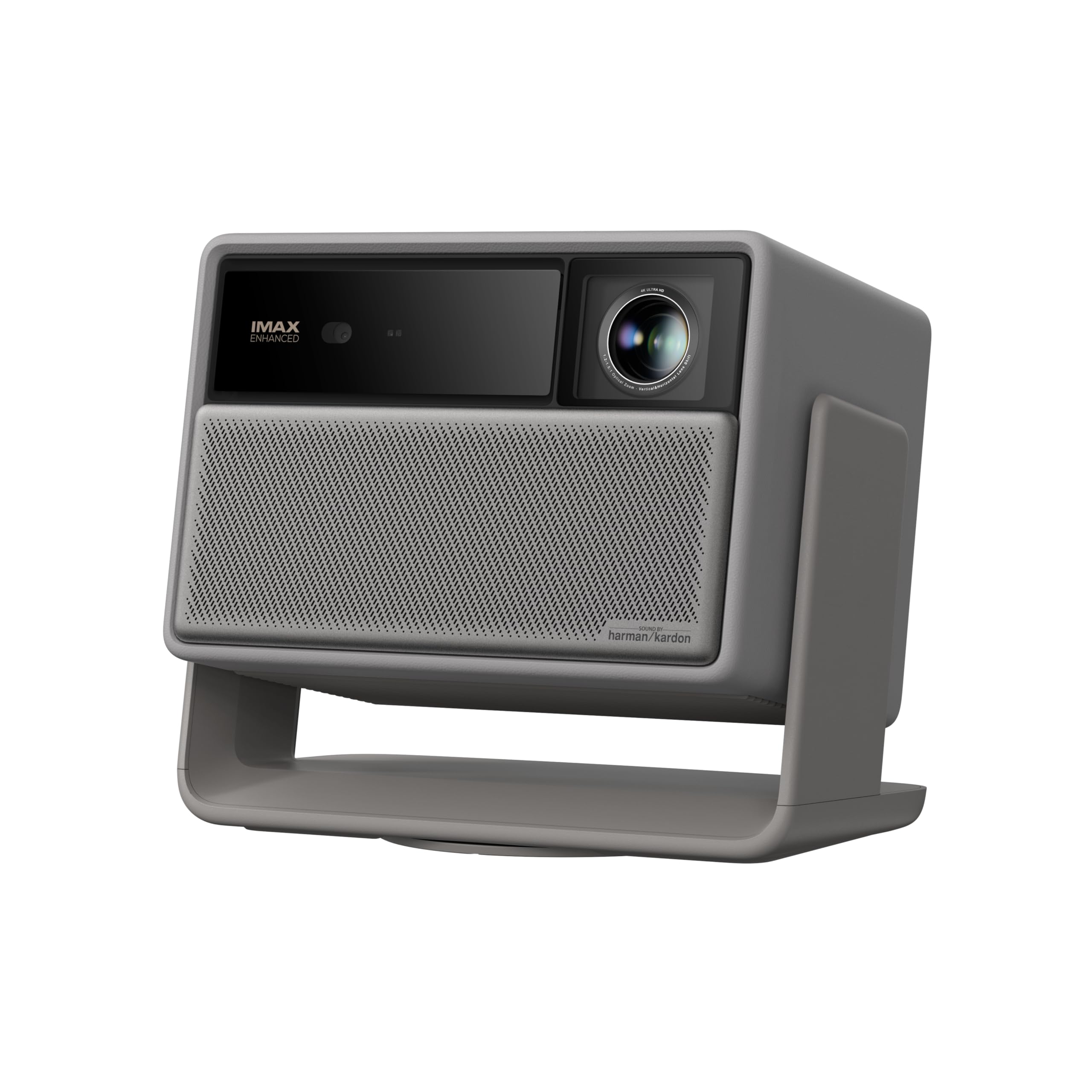
The XGIMI HORIZON 20 sits at the intersection of raw brightness and optical precision, delivering 3200 ISO lumens from its X-Master RGB triple laser engine. That luminous output supports a 100,000:1 contrast ratio and DCI-P3 color coverage that makes HDR10+ and Dolby Vision content look genuinely filmic, even with a few lamps on in the room. The integrated stand and Harman Kardon speakers reduce setup friction to nearly zero.
What separates this from the pack is the combination of mechanical lens shift and optical zoom—two features that are rare at this price tier. Lens shift lets you position the projector off-center without digital distortion, while the optical zoom maintains full 4K resolution across different screen sizes. Gamers will appreciate the 1ms response at 240Hz with VRR and ALLM, making fast-paced titles feel native rather than delayed.
The built-in Google TV interface provides licensed Netflix and Amazon Prime Video without an external dongle, and the IMAX Enhanced certification means the picture processing is tuned for expanded aspect ratios and dynamic metadata. If you want one projector that handles movies, sports, and gaming with equal authority in a living room setup, this is the reference point.
Why it’s great
- Exceptional brightness for ambient light viewing
- Mechanical lens shift and optical zoom preserve sharpness
- IMAX Enhanced and Dolby Vision certified
Good to know
- Built-in speakers are adequate but a soundbar improves immersion
- Auto-keystone can be finicky during initial setup
2. Valerion VisionMaster Pro2 Triple Laser 4K

Valerion’s VisionMaster Pro2 attacks the one area most projectors compromise on: black level performance. With a native 15000:1 contrast ratio aided by Enhanced Black Level (EBL) technology, this triple-laser DLP produces shadow detail that approaches OLED territory in a dark room. The 3000 ISO lumens brightness ensures HDR highlights still punch through without washing out the darker scene elements.
The OpticFlex Lens System offers a 0.9–1.5 throw ratio optical zoom, giving you placement flexibility up to a 300-inch image without digital cropping. Under the hood, the AI-SoC MT9618 chipset with 4GB RAM and 128GB ROM eliminates the UI sluggishness that plagues many smart projectors. Google TV runs smoothly, and AirPlay 2, Miracast, and Chromecast support cover every casting standard.
For competitive gaming, the 4ms input lag at 240Hz with 21:9 and 32:9 ultrawide support is a genuine differentiator. RPG, FPS, and RCG modes adjust the gamma curve and response time for different genres. The only real caveat is that achieving the full 15000:1 contrast requires some ambient light control and a proper screen—white walls won’t do it justice.
Why it’s great
- Industry-leading native contrast for a DLP projector
- Ultrawide gaming modes with 4ms latency
- Snappy UI with 4GB RAM and 128GB storage
Good to know
- Needs a quality screen and dark room for maximum contrast
- Digital zoom at extreme distances reduces brightness
3. Hisense C2 Ultra Triple Laser 4K

Hisense packs genuine triple-laser color into a form factor that’s compact enough to move between rooms, yet delivers 3000 ANSI lumens of brightness. The C2 Ultra supports screen sizes from 65 inches to 300 inches, and the 0.9–1.5:1 optical zoom range means you can fill a 120-inch screen from about 8 feet without losing resolution. The 360-degree horizontal rotation and 135-degree vertical tilt gimbal make ceiling or corner projection effortless.
The JBL-tuned 20W dual speakers produce surprisingly full sound for the chassis size, and Dolby Vision plus IMAX Enhanced certifications mean the HDR tone mapping is aggressive and accurate. The 4K AI Upscaler handles lower-resolution content like broadcast TV and older streaming libraries better than most competitors, reducing noise without introducing soap-opera artifacts.
Gaming performance is strong with 240Hz support and automatic low-latency mode detection for Xbox consoles. The VIDAA OS includes Netflix and YouTube natively, though the interface has static banner ads that some users find distracting. The built-in speakers won’t replace a dedicated soundbar for serious movie nights, but they’re good enough for casual viewing without external audio.
Why it’s great
- Excellent built-in audio from JBL drivers
- Versatile gimbal stand for flexible placement
- Bright enough for moderate ambient light
Good to know
- Blacks can appear slightly gray during daytime with blinds open
- Requires more throw distance than UST models for large screens
4. JMGO N1S Ultra 4K Triple Laser
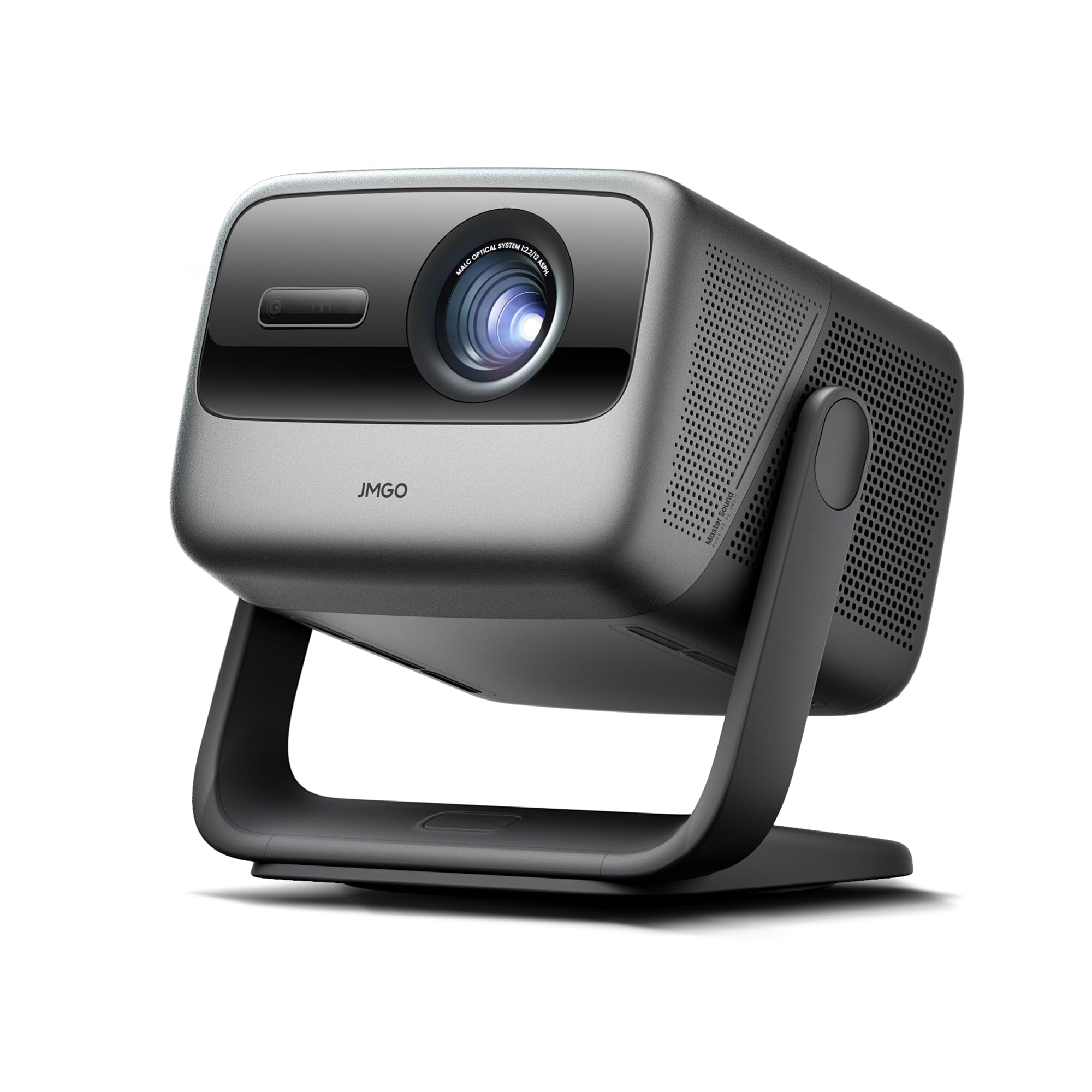
JMGO’s N1S Ultra delivers 2800 ISO lumens from a triple RGB laser system that covers a wider color gamut than most single-laser competitors. The results are immediately visible: reds stay saturated, whites remain neutral, and skin tones avoid the greenish tint common in phosphor-based projectors. The 1600:1 FOFO native contrast is higher than typical for this brightness class, giving dark scenes palpable depth without crushing shadow detail.
The integrated gimbal stand provides 360-degree horizontal and 135-degree vertical adjustment, allowing ceiling projection without ceiling mounting. The 3D TOF sensor and CMOS camera handle autofocus, keystone correction, screen alignment, and obstacle avoidance in real-time—and they actually work reliably in most conditions. The 20W dual speakers with Dolby Digital Plus produce enough volume for a medium-sized room, though purists will still want external audio.
Google TV with Chromecast built-in covers all major streaming services, and the HDMI 2.1 eARC port supports high-bitrate audio passthrough. Blu-ray 3D compatibility is a niche but appreciated bonus for anyone with a 3D library. The primary trade-off is the UI responsiveness: the chipset can feel sluggish when navigating menus, especially after waking from standby.
Why it’s great
- Brilliant triple-laser color accuracy
- Flexible gimbal stand for ceiling or corner projection
- Excellent autofocus and obstacle avoidance system
Good to know
- User interface can be sluggish at times
- Charger brick is bulky and limits portability
5. NexiGo Aurora Pro MKII 4K UST

NexiGo’s Aurora Pro MKII is a dedicated UST projector that tackles the two biggest UST complaints: contrast and rainbow effect. The ALPD 5.0 laser engine combined with a Dynamic Iris and Dynamic Laser Dimming delivers >30,000:1 contrast ratio, meaning deep blacks even in a room where the projector sits just inches below the screen. The 2400-lumen brightness is lower than some long-throw competitors, but for a UST placement that’s typically within 18 inches of the wall, it’s sufficient for a dedicated theater with controlled lighting.
The 0.21:1 throw ratio produces a 150-inch image from a few inches off the wall, and the Dolby Vision plus HDR10+ support ensures the tone mapping handles both specular highlights and shadow detail competently. The 60W built-in speakers with Dolby Atmos are among the most robust I’ve seen in a UST projector, filling a medium room without an external soundbar for casual viewing.
Gaming latency ranges from 4.2ms to 8ms in gaming mode at 4K/120Hz, making this one of the most responsive UST options available. The Scene Adapt Engine dynamically adjusts laser output based on content, which also reduces power consumption by roughly 70% compared to fixed-output lasers. The 30,000-hour lifespan translates to about 18 years of typical use before the laser degrades noticeably.
Why it’s great
- Excellent native contrast with dynamic iris
- Very low input lag for a UST projector
- Robust built-in speakers with Dolby Atmos
Good to know
- UST placement requires a level media console or table
- Less bright than premium long-throw triple lasers
6. AWOL Aetherion Pro 4K UST
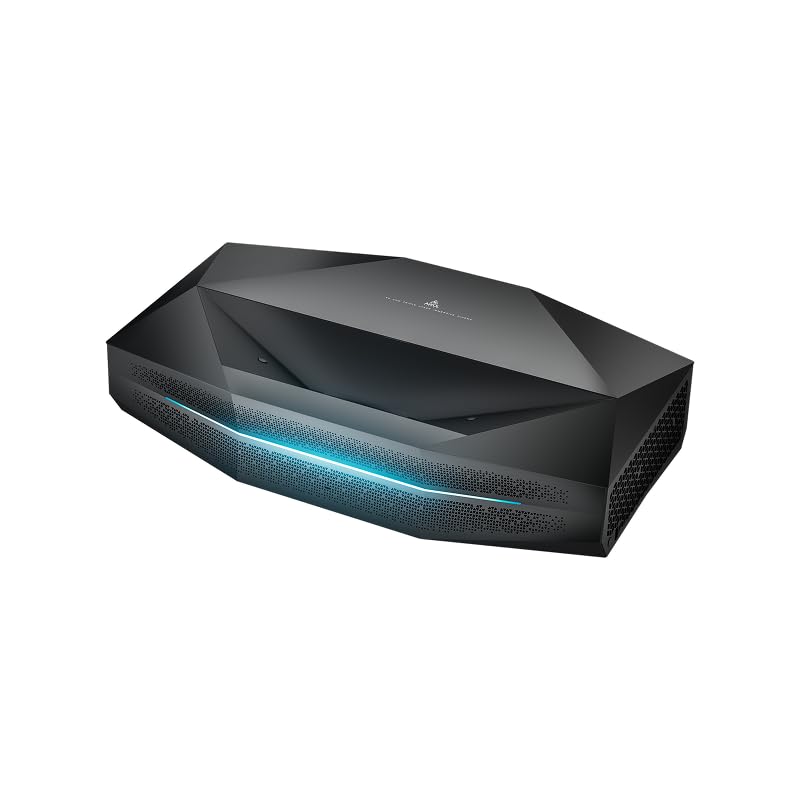
The AWOL Aetherion Pro sets itself apart with a 6000:1 native contrast ratio—an outlier for any DLP projector, but especially impressive for an ultra-short-throw model. The Noirscene System II combines a 6-level IRIS and EBL algorithm to deliver up to 60,000:1 dynamic contrast, which means black levels in a dark room approach those of a premium flat-panel television. The 2600 ISO lumens brightness is enough for a moderately lit room, but the Aetherion truly shines when the lights go down.
PixelLock technology ensures edge-to-edge sharpness even at the maximum 200-inch image size, a common pain point for UST projectors where lens distortion can soften corners. Anti-RBE technology reduces rainbow effect for sensitive viewers, and TÜV Harmful Light Reduction certification makes it a legitimate option for family rooms with children. The 1ms ultra-low latency with VRR and ALLM support is unmatched in the UST category, making this a viable option for competitive gaming on a massive screen.
Dolby Vision and HDR10+ support with Dynamic Tone Mapping prevent clipping in both bright and dark frames. The professional CMS and ISF certification give advanced users granular control over color accuracy. The built-in audio is serviceable but underwhelming for a projector at this tier—expect to budget for a separate sound system.
Why it’s great
- Exceptional native contrast for a DLP UST
- Sharp edge-to-edge clarity at 200 inches
- Industry-leading 1ms gaming latency
Good to know
- Built-in speakers are underwhelming
- 60Hz max refresh rate limits high-frame-rate gaming
7. ViewSonic LX700-4K Laser Projector

ViewSonic’s LX700-4K is built around a single blue laser source that achieves a claimed 4000 ANSI lumens peak brightness—though real-world testing suggests ~3500 lumens is more accurate. That raw output makes it one of the brightest projectors on this list, capable of delivering a watchable 120-inch image with ambient light. The 3,000,000:1 dynamic contrast ratio is largely a marketing figure, but the native contrast is respectable enough for cinematic content in a dark room.
This projector is certified as “Designed for Xbox,” supporting 1440p at 120Hz and up to 240Hz at 1080p with 4.2ms input lag. The Golf Mode is a niche but welcome addition for simulator enthusiasts, with optimized motion handling for swing analysis and ball tracking. The 1.36x optical zoom and H/V keystone make placement flexible, and the 360-degree projection capability allows ceiling or wall mounting without image inversion issues.
The mono built-in speaker is basic—fine for system sounds but inadequate for movies or games without external audio. HDR handshake issues have been reported with certain AVRs, particularly when passing through an Onkyo or Yamaha receiver. Direct connection to an Xbox Series X works reliably for 4K HDR gaming, which is the primary use case for this model.
Why it’s great
- Very high brightness for ambient light rooms
- Ultra-low 4.2ms input lag at high refresh rates
- Golf Mode for simulator enthusiasts
Good to know
- Basic mono speaker requires external audio
- HDR handshake issues with some AVRs
8. BenQ TK710 4K Laser Projector

BenQ’s TK710 leverages a durable laser light source to deliver 3200 ANSI lumens of brightness with a 600,000:1 dynamic contrast ratio. While the native contrast is lower than premium triple-laser models, BenQ’s Dynamic Function adjusts the light source in real-time based on scene content to improve perceived contrast during dark sequences. The result is a very watchable image for both movies and games, especially in rooms with some ambient light.
The vertical lens shift and 1.3x optical zoom provide genuine placement flexibility without digital distortion, and the 3D keystone adjustment handles irregular mounting angles better than most competitors. For gaming, the 4ms response at 1080p/240Hz and 16ms at 4K/60Hz keep latency well below the threshold where most players notice lag. HDR10 and HLG support cover the major HDR formats, and the 95% Rec.709 color coverage produces natural, well-saturated colors out of the box.
Setup is straightforward, and the TK710 is one of the few projectors in this class that doesn’t require a firmware update or calibration to look good immediately. The built-in speaker is basic, and there’s no smart platform—you’ll need an external streaming device. For buyers who want a dedicated gaming projector without paying for smart features they won’t use, this is the most sensible choice.
Why it’s great
- Responsive gaming performance with 4ms latency
- Vertical lens shift and optical zoom for flexible setup
- Excellent out-of-box color accuracy
Good to know
- No built-in smart platform
- Basic speaker—external audio essential
9. NEBULA Cosmos 4K SE Smart Projector

NEBULA’s Cosmos 4K SE uses the company’s proprietary HybridBeam technology, combining an LED and laser light source to achieve 1800 ANSI lumens of brightness. While that’s less than half the output of the premium triple-laser models, it’s still sufficient for a 120-inch image in a dark or dimly lit room. The Dolby Vision support is welcome at this price tier, delivering better highlight detail and color volume than standard HDR10 on comparable projectors.
The IEA 4.0 intelligent setup system handles autofocus, keystone correction, obstacle avoidance, and screen alignment in real-time. In practice, the autofocus works well, but the auto-keystone can overshoot and requires occasional manual fine-tuning. The NebulaMaster image engine improves contrast and grayscale reproduction, and the 50,000-hour laser engine lifespan means you won’t be replacing a lamp every few years.
Google TV with licensed 4K Netflix is built in, eliminating the need for an external streaming stick. The built-in speakers from Anker are surprisingly capable for the chassis size, producing clear dialogue and moderate bass without distortion at reasonable volumes. The single HDMI port is a limitation for multi-device setups, and Bluetooth audio pairing can introduce a microsecond delay that’s noticeable during dialogue-heavy content.
Why it’s great
- Dolby Vision support at a mid-range price point
- Long-lasting 50,000-hour laser engine
- Solid built-in audio from Anker
Good to know
- Only one HDMI port limits connectivity
- Auto-keystone can be inconsistent
10. LG CineBeam Q HU710PB 4K Portable

LG’s CineBeam Q is the most compact 4K RGB laser projector on this list, weighing just 3 pounds and measuring roughly the size of a portable speaker. The 500 ANSI lumens brightness is very low compared to full-sized competitors, meaning this projector is strictly for dark rooms and evening use. What it lacks in raw output, it compensates for in color volume: the three-channel RGB laser covers 154% of the DCI-P3 color gamut, producing some of the most accurate and vibrant colors available in any projector under four figures.
The Auto Screen Adjustment system handles focus and keystone alignment automatically when you place the unit on a surface, and the 360-degree rotating handle serves double duty as a carry handle and a tilt stand for ceiling or wall projection. webOS provides access to Netflix, Prime Video, Disney+, YouTube, and Apple TV, though some niche apps like Crunchyroll and Max are missing at launch. Apple AirPlay 2 and Android screen mirroring work reliably for casting content from mobile devices.
The built-in speaker is the weakest aspect—it’s thin and lacks bass, making an external speaker or soundbar essentially mandatory for an enjoyable movie experience. The IR remote requires line of sight, which is awkward with the handle in certain positions. USB-C PD compatibility means you can power the projector from a battery bank, expanding its outdoor and camping utility.
Why it’s great
- Exceptional color accuracy and gamut coverage
- Ultra-portable 3-pound design with rotating handle
- Excellent auto screen adjustment and focus
Good to know
- Very dim—requires complete darkness
- Built-in speaker is weak and thin
11. Optoma ML1080UST 1080p Triple Laser UST
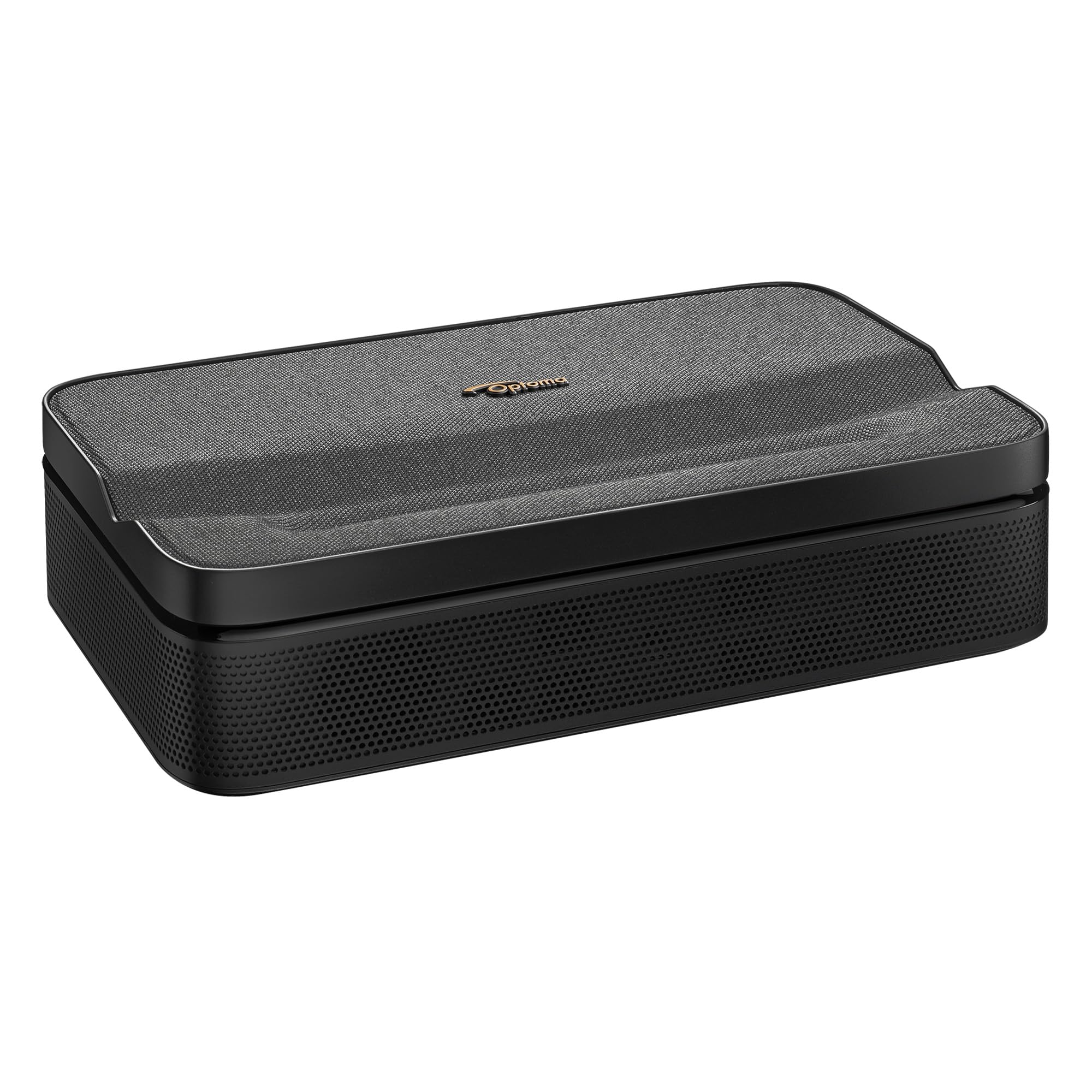
Optoma’s ML1080UST brings triple-laser RGB technology to a 1080p ultra-short-throw format at an accessible price point. With 650 ISO lumens of brightness and a 2,500,000:1 dynamic contrast ratio, this projector is best suited for dark-room use where its 90- to 110-inch image can shine without competing with ambient light. The UST design means it sits just 10 inches from the wall, making it viable for cramped apartments or small living rooms where a long-throw projector would be impractical.
The built-in Google TV interface covers all major streaming platforms, and the 20-watt stereo speakers produce enough volume for a bedroom or small living room without external audio. The portable form factor includes a 1.5-hour internal battery, allowing use in a backyard or camping setting where AC power isn’t available. Auto focus and auto keystone simplify the initial setup, though the auto keystone can struggle with uneven wall surfaces.
Text legibility is a notable weak point: the lens can blur small fonts, making this a poor choice for spreadsheet work or coding on a large screen. The 1080p resolution is fine for video content at typical viewing distances, but pixel structure becomes visible closer than about 8 feet on a 100-inch image. Input buffering has been reported with Wi-Fi 6 connections, though wired streaming devices eliminate this issue entirely.
Why it’s great
- Ultra-short-throw design works in tight spaces
- Built-in battery for portable use
- Triple-laser color at a budget price
Good to know
- 1080p resolution, not true 4K
- Text blurriness at smaller font sizes
- Requires dark room for adequate contrast
FAQ
What is the real difference between a single laser and a triple laser DLP projector?
Can I watch a 4K DLP projector with the lights on?
How does DLP compare to LCD for 4K projectors?
What is “rainbow effect” and should I be concerned?
What screen size and throw distance do I need?
Final Thoughts: The Verdict
For most users, the best 4k dlp projector winner is the XGIMI HORIZON 20 because it combines genre-leading brightness, mechanical lens shift, and Dolby Vision certification in a package that performs equally well for movies and gaming. If you want the deepest black levels and best contrast for a dedicated dark-room theater, grab the Valerion VisionMaster Pro2. And for a portable cinema you can move between rooms or take to a friend’s house, nothing beats the Hisense C2 Ultra with its gimbal stand and robust JBL audio.