
Walking into a hardware store and staring at rows of miter saws with different blade sizes, bevel ranges, and confusing acronyms is a fast track to a bad purchase. A beginner miter saw needs to deliver square cuts out of the box, offer intuitive angle adjustments, and stay within a reasonable footprint — without overwhelming you with dual-bevel mechanics you won’t use for years.
I’m Min — the co-founder and writer behind Gadgets Feed. I’ve spent countless hours dissecting spec sheets, cross-referencing customer feedback, and analyzing motor performance across dozens of miter saws to find the ones that actually serve a first-time buyer.
Whether you are trimming baseboards, framing a shed, or building shelving, finding the right beginner miter saw saves you money, frustration, and material waste from the very first cut.
How To Choose The Best Beginner Miter Saw
Choosing a first miter saw comes down to balancing power, cut capacity, and ease of adjustment. You do not need a 15-amp motor with dual bevel for weekend trim work, but you also do not want a saw that drifts out of square after three cuts. Focus on blade size, bevel type, and whether a sliding mechanism fits your workspace.
Blade Size: 10-Inch Is the Sweet Spot
A 10-inch blade handles 2×6 lumber in a single pass and cuts through 4×4 posts with a sliding mechanism. 7-1/4-inch saws save weight and money but limit you to 2×4 crosscuts. 12-inch saws are overkill for a beginner — blades cost more, and the saw takes up significantly more bench space.
Single Bevel vs Dual Bevel
Single bevel tilts the blade left only, typically 0–45°. That covers crown molding, baseboards, and picture frames. Dual bevel tilts both directions, which saves flipping the workpiece — a convenience that beginners rarely need and a feature that adds weight and cost. For your first saw, single bevel is the smarter buy.
Sliding Mechanism vs Fixed
A sliding miter saw uses rails to pull the blade forward, increasing crosscut capacity by several inches. Fixed saws are lighter, more compact, and often more accurate out of the box because there are no rails to introduce play. If you cut mostly dimensional lumber under 6 inches wide, a fixed saw is simpler. If you plan to cut wide boards or panels, invest in a quality sliding saw with ball-bearing rails.
Cutting Guides: Shadow Line vs Laser
Shadow line projects a sharp, blade-width silhouette on the workpiece using an LED — no battery changes, no drift over time. Lasers are common on budget models but can lose calibration after transport. For a beginner, a shadow line is more reliable, but a decent laser is better than nothing for learning alignment.
Quick Comparison
On smaller screens, swipe sideways to see the full table.
| Model | Category | Best For | Key Spec | Amazon |
|---|---|---|---|---|
| Metabo HPT C10FCG2 | Non-Sliding | Lightweight portability | 24.2 lb / 5,000 RPM | Amazon |
| Evolution R210CMS | Multi-Material | Cutting metal and wood | 8-1/4″ blade / 1,200W | Amazon |
| SKIL MS6306-00 | Sliding | Compact sliding design | 7-1/4″ blade / Shadow Line | Amazon |
| Genesis GMS1015LC | Non-Sliding | Budget-friendly laser guide | 10″ blade / 15-Amp | Amazon |
| Evolution R185SMS+ | Sliding Multi-Material | Extended cut length on metal | 7-1/4″ blade / 210 mm slide | Amazon |
| DOVAMAN DMS01A | Sliding Dual-Speed | Versatile multi-material kit | 10″ blade / 3 TCT blades | Amazon |
| MarvTool JS-1013C3 | Sliding Compound | DIY value with extension tables | 10″ blade / 25.6 lb | Amazon |
| NOVORIK 1009xqj00101 | Sliding w/ Laser | Affordable sliding precision | 10″ blade / 4,000 RPM | Amazon |
| Hoteche P805218A | Sliding Compound | Entry-level all-in-one kit | 10″ blade / 4,500 RPM | Amazon |
In‑Depth Reviews
1. Metabo HPT C10FCG2
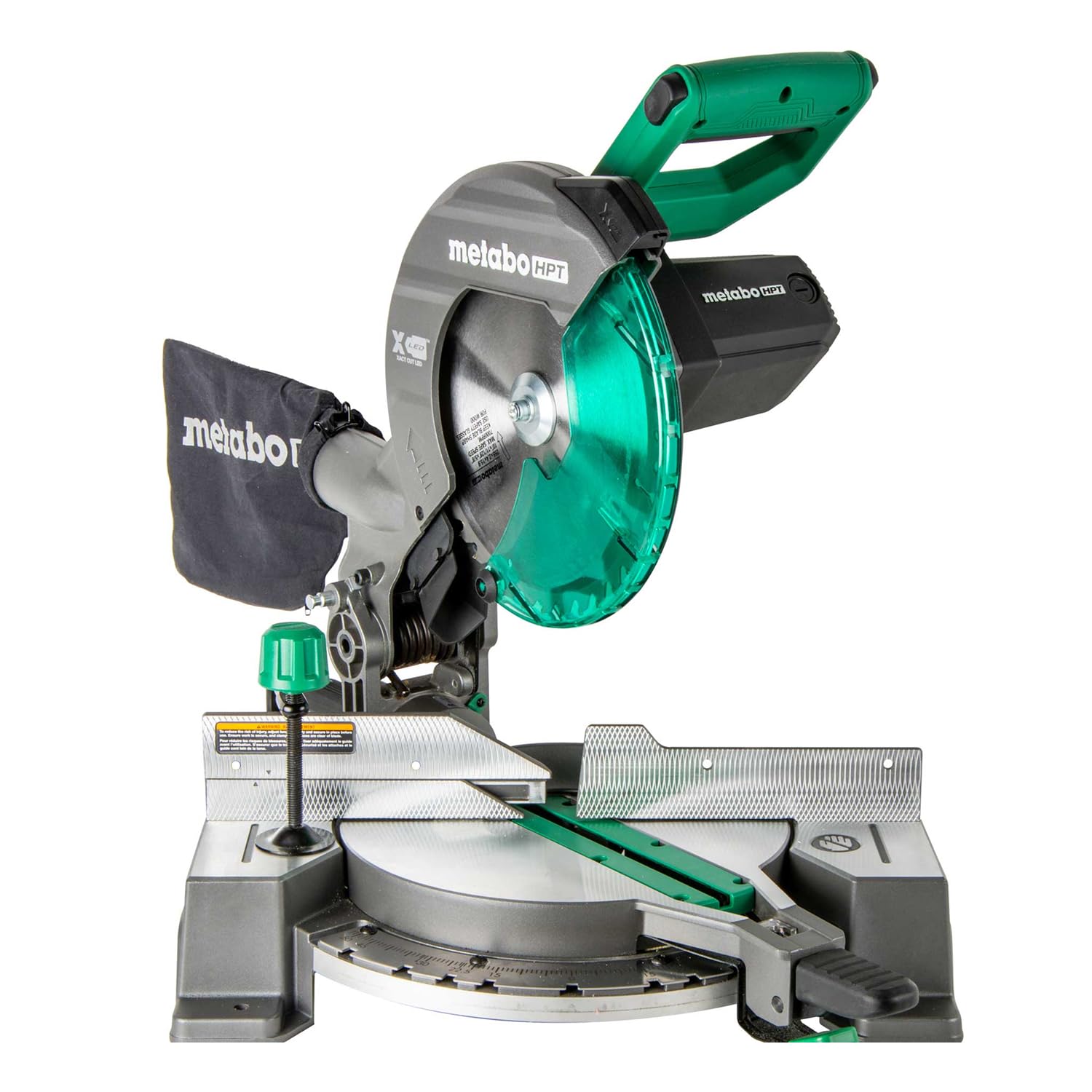
The Metabo HPT C10FCG2 hits the sweet spot for a beginner because it strips away unnecessary complexity while keeping the features that matter — a 15-amp motor spinning at 5,000 RPM and a shadow line that never needs batteries. Weighing just 24.2 pounds, it is one of the lightest 10-inch miter saws available, making it easy to carry between a garage workstation and a driveway project. Users consistently report that it arrives square from the factory, which eliminates the frustrating calibration process that plagues many budget saws.
The single bevel tilts 0–45° left and the miter range goes 0–52° in both directions, covering the angles needed for crown molding and baseboard work. The included 40-tooth tungsten carbide blade cuts cleanly through pine and oak right out of the box. The vice clamping system holds the workpiece securely, reducing vibration during cuts. For a first-time buyer, the combination of light weight, accurate shadow line, and hassle-free setup makes this saw the easiest recommendation in the category.
What holds it back is the dust collection — the included bag fills quickly and doesn’t capture fine particles well. Some users also note that the blade wrench was missing from the package, though Metabo HPT’s five-year warranty provides peace of mind. If you need to cut metal or wide boards exceeding 6 inches, this non-sliding design will leave you wanting more capacity.
Why it’s great
- Extremely lightweight at 24.2 lb, easy to move between work sites
- Shadow line guide is always accurate with no batteries to replace
- 5-year tool body warranty covers long-term reliability
Good to know
- Non-sliding design limits crosscut capacity to roughly 6 inches
- Dust bag clogs quickly and does not capture fine particles well
2. Evolution Power Tools R210CMS

The Evolution R210CMS is a specialist in the beginner miter saw space — it cuts steel, aluminum, wood with embedded nails, and plastic using the same blade, no blade swaps required. The 8-1/4-inch blade spins with 1,200 watts of hi-torque power, and the convertible arbor allows you to flip the collar to accept standard 5/8-inch arbor blades if you want to upgrade later. Real users report clean cuts on 2020 aluminum extrusions and steel angle iron with minimal burrs or heat buildup.
The miter range spans 45° left to 45° right, and the bevel tilts 0–45° left, which is adequate for most trim and light metal fabrication work. The included Japanese tungsten-carbide-tipped blade handles multi-material cutting straight from the box, and the three-year limited warranty is generous for this price tier. The saw is compact — one of the smallest miter saws on the market — which helps if you are short on bench space.
The trade-off is that the chip and dust management is poor when cutting metal; hot metal shavings can melt into the plastic components over time, and the onboard angle markings are difficult to read accurately. The stock blade also feels flimsy for heavy metal work. This saw is best suited for the beginner who knows they will be cutting a mix of wood and metal from day one rather than sticking exclusively to woodworking.
Why it’s great
- Cuts wood, metal, and plastic with no blade changes using the included TCT blade
- Convertible arbor accepts standard 5/8-inch blades for upgrades
- Compact footprint saves bench space in small workshops
Good to know
- Hot metal shavings can melt plastic components over extended use
- Onboard angle markings are not precise enough for fine woodworking
3. SKIL MS6306-00

The SKIL MS6306-00 uses a fixed compact rail system that minimizes the saw’s benchtop-to-wall footprint, allowing you to place it flush against a wall in tight garage spaces. With a 7-1/4-inch blade and a 10-amp motor delivering 4,800 RPM, it crosscuts up to 2×10 lumber at 0° and handles nested 3-1/2-inch crown molding. The LED shadow line provides precise blade alignment without the calibration drift common to budget lasers — a feature that experienced carpenters in user reviews consistently praise over traditional laser guides.
The single bevel tilts 0–45° left, and the miter range offers 0–47° left and 0–50° right with positive stops at 0°, 15°, 22.5°, 31.6°, and 45°. The quick-release miter lock and included work clamp make repeatable angle cuts fast and safe. Weighing under 25 pounds, it is nearly as portable as the Metabo HPT while offering the sliding capacity that the Metabo lacks.
The main limitation is the 7-1/4-inch blade size — it cannot cut through 4×4 posts or 2×12 lumber in one pass the way a 10-inch saw can. The 24-tooth carbide blade that ships with the saw is adequate for framing lumber but rough for fine trim work, so you will likely want to upgrade to a higher-tooth-count blade for finish cuts. The saw also cannot bevel to the right, which is a constraint if you cut compound angles frequently.
Why it’s great
- Compact rail design sits flush against walls, saving workshop space
- LED shadow line is more durable and accurate than laser guides on other budget saws
- Lightweight under 25 lb makes it easy to move and store
Good to know
- 7-1/4″ blade cannot cut 4×4 lumber or 2×12 boards in one pass
- Stock 24-tooth blade is too coarse for fine trim and molding work
4. Genesis GMS1015LC

The Genesis GMS1015LC brings a 15-amp motor and a 10-inch blade to a price point that undercuts nearly every other full-size miter saw on the market. The laser guide, powered by two AAA batteries, helps beginners visualize the cut line before pulling the trigger — a feature that reduces waste on expensive hardwood. The die-cast aluminum base keeps the saw stable during cuts, and the electric brake stops the blade in seconds for safety.
Nine positive miter stops lock at common angles (0°, 15°, 22.5°, 30°, 45° in both directions), making repeatable cuts fast even if you have never used a miter saw before. The included 60-tooth carbide blade is a standout at this price — it delivers smooth finish cuts on trim and molding straight out of the box, saving you the cost of an immediate blade upgrade. The extension wings provide extra support for longer boards.
The dust collection bag clogs quickly and the dust port adapts poorly to standard shop-vac hoses without tape or an adapter. The laser calibration can drift if the saw is moved frequently, and the plastic components on the fence and handle feel less durable than the cast-aluminum base. For a beginner focused on trim work and small home projects on a tight budget, the Genesis GMS1015LC delivers impressive value despite these compromises.
Why it’s great
- Includes a 60-tooth carbide blade that cuts trim cleanly without an immediate upgrade
- Die-cast aluminum base provides stability at a very low price point
- 9-position miter stops make angle selection fast and repeatable for beginners
Good to know
- Laser calibration can drift with transport and needs frequent adjustment
- Dust bag fills quickly and dust port does not fit standard vacuum hoses
5. Evolution Power Tools R185SMS+

The Evolution R185SMS+ takes the multi-material capability of the R210CMS and adds a 210 mm sliding mechanism for extended crosscut capacity. The 1,500-watt motor spins the 7-1/4-inch blade with authority, and the ball-bearing slides deliver smooth motion that reduces binding on wide cuts. Real users report cutting steel angle iron and aluminum extrusions with virtually no sparks or burrs, a testament to Evolution’s patented tooth geometry.
The bevel tilts 0–45°, and the miter range spans 50° left to 50° right, covering more position flexibility than the cheaper R210CMS. The laser guide provides a visual cutting path, and the carry handle makes transport between job sites manageable despite the sliding mechanism adding weight. The three-year warranty is best-in-class for this price tier and signals confidence in the build quality.
The small cord gauge and lack of a ground plug raise some safety concerns for continuous heavy use. The build quality feels geared toward finish work rather than framing — the fence and base components are adequate for trim but not for beating on with heavy lumber day after day. If you are a beginner who plans to cut metal siding, aluminum thresholds, and wood trim without switching machines, the R185SMS+ is a compelling single-tool solution.
Why it’s great
- Sliding mechanism provides extended cut capacity for wider boards and panels
- Multi-material TCT blade cuts steel, aluminum, and wood without blade swaps
- Ball-bearing slides reduce binding and deliver smooth operation
Good to know
- Cord gauge is thin and there is no ground plug, limiting safety for continuous heavy use
- Build quality is better suited for finish work than daily construction framing
6. DOVAMAN DMS01A

The DOVAMAN DMS01A stands out because it includes three TCT blades — two 40-tooth and one 48-tooth — plus a laser guide and a dual-speed motor that switches between 3,200 RPM for ferrous metals and 5,000 RPM for wood and plastic. The 10-inch sliding rail extends cutting capacity up to 4×13 inches, and the extendable side tables support long workpieces without sagging. The ambidextrous design with dual lock switches means left-handed users get the same safety and comfort as right-handed ones.
The laser guide is bright and holds calibration well, and the 15-amp pure copper motor delivers consistent torque across the speed range. Real users note that the stock blades are functional for light work but recommend upgrading to a Diablo blade for smoother cuts on hardwoods. The included extra carbon brushes extend the motor’s service life, a thoughtful inclusion for a beginner who may not know how to maintain a saw.
The main downside is the weight — 37.4 pounds (17 kg) makes it the heaviest saw in this roundup, and the build quality, while solid, uses some plastic components on the fence and base that reduce rigidity under heavy force. The dust collection is average, with the bag filling quickly during continuous cuts. For a beginner who wants a complete multi-material package with spare parts included, the DOVAMAN delivers exceptional value for the money.
Why it’s great
- Dual-speed motor (3,200/5,000 RPM) handles both ferrous metal and wood effectively
- Includes three TCT blades, spare carbon brushes, and a clamp — ready to use out of the box
- Ambidextrous design with dual lock switches works well for left-handed users
Good to know
- At 37.4 lb, this is the heaviest saw here and less portable for moving between sites
- Stock blades perform adequately but replacement with a premium blade improves cut quality
7. MarvTool JS-1013C3
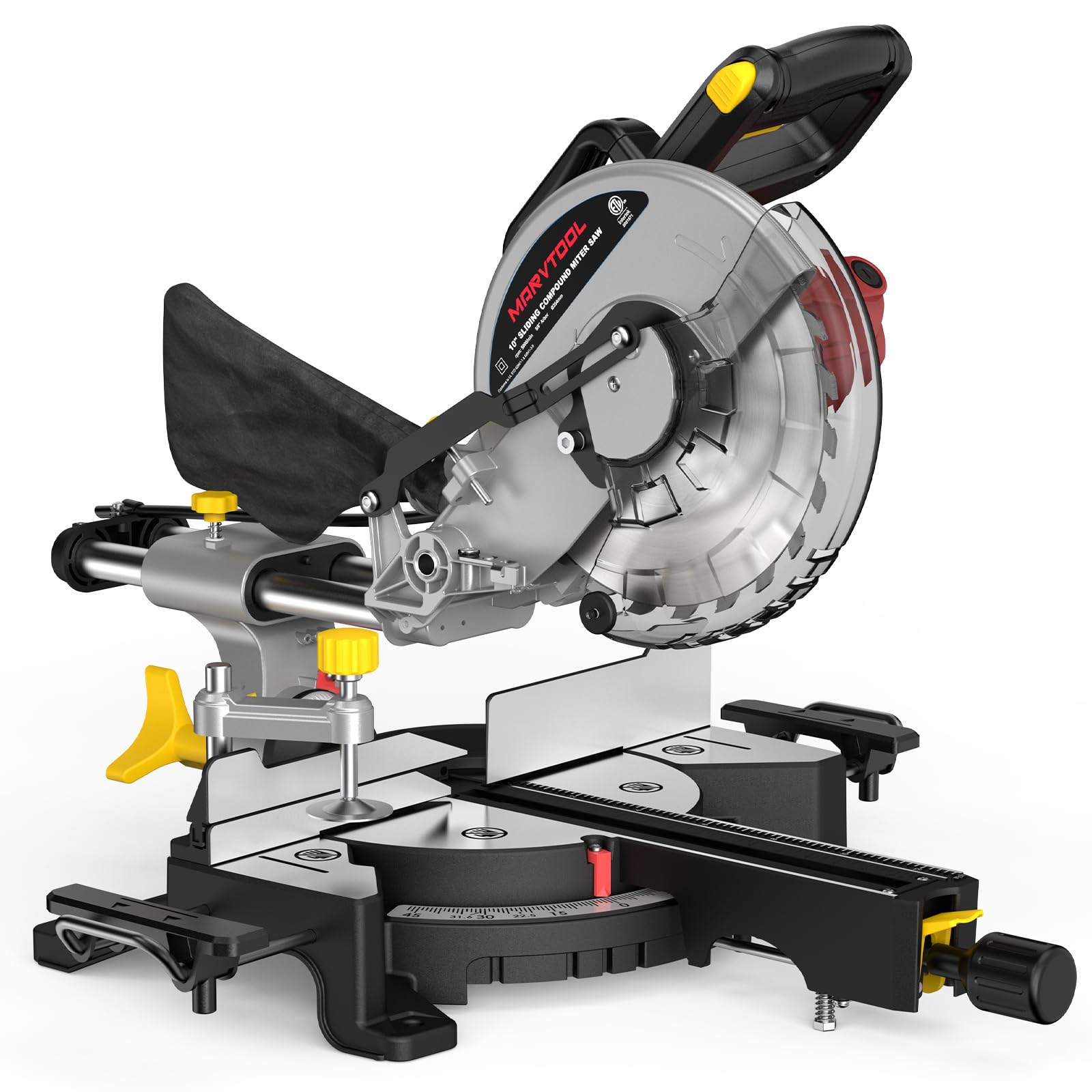
The MarvTool JS-1013C3 delivers a 10-inch sliding compound miter saw with a 15-amp motor spinning at 5,000 RPM, paired with two extension tables that provide support for longer workpieces. Weighing 25.6 pounds, it is nearly as portable as the Metabo HPT while offering sliding capacity that the Metabo lacks. The transparent blade guard provides clear visibility during cuts, and the vise clamp secures materials firmly for accurate results.
The single bevel tilts 0–45° left, and the miter base adjusts on both sides for bevel cuts in the same range. Users report that the saw arrives well-calibrated and produces square cuts for trim and DIY shelving projects. The included 36-tooth TCT blade handles general woodworking and soft metals adequately, and the dust collection bag captures a decent amount of debris during operation. The two-year warranty provides reasonable coverage for a saw in this price bracket.
The saw lacks a laser guide or shadow line — you have to rely on manually aligning the blade with your mark, which can be challenging for absolute beginners. The sliding rails, while functional, are not ball-bearing units, so the action is slightly less smooth than more expensive sliding saws. The handle is packed separately in the foam for shipping and requires a small assembly step that some users miss initially.
Why it’s great
- Sliding mechanism with extension tables handles longer boards and panels effectively
- Lightweight at 25.6 lb for a sliding 10-inch miter saw
- Transparent blade guard provides excellent visibility during cuts
Good to know
- No laser guide or shadow line — requires manual blade-to-mark alignment
- Sliding rails lack ball bearings, resulting in slightly less smooth action
8. NOVORIK 1009xqj00101

The NOVORIK 1009xqj00101 offers a sliding compound miter saw with a 15-amp motor (1,800W) running at 4,000 RPM and a laser guide that marks the cut line for precise alignment. The single bevel tilts 0–45° left, and the miter base has positive stops at 0°, 15°, 22.5°, 30°, and 45° in both directions, simplifying common angle cuts. The included clamping device and side supports provide basic workpiece stabilization.
Real users report that the saw arrives well-packaged and performs accurately for wood and soft metal cutting. The laser guide, powered by two AAA batteries, helps beginners visualize the cut path. The dust extraction port accepts a standard vacuum hose, keeping cleanup manageable. The 40-tooth TCT blade that ships with the saw is adequate for general-purpose cutting and saves the cost of an immediate blade purchase.
The 4,000 RPM motor is slower than the 5,000 RPM saws from Metabo and MarvTool, which translates to slightly rougher cuts on hardwoods if you push the feed rate. Some units have arrived with minor packaging damage or missing hardware, though customer service has been responsive for replacements. At 33.9 pounds, it is heavier than the MarvTool and Metabo options, reducing portability for users who need to carry the saw frequently.
Why it’s great
- Sliding mechanism provides extended cutting capacity for wider workpieces
- Laser guide helps beginners align cuts accurately without guessing
- Dust extraction port accepts standard vacuum hoses for cleaner operation
Good to know
- 4,000 RPM motor is slower than competitors, producing slightly rougher cuts on hardwoods
- At 33.9 lb, it is heavier than similar sliding saws and less portable
9. Hoteche P805218A
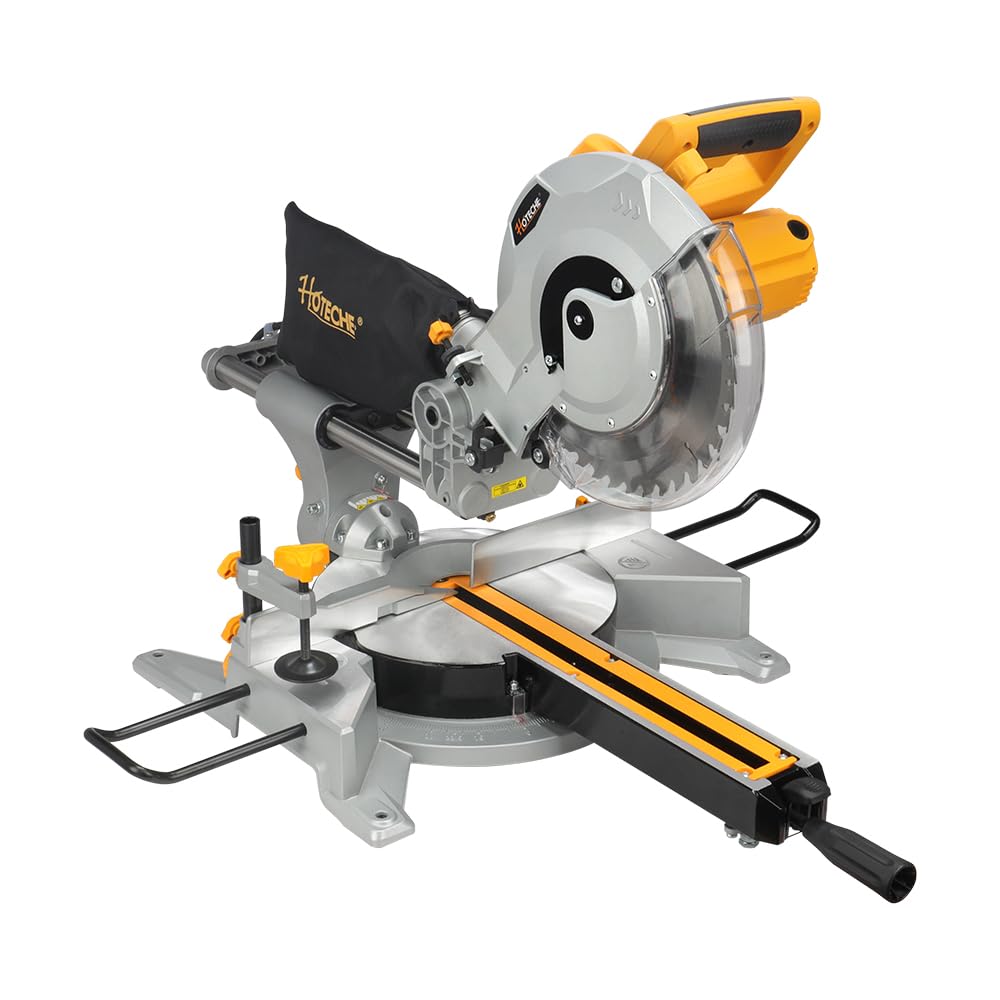
The Hoteche P805218A combines a 10-inch sliding compound miter saw with a 15-amp motor delivering 4,500 RPM and a laser guide to help beginners achieve straight cuts. The single bevel tilts 0–45° left, and the sliding mechanism provides a cutting capacity of 340 mm × 70 mm at 0° bevel. The included extension bars, dust bag, working clamp, and hex wrenches make this a complete starter package right out of the box.
Real users highlight the laser sight as a major help for first-time users — it shows exactly where the blade will land, reducing mistakes on expensive material. The 40-tooth TCT blade cuts through 1×2 strips quickly and cleanly, and the sliding rails extend smoothly for wider cuts on shelving and trim. The dust bag captures a reasonable amount of debris for a saw in this price range, though attaching it to a shop vac through the included port yields better results.
The fence design limits the width of cut — the fence is set forward, reducing the maximum cut width compared to other sliding saws in this roundup. The instructions for releasing the head lock are unclear for absolute beginners, though user-uploaded videos help fill the gap. At 34.9 pounds, this is one of the heaviest saws here, and some plastic components on the adjustment levers feel less durable than the all-metal parts on Metabo or Evolution saws.
Why it’s great
- Complete starter package with extension bars, clamp, dust bag, and wrenches included
- Laser guide is highly effective for beginners learning blade alignment
- Sliding mechanism extends cutting capacity for wider boards and panels
Good to know
- Fence design limits maximum cut width compared to other sliding 10-inch saws
- Instructions for head lock release are unclear — beginners may need to watch a video tutorial
FAQ
Do I need a sliding miter saw as a beginner?
What is the difference between a compound and a sliding compound miter saw?
Can a beginner miter saw cut metal?
Should I buy a saw with a laser guide or a shadow line?
Final Thoughts: The Verdict
For most users, the beginner miter saw winner is the Metabo HPT C10FCG2 because it combines the lightest weight in the category with a no-batteries-required shadow line and reliable square cuts out of the box. If you want multi-material cutting capability that lets you slice through steel and wood without changing blades, grab the Evolution R210CMS. And for a compact sliding design that works flush against workshop walls while still cutting 2×10 lumber, nothing beats the SKIL MS6306-00.