
The floor underfoot never stays still — that is the entire point. Whether you stand at a desk eight hours a day, rehab from an ankle sprain, or chase a deeper core engagement during workouts, a single flat surface works against you. A balance board introduces controlled instability, forcing your stabilizer muscles, joints, and nervous system to fire in ways standing still never can.
I’m Min — the co-founder and writer behind Gadgets Feed. I spent dozens of hours analyzing build materials, weight capacities, base designs, and real-user durability reports across rocker boards, wobble platforms, roller-based trainers, and spinning decks to isolate what separates a long-term tool from a wobbly novelty.
No two boards feel the same underfoot. The right choice determines whether you rehab safely, stand longer without fatigue, or sharpen athletic reflexes. In this guide I break down seven contenders to help you identify the best balance board for your specific routine and body mechanics.
How To Choose The Best Balance Board
A balance board’s job looks simple — make standing harder — but the way it creates that instability changes everything. Picking the wrong architecture for your goal turns a rehab tool into a hazard or turns an athletic trainer into a boring platform. Focus on three decisions first.
Rocker, Wobble, or Roller: Matching Instability Type to Your Goal
A rocker board moves along a single plane — forward/back or side-to-side depending on how the base is shaped. It works best for standing-desk use and early-stage rehab because the instability is predictable. A wobble board tilts in 360 degrees and works the entire ankle capsule simultaneously, making it better for general core conditioning and advanced rehab. A roller-based board (a deck sitting on a cylindrical roller) mimics the lateral carve of surfing or snowboarding and demands much higher coordination. Beginners should start with a rocker or wobble before stepping into a roller.
Surface Area, Grip, and Weight Capacity
A board that is too narrow causes foot fatigue and stability issues for anyone above a men’s size 10. Look for a platform width of at least eleven inches. The top surface should provide real traction — textured wood, EVA foam, or grip tape — not smooth paint. Weight capacity on premium boards ranges from 350 to 450 pounds. A lower cap usually indicates thinner plywood or a weaker hinge point, which can crack under repetitive dynamic load.
Portability vs. Permanence
Some boards live under a standing desk and never move. Others get tossed in a gym bag for travel. A heavier board with a wide wood base dampens vibration and feels more stable, but it is a pain to carry. A lightweight plastic board slides into a backpack easily but may shift on carpet. Decide whether the board stays in one room or follows you, then choose materials and weight accordingly. A 6.5-pound Gaiam is easy to relocate; a 13-pound solid wood board is not.
Quick Comparison
On smaller screens, swipe sideways to see the full table.
| Model | Category | Best For | Key Spec | Amazon |
|---|---|---|---|---|
| StrongTek Wooden Balance Board | Mid-Range | Rehab & Core Training | 360° cross-base wobble, 350 lb capacity | Amazon |
| Fitlaya Fitness Balance Board | Mid-Range | Snowboard & Surf Training | Roller-based, 29″ Canadian maple deck | Amazon |
| Theraband 23300 Rocker Board | Mid-Range | Physical Therapy & Post-Surgery Rehab | 30° deflection, molded plastic, 330 lb limit | Amazon |
| Gaiam Evolve Balance Board | Mid-Range | Standing Desk Work | Rocker base, 27″ x 12″, 250 lb capacity | Amazon |
| Sportneer Balance Board | Premium | Progressive Athletic Training | 7 modes, birch wood, 450 lb capacity | Amazon |
| GIBBON SlackBoard | Premium | Low-Impact Core & Agility | Slackline board, 42″ American maple | Amazon |
| Whirly Board Spinning Deck | Premium | Agility Drills & Standing Desk | 360° spin, 7-ply Canadian maple, 400 lb cap | Amazon |
In‑Depth Reviews
1. StrongTek Wooden Balance Board

The StrongTek sits in a sweet spot most boards miss: it offers 360-degree wobble like a traditional round-base board but uses a cross-shaped base that creates a larger floor contact area. That geometry makes it more approachable for someone transitioning from a basic rocker board while still challenging the ankles and core in every direction. The lauan hardwood plywood platform measures 17.5 by 13.5 inches, giving enough room for men’s size 11 feet without crowding the edge.
The non-slip textured top surface keeps feet planted during dynamic shifts, and the 3-inch height provides enough tilt range to feel the stabilizers loading without dumping you on the floor. At 2.23 kilograms the board is light enough to move between rooms but heavy enough to avoid skittering on hard floors. Reviewers consistently call out the construction as sturdy, and several used it successfully during knee and ankle rehab after surgery.
Multiple users noted that the adhesive backing on the four small corner pads can peel off over time — a minor nuisance that does not affect the board’s core function but prevents a perfect five-star durability score. If you want a single board that scales from gentle standing-desk rocking to serious multi-directional balance work, this is the most versatile option at its tier.
Why it’s great
- Cross-base wobble provides 360° training without the instability of a round base
- 350-pound weight capacity holds up under repeated dynamic use
- Non-slip textured surface works with socks or bare feet
Good to know
- Corner pads have weak adhesive and may need re-gluing
- Surface may feel slightly small for shoe sizes above 13
2. Fitlaya Fitness Balance Board

The Fitlaya departs from the rocker/wobble paradigm and uses a classic roller design: a 29.1-inch deck sits on a 17.8-inch cylindrical roller, allowing lateral carve motions that directly translate to surfing, snowboarding, and skateboarding. The deck is cut from Canadian maple — the same material high-end skateboards use — and the handcrafted construction carries a 350-pound weight capacity. The anti-slip surface ensures your feet stay anchored even during aggressive side-to-side shifts.
This board is not for casual standing-desk rocking. The roller demands active coordination from the hips, glutes, and core to maintain balance. Reviewers report that kids aged 8 to 14 pick it up quickly, while adults find it humbling but rewarding. The included roller is capped with plastic end pieces that can pop off after extended use — a quick push fixes it, but it is a recurring complaint in longer-term reviews.
The board’s 29-inch length accommodates wider stances, making it suitable for taller users. If your primary goal is sport-specific training for board sports or you want a dynamic core workout that feels like play, the Fitlaya delivers at a price well below boutique surf-trainer brands.
Why it’s great
- Canadian maple construction feels solid and resists splintering
- Roller-based design directly improves lateral balance for board sports
- Long deck accommodates wider stances and bigger feet
Good to know
- Plastic end caps on the roller tend to pop off during use
- Steep learning curve for beginners not used to roller instability
3. Theraband 23300 Rocker Board
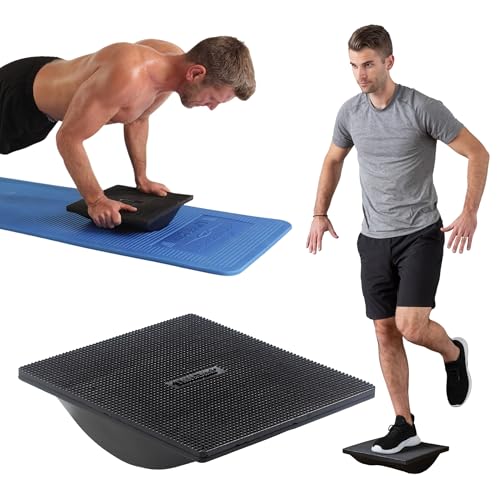
Theraband has a decades-long reputation in clinical physical therapy, and the 23300 rocker board reflects that heritage. Molded from black plastic rather than wood, it measures 18 by 15 inches and uses a 30-degree angle of deflection to create a linear plane of instability — forward/back or side-to-side depending on how you orient it. The anti-skid bottom grips carpet and yoga mats without sliding, while the tactile top surface provides grip even during sweatier rehab sessions.
At 3.5 pounds this is the lightest board in the lineup, making it genuinely portable for travel or clinic use. The included illustrated guide covers over 37 exercises integrating resistance bands and soft weights. Several reviewers with plantar fasciitis and post-knee-surgery rehab noted consistent improvement when using the board daily as prescribed by their physical therapist.
The trade-off is that plastic — even durable molded plastic like this — lacks the warmth and vibration-dampening feel of hardwood. Some users also wish the deflection angle was slightly more aggressive for advanced work. But for controlled, medically guided rehab where predictability is the priority, the Theraband remains the clinical default for good reason.
Why it’s great
- Trusted clinical brand used by physical therapists nationwide
- 30° deflection provides predictable, single-plane instability
- Ultra-light 3.5-pound weight makes it easy to pack for travel
Good to know
- Plastic construction feels less premium than hardwood alternatives
- Limited to one plane of motion — less versatile for advanced athletes
4. Gaiam Evolve Balance Board
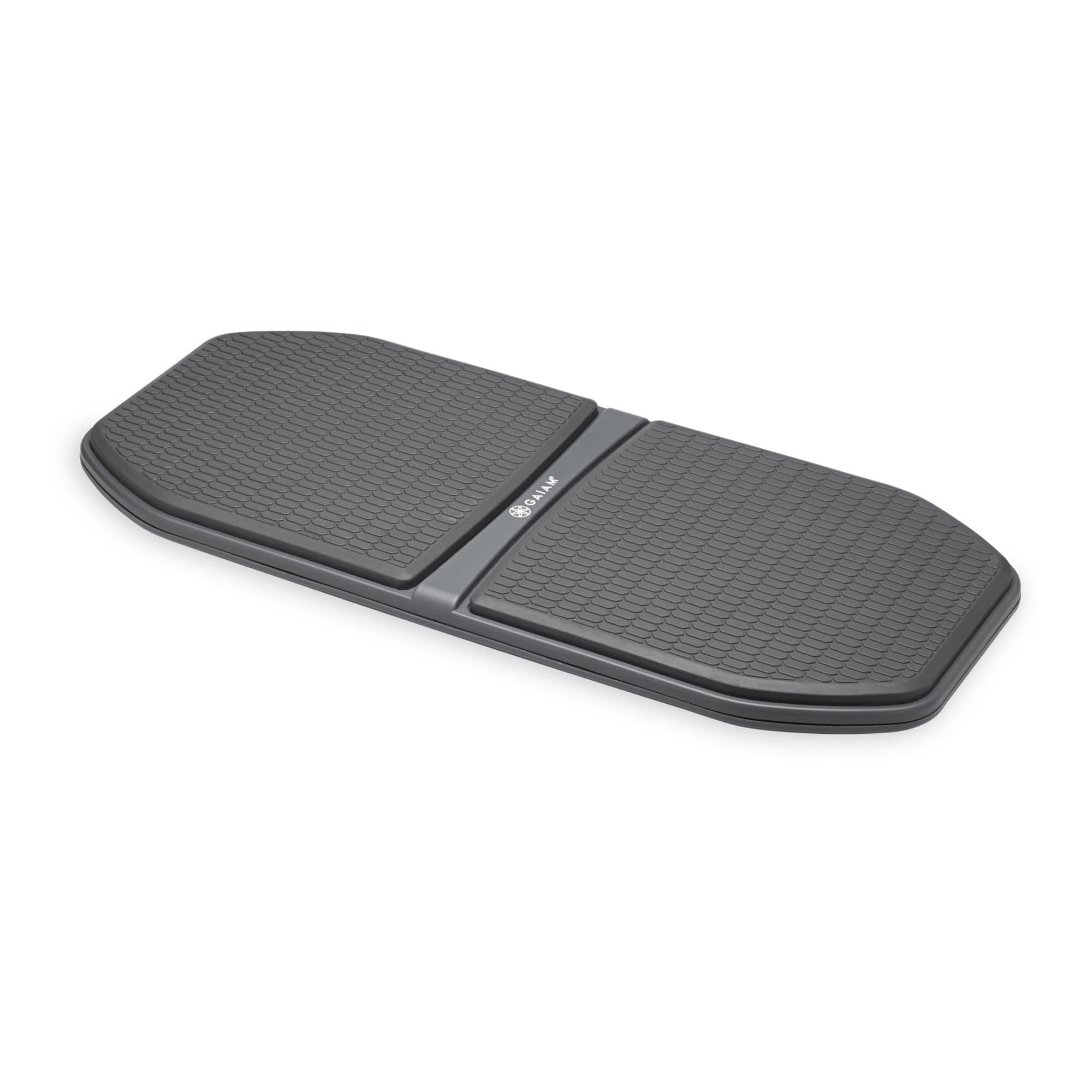
The Gaiam Evolve is purpose-built for the standing-desk user. Its rocker base allows subtle forward/back and side-to-side tilt without requiring active balance focus — you can continue typing while swaying. The 27-by-12-inch platform is wide enough to allow comfortable foot shifts, and the honeycomb non-slip texture keeps shoes or socks planted on both hard floors and low-pile carpet.
The board adds roughly 3.65 inches of height, so check your desk clearance before committing. At 6.5 pounds it is not the lightest option but still easy to slide under a desk when not in use. Multiple reviewers report that the board prevents locked knees and lower-back fatigue during 4- to 5-hour standing sessions, making it a genuine ergonomic upgrade rather than a gimmick.
Some long-term users have reported a creaking sound developing in the rocker mechanism after two months of daily use, and the PU/PVC top padding can peel near the center under constant foot pressure. The 250-pound weight capacity also sits lower than other boards in this guide, so heavier users should look to the StrongTek or Sportneer for more margin. If you want a dedicated desk board that prioritizes micro-movement over max instability, the Gaiam delivers.
Why it’s great
- Rocker base allows micro-movements during typing and desk work
- Wide honeycomb surface feels stable on carpet and hard floors
- Ergonomic design promotes neutral ankle positioning
Good to know
- 250-pound weight capacity is lower than competitors
- Some units develop creaking noise after extended use
5. Sportneer Balance Board

The Sportneer is the most configurable board in this lineup. It ships with a roller, a 2.8-inch ball, and four magnetic stoppers that snap into the underside of the 30.09-inch birch platform to create seven distinct difficulty modes. Beginners start with all stoppers engaged for reduced tilt; advanced users remove them all and ride the roller or ball with no limits. The magnetic attachment system requires no tools and holds securely during aggressive use.
The birch wood construction supports a class-leading 450-pound weight capacity, and the textured EVA foam top surface provides excellent barefoot grip without being abrasive. Reviewers consistently call out the versatility as the standout feature — families report multiple skill levels using the same board simply by adjusting the configuration. The stoppers also prevent the board from sliding away on hard floors during fall-offs.
The board is narrower than some premium options at 11.8 inches wide, which can feel tight for users with shoe sizes above 13. The half-circle stopper pieces lack indentations for easy removal, so prying them off can require some effort. If you want a single board that grows with your ability and serves everyone in the household, this is the strongest choice.
Why it’s great
- Seven configurable modes allow true progression from beginner to expert
- 450-pound weight capacity exceeds all other boards on this list
- Magnetic stoppers snap in and out without tools
Good to know
- 11.8-inch width can feel cramped for larger feet
- Stopper pieces lack grab points, making removal slightly awkward
6. GIBBON SlackBoard
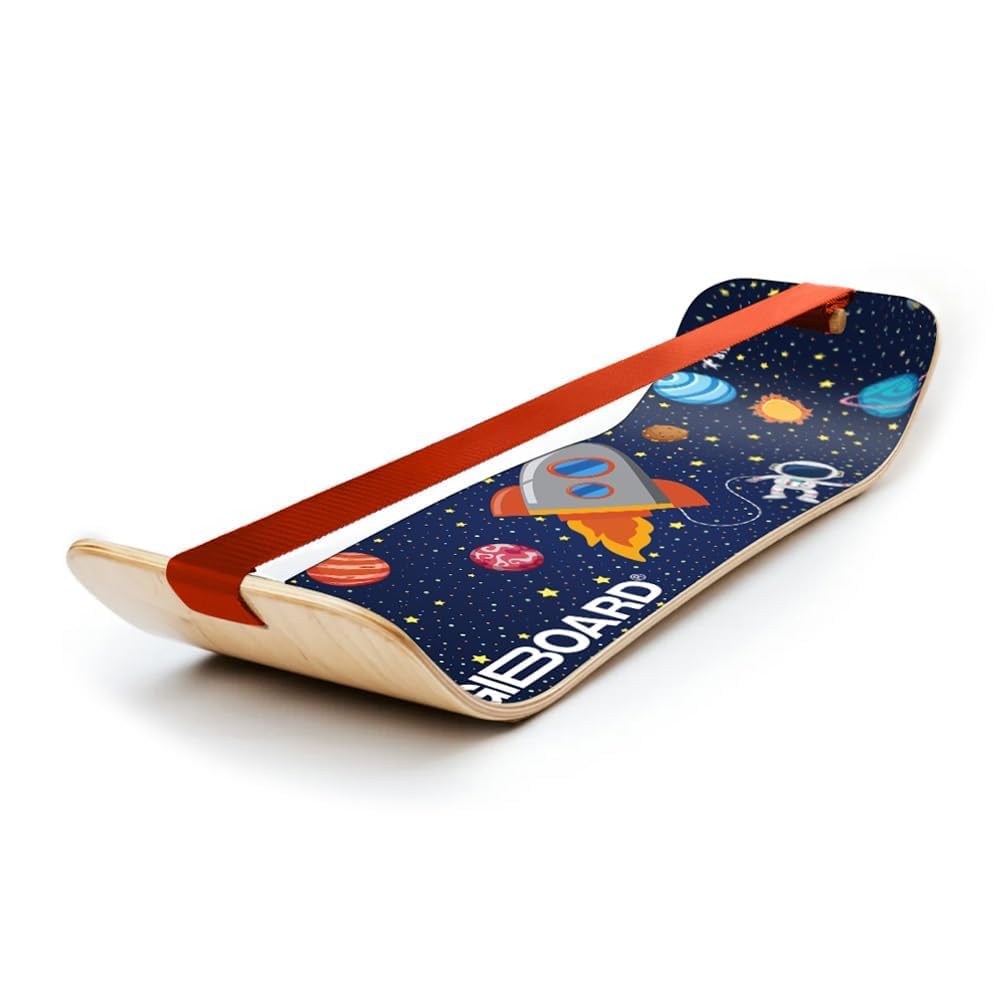
The GIBBON SlackBoard reimagines balance training by combining a slackline with a rigid platform. Instead of tilting on a pivot or roller, the 42-inch American maple board sits on two tensioned lines, creating a low-to-the-ground wobble that engages the entire kinetic chain. The board stands only a few inches off the floor, so falls are harmless — a key safety feature for nervous beginners and kids.
The construction is strikingly beautiful, with smooth sanded maple that shows off the wood grain. The two-line configuration (included with the Pro model) provides more stability than a single line, making it accessible for beginners while still challenging enough for advanced users who can eventually convert to one line. The included free app provides guided workouts and tracking, adding structure that many balance boards lack.
At 7.5 pounds and 42 inches long, this is a larger board that requires dedicated floor space. The learning curve is significantly steeper than a rocker board — reviewers describe the first session as “Bambi on ice” — but most report rapid progress within days. If you want a board that forces full-body engagement and doubles as a conversation piece in your living room, the SlackBoard is unmatched.
Why it’s great
- Slackline design provides unique full-body engagement unlike pivot-based boards
- Low profile makes falls harmless — ideal for kids and home use
- Beautiful American maple construction with companion workout app
Good to know
- Requires significant floor space at 42 inches long
- Steep initial learning curve may frustrate impatient users
7. Whirly Board Spinning Balance Board
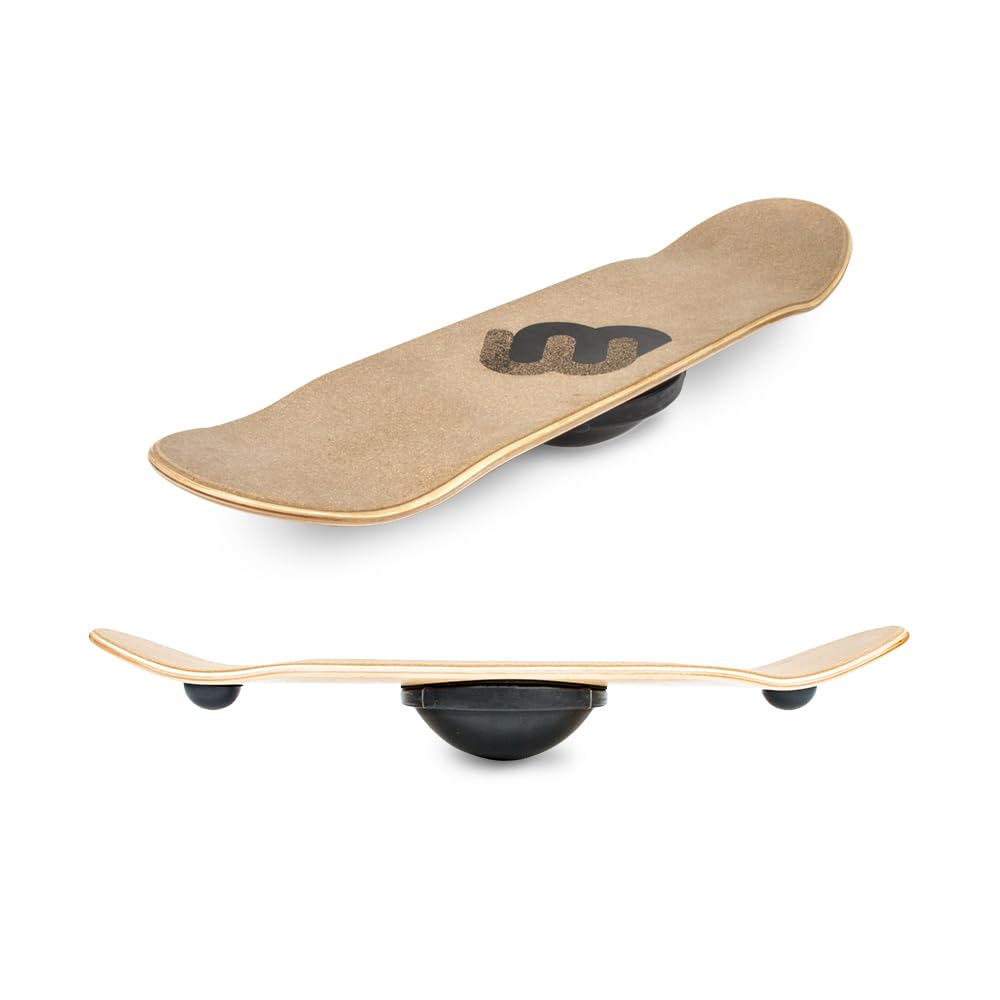
The Whirly Board stands apart with its 360-degree spinning mechanism. Unlike a wobble board that simply tilts, this deck rotates freely on a ball bearing while remaining off the ground, forcing you to constantly adjust your weight distribution to stay centered. The 32-inch platform is built from premium 7-ply Canadian maple with high-traction grip tape, the same material used in professional skateboard decks. It supports up to 400 pounds and carries a lifetime replacement promise from the Wisconsin-based manufacturer.
The spinning action demands active hip and core engagement that no other board in this guide replicates. Reviewers use it for hockey agility drills, tennis footwork, and general standing-desk movement, where the rotation prevents locked joints and keeps the lower body engaged. The natural cork grip tape feels comfortable barefoot according to most users, though the concave lip creates pressure points for large feet — size 13 and above should consider the wide version.
The board is narrow at 8.25 inches, so foot placement needs to be precise. It also works best on carpet to prevent the ball from sliding. The slick cork surface is beautiful but less grippy than EVA foam when wet. This is a specialty tool for athletes who want sport-specific rotational training or standing-desk users who crave more than simple rocking.
Why it’s great
- Unique 360° spinning mechanism delivers unmatched rotational training
- Lifetime replacement promise from a US manufacturer
- 7-ply maple construction feels premium and durable
Good to know
- 8.25-inch width is too narrow for large feet — opt for the wide version
- Cork grip surface offers less traction than EVA or textured wood
FAQ
Can I use a balance board if I have a history of ankle sprains?
How much space do I need around the board?
Will a balance board damage my hardwood floors?
Final Thoughts: The Verdict
For most users, the best balance board winner is the StrongTek Wooden Balance Board because its cross-base wobble design delivers 360-degree training in a controlled, approachable package that fits rehab, desk use, and core work. If you want progressive difficulty with maximum adjustability, grab the Sportneer Balance Board with its seven configurable modes. And for sport-specific lateral training that directly translates to surfing or snowboarding, nothing beats the Fitlaya Fitness Balance Board.