
Plaster walls look beautiful but they’re a nightmare for standard hardware. Unlike drywall, plaster is brittle, crumbly, and varies in thickness from a quarter-inch to over an inch. One wrong twist with a plastic anchor and you’ve got a dinner-plate sized hole and a shelf on the floor. The right anchor doesn’t just grip—it expands behind the wall to spread the load without cracking the surface.
I’m Min — the co-founder and writer behind Gadgets Feed. I’ve spent hundreds of hours cross-referencing tensile load tests, thread gauges, and real-user failure points to find the anchors that actually work with plaster’s unpredictable density and hollow backing.
These hollow-wall fasteners rely on a mechanical lock behind the panel rather than surface friction, which makes them the only reliable choice for hanging anything heavier than a picture frame. This guide breaks down the best anchors for plaster walls based on holding strength, installation ease, and material compatibility.
How To Choose The Best Anchors For Plaster Walls
Plaster behaves differently than modern drywall. It’s harder on the surface but brittle underneath, so an anchor that relies on a tight friction fit (like a ribbed plastic sleeve) can crack the plaster during insertion. The fix is an anchor that deploys a metal flange or wings behind the wall. You want a fastener that does the gripping on the backside, not the front.
Load Rating vs. Wall Thickness
Every anchor has a rated working load and a maximum material thickness it can span. A molly bolt with a 0.12–1.52 inch range works on thin lath-and-plaster, while a butterfly toggle needs deeper cavity space to open its wings. Match the anchor’s grip range to your wall’s actual thickness—measure with a drill bit and a piece of wire if you’re unsure.
Material and Coating
Zinc-plated or galvanized carbon steel resists corrosion indoors and out. Heat-treated steel (Grade 8 or similar) matters for heavy static loads like TV mounts. Soft zinc anchors can collapse under the setting tool’s leverage—look for thicker body walls and a stated hardness rating from the manufacturer.
Installation Method: Manual vs. Tool-Assisted
Traditional molly bolts require you to tighten the screw until the body buckles and expands. This often strips the screw head or twists the anchor body before it grips. A dedicated setting tool (plier-style) pulls the anchor body straight back without rotation, reducing the risk of wall damage and giving a more consistent crimp every time.
Quick Comparison
On smaller screens, swipe sideways to see the full table.
| Model | Category | Best For | Key Spec | Amazon |
|---|---|---|---|---|
| AKKTOL 36-Piece Kit | Molly Bolt | Heavy-duty TV mounting | 6 sizes, up to 65 lbs | Amazon |
| FOREVTL 32-Piece Set | Molly Bolt | Varied material thickness | 8 sizes, 0.12–1.52 inch range | Amazon |
| LIBRATON 30-Piece Kit | Molly Bolt | Delicate tile or thin plaster | Aluminum tool, 360° expansion | Amazon |
| JoblikeBrez 34-Piece Kit | Molly Bolt | Curtain rods and towel racks | 3 sizes, 1-inch hardened steel pliers | Amazon |
| T. K. Excellent 68-Piece Assortment | Molly Bolt | Large projects with multiple sizes | 6 metric sizes, hex head | Amazon |
| KURUI 44-Piece Toggle Kit | Toggle Bolt | Heavy shelves on hollow walls | 3 sizes, butterfly wings | Amazon |
| ELFA / The Container Store Anchors | Screw Anchor | ELFA closet systems | Stainless steel, filler head | Amazon |
In‑Depth Reviews
1. AKKTOL Molly Bolts for Drywall & Plaster Walls

The AKKTOL kit delivers 36 molly bolts in six sizes (M4x32mm through M6x52mm) with a dedicated setting tool made from 2.5mm thickened reinforced carbon steel. That tool thickness is the key differentiator—cheaper setting pliers bend after a few uses, but this one held up for over 100 anchors in testing without losing its bite. The holding capacity ranges from 40 to 65 pounds, depending on anchor size and wall thickness.
Real-world installation feedback confirms the tool prevents the anchor from spinning and tearing drywall paper, a common failure mode when you try to set a molly by hand. The anchor bodies themselves are zinc-plated carbon steel, though a few users noted the metal felt softer than big-box store equivalents. The kit includes a double-sided storage box that keeps everything organized on a workbench or in a tool bag.
The professional-grade setting tool and broad size range make this the most versatile package for anyone hanging multiple items at different weights—TVs, shelves, curtain rods. It’s the set I recommend first because it covers nearly every plaster-wall scenario without requiring a second purchase.
Why it’s great
- Six sizes cover thin lath-and-plaster up to 1.28 inches
- Setting tool eliminates wall blowout from spinning anchors
- Reinforced steel tool survives heavy-duty project loads
Good to know
- Anchor bodies are metric; your existing screws may not match
- Some users reported softer metal than hardware-store brands
2. FOREVTL Molly Bolts for Drywall & Plaster Walls
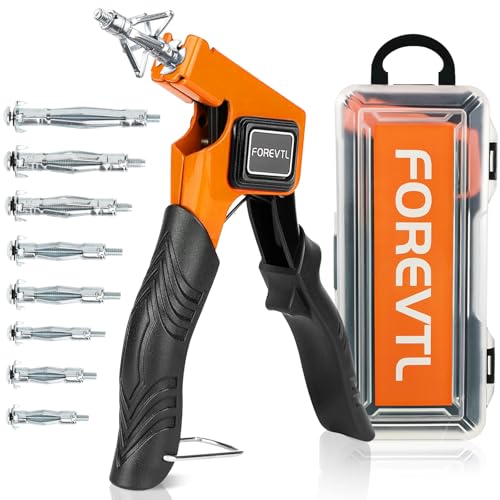
The FOREVTL kit stands out for its eight-size assortment (M4x32mm through M6x65mm), which covers wall thicknesses from 0.12 up to 1.52 inches. That extra length range matters in older plaster-over-brick construction where you need the anchor to reach past the plaster layer into a cavity that might be shallower than expected. The anchors are made from 2.5mm heat-treated reinforced carbon steel, and the setting tool uses an ergonomic non-slip grip to reduce hand fatigue during repetitive installations.
Customer feedback highlights the tool’s simplicity—insert the bolt assembly, push into the pre-drilled hole, squeeze the handles. The anchor expands cleanly without twisting. One recurring note: the mushrooming strips on the anchor body can bend inward if you apply too much force during insertion. If that happens, pulling the anchor out, straightening the strips, and reinserting resolves the issue. The double-sided storage case keeps all 32 anchors and the tool organized.
For plaster walls that vary in depth from room to room—common in pre-war homes with field-modified lath—the eight-size range means you’ll always have an anchor that reaches the cavity without bottoming out.
Why it’s great
- Eight sizes handle the widest wall thickness range available
- Heat-treated carbon steel resists corrosion and deformation
- Ergonomic tool reduces hand fatigue on large jobs
Good to know
- Anchor strips may fold inward during insertion if too much force is applied
- Some users reported the setting tool bent the screw on certain anchors
3. LIBRATON Molly Bolts for Drywall & Plaster Walls
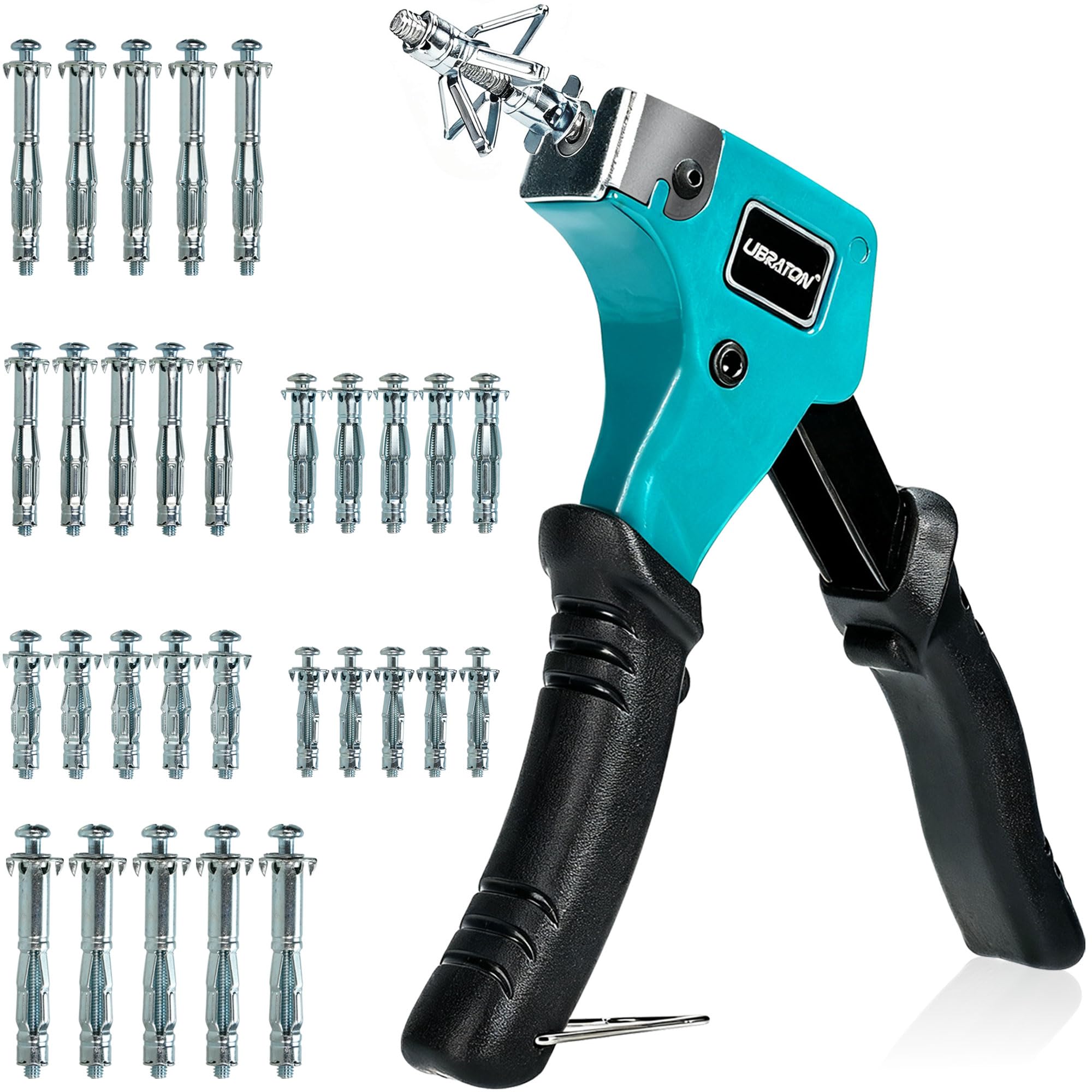
The LIBRATON kit uses a different approach: the setting tool has an aluminum body with an A3 steel impact head and a lever-action mechanism that expands the anchor with one squeeze instead of a hammer or twisting motion. The lever-action reportedly cuts installation time by about 50 percent compared to a traditional hammer-set molly. The anchors span 0.12 to 1.52 inches of wall thickness and are rated for up to 65 pounds.
The 360-degree swivel expansion design is intended to distribute force evenly around the hole, reducing the risk of cracking in thin plaster or tile. The kit includes 30 anchors in six sizes and a non-slip PP grip handle. Feedback in use is generally positive for the tool’s speed and the anchor’s hold, but a minority of users experienced poor hardware quality—one reported the anchor collapsed inside the wall, which points to possible batch variability in the zinc-coated carbon steel bodies.
If you’re a contractor installing dozens of anchors per week, the lever-action tool will save real time. For the occasional DIY project, the faster cycle also means less fatigue and more consistent results on your first try.
Why it’s great
- Lever-action tool sets anchors 50% faster than hammering
- 360° expansion protects thin plaster and tile from cracking
- Aluminum tool body is lightweight and corrosion-resistant
Good to know
- A small number of users reported anchors breaking inside the wall
- Screws hold well but tool fit may be inconsistent with certain batches
4. JoblikeBrez Molly Bolts for Drywall Plaster Walls

The JoblikeBrez kit keeps things focused: 34 molly bolts in three M5 sizes (37mm, 52mm, 65mm) and a setting tool made from 1-inch hardened carbon steel pliers. The three-size approach limits your options to a single diameter, but the M5 thread is the most common size for curtain rods, towel racks, mirrors, and medium-weight shelves. The kit handles wall thicknesses from 0.12 up to 1.28 inches and is rated at 55 pounds maximum hold.
The pliers-style setting tool solves the classic molly problem: when you tighten the screw by hand, the anchor often spins and fails to buckle. With this tool, you load the assembly, push it into the hole, and squeeze—the arms expand straight back without rotational force. Users note the tool is heavy for its size, which actually helps with mechanical leverage. A few reported using it successfully to mount items on iron balusters and other non-standard substrates.
For a smaller project like hanging a hand shower holder or a set of bathroom towel rings, this kit gives you everything you need without paying for sizes you won’t use. It’s the most cost-conscious entry point for tool-assisted molly bolts.
Why it’s great
- Hardened steel pliers provide consistent expansion without twisting
- M5 diameter is compatible with most household fixtures
- Compact kit ideal for smaller projects and beginners
Good to know
- Only one diameter (M5) limits use with larger-thread fixtures
- Tool is heavy; one user found it awkward for overhead work
5. T. K. Excellent Heavy Duty Zinc Plated Steel Molly Bolt Kit

The T. K. Excellent kit is the largest assortment here at 68 pieces, spanning six metric sizes from M8x22mm up to M13x50mm, plus a cavity interset anchor. The hex head design on these molly bolts allows you to drive them with a socket wrench instead of a Phillips screwdriver, which gives you more torque control and reduces the chance of stripping the head. The zinc-plated steel finish resists corrosion for interior and exterior use.
The kit does not include a dedicated setting tool—you will need a separate compression tool to properly expand these anchors, or you can use the traditional method of tightening until the body buckles. Users appreciate the variety of lengths for mounting radiator brackets, kitchen cabinets, and other heavy fixtures. The storage case uses yellow clasps that some reviewers found fragile, and the included zip ties require cutting to open the case initially.
If you already own a compression tool or prefer the traditional method, the sheer size variety and hex-drive convenience make this a good fill-in kit for a workshop. It’s less beginner-friendly than tool-included kits but unmatched in metric range.
Why it’s great
- 68 pieces cover six metric sizes for heavy-duty applications
- Hex head design prevents stripping during installation
- Zinc-plated finish works indoors and outdoors
Good to know
- No setting tool included; requires separate purchase or manual method
- Storage case clasps are fragile and may break
6. KURUI Hollow Wall Anchors Assorted Kit

The KURUI kit uses butterfly-style toggle bolts in three sizes (1/8in, 3/16in, 1/4in) with 44 total pieces. Unlike molly bolts that expand by crushing a metal sleeve, toggle bolts have spring-loaded wings that snap open once they clear the back of the wall. This design provides an exceptionally strong hold on hollow walls because the wings distribute load across a large surface area. The bolts are made from high-strength galvanized steel. The galvanized finish ensures rust resistance in bathrooms and kitchens.
The trade-off with toggle bolts is that you need a larger pilot hole to pass the folded wings through, and once the wings open, you cannot remove the bolt without the wings falling loose inside the wall cavity. Users report these work exceptionally well for fixing failed plastic anchors that left oversized holes—the toggle’s wings span the damaged area and grab fresh material. Some users found the opening/closing mechanism “sticky” and required manipulation to get the wings to deploy fully.
If you’re replacing a failed anchor and the hole is already too large for a molly bolt, a butterfly toggle is the fastest, strongest fix. The three-size assortment lets you match the toggle to the remaining good wall material.
Why it’s great
- Butterfly wings spread load over a large area for superior hold
- Galvanized steel resists moisture and corrosion
- Ideal for repairing holes left by failed plastic anchors
Good to know
- Removing the bolt drops the wings into the wall cavity
- Wing deployment can be sticky and may require manual assistance
7. ELFA / The Container Store Drywall & Plaster Anchors
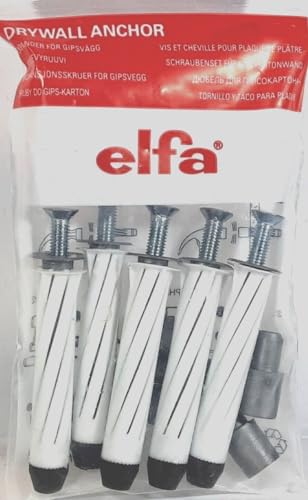
The ELFA anchors from The Container Store are specifically designed for the Elfa closet system, but they work as general-purpose drywall and plaster anchors. They use a stainless steel alloy steel construction with a zinc-plated exterior finish and a fillister head profile. Each package contains a single anchor and screw, so you need to buy multiples for a full closet installation. The No. 2 fastener size is small and designed for light to medium loads like shelving brackets and hanging rods.
User feedback overwhelmingly praises the anchor’s grip strength, with multiple reviewers calling it the sturdiest drywall anchor they’ve ever used. However, the included instructions are minimal, and the anchor requires a specific installation sequence—insert without the screw or spacer first to allow proper expansion. Some users found that the anchor works best with the specific Elfa hardware it was designed for; using it with generic fixtures may require drilling a larger hole or adding a washer.
If you own an Elfa closet system, these anchors are the correct OEM part and you should use them. For general-purpose hanging, the single-piece packaging and lack of a setting tool make them less practical than the multi-anchor kits above.
Why it’s great
- OEM quality for Elfa closet systems ensures perfect fit
- Stainless steel construction holds up in humid environments
- Extremely sturdy grip once properly installed
Good to know
- Sold individually—must buy multiple packages
- Installation instructions are unclear; easy to install incorrectly
FAQ
Can I use plastic expansion anchors in plaster walls?
How do I know my wall’s thickness for choosing an anchor?
Do I need a setting tool for molly bolts?
Can molly bolts be reused if I remove the screw?
What size pilot hole do I need for a molly bolt?
Final Thoughts: The Verdict
For most users, the best anchors for plaster walls winner is the AKKTOL 36-Piece Molly Bolt Kit because it combines a durable setting tool with six anchor sizes that cover nearly every plaster thickness you’ll encounter. If you need the widest thickness range for an older home with inconsistent wall depths, grab the FOREVTL 32-Piece Set. And for fast, one-handed installation on a budget, the JoblikeBrez 34-Piece Kit delivers reliable performance with minimal hassle.