
A backpacking lantern is the difference between fumbling through your pack at dusk and actually enjoying the camp after the sun goes down. The challenge is finding one that delivers real light output without adding noticeable grams to your base weight or forcing you to carry a separate power bank.
I’m Min — the co-founder and writer behind Gadgets Feed. I’ve spent countless hours analyzing lumen-per-gram ratios, battery chemistries, and charging protocols across dozens of backpacking lanterns to find the models that earn their place in a properly packed bag.
This guide breaks down the top contenders in best backpacking lantern picks by comparing real-world battery life, brightness modes, and weight specs that actually matter when miles are on your legs.
How To Choose The Best Backpacking Lantern
Backpacking lanterns are a compromise between brightness, weight, battery life, and durability. Unlike car camping lanterns where you can haul a heavy lithium pack, a backpacking lantern must hit a much tighter weight budget without leaving you in the dark halfway through your trip.
Prioritize the Lumen-to-Gram Ratio
Every extra gram you carry should justify itself with usable light. A lantern rated at 500 lumens that weighs 200 grams delivers 2.5 lumens per gram — but if the beam is narrow or harsh, the raw number doesn’t help. Look for a 360-degree flood pattern that fills a tent or a camp table without creating harsh shadows. The real metric is how many square feet you can comfortably light, not the headline lumen number.
Battery Chemistry and Recharge Options
The battery type dictates how you power up mid-trip. Lithium-ion rechargeable packs offer the best energy density and can double as emergency phone chargers via USB-A or USB-C output. Solar-rechargeable panels add weight but free you from carrying extra battery banks on extended trips. AAA-powered options are lighter on paper but force you to carry disposable cells or invest in NiMH rechargeable batteries — and the waste is real. Decide whether you prioritize field recharging convenience or absolute minimum weight.
Weather Resistance and Drop Protection
An IPX4 rating protects against splashes and rain, while IP67 means the lantern can survive being submerged briefly — a real advantage if you’re crossing streams or setting up camp in wet conditions. Drop resistance matters because a backpacking lantern will inevitably get knocked off a picnic table or a tent vestibule. A unit that survives a 1-meter fall onto rock is worth the premium over a fragile plastic shell that shatters on first contact.
Quick Comparison
On smaller screens, swipe sideways to see the full table.
| Model | Category | Best For | Key Spec | Amazon |
|---|---|---|---|---|
| Glocusent 135 LED | Rechargeable | High brightness campsite | 1500 lumens / 5000mAh | Amazon |
| Coleman Classic Rechargeable | Rechargeable | Camp base camp & phone charging | 800 lumens / 4800mAh | Amazon |
| CLAYMORE Ultra Mini | Premium Compact | Ultralight backpacking | 500 lumens / 116g | Amazon |
| LuminAID Max | Solar + Charger | Extended trips / emergency kit | 200 lumens / IP67 / solar | Amazon |
| Wsky Solar 4-Pack | Solar + AA | Multi-light setups | 100 lumens / triple power | Amazon |
| BioLite Luci Original | Inflatable Solar | Ultralight / emergency kit | 65 lumens / 125g / IP67 | Amazon |
| Snow Peak Mini Hozuki | AAA Battery | Minimalist Japanese design | 60 lumens / 1.9 oz / AAA | Amazon |
In‑Depth Reviews
1. Glocusent 135 LED Ultra Bright Camping Lantern
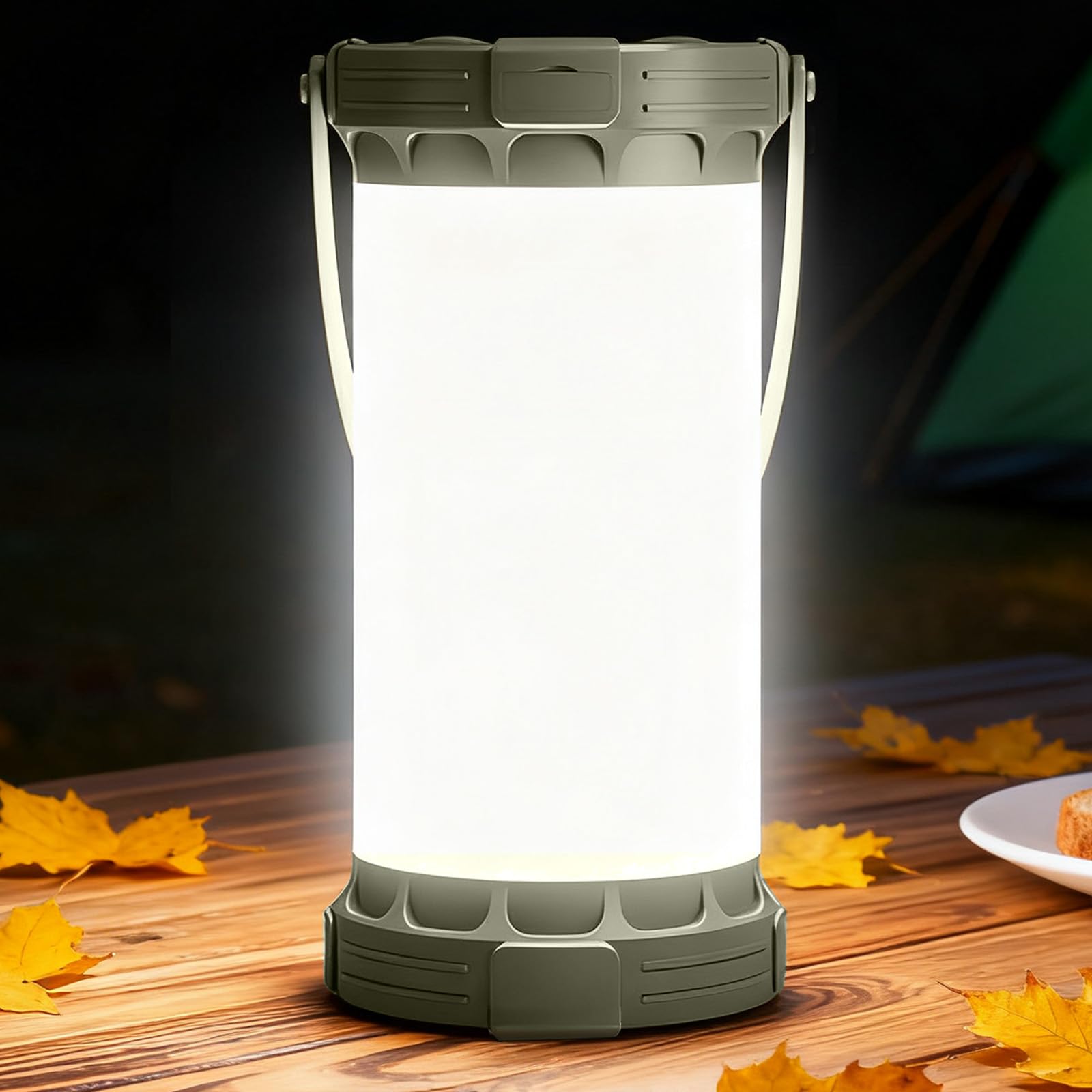
The Glocusent 135 LED delivers the highest lumen-per-gram ratio in this roundup — 1500 lumens of peak output from a 299-gram body, all powered by a 5000mAh internal cell that runs up to 200 hours on the lowest setting. The 360-degree flood pattern with 135 individual LEDs eliminates hard shadows and lights an entire 200-square-foot area evenly, which is rare in the sub-300-gram backpacking segment.
Three color-temperature modes (3000K warm, 4500K neutral, 6000K cool) let you shift from cozy campfire ambiance to crisp task lighting for cooking or map reading. The USB-C port doubles as a phone charger, so this lantern effectively replaces a separate power bank on shorter trips. The IP44 rating handles rain and splashes, and the 1500-lumen “Super Bright” mode bursts for three minutes when you need wide-area emergency coverage.
The memory function recalls your last brightness setting, and the large sunken buttons are easy to operate with cold or gloved hands. At this price point with a 24-month warranty, the Glocusent is the most complete backpacking lantern for anyone who wants massive output without carrying a brick.
Why it’s great
- Extraordinary 1500-lumen peak output in a 299g package
- 5000mAh battery doubles as a phone charger via USB-C
- Three color temps and five brightness levels offer total control
Good to know
- Super Bright mode limited to 3-minute bursts
- IP44 rating is splash-proof but not submersible
2. CLAYMORE Ultra Mini (Red)

The CLAYMORE Ultra Mini is a precision-engineered Korean-made lantern that packs 500 lumens into a body weighing just 116 grams — that’s 4.3 lumens per gram, one of the best ratios available in a rechargeable backpacking lantern. The three-sided LED panel design distributes light evenly across a tent interior or camp table without a harsh hotspot, and the 1/4-inch tripod socket adds mounting versatility that most competitors lack.
Three color temperatures — 3000K warm, 4200K natural, 6500K cool — plus an SOS flash mode make it adaptable from cozy evenings to emergency signaling. The IP64 rating handles dust and rain, and the integrated wire stand lets you place it on any flat surface or hang it inside your tent. USB-C charging reaches full capacity in under three hours, and the battery lasts up to 24 hours on the lowest setting.
The compact form factor (about the size of a smartphone) slides into a hip belt pocket or the lid of your pack. Despite the premium price, the build quality and Korean engineering justify the cost for thru-hikers and gram counters who refuse to compromise on reliability.
Why it’s great
- Exceptional 4.3 lumens per gram ratio
- IP64 dust and splash resistance for rugged use
- 1/4-inch tripod socket and wire stand for flexible mounting
Good to know
- Higher initial cost compared to rechargeable competitors
- No integrated power bank function for phone charging
3. Coleman Classic Rechargeable LED Lantern

Coleman’s Classic Rechargeable LED Lantern brings a familiar retro design into the modern rechargeable era with a 4800mAh lithium-ion battery that pushes 800 lumens on high. Three brightness levels — 100, 300, and 800 lumens — let you extend runtime dramatically: up to 45 hours on low and 5 hours on the highest setting. The built-in USB-A port lets you charge your phone or headlamp while the lantern runs, making it a practical base camp hub.
The IPX4 water resistance and 1-meter impact resistance mean this lantern can survive a drop on gravel or a sudden rain shower without issue. The large bail handle doubles as a carabiner for hanging inside a tent or from a tree branch. The base unscrews to reveal hidden cord storage, a thoughtful touch that keeps your pack organized.
At about 2.2 pounds, this is heavier than dedicated ultralight options, but the 800-lumen output and phone charging capability make it a strong choice for car camping or base camp where weight is less critical. Coleman backs it with a 3-year warranty, adding peace of mind for frequent outdoor use.
Why it’s great
- 800 lumens with three brightness modes and long runtime
- Built-in USB-A port charges devices while lantern is on
- IPX4 water resistance and 1-meter impact protection
Good to know
- Weighs 2.2 pounds — too heavy for ultralight backpacking
- Charging via USB-C is slower than some compact competitors
4. LuminAID Max Quick Inflate 2-in-1

The LuminAID Max collapses to one inch thick and inflates to a 6-inch cube that emits 200 lumens of diffused light through a rugged TPU shell. The integrated solar panel recharges the 2000mAh battery in 16-20 hours of direct sunlight, and USB charging via the included cable takes just 1-2 hours. The 2.1-amp USB output port provides 75-100% charge for most smartphones, effectively combining your lantern and power bank into a single sub-10-ounce package.
The IP67 rating means the Max is fully dustproof and can survive submersion in up to one meter of water for 30 minutes — it even floats when inflated. The Turbo mode delivers an extra burst of brightness for task lighting, and the multiple brightness settings let you stretch runtime to roughly 25 hours on the lowest setting. The inflatable design eliminates hard plastic edges, making it safe to pack against sleeping bags or soft gear.
This is the best option for extended off-grid trips where solar recharging is a practical strategy. The dual role as a phone charger adds weight compared to a pure light source, but for longer treks where every gram must serve multiple functions, the LuminAID Max earns its place.
Why it’s great
- Fully waterproof (IP67) and floats when inflated
- Solar + USB charging with phone charging capability
- Packs down to 1 inch thick for easy storage
Good to know
- Solar recharge takes 16-20 hours in direct sun
- Maximum 200 lumens is dimmer than dedicated high-output lanterns
5. Wsky Solar Camping Lantern 4-Pack

The Wsky 4-pack offers three power sources — built-in rechargeable lithium-ion battery, solar panel, or 3x AA batteries — giving you extraordinary flexibility for group camping or emergency kits where multiple light points are needed. Each lantern emits 100 lumens of 360-degree light from a compact collapsible body, and the military-grade ABS shell resists shocks and impacts. The magnetic base and folding hanging hook provide hands-free operation in tents, on metal surfaces, or from tree branches.
Runtime on the internal battery reaches roughly 12 hours on a full charge, and the solar panel extends your range during daylight trips. The collapsible design compresses to a flat disc that slides into side pockets or emergency bags. Each unit also functions as a power bank via USB output, though the 100-lumen maximum means these are best for ambient tent lighting rather than task-intensive camp chores.
Because you’re buying four lights in one package, this is the highest-value option for families or groups who need distributed lighting without hunting for individual units. The triple-power architecture removes batteries-as-a-weak-point anxiety on longer trips.
Why it’s great
- Three power modes: rechargeable, solar, or AA batteries
- 4-pack includes magnetic base and hanging hook per unit
- Collapsible design packs flat for easy storage
Good to know
- Each unit maxes out at 100 lumens — not for high-output tasks
- AA batteries are not included
6. BioLite Luci Original Solar Inflatable
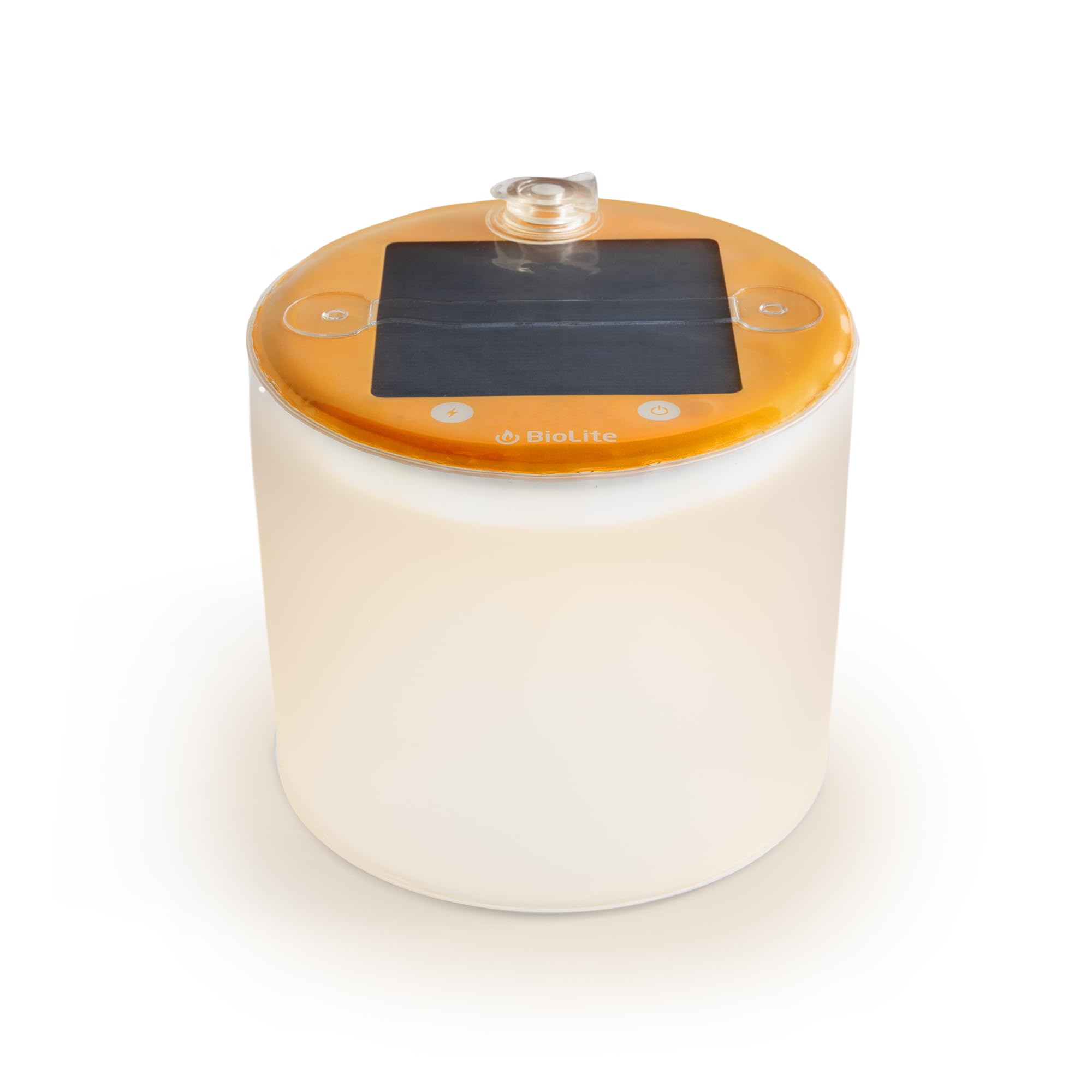
At 125 grams and collapsing to just one inch thick, the BioLite Luci Original is built for gram-conscious backpackers who need reliable ambient light without battery anxiety. The inflatable design uses a 1000mAh lithium-ion battery that provides up to 24 hours of light on low, and it recharges via its built-in solar panel or USB-C. The matte finish diffuses the warm white LEDs into a soft, even glow that feels natural inside a tent — no harsh blue light.
The IP67 rating makes this lantern fully waterproof and dustproof, and it can withstand up to 150 pounds of pressure without breaking, so you can pack it deep in your bag without worry. The 65-lumen maximum is modest, but the light spread is wide and even, making it ideal for small tents or as a reading lamp. The integrated handle strap with a snap lets you hang it from a tent loop or a pack strap.
Users consistently report battery life exceeding the advertised 24 hours, with some getting two full days on a single charge. For weekend trips or emergency kits where weight is the primary constraint, the Luci Original delivers the best gram-to-runtime ratio in its class.
Why it’s great
- Ultralight at 125g with solar + USB charging
- IP67 fully waterproof and crush-resistant to 150 lbs
- Collapses flat to one inch for ultra-compact storage
Good to know
- Maximum 65 lumens is dim — not for large areas or task work
- Premium price point for a 65-lumen light
7. Snow Peak Mini Hozuki Lantern

The Snow Peak Mini Hozuki is the lightest lantern on this list at just 1.9 ounces, running on 3x AAA alkaline or NiMH rechargeable batteries. Its minimalist Japanese design — a compact 2.2-inch sphere with a matte silicone diffuser — produces 60 lumens of soft, warm light that spreads evenly in a 360-degree radius. The low output mode extends runtime to 100 hours, while the high mode lasts 60 hours, making this a viable option for multi-day trips if you carry spare cells.
The silicone dome doubles as a diffuser and a protective shade, and the integrated carabiner-style loop clips easily to tent loops, pack straps, or a loop on your belt. The lifetime product guarantee from Snow Peak means this lantern is built to last through years of use — if it fails, Snow Peak will repair or replace it for free. The bark brown color blends naturally into outdoor environments.
Response from users is split between those who adore the elegant design and long runtime and those who find the controls finicky and the AAA battery drain higher than expected. For purists who want the lightest possible option with no lithium-ion battery to degrade over time, the Mini Hozuki is a thoughtfully engineered piece of gear. For most backpackers, the rechargeable options above offer better performance per gram.
Why it’s great
- Extremely lightweight at 1.9 ounces — great for ultralight packs
- Lifetime product guarantee from Snow Peak
- Long runtime up to 100 hours on low mode
Good to know
- Requires AAA batteries — no rechargeable option built-in
- Maximum 60 lumens is dim compared to rechargeable competitors
- Some users report finicky controls and battery drain issues
FAQ
How many lumens do I actually need for a backpacking tent?
Should I choose a solar-powered or USB-rechargeable backpacking lantern?
What does IP rating mean for a backpacking lantern?
Final Thoughts: The Verdict
For most users, the best backpacking lantern winner is the Glocusent 135 LED because it combines a massive 1500-lumen peak output, 5000mAh battery that doubles as a phone charger, and three color-temperature modes in a sub-300-gram package that outperforms everything else at its price point. If you want the best gram-to-lumen ratio for ultralight backpacking, grab the CLAYMORE Ultra Mini. And for extended off-grid trips where solar charging is a genuine necessity, nothing beats the LuminAID Max.