
Buying a 32 Hz subwoofer box is a decision about tuning — not just size or brand. A box tuned to this specific frequency targets the lowest octave of bass, where the kick drum thumps and the synth lines rumble. Get the tuning wrong, and even a high-end sub will sound boomy or weak in the frequencies that matter most.
I’m Min — the co-founder and writer behind Gadgets Feed. I’ve spent countless hours analyzing enclosure specs, tuning algorithms, and real-world user feedback to separate the boxes that deliver true 32 Hz performance from those that merely claim it.
Every box on this list was evaluated for its ability to reproduce sub-bass without excessive port noise, panel flex, or tuning drift, making this the definitive guide to finding the best 32 hz subwoofer box for your system.
How To Choose The Best 32 Hz Subwoofer Box
Not every box labeled “ported” or “low-tuned” actually delivers a 32 Hz response. The tuning frequency, internal volume, and port dimensions must align precisely. Here are the critical specs to evaluate before you buy.
Confirm the True Tuning Frequency
Many prefab boxes claim a 32 Hz tune but actually resonate higher — 38 Hz or even 45 Hz. Look for customer measurements using a termometer or impedance sweeps. A true 32 Hz box will have a port length calculated for that specific frequency and an internal volume that supports it. Boxes with higher advertised tuning will cancel out the low notes you paid for.
Inspect the Port Design
A slot port must be wide enough to avoid port noise (chuffing) at high output. Kerf ports — curved instead of square — reduce turbulence and improve low-end clarity. Round ports are simpler but can whistle if undersized. The port area should be at least 12-16 square inches per cubic foot of box volume for clean airflow.
Evaluate Build Materials and Joinery
3/4-inch MDF is the minimum for a rigid enclosure. Dado and miter joints provide an airtight seal that prevents air leaks and panel vibration. Double front baffles reduce flex where the driver mounts. Cheaper boxes use 1/2-inch MDF or butt joints, which will buzz and warp under sustained low-frequency pressure.
Quick Comparison
On smaller screens, swipe sideways to see the full table.
| Model | Category | Best For | Key Spec | Amazon |
|---|---|---|---|---|
| MSW Enclosures 2.0 ft³ | Premium | High-end 12″ subs | 2.00 ft³ @ 32 Hz | Amazon |
| Ground Shaker 30Hz (12″) | Premium | Deep sub-bass reproduction | 2.45 ft³ @ 31 Hz | Amazon |
| CT Sounds TROPO-1X12D2 | Premium | Loaded 12″ system | 650W RMS, Kerf Port | Amazon |
| QPower QBOMB15HP Single 15″ | Premium | 15″ sub at 32 Hz | 3.2 ft³ @ 32 Hz | Amazon |
| Bbox Dual 12″ Pro Series | Mid-Range | Dual 12″ daily driver | 35 Hz tuned, 1″ front baffle | Amazon |
| CT Sounds CT1X12 Single 12″ | Mid-Range | Clean kerf port performance | 34 Hz, 3/4″ MDF | Amazon |
| QPower QBOMB 15″ Single | Mid-Range | High-output 15″ setup | 3.85 ft³, 0.75″ MDF | Amazon |
| Atrend Bbox 12SVSC Single 12″ | Budget | Entry-level single 12″ | 5/8″ MDF, 40 Hz response | Amazon |
| QPower QBOMB Single 10″ | Budget | Compact shallow-mount | 1.4 ft³, 10″ ported | Amazon |
In‑Depth Reviews
1. MSW Enclosures 2.0 Cu. Ft. Ported/Vented MDF Enclosure (12″)
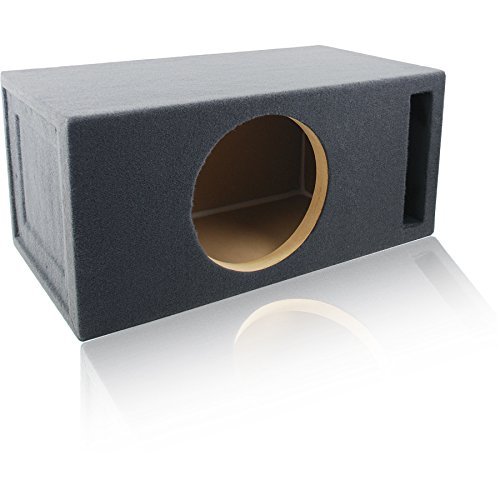
This enclosure from MSW is the gold standard for prefab 32 Hz boxes. Its internal volume is precisely 2.00 cubic feet, and the slot port is tuned to a verified 32 Hz. Users report that pairing it with a Sundown SA-12 or Skar DDX-12 produces sub-bass that shakes the vehicle without port noise or chassis flex.
The build quality is competition-grade: a double MDF front baffle adds rigidity where the driver mounts, and dado joints ensure an airtight seal. At 50 pounds, this box resists walking under hard acceleration. The true 32 Hz tune means rock and metal may lose some punch in the mid-bass, but rap, EDM, and reggae sound enormous.
Some buyers noted the front baffle wasn’t caulked from the factory and the terminal cup feels cheap — both easy fixes with silicone and a better cup. If you’re installing a high-power 12-inch sub and want a guaranteed 32 Hz response without building your own, this box delivers.
Why it’s great
- Verified 32 Hz slot-port tuning with 2.00 ft³ internal airspace
- Double 3/4″ MDF front baffle eliminates driver flex
- Phenomenal low-end extension for 12″ subs
Good to know
- Terminal cup is basic; some users upgraded to a heavy-duty binding post
- Port may produce audible chuffing in trunkless vehicles at extreme volumes
- Mid-bass output is reduced compared to a higher-tuned box
2. Ground Shaker Single 12″ Ported 30Hz Sub Box

Advertised as a 30 Hz enclosure but measured by multiple users at a true 31 Hz, this box gets exceptionally low. Its 2.45 cubic feet of internal airspace is generous, allowing subs like the Sundown Zv6 or Skar EVL to fully extend. One user reported replacing a 38 Hz box with this unit and gaining 8 Hz of usable low-end extension — a massive audible difference for rap and R&B.
The larger volume does come with a trade-off: control in the upper sub-bass range is softer than a tighter 2.0 ft³ box. Some owners noted port noise between 28-31 Hz, likely due to the port dimensions not being fully optimized for the claimed tuning. Still, the build is solid and the weight keeps it planted.
Check mounting depth and cutout diameter carefully — this box is designed for specific subs and not all 12-inch drivers will seat properly. If you’re after the deepest possible extension for a single 12-inch sub and don’t mind a slightly loose upper bass response, this box is a strong contender.
Why it’s great
- True 31 Hz tuning provides exceptional low-end depth
- Large 2.45 ft³ volume allows extended cone excursion
- Sturdy construction handles high-power subwoofers
Good to know
- Port noise reported at very low frequencies
- Actual tuning is ~31 Hz, not the advertised 30 Hz
- Not all 12″ subs will fit due to cutout diameter
3. CT Sounds TROPO-1X12D2 Loaded Ported Box

This is a complete loaded subwoofer system, not just an empty box. CT Sounds pairs their Tropo 12-inch driver in a kerf-port enclosure pre-wired to 1 ohm. The kerf port reduces turbulence compared to a square slot, and the advanced joinery — dado, miter, and rabbet — ensures an airtight chamber.
With 650 watts RMS on tap, this unit hits hard and low. Users consistently report clean, deep bass that outperforms larger 15-inch setups in the same price range. The box is sized at approximately 2.13 cubic feet, which leans toward the boomy side — great for rap and EDM, but less punchy for rock and metal.
The initial glue smell is strong and needs a few days to air out. Some buyers also noted the box volume may be slightly too large for the Tropo driver, causing some loss of control in the mid-bass. For a plug-and-play solution with a premium port design, this is a compelling package.
Why it’s great
- Complete system with high-quality 12″ driver pre-installed
- Kerf port minimizes chuffing for cleaner low-end
- Advanced joinery ensures vibration-free operation
Good to know
- Box volume may cause boominess; less ideal for rock/metal
- Strong glue smell requires airing out before installation
- Mid-bass punch is softer compared to a sealed enclosure
4. QPower QBOMB15HP Single 15″ 32 Hz Vented Box
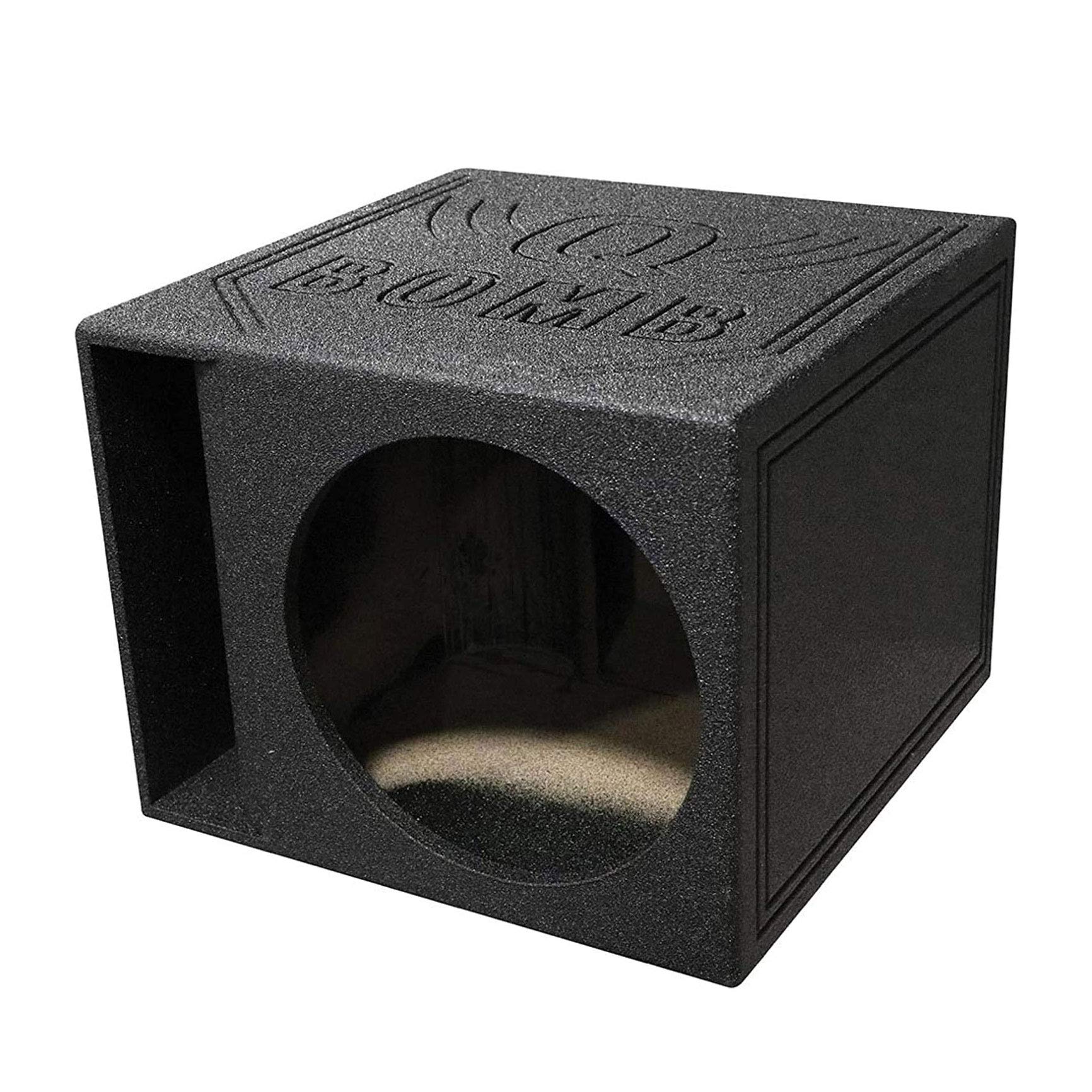
This is the only box in the lineup explicitly engineered and advertised for 32 Hz tuning with a 15-inch driver. The internal volume is 3.2 cubic feet with a curved slot port that helps reduce turbulence. The black bedliner finish adds durability, though some units arrived with cosmetic damage to the speaker cutout area.
Users feeding high-wattage 15-inch subs — like a Sundown X-15 or Skar ZVX — report earth-moving low-end without overheating the coil. One user measured 64 dB at 34 Hz, confirming the box’s ability to produce serious pressure at tuning frequency. The spring-loaded terminal is convenient for quick wiring but may need sealing to prevent air leaks.
The primary concern is fitment: some 15-inch subs with larger baskets or deeper mounting depths will not seat properly. Measure your driver’s outer diameter and mounting depth against the box specs before purchasing. For those with compatible hardware, this box delivers genuine 32 Hz performance at a reasonable price point.
Why it’s great
- True 32 Hz tuning for 15″ subwoofers
- Curved slot port reduces turbulence compared to sharp edges
- Bedliner coating protects against trunk wear
Good to know
- Some 15″ subs may not fit due to basket dimensions
- Spring-loaded terminal is basic and may leak air
- Bedliner finish can cause gasket sealing issues
5. Atrend Bbox Dual 12″ Pro Series Vented Enclosure

This dual 12-inch enclosure from Atrend uses a shared chamber design tuned to 35 Hz — slightly above the ideal 32 Hz but still capable of solid low-end. The 1-inch MDF front baffle is a standout feature at this price tier, providing the rigidity needed for dual high-excursion subs.
Buyers report excellent results with dual Alpine Type R and Sundown SA-12s, noting cleaner bass and better low-end extension compared to their previous boxes. The shared chamber design maximizes output efficiency, though some purists prefer individual chambers for channel separation. The box comes with basic terminal cups that benefit from an upgrade to 12-gauge wire.
The biggest caveat: some reviews indicated the front baffle is not true MDF but a softer composite that may wallow out over time with repeated sub removal. If you plan to swap subs frequently, this could become an issue. For a set-it-and-forget-it daily driver, this box provides strong value.
Why it’s great
- 1-inch front baffle reduces flex with dual high-power subs
- Shared chamber design maximizes output efficiency
- Solid low-end for Spanish music and modern rap
Good to know
- Tuned to 35 Hz, not the ideal 32 Hz for deepest bass
- Front baffle material may be softer than true MDF
- Terminal cups use thin 14/16 gauge pigtails
6. CT Sounds CT1X12 Single 12″ Kerf Port Box

The kerf-style port on this CT Sounds box is a rare find in the sub- range. Instead of a sharp 90-degree turn, the port is curved, which reduces air turbulence and allows the sub to play deeper and more accurately. The internal walls are lined with poly-fill to dampen standing waves.
With a 34 Hz tuning frequency, this box sits close to the 32 Hz target. Users pairing it with Sundown and CT Sounds ozone subs report spine-realigning bass that shakes windows from the driveway. The 3/4-inch MDF construction with dado and miter joints keeps vibration minimal even at high power levels.
The pre-soldered 12-gauge wires inside the box are a nice touch, though some users wished they were longer for easier sub installation. The box is also relatively heavy for its size, indicating dense MDF. For a single 12-inch setup that prioritizes clean low-end over ultimate SPL, this is a top contender.
Why it’s great
- Kerf port design reduces chuffing for cleaner bass
- Poly-fill lining damps internal standing waves
- High-quality dado and miter joints for airtight build
Good to know
- Internal wires could be longer for easier connection
- Tuned to 34 Hz, slightly above the ideal 32 Hz target
- Heavy construction may not suit all vehicle placements
7. QPower QBOMB Single 15″ Ported Enclosure

This 15-inch enclosure offers 3.85 cubic feet of airspace, making it one of the largest prefab boxes available. The middle slot port is 3 inches wide and 15 inches tall, providing ample port area for high-excursion drivers. The advertised tuning is not explicitly stated as 32 Hz, but customer measurements suggest it lands in the low 30s.
Users report running 1500-watt amplifiers through this box without structural failure, though one review noted a split in the MDF after four months of daily use. The bedliner finish is durable and weather-resistant, but the rough texture can cause gasket issues. The spring-loaded terminal is functional but basic.
For those wanting maximum volume for a 15-inch sub without investing in a custom build, this box offers substantial airspace at a low entry point. But the occasional durability concerns suggest it may not be ideal for permanent high-power installations. Consider reinforcing the seams with internal silicone if you plan to run 1000+ watts RMS.
Why it’s great
- 3.85 ft³ provides massive airspace for 15″ subs
- Bedliner finish is weather and corrosion resistant
- Handles 1000+ watts well in most installations
Good to know
- Some units developed MDF splits under sustained high power
- Bedliner roughness can cause sub gasket sealing issues
- Spring-loaded terminal uses small wire push connectors
8. Atrend Bbox 12SVSC Single 12″ Vented Box

This is the most affordable box on the list, and its compromises are clear. It uses 5/8-inch MDF — thinner than the industry standard 3/4-inch — and one review noted some panels were even 1/2-inch. The factory tuning is closer to 45-50 Hz, which entirely misses the 32 Hz target. Users report that lower bass notes are canceled by the high port tuning.
That said, some buyers have found creative workarounds: obstructing the port with a pool noodle to lower the tuning to ~31 Hz, or facing the port toward a solid surface. The box is solidly assembled with aliphatic wood glue and pneumatic nails, and it fits perfectly in specific vehicles like the 99-04 Mustang convertible and Grand Marquis.
For a true 32 Hz response out of the box, skip this one. But if you’re on a tight budget and willing to mod the port, it can be coaxed into producing decent low-end. The included terminal wire is too small for 500W RMS, so budget for upgrading the wiring.
Why it’s great
- Very affordable entry point for a single 12″ ported box
- Fits specific vehicle models perfectly
- Solid assembly with wood glue and dado joints
Good to know
- Factory tuning is ~45-50 Hz, not 32 Hz
- Uses 5/8″ MDF instead of standard 3/4″
- Terminal wires are insufficient for high-wattage subs
9. QPower QBOMB Single 10″ Vented Box

This 10-inch enclosure is the most compact option, with 1.4 cubic feet of airspace. It’s designed for shallow-mount subs and tight spaces, fitting behind seats in extended cab trucks. The tuning is not specified but customer reports suggest it’s in the 40-45 Hz range, making it better for punchy mid-bass than deep sub-bass.
Users pairing it with a Rockford Fosgate P3 10-inch and Zapco 800W amp in a Subaru Impreza reported very loud output with good sound quality, though gain had to be reduced. The bedliner finish looks aggressive but can cause seal issues with the sub gasket — adding foam tape resolves this. The terminal cup is the weakest point and may benefit from silicone resealing.
For a true 32 Hz experience, a 10-inch box is inherently limited by its smaller volume and port length. This box is best for those who need a shallow, space-efficient solution and prioritize output over ultra-low extension. If you have the room, a 12-inch box will always deliver deeper bass.
Why it’s great
- Compact size fits behind truck seats and small trunks
- High output for a 10″ subwoofer box
- Durable bedliner finish resists wear
Good to know
- Tuning is too high for true 32 Hz sub-bass
- Bedliner texture can cause sub gasket sealing problems
- Terminal cup is basic and may need resealing
FAQ
Can I use a 32 Hz box for rock or metal music?
How do I verify the actual tuning frequency of my box?
Is a 32 Hz box louder than a 40 Hz box?
What happens if my subwoofer’s recommended enclosure volume doesn’t match the box?
Final Thoughts: The Verdict
For most users, the best 32 hz subwoofer box winner is the MSW Enclosures 2.0 ft³ because it delivers verified 32 Hz tuning with competition-grade build quality and a double front baffle. If you want a loaded system that plays deep out of the box, grab the CT Sounds TROPO-1X12D2. And for a true 15-inch 32 Hz enclosure, nothing beats the QPower QBOMB15HP.