
A foam roller can mean the difference between a stiff, aching back and fluid, pain-free movement. But not all cylinders of foam are created equal — the wrong density, length, or surface texture can turn your recovery tool into a painful mistake that collects dust in the corner.
I’m Min — the co-founder and writer behind Gadgets Feed. I’ve spent countless hours analyzing the construction, density ratings, and real-world customer feedback on dozens of these self-massage tools to separate the ones that actually deliver myofascial relief from the ones that just look the part.
Whether you’re a seasoned athlete or someone finally addressing that nagging lower back knot, this guide breaks down what matters most in a back foam roller — from density to length to surface texture — helping you make a confident choice.
How To Choose The Best Back Foam Roller
Choosing a back foam roller isn’t as simple as grabbing the first round piece of foam you see. The density determines how deep the massage goes, the length dictates which muscle groups you can effectively roll, and the surface texture — smooth, bumpy, or contoured — changes the entire sensation and therapeutic effect.
Understand the Density Spectrum
Density is the single most important spec. Low-density foam squishes under body weight and fails to reach deep muscle knots. High-density EPP or polypropylene foam holds its shape and delivers the compressive force needed for genuine myofascial release. Beginners often mistake soft for “comfortable” — it’s actually inefficient for back pain relief.
Length Dictates Your Reach
A 12-inch roller works for calves and forearms, but a back foam roller needs at least 18 inches to support your full spine and shoulder blades simultaneously. Taller users or those wanting to roll both legs at once should look at 24-inch or 36-inch options. The wrong length forces you to stop mid-roll and reposition constantly.
Surface Texture and Shape Matter
Smooth rollers provide broad, even pressure — excellent for general muscle relaxation. Textured or contoured rollers (bumps, ridges, or grooves) dig into trigger points for targeted release. Half-round shapes offer more stability for balance exercises. If you have spinal sensitivity, a model with a spinal canal or central groove protects your vertebrae from direct pressure.
Quick Comparison
On smaller screens, swipe sideways to see the full table.
| Model | Category | Best For | Key Spec | Amazon |
|---|---|---|---|---|
| OPTP AXIS Firm Foam Roller | Premium | Full spine & tall users | 36″ x 6″ EPP foam | Amazon |
| Chirp Wheel XL | Premium | Sensitive backs & spinal safety | 7″ wide, spinal canal | Amazon |
| Teeter Massage Foam Roller | Mid-Range | Textured deep tissue work | 26″ x 5″ bumpy surface | Amazon |
| Rollga Foam Roller LITE | Mid-Range | Spine contour & beginners | 18″ contoured design | Amazon |
| Brazyn Morph Collapsible Roller | Mid-Range | Travel & storage | Collapsible, 1.5″ flat | Amazon |
| Amazon Basics High Density Roller | Entry-Level | Everyday basic rolling | 18″ polypropylene foam | Amazon |
| Yes4All Half Foam Roller | Entry-Level | Balance & gentle stretching | 24″ x 6″ half-round | Amazon |
In-Depth Reviews
1. OPTP AXIS Firm Foam Roller

The OPTP AXIS Firm Foam Roller earns its place at the top because its 36-inch length and ultra-firm EPP foam composition deliver the kind of consistent, deep pressure that actually releases chronic back tension. This is the same foam density you’d find in a physical therapy clinic — it doesn’t sag, dent, or soften after months of daily use. The smooth closed-cell surface wipes clean easily and won’t absorb sweat or odor over time.
For users over 5’10”, the 36-inch span is a game-changer. You can lie fully supine with your head and hips supported simultaneously, allowing a complete spinal roll from the sacrum to the upper traps without repositioning. The high density requires your body weight to do the work — expect a firm, intense sensation that targets knots with ruthless efficiency.
Customer reports note that users with degenerative arthritis and chronic back issues have eliminated months of pain after committing to twice-daily five-minute rolling sessions. The 6-inch diameter is standard, but the length creates a stability that shorter rollers simply cannot match.
Why it’s great
- Full 36-inch length supports entire spine at once
- Closed-cell EPP foam is durable and easy to clean
- Extremely firm density provides therapeutic-grade pressure
Good to know
- May be uncomfortably hard for beginners or those with bone-on-bone conditions
- Large size is not portable for gym bags or travel
2. Chirp Wheel XL

The Chirp Wheel XL stands apart from traditional cylinders because its patent-pending spinal canal groove prevents direct vertebral pressure while allowing deep muscle penetration on either side of the spine. This is a critical design detail for anyone with disc issues, facet joint sensitivity, or a history of spinal injuries. The 7-inch width is 30 percent wider than standard rollers, distributing body weight over a larger surface area for a gentler overall feel.
The 50 percent thicker padding compared to earlier Chirp models makes this the most forgiving option for those who find standard high-density rollers too harsh. It supports up to 500 pounds, so it accommodates a wide range of body types without bottoming out. The wheel-like shape allows you to roll sitting up, giving you more control over the depth of stretch compared to lying prone on a stationary roller.
Many users report that just five to ten minutes of daily rolling completely eliminates their back stiffness. The wide base provides excellent stability — you don’t need strong core balance to use it safely.
Why it’s great
- Spinal canal groove protects vertebrae during rolling
- Wide 7-inch platform distributes weight comfortably
- Thick padding ideal for sensitive backs
Good to know
- Wheel shape feels different — some users prefer traditional stationary rollers
- Large wheel may be oversized for smaller frames
3. Teeter Massage Foam Roller
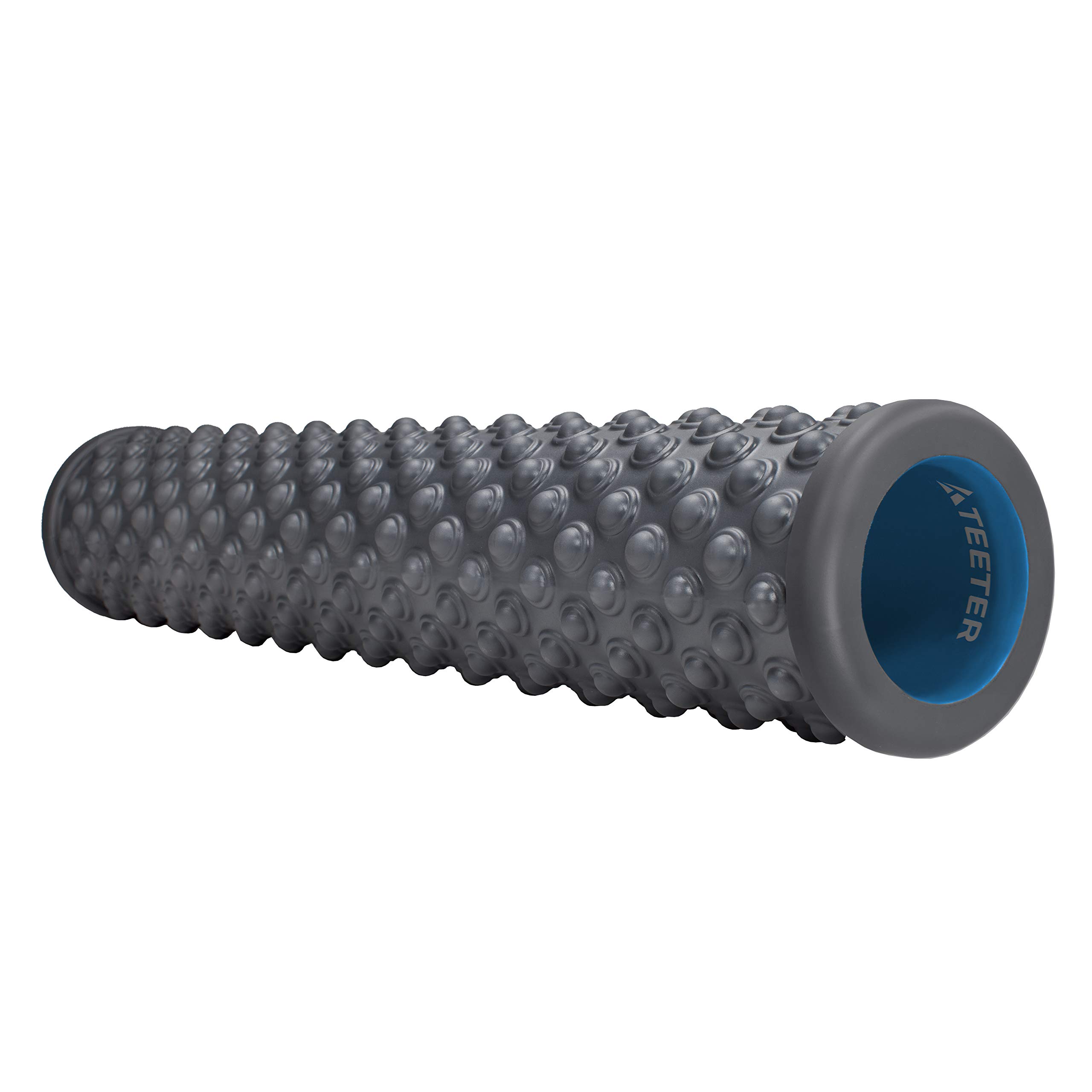
The Teeter Massage Foam Roller bridges the gap between a smooth beginner roller and an aggressive deep-tissue tool. Its bumpy surface texture mimics fingertip pressure, making it significantly more effective at breaking up adhesions and trigger points than a smooth roller. The 26-inch length is a sweet spot — long enough to roll both legs simultaneously and cover the full back, yet compact enough to store in a closet.
The construction features a firm plastic hollow core wrapped in PU foam, which keeps its shape indefinitely without developing flat spots. Teeter offers two firmness variants: the blue “less firm” version with subtle wavy ridges and the gray “more firm” version with aggressive bumpy texture. The gray version is the choice for users seeking pointed, focused pressure that simulates a therapist’s elbow.
The 5-inch diameter is slightly smaller than the standard 6-inch, which creates a narrower pressure point that can reach deeper into muscle bellies. Customers with wide shoulders report this length accommodates their frame better than shorter rollers.
Why it’s great
- Textured surface digs into trigger points effectively
- Two firmness options let you dial in intensity
- Solid core prevents shape deformation over time
Good to know
- Bumpy surface can feel aggressive on bare skin
- Surface may slip against clothing — works best on exposed skin
4. Rollga Foam Roller LITE

The Rollga Foam Roller LITE uses a patented contoured shape that differs fundamentally from cylindrical rollers. Its central groove cradles the spine while raised ridges on either side apply targeted pressure to the paraspinal muscles — the same tissues that cause most back stiffness. This geometry makes it far more effective at reaching shoulder blade tension and lower back knots than a flat cylinder could ever achieve.
The LITE version is 20 percent softer than the standard Rollga, making it accessible for beginners, older adults, or anyone with a low pain tolerance for deep tissue work. The 18-inch length is compact enough for travel but still provides adequate support for the full back when positioned diagonally. The ridges also work well for hamstring, glute, and IT band release.
Users who have tried conventional rollers and found them too broad for precise targeting report that the Rollga’s contour reaches deeper into specific spots without excessive pressure on the spine itself. The lightweight design at just 5.6 ounces makes it one of the easiest rollers to reposition mid-session.
Why it’s great
- Contoured shape targets paraspinal muscles more precisely
- LITE version is gentle enough for beginners
- Extremely lightweight and portable for travel
Good to know
- Contour design takes a session or two to get used to
- Softer density may break in faster than firmer rollers
5. Brazyn Morph Collapsible Foam Roller

The Brazyn Morph is the only truly collapsible entry on this list — it snaps into a sturdy 16-inch tube that supports up to 350 pounds, then collapses flat to just 1.5 inches thick for storage. This solves the primary objection to foam rollers: they are bulky and inconvenient to carry. The textured nub surface adds a myofascial release component that smooth rollers lack, mimicking the knobby feel of a handheld massage tool.
The firmness sits in the medium range — it’s softer than the OPTP or Teeter firm rollers, which makes it a more comfortable entry point for travel companions or household members with lower pain tolerance. The collapsible design holds up well after years of repeated opening and closing; users report three-plus years of regular use without the foam degrading or the locking mechanism failing.
At 1.5 pounds, this is the lightest roller in the premium tier. It’s ideal for professionals who travel frequently, gym-goers who hate carrying bulky gear, or anyone with limited home storage space who still wants reliable back pain relief.
Why it’s great
- Collapses flat to 1.5 inches for easy packing
- Textured nubbins provide effective myofascial release
- Supports up to 350 pounds despite lightweight build
Good to know
- Softer than dedicated high-density rollers
- 16-inch length is shorter than ideal for full back support
6. Amazon Basics High Density Foam Roller

The Amazon Basics High Density Foam Roller punches far above its entry-level price point by using genuine polypropylene foam that maintains its shape after months of consistent use. At 18 inches, it provides adequate length for supine spinal rolling for users under 5’8″, and the 6-inch diameter offers a familiar, predictable rolling experience. The blue speckled finish hides dirt and wear better than solid black or white rollers.
The firmness is genuinely high-density — this is not a soft, cheap foam that compresses fully under body weight. Customers report visible results including relief from sciatica, piriformis tightness, and general lower back soreness. The molded edges are slightly rounded to reduce discomfort as you roll over bony prominences like the sacrum or spinous processes.
One design consideration: some units arrive with a raised seam line from the molding process, though this can be easily trimmed with nail clippers. The 6.7-ounce weight makes it one of the lightest full-size rollers available, and the smooth surface wipes clean effortlessly after sweaty sessions.
Why it’s great
- Genuine high-density foam at an accessible price
- Lightweight and easy to carry for its size
- Molded edges reduce pressure on bony areas
Good to know
- Some units may have a molding seam that needs trimming
- 18-inch length is too short for tall users needing full spinal support
7. Yes4All Medium Firm Half Foam Roller
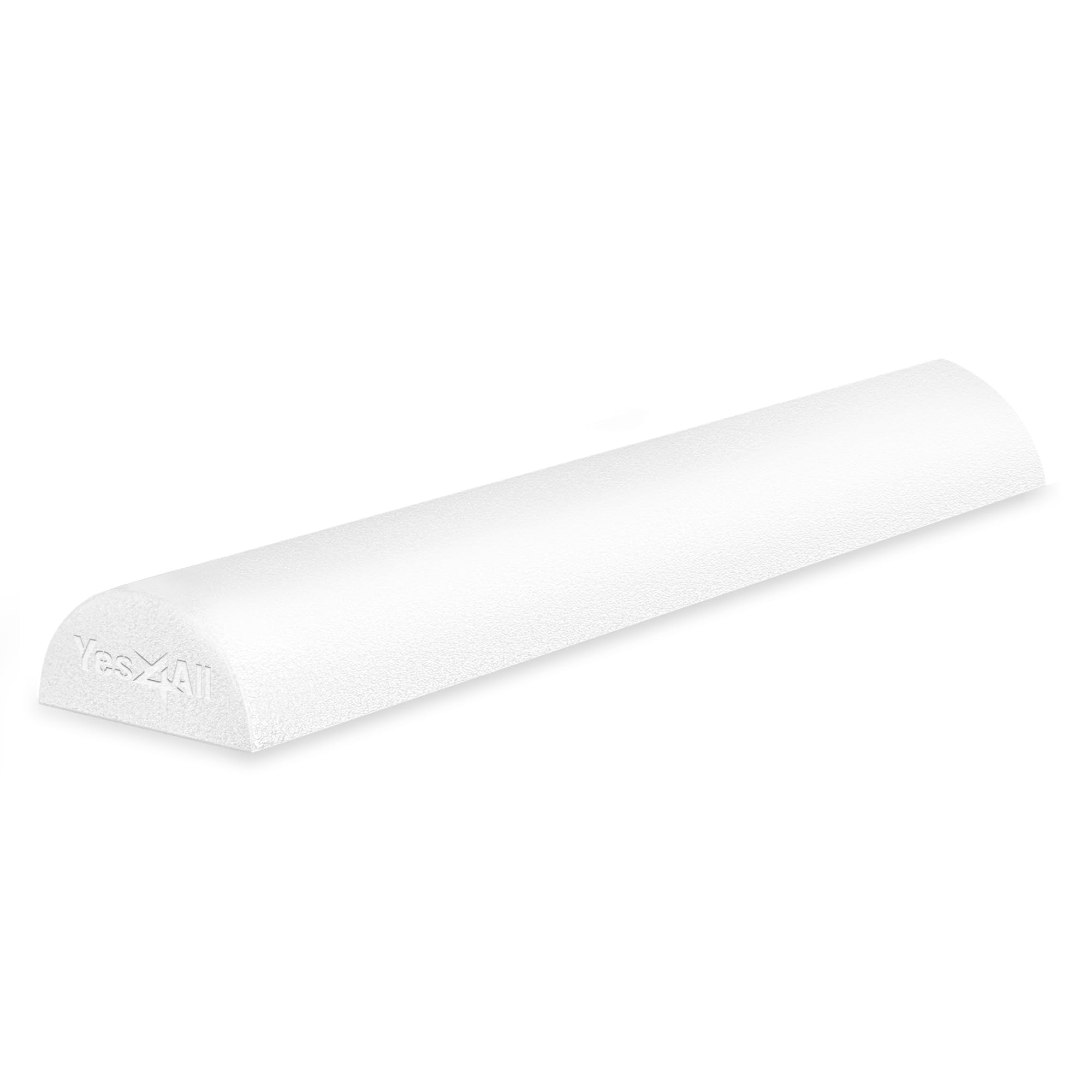
The Yes4All Medium Firm Half Foam Roller serves a different purpose than traditional round cylinders — the flat, curved half-round design creates a stable platform for balance exercises, spinal extension stretches, and core activation that a rolling cylinder cannot provide. Physical therapists frequently recommend this shape for patients recovering from back strain because the flat side prevents unwanted rolling during seated or supine exercises.
The PE foam material is 30 percent heavier and firmer than competitor half-round options, supporting up to 250 pounds without losing shape. The medium firmness sits in a sweet spot: firm enough to support your weight during cobra or bird dog exercises, yet soft enough to be comfortable for older or arthritic users who cannot tolerate high-density rolling. The 24-inch length is the most versatile size — it supports the full torso without being unwieldy.
Users report effective use for stretching the spine, releasing the quadratus lumborum, and performing gentle back extensions. The anti-slip surface texture helps keep it planted on yoga mats or carpet during dynamic movements.
Why it’s great
- Half-round design provides stability for balance and stretching exercises
- Medium firmness is accessible for beginners and older users
- Anti-slip surface stays put during dynamic movements
Good to know
- Does not function as a traditional rolling massage tool
- PE foam is firmer than standard half-round options — may feel hard to some
FAQ
How firm should a back foam roller be?
Is a half-round or round foam roller better for back pain?
Can a foam roller crack your back like a chiropractor?
Final Thoughts: The Verdict
For most users, the back foam roller winner is the OPTP AXIS Firm Foam Roller because its 36-inch length and uncompromising EPP density deliver the deepest, most consistent full-spine release without sagging or degrading. If you want spinal protection with a more forgiving feel, grab the Chirp Wheel XL. And for a compact travel companion that doesn’t sacrifice texture effectiveness, nothing beats the Brazyn Morph Collapsible Foam Roller.