
Building a reliable mountain or fat bike means choosing components that won’t leave you stranded mid-trail. Whether you’re fighting pinch flats on rocky descents, hunting for smoother gear shifts, or itching to upgrade your braking power, the right hardware transforms an ordinary ride into a confident, capable machine. The hard part is wading through endless spec sheets and conflicting reviews to find parts that actually fit and perform together.
I’m Min — the co-founder and writer behind Gadgets Feed. To craft this guide, I cross-referenced hundreds of verified customer experiences on Amazon to separate genuine performance upgrades from parts that look good on paper but fail in the real world. My focus was strictly on measurable specs like tube thickness, derailleur cog compatibility, and hydraulic brake modulation.
This roundup focuses exclusively on the best bike parts you can buy for trail-ready upgrades and essential replacements that actually hold up to regular abuse.
How To Choose The Best Bike Parts
Upgrading your bike is about more than just swapping in a shiny new component. Compatibility across drivetrain speed, hub standards, and frame routing defines whether a part bolts on perfectly or creates a cascade of additional purchases. Focus on three core areas to get it right the first time.
Drivetrain Compatibility: Speed, Clutch, and Cog Range
When replacing a rear derailleur, match the number of speeds (10-speed, 11-speed, etc.) exactly to your shifters. A derailleur with a long cage and a clutch, like the Shimano Deore M5100, handles a max 51T cog, which is essential for 1x conversions where hill-climbing range matters. The same logic applies to cranksets: bottom bracket standard (square taper vs. external) and chainring bolt pattern must align with your frame.
Stopping Power: Hydraulic vs. Mechanical
Hydraulic disc brakes deliver superior modulation and require less hand strength at the lever, making them the go-to for mountain and fat bikes. Key specs to check are hose length (front cables typically run 80–85 cm, rear 140–150+ cm for full-suspension frames) and rotor size. A 160 mm rotor offers balanced stopping force for most trail riding, but larger frames may need 180 mm rotors to avoid brake fade on long descents.
Puncture Protection and Tire Support
Self-sealing inner tubes with pre-loaded sealant address the most common trail frustration: sudden flats. The key metric is tube wall thickness — thicker butyl rubber resists sidewall cuts and supports heavy loads, especially on 26×4.0 fat bike tires. Check the valve type (Schrader vs. Presta) to match your rim hole diameter.
Quick Comparison
On smaller screens, swipe sideways to see the full table.
| Model | Category | Best For | Key Spec | Amazon |
|---|---|---|---|---|
| PNW Cascade Dropper Post | Dropper Post | Trail riding, external routing frames | 170 mm travel, 30.9 mm diameter | Amazon |
| Shimano Deore M5100 Derailleur | Derailleur | 1x conversions, 11-speed shifting | Max 51T cog, long cage | Amazon |
| TOBWOLF Hydraulic Disc Brakes | Brake Set | Upgrading from cable to hydraulic | 160 mm rotors, 81 cm front hose | Amazon |
| Shimano Altus Crankset | Crankset | Entry-level replacement, square taper | 42/32/22T, 175 mm arms | Amazon |
| DURATECH 41-Piece Tool Kit | Tool Kit | Home mechanics, drivetrain removal | Includes crank puller, chain riveter | Amazon |
| Race Face Atlas Stem | Stem | Aggressive riding, handlebar stiffness | 50 mm length, 31.8 mm clamp | Amazon |
| Self-Sealing Fat Bike Tubes | Inner Tube | Puncture protection on rough terrain | 26×4.0/4.5, 32 mm Schrader valve | Amazon |
In‑Depth Reviews
1. PNW Components Cascade Dropper Post

The PNW Cascade Dropper Post is the single best upgrade you can make to an older mountain bike without internal cable routing. Its sealed cartridge system delivers a smooth, consistent return speed that riders describe as noticeably better than budget posts, with minimal side-to-side play at full extension. Available in 125 mm, 150 mm, and 170 mm travel options, the 30.9 mm diameter version fits most hardtail frames perfectly.
Installation is straightforward for home mechanics — the external cable routing and clear lever actuation allow a complete setup in about 15 minutes. The saddle-pressure-to-drop mechanism feels intuitive on the trail, and the post survives hard landings and wet conditions without binding. Users specifically praise the fast, reliable rebound that transforms descending confidence on older frames previously limited by rigid seatposts.
The Cascade does not include a lever, cable, or housing, so factor that into your build budget. Some riders note a slight delay in return speed compared to more expensive posts, but the trade-off for the price point is well worth it. With a limited lifetime warranty and excellent customer support from PNW, this dropper post is the gold standard for external-routing bikes.
Why it’s great
- Sealed cartridge for smooth, consistent actuation in all conditions
- Three travel options (125/150/170 mm) to fit rider height and frame geometry
- Lifetime warranty and responsive customer service from PNW
Good to know
- Does not include lever, cable, or housing — must be purchased separately
- Return speed is slower than high-end models like Fox Transfer
2. Shimano Deore M5100 Rear Derailleur

The Shimano Deore M5100 is the derailleur that makes 1x drivetrain conversions accessible without sacrificing shifting quality. Its long cage and 51T max cog capacity mean you can pair it with a wide-range cassette for serious climbing gears, while the Shadow+ clutch keeps chain slap silent on rough descents. The aluminum construction keeps weight low at roughly 290 grams, and the direct-mount interface makes installation clean on modern frames.
Riders using this derailleur for conversions from 3×8 to 1×11 report crisp, reliable shifts even under load, with zero dropped chains after the clutch is engaged. The build quality is typical Shimano — precise manufacturing tolerances that translate to a quiet drivetrain that requires minimal adjustment after initial setup. It works seamlessly with M5100 shifters and standard 11-speed chains.
The M5100 does not include a cable or housing, and it requires a compatible Shimano 11-speed shifter for proper indexing. Some users note the clutch tension is stiff at first but relaxes after a few rides. For riders wanting a budget-friendly path to a modern 1x setup, this derailleur is the cornerstone component that makes the whole system work.
Why it’s great
- Shadow+ clutch eliminates chain drop on rough terrain
- Handles up to a 51T cassette for steep climbing range
- Aluminum body keeps weight reasonable at 290 g
Good to know
- Requires specific 11-speed shifters for correct indexing
- Clutch tension may feel stiff during the first few rides
3. TOBWOLF Hydraulic Disc Brake Set

The TOBWOLF hydraulic disc brake set is a massive leap forward for anyone still running cable-operated brakes on a mountain or fat bike. The set includes two pre-bled calipers with 160 mm stainless steel rotors, ceramic brake pads, and hoses measuring 81 cm (front) and 147 cm (rear) — enough to reach dropouts on full-suspension frames. The ceramic pad compound provides strong modulation without squealing, even in wet conditions.
Installation requires bleeding the system, and users consistently report excellent stopping power after a proper bleed. The calipers feature dual pistons that apply even pressure across the rotor, with tool-free reach adjustment on the levers. Riders upgrading from mechanical discs describe the difference as night and day, with one-finger braking control on steep descents. The 6-bolt rotor pattern fits standard hubs without adapters.
The hoses are pre-filled but not fully pre-bled, so some users needed to top up with mineral oil before achieving firm lever feel. The mounting bolts can strip easily if over-torqued, and the rotors may need a few hard stops to bed in completely. For the price point, this kit delivers hydraulic performance that rivals name-brand systems costing twice as much.
Why it’s great
- Ceramic pads deliver strong, quiet stopping power in wet conditions
- Long rear hose (147 cm) fits full-suspension frames without extenders
- Huge performance upgrade over cable-actuated mechanical disc brakes
Good to know
- System arrives with air in lines — a full bleed is required before use
- Mounting screws are soft and prone to stripping under load
4. Shimano Altus FC-M311 Crankset
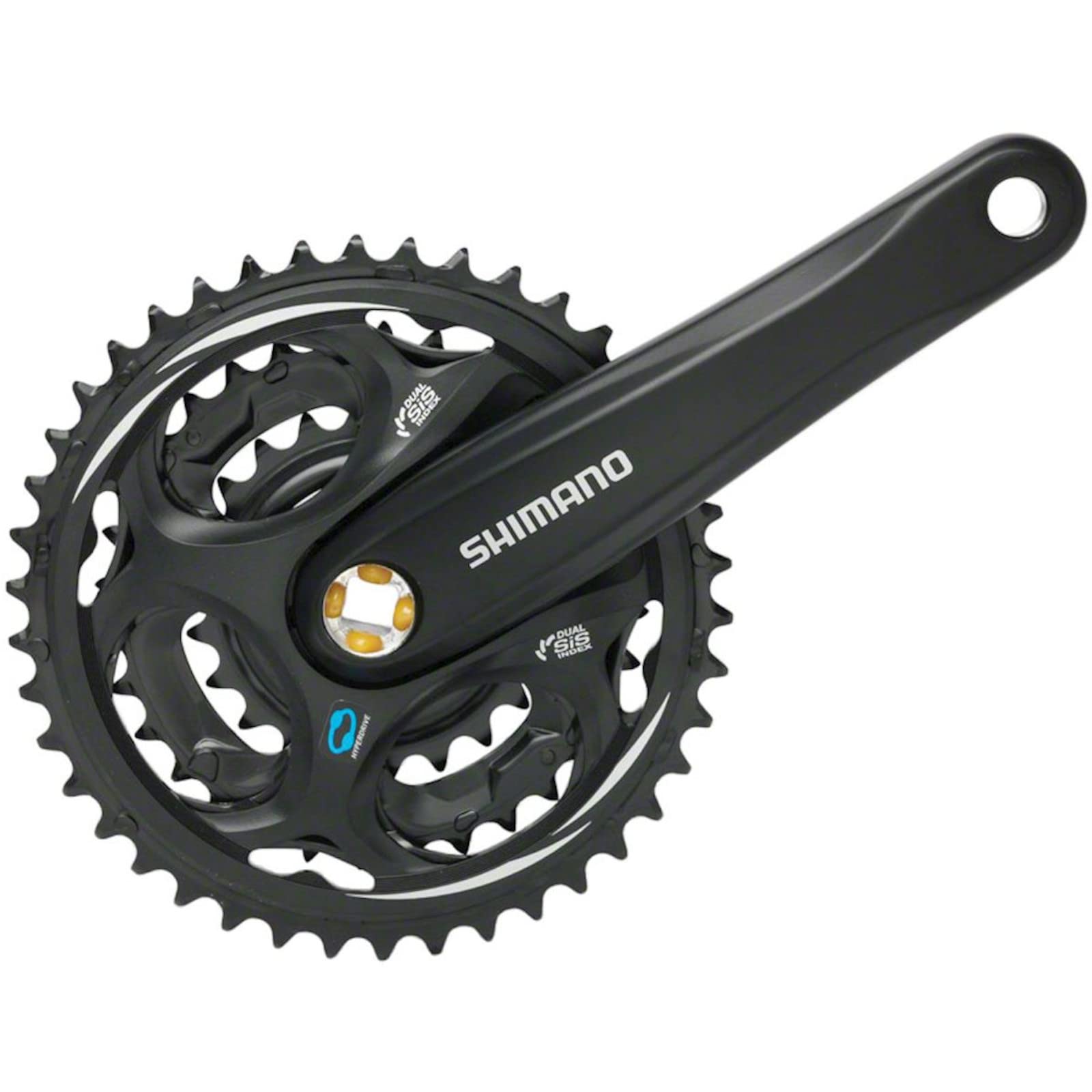
The Shimano Altus FC-M311 is a workhorse crankset built for replacement duty on entry-level mountain and hybrid bikes. It uses a standard square taper interface compatible with the most common bottom brackets, and the 42/32/22T chainring combo provides a wide gear range for climbing and cruising. The 175 mm crank arm length fits most adult riders well and offers strong pedal leverage.
Riders using this as a direct replacement on Schwinn, Diamondback, and similar bikes report it bolts on with zero issues, solving stripped pedal threads or bent arms on older cranksets. The steel chainrings last significantly longer than the soft aluminum rings found on many budget bikes. The included chainring bolts and crank dust caps make for a complete, clean installation without needing extra hardware.
The Altus crankset features a plastic outer guard that can crack on aggressive trail rides — some users report it snapping off after a season of use. The square taper interface is standard, but the crank fixing bolt torque must be carefully set to prevent creaking. For pure utility and price, this crankset is tough to beat for a budget bike rebuild.
Why it’s great
- Standard square taper fits almost any budget bottom bracket
- Steel chainrings are far more durable than entry-level aluminum rings
- Complete kit includes bolts, chainring bolts, and dust caps
Good to know
- Plastic outer chain guard cracks easily on rough terrain
- Square taper interface requires careful torque to avoid creaking
5. DURATECH 41-Piece Bike Repair Tool Kit

The DURATECH 41-piece bike tool kit is the answer to the question every new DIY mechanic asks: what tools do I actually need? It includes a chain riveter, crank puller, cassette lockring tool, tire levers, pedal wrench, and a full set of hex and Torx keys, all packed in a hard plastic case with cutouts for each tool. The steel construction is heat-treated for strength, and the tools feel solid for the price point.
This kit proved particularly useful for a 3×8 to 1×9 conversion, where the crank puller and chain tool were essential for removing the old drivetrain. The tools are designed specifically for bicycles, so the hex keys fit tight frame bolts without rounding, and the chain riveter pushes pins out cleanly. The case keeps everything organized in the garage or the back of a car for trailside repairs.
Some tools show wear with heavy use — the pedal wrench bent slightly after a few crank arm removals, and the T-handle hex keys lack the precision of pro-level brands like Park Tool. The kit is missing a proper tire patch kit and a chain whip for cassette removal, so you’ll need to supplement those for full drivetrain service. For the price, it’s the perfect starting point for learning bike maintenance without a huge investment.
Why it’s great
- Comprehensive 41-piece set covers drivetrain, brake, and frame work
- Heat-treated steel tools offer decent durability for home use
- Organized carry case keeps everything accessible for trailside repairs
Good to know
- Pedal wrench bends under high torque on stubborn crank arms
- Missing chain whip and patch kit for full cassette service
6. Race Face Atlas Mountain Bike Stem
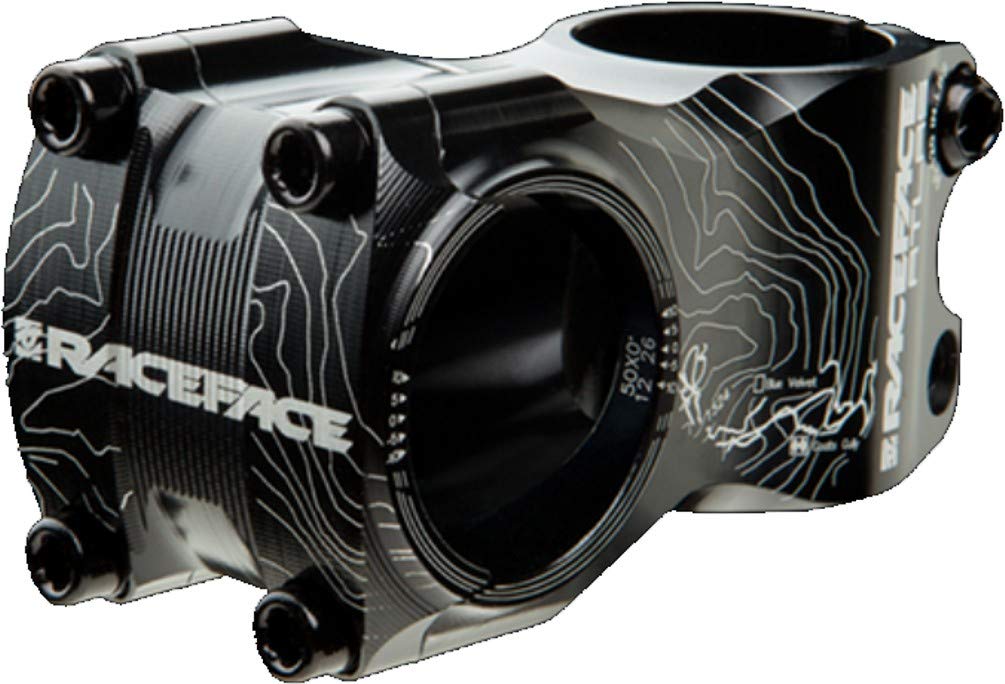
The Race Face Atlas stem is a premium cockpit component built for riders who demand stiffness and precision on aggressive terrain. Machined from 6061-T6 aluminum with a four-bolt faceplate and interlocking U-shaped geometry, it clamps the handlebar securely without creating stress risers that can crack cheaper stems. Weighing just 155 grams in the 50 mm length, it’s a lightweight addition that tightens steering response noticeably.
Riders replacing a longer stem with the 50 mm version report a significantly more comfortable riding position, bringing the handlebar 1.5 inches closer for better descending control. The finish is consistent and durable, with clean lines that match Race Face’s top-tier aesthetic. The four-bolt bar clamp ensures zero handlebar rotation even under hard braking and sketchy landings.
The Atlas stem lacks printed torque specs directly on the unit, which is unusual for a premium part — you’ll want to reference the online manual during installation. The price sits well above basic stems, making it a targeted upgrade for riders who have already dialed in their suspension and cockpit setup. For the weight weenie or the aggressive trail rider, this stem is a finished product that performs flawlessly.
Why it’s great
- Interlocking U-shaped faceplate eliminates handlebar stress risers
- Ultra-light 155 g weight saves grams where it matters most
- Four-bolt clamp keeps bars perfectly aligned during hard riding
Good to know
- No torque values printed on the stem — check online specs before install
- Premium price is justified only if you prioritize weight and stiffness
7. Self-Sealing Fat Bike Tubes (26×4.0/4.5)
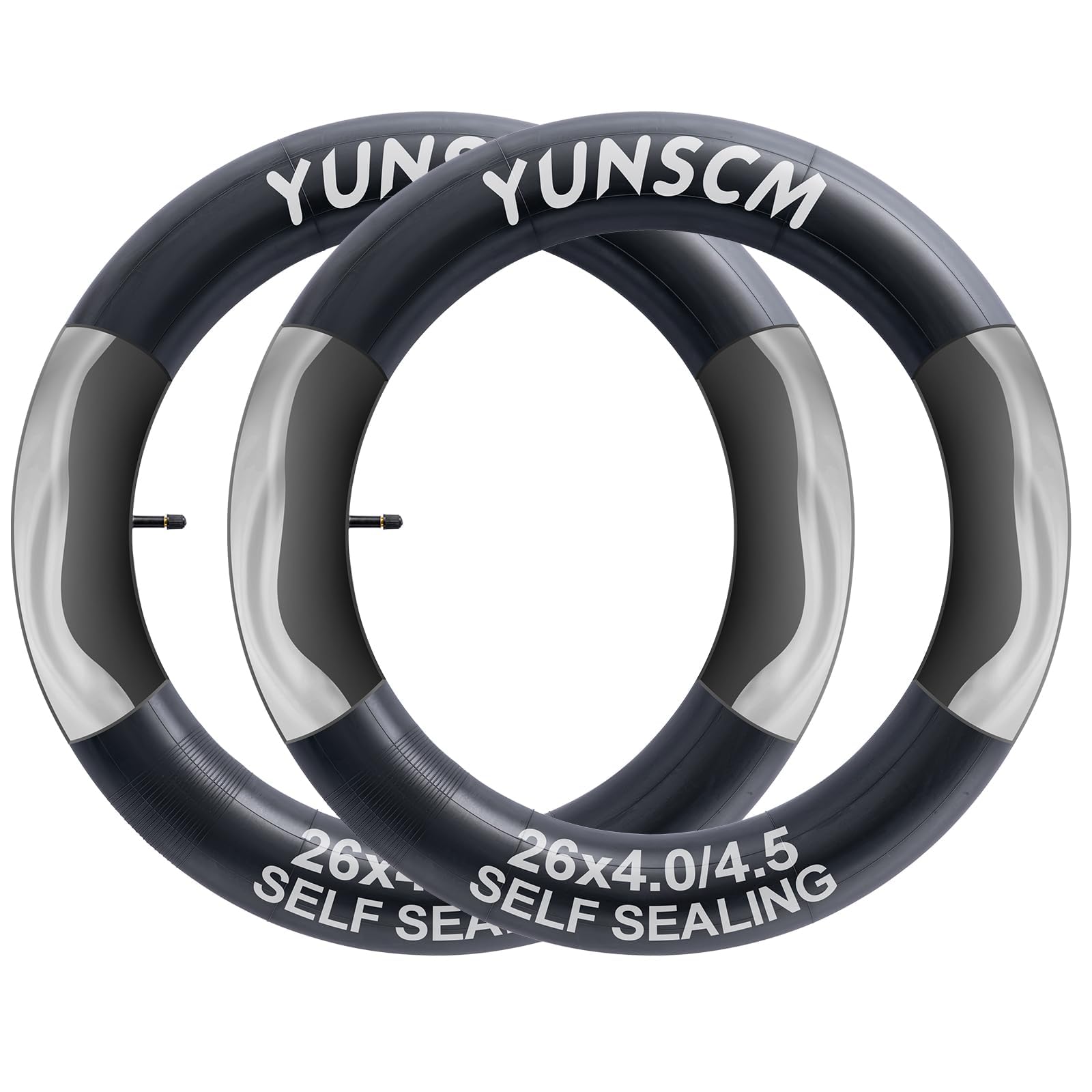
These 26×4.0/4.5 self-sealing fat bike tubes are built with pre-installed sealant and thick butyl rubber construction, designed specifically to tackle thorns, goatheads, and pinch flats on rough trails. The sealant circulates inside the tube and clogs small punctures within 5 to 8 seconds, meaning a nail hole doesn’t end your ride. The Schrader valve (32 mm) is compatible with standard fat bike rims without needing an adapter.
Riders putting hundreds of miles on sandy and rocky terrain report zero flats after installation, with the sealant handling Florida sand spurs and cactus spines that would kill standard tubes. The thicker butyl rubber also acts as a vibration damper, slightly improving ride quality on rigid fat bike frames. The two-pack covers both wheels, and the tubes fit all standard 26×4.0 and 4.5 tires without rubbing.
The sealant can leak out if the tube sits in direct sunlight at high pressure — one user reported a split seam after the tube was left inflated in the sun. These tubes are also heavy and bulky, making them unsuitable for carrying as spares in a saddle bag. For installation, avoid positioning the valve at the bottom during inflation to prevent sealant from blocking the core. They’re not perfect for every condition, but for puncture-prone terrain, they’re a game-changer.
Why it’s great
- Pre-installed sealant seals small punctures in seconds during a ride
- Thick butyl rubber adds puncture resistance and dampens trail vibration
- Two-pack provides complete coverage for both wheels out of the box
Good to know
- Sealant can clog the valve core if tube is inflated with valve at the bottom
- Heavy and bulky — not practical for carrying as a trail spare in a bag
FAQ
Can I use a 11-speed derailleur with 10-speed shifters?
Do self-sealing tubes replace the need for tubeless tire setups?
How often should I bleed hydraulic disc brakes?
Final Thoughts: The Verdict
For most users, the best bike parts winner is the PNW Cascade Dropper Post because it transforms the descending capability of any older mountain bike with external cable routing. If you want flawless shifting on a 1x drivetrain build, grab the Shimano Deore M5100 Derailleur for its reliable clutch and big-cog capacity. And for budget-conscious riders who just need to stop flats on the trail, nothing beats the protection of the Self-Sealing Fat Bike Tubes.