
Every frame in a short film lives or dies on the sensor behind the glass. The wrong camera clips your highlights in a sunrise exterior, hunts for focus during a dialogue scene, or forces you into a cramped workflow that saps creative energy. You need a body that delivers organic skin tones, reliable autofocus, and a codec that doesn’t choke your editing timeline — all without draining your entire production budget on the camera alone.
I’m Min — the co-founder and writer behind Gadgets Feed. I analyze technical specifications and market data across the cinema and mirrorless landscape, evaluating dynamic range figures, bit depth, codec flexibility, and real-world build quality to separate genuine filmmaking tools from over-hyped consumer bodies.
Whether you are grading a night scene in DaVinci Resolve or capturing a fast-moving subject with shallow depth of field, the best camera for short films balances sensor performance with practical features like reliable autofocus, robust codec support, and a lens ecosystem that fits your vision.
How To Choose The Best Camera For Short Films
Selecting a camera for narrative work demands weighing sensor characteristics against practical shooting needs. The full-frame vs. Super 35 debate, codec support for grading, and autofocus reliability for controlled takes are all critical factors that directly influence your final image.
Sensor Size and Dynamic Range
Full-frame sensors (like the Panasonic S5II and Sony A7S III) provide shallower depth of field for isolating subjects against blurred backgrounds, while Super 35 sensors (like the Blackmagic 6K Pro and Sony FX30) offer a wider lens selection and often better rolling shutter characteristics. Look for at least 13 stops of dynamic range — that is the safety margin that preserves highlight detail in a window-lit interior without crushing your shadows. Dual native ISO is another priority, because it keeps noise low across two distinct sensitivity ranges, which is a lifesaver when your scene transitions from a lighted set to practical-only lighting.
Codec and Color Science
The codec determines how much latitude you have in the edit bay. RAW formats like Blackmagic RAW, REDCODE RAW, and ProRes RAW give you full control over white balance, ISO, and color temperature in post. For filmmakers who want a more streamlined pipeline, 10-bit 4:2:2 Long-GOP or All-I codecs (available on the Sony FX30 and Panasonic S5II) provide substantial grading latitude without ballooning file sizes. Log profiles such as V-Log, S-Log3, and BMD Film are essential for retaining highlight and shadow detail before the grade.
Build, Audio, and Monitoring
Short films are often run-and-gun productions with skeleton crews. A camera with a robust body, internal ND filters (Blackmagic 6K Pro), mini XLR audio input (Blackmagic Pocket series), and a large bright LCD for focus pulling saves you from rigging external monitors. Active cooling or heat-dissipation mechanics (S5II, FX30, Nikon Z 8) let you record 4K 10-bit or 6K proxy clips without thermal shutdowns during extended takes.
Quick Comparison
On smaller screens, swipe sideways to see the full table.
| Model | Category | Best For | Key Spec | Amazon |
|---|---|---|---|---|
| Sony A7S III | Full-Frame | Low-light & Pro Hybrid Use | 12.1MP, 15+ stops DR, 4K 120fps 10-bit | Amazon |
| Nikon Z 8 | Full-Frame | Pro Hybrid 8K/4K Work | 45.7MP, 8K/60p, 12-bit N-RAW | Amazon |
| Nikon RED Z Cinema | Cinema | True RED Color Science | 6K FF, 15+ stops, 32-bit float audio | Amazon |
| Canon EOS R5 | Full-Frame | High-Res Stills & 8K Video | 45MP, 8K RAW, DPAF | Amazon |
| Blackmagic 6K Pro | Cinema | Pro Res/RAW Workflow | 6K Super35, 13 stops, Internal NDs | Amazon |
| Panasonic S5II | Full-Frame | Best Value Full-Frame Hybrid | 24.2MP, 14+ stops V-Log, 6K Open Gate | Amazon |
| Sony FX30 | Super35 | Cinema Line Indie Film | 20.1MP APS-C, S-Cinetone, Dual Base ISO | Amazon |
| Blackmagic 4K | Cinema | Entry-Level RAW Cinema | MFT, 13 stops, 4K RAW, DaVinci included | Amazon |
| Fujifilm X-T30 III | APS-C | Portable Film Simulation | 26.1MP, AI AF, Compact Body | Amazon |
| Panasonic G85 | MFT | Budget IBIS & 4K Intro | 16MP MFT, 5-Axis IBIS, 4K 30fps | Amazon |
| Canon T7 Bundle | DSLR | Entry-Level Still/Light Video | 24.1MP APS-C, 1080p, 9-Point AF | Amazon |
In‑Depth Reviews
1. Panasonic LUMIX S5II Mirrorless Camera, 24.2MP Full-Frame with 20-60mm F3.5-5.6 L Mount Lens
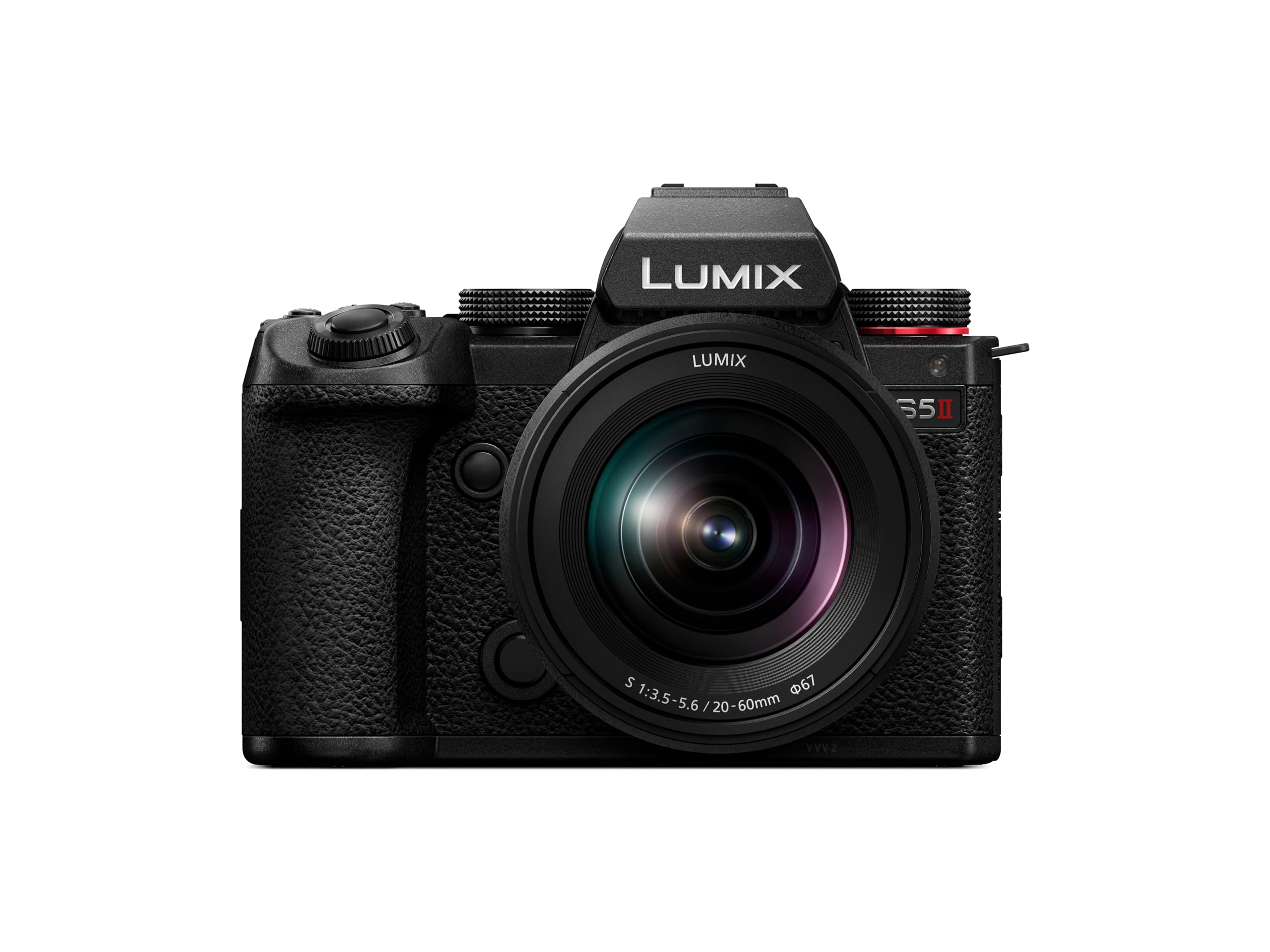
The Panasonic S5II solves the brand’s historical autofocus weakness with a Phase Hybrid AF system that locks onto faces and eyes with Sony-like confidence during 4K 60p takes. Its 24.2-megapixel full-frame sensor captures 14+ stops of dynamic range in V-Log, providing a wide latitude for color grading in short film projects. The included 20-60mm f3.5-5.6 kit lens delivers a useful wide-to-standard zoom range right out of the box.
Active I.S. technology compensates for walking motion during handheld shooting, reducing the need for a gimbal on certain narrative setups. The heat-dispersion mechanism — a combination of a small fan and efficient heat sink — enables truly unlimited 4:2:2 10-bit recording without thermal shutdown, which is critical for long interview scenes or documentary-style short film takes.
L-Mount alliance access (Sigma, Leica, Viltrox, Blackmagic) expands creative lens choices over time. The menu system is intuitive after a short learning curve, though the battery life is modest compared to larger full-frame bodies. The Real Time LUT feature lets you bake-in color grades in-camera, useful for fast-turnaround projects.
Why it’s great
- Phase Hybrid AF solves previous Panasonic focus hunting issues
- Unlimited 4:2:2 10-bit recording with active cooling
- Excellent V-Log dynamic range for post-production grading
Good to know
- Kit lens is soft wide open compared to prime options
- Battery life limits extended all-day shoots
- L-Mount lens library is smaller than Sony E or Canon RF
2. Sony Alpha 7S III Full-Frame Mirrorless Digital Camera Body

The A7S III remains a benchmark for narrative-focused hybrid shooters who demand exceptional low-light performance. Its 12.1-megapixel Exmor R sensor is optimized for photon collection rather than resolution, yielding clean images at ISO 12,800 that challenge dedicated cinema cameras. The 15-plus stop dynamic range in S-Log3 gives you ample room to push shadows and recover highlights without banding.
The BIONZ XR processor enables 4K 120fps recording with full pixel readout and 10-bit 4:2:2 depth in all codec modes — XAVC S, XAVC HS, and XAVC S-I. This flexibility lets you choose between file size efficiency and maximum grade-ability based on your project’s requirements. The 759-point phase-detection autofocus with real-time tracking is the most reliable in its class for dialogue scenes with moving subjects.
Build quality includes a robust magnesium alloy chassis and a high-resolution 9.44-million-dot OLED viewfinder. The heat management system allows for unrestricted recording times in warm conditions. It uses affordable CFexpress Type A and SD UHS-II dual card slots, though the 12.1-megapixel sensor limits stills resolution for hybrid photographers.
Why it’s great
- Industry-leading low-light sensitivity with clean ISO 12,800
- Reliable 759-point phase detect autofocus tracking
- Versatile codec support with 4K 120fps 10-bit
Good to know
- 12.1MP sensor limits high-resolution still photography
- Requires expensive CFexpress Type A for high bitrate modes
- S-Cinetone needs grading to match log profiles
3. Nikon Z 8 Professional Full-Frame Mirrorless Hybrid Camera

The Nikon Z 8 condenses Z 9 flagship performance into a smaller body that is more practical for independent short film crews. Its 45.7-megapixel stacked CMOS sensor with EXPEED 7 engine drives internal 8K/60p and 4K/120p recording in 12-bit N-RAW or ProRes RAW, giving you the resolution headroom to punch into a 4K timeline for reframing without quality loss. The 493-point hybrid autofocus uses deep learning to detect people, animals, and vehicles down to -9 EV.
The dual-stream design means the camera processes a high-resolution still and a video stream simultaneously, enabling instant autofocus responses even during 8K recording. Pre-burst capture with 120fps raw shooting is useful for capturing unpredictable action moments in narrative scenes. The body includes a single CFexpress Type B slot and an SD UHS-II slot, a compromise over the Z9’s dual CFexpress.
Heat management is improved over earlier Nikon bodies but extended 8K sessions can still trigger thermal warnings. The battery life requires planning for long shoot days, typically needing three or more EN-EL15c cells. The N-Log and RED LUT compatibility introduced via firmware updates significantly improves color grading flexibility compared to earlier Nikon cameras.
Why it’s great
- Internal 8K/60p 12-bit N-RAW and ProRes RAW
- Advanced deep-learning autofocus with subject tracking
- Substantially smaller and lighter than the Z9
Good to know
- Extended 8K recording can trigger thermal limits
- Mixed CFexpress and SD card slots
- Requires heavy battery investment for full shoots
4. Canon EOS R5 Mirrorless Camera Body, Full-Frame Hybrid, 8K Video

The Canon EOS R5 combines a 45-megapixel back-side illuminated sensor with the DIGIC X processor to deliver 8K RAW internal recording at up to 30fps. For short films, this resolution enables cropping and panning in post while maintaining a 4K finish. The Dual Pixel CMOS AF II system covers approximately 100% of the sensor area with 1,053 AF points, providing smooth and accurate focus pulls during character-driven dialogue.
The 4K HQ mode oversamples from the 8K sensor to produce exceptionally detailed 4K footage with reduced moiré. The in-body image stabilization provides 5 stops of correction, usable for handheld narrative work. The body includes a bright electronic viewfinder and a fully articulating touchscreen for tricky angles.
Overheating concerns have been addressed with firmware updates, though extended 8K recording in warm environments still requires monitoring. Battery life is adequate but not outstanding for long narrative shoots. The RF mount gives access to Canon’s excellent L-series lenses with fast autofocus response, but third-party lens options remain limited compared to Sony E-mount.
Why it’s great
- 8K RAW internal recording with superb detail
- Excellent Dual Pixel CMOS AF with near-full-sensor coverage
- Oversampled 4K HQ mode reduces aliasing
Good to know
- Extended 8K recording can trigger heat warnings
- Limited third-party RF lens selection
- Battery life demands spares for full-day shoots
5. Blackmagic Design Pocket Cinema Camera 6K Pro

The Blackmagic Pocket Cinema Camera 6K Pro is purpose-built for narrative filmmaking with a Super 35 sensor that records 6144 x 3456 resolution in Blackmagic RAW. The 13-stop dynamic range and dual native ISO up to 25,600 deliver professional-grade latitude for both controlled studio lighting and natural-light exteriors. The built-in 2, 4, and 6-stop ND filters simplify exposure control without attaching matte boxes — a major convenience for run-and-gun short film crews.
The 5-inch tilting HDR LCD screen has 1,500 nits of brightness, making it usable in direct sunlight without an external monitor. The Canon EF lens mount opens up a vast, affordable vintage and modern lens ecosystem. Recording options include ProRes up to 4K and 12-bit Blackmagic RAW, fully compatible with DaVinci Resolve Studio, which is included with the camera.
The lack of continuous autofocus means you must pull focus manually or rely on an external follow-focus system with a gimbal. The NP-F570 battery provides longer life than the earlier Pocket 4K battery, but the camera is still power-hungry for extended sessions. The auto exposure system lacks ISO control and exhibits jarring jumps in variable lighting scenes.
Why it’s great
- Internal ND filters for fluid exposure control
- 13-stop dynamic range with Blackmagic RAW workflow
- 5-inch tilting HDR LCD for bright sunlight
Good to know
- No continuous autofocus; requires manual focus rigging
- Battery life is limited for all-day shooting
- Auto exposure jumps can be disruptive in variable scenes
6. SONY Cinema Line FX30 Super 35 Camera

The Sony FX30 brings the Cinema Line feature set — S-Cinetone, Cine EI Quick modes, and user LUT embedding — to a Super 35 body at a price point accessible for indie short films. Its 20.1-megapixel Exmor R APS-C sensor oversamples 6K to produce highly detailed 4K footage with wide dynamic range. Dual base ISO (800 and 2500) ensures clean shadows in low-light scenes, crucial for moody narrative interiors.
The active cooling system eliminates overheating even during long 4K 120fps takes, a significant advancement over earlier Sony bodies. The 495-point phase-detect autofocus system with real-time animal and eye tracking simplifies capturing fast-moving subjects in narrative scenes. S-Cinetone provides a pleasing cinematic look straight out of the camera, reducing grading time for short-form projects.
No in-body image stabilization is a noticeable omission for handheld work, requiring reliance on a gimbal or OSS lenses. The E-mount lens ecosystem is the broadest in the industry, offering cost-effective cine primes and zooms from Sony, Sigma, and Tamron. Battery life with the NP-FZ100 is acceptable for moderate shooting days but will need replacement for heavy production.
Why it’s great
- 6K oversampled 4K with S-Cinetone color science
- Active cooling for unlimited 4K 120fps recording
- Cinema Line features including user LUT embedding
Good to know
- No in-body stabilization; requires gimbal or OSS glass
- APS-C crop factor reduces wide-angle lens options
- Battery life adequate but not stellar
7. Nikon RED Z Cinema | ZR Cinema Camera with 32-Bit Float Audio

The Nikon RED Z Cinema ZR camera merges RED’s color science with Nikon’s engineering, creating a 6K full-frame cinema body that records REDCODE RAW (R3D NE) footage with 15-plus stops of dynamic range. The 273-point hybrid autofocus and Dual Base ISO (800 and 3200) give you both reliable focus and clean low-light performance on a narrative set. The 32-bit float audio capability records two channels via the built-in preamp, capturing sound that cannot clip — a functional advantage for location sound capture.
The 4-inch DCI-P3 touchscreen is bright and swiveling, though the camera is designed to be rigged with external monitoring for professional sets. It weighs only 1.18 pounds, making it remarkably lightweight for a cinema camera. The standard REDCODE RAW workflow gives you the same grading latitude as RED’s higher-end Komodo and V-RAPTOR systems.
Recording high-resolution R3D files demands fast, high-capacity CFexpress Type B storage, which is not inexpensive. Premiere Pro currently lacks direct support for R3D NE raw — you may need DaVinci Resolve or a specific RED plugin. The camera does not include a charger in the box, and boot-up is faster than the Komodo but still requires a moment before you can roll.
Why it’s great
- True RED color science with REDCODE RAW recording
- 32-bit float audio eliminates clipping in dialogue capture
- Extremely lightweight at 1.18 lbs for a cinema body
Good to know
- Requires expensive CFexpress Type B media
- R3D NE not fully supported in Premiere Pro
- No charger included in the box
8. Blackmagic Design Pocket Cinema Camera 4K

The Blackmagic Pocket Cinema Camera 4K remains the most affordable entry point into true RAW cinema production. Its 4/3-inch sensor with 4096 x 2160 native resolution delivers 13 stops of dynamic range and dual gain ISO up to 25,600, producing images that grade beautifully in DaVinci Resolve Studio (included). The MFT lens mount opens up affordable vintage glass and compact modern zooms ideal for minimal-crew narrative work.
Recording options include SD/UHS-II, CFast 2.0, and USB-C external SSD storage, providing flexible, low-cost media workflows. The 5-inch LCD display is bright enough for basic monitoring without an external screen. The included DaVinci Resolve Studio key eliminates the cost barrier for professional color grading and editing.
The camera lacks continuous autofocus, in-body image stabilization, and a flip-out screen, making it less suitable for run-and-gun or vlog-style production. Battery life with the standard LP-E6 cell is approximately 30 minutes, so an external power solution or extended battery grip is essential for full-day shoots. The 1080p crop factor in windowed modes is restrictive when you need full sensor readout.
Why it’s great
- Affordable RAW cinema workflow with included DaVinci Resolve
- USB-C external SSD recording for low-cost media
- 13-stop dynamic range with dual gain ISO
Good to know
- No continuous autofocus or IBIS
- Battery life around 30 minutes requires external power
- Flip screen absent; 1080p crop in windowed modes
9. FUJIFILM X-T30 III Mirrorless Camera Body, Silver
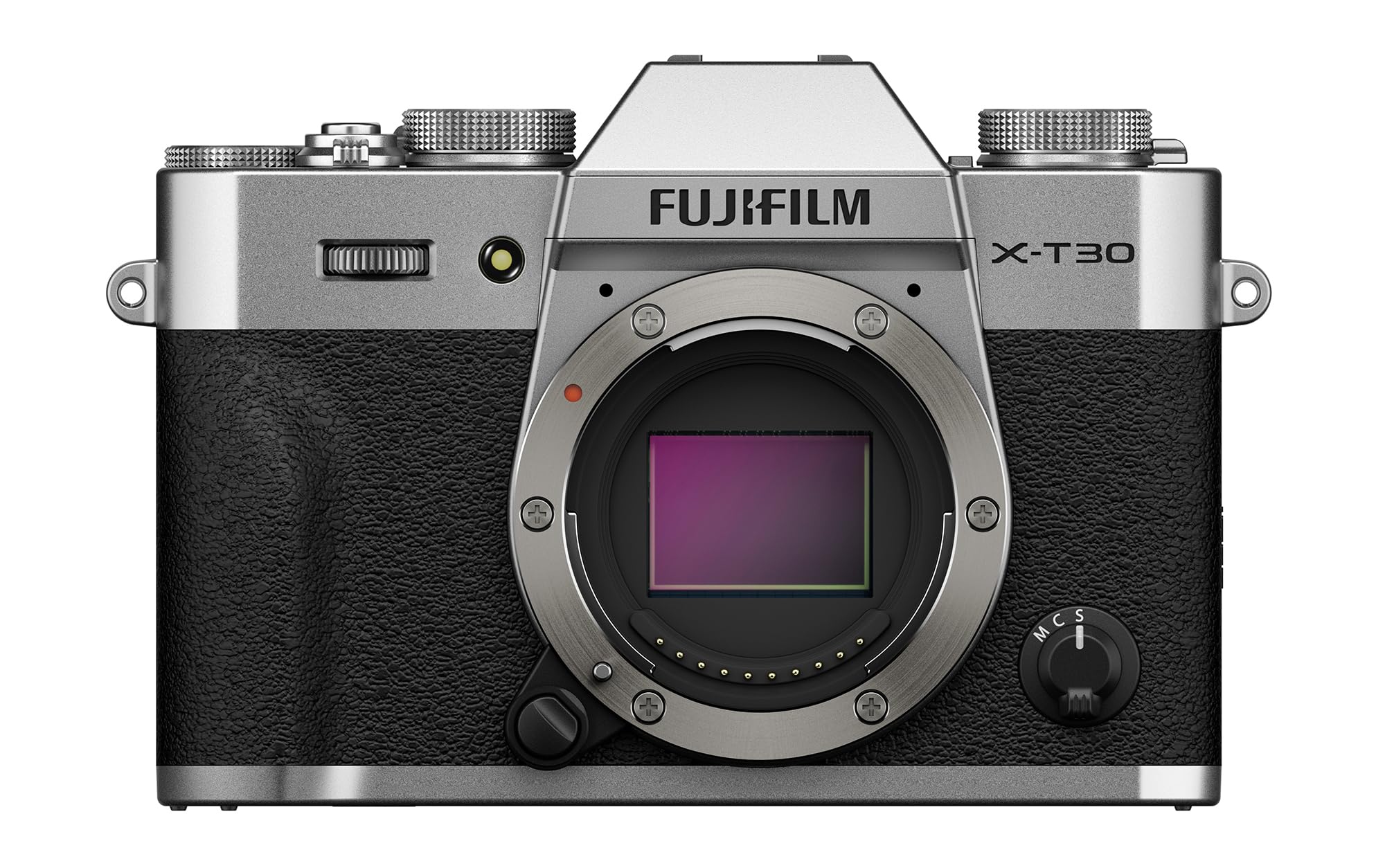
The Fujifilm X-T30 III is built around the X-Trans sensor and 20 built-in Film Simulations, offering in-camera looks that can serve as creative LUTs for short films. The AI-powered subject detection autofocus with 179 hybrid points reliably tracks faces and eyes, simplifying single-operator shoots. The compact, retro-styled body is small enough for everyday carry, making it a stealthy second camera for B-roll and behind-the-scenes content.
The XC13-33mm F3.5-6.3 OIS kit lens provides optical stabilization and a wide-to-standard zoom range suitable for establishing shots. The auto mode lets non-technical collaborators capture usable footage without extensive training. The camera connects smoothly to a smartphone for quick footage transfer and remote control.
Video resolution tops out at 4K 30fps in 10-bit 4:2:0, which limits grading flexibility compared to dedicated cinema cameras. The lack of internal 10-bit 4:2:2 recording means that demanding post-production work may introduce banding. The small body puts key video controls behind menus rather than dedicated dials, slowing manual adjustments on set.
Why it’s great
- In-camera Film Simulations for creative looks
- AI-powered face and eye tracking AF
- Extremely compact and travel-friendly
Good to know
- Limited to 4K 30fps 10-bit 4:2:0 internal
- Video controls buried in menus
- No headphone or full-size HDMI port
10. Panasonic LUMIX G85 4K Digital Camera with 12-60mm Power O.I.S. Lens

The Panasonic G85 democratizes stabilized 4K video for beginners making short films on a tight budget. Its 16-megapixel Micro Four Thirds sensor with no low-pass filter produces sharp detail, and the class-leading 5-axis in-body dual image stabilization works in both photo and video modes to deliver clean handheld shots in low-light conditions. The 12-60mm Power O.I.S. kit lens extends stabilization further for walk-around interior coverage.
4K QFHD (3840 x 2160) recording is complemented by exclusive LUMIX 4K Photo and Post Focus modes, allowing you to extract high-res stills and adjust focus points after capture. The electronic viewfinder (2,360K dots) and rear 3-inch tilting touchscreen provide clear monitoring options for handheld and tripod work.
Autofocus performance during 4K video is sluggish in dim conditions, requiring careful baseline setup for narrative scenes. The micro four-thirds sensor produces more noise than larger sensors at high ISO, limiting its use in very low-light environments. The included kit lens delivers good clarity but lacks the aperture speed for shallow depth of field close-ups.
Why it’s great
- Exceptional 5-axis in-body stabilization for handheld use
- Weather-sealed magnesium alloy build at budget price
- 4K 30fps with dual stabilization system
Good to know
- Autofocus hunts in low-light 4K video
- MFT sensor noise at higher ISO values
- Kit lens aperture limits shallow depth of field
11. Canon EOS Rebel T7 DSLR Camera with Double Zoom Kit Bundle
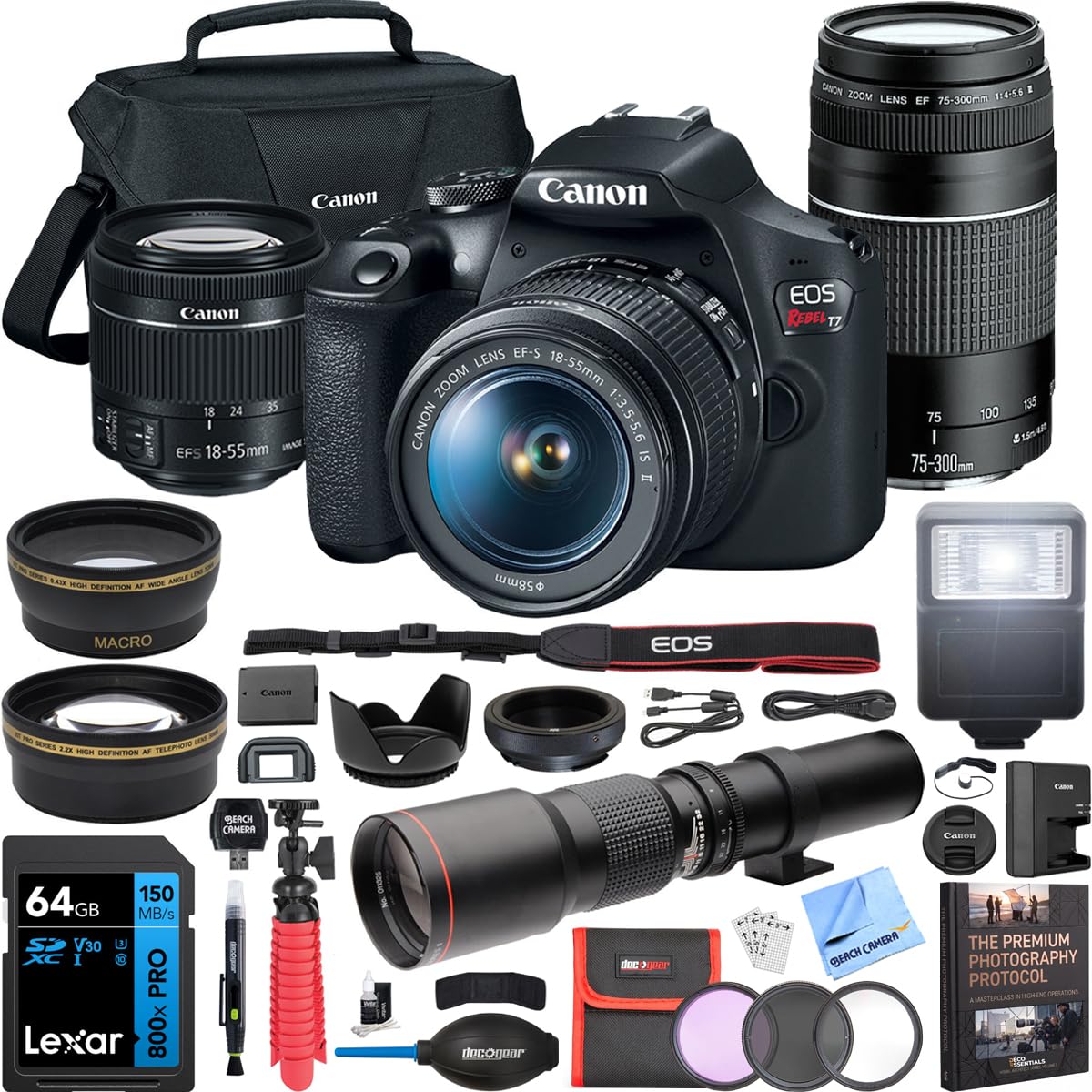
The Canon Rebel T7 bundle offers the lowest barrier to entry for learning the fundamentals of exposure and composition for short filmmaking. The 24.1-megapixel APS-C CMOS sensor with DIGIC 4+ image processor captures 1080p Full HD video at up to 30fps. The bundle includes the EF-S 18-55mm and EF 75-300mm zoom lenses plus a 500mm preset telephoto, covering a wide range of focal lengths for experimentation.
The 9-point AF system uses phase detection, adequate for static subjects but limited for tracking movement during narrative scenes. Built-in Wi-Fi and NFC allow remote shooting and image transfer to a smartphone for quick social media edits. The optical viewfinder and 3-inch LCD display provide basic monitoring, though the LCD’s 920K dots are low resolution by modern standards.
The Rebel T7 records only 1080p video, lacking 4K resolution and high-frame-rate slow motion, limiting its usefulness for serious production. The 3 fps continuous shooting rate is slow for capturing action details. The battery life report is inconsistent, with some users reporting rapid drain after minimal use, though this may vary by unit.
Why it’s great
- Massive lens bundle for exploring different focal lengths
- Simple interface for learning exposure fundamentals
- Canon EF/EF-S lens compatibility with affordable primes
Good to know
- Limited to 1080p video with no 4K or slow-motion
- 9-point autofocus struggles with moving subjects
- Battery life can be inconsistent across units
FAQ
Is full-frame or Super 35 better for short filmmaking?
Do I need RAW recording for a short film?
What does 32-bit float audio mean for film direct?
Should I prioritize IBIS or a gimbal for handheld shots?
Final Thoughts: The Verdict
For most users, the best camera for short films winner is the Panasonic LUMIX S5II because it strikes a near-perfect balance between full-frame dynamic range, reliable phase-detect autofocus, unlimited 4:2:2 10-bit recording, and a competitive price point. If you want dedicated cinema features with built-in ND filters and RAW workflow, grab the Blackmagic 6K Pro. And for exceptional low-light sensitivity with the most robust autofocus in the market, nothing beats the Sony Alpha 7S III.