
If you own a 1095 carbon steel knife, you understand the friction immediately: this steel takes a shaving-sharp edge and holds it through heavy wood processing, but it also rusts if you look at it wrong. The trade-off between edge retention, ease of sharpening, and corrosion resistance defines every decision in this category—and most buyers get it wrong by focusing on the wrong spec.
I’m Min — the co-founder and writer behind Gadgets Feed. I’ve spent hundreds of hours cross-referencing heat-treatment data, Rockwell hardness claims, blade geometry reports, and real-user abuse tests to separate authentic performance from marketing hype in the 1095 carbon steel knife space.
Whether you need a woods batoner, a camp food-prep blade, or a hard-use survival tool, this guide breaks down the heat-treat profiles, handle materials, sheath systems, and edge geometries that actually matter when choosing the best 1095 carbon steel knife for your carry style.
How To Choose The Best 1095 Carbon Steel Knife
1095 is a simple high-carbon steel with approximately 0.95% carbon content, giving it excellent edge potential and easy field sharpening at the cost of corrosion resistance. The key variables that separate a great knife from a mediocre one are heat treatment, blade geometry, and handle integration—not the steel type alone.
Heat Treatment & Rockwell Hardness
A 1095 blade heat-treated to 55-57 HRC offers toughness for batoning and prying, while a blade treated to 57-59 HRC sacrifices some toughness for better edge retention. Cryogenic quenching (used by ESEE) refines the grain structure, producing a blade that resists chipping without becoming brittle. Avoid blades that don’t publish their HRC range—it’s a red flag for inconsistent treatment.
Blade Grind & Geometry
Scandi grinds (single bevel to the edge) excel at carving and feather-stick work but bind during deep cuts. Full-flat grinds slice efficiently through food and rope but are weaker at the edge for heavy batoning. Saber grinds offer a compromise with a thicker cross-section for chopping. Match the grind to your primary task: Scandi for bushcraft carving, full-flat for EDC versatility, saber for survival chopping.
Handle Material & Ergonomics
Micarta and G10 provide excellent grip when wet and resist thermal expansion, while polypropylene and Ultramid are lighter but can feel slick. Walnut wood handles look traditional but require oiling to prevent cracking. Check for palm swell, jimping placement, and guard geometry—a handle that causes hot spots during 30 minutes of carving will ruin your day regardless of blade quality.
Quick Comparison
On smaller screens, swipe sideways to see the full table.
| Model | Category | Best For | Key Spec | Amazon |
|---|---|---|---|---|
| ESEE-6 | Premium | Heavy camp & bushcraft | 0.188″ blade, full-flat grind | Amazon |
| ESEE-5 | Premium | Survival & extreme abuse | 0.25″ blade, saber grind | Amazon |
| KA-BAR BK18 Becker Harpoon | Premium | EDC & game processing | 4.56″ drop point, 1095 Cro-Van | Amazon |
| Bloodline Survival Knife | Mid-Range | Complete survival kit | 4″ blade, 90° spine, G10 handle | Amazon |
| KA-BAR Mark I | Mid-Range | Compact field utility | 5.125″ clip point, Kraton handle | Amazon |
| Condor Terrasaur | Budget | Entry-level bushcraft | 4.15″ blade, Scandi grind, PP handle | Amazon |
| BPSKNIVES B1 | Budget | Budget scandi carver | 4.3″ blade, walnut handle, leather sheath | Amazon |
In‑Depth Reviews
1. ESEE-6 1095 Carbon Steel Knife

The ESEE-6 is the benchmark for production 1095 knives, and for good reason. ESEE cryogenically treats their 1095 to 55-57 HRC, producing a blade that is tough enough for heavy batoning and prying without chipping, yet takes a razor edge on a field stone. The 6.5-inch drop point with a full-flat grind cuts through wood, rope, and food with noticeably less friction than saber-ground competitors.
The 3D-contoured G10 handle fills the palm with no hot spots, and the ambidextrous polymer sheath delivers positive retention with a clip plate that works on belts and MOLLE platforms. At 13 ounces, it carries heavier than some 6-inch blades, but the weight distribution feels balanced in hand for extended carving sessions.
ESEE backs this with a no-questions-asked lifetime guarantee—if you break it, they replace it. That policy alone justifies the premium for hard-use buyers. The textured powder-coat finish is durable but will wear at contact points over time; a light oil film on the exposed 1095 prevents rust after use.
Why it’s great
- Cryo-treated 1095 at 55-57 HRC offers exceptional toughness without sacrificing edge-holding
- Full-flat grind provides efficient slicing and carving across multiple tasks
- Lifetime no-questions-asked warranty from a US-based manufacturer
Good to know
- Powder-coat finish will wear at high-friction points, exposing bare steel to rust
- Heavier than some competitors at 13 oz—not ideal for ultralight packs
2. ESEE-5 1095 Fixed Blade Knife

The ESEE-5 is built for a narrower mission than the ESEE-6: extreme abuse in survival scenarios. Its 5.25-inch blade is a full quarter-inch thick with a saber grind, giving it the cross-sectional strength to baton through seasoned hardwood and even pry apart split logs without edge deformation. The glass-breaker pommel adds a genuine survival feature that the ESEE-6 lacks.
At 17 ounces, the ESEE-5 is undeniably heavy—you feel it on the belt all day. But the weight is deliberate: the 3D-contoured G10 handle and thick tang shift the balance forward, turning the blade into a capable chopper for small branches. The sabre grind means it does not slice as cleanly as the ESEE-6; food prep and feather-stick carving require more effort.
The ambidextrous Kydex sheath uses the same clip-plate system as the ESEE-6, and the same lifetime warranty applies. Owners report that the thick 1095 maintains its edge through heavy chopping sessions but needs frequent sharpening—the trade-off for running at 55-57 HRC. Apply oil after any wet exposure.
Why it’s great
- 1/4-inch blade thickness makes it one of the toughest production 1095 knives available
- Saber grind handles chopping and heavy batoning without edge failure
- Glass-breaker pommel and lifetime warranty add genuine survival value
Good to know
- 17 oz is heavy for EDC or long hikes—this is a dedicated survival tool
- Saber grind is less efficient for carving, feathering, and food prep
3. KA-BAR BK18 Becker Harpoon
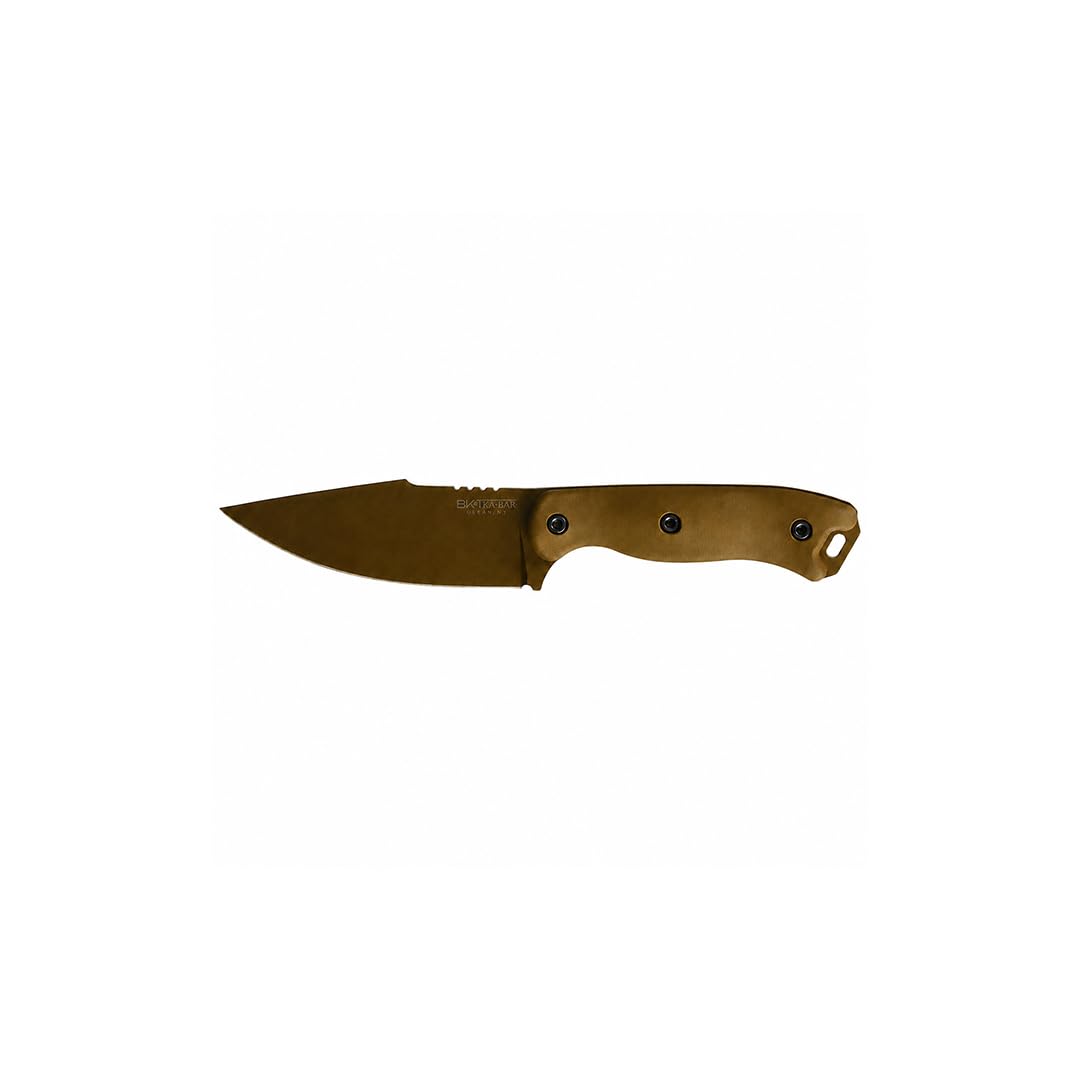
The BK18 Becker Harpoon is a refined take on the classic BK16, offering a harpoon swedge that reduces tip weight for improved point control without weakening the tip profile. ESEE co-designer Ethan Becker specified 1095 Cro-Van steel (1095 with a touch of vanadium for grain refinement), which gives slightly better edge stability than standard 1095 at the same hardness range.
The Ultramid handle is glass-reinforced nylon with a subtle texture that grips well dry but becomes slick in wet conditions—many users wrap it with self-vulcanizing tape for a tackier feel. At 4.56 inches, the blade length is legal for carry in many restricted jurisdictions, and the full tang extends past the handle for light hammering.
The factory Kydex sheath offers triple retention: friction fit plus two reversible snap straps. Some owners report the sheath rides too low on the belt and modify it with zip ties or aftermarket clips. The harpoon swedge is cosmetic for most users but gives the BK18 a distinctive look that sets it apart from the standard drop-point crowd.
Why it’s great
- 1095 Cro-Van offers refined grain structure for better edge stability
- 4.56-inch blade is legal in most restricted carry jurisdictions
- Triple-retention Kydex sheath keeps the knife secure during active movement
Good to know
- Ultramid handle gets slippery when wet; many users add grip wrap
- Sheath rides low on belt, requiring modification for ideal carry position
4. Bloodline Fixed Blade Survival Knife
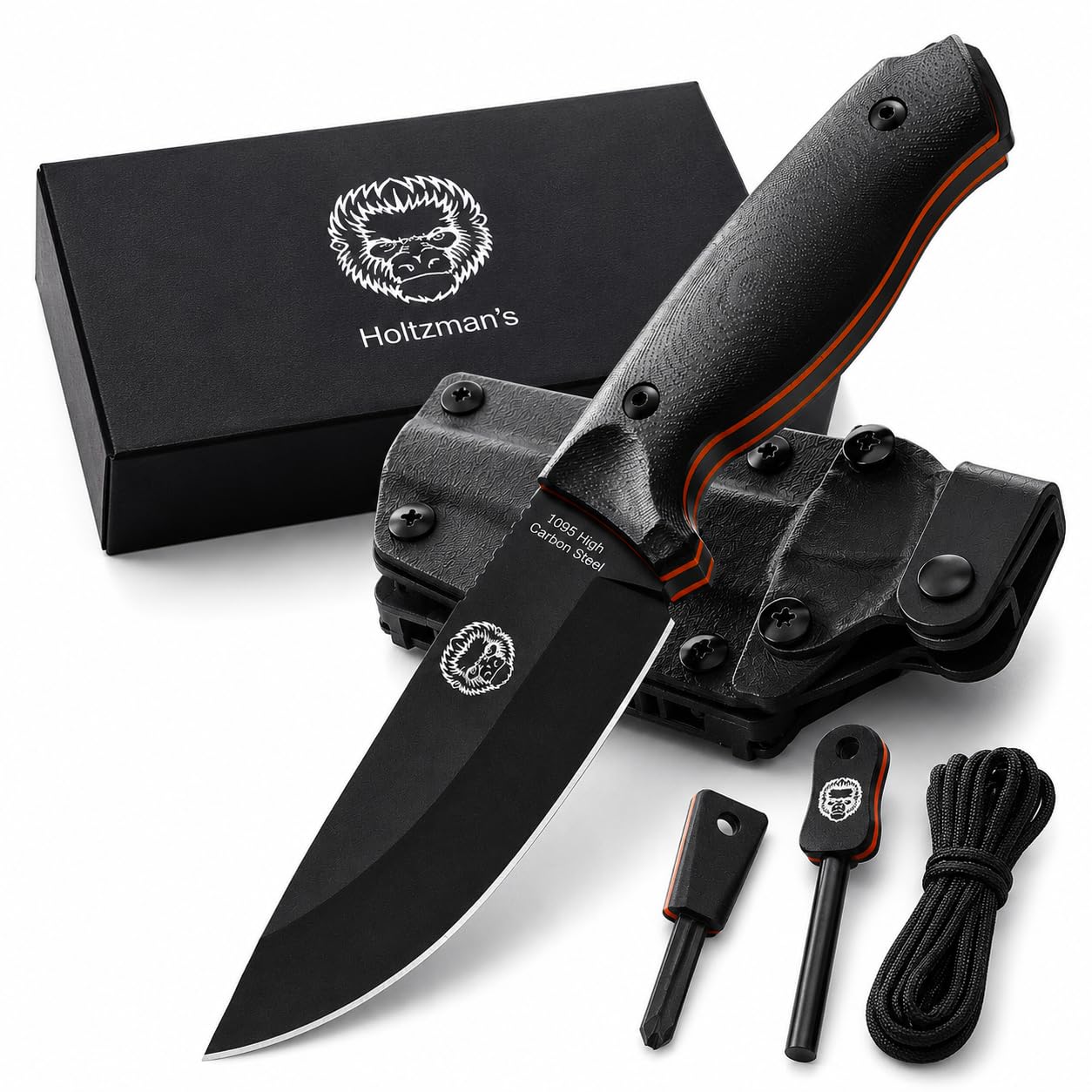
The Bloodline survival knife is a complete kit solution from Holtzman’s Gorilla Survival, pairing a 4-inch 1095 carbon steel blade with a textured G10 handle and a Kydex sheath that includes slots for the included ferro rod and striker. The 90-degree spine is crisp enough to throw sparks reliably from the ferro rod, and the compound-bevel edge comes razor-sharp out of the box.
The G10 handle with an orange liner provides secure grip in wet conditions without the slickness of polypropylene handles. The full-tang construction and lanyard hole add safety for heavy use, though the blade’s 4-inch length limits batoning capacity compared to longer knives like the ESEE-6. The Kydex sheath uses a Tek Lok-style clip for belt carry and includes a leather dangler for scout-style positioning.
Owners report that the blade holds its edge well for camp tasks like feather-stick carving and cordage cutting. The included ferro rod and striker throw large sparks, reducing the need for separate fire-starting gear. The high-carbon steel requires oiling after use to prevent rust, particularly around the Kydex contact points where moisture can trap.
Why it’s great
- Complete kit includes knife, Kydex sheath, ferro rod, striker, and belt clip
- Textured G10 handle provides superior grip in wet conditions
- 90-degree spine is optimized for ferro-rod fire starting
Good to know
- 4-inch blade limits heavy batoning and chopping tasks
- Carry-angle adjustability is limited; scout carry requires modification
5. KA-BAR Mark I Fixed Blade Knife
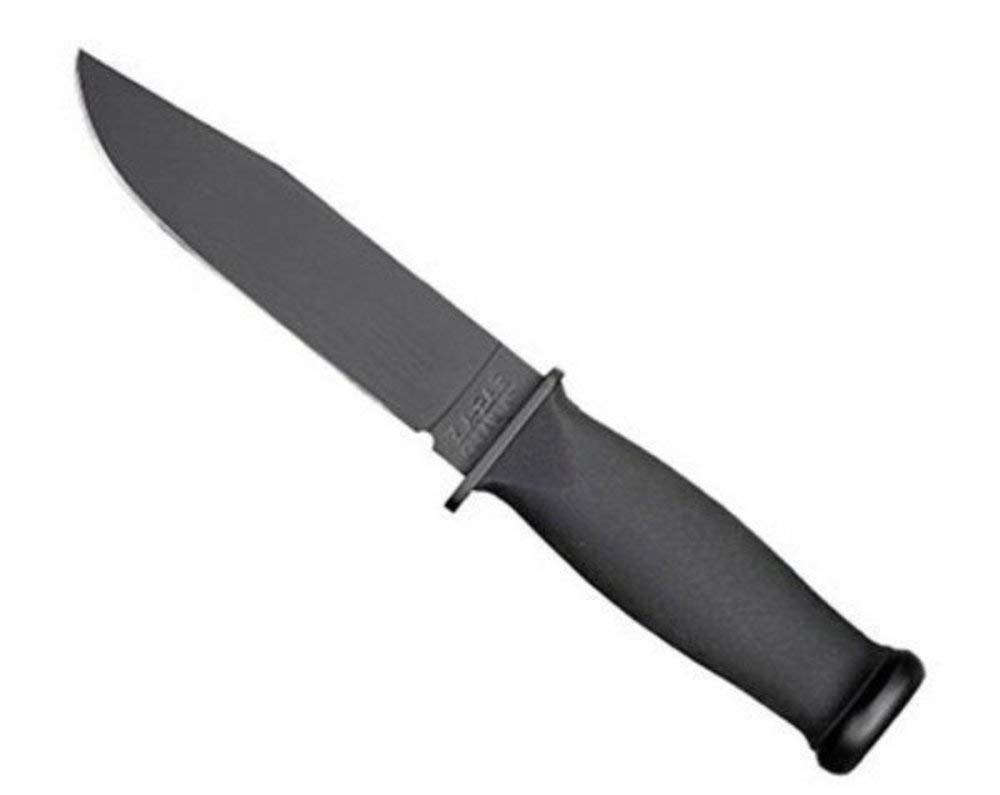
The KA-BAR Mark I is a modern interpretation of the classic Mark I design, updated with a full-flat grind on 1095 Cro-Van steel and a Kraton handle that provides excellent shock absorption during impact tasks. The 5.125-inch clip point is optimized for precise cutting and thrusting, with a distal taper that shifts weight toward the handle for balanced control.
The Kraton handle is a standout feature—its pebble texture and palm swell fill the hand without creating hot spots, even during extended use. The modified guard allows thumb-forward grip for detailed carving, and the pommel geometry works for light stake driving. At roughly 7 ounces, it carries lighter than its size suggests.
The factory GRN (glass-reinforced nylon) sheath is excellent for the price point, with triple retention: friction fit plus two reversible snap straps and a square drain hole. The ambidextrous design and MOLLE-compatible belt loop make it adaptable to different carry setups. The black coating provides some corrosion resistance, but exposed 1095 edges still need oil maintenance.
Why it’s great
- Full-flat grind on 1095 Cro-Van delivers efficient slicing and easy resharpening
- Kraton handle absorbs shock and provides excellent grip without hot spots
- GRN sheath offers triple retention and MOLLE/ALICE compatibility out of the box
Good to know
- Handle length may be slightly short for users with extra-large hands
- Black coating wears at contact points, exposing bare steel to rust
6. Condor Terrasaur Bushcraft Knife

The Condor Terrasaur is a true Scandi-grind bushcraft knife built from 1095 carbon steel, designed specifically for carving, feather-stick making, and wood processing. The 4.15-inch blade with a straight spine and Scandi bevel creates a consistent cutting geometry that is easy to maintain in the field with a simple flat stone.
The high-impact polypropylene handle is over-molded directly onto the full tang, creating a seamless transition that prevents debris buildup. The handle texture is moderate—adequate for dry use but less secure than G10 or Micarta when wet. The Army Green color blends well with natural surroundings and resists UV degradation better than black polymers.
The sheath is the Terrasaur’s weakest point: the polypropylene scabbard covers a significant portion of the handle, making extraction difficult and potentially hazardous in a hurry. The leather belt loop is functional but lacks the retention adjustability of Kydex sheaths. At this price point, the blade-to-handle ratio and Scandi geometry make it an excellent entry-level bushcraft tool, but the sheath may need replacement.
Why it’s great
- True Scandi grind is ideal for bushcraft carving and feather-stick making
- 1095 steel at this price point is rare; sharpens easily in the field
- Over-molded polypropylene handle prevents debris buildup at the tang
Good to know
- Sheath covers too much handle, making extraction difficult and potentially unsafe
- Polypropylene handle becomes slick in wet conditions compared to G10 or Micarta
7. BPSKNIVES B1 CSH Bushcraft Knife

The BPSKNIVES B1 uses 1066 carbon steel rather than 1095, which means slightly less carbon content and marginally lower edge retention, but easier sharpening and increased toughness for its hardness range of 57-59 HRC. The Scandi grind is executed well from the factory, producing a razor-sharp edge that excels at wood carving and feather-stick work.
The walnut wood handle is finished with Danish oil, offering a traditional aesthetic that feels warm and natural in the hand. Some units ship with the handle unfinished or with rough texture, but a quick sanding and oil application transforms it into a smooth, comfortable grip. The genuine leather sheath is handmade and provides secure vertical carry on a belt or strap, though it lacks the retention of modern Kydex.
At 4.3 inches, the blade is long enough for medium bushcraft tasks but short enough for detailed carving. The 3mm blade thickness strikes a balance between edge stability and slicing efficiency. The tang has exposed carbonization on some units, requiring mineral oil or wax application to prevent rust from migrating into the handle scales.
Why it’s great
- 1066 carbon steel at 57-59 HRC offers excellent toughness and easy resharpening
- Scandi grind is factory-sharp and ready for bushcraft carving out of the box
- Walnut handle and leather sheath provide classic, traditional aesthetics
Good to know
- Finish consistency varies; some handles require sanding and oiling for smooth texture
- Leather sheath lacks modern retention features and may allow blade movement over time
FAQ
Does 1095 carbon steel rust easily, and how do I prevent it?
What is the difference between 1095 and 1095 Cro-Van?
Can a 1095 carbon steel knife be used for batoning wood?
Final Thoughts: The Verdict
For most users, the best 1095 carbon steel knife winner is the ESEE-6 because its cryo-treated 1095, full-flat grind, and lifetime warranty offer the best balance of toughness, slicing efficiency, and long-term value for heavy camp and bushcraft use. If you need a survival-focused blade that can withstand extreme abuse, grab the ESEE-5 for its 1/4-inch saber-ground blade and glass-breaker pommel. And for a complete kit that includes a ferro rod and Kydex sheath at a mid-range price point, nothing beats the Bloodline survival knife.