
If you’re still cutting on a solid metal table or letting your laser scorch material on wooden slats, you’re already fighting cleanup, burn marks, and misaligned cuts that waste expensive sheets of wood and acrylic. A dedicated honeycomb work surface lifts your material off the table, lets smoke and heat vent through the open grid, and gives you a precision reference plane your laser can work with.
I’m Min — the co-founder and writer behind Gadgets Feed. I’ve spent countless hours analyzing the technical specifications, material properties, and real-world feedback across the aluminum honeycomb panel market to sort the flimsy frames from the truly flat, durable work surfaces.
Whether you own a desktop diode laser or a large-format CO2 machine, choosing the right support grid matters. This guide to the best aluminum honeycomb panels breaks down the structural specs, compatibility gotchas, and value decisions that separate a good setup from perpetual frustration.
How To Choose The Best Aluminum Honeycomb Panels
Not every honeycomb panel delivers the same flatness or durability. Three factors determine whether your work surface produces crisp, repeatable cuts or introduces headaches: the material makeup of the grid itself, the dimensional compatibility with your specific machine, and the frame construction that keeps everything rigid over time. Ignore any one of these and you end up with a panel that buckles, rusts, or needs shimming to even sit flat.
Cell Geometry and Open Area
The hole diameter — typically ranging from 6mm to 10mm — and the percentage of open space directly affect how much smoke and debris escape during a laser cut. Panels with a higher open area (40% or more) allow better airflow and reduce scorching on the underside of your material. However, very large cells can cause small parts to fall through or flex, so the ideal balance for cutting common sheet goods is a cell under 8mm with around 35–45% open area.
Frame Rigidity and Edge Design
A heavy-gauge aluminum frame resists warping from heat and mechanical stress far better than thin stamped steel edges. Look for panels with riveted or welded corners rather than screw-fastened assemblies, which can loosen after repeated thermal cycles. Razor-sharp 45-degree frame edges are a common complaint on budget units — premium panels include rolled or beveled edging or protective corner caps for safer handling during installation and removal.
Weight and Portability vs. Durability
Pure aluminum honeycomb structures weigh roughly half as much as galvanized steel alternatives while providing comparable stiffness. Lighter panels are easier to slide in and out of tight laser enclosures, especially on larger machines with limited clearance. Steel grids, on the other hand, allow you to use magnets to hold down thin materials, a feature aluminum cannot support because it is non-ferrous. Decide whether you prioritize rust-free lightweight handling or magnetic material retention before choosing between aluminum and steel core construction.
Quick Comparison
On smaller screens, swipe sideways to see the full table.
| Model | Category | Best For | Key Spec | Amazon |
|---|---|---|---|---|
| xTool P3 Honeycomb Panel | Premium | Drop-in xTool upgrade | 100% aluminum, 2.7 lbs weight | Amazon |
| XLNT Laser 23.62×35.43 Panel | Premium | CO2 laser workhorses | Aluminum frame, 21.9×33.7 work area | Amazon |
| Online Metals 3003 Perforated Sheet | Mid-Range | Custom builds & screens | 14-gauge 3003 aluminum, 40% open | Amazon |
| NEJE Large Honeycomb Bed | Mid-Range | Diode laser clean-up | 530x850mm aluminum/iron grid | Amazon |
| Honeycomb Laser Bed 500×500mm | Mid-Range | Creality Falcon & compact lasers | 19.68×19.68 platform, metal columns | Amazon |
| Extended Honeycomb 400x850mm | Budget | Extended-bed Ray5 units | Steel grid, magnetic hold-down | Amazon |
| XLNT 51.18×35.43 Extra-Large Panel | Budget | Oversized worktables | 1300x900mm galvanized iron + Al frame | Amazon |
In‑Depth Reviews
1. xTool P3 Honeycomb Panel
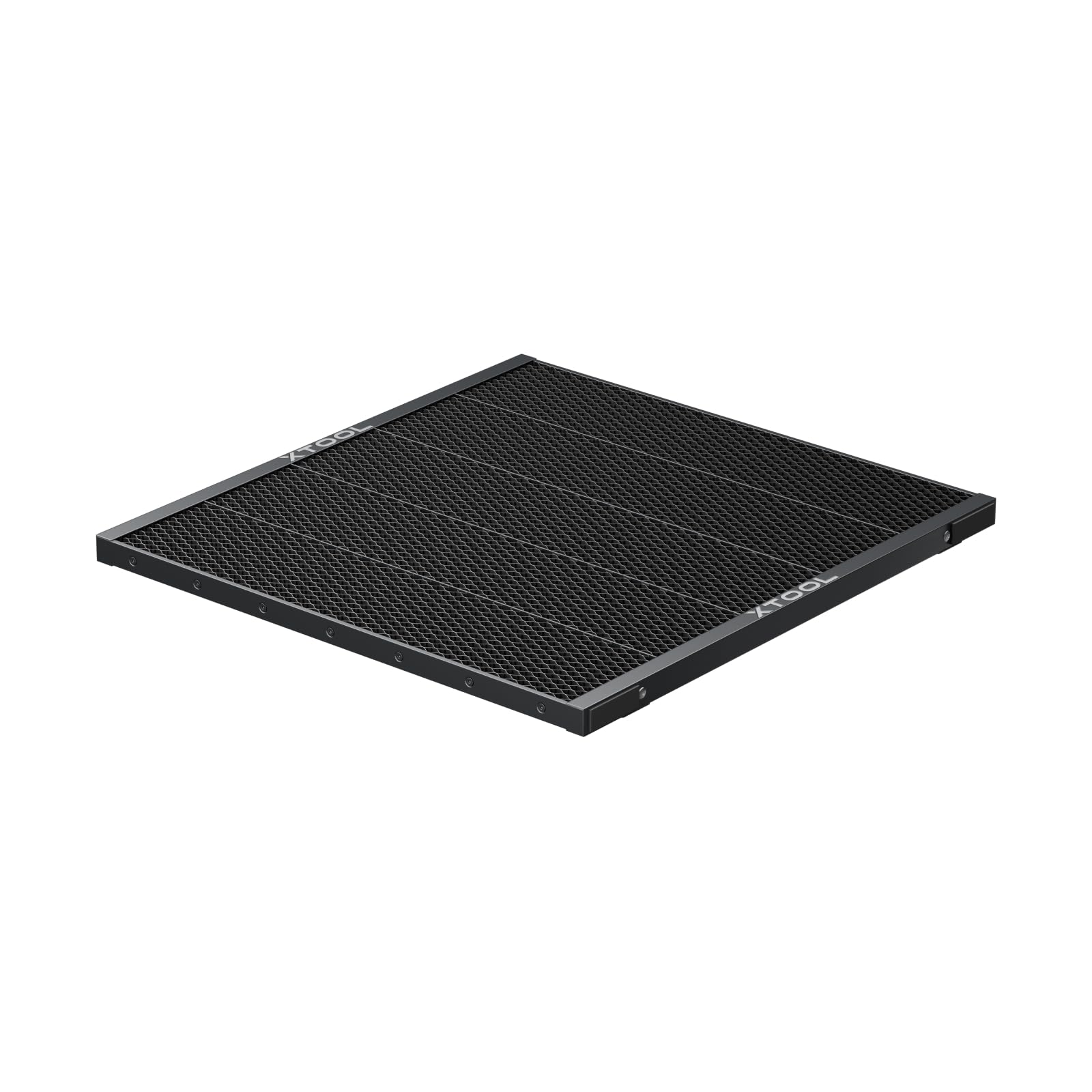
The xTool P3 panel is built from 100% premium aluminum, weighing only 2.7 pounds — less than half the heft of an equivalently sized steel panel. This ultra-lightweight construction makes installation and removal from an xTool P2 or P2S enclosure practically effortless, yet the high-strength alloy maintains superior flatness across the entire 22.24 x 20.08 inch working area for consistent, high-precision cuts.
Because aluminum contains no iron, this panel will never rust, even when exposed to the high humidity and cutting oil residues common in laser workshops. The fine honeycomb grid also minimizes back reflection of the laser beam, which reduces smoke stains and scorch marks on the underside of materials like plywood and acrylic. Users consistently report cleaner edges and less charring compared to factory slat beds.
The panel supports flexible configurations, including dual-honeycomb setups or mixing honeycomb with blade tables for larger production runs. It ships as a completely assembled drop-in unit with protective corner caps, so you can install it in under a minute. For xTool owners who want maximum lifespan and cut quality from their machine, this is the definitive upgrade.
Why it’s great
- Pure aluminum construction — zero rust over its lifetime
- Ultra-light 2.7 lb weight makes handling and storage easy
- Reduces scorch marks and back-reflection for cleaner cut edges
Good to know
- Designed specifically for xTool P series — not universal for all laser brands
- No magnetic hold-down capability since aluminum is non-ferrous
2. XLNT Laser Honeycomb Work Table 23.62×35.43

The XLNT 23.62 x 35.43 inch panel offers a 21.9 x 33.7 inch working surface with a sturdy aluminum frame and a galvanized steel honeycomb grid. The steel core provides excellent rigidity and prevents warping under repeated thermal stress, while the anodized aluminum edging resists corrosion and adds a clean finished look to the assembly.
Buyers confirm this panel fits K40 CO2 lasers very well and that the solid frame construction holds up to frequent material changes without flexing. The 0.87-inch overall thickness is a standard dimension that allows most laser focal planes to remain compatible without requiring lift adjustments. Several users repurposed units that were slightly oversized as drip pans for staining projects, which speaks to the panel’s robust flatness.
A few customers noted that the 45-degree frame edges are razor-sharp out of the box and require filing or sanding for safe everyday use. If you work directly on the bed surface without gloves, plan to spend a few minutes breaking the edges. Despite this minor fit-and-finish issue, the overall build quality and dimensional accuracy put this panel among the most durable options for CO2 laser operators.
Why it’s great
- Solid frame construction resists warping under heat cycles
- Generous 21.9×33.7 work area fits most K40 and mid-size CO2 lasers
- Aluminum edging prevents rust around the perimeter
Good to know
- Frame edges arrive sharp — filing recommended before use
- Required assembly with included hardware, not drop-in ready
3. NEJE Large Honeycomb Laser Bed 530x850mm

The NEJE 530x850mm bed combines an aluminum alloy frame with an iron honeycomb grid, delivering a balance of light weight and magnetic compatibility. At this size, the actual honeycomb cutting area measures approximately 480mm x 800mm, which makes it a strong match for NEJE Max 4 and Master 2S diode lasers as well as compatible machines from brands like Ikier.
The powder-coated finish protects the metal from minor corrosion, and the uniform 22mm honeycomb diameter provides consistent support for materials up to medium-density fiberboard. The included metal drip tray underneath catches debris and protects your tabletop from burn damage. Users who upgraded from factory slats report a significant reduction in smoke staining and improved cut-through on thicker materials.
Several long-term users noted that the thin aluminum protective sheet beneath the honeycomb can buckle after a week of heavy use, which introduces a slight low spot in the center of the bed. The honeycomb grid itself remained intact, but the under-panel may need periodic flattening. For typical hobbyist usage — a few hours per week — this panel offers genuine value at a mid-range price point.
Why it’s great
- Large 530x850mm platform accommodates extended diode laser beds
- Powder-coated finish resists rust in non-condensing environments
- Comes pre-assembled with protective corner caps and debris tray
Good to know
- Bottom drip tray may buckle after heavy use, affecting flatness
- Frame has slight flex when supporting uneven loads near edges
4. Honeycomb Laser Bed 500×500mm for Creality Falcon

This 500x500mm panel is specifically dimensioned to match the Creality Falcon 2 laser engraver, but its universal 19.68 x 19.68 inch platform will also fit many other desktop diode and CO2 machines. The aluminum honeycomb grid is reinforced by multiple metal support columns underneath, creating a structure that resists sagging even under the weight of larger material sheets.
The open-cell design effectively vents smoke through the grid rather than trapping it beneath the workpiece, which reduces charring around cut edges. A precise graduated scale printed along the edges helps position your material for repeatable alignment across multiple cuts. Users report that assembly is minimal — you simply peel protective stickers off the aluminum under-sheet and set the panel directly into the laser bed cavity.
At 8.53 pounds, this panel is moderately heavier than some all-aluminum alternatives, but the extra weight contributes to its vibration-dampening properties during fast engraving passes. The 22mm overall thickness and graduated edge markings make it particularly good for users who need to index multiple pieces of material across consecutive operations without re-measuring each time.
Why it’s great
- Reinforced with metal support columns to prevent sagging
- Graduated scale on edges aids repeatable material alignment
- Instant drop-in fit for Creality Falcon 2 with no modification
Good to know
- Heavier than all-aluminum panels at 8.53 pounds
- Lacks magnetic hold-down due to aluminum grid construction
5. Online Metals 3003 Aluminum Perforated Sheet

This is a raw 36×36 inch sheet of 3003 aluminum with 0.25-inch staggered round holes offering 40% open area, not a finished laser bed with a frame. For makers who build custom laser worktables, ventilation grates, or security screens, this provides the raw performance material: 14-gauge thickness that holds form under heat, exceptional corrosion resistance, and high formability for bending or cutting into custom shapes.
The 3003-H14 temper gives the sheet a good balance of strength and workability — you can shape it with a hammer or brake without cracking. Several buyers have used it for tube amp safety screens, custom fan grilles, and even DIY sandblast stencils. The staggered hole pattern provides uniform airflow across the entire surface, which translates to even smoke evacuation when used as a laser bed deck.
Because this is an unfinished sheet, you will need to build your own frame or mount it directly onto risers inside your laser enclosure. The edges are raw and may have burrs from the cutting process. If you want a turnkey honeycomb bed, this is not the right choice. But if you need a specific custom size or want to fabricate your own jig, the material quality is outstanding and the 40% open area is ideal for laser cutting applications.
Why it’s great
- 14-gauge 3003 aluminum is highly workable and corrosion-resistant
- 40% open area provides excellent ventilation for laser cuts
- Staggered 0.25-inch holes offer good support while clearing debris
Good to know
- Raw sheet only — no frame, no feet, no corner protection included
- Edges may have sharp burrs requiring deburring before handling
6. Extended Honeycomb Laser Bed 400x850mm

This 400x850mm panel uses a steel honeycomb grid rather than aluminum, which immediately gives it two distinct advantages: you can use strong magnets to hold down thin materials, and the steel is less likely to deform under repeated local heating from the laser. The steel grid is riveted to an aluminum tray underneath that catches debris and protects the workbench surface.
The panel is designed to work with extended-frame Ray5 and Laser Master 3 machines, but at 12.87 pounds it is notably heavy compared to all-aluminum alternatives. Multiple users confirm the one-piece steel honeycomb construction is sturdy and that the riveted edges do not loosen over time. The hardened steel surface also resists scratches from sliding materials in and out during production runs.
The underside aluminum tray arrived slightly bent in a few shipping reports, typically due to the weight of the steel grid pressing against the thin tray during transit. The grid itself is well-protected by the frame, but the tray may need gentle flattening if it arrives with a warp. For users who prioritize magnetic material retention over lightweight handling, this panel delivers exceptional rigidity and compatibility.
Why it’s great
- Steel honeycomb grid allows strong magnetic hold-down for materials
- Riveted frame construction stays tight under thermal cycling
- Hardened steel surface resists scratches and deformation
Good to know
- Heavy at 12.87 pounds — less portable than aluminum panels
- Bottom aluminum tray may arrive slightly bent in transit
7. XLNT 51.18×35.43 Extra-Large Honeycomb Panel

At 51.18 x 35.43 inches, this XLNT panel is built for industrial-scale laser beds and large-format CO2 machines. The working area measures 1256 x 856mm, giving you nearly 50% more usable space than the typical 600x900mm panel. The 7mm hole diameter provides excellent smoke clearance while still supporting small pieces without parts falling through the grid.
The construction uses a galvanized iron honeycomb plate attached to an aluminum frame, creating a hybrid structure that combines the rust resistance of galvanized steel with the lightweight dimensional stability of an aluminum border. The panel is rated to support up to 500 pounds of distributed load, meaning you can safely place heavy stock sheets or even stack multiple workpieces without risking frame failure. Buyers report the panel arrived well-packed even from international shipping and retained its flatness.
The main drawback is the required assembly — you will need to attach the aluminum frame to the iron plate using the included hardware and instructions. Additionally, the 45-degree frame edges have been noted as extremely sharp by several customers, requiring filing or edge protection before routine use. For users with extra-large laser tables who need a budget-friendly panel that does not compromise on flatness, this is the largest practical option available.
Why it’s great
- Massive 1256x856mm work area for large-format machines
- 500 lb load capacity handles heavy stock sheets without flexing
- Galvanized iron grid resists rust in humid workshop environments
Good to know
- Requires assembly — not drop-in ready out of the box
- Frame edges are razor-sharp and need filing before regular use
FAQ
Can I use an aluminum honeycomb panel with a CO2 laser?
Why do my cuts leave scorch marks even with a honeycomb bed?
What is the standard cell size for laser engraver honeycomb panels?
Can I cut acrylic on an aluminum honeycomb panel?
Final Thoughts: The Verdict
For most users, the best aluminum honeycomb panels winner is the xTool P3 Honeycomb Panel because it delivers a rust-free, ultra-light pure aluminum platform that pairs perfectly with xTool machines while virtually eliminating scorch marks. If you need magnetic hold-down capability and extended length for machines like the Ray5, grab the Extended Honeycomb 400x850mm. And for large-format CO2 shops on a budget, nothing beats the raw size and load capacity of the XLNT 51.18×35.43 Panel.