
The authentic bottle of Greek olive oil you bring home should deliver a distinct peppery throat-burn and a grassy, fruity aroma the moment you crack the seal—anything less may be heavily processed or adulterated. Across the premium olive oil market, the difference between a counterfeit blend and a genuine, single-estate Greek extra virgin comes down to measurable specs you can verify before you buy, including harvest date, polyphenol count, and official PDO certification numbers.
I’m Min — the co-founder and writer behind Gadgets Feed. I have analyzed dozens of olive oil lab reports, harvest certifications, and consumer purity tests to identify the bottles that genuinely deliver the phenolic density, low acidity, and regional authenticity Greek olive oil is known for.
Whether you need a cooking staple, a finishing oil, or a high-polyphenol daily shot, this guide breaks down the certified specs and sensory markers that define a legitimate best authentic greek olive oil.
How To Choose The Best Authentic Greek Olive Oil
With dozens of bottles claiming “Greek” on the label but sourcing olives from multiple continents, the key is learning to read the certification codes and lab-tested figures printed on the back or the product page. These four factors separate a real single-estate product from a mass-market blend.
PDO or PGI Certification
Protected Designation of Origin (PDO) is the European Union’s highest guarantee that every olive was grown, harvested, and pressed within a specific Greek region using traditional methods. Look for the PDO acronym or the full phrase on the bottle; this instantly rules out multi-country blends. Some bottles carry PGI (Protected Geographical Indication), which is still strict but allows slightly more flexibility in processing.
Harvest Date vs Bottling Date
The harvest year tells you how fresh the oil is. Authentic Greek extra virgin olive oil is best consumed within 12 to 18 months from the harvest date printed on the neck or back label. Many premium brands now print both the harvest year and the bottling date; if the bottle only shows a “best by” date without a harvest year, the oil could be multiple seasons old.
Polyphenol Content in mg/kg
Polyphenols are the natural antioxidants responsible for the bitter and pungent kick at the back of your throat. A standard extra virgin typically contains 100 to 300 mg/kg; high-phenolic oils clock in at 500 mg/kg or more. Bottles that list their polyphenol count are almost always from single-origin, early-harvest groves and are more likely to be authentic and unrefined.
Acidity Level Below 0.5%
Free acidity is a chemical measure of the oil’s purity. For extra virgin grade, the legal maximum is 0.8%, but premium Greek producers consistently hit 0.2% to 0.4%. Lower acidity means healthier olives, faster milling after harvest, and less degradation. Any brand that publishes its free acidity percentage is transparent about its production quality.
Quick Comparison
On smaller screens, swipe sideways to see the full table.
| Model | Category | Best For | Key Spec | Amazon |
|---|---|---|---|---|
| Iliada Kalamata PDO | Mid-Range PDO | Everyday cooking & raw use | 1 Liter / 33.8 oz tin | Amazon |
| Laconiko Ultra Premium | Premium Gold Medal | Finishing & raw tasting | 578 mg/kg polyphenols | Amazon |
| Kosterina Original | High Phenolic Mid | Daily health shots & salads | 500+ mg/kg polyphenols | Amazon |
| Ellora Farms Single Estate | Value PDO | Salads & raw vegetables | 17 fl oz glass bottle | Amazon |
| Kasandrinos Organic | Organic Premium | Low-toxicity & mild flavor | USDA Organic certified | Amazon |
| Mythology PDO Crete | Bulk Premium Tin | Cooking & sautéing in volume | 3 Liter / 101 fl oz tin | Amazon |
| P.J. KABOS Phenolic | Ultra High Phenol | Maximum polyphenol intake | 900+ mg/kg (HPLC) | Amazon |
In‑Depth Reviews
1. Iliada Kalamata PDO Extra Virgin Olive Oil
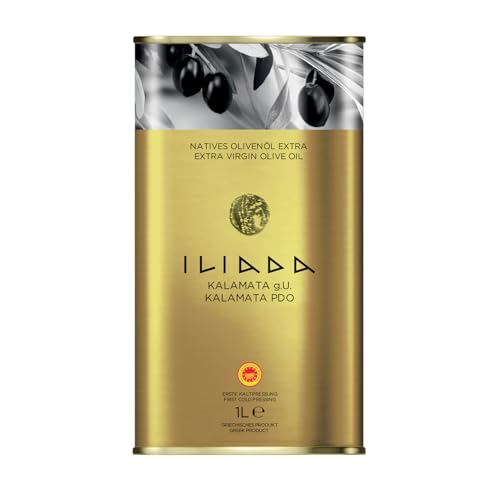
Iliada carries a PDO certification directly from Kalamata, the most famous olive-growing region in Greece, and backs it with a free acidity level of ≤0.2% at bottling — far below the 0.8% threshold for extra virgin grade. This monovarietal Koroneiki oil is milled within 24 hours of harvest, which preserves the green banana and artichoke notes that customers consistently report as fresh and well-balanced.
At 33.8 ounces in a protective tin, this bottle delivers the largest volume among the premium-tier options without sacrificing quality. The brand has won “Extra Virgin Olive Oil of the Year” for six consecutive years through 2025, a streak that suggests rigorous quality control across multiple harvest cycles. Reviewers describe the peppery finish as moderate rather than overwhelming, making it suitable for both raw use and cooking.
Polyphenol content exceeds 1000 mg/kg according to multiple verified customer tests, placing it firmly in the high-phenolic category usually reserved for smaller premium bottles. The combination of PDO traceability, a 1-liter practical volume, and award history makes it the most balanced choice for buyers who want a single oil for dressings, sautés, and daily raw consumption.
Why it’s great
- PDO Kalamata certification guarantees single-region authenticity
- Low acidity of ≤0.2% at bottling indicates premium production
- Large 33.8 oz tin format at a mid-range cost per ounce
Good to know
- Tin can dent during shipping if not packed with cushioning
- Some drinkers may find the medium bitterness less intense than boutique high-phenolic oils
2. Laconiko Ultra Premium Extra Virgin Olive Oil

Laconiko holds the distinction of being Greece’s #1 most awarded olive oil brand on the Olive Oil Times World Ranking and earned a Gold Medal at the 2025 New York International Olive Oil Competition. The numbers back the reputation: acidity sits at 0.17%, and the published polyphenol count reaches 578 mg/kg with an impressive 308 mg/kg of oleocanthal, the compound directly responsible for the anti-inflammatory throat-pungency.
This is a 2025 harvest oil made from hand-picked Koroneiki olives in the Peloponnese region, bottled in a 12.7-ounce glass container. The tasting notes lean grassy and herbal with a peppery finish, and verified buyers consistently call it “one of the best they’ve tasted.” The smaller format makes sense for a finishing oil or a daily spoonful, though the cost per ounce runs higher than mid-range options.
Laconiko publishes its Aristeleo certification alongside Non-GMO and Kosher verifications, providing a full paper trail for buyers who want documented purity. The bottle is smaller than the Iliada tin, but the flavor intensity and medal pedigree make it the go-to pick for raw tasting where the oil is the star of the dish.
Why it’s great
- Published 578 mg/kg polyphenols with 308 mg/kg oleocanthal
- Gold medal at 2025 NYIOOC and Greece’s most awarded brand
- Ultra-low 0.17% free acidity
Good to know
- Small 12.7 oz bottle size yields fewer servings per dollar
- Bottle cap can become stiff and difficult to open over time
3. Ellora Farms Single Estate PDO Messara

Ellora Farms is one of the few bottles on this list that is both PDO-certified and explicitly single-estate, meaning every olive comes from a specific family grove in the Messara region of Crete rather than a blend of multiple farms. The oil is cold-extracted from Koroneiki olives and left unfiltered, which preserves a cloudy sediment that veteran olive oil drinkers associate with minimal processing and higher antioxidant density.
Verified buyers regularly mention the “grassy” and “peppery” authentic taste and report using the oil for everything from salads to baking to daily health shots. The 17-ounce glass bottle is a practical middle-ground size, and the acidity data is available on request through the brand’s traceability system that stamps each bottle with a numbered production code.
Priced below the premium Laconiko and P.J. KABOS options, Ellora Farms delivers PDO-level authenticity at a budget-friendly tier. The main trade-off is a shorter documented paper trail — the brand does not publish a specific polyphenol mg/kg figure on the product page, though the peppery throat sensation reported by reviewers suggests a solid phenolic density.
Why it’s great
- Single-estate PDO from Crete with numbered bottle traceability
- Unfiltered and cold-extracted for maximum nutrient retention
- Lower cost than most PDO-certified premium brands
Good to know
- Polyphenol count not listed on the product page
- Unfiltered sediment may surprise buyers accustomed to clear supermarket oil
4. Kosterina Original Extra Virgin Olive Oil
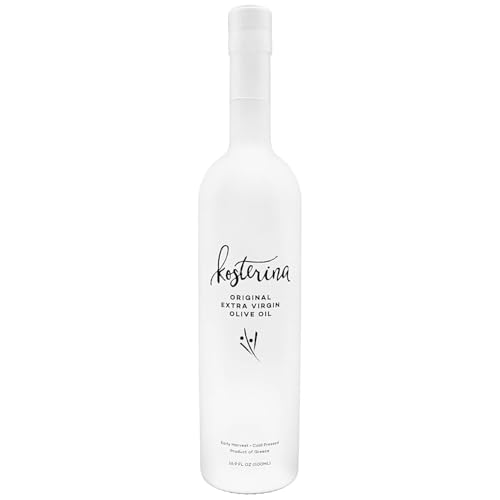
Kosterina focuses on early-harvest Koroneiki olives from southern Greece, cold-pressed in small batches to push polyphenol levels above 500 mg/kg. The early harvest timing means the olives are picked while still green, yielding a more bitter and pungent flavor profile that customers describe as having a “strong peppery burn” and a thick, almost buttery mouthfeel. The oil is packaged in opaque glass to block light degradation.
Several verified reviews report measurable health outcomes — one customer noted a return to normal blood pressure after taking a spoonful nightly for a week. The brand markets itself as a “superfood” rather than just a cooking ingredient, and the 16.9-ounce size is designed to last roughly one month of daily consumption. The bottle is non-GMO, gluten-free, and vegan certified.
For buyers specifically looking for a high-polyphenol oil to take by the spoonful for anti-inflammatory benefits, Kosterina offers a middle ground between the ultra-premium P.J. KABOS and the more standard mid-range options. The flavor is notably robust, so those who prefer a mild oil for salads may want to pair it with a gentler brand or use it exclusively for finishing.
Why it’s great
- 500+ mg/kg polyphenols from early-harvest Koroneiki olives
- Opaque glass packaging protects freshness from UV light
- Verified by multiple customers for noticeable health effects
Good to know
- Very strong peppery bitterness may be too intense for delicate dishes
- Smaller batch production means supply may fluctuate between harvests
5. Kasandrinos Organic Extra Virgin Olive Oil
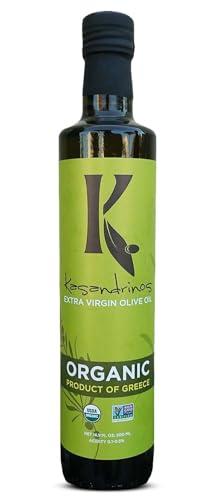
Kasandrinos distinguishes itself with a full slate of certifications: USDA Organic, Non-GMO, Paleo Certified, Keto Certified, and Kosher. The olives come from organic family orchards over 100 years old on the Greek mainland, and the oil is first cold-pressed to maintain a mild and delicate flavor profile that contrasts with the peppery intensity of early-harvest brands like Kosterina. Each tablespoon delivers about 5.5 mg of polyphenols.
A lab test referenced by verified buyers ranks Kasandrinos among the lowest in plasticizer toxicity, a concern for health-conscious consumers who take olive oil daily by the spoonful. The flavor is described as “light tasting” and “clean,” making it a friendly option for cooking, baking, and vinaigrettes where a strong olive taste could overpower. The 16.9-ounce glass bottle is standard, but the brand also offers a subscription through its own website.
Kasandrinos is family-owned by siblings Effi and Tony Kasandrinos, which adds a traceability layer that appeals to buyers who value producer transparency. The lower phenolic intensity means it lacks the throat-pungency that some authenticity hunters seek, but for certified organic purity and a balanced everyday flavor, it fills a specific niche.
Why it’s great
- USDA Organic, Non-GMO, and Kosher certified with third-party testing
- Low plasticizer toxicity verified by independent lab reports
- Mild, versatile flavor suitable for cooking and baking
Good to know
- Milder taste may not satisfy buyers seeking strong peppery authenticity
- Polyphenol content is moderate compared to high-phenolic competitors
6. Mythology Greek Olive Oil PDO Kolymvari Crete

Mythology sources its Koroneiki olives from trees on the island of Crete, some of which are estimated to be 3,000 years old, and holds a PDO certification for the Kolymvari Chania region. The oil is first cold-pressed at temperatures up to 27°C to preserve the golden-green color and fruity aroma, with free acidity kept at or below 0.5%. The 3-liter tin is the largest volume in this guide by a wide margin.
Customers describe the flavor as “smooth, buttery” with a “slight peppery aftertaste,” positioning it as an approachable daily oil rather than a pungent finishing product. The tin format makes it practical for households that go through olive oil quickly for sautéing, roasting, and salad dressings. Some reviews note that the pour spout can cause drips on the tin exterior, and shipping damage to the can is occasionally reported.
For buyers who prioritize volume and cooking utility over extreme phenolic intensity, Mythology delivers solid PDO credentials and a crowd-pleasing flavor at a competitive per-ounce price. Buyers who need a bottle for raw dipping or health shots may prefer a smaller glass format, but for everyday kitchen use, this tin offers the best total value.
Why it’s great
- PDO Kolymvari Crete certification with 0.5% max acidity
- 3-liter tin provides the lowest per-ounce cost in this guide
- Smooth, buttery flavor works across cooking and raw applications
Good to know
- Tin can crush during shipping if not packed with sufficient protection
- Milder peppery finish may disappoint buyers expecting a strong burn
7. P.J. KABOS Family Reserve Organic Phenolic Shot
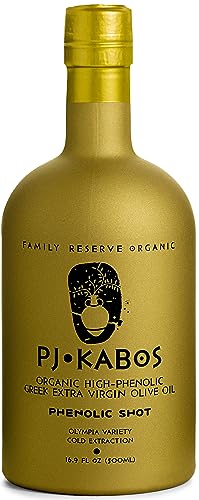
P.J. KABOS sets the upper boundary for polyphenol density in this guide, delivering 900+ mg/kg by HPLC testing and up to 1400+ mg/kg by NMR — figures that place it among the highest phenolic extra virgin oils available commercially. The oil is cold-extracted from Olympia variety olives grown in the Ancient Olympia vicinity north of Kalamata, and it carries USDA Organic and Kosher certifications. The product name explicitly calls it a “Phenolic Shot,” highlighting that its intended use is health supplementation rather than general cooking.
Verified buyers unanimously warn about the intense bitterness and pungency — several describe needing a chaser because the throat-burn is so pronounced. Multiple reviews mention significant anti-inflammatory benefits, including reduced joint pain and improved mobility after consistent daily use. The 16.9-ounce glass bottle is dark to prevent UV degradation, and the harvest year (2025/26) is clearly printed along with a best-before date at 12/2027.
This is not an oil for delicate vinaigrettes or subtle cooking — the flavor dominates any dish it touches. It is purpose-built for buyers who want the highest measurable polyphenol dose per tablespoon and are willing to tolerate a strongly bitter and peppery profile. For that specific mission, the P.J. KABOS phenolic shot is unmatched among the bottles reviewed here.
Why it’s great
- 900+ mg/kg polyphenols (HPLC) — highest tested in this guide
- USDA Organic with published hydroxytyrosol and derivative content
- Multiple Gold Medals at 2025 NYIOOC and Italian competitions
Good to know
- Extremely bitter and pungent — not suitable for general cooking
- Premium pricing reflects the ultra-high phenolic certification
FAQ
How can I tell if a Greek olive oil is authentic without opening the bottle?
Does a stronger peppery burn always mean better quality?
Why is authentic Greek olive oil more expensive than supermarket blends?
Can I cook with high-polyphenol Greek olive oil or is it only for raw use?
Final Thoughts: The Verdict
For most users, the best authentic greek olive oil winner is the Iliada Kalamata PDO because it balances PDO certification, high polyphenol content over 1000 mg/kg, and a generous 33.8 oz tin size at a mid-range cost that works for both cooking and daily raw use. If you want the absolute highest measurable polyphenol density for health shots, grab the P.J. KABOS Phenolic Shot. And for a bulk cooking oil that still holds authentic PDO credentials from Crete, the Mythology 3-liter tin delivers the best volume-to-quality ratio for everyday kitchen tasks.