
The windblast at 20 mph turns every speck of dust into a grit bomb, and a stray pebble kicked up by the pack can end your ride instantly. Yet the cycling glasses market is flooded with frames that offer marginal gains over a well-designed option, leaving riders to sort through marketing fluff instead of actual lens performance. The real challenge isn’t finding protection—it’s finding a pair that delivers optical clarity, secure fit, and versatile lens options without draining your post-ride coffee budget.
I’m Min — the co-founder and writer behind Gadgets Feed. After pouring hundreds of hours into analyzing lens materials, frame geometries, and UV protection ratings across the cycling eyewear market, I’ve zeroed in on the specs that actually matter for riders who log serious miles on pavement and trail alike.
This guide breaks down the top contenders across every meaningful category, from budget-friendly photochromic lenses to premium polarized options, so you can find the best set of affordable cycling glasses for your next century ride.
How To Choose The Best Affordable Cycling Glasses
The cycling eyewear sweet spot sits between and , where frame quality and lens technology actually scale with price. Below that, you risk brittle frames and scratched optics. Above it, you’re paying for brand cachet and marginal weight savings, not tangible performance gains for the average rider.
Lens Architecture: Polarized vs. Photochromic
Polarized lenses eliminate horizontal glare from wet roads and car windshields, which is critical for road cyclists. Photochromic lenses, on the other hand, automatically adjust tint between 21% and 83% light transmittance, letting you ride from dawn through afternoon glare without swapping lenses. Mid-range options now bundle both technologies in a single frame, giving you the widest usable range without carrying spares.
Frame Materials and Fit
TR90 frames dominate the value tier because they’re flexible enough to survive drops yet rigid enough to hold multi-lens systems. Check for adjustable nose pads and temple grips—hydrophilic rubber compounds get tackier when wet, preventing slippage during high-cadence efforts. A universal fit curve of 8 base curvature wraps tightly enough for aero tucks without distorting peripheral vision.
Venting and Fog Resistance
A closed frame traps heat and moisture, which mists up your lenses the moment you stop at a light. Look for frames with top-edge vents that channel airflow across the lens interior, or lower-frame cutouts that act as exhaust ports for warm air. Polycarbonate lenses with an anti-fog coating add another layer of insurance for humid century rides.
Quick Comparison
On smaller screens, swipe sideways to see the full table.
| Model | Category | Best For | Key Spec | Amazon |
|---|---|---|---|---|
| Crit Sport Sunglasses | Premium | Serious training & group rides | Photochromic + 100% UV protection | Amazon |
| Tifosi Sanctum | Premium | Fit-sensitive riders & pickleball | Hydrophilic rubber grip + vented frame | Amazon |
| Tifosi Vogel SL | Premium | Road cycling & daily durability | Frameless bottom + 26g weight | Amazon |
| goodr OG Polarized | Mid-range | Running & casual daily wear | Non-slip grip + polarized lenses | Amazon |
| ROCKBROS Dual Lens | Mid-range | Variable light conditions (dawn to dusk) | Polarized + photochromic in one kit | Amazon |
| KAPVOE K76 | Mid-range | Bike commuting & mirror attachment | 3 lens colors + adjustable nose piece | Amazon |
| X-TIGER 5 Lens Kit | Budget | Multi-sport use & spare pairs | 5 interchangeable lenses + TR90 frame | Amazon |
In-Depth Reviews
1. Crit Sport Sunglasses

The Crit Sport is the rare sub- cycling glass that actually does photochromic lenses right. The tint shifts from 21% to 83% light transmittance based on UV intensity, so you can roll out at dawn, hammer through midday glare, and descend into twilight without ever swapping lenses. The frameless bottom design keeps the field of view wide open, and the small top-edge vents reduce fogging during high-effort climbs.
Riders who rely on a bike computer will appreciate the integrated magnifier section built into the lower lens—it sharpens the LCD digits without distorting distance vision. The dark tint handles full-sun conditions admirably, though it’s slightly limiting in dense forest shade. Adjustable nose pieces and temple arms accommodate a wide range of face shapes, and the included hard case and cleaning cloth make daily storage practical.
The one compromise: the photochromic lens doesn’t turn fully clear indoors the way dedicated clear lenses do, so these aren’t ideal for post-ride café stops where you need to read a menu without sunglasses. But for the riding window itself, from sunrise to sunset, the Crit Sport delivers professional-grade adaptability at a fraction of the price of flagship photochromic frames.
Why it’s great
- True photochromic range with smooth transitions
- Built-in computer reader magnifier section
- Secure, adjustable fit that survives MTB chatter
Good to know
- Lens doesn’t go fully clear indoors
- Anti-fog performance is average without active airflow
2. Tifosi Sanctum Sunglasses
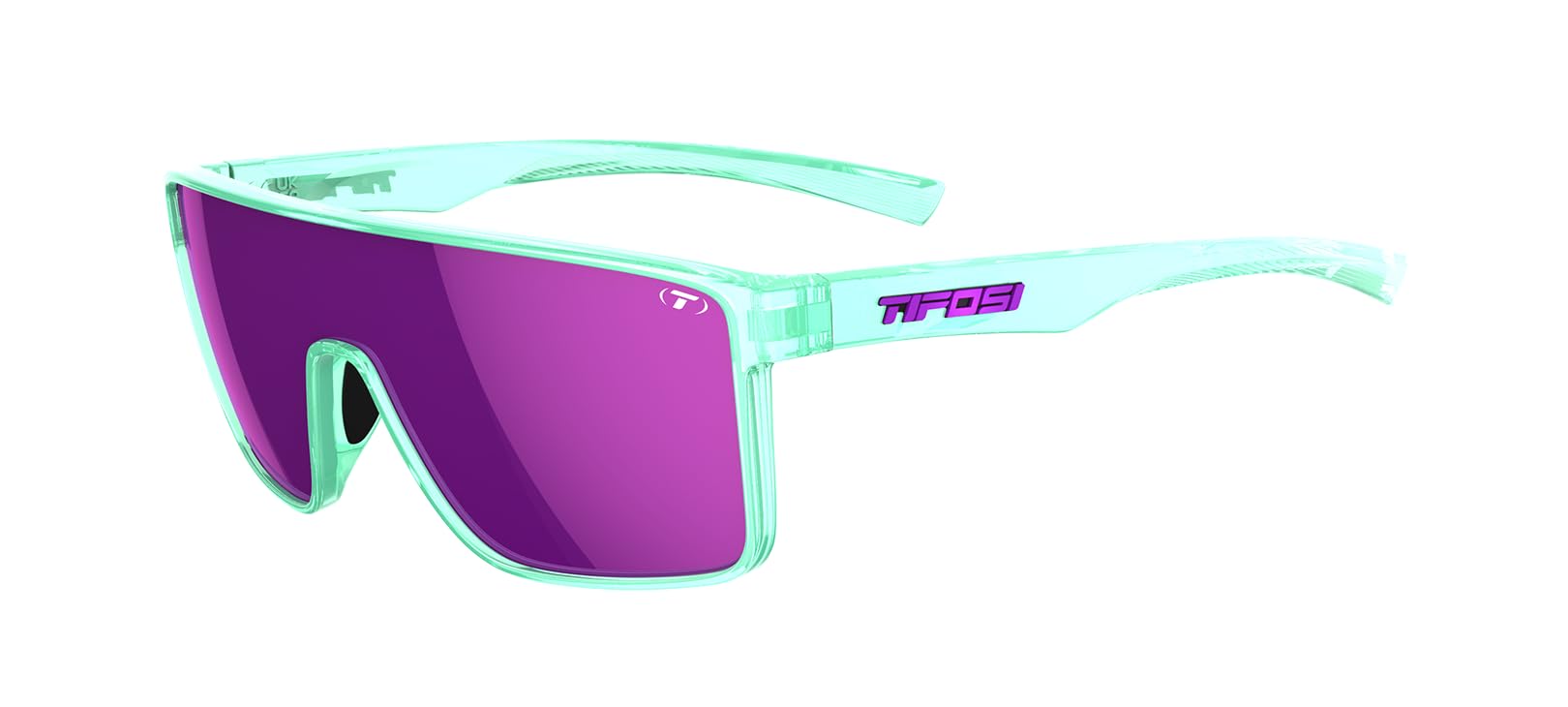
Tifosi has engineered the Sanctum around a distinct problem: glasses that slip when you sweat. The hydrophilic rubber on the nose pads and temple tips becomes tackier with moisture rather than slicker, so these stay planted even during 100-degree gravel grinds where your face is a faucet. The frame weighs in at a negligible 28 grams, making them easy to forget you’re wearing—until you realize you haven’t had to push them back up your nose once.
The polarized lens cuts glare from wet asphalt and car chrome with 100% UV protection, and the anti-fog vents are positioned to channel airflow across the lens interior during forward motion. The wrap-around shield design offers excellent coverage without obstructing peripheral vision, and the slim profile works well under a road helmet. Riders with smaller face shapes report that the Sanctum fits particularly well, with no pressure points behind the ears.
One structural note: the flat top frame sits close to the brow, which can interfere with helmet brims on certain aero helmets. And in zero-motion traffic stops, the anti-fog vents still need a bit of airflow to stay clear. But for any ride where you’re moving, the Sanctum delivers the most secure, slip-free fit in its price bracket, backed by a hard case and cleaning cloth that add real everyday value.
Why it’s great
- Hydrophilic rubber grips tighten when wet
- Ultra-light 28g frame for all-day comfort
- Wrapped shield blocks wind and debris effectively
Good to know
- Flat top frame may contact some helmet brims
- Fogging happens at rest, clears with movement
3. Tifosi Vogel SL Sport Sunglasses

The Vogel SL strips away the unnecessary plastic that most frames wrap around the bottom of the lens, creating an almost rimless lower edge that drops the weight to just 26 grams. This design choice pays dividends on long road rides where heavy frames start digging into your nose bridge after hour three. The shatter-resistant polycarbonate lens provides full UV400 coverage and is treated with a scratch-resistant coating that held up well through a season of sand volleyball and daily commuting.
The frame uses a flexible Grilamid material that bends without breaking, making it a solid choice for riders who toss their glasses in a saddle bag or jersey pocket. The hydrophilic rubber nose pads grip progressively as you sweat, so the Vogel stays put even during interval efforts where you’re breathing hard and looking down at the power meter. Reviews consistently note that these glasses feel more substantial than their price suggests—the lens clarity, in particular, outpaces other options in the same bracket.
The yellow/brown tint of the stock lens gives everything a warm fall cast, which some riders love for contrast enhancement on overcast days but others find disorienting for road riding. If you have a low nose bridge, the lens may sit close enough to touch your cheekbones, transferring sunscreen onto the glass. But for riders with average facial geometry, the Vogel SL offers a premium, near-invisible wearing experience that punches well above its weight.
Why it’s great
- Ultra-light 26g frameless design reduces fatigue
- Flexible Grilamid frame survives drops and jersey pocket abuse
- Lens clarity exceeds expectations at this price point
Good to know
- Lens tint adds warm color cast, not neutral
- Sits too low for some low-nose-bridge riders
4. goodr Polarized Sunglasses OG
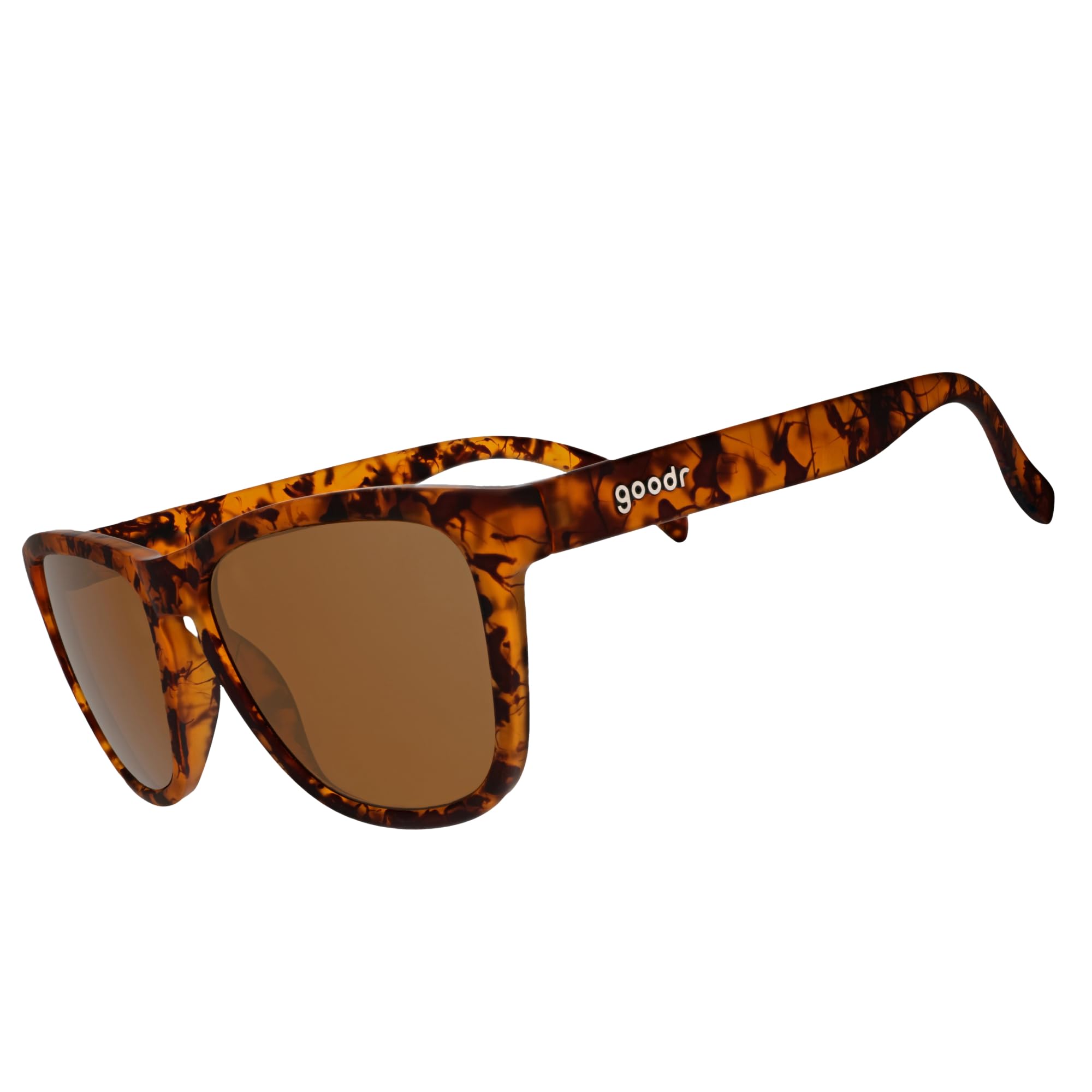
goodr built its reputation on a simple insight: cycling and running glasses should stay on your face, not fall off when you look down at your bike computer. The OG model uses a wrap-around frame geometry combined with lightweight hydrophobic rubber touch points that grip even when your face is drenched in sweat. During a half-marathon training block, these didn’t bounce or slip once—a feat that many premium glasses fail to achieve.
The polarized lenses deliver genuine UV400 protection and cut glare from wet roads and car windshields effectively. At 24 grams, they’re light enough that you can rack them on your hat visor during a rest stop without feeling the weight. The color options are playful without being obnoxious, covering a wide enough spectrum that you can match them to your kit or simply have a pair that stands out in a group ride photo.
The trade-off for this price is lens durability: a drop onto asphalt can pop the lens out of the frame, though it’s easily reinserted. The polarization layer does an excellent job with horizontal glare but slightly darkens the view in overcast conditions, making them less ideal for variable-weather century rides. For everything else—daily commutes, casual group rides, and even beach hangouts—the goodr OG is the best value in the polarized segment.
Why it’s great
- No-slip grip works through drenching sweat
- Lightweight 24g frame ideal for all-day wear
- Wide color palette with genuinely effective polarization
Good to know
- Lens can pop out on hard impact
- Not ideal for overcast or low-light conditions
5. ROCKBROS Mountain Bike Glasses

ROCKBROS solves the biggest hassle of multi-activity eyewear: you get two lenses in the box—one dedicated polarized (15% light transmittance) for bright conditions, and one photochromic (21%–83% transmittance) that adapts to shifting light. That means you can ride from high-noon sun into a wooded singletrack without stopping to swap lenses, or just use the polarized set for consistent, glare-free road riding. The TR90 frame is flexible enough to handle trail abuse without snapping.
The frame includes a novel feature: the lower section is removable, letting you switch between a shielded look and a more open, half-frame aesthetic. The adjustable, anti-slip nose pad fits a range of face shapes, and the included myopia adapter frame means riders who need prescription inserts can use these beyond just sunglasses. The vent holes cut into the lens itself help minimize fogging during steep climbs in humid conditions.
At 1.06 ounces (30 grams), the dual-lens system adds a touch of weight compared to a dedicated single-lens frame. The photochromic transition speed is decent but not instant—you’ll wait a few seconds when moving from deep shade to full sun. But for the rider who wants a do-everything kit—road riding in the morning, trail riding at noon, and commuting at dusk—the ROCKBROS kit eliminates the “wrong lens for the moment” problem entirely.
Why it’s great
- Two specialized lenses (polarized + photochromic) included
- Removable lower frame for styling flexibility
- Myopia frame adapter included for prescription wearers
Good to know
- Photochromic transition is not instant
- Slightly heavier than single-lens options at 30g
6. KAPVOE K76 Polarized Cycling Glasses

The KAPVOE K76 nails the commuter-specific use case: a pair of glasses that look good enough for the coffee stop, perform well enough for the morning interval, and don’t cost so much that you worry about them sitting on the handlebar bag. The package includes three lens colors—a polarized dark lens for bright conditions, a clear lens for low-light or night commuting, and a light blue contrast-enhancing lens for overcast days—all swapping into the TR90 frame with minimal effort.
The adjustable nose piece is a standout at this price point, letting you dial in the vertical position so the frame clears your cheekbones and doesn’t interfere with your helmet strap. Riders who use a cycling mirror report that the temple arms accept the clip-on attachment securely. The vents along the top edge prevent fogging during hard efforts, and the transitional photochromic option on some variants means you can leave the same lens on from sunrise to sunset if you choose.
The main compromise is lens material: the thin polycarbonate lenses scratch more easily than glass, so you’ll want to use the included pouch for storage rather than tossing them loose in a bag. The frame shape is intentionally flashy with a retro-modern aesthetic that won’t appeal to riders who prefer understated looks. For the price and utility bundle, though, the K76 delivers the most complete lens system per dollar in the commuting category.
Why it’s great
- Three lens options cover dawn, day, and dusk
- Adjustable nose piece for customized fit
- Accepts cycling mirror attachments
Good to know
- Thin polycarbonate lenses scratch relatively easily
- Retro-flashy frame styling is not subtle
7. X-TIGER Polarized Cycling Glasses
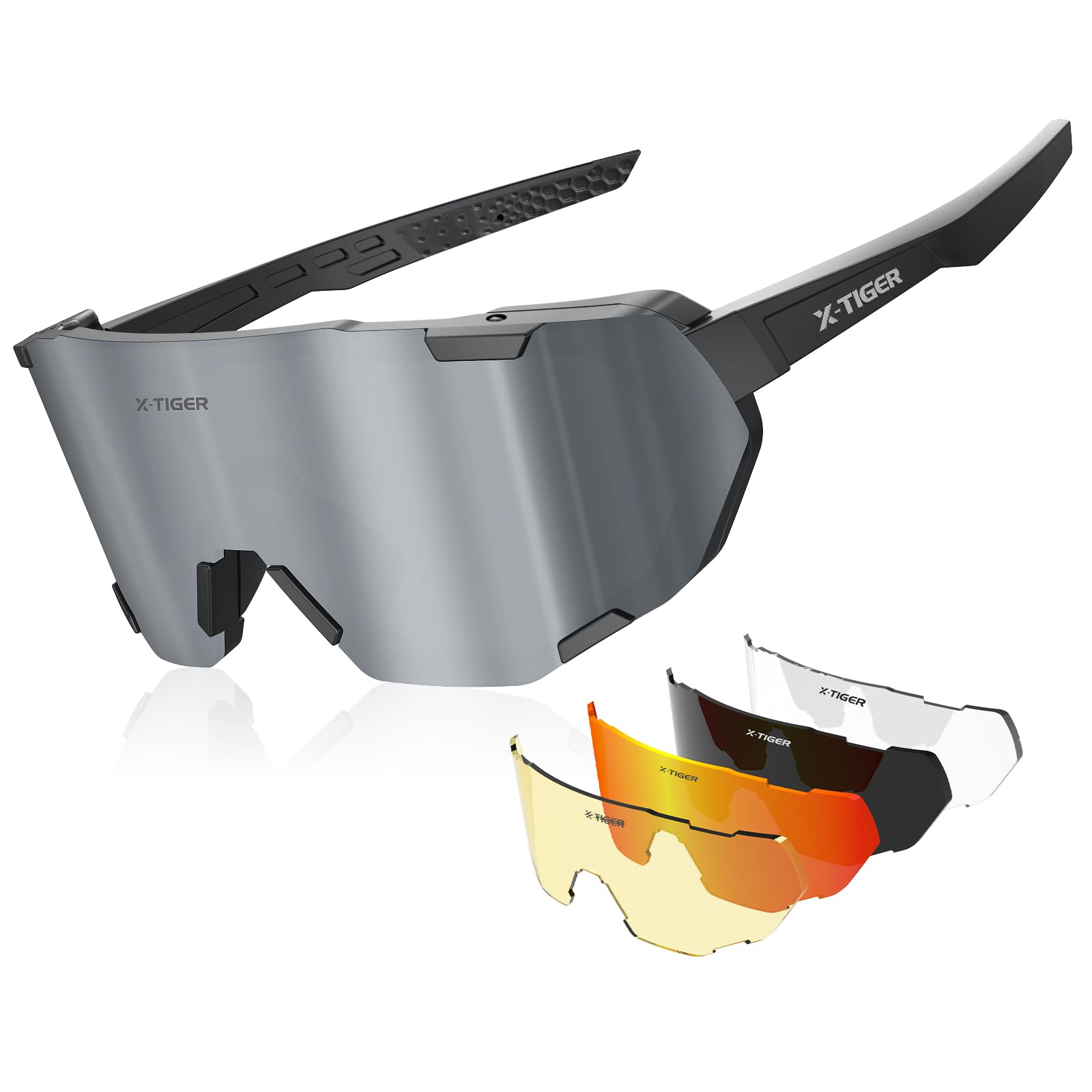
X-TIGER takes the “bring everything” approach to the extreme: five interchangeable lenses bundled with a TR90 frame, including a dedicated polarized lens for glare reduction, a REVO lens for contrast enhancement, a yellow lens for low-light and night riding, a mirror lens for high-glare conditions like snow or beach, and an HD clear lens for overcast days. That’s essentially a six-sport lens kit (cycling, running, skiing, baseball, fishing, and driving) for the price of a single mid-range lens replacement.
The frame geometry uses a curved 8-base wrap that accommodates a wide range of face sizes without pressure points. The soft rubber nose pad and removable side shields add extra protection from wind and debris, which is particularly useful for gravel riding and mountain biking where dust clouds are common. Reviews consistently note that the clarity of the polarized lens surprised them, especially compared to other sub- options that often deliver hazy optics.
The catch is lens-changing ergonomics: the swap system requires some dexterity and the lenses pop out more easily than on premium frames. The myopia adapter frame rattles loose after extended use without periodic tightening. The temple grooves can snag longer hair, and after months of daily use, some riders report pressure discomfort behind the ears. But for the rider who loses or breaks glasses frequently and needs a complete light-management system for under , the X-TIGER kit is practically unbeatable.
Why it’s great
- Massive 5-lens kit covers every conceivable light condition
- Curved wrap fits most face shapes comfortably
- Polarized lens clarity exceeds sub- expectations
Good to know
- Lens changes require careful handling
- Myopia frame may rattle loose over time
FAQ
Can I get a photochromic lens that works for cycling under ?
What is the actual difference between UV400 and polarized in cycling glasses?
How do I prevent affordable cycling glasses from fogging during hard efforts?
Final Thoughts: The Verdict
For most riders, the best affordable cycling glasses are the Crit Sport Sunglasses because the photochromic lens, integrated magnifier, and adjustable fit cover the widest range of riding conditions without needing a lens case. If you want a no-slip frame that stays locked on during your sweatiest efforts, grab the Tifosi Sanctum. And for the rider who needs a complete lens kit for under , nothing beats the X-TIGER 5 Lens Set for sheer utility per dollar spent.