
The single greatest threat to your air conditioner’s efficiency isn’t the outdoor temperature — it’s the layer of cottonwood fluff, grass clippings, and weed seeds that packs itself against your condenser coils. Every clogged fin forces your compressor to work harder, cycle longer, and burn more electricity. A purpose-built AC unit screen is the only barrier between your equipment and a slow, preventable death by debris.
I’m Min — the co-founder and writer behind Gadgets Feed. I’ve spent countless hours studying mesh densities, magnetic seal strengths, filter MERV ratings, and real-world customer feedback to identify which screens actually stop debris without starving your system of airflow.
Whether you need a magnetic window screen to keep bugs out while the unit runs, a mesh condenser cover to stop yard debris, or a high-MERV filter for cleaner indoor air, the right ac unit screen extends equipment life and lowers your electric bill.
How To Choose The Best AC Unit Screen
Selecting the right screen depends entirely on where you’re placing it. An intake filter for a window unit has different airflow and particle-capture requirements than a mesh cover for a 3-ton outdoor condenser. Focusing on three variables — mesh openness, seal type, and material durability — will narrow your options immediately.
Location Dictates Mesh Density
For outdoor condenser covers, you need a mesh that stops cottonwood seeds and grass clippings without choking the fan. A 1.5mm to 2mm aperture mesh (roughly 8×8 to 12×12 strands per inch) offers the best balance. For furnace or intake filters, MERV 11 (MPR 1000) provides a strong defense against dust and mold spores while maintaining enough airflow for most residential HVAC blowers. Foam or carbon sheets used as window-unit pre-filters need lower density — high airflow at the cost of fine-particle capture.
Seal Integrity Is Non-Negotiable
A window screen that jumps off its track during a gust is useless. Look for magnetic strips rated at 600 Gauss or higher for fiberglass mesh screens. For window AC side panels, self-adhesive strips with a minimum peel strength of 5 lb/in ensure the panel stays flush against the frame. Outdoor condenser covers should have a drawstring or adjustable buckle strap that cinches tight around the base — otherwise wind lifts the cover and debris still enters through the bottom gap.
Material Must Survive UV and Moisture
Fiberglass mesh resists UV degradation far better than standard polyester, making it the preferred material for window screens that face direct sun. PVC-coated polyester is the standard for outdoor condenser covers because it sheds water, resists mildew, and holds up to season-after-season freeze-thaw cycles. Activated carbon sheets are strictly for indoor odor control — they lose effectiveness when saturated by outdoor humidity and should never be used as a primary outdoor debris barrier.
Quick Comparison
On smaller screens, swipe sideways to see the full table.
| Model | Category | Best For | Key Spec | Amazon |
|---|---|---|---|---|
| Filtrete 16x20x1 MERV 11 | Pleated Filter | Indoor allergen capture via HVAC | MPR 1000 / MERV 11 | Amazon |
| TRELC Outdoor Mesh Cover | Condenser Cover | Blocking leaves/grass on outdoor unit | 31.5″x31.5″x35.4″ | Amazon |
| Full Mesh AC Defender | Condenser Cover | All-season debris protection with airflow | 32″x32″x36″ | Amazon |
| HOFUDON Magnetic Screen | Magnetic Mesh | DIY window bug screen with easy access | 720GS Magnetic Strip | Amazon |
| LBG Side Panel Kit | Insulating Panel | Sealing gaps around window AC units | 17″x10″ Double Layer | Amazon |
| HOXHA Window Seal | Cloth Seal | Portable AC exhaust hose sealing | 157″ Perimeter | Amazon |
| Bagean Carbon Filter Sheet | Carbon Sheet | Odor removal for indoor air intakes | 0.2″ Thick Sheet | Amazon |
In‑Depth Reviews
1. Filtrete 16x20x1 Air Filter, MERV 11
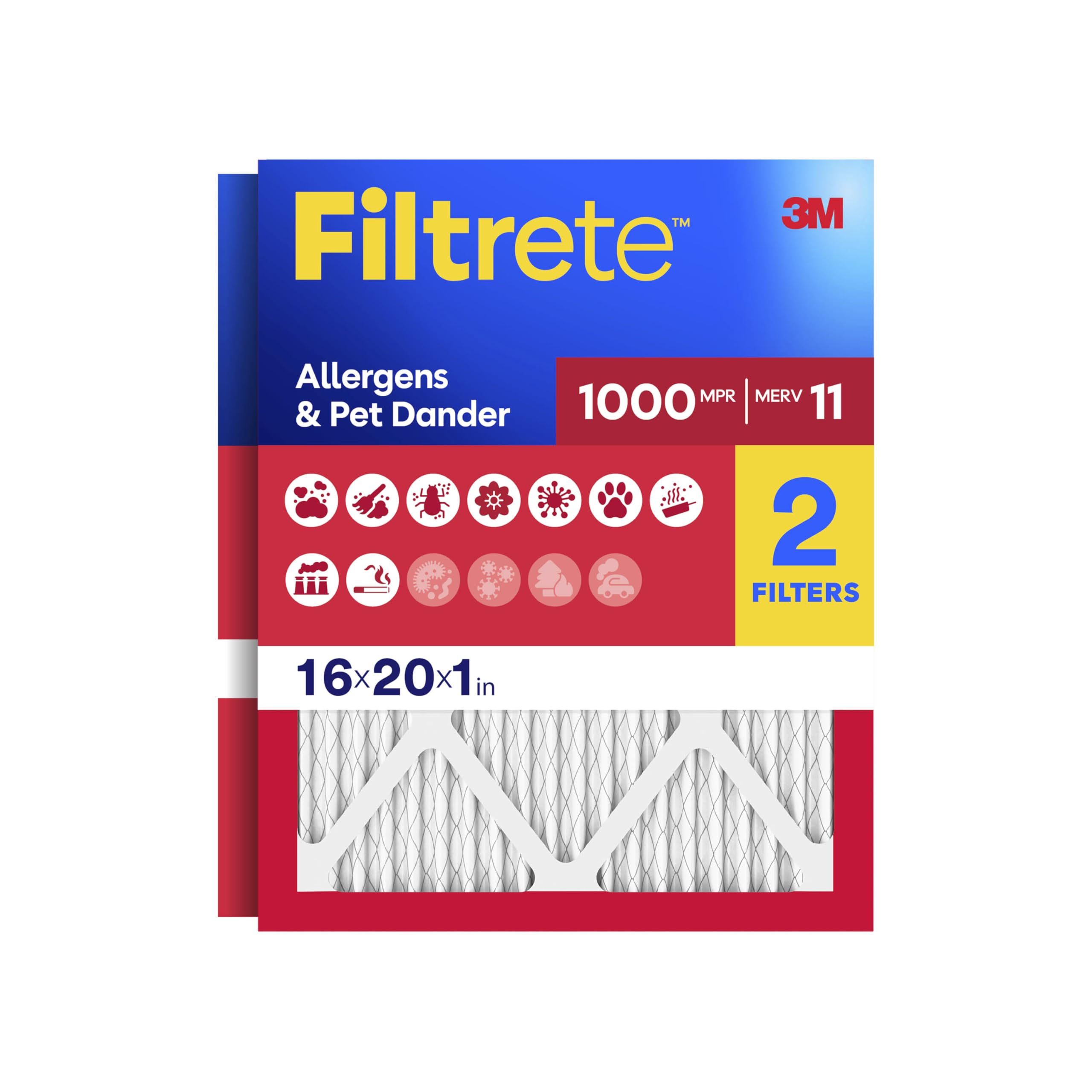
This is the industry benchmark for residential HVAC filtration. Filtrete’s 3-in-1 pleated media captures microparticles as small as 0.3 microns — dust mites, pet dander, mold spores — without appreciably dropping static pressure across the coil. At MERV 11 and MPR 1000, it sits right in the sweet spot between protection and airflow for most standard furnace blowers.
The 16x20x1 actual dimensions (15.68 x 19.68 x 0.81 inches) ensure a snug fit in standard filter slots. Users report instant improvement in air quality, with less dust accumulation on surfaces and a noticeable reduction in allergy symptoms among families with pets. The three-month replacement schedule is realistic for moderate-use homes; heavy-allergy households should swap every 60 days.
This two-pack offers strong per-unit value compared to single retail packs. The Filtrete Smart App integration for replacement reminders is a genuine convenience — set it at 90 days and forget about visual checks. If your HVAC manual allows MERV 11 without airflow concerns, this is the safest buy in the category.
Why it’s great
- Asthma & allergy friendly certified by AAFA
- Precise pleated construction resists warping under high fan speeds
- Converts to a 30/60/90-day reminder system via app
Good to know
- MERV 11 may be too restrictive for older or undersized HVAC systems
- Three-month life assumes 8-12 hours of daily runtime; real-world may need earlier swaps
2. TRELC Outdoor Air Conditioner Cover

If your outdoor condenser sits near a lawn that drops cottonwood fluff or seed pods each season, the TRELC cover is the most effective debris barrier on this list. The heavy-duty PVC-coated polyester shell wraps the top and all four sides, while the fine mesh weave blocks organic matter without impeding airflow. The mesh design allows heat to dissipate naturally — critical for any cover left on during active cooling months.
Installation takes under five minutes: drape the cover over the unit, reach underneath to pull the adjustable strap through the plastic buckle, and cinch tight. Owners report it stays in place through thunderstorms and 40+ mph gusts because the bottom hem can be tucked under the condenser base. The 31.5” x 31.5” x 35.4” footprint fits the vast majority of residential 3- to 4-ton units.
One point of caution: the cover should be removed before running the AC for extended periods if you live in a region with sustained temperatures over 95°F, because trapped heat can still reduce condensing efficiency. For seasonal use during spring seed fall and autumn leaf drop, this is a five-year investment that pays for itself in avoided compressor repairs.
Why it’s great
- Mesh weave blocks cottonwood and fine grass clippings
- Adjustable buckle holds firm in high wind
- Washable and fade-resistant after repeated sun exposure
Good to know
- Should not be left on during peak summer heat for weeks at a time
- Only three size options may leave large units partially exposed
3. Full Mesh Air Conditioner Cover (Lisol)

At 32 inches wide by 36 inches tall, this Lisol cover is engineered for standard outdoor condensers and offers dual-closure security — a drawstring at the base plus an adjustable buckle strap. The heavier mesh weave compared to the TRELC means slightly less airflow but better resistance to tearing from sharp branch ends. The PVC-coated polyester construction sheds water and resists mildew formation even in shaded, damp installations.
Customer feedback highlights the cover’s ability to survive full seasons without strap failure or fabric fraying, though one long-term report noted the buckle broke after eight months in direct coastal salt air. The drawstring tightens around the condenser legs, creating a near-sealed perimeter that prevents mice and wasps from nesting inside the cabinet during the off-season.
For users with standard-sized condensers who want a second layer of bottom closure, the drawstring-plus-buckle combo is a genuine advantage over single-strap designs. The grey color blends into most exterior paint schemes better than stark white. If your unit is larger than 36 inches tall, measure carefully — this cover won’t stretch to fit oversized commercial-grade equipment.
Why it’s great
- Dual closure (drawstring plus buckle) for a tight bottom seal
- Heavy mesh resists tearing from sticks and acorns
- Waterproof layer protects electrical components from rain splash
Good to know
- Coarser mesh than TRELC, which slightly reduces debris capture of fine seeds
- Buckle hardware may corrode in coastal salt environments
4. HOFUDON Magnetic Window Screen

This magnetic screen is the best option for window-mounted AC units that need insect protection without blocking the view or restricting fresh air intake. The fiberglass mesh is treated for flame retardancy and UV stability, while the magnetic strips pack 720 Gauss of holding force — enough to keep the screen closed against moderate wind but light enough for a child or pet to push through. Maximum coverage is 39 by 59 inches, but the mesh and frame can be cut down to any rectangular size.
Installation involves sticking the adhesive-backed magnetic frame to the window casing, then letting the screen self-adhere magnetically. Users report the fiberglass mesh is taut enough to resist sagging over a full season, and the included corner clips add security at the four edges. The screen is removable and washable — just rinse the mesh with a garden hose and reattach.
One important note: the magnetic adhesion works best on steel or iron window frames. For aluminum or vinyl frames, the adhesive strips provide the primary hold, and the magnets serve mainly as a closure aid, not a structural attachment. This is a mid-range solution that outperforms cheap adhesive mesh screens but falls short of custom-made screen frames in durability over multiple seasons.
Why it’s great
- 720-Gauss magnetic strips provide strong closure without hardware
- Fiberglass mesh resists UV degradation and tearing
- DIY cut-to-size eliminates need for custom screen measurements
Good to know
- Magnetic hold weakens on non-ferrous window frames
- Installation manual is crucial for correct adhesive placement
5. LBG Products Window AC Side Panel Kit

For window ACs that leave a gap between the unit sides and the window frame, the LBG double-layer side panel kit provides an insulating screen that blocks outdoor heat and prevents conditioned air from leaking out. The panels measure 17 inches tall by 10 inches wide and are designed to be cut down to fit openings from 5,000 to 20,000 BTU units. The double-wall construction traps dead air space, achieving 80 percent shading and a noticeable reduction in solar heat gain.
The self-adhesive side channels stick to the window frame; the panels then slide into the channels and can be trimmed with a hacksaw or serrated knife for a custom fit. The included insulating tape seals the perimeter edges. Customer feedback is split between those who achieve a perfect seal after careful measurement and those who found the included saw too flimsy for clean cuts — a sturdy blade is recommended for best results.
The panels also serve as a physical barrier against insects and fine dust entering through the side gaps, making them a dual-purpose screen solution.
Why it’s great
- Double-layer design reduces heat transfer through side gaps
- Blocks up to 80% of sunlight entering through the window gap
- Adjustable width fits a wide range of window AC sizes
Good to know
- The included hacksaw is low quality — use your own cutting tool
- Requires precise measurement; 1/8″ measurement error can leave visible gaps
6. HOXHA Universal Window Seal for Portable AC

Portable air conditioners lose efficiency when hot outdoor air leaks back through the window gap. The HOXHA seal kit addresses this with a 157-inch-long polyester cloth seal that wraps around adjustable couplers, creating an enclosed environment for the exhaust hose. At 8.4 ounces total weight, the kit adds virtually no load to the window assembly and folds flat for storage when the AC is packed away for winter.
The key improvement over older zipper-based designs is the adjustable coupler system — instead of relying on a zipper that can break or leak air, the HOXHA uses a cinch-style coupler that tightens around the exhaust hose. The adhesive hook tape bonds to wood, vinyl, or aluminum window frames without drilling. Users with casement and crank-out windows report this is the first seal that actually closes the irregular gaps these windows create.
One limitation: the coupler requires four points of symmetry to align perfectly with the exhaust hose opening, which may require taping if the hose sits off-center. For standard sliding and double-hung windows, installation is straightforward and completes in under 15 minutes. This is the lowest-cost way to recover the 15-20 percent cooling efficiency typically lost by portable ACs with poor window seals.
Why it’s great
- Coupler design eliminates zipper failure points
- Lightweight polyester fabric stores compactly off-season
- Adhesive hook tape works on multiple window frame materials
Good to know
- Coupler symmetry may not align perfectly with every off-center hose
- Fabric seal is less rigid than foam — requires careful initial tension
7. Bagean Activated Carbon Filter Sheet
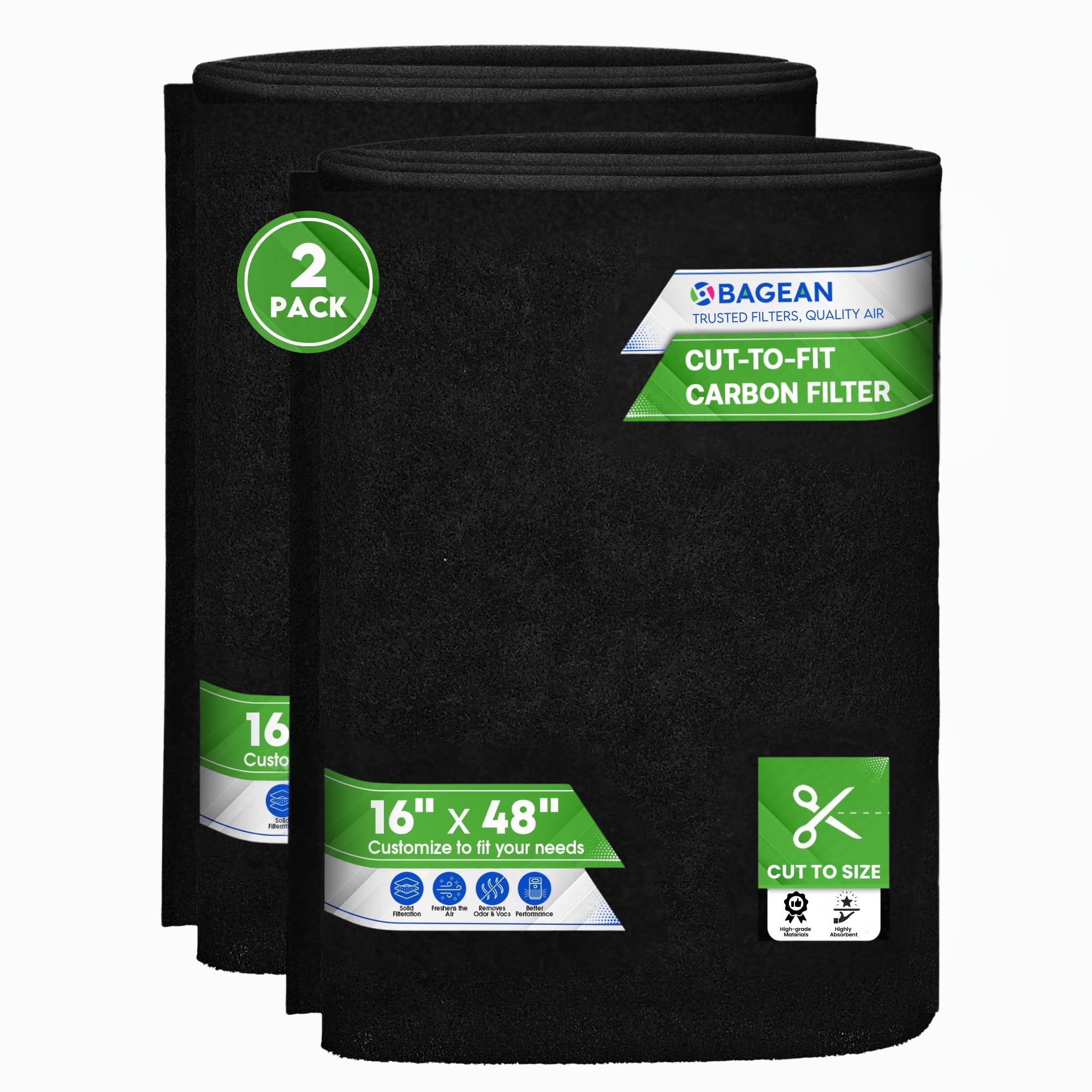
When your primary concern is odor removal rather than particle filtration, the Bagean cut-to-fit carbon sheet offers the most flexible solution. The 16-by-48-inch activated carbon pad is made from coconut shell carbon, which provides higher adsorption surface area than wood-based carbon for the same weight. At 0.2 inches thick, the sheet is thin enough to fit behind existing AC grilles or folded into range hood cavities without restricting exhaust flow.
Customers have successfully cut the sheet into small squares for DTF oven exhaust scrubbers, as a pre-filter for shop vacuums, and as a backing layer behind window AC intake grilles to neutralize outdoor cooking smells. The carbon does not shed black dust during cutting, a common complaint with lower-quality carbon pads. Replacement every three months maintains odor absorption performance.
This is not a replacement for a proper MERV-rated filter — the carbon layer handles gas-phase pollutants and smells but does not capture particulate matter with any meaningful efficiency. Use it behind a fiberglass or pleated screen as a dedicated odor stage, or as a standalone pre-filter in low-dust environments where smell is the primary nuisance. The value per square inch is excellent for a specialty carbon sheet.
Why it’s great
- Large sheet yields multiple custom-sized filters
- Coconut shell carbon offers superior odor adsorption vs. wood-based carbon
- No carbon shedding during cutting or handling
Good to know
- Limited particulate filtration — must be paired with a mechanical filter for dust
- Thin profile may sag if used unsupported in high-velocity airflow
FAQ
Can I run my central AC with a mesh cover on the outdoor condenser?
How often should I replace a MERV 11 furnace filter if I have pets?
Will a magnetic window screen hold securely on a vinyl window frame?
What is the difference between an AC side panel kit and a window seal for portable ACs?
Can a carbon filter sheet be washed and reused?
Final Thoughts: The Verdict
For most users, the ac unit screen winner is the Filtrete 16x20x1 MERV 11 because it delivers proven particle capture for indoor HVAC systems without over-restricting airflow — the standard that every other filter is measured against. If you need to protect an outdoor condenser from seasonal debris, the TRELC Outdoor Mesh Cover is the most reliable mesh barrier for preventing compressor clogs. And for a DIY window bug screen that allows natural ventilation, the HOFUDON Magnetic Window Screen offers the best combination of magnetic seal strength and cut-to-fit convenience.