
The 8-inch Android tablet market has quietly become the most aggressively competitive slice of the entire tablet landscape. Buyers are no longer choosing between a sluggish budget slate and an overpriced mini iPad — the current crop of compact Android tablets packs serious hardware at real-world prices, turning what was once a e-reader or toddler toy into a legitimate daily driver for streaming, light productivity, and even gaming. The challenge isn’t finding an 8-inch tablet anymore; it’s picking the one that doesn’t force you to compromise on the specs that actually matter.
I’m Min — the co-founder and writer behind Gadgets Feed. My research for this guide involved cross-referencing benchmark data across dozens of models, analyzing battery performance claims against real-world use reports, and pitting connectivity standards like Wi-Fi 6 and Bluetooth 5.4 head-to-head to separate genuine upgrades from marketing checkboxes.
Whether you need a travel companion for offline video, a kid-friendly device with robust parental controls, or a secondary screen for reading and browsing, this guide breaks down the top contenders to help you find the best 8 inch android tablet without wasting time on specs that don’t translate to real use.
How To Choose The Best 8 Inch Android Tablet
An 8-inch tablet occupies a unique spot — large enough for comfortable video playback and reading, small enough to hold one-handed. The buying mistake most people make is focusing exclusively on storage or brand name while ignoring the processor generation, RAM configuration, and display certification that actually determine whether the tablet feels responsive six months after purchase. Here’s what to prioritize.
Real RAM vs. Virtual RAM Expansion
Several budget-friendly models advertise “12GB RAM” but only 4GB of that is physical memory — the rest is borrowed from storage via virtual RAM expansion technology. While this helps keep a few extra apps in memory, it’s dramatically slower than true physical RAM and can introduce stutter when switching between heavier apps. For a smoothly responsive experience, prioritize tablets with at least 4GB of genuine physical RAM. The virtual RAM number should be treated as a minor bonus, not a primary spec.
Widevine L1 Certification for HD Streaming
If you plan to watch Netflix, Amazon Prime Video, or Disney+ on your tablet, Widevine L1 certification is non-negotiable. Without it, streaming apps cap resolution at 480p or 540p, making video look soft and pixelated on an 8-inch display. Models that advertise L1 support guarantee full HD playback on major services. Always confirm this certification in the technical specs — some budget tablets omit it entirely despite having HD-resolution screens.
Battery Capacity and Charging Speed
Most 8-inch tablets ship with batteries between 5000mAh and 5500mAh, which translates to roughly 8 to 13 hours of mixed use. The more important metric is charging speed. A 5000mAh battery paired with a 10W charger takes over three hours to fully charge — a genuine inconvenience for daily use. Look for tablets that support 15W or faster charging, and check whether a compatible charger is included in the box, as some manufacturers ship underpowered chargers that negate the fast-charging capability.
Connectivity: Wi-Fi 6, Bluetooth, and GPS
Wi-Fi 6 brings meaningful real-world speed improvements, especially in homes with multiple connected devices, while Bluetooth 5.3 or 5.4 offers lower latency for wireless audio and game controllers. GPS support, meanwhile, is often overlooked but matters if you plan to use the tablet for navigation or offline maps during travel. Many budget tablets disable GPS to cut costs, so check the fine print if offline navigation is a priority.
Quick Comparison
On smaller screens, swipe sideways to see the full table.
| Model | Category | Best For | Key Spec | Amazon |
|---|---|---|---|---|
| BNCF BPad T1 | Premium | Best overall with Android 16 and 90Hz display | 24GB RAM (8+16 virtual) / 128GB storage / 5500mAh | Amazon |
| Samsung Galaxy Tab A9 | Premium | Best premium performance from a major brand | Helio G99 / 4GB RAM / 64GB storage / Bluetooth 5.3 | Amazon |
| Lenovo Tab One | Mid-Range | Best all-around value with included folio case | Helio G85 / 4GB RAM / 64GB / 480 nits / Dolby Atmos | Amazon |
| Samsung Galaxy Tab A7 Lite | Mid-Range | Durable metal frame for kids and travel | MT8768N / 3GB RAM / 32GB storage / 5100mAh | Amazon |
| Amazon Fire HD 8 (4GB) | Mid-Range | Best for the Amazon ecosystem | 4GB RAM / 64GB storage / 13-hour battery / Alexa | Amazon |
| Amazon Fire HD 8 (3GB) | Mid-Range | Best entry-level Amazon tablet | 3GB RAM / 32GB storage / 13-hour battery | Amazon |
| Azeyou Mini Tablet | Budget | Best budget pick with GPS and Widevine L1 | 4GB RAM (3+1 virtual) / 64GB / 5000mAh / GPS | Amazon |
| HAOVM M8 Tablet | Budget | Best ultra-budget pick with Wi-Fi 6 | 12GB RAM (4+8 virtual) / 64GB / 5100mAh / Wi-Fi 6 | Amazon |
| Lenovo Tab M8 (4th Gen) | Budget | Best battery life for basic media consumption | Helio A22 / 2GB RAM / 32GB / 5100mAh / 16-hour battery | Amazon |
In‑Depth Reviews
1. BNCF BPad T1
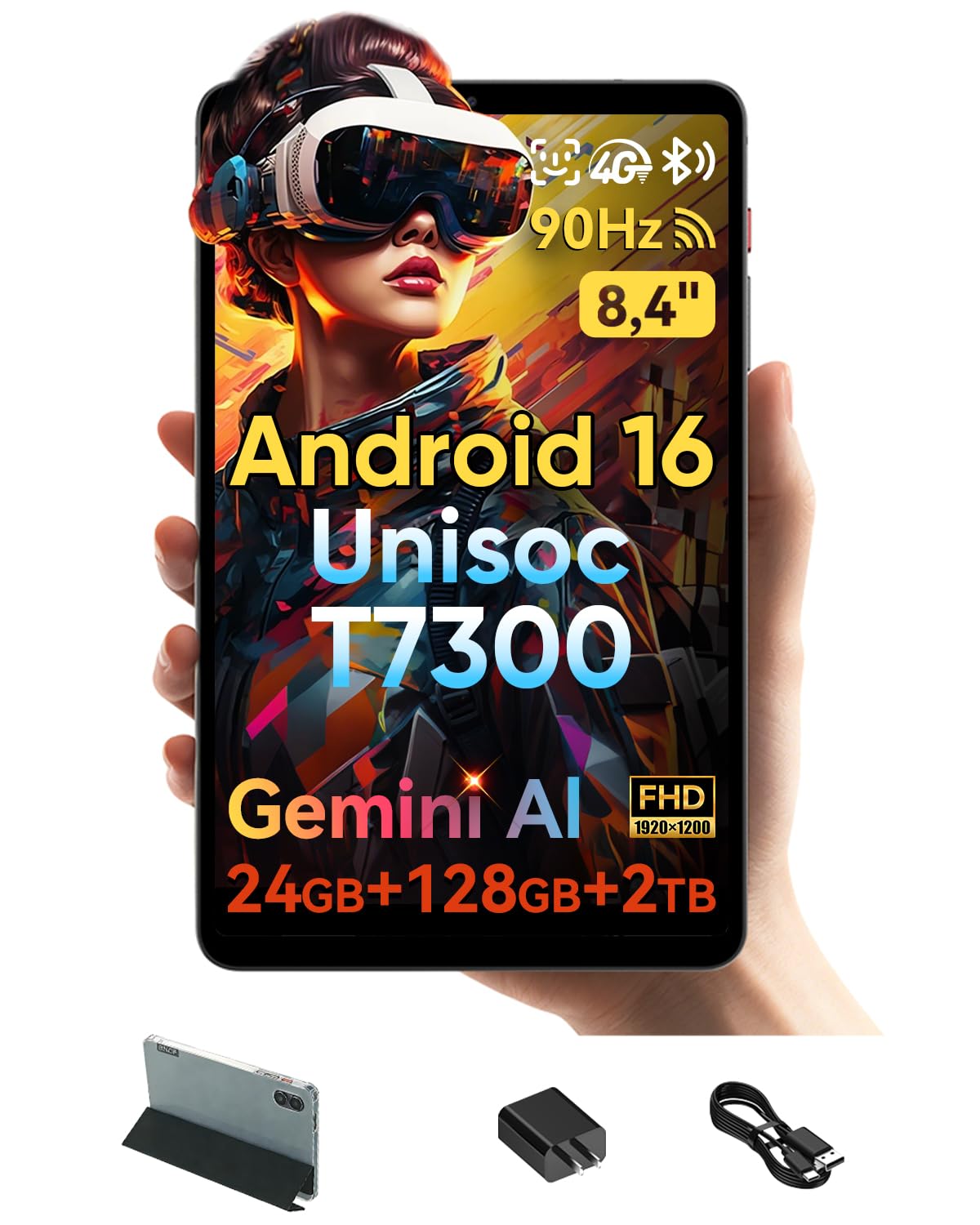
The BNCF BPad T1 stands out immediately for shipping with Android 16, making it the most future-proof 8-inch tablet on this list. The Unisoc T7300 octa-core processor built on a 6nm process delivers fluid day-to-day performance, and the 8.4-inch FHD+ display with a 90Hz refresh rate provides noticeably smoother scrolling and animations compared to the 60Hz panels found on most competitors. At 316 grams with a 7.6mm profile, it’s also remarkably light and thin for a tablet packing a 5500mAh battery.
The screen is the star here — 1920×1200 resolution at 90Hz makes reading articles, navigating the interface, and watching video feel genuinely premium. Widevine L1 certification ensures full HD playback on Netflix and Disney+. The 13MP rear camera and 8MP front camera are capable enough for document scanning and video calls, while 4G LTE, Wi-Fi 6, and Bluetooth 5.4 keep connectivity options current. A protective case is included in the box, which adds immediate value.
The downside is the RAM configuration: the advertised 24GB is built from 8GB physical RAM plus 16GB of virtual expansion, so heavy multitasking won’t feel as snappy as a true 12GB physical RAM device. Face unlock works reliably about half the time, and there’s no fingerprint sensor. Still, for the combination of Android 16, a 90Hz FHD screen, and a large battery in a lightweight chassis, this tablet sets a new bar for the form factor.
Why it’s great
- Runs Android 16 with Gemini AI integration
- 90Hz FHD+ display is the smoothest in this class
- Lightweight 316g body with 5500mAh battery
- Widevine L1 for HD streaming on all major apps
Good to know
- 24GB RAM is heavily dependent on virtual expansion
- Face unlock is inconsistent
- No fingerprint sensor available
2. Samsung Galaxy Tab A9

The Samsung Galaxy Tab A9 represents what a major manufacturer can achieve when it commits serious hardware to the 8-inch form factor. The MediaTek Helio G99, built on a 6nm process, is a genuine step up from the older Helio G85 and MT8768N chips found in budget competition — it handles app switching, web browsing, and casual gaming without the stutter that plagues cheaper 8-inch tablets. The 4GB of physical RAM and 64GB of onboard storage provide a solid foundation, expandable via microSD up to 1TB.
Bluetooth 5.3 is a meaningful upgrade over the 5.0 standard still common in this category, offering lower latency for wireless earbuds and game controllers. The 8.7-inch TFT display runs at 1340×800 resolution, which is adequate but not industry-leading — colors and contrast don’t match the IPS panels found on the Lenovo Tab One or the BNCF BPad T1. Battery life from the 5100mAh cell is solid, delivering a full day of mixed use, and the included 15W charger is appreciated since many competitors ship underpowered adapters.
This is an international model, so there’s no US warranty, and the box includes a region-appropriate charger. Setup requires selecting a non-US country during initial configuration, which some users find confusing. The speakers are loud and clear, and face recognition works approximately 75% of the time. For buyers who prioritize brand reliability, software update support, and genuine 4GB physical RAM, the Tab A9 justifies its premium positioning.
Why it’s great
- Helio G99 offers class-leading processing power
- Real 4GB physical RAM ensures smooth multitasking
- Bluetooth 5.3 for low-latency audio
- Expandable storage up to 1TB
Good to know
- International model with no US warranty
- TFT display is less vibrant than IPS alternatives
- Face unlock is inconsistent
3. Lenovo Tab One
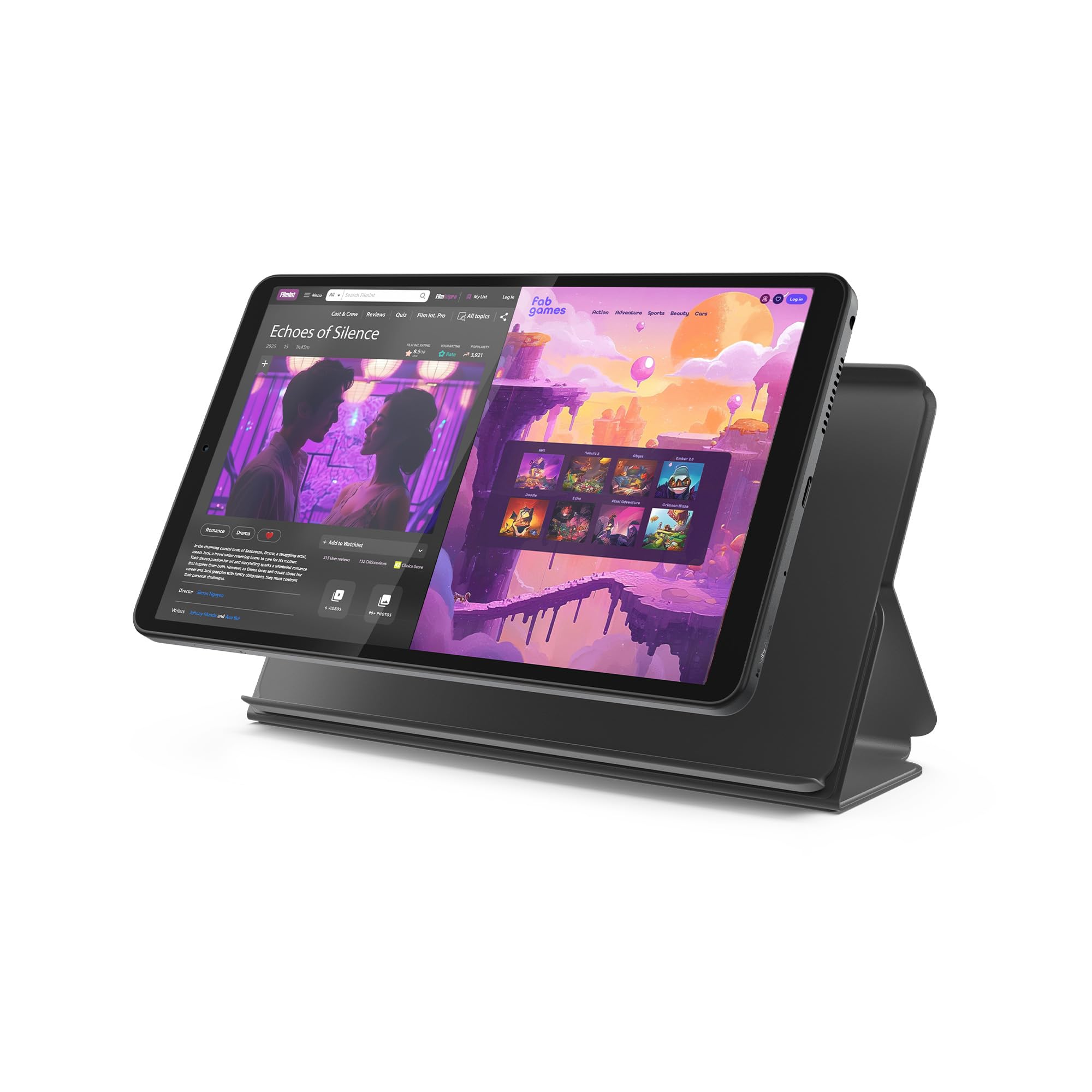
The Lenovo Tab One hits a sweet spot that few 8-inch tablets manage: it combines a known brand, solid hardware, and an included folio case at a price that undercuts most mid-range competitors. The MediaTek Helio G85 processor paired with 4GB of physical RAM delivers snappy performance for web browsing, email, YouTube streaming, and even some light gaming. The 8.7-inch HD display hits an impressive 480 nits of brightness, making it one of the most readable 8-inch tablets under direct sunlight or bright indoor lighting.
Dual Dolby Atmos speakers provide genuinely impressive sound depth for a tablet this size, and the included 3.5mm headphone jack is a welcome feature for wired audio enthusiasts. Battery life is excellent, with real-world reports confirming up to 12 hours of YouTube streaming on a single charge. The 64GB of internal storage is generous for the price tier, and microSD expansion up to 512GB ensures you won’t run out of space for offline content. The included folio case doubles as a stand for hands-free viewing.
The main drawback is the presence of pre-installed bloatware — users report needing to disable several apps and animations to achieve the snappiest experience. The 60Hz refresh rate is standard at this price, but feels less fluid after testing a 90Hz panel. Some users also note that the included charger charges at a slower rate than the tablet supports. Despite these minor issues, the Lenovo Tab One delivers the best balanced package of performance, display quality, and accessories in the mid-range category.
Why it’s great
- 480-nit display is the brightest in its class
- 4GB real RAM for smooth everyday performance
- Included folio case with built-in stand
- Dolby Atmos dual speakers with headphone jack
Good to know
- Some bloatware needs to be removed manually
- 60Hz display feels less smooth than 90Hz alternatives
- Charger may be slower than tablet’s maximum supported speed
4. Samsung Galaxy Tab A7 Lite

The Samsung Galaxy Tab A7 Lite has been a staple recommendation for parents and travelers since its 2021 launch, and for good reason. Its upgraded metal frame provides genuine drop protection that plastic-bodied tablets can’t match — multiple user reports confirm it survives tumbles that would shatter cheaper alternatives. The 8.7-inch display, while limited to a standard TFT panel, is paired with Gorilla Glass for scratch resistance, and the 5100mAh battery delivers a full day of entertainment for kids or a long flight’s worth of video playback.
Samsung Kids is a genuinely useful software suite that lets parents control content access, set screen time limits, and monitor usage from their own device. The One UI integration with other Samsung devices allows seamless content sharing — start a show on your phone and pick it up on the tablet. Performance from the MediaTek MT8768N processor with 3GB RAM is adequate for streaming, e-books, and light gaming, though it struggles when multiple apps are open simultaneously. The included 15W fast charging is appreciated.
The age shows in a few areas: the display resolution is lower than newer competitors, and the 2021-era processor can’t match the Helio G85 or G99 for gaming. The 32GB internal storage fills quickly, though expandable storage up to 1TB helps. Some users report touch sensitivity issues after applying a screen protector. For buyers who prioritize durability and parental controls over raw performance, the A7 Lite remains a reliable choice, especially at its current price point.
Why it’s great
- Metal frame with Gorilla Glass for durability
- Samsung Kids provides robust parental controls
- 5100mAh battery with 15W fast charging
- Expandable storage up to 1TB
Good to know
- 2021-era processor lags behind newer models
- Only 32GB of internal storage
- TFT display is less vibrant than IPS panels
5. Amazon Fire HD 8 (4GB RAM)

The Amazon Fire HD 8 with 4GB RAM is the first Fire tablet that genuinely feels responsive enough for daily adult use. The 50% RAM increase over the 2022 release transforms the experience — switching between Prime Video, the Silk browser, and email no longer triggers the stuttering and reloading that plagued earlier Fire tablets. The 64GB storage capacity, expandable up to 1TB, provides plenty of room for offline content, and the 13-hour battery life is class-leading for continuous video playback.
Alexa integration remains the Fire HD 8’s killer feature for Amazon loyalists. Voice control for smart home devices, shopping list management, and hands-free video calls via Zoom work reliably. The 5MP rear camera is adequate for document scanning and casual photos. The display is bright enough for indoor use, and the inclusion of USB-C charging is a welcome upgrade over older micro-USB models. The 4GB RAM model handles Amazon Luna cloud gaming surprisingly well, outperforming many laptops for streaming titles like Skyrim and Fallout.
The major limitation is the Amazon Appstore instead of Google Play. You can’t install Chrome, Google Docs, or many mainstream Android apps natively. Workarounds exist but require technical know-how. The lock screen displays ads unless you pay extra to remove them, and the Silk browser is significantly less capable than Chrome. For users deeply invested in Amazon’s ecosystem — Prime Video, Kindle, Alexa, and Amazon Music — the Fire HD 8 with 4GB RAM is the best choice. For everyone else, the app store limitation is a genuine dealbreaker.
Why it’s great
- 4GB RAM makes multitasking genuinely smooth
- 64GB storage with 1TB expandable capacity
- 13-hour battery life for all-day use
- Alexa integration for smart home control
Good to know
- Limited to Amazon Appstore — no Google Play access
- Lock screen includes advertisements
- Silk browser is less capable than Chrome
6. Amazon Fire HD 8 (3GB RAM)
The 3GB RAM version of the Amazon Fire HD 8 is the entry point into Amazon’s tablet ecosystem and is best suited for light, single-app use cases like Kindle reading, background music playback, or serving as a dedicated smart home control panel. The 3GB of RAM represents a 50% increase over the 2022 model, which helps with basic navigation, but multitasking between three or more apps will trigger app reloads and occasional stutter. The 32GB storage, expandable to 1TB, is adequate for offline video and e-books.
Battery life is excellent at up to 13 hours, and the USB-C charging is a meaningful convenience upgrade. The display quality is identical to the 4GB model — adequate for indoor use but not particularly bright for outdoor reading. The 5MP rear camera handles basic photography and document scanning. Alexa integration for voice commands and smart home control works identically to the higher-RAM version, making this model a viable choice if you plan to use it primarily as a voice-controlled device rather than a multitasking tablet.
The same ecosystem limitations apply here: no Google Play, ads on the lock screen, and the Silk browser. User reports of performance degrading over time are more common with the 3GB model than the 4GB version. For very young children who only use one app at a time, or as a dedicated kitchen tablet for recipes and music, the 3GB Fire HD 8 is a solid entry-level option. For anyone planning to browse the web and run multiple apps, the 4GB version is worth the additional investment.
Why it’s great
- Very accessible entry price for Amazon ecosystem
- 13-hour battery life for all-day use
- USB-C charging for modern convenience
- Alexa integration for hands-free control
Good to know
- 3GB RAM struggles with multitasking
- Only 32GB internal storage
- No Google Play app store access
- Performance may degrade over time with heavy use
7. Azeyou Mini Tablet
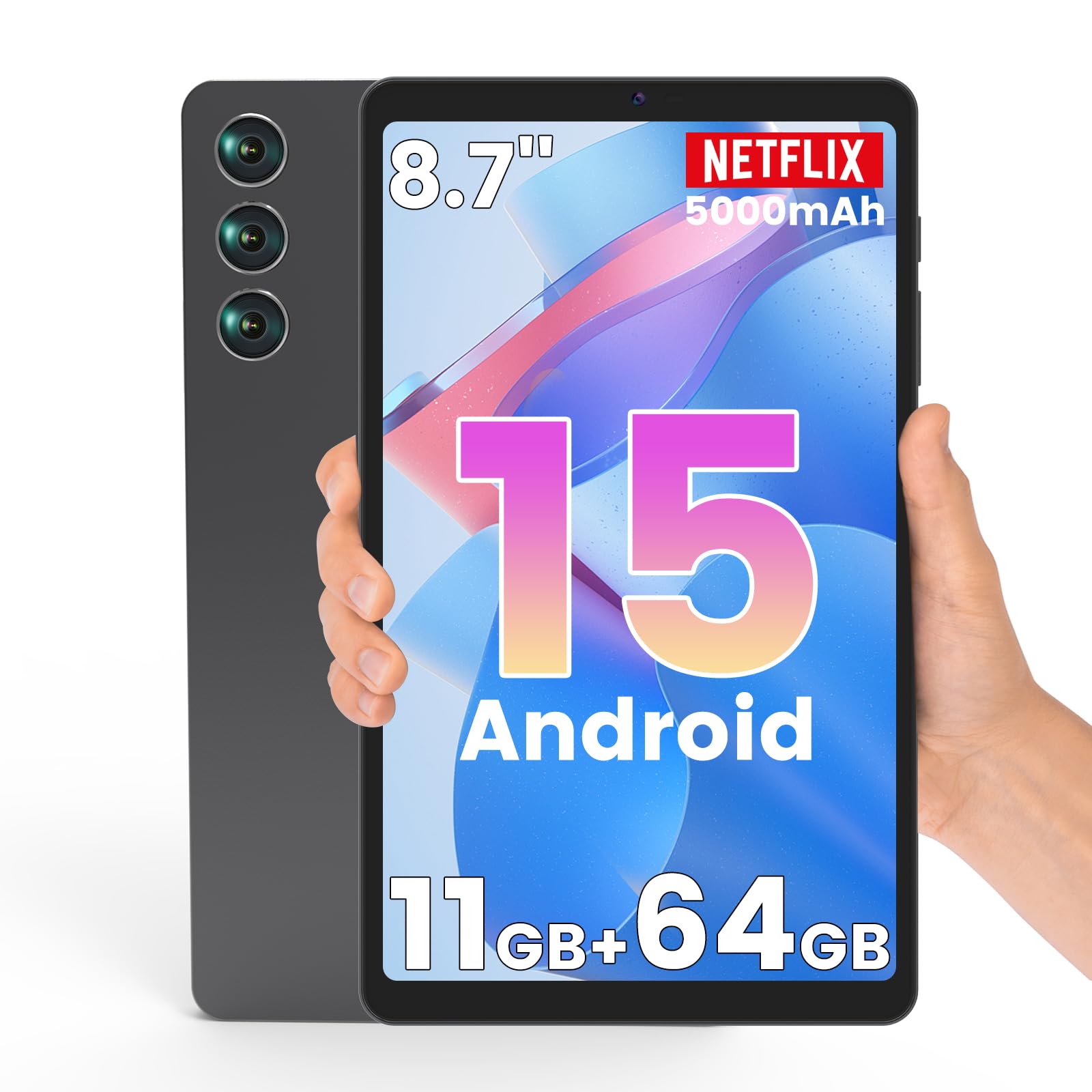
The Azeyou Mini Tablet stands out in the budget tier for including GPS navigation and Widevine L1 certification — two features that are often the first to be cut on lower-priced tablets. The built-in GPS works reliably for driving and walking navigation using Google Maps, while the Widevine L1 certification ensures full HD playback on Netflix and Disney+. The 8.7-inch IPS display is bright and offers good viewing angles for the price, and the 5000mAh battery provides a solid 8 hours of mixed use.
Android 15 runs reasonably smoothly on the quad-core processor with 3GB physical RAM supplemented by virtual RAM expansion. Day-to-day tasks like web browsing, email, e-book reading, and video streaming are handled without major issues. The 64GB of internal storage, expandable up to 1TB via microSD, provides ample room for offline content. The tablet is lightweight at approximately 470 grams and feels well-constructed for its price tier. Dual-band Wi-Fi and Bluetooth 5.0 keep connectivity current.
The 10W charging speed is the main practical limitation — refilling the 5000mAh battery takes over three hours, which is slow by modern standards. The 2MP front camera is mediocre for video calls, and the quad-core processor will struggle with anything beyond casual gaming. Finding a fitted case is difficult due to the non-standard dimensions; a universal case is required. For budget-conscious buyers who need GPS for travel or navigation and want HD streaming without compromises, the Azeyou delivers surprising value.
Why it’s great
- Built-in GPS for navigation and offline maps
- Widevine L1 for full HD streaming on Netflix and Disney+
- 64GB storage expandable up to 1TB
- Bright IPS display with good viewing angles
Good to know
- 10W charging is very slow for a 5000mAh battery
- 2MP front camera is low quality for video calls
- Difficult to find a fitted protective case
- Processor struggles with gaming
8. HAOVM M8 Tablet

The HAOVM M8 is the most aggressively specified budget tablet on this list on paper, with Android 15, Wi-Fi 6, Bluetooth 5.4, and a claimed 12GB of RAM. In practice, it’s a 4GB physical RAM device with 8GB of virtual expansion, but that still puts it ahead of most budget competitors for light multitasking. The 8-inch IPS display with Widevine L1 delivers genuinely good HD video quality, and the 5100mAh battery provides up to 10 hours of streaming. The included 8MP rear and 5MP front cameras are a step above the 2MP sensors found on similarly priced tablets.
The standout feature is Wi-Fi 6, which delivers a noticeable speed improvement over Wi-Fi 5 in homes with multiple connected devices. Bluetooth 5.4 offers the lowest latency available on any tablet in this price range, making it a good choice for wireless gaming controllers and earbuds. The tablet also supports 4G LTE via a SIM card, giving you cellular connectivity for on-the-go use without relying on Wi-Fi hotspots. The build quality is decent for the price, and the tablet is lightweight enough for comfortable one-handed reading.
The main concern is reliability. Several user reports indicate that GPS is disabled on this device — Google Maps navigation won’t work despite the tablet having cellular connectivity. The virtual RAM expansion can cause app crashes when multiple heavier apps are open simultaneously, and the interface can feel sluggish under load. Some users have reported needing to factory reset the device to clear a Chinese diagnostic mode during initial setup. For buyers who need a cheap secondary tablet with good wireless specs for light streaming and browsing, the HAOVM M8 is a viable option, but it carries more risk than the Azeyou or Lenovo alternatives.
Why it’s great
- Wi-Fi 6 and Bluetooth 5.4 for premium wireless
- Widevine L1 for HD streaming
- 4G LTE cellular support via SIM card
- 5100mAh battery with 10-hour streaming life
Good to know
- GPS is disabled — no offline navigation
- Only 4GB physical RAM despite 12GB claim
- Some units require factory reset at setup
- Interface can feel sluggish under load
9. Lenovo Tab M8 (4th Gen)

The Lenovo Tab M8 (4th Gen) is the battery champion of this roundup, with a claimed 16 hours of video playback from its 5100mAh cell — a figure that real-world users largely confirm, especially when using the tablet for YouTube, music, and basic apps. The TÜV Eye Care certification and dedicated Reading Mode make it the best option on this list for extended e-book reading sessions, reducing blue light emissions and simulating a paper-like reading experience that genuinely reduces eye strain over long periods.
The MediaTek Helio A22 processor with 2GB RAM running Android 12 (Go Edition) is the most modest hardware configuration here, and it shows. Navigation is usable but not snappy — expect occasional stutter when switching apps and slower loading times for web pages. The 32GB storage is limited, though expandable via microSD. The 8-inch HD display is crisp for text but lacks the brightness and color saturation of the IPS panels on the Lenovo Tab One or BNCF BPad T1. The dual speakers provide adequate sound for YouTube and podcasts but lack bass depth.
This tablet is narrowly targeted: it’s excellent for reading e-books, playing background music, and watching YouTube in bed, but it will frustrate anyone expecting multitasking performance. The 2GB RAM means apps frequently reload when switching, and x265 video codecs can cause stuttering during playback. The Family Link parental controls work well for children’s tablets, and the privacy dashboard provides clear visibility into app permissions. For the specific use case of a dedicated e-reader or a child’s first tablet, the Tab M8 delivers unmatched battery life and eye comfort. For general-purpose use, the Lenovo Tab One is a far better investment.
Why it’s great
- 16-hour battery life is best in class
- TÜV Eye Care certification for comfortable reading
- Dedicated Reading Mode for e-book lovers
- Lightweight and portable plastic body
Good to know
- 2GB RAM causes frequent app reloads
- Helio A22 processor is noticeably slow
- Android Go Edition limits multitasking capability
- x265 video stutters during playback
FAQ
Can I install Google Play on the Amazon Fire HD 8?
Does GPS work on tablets without cellular connectivity?
Is a 60Hz display good enough for an 8-inch tablet?
Final Thoughts: The Verdict
For most users, the best 8 inch android tablet is the BNCF BPad T1 because it combines Android 16, a smooth 90Hz FHD display, and a large 5500mAh battery in an exceptionally light chassis — features you simply won’t find elsewhere in this form factor. If you want a proven brand with reliable performance and software updates, grab the Samsung Galaxy Tab A9. And for the best value with an included case and bright 480-nit display, nothing beats the Lenovo Tab One.