
The pursuit of a perfect digital-to-analog conversion is the central obsession in high-fidelity audio, yet the right DAC can be the single most transformative component in a signal chain. Beyond the marketing claims of chip counts and filter topologies lies the core truth: a great DAC reveals nuance, retrieves micro-detail, and paints a soundstage that pulls you out of the listening chair and into the recording venue. The challenge is separating genuine engineering from audiophile mythology, especially when evaluating the precise tonal balance, output stage design, and power delivery that defines a reference-class component.
I’m Min — the co-founder and writer behind Gadgets Feed. I have spent countless hours analyzing DAC architectures, from discrete R2R ladder arrays to multi-chip ESS Sabre implementations, cross-referencing output impedance plots, jitter measurements, and real-world headphone pairings to build this guide with surgical precision.
Whether you are upgrading from a motherboard codec or building a high-end headphone rig, finding the best audiophile dac for your system hinges on understanding your transducer’s sensitivity and your stylistic preference for analytical or musical presentation.
How To Choose The Best Audiophile DAC
Selecting a DAC is an exercise in matching an engineering philosophy to your listening habits and system synergy. The wrong choice can leave your headphones sounding lifeless or harsh, while the right one reveals layers of information you never knew existed in your favorite recordings. Focus on the interface that fits your source, the output stage that respects your headphones, and the tonal character that keeps you listening for hours.
DAC Architecture: R2R vs. Delta-Sigma
The DAC chip or discrete ladder defines the fundamental sonic signature. Ladder-type R2R designs, like the one in the FiiO K13 R2R, use precision resistors to recreate the analog waveform directly, producing a cohesive, organic sound with a natural roll-off in the high frequencies that many describe as “analog-like.” In contrast, Delta-Sigma chips (ESS Sabre, AKM) use oversampling and noise shaping to achieve incredibly low distortion and extended frequency response, often resulting in a more incisive, detailed presentation. Your choice here is a stylistic one, not a quality judgment.
Output Power and Impedance Matching
A DAC’s headphone amplifier stage must provide adequate voltage swing for high-impedance dynamic drivers (300-600 ohms) and sufficient current for low-impedance planar magnetics. For sensitive IEMs, an output impedance below 1 ohm is critical to avoid altering the frequency response. The aune S9c Pro delivers 5 watts into 32 ohms, while the iFi Zen DAC 3 offers lower gain settings for sensitive monitors. Always check the power rating at your specific headphone impedance.
Connectivity and Digital Filters
USB input with asynchronous clocking is the modern standard, but coaxial, optical, and even AES/EBU inputs remain vital for integrating CD transports or streamers. The presence of HDMI ARC on the SMSL DO100 PRO demonstrates a shift towards TV integration. Furthermore, the ability to toggle between digital filters (minimum phase, linear phase, NOS) allows you to fine-tune the transient response and pre-ringing behavior to suit your taste — a crucial feature often overlooked by beginners.
Quick Comparison
On smaller screens, swipe sideways to see the full table.
| Model | Category | Best For | Key Spec | Amazon |
|---|---|---|---|---|
| FiiO K13 R2R | R2R DAC/Amp | Organic, immersive listening | 192 x 0.1% resistors, 2400mW | Amazon |
| TOPPING DX5 II | Desktop DAC/Amp | Versatile all-in-one with PEQ | 7600mW x2 balanced, 10-band PEQ | Amazon |
| TOPPING D70 Pro OCTO | Pure DAC | Transparency with Cirrus Logic | 8x CS43198, THD+N <0.00007% | Amazon |
| aune S9c Pro | High-Power DAC/Amp | Demanding headphones, reference clarity | 5W @ 32ohm, 10MHz clock input | Amazon |
| SMSL DO100 PRO | Pure DAC | System integration with HDMI ARC | Dual ES9039Q2M, Bluetooth 5.1 | Amazon |
| FiiO K7 | Desktop DAC/Amp | Entry-level balanced performance | 2x AK4493SEQ, 2000mW BAL | Amazon |
| iFi Zen DAC 3 | Desktop DAC/Amp | USB-powered minimalist setup | Burr-Brown chipset, USB-C | Amazon |
| Cambridge Audio CXN100 | Network Streamer/DAC | All-in-one streaming solution | ESS ES9028Q2M, Chromecast built-in | Amazon |
| GUSTARD DAC-X30 | Flagship Streaming DAC | Reference-level network audio | 4x ES9039SPRO, OCXO clock | Amazon |
In‑Depth Reviews
1. FiiO K13 R2R Desktop DAC & Headphone Amp
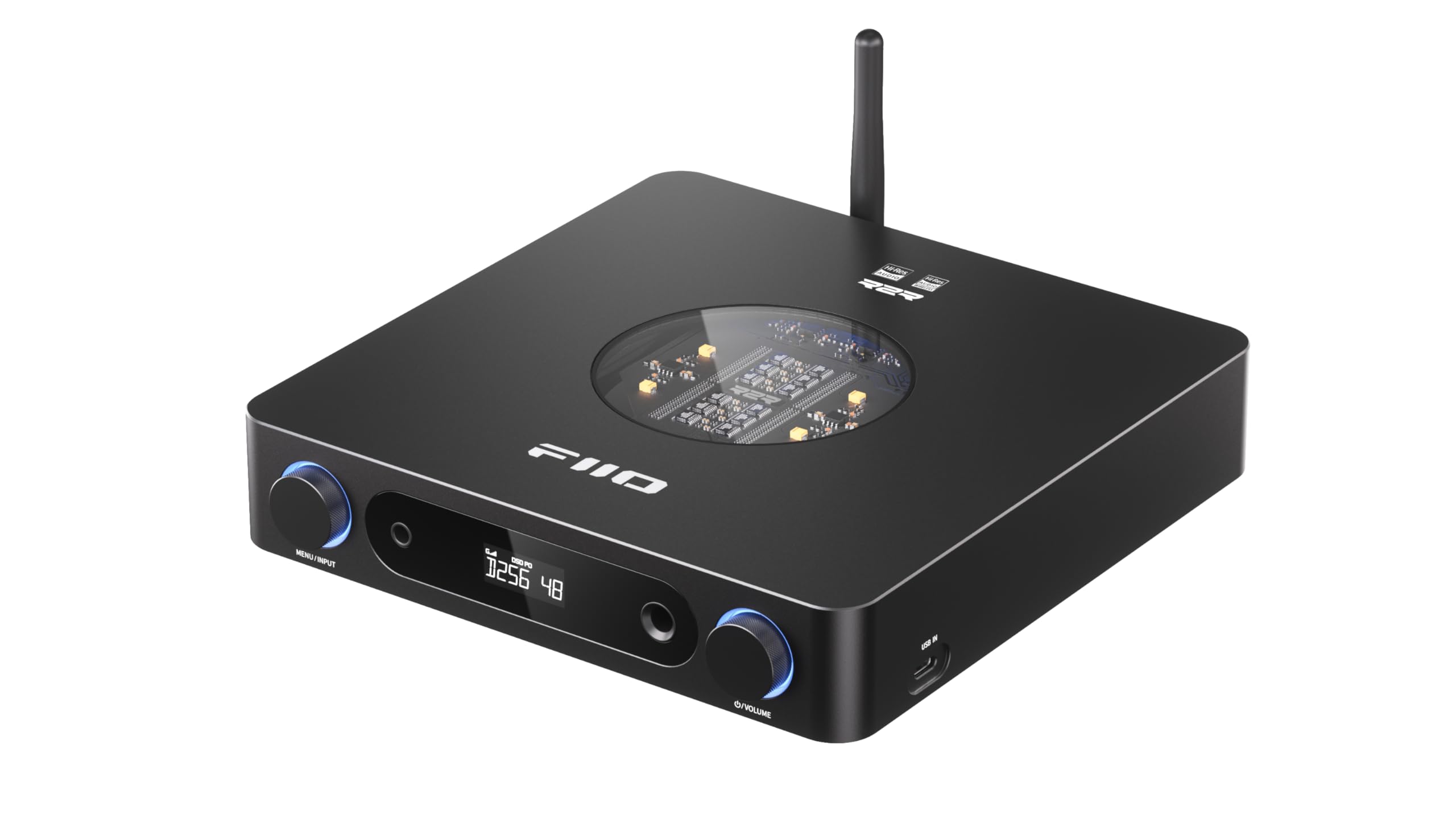
The FiiO K13 R2R represents a bold departure from the company’s established AKM and ESS-based designs, employing a proprietary fully differential 24-bit R2R ladder built from 192 ultra-precise 0.1% thin-film resistors. This architecture delivers a distinctly organic, analog-like timbre that reviewers consistently describe as more immersive and less analytical than traditional Delta-Sigma DACs, with a Non-Oversampling (NOS) mode that preserves the original sampling rate for a purer, more natural sound characteristic.
Equipped with a 2400mW balanced headphone output via 4.4mm and a robust 6.35mm single-ended jack, the K13 R2R easily drives demanding planars like the Hifiman Edition XS while maintaining a low noise floor for sensitive IEMs. The inclusion of a 10-band high-precision PEQ with Auto EQ capabilities allows for granular system tuning, all controllable through FiiO’s app or web interface, making it the most feature-rich R2R option under .
In listening tests, the K13 R2R excels at creating a deep, layered soundstage with a palpable sense of space, especially evident with progressive electronic and score music. While the accompanying remote feels slightly cheap, the primary unit’s build quality is excellent, with a heavy full-aluminum chassis. This DAC proves that R2R can be both accessible and sonically profound.
Why it’s great
- Incredibly natural, non-fatiguing R2R sound signature.
- Powerful enough for full-size planars and sensitive for IEMs.
- 10-band PEQ and Auto EQ functionality is a game-changer for system matching.
Good to know
- Remote control feels lightweight and inexpensive.
- Volume knob can feel slightly wobbly on some units.
- Requires proper driver version and gain settings to avoid initial crackling.
2. aune S9c Pro DAC with Headphone Amp

The aune S9c Pro is a reference-class desktop DAC and headphone amplifier that pulls no punches, combining a dual ES9068 DAC chip configuration with a fully discrete, twin-JFET output stage and a massive 50-watt toroidal linear power supply. The engineering centerpiece is its second-generation PLL core and 10MHz external clock input, which allows the USB XMOS controller and DAC chip to share a synchronized clock source, dramatically reducing jitter and producing what aune calls “Global Clock Sync.” This results in a sound that is exceptionally stable, with pinpoint image specificity and a black background.
With a staggering 5 watts of output power into 32 ohms via the balanced 4.4mm and XLR outputs, the S9c Pro is one of the most powerful all-in-one units under , capable of driving even the most current-hungry planar magnetic headphones to their full dynamic potential without breaking a sweat. The line output noise floor is measured at an absurdly low 2.04 µV, making it an equally capable preamp for active monitors. Reviewers consistently praise its top-tier sound texture, control, and slam, often calling it an “end-game” unit.
The two tuning modes (Standard and Pure) offer subtle but meaningful shifts in presentation, allowing for fine-tuning based on the recording. The build is exceptionally robust, though the unit is heavy at 10 pounds. The remote control has a notably short operating range, which is a minor inconvenience for a component in this price bracket, but the sonic performance is so commanding that it becomes a mere footnote.
Why it’s great
- Unrivaled power delivery for the price with 5W output.
- Exceptional jitter reduction through Global Clock Sync and external clock input.
- Extremely low noise floor ideal for both headphones and preamp duty.
Good to know
- Heavy chassis (10 lbs) due to toroidal transformer.
- Remote control range is very short and directional.
- Highly analytical presentation; not for those seeking a colored, warm sound.
3. TOPPING D70 Pro OCTO Fully Balanced DAC
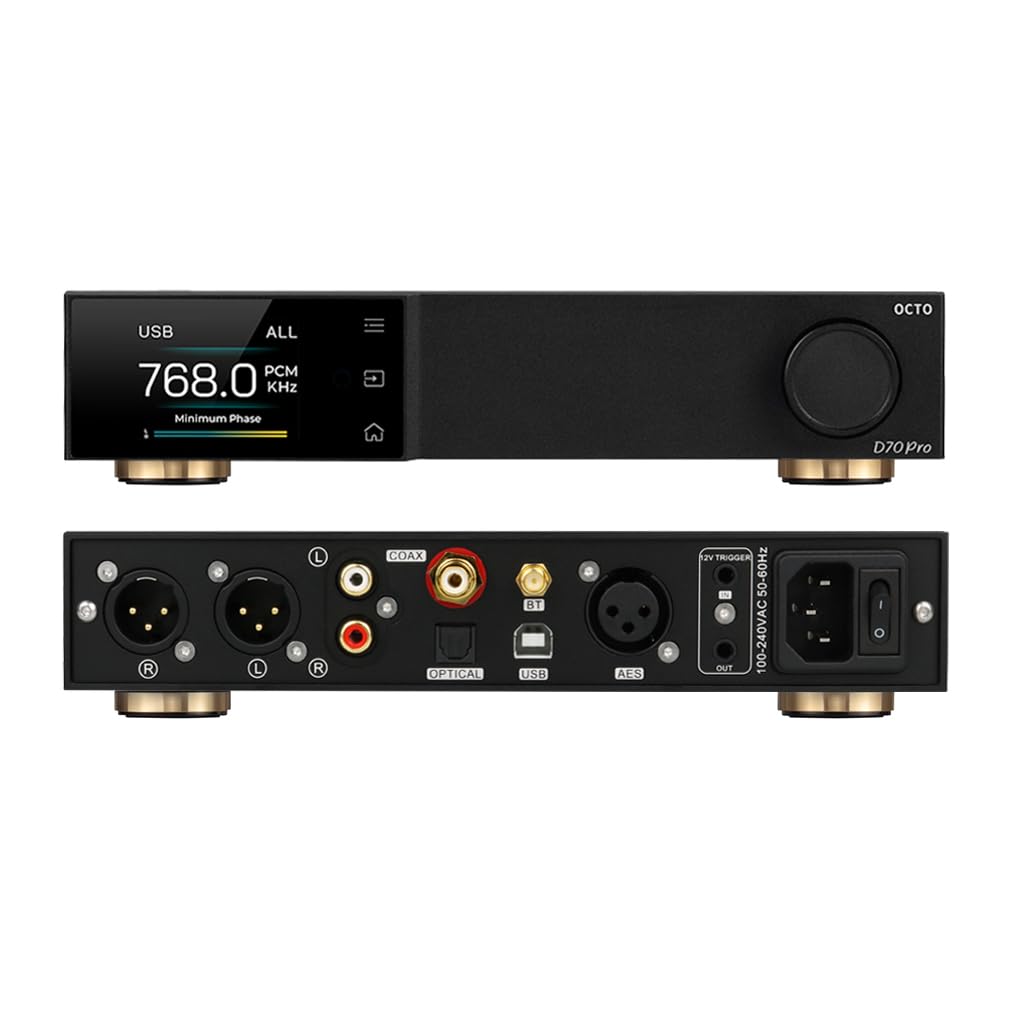
The TOPPING D70 Pro OCTO is a statement piece for those who prioritize pure DAC performance above all else, utilizing eight Cirrus Logic CS43198 flagship chips in a proprietary octo configuration. This design achieves a total harmonic distortion plus noise (THD+N) of less than 0.00007% and a signal-to-noise ratio of 134dB, placing it among the most technically capable measuring DACs in its class. The accompanying Aurora UI full-color touch screen with FFT and VU display modes adds a level of functional visual feedback that is both useful and aesthetically pleasing.
Connectivity is comprehensive, including USB with XMOS XU316, AES/EBU, optical, coaxial, and Bluetooth 5.1 with LDAC support. The primary sonic characteristic of the D70 Pro OCTO is its remarkable transparency and ability to resolve fine detail without sounding harsh or clinical. Reviewers note that it smooths sibilance effectively while delivering excellent soundstage depth, width, and separation, making it fatigue-free for long listening sessions. It pairs exceptionally well with analytical headphones like the Hifiman Ananda Nano, providing a rich, thumpy bass without bleeding into the mids.
One critical note is the Cirrus Logic DRE (Dynamic Range Extender) feature, which early firmware versions had enabled by default, causing audible distortion. A firmware update allows toggling this off, and TOPPING has been responsive to user feedback. As a pure DAC without a built-in headphone amplifier, it requires an external amp, but its sonic performance is universally praised as a “bargain at ” that performs 85% of a + Denafrips R2R according to some audio reviewers.
Why it’s great
- Exceptional measured performance with sub-0.00007% THD+N.
- Incredible detail retrieval and soundstage specificity.
- Beautiful and functional Aurora UI with FFT and VU meters.
Good to know
- Requires external headphone amplifier.
- DRE feature may cause audible distortion if not manually disabled.
- Not for those preferring a “round” analog sound; performance is pure transparency.
4. TOPPING DX5 II Hi-Res DAC & Headphone Amp Combo
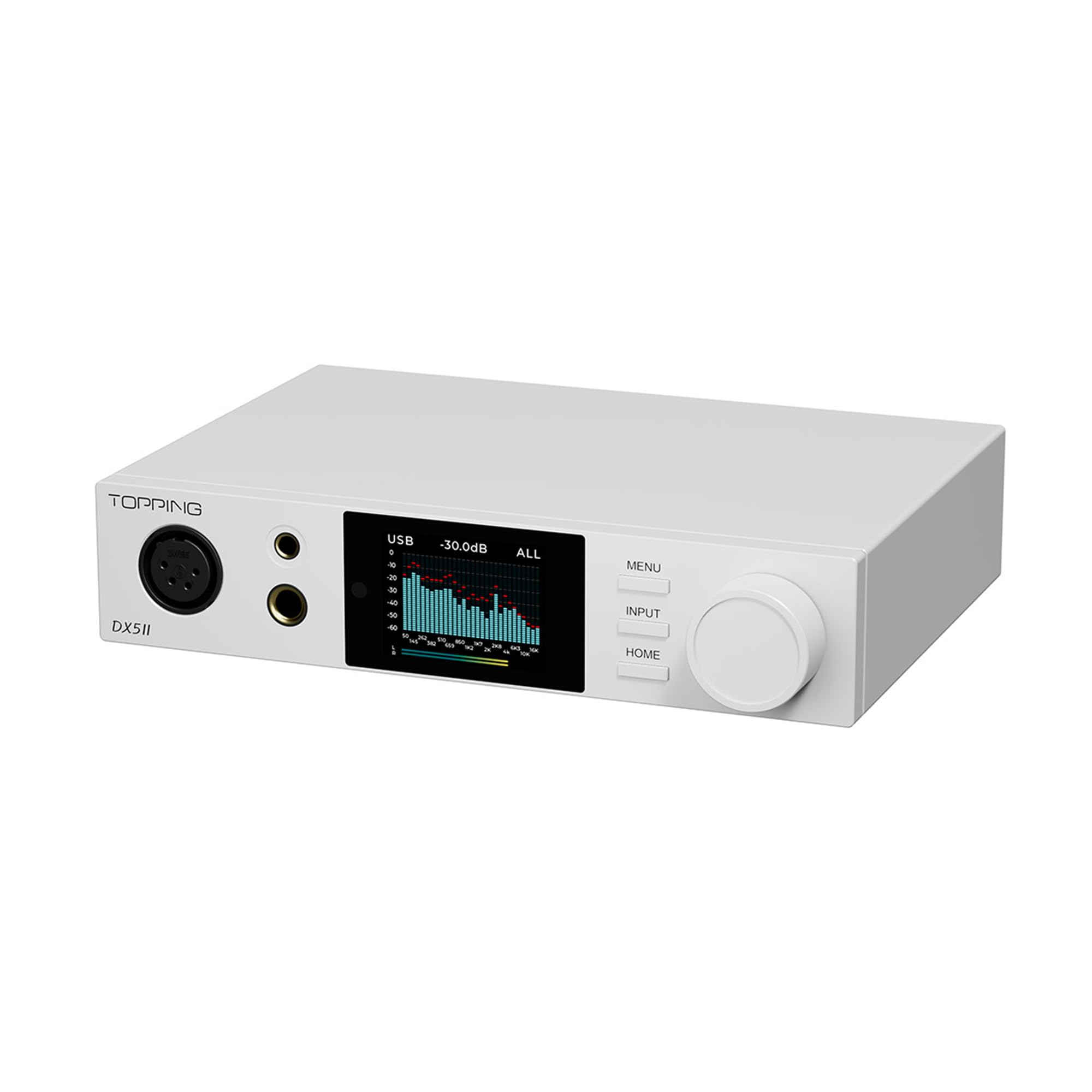
The TOPPING DX5 II is an evolution of the highly regarded DX5 series, packing dual ES9039Q2M DAC chips and a powerful X-Hybrid balanced headphone amplifier delivering a colossal 7600mW x2 output via its 4.4mm balanced jack. This power allows it to effortlessly drive even the most demanding high-impedance headphones from a single desktop unit, while its low noise floor ensures sensitive IEMs remain hiss-free. The inclusion of a 10-band high-precision PEQ with the ability to simulate or correct headphone response is a standout feature for critical listeners who want system tuning without additional hardware.
The DX5 II also serves as a versatile preamp with RCA and XLR line outputs, a 12V trigger for seamless system integration, and Bluetooth 5.1 with LDAC, aptX Adaptive, and AAC codecs. The new 2.0-inch Aurora UI color display with nine customizable themes and a pressable knob provides intuitive control. In use, the DAC is transparent and neutral, with excellent dynamic range and channel matching that surpasses most competitors in its price bracket.
However, there is a known quality control issue regarding the headphone jacks; hot-swapping cables while the unit is on can cause failure, leading to distortion or a buzzing sound at low volume levels. TOPPING recommends plugging in headphones before powering on. Despite this quirk, the DX5 II offers an unmatched feature set and raw power for its price, making it a top recommendation for those who want a single-box solution with room to grow.
Why it’s great
- Enormous balanced output power for high-impedance and planar headphones.
- Versatile 10-band PEQ with Auto EQ sharing capabilities.
- Excellent as a preamp with 12V trigger and multiple digital inputs.
Good to know
- Headphone jacks can be fragile if cables are hot-swapped with power on.
- Volume knob design is polarizing among users.
- Language change requires a firmware flash process.
5. Cambridge Audio CXN100 Network Streamer & DAC

The Cambridge Audio CXN100 bridges the gap between high-end music streaming and serious DAC performance, integrating a powerful ESS Sabre ES9028Q2M reference DAC with a dedicated streaming platform that supports Spotify Connect, TIDAL Connect, Qobuz, Deezer, and internet radio. This makes it a compelling choice for users who want lossless streaming without the need for a separate computer or streamer. The inclusion of Chromecast, Apple AirPlay 2, and Roon readiness grants it immense system flexibility.
Sonically, the CXN100 delivers a huge soundstage with detailed dynamics, excelling with high-resolution FLAC and Tidal Masters content. The Stream Magic app provides responsive control over every function, from input selection to playlist management. Its industrial design is understated and elegant, fitting seamlessly into both modern and traditional hi-fi racks. Using its XLR balanced outputs, the CXN100 acts as a premium preamp, connecting directly to active monitors or a separate amplifier.
A notable limitation is that the CXN100 is not a headphone amplifier; it is exclusively a line-level DAC and streamer. Additionally, some users report significant audio lag when using it as a TV DAC via optical, making it less suitable for video synchronization without additional workarounds. For a pure music streaming experience, however, it is a refined and sonically excellent solution that has received high praise from dedicated listeners.
Why it’s great
- Excellent implementation of the ES9028Q2M Sabre DAC with a massive soundstage.
- Built-in streaming support for Tidal, Qobuz, Spotify, and internet radio.
- Works as a premium preamp with XLR balanced outputs.
Good to know
- No headphone amplifier output built in.
- Significant audio lag when used as an optical DAC for TV.
- Physical remote control is sold separately.
6. SMSL DO100 PRO HiFi Balanced DAC

The SMSL DO100 PRO is a pure DAC with a focus on versatility and measured performance, pairing dual ES9039Q2M DAC chips with the latest XMOS XU316 controller for PCM support up to 768kHz and DSD512. Its party piece is the inclusion of an HDMI ARC input, which allows for high-quality audio transmission directly from a compatible TV, making it a rare and valuable option for those integrating a hi-fi system into their home theater. It also features Bluetooth 5.1 with LDAC for wireless streaming.
With XLR balanced and RCA single-ended outputs, the DO100 PRO functions as a preamp with a fixed or variable output. The 8x MQA decoding capability is a plus for Tidal users. In use, the DAC exhibits a neutral, clear tonality with excellent dynamic range, vastly outperforming the internal DAC of a CD player like the Onkyo DX-390. The build quality is excellent, with a full aluminum CNC-machined chassis that feels premium for its price point.
However, the HDMI ARC implementation can be unreliable, with some users experiencing audio dropouts and CEC handshake failures. Using the optical input is a more stable alternative for TV audio. Additionally, the XLR output at 5.2Vrms is very hot, potentially overdriving some amplifiers and speakers, so it requires careful gain management. For a pure DAC with modern connection options, it remains a strong performer.
Why it’s great
- HDMI ARC input for high-quality TV audio integration.
- Ultra-low noise floor with dual ESS DAC chips.
- Full MQA decoding via USB, optical, and coaxial inputs.
Good to know
- HDMI ARC function can be unreliable with some TV models.
- High output voltage (5.2Vrms) may require gain reduction.
- Simple interface with no display customization.
7. FiiO K7 Full Balanced HiFi DAC Headphone Amplifier

The FiiO K7 is the sweet-spot entry point into balanced desktop audio, combining dual AKM AK4493SEQ DAC chips with dual THX AAA 788+ amplifier modules in a compact, attractive chassis. It delivers a clean 2000mW of balanced output power, enough to comfortably drive most full-size headphones, including the power-hungry Focal Elegeia. The six-stage audio circuit architecture is derived from FiiO’s more expensive devices, ensuring excellent channel separation and a low noise floor.
Its input flexibility is generous for the price, supporting USB, optical, coaxial, and AUX in, while outputs include 4.4mm balanced, 6.35mm single-ended, and 3.5mm single-ended. A dedicated digital volume knob with an intentional mute zone for sensitive IEMs is a thoughtful touch. Reviewers consistently praise it as the best starter all-in-one, with a sound that is mildly but audibly better than a good soundcard, offering more lifelike vocals and instrument separation.
While the K7 is an excellent foundation, users who eventually upgrade to the FiiO K9 ESS note a major improvement in soundstage, dynamics, and treble refinement, particularly with revealing headphones like the Sennheiser HD800S. For its price, however, the K7 represents outstanding value and is an easy recommendation for anyone stepping into the world of high-fidelity DACs.
Why it’s great
- Outstanding value for a fully balanced DAC/Amp combo.
- Clean, detailed sound with good power for most headphones.
- Compact, well-built design with a smooth volume encoder.
Good to know
- Not as resolving or dynamic as premium options like the K9 ESS.
- May run out of headroom with very high-impedance or low-sensitivity planars.
- Lacks advanced features like PEQ or Bluetooth.
8. iFi Zen DAC 3 Desktop Digital Analog Converter
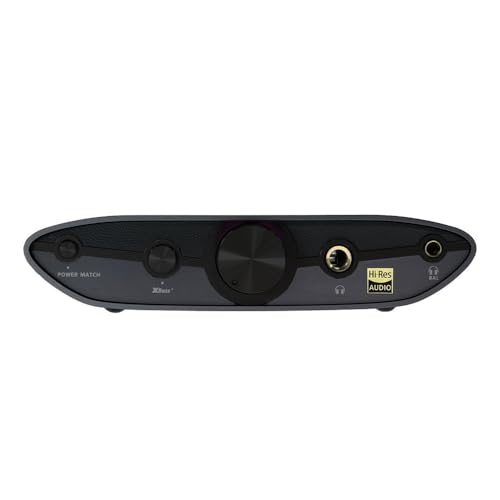
The iFi Zen DAC 3 continues the lineage of one of the most popular entry-level audiophile components, featuring a Burr-Brown True Native chipset and a sleek, low-profile matte black aluminum chassis that fits easily on any desk. Its defining characteristic is its bus-powered USB-C connectivity, requiring no separate power adapter, which makes it an exceptionally tidy solution for laptop-based listeners. It supports PCM up to 32-bit/768kHz and DSD512, with full MQA decoding.
The Zen DAC 3 offers dual headphone outputs: a 4.4mm balanced and a 6.35mm single-ended, along with variable and fixed line-out modes. The PowerMatch and TrueBass features allow for gain adjustment and a variable low-frequency boost. Tonally, it presents a clean, detailed sound with a slightly warm bass emphasis and good texture. Reviewers note an audible improvement over motherboard audio, with very low latency for virtual instrument work.
One reviewer pointed out that the Zen DAC has lower headphone output power (210mW unbalanced, 300mW balanced) than its predecessor, the Zen DAC V2, which might struggle with harder-to-drive headphones like the K712 Pro. The new Xbass feature is also described as harder-hitting compared to the V2’s smoother Truebass. This is a fantastic option for a minimalist, USB-powered setup, but pairing it with the right headphones is critical.
Why it’s great
- Bus-powered via USB-C for a clean, minimalist desktop setup.
- Warm, detailed sound signature with Burr-Brown implementation.
- Beautiful compact design with good build quality.
Good to know
- Lower output power than the previous Zen DAC V2.
- Headphone output may lack the low-range drive for high-impedance headphones.
- Audio plays to all connected outputs simultaneously with no dedicated mute.
9. GUSTARD DAC-X30 HiFi Network Streaming DAC
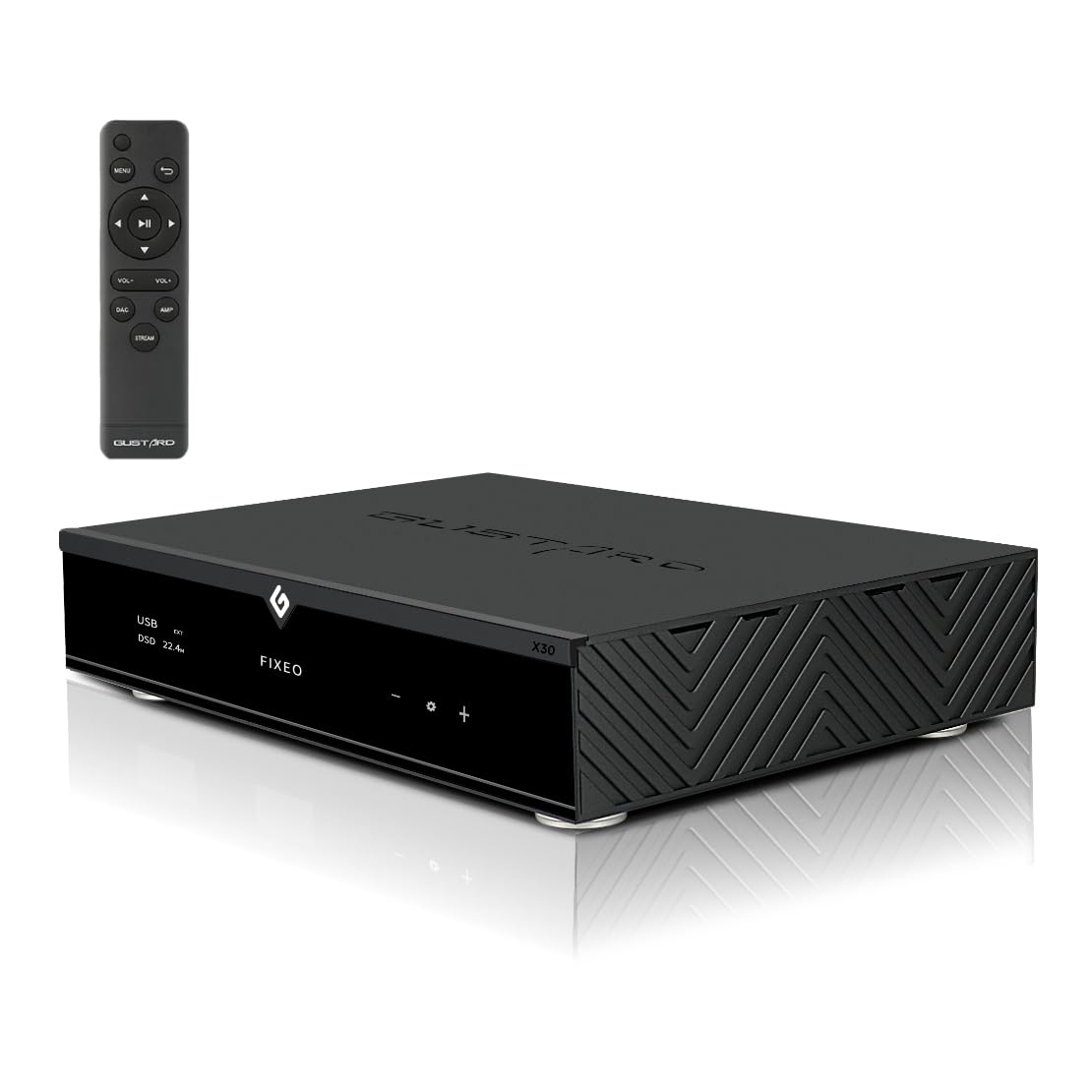
The GUSTARD DAC-X30 is a flagship network streaming DAC that represents the bleeding edge of commercial audio engineering, utilizing four ESS ES9039SPRO chips in a fully balanced dual-mono configuration per channel. This architecture is supported by a discrete Class A LPF output stage, a K2 synthesizer with synchronized clock implantation technology, and support for an external 10M clock via OCXO. The result is a DAC of extreme precision, capable of generating a 3D holographic soundstage with a concert-like liveliness that rivals far more expensive units.
Input options are exhaustive: USB, LAN (for Roon, UPnP, NAA), optical, coaxial, AES/EBU, and two IIS inputs. The built-in network streamer handles high-resolution files via Roon and UPnP, though it requires a competent network setup. In listening tests, the DAC-X30 provides exceptional clarity and separation, with excellent imaging specificity. Reviewers who upgraded from units like the Denafrips Pontus II or Cambridge Audio CXN v2 reported a massive and immediate improvement in sound quality.
A key consideration is that the X30 is not a preamp; it is a pure DAC and streamer with a fixed output. The I2S pinout is not standardized across manufacturers, which can cause compatibility headaches with transport devices. Furthermore, while it excels with well-recorded material, it can reveal the limitations of poor recordings with brutal honesty. This is a reference-tier component for the serious listener who prioritizes absolute performance and network integration.
Why it’s great
- Flagship quad-chip ESS configuration for state-of-the-art DAC performance.
- Built-in network streaming with Roon, UPnP, and NAA support.
- External 10M clock input for ultimate jitter reduction.
Good to know
- I2S pinout is not standardized, causing potential compatibility issues.
- Does not function as a preamp; fixed line-level output only.
- Requires a dedicated Roon server and network competence for best results.
FAQ
What is the difference between NOS and OS mode in a DAC?
Do I need a balanced DAC if my headphones are single-ended?
Final Thoughts: The Verdict
For most users, the best audiophile dac winner is the FiiO K13 R2R because it offers a uniquely natural and musical R2R sound signature with a powerful amplifier and versatile PEQ functionality at a fantastic price. If you want a pure DAC with reference-level measured performance and a stunning display, grab the TOPPING D70 Pro OCTO. And for a complete high-power headphone amplifier and DAC combo that drives everything without breaking a sweat, nothing beats the aune S9c Pro.