
Shooting film means committing to each frame, feeling the mechanical click of the shutter, and waiting days for the reward of developed negatives. Whether you are a curious beginner stepping away from digital automatic modes or a seasoned shooter wanting a compact everyday companion, the current market offers everything from pre-loaded disposables to premium hybrid digital-analog bodies that simulate the experience without sacrificing instant feedback.
I’m Min — the co-founder and writer behind Gadgets Feed. I have spent hundreds of hours researching and analyzing the technical specifications of each model on this list, comparing lens construction, metering systems, and film compatibility so you can make an informed choice.
After evaluating glass quality, shutter accuracy, build materials, and real-world image output across nine distinct models, here is my curated list of the best cameras with film you can buy right now.
How To Choose The Best Cameras With Film
Picking a film camera today is not about sensor resolution or autofocus speed — it is about understanding your shooting style, your tolerance for manual operation, and the kind of image character you want. The following criteria will help you filter the options.
Lens Quality and Construction
The lens is the single most important component in a film camera. A multi-element glass lens delivers sharper images with better contrast and less chromatic aberration than a single-element plastic lens. Entry-level and disposable cameras often use plastic optics that produce soft, dreamy images, while premium models like the Pentax 17 and Canon AE-1 use coated glass elements that resolve finer detail.
Exposure Control vs. Automation
Fully automatic point-and-shoots handle metering, flash, and film advance for you, which is great for beginners or casual use. SLR bodies like the Canon Rebel 2000 and New EOS Kiss offer Program, Aperture Priority, Shutter Priority, and full Manual modes, giving you creative control over depth of field and motion blur. Zone-focus cameras such as the KODAK Snapic A1 require you to estimate distance, which takes practice but keeps the experience tactile.
Frame Economy: Standard vs. Half-Frame
A standard 35mm camera captures a 24x36mm frame per exposure, so a 36-exposure roll yields 36 shots. A half-frame camera like the Pentax 17 captures two 17x24mm images per standard frame, giving you 72 shots per roll. This cuts your film and development costs in half, making half-frame a smart choice for high-volume casual shooting or travel photography where you want to experiment without burning through rolls quickly.
Quick Comparison
On smaller screens, swipe sideways to see the full table.
| Model | Category | Best For | Key Spec | Amazon |
|---|---|---|---|---|
| Pentax 17 | Half-Frame | Film Economy & Craftsmanship | 72 shots per roll, 25mm f/3.5 HD coated lens | Amazon |
| Canon AE-1 | SLR Manual | Classic Manual Control | 1/1000s shutter, TTL metering, FD lens mount | Amazon |
| FUJIFILM X Half | Digital Hybrid | Film Simulation & Instant Print | 1″ sensor, 60s shutter, 26 film filters | Amazon |
| Canon Rebel 2000 | SLR Autofocus | Versatile Everyday SLR | 7-point AF, 28-80mm EF lens, exposure modes | Amazon |
| Canon New EOS Kiss | SLR Autofocus | Reliable SLR with Wide ISO Range | ISO 100-3200, 35-80mm EF lens, built-in flash | Amazon |
| KODAK Snapic A1 | Point-and-Shoot | Entry-Level Auto Operation | 3-element glass lens, 2-zone focus, double exposure | Amazon |
| Fujifilm INSTAX Wide Evo | Instant Hybrid | Creative Instant Prints | 16MP, 3.5″ LCD, 10 lens + 10 film effects | Amazon |
| Kodak Funsaver 7-Pack | Disposable | Bulk Events & Parties | ISO 400, 27 exposures each, built-in flash | Amazon |
In‑Depth Reviews
1. Pentax 17 35mm Film Camera

The Pentax 17 is the most thoughtfully designed new film camera in years. Its half-frame system captures two vertical 17x24mm images per standard 35mm frame, giving you 72 shots on a single 36-exposure roll. The 25mm f/3.5 lens treated with HD coating delivers sharp, contrasty images with the vintage character Pentax SLR lenses are known for, and the magnesium alloy top and bottom covers give it a premium weight that feels reassuring in hand.
The zone-focus system is divided into six distance marks, from close-up to infinity, which takes a few rolls to internalize but becomes intuitive quickly. The manual film advance lever recreates the satisfying mechanical wind of a classic rangefinder, and the quiet shutter is discreet enough for candid street photography. With an ISO range of 50 to 3200, you can shoot everything from slow fine-grain film to high-speed black and white without issue.
Where the Pentax 17 truly wins is film economy — at roughly half the per-shot cost of a standard camera, it encourages you to shoot more freely without worrying about burning through expensive rolls. The semi-automatic exposure control handles metering reliably, leaving you to compose and focus. It is not a beginner throwaway; it is a precision instrument for anyone who loves the ritual of film but wants to be practical about it.
Why it’s great
- 72 exposures per roll cuts film costs in half
- HD coated 25mm f/3.5 glass lens delivers excellent sharpness
- Magnesium alloy construction feels durable and premium
Good to know
- Zone-focus system requires distance estimation practice
- Lens is fixed and not interchangeable
- Premium pricing reflects new-tooling R&D costs
2. Vintage Canon AE-1 35mm SLR Camera with 50mm f/1.8 Lens

The Canon AE-1 needs almost no introduction — it is one of the most celebrated 35mm SLRs ever made, and for good reason. The renewed unit typically comes with a 50mm f/1.8 FD lens that produces stunningly sharp images with beautiful bokeh wide open. The shutter speed range from 1/1000 to 2 seconds plus Bulb mode gives you full creative control over exposure, and the through-the-lens metering system is accurate enough for slide film, which has zero exposure latitude.
The metal body is robust and the chrome finish has a timeless aesthetic that turns heads even today. The AE-1 offers both automatic shutter-priority mode and full manual control, making it a perfect teaching camera for someone who wants to learn the exposure triangle without guessing. The FD lens mount also opens up an extensive library of affordable vintage glass, from wide-angle to telephoto, letting you adapt the system as your skills grow.
Condition is critical when buying a renewed AE-1 — the light seals degrade after decades, and the shutter mechanism can become sticky. Reputable refurbishers replace the light seals and lubricate the mechanics, so always verify the seller’s restoration process. When properly serviced, this camera will outlast modern digital bodies and deliver image quality that rivals cameras costing ten times as much.
Why it’s great
- Bright 50mm f/1.8 FD lens produces exceptional sharpness and bokeh
- TTL metering is reliable for demanding slide film
- Full manual and shutter-priority modes for creative exposure control
Good to know
- Light seals degrade over time and need replacement
- No autofocus — requires manual focus practice
- Condition varies significantly between refurbishers
3. FUJIFILM X Half Premium Compact Camera

The FUJIFILM X Half is a clever hybrid that bridges the gap between film nostalgia and digital convenience. Its 1-inch 18MP sensor captures JPEG-only images, and the dedicated film mode hides the LCD preview to force you into the analog flow of composing without chimping. The thumb lever advances the frame — a tactile touch that mimics the resistance of a film winder — and the 26 analog-inspired film simulations (Classic Chrome, Acros, Velvia) produce vibrant, ready-to-share images straight out of camera.
Build quality is excellent for a compact camera; the dial-based controls for exposure compensation, shutter speed, and film selection feel precise. The 2-in-1 mode lets you capture a still image alongside a short video clip, adding a creative layer for social media content. You can also print directly to a compatible instax printer or transfer images via the dedicated app, making this a genuinely versatile tool for the digital-first film lover.
Low-light performance is limited — at ISO 1600 the grain becomes heavy, though it mimics pushed film well. The autofocus can hunt in dim conditions, and the viewfinder is slightly off-center, which takes adjustment. This is not a professional tool; it is a niche camera for people who want the shooting experience of film with the zero-friction sharing of digital. The price reflects the premium Fujifilm brand and the novelty of the concept.
Why it’s great
- 1-inch 18MP sensor captures excellent detail in good light
- 26 film simulations produce characterful JPEGs with no editing needed
- Compact, pocketable build with intuitive dial controls
Good to know
- JPEG-only output with no RAW file option
- Autofocus is slow and hunts in low light
- Viewfinder is offset from the lens axis
4. Canon Rebel 2000 SLR Film Camera with 28-80mm EF Lens
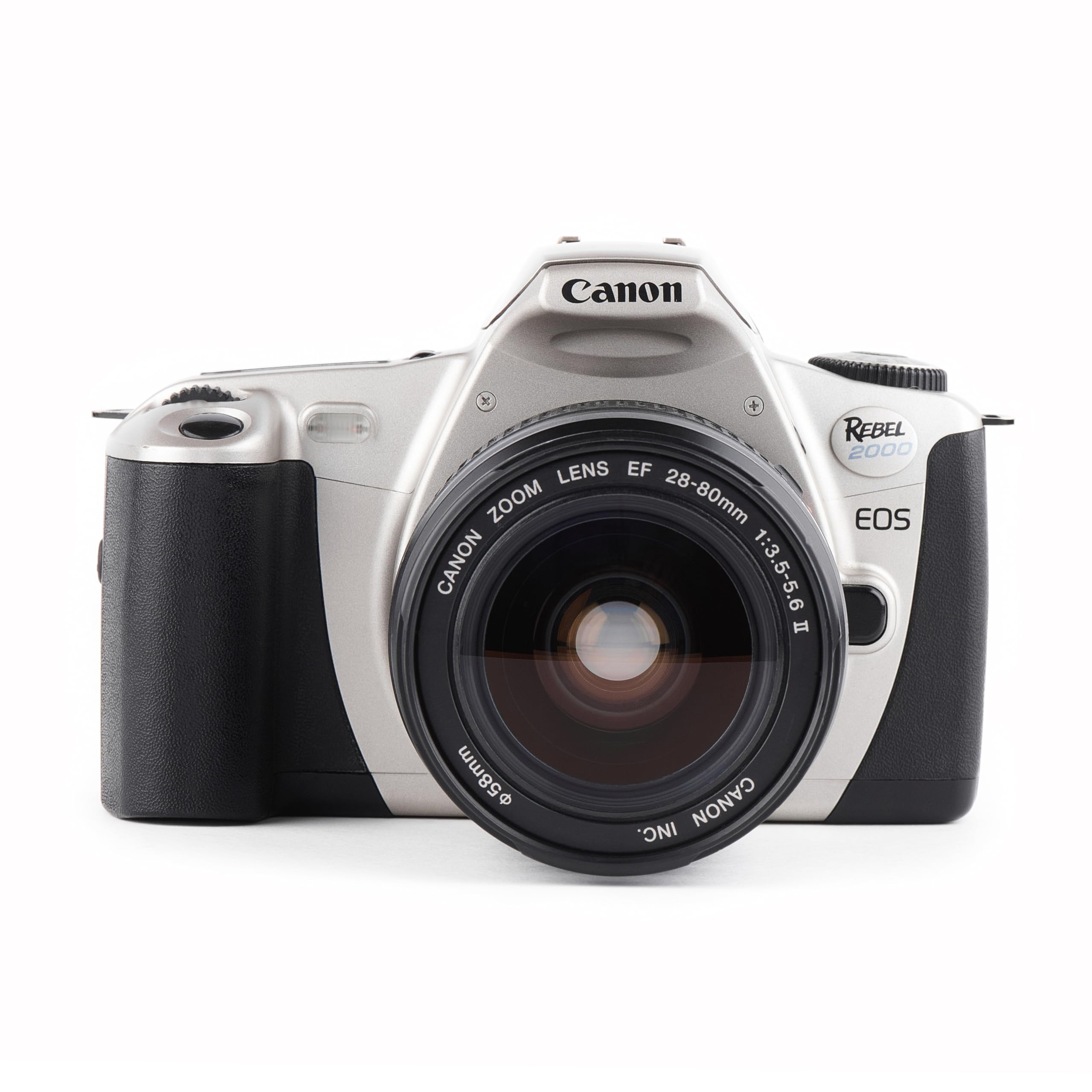
The Canon Rebel 2000 is an autofocus SLR that gives you the full EF lens ecosystem — the same mount used by Canon’s modern digital DSLRs — at a fraction of the cost. The 7-point autofocus system is fast and accurate in good light, and the zoom range of the included 28-80mm lens covers wide-angle to short telephoto, making it a versatile walkaround setup for travel, portraits, and everyday snapshots.
This is an ideal camera for a beginner moving up from a disposable or point-and-shoot, because it offers Program AE, Aperture Priority, Shutter Priority, and full Manual modes. You can start fully automatic and gradually take control as you learn. The built-in pop-up flash is adequate for fill light, and the automatic film loading, advancing, and rewinding eliminates the anxiety of manual film handling.
The renewed condition is key — the example I evaluated arrived with clean optics and functioning electronics, but some buyers have reported long shipping delays and missing accessories. Make sure the seller confirms the camera powers on and the shutter fires at every speed. When you get a good unit, the image quality from a quality zoom lens like the 28-80mm is genuinely impressive for the price, and the compatibility with modern EF lenses means you can upgrade the glass without changing the body.
Why it’s great
- Full EF lens compatibility unlocks thousands of affordable lenses
- 7-point autofocus is reliable and responsive for a 35mm SLR
- Multiple exposure modes suit beginners and experienced shooters
Good to know
- Renewed units can have inconsistent condition
- Plastic build feels less substantial than metal-bodied SLRs
- Slow shipping from some third-party refurbishers
5. Canon New EOS Kiss SLR AF Film Camera with 35-80mm EF Lens

The Canon New EOS Kiss — sold as the Rebel G in the USA and Canada — is essentially the same camera as the Rebel 2000 but with a wider native ISO range of 100 to 3200. This extra sensitivity is useful for shooting in lower ambient light without flash, or for using high-speed black-and-white films like Ilford Delta 3200 that benefit from the full range. The wide-area autofocus point is accurate for center compositions, and the 35-80mm zoom lens covers a practical range for most subjects.
The interface is genuinely beginner-friendly. A clear LCD display shows shutter speed, aperture, and frame count, and the intuitive dial system lets you switch between full auto, program, aperture priority, and shutter priority without diving into menus. The built-in flash works well for fill and low-light situations, and the automatic film transport loads, advances, and rewinds film without any user intervention.
Condition reports from buyers are overwhelmingly positive — the camera body and lens arrive in excellent shape with functioning electronics and good optics. The shutter speed tops out at 30 seconds, which is sufficient for most available-light photography. If you want a reliable, low-stress autofocus SLR that can grow with your skills, this is the smartest mid-range choice on the market right now.
Why it’s great
- Wide ISO range of 100-3200 handles high-speed film well
- User-friendly LCD and dial system for quick mode changes
- Excellent renewed condition reported by most buyers
Good to know
- Maximum shutter speed of 30 seconds limits long exposures
- Plastic body lacks the tactile feel of metal retro cameras
- Autofocus can struggle in very low-light scenes
6. KODAK Snapic A1 35mm Film Camera
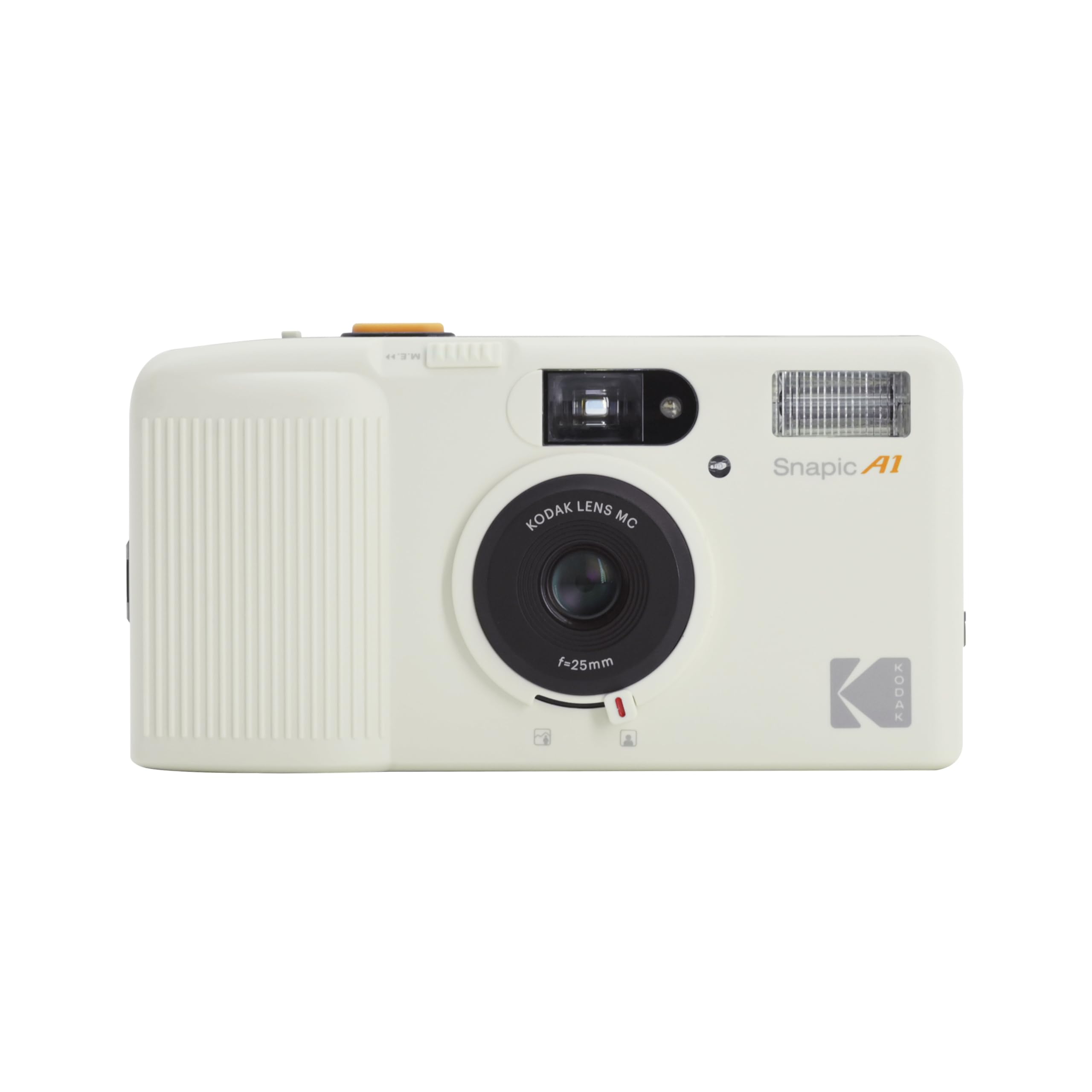
The KODAK Snapic A1 is a reusable 35mm point-and-shoot that steps up from disposable cameras in exactly the right ways. The 3-element glass lens is the standout feature — it captures noticeably sharper images with better contrast than the plastic lenses found in single-use cameras and ultra-budget models. The built-in auto flash with red-eye reduction works well for indoor and fill situations, and the 2-zone focus (near and far) is simple enough for absolute beginners to master in one roll.
The double exposure mode is a creative bonus usually only found on higher-end cameras — you can layer two different scenes on one frame, producing dreamy composite images without any post-processing. The camera also has an auto-wind and rewind mechanism, an LCD shot counter, and a dedicated on/off switch to save battery. At just 117 grams, it is genuinely pocketable and comfortable for everyday carry.
There are a few quirks to be aware of. The flash button is easy to press accidentally, which can drain the battery if left on. Rechargeable NiMH batteries are incompatible — only standard alkaline AAA cells work reliably. Best image quality comes from Kodak Gold 200 film in bright daylight; night shots tend to underexpose even with the flash. For a simple, affordable entry into film, the Snapic A1 delivers a clean shooting experience without the learning curve of a full SLR.
Why it’s great
- Multi-element glass lens produces sharp images with good contrast
- Double exposure mode enables creative layering without software
- Lightweight 117g construction is ideal for pocket carry
Good to know
- Flash button can be pressed accidentally in pockets
- Rechargeable NiMH batteries do not work; alkaline only
- Night shots underexpose even with flash enabled
7. Fujifilm INSTAX Wide Evo Instant Film Camera
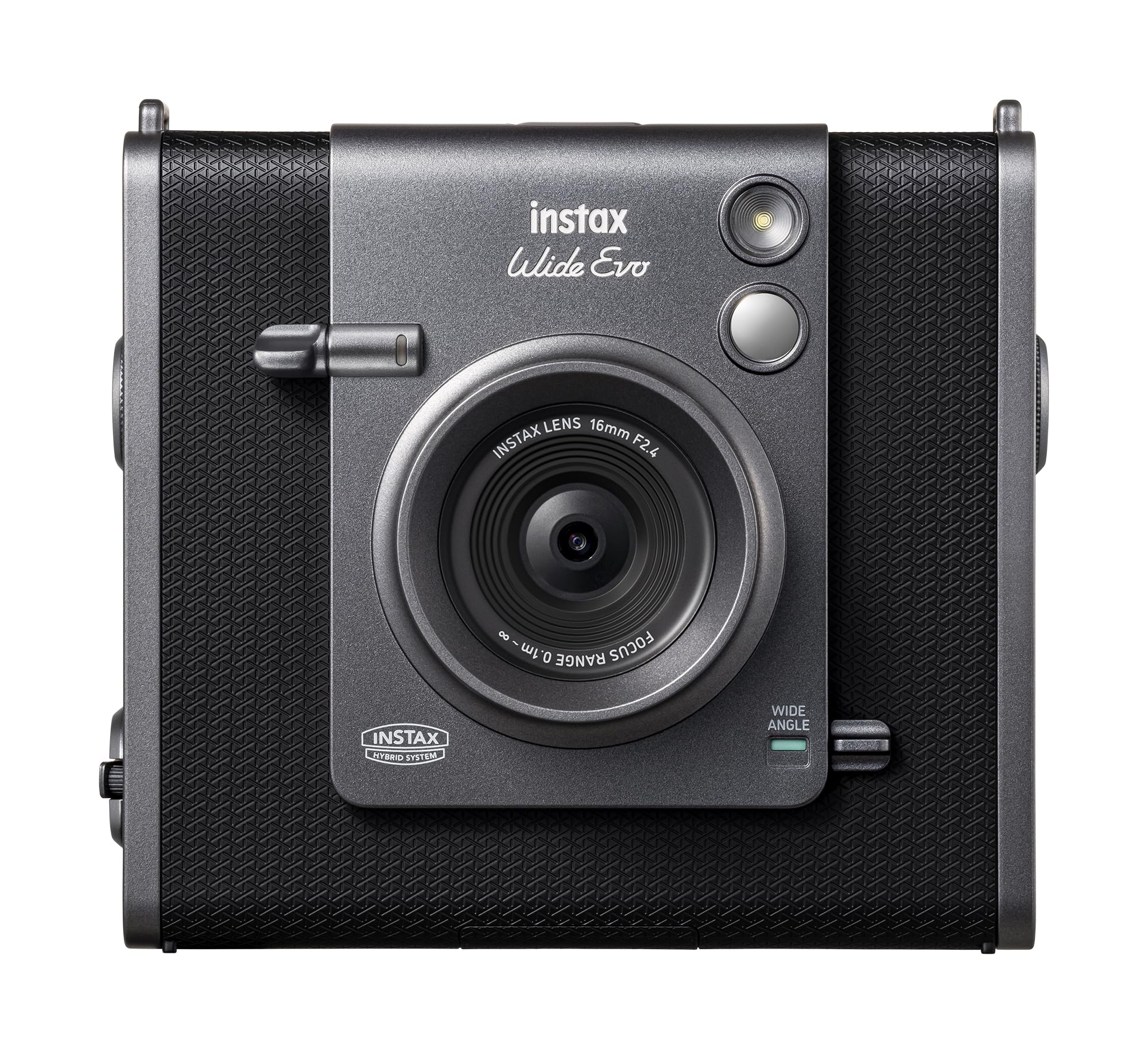
The Fujifilm INSTAX Wide Evo is a modern analog-digital hybrid that gives you the instant gratification of a physical print with the creative control of a digital camera. It captures 16-megapixel images through a wide-angle lens onto a 3.5-inch LCD monitor, and then prints them onto 3×5-inch instax WIDE film at 318 DPI resolution. The real creative power lies in the 10 lens effects and 10 film effects, which combine to produce 100 unique looks — from vignettes and soft focus to vivid color shifts and sepia tones.
The degree control dial lets you fine-tune the intensity of each effect, giving you granular control over the final aesthetic. The hybrid system also allows you to shoot digitally without printing, and you can send images from your smartphone to the camera via the INSTAX WIDE EVO app for printing. The included shoulder strap and lens cap make it ready for event photography right out of the box, and the USB-C charging is convenient for travel.
Build quality is mixed — the body is largely plastic, which some buyers find disappointing at this price point. Quality control issues such as memory card read errors and dead LCD pixels have been reported, though customer service from Fujifilm is generally responsive. This camera is not for purists who want a pure analog experience; it is for creative shooters who want instant prints with a retro look and the flexibility to experiment with digital filters before committing to a physical print.
Why it’s great
- 100 unique filter combinations from 10 lens and 10 film effects
- Degree control dial provides fine-tuned intensity adjustment
- 3×5-inch instax WIDE prints are large enough to display
Good to know
- Plastic build feels less premium than the price suggests
- Quality control issues like dead pixels and read errors occur
- Not a fully analog experience — relies on digital processing
8. KODAK Snapic A1 35mm Film Camera (Rhino Grey)
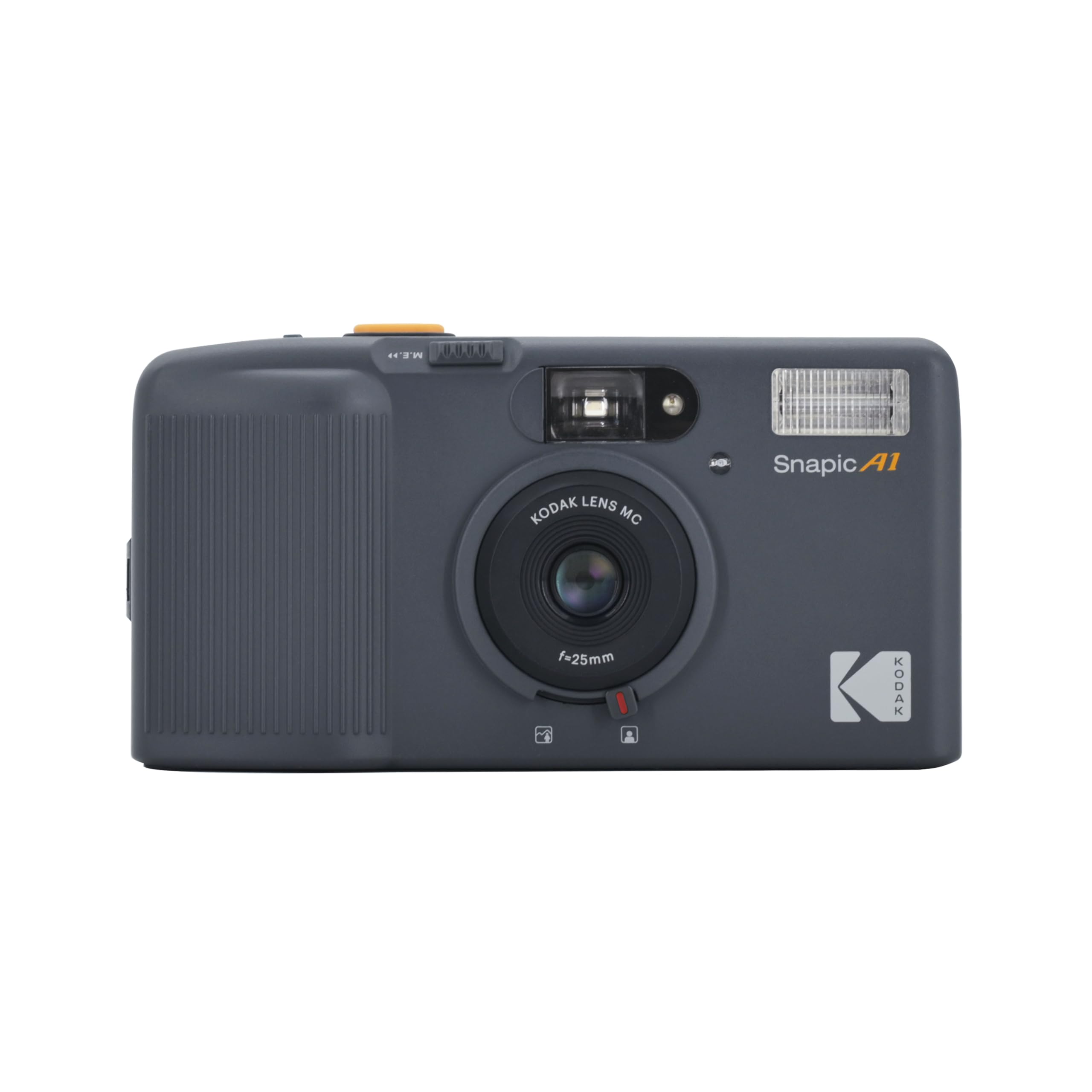
The Rhino Grey edition of the KODAK Snapic A1 is mechanically identical to the Ivory White version — same 3-element glass lens, same 2-zone focus system, same double exposure capability — but in a darker, more discreet finish that hides scratches better over time. The auto-wind and auto-rewind mechanisms make loading and unloading film completely painless, ideal for a first-time film user who might be intimidated by manual film transport.
The built-in auto flash with red-eye reduction activates automatically when the camera detects low light, which is a set-and-forget convenience. The LCD shot counter shows how many exposures remain, and the on/off switch prevents accidental battery drain when the camera is stored in a bag. Image quality is best achieved with ISO 200 daylight film like Kodak Gold or Fujicolor 200, producing vibrant colors with the characteristic film look that digital filters try to imitate.
Battery compatibility is a real constraint — like its white sibling, this model requires standard alkaline AAA cells only. Rechargeable NiMH batteries cause erratic operation. The flash button is also prone to accidental presses during transport. These are minor concessions for a camera that costs about the same as a two-pack of disposables but eliminates the recurring waste and per-use expense. It is the smartest buy for anyone who wants to test the film waters without financial commitment.
Why it’s great
- Same glass lens and features as the more expensive color variant
- Auto-wind and rewind eliminate film handling complexity
- Dark finish hides daily wear better than lighter colors
Good to know
- Only works with alkaline AAA batteries — no NiMH support
- Flash button is easily pressed accidentally
- Best image quality is limited to daylight and ISO 200 film
9. Kodak Funsaver Disposable Camera 7-Pack

The Kodak Funsaver 7-Pack is a bulk bundle of seven single-use 35mm cameras, each pre-loaded with 27 exposures of Kodak ISO 400 film. The higher sensitivity allows for decent results in mixed lighting conditions — indoor shots with flash come out clear within the recommended range, and outdoor daylight shots deliver the classic warm, saturated Kodak color palette that defines the disposable camera look. The built-in flash is automatic, firing when the shutter button is pressed in low light.
This bundle is purpose-built for events like weddings, bachelor parties, and vacations where you want to hand cameras to guests without worrying about damage or loss. Each unit costs roughly the same as a premium point-and-shoot roll of film plus development, but with zero entry barrier — just advance the wheel, point, and shoot. The included microfiber cloth is a small but thoughtful addition for keeping the lens clear during outdoor use.
The trade-off is obvious: you cannot reuse these cameras, and the plastic lens produces soft, dreamlike images that lack the edge-to-edge sharpness of a glass lens. The ISO 400 film is fixed, so you cannot swap to a finer-grain stock for critical work. Night shots outside the flash range will come out completely black. For guests grabbing candids, these limitations are irrelevant — the resulting imperfect, nostalgic look is exactly what event organizers are paying for.
Why it’s great
- Seven cameras in one bundle cover large events and parties
- Pre-loaded ISO 400 film works well in mixed indoor/outdoor light
- Zero learning curve — advance, shoot, and develop
Good to know
- Plastic lens produces soft, non-sharp images compared to glass
- Single-use design means ongoing per-unit cost with every camera
- Night shots outside flash range yield completely black frames
FAQ
What is the advantage of a half-frame camera over a standard 35mm camera?
Can I use modern DSLR lenses on a vintage film camera body?
How do I choose between a reusable point-and-shoot and a disposable camera bundle?
Final Thoughts: The Verdict
For most users, the best cameras with film winner is the Pentax 17 because it combines modern manufacturing precision with the cost-saving half-frame format, allowing you to shoot 72 frames per roll with a beautifully coated glass lens. If you want the classic full-frame SLR experience with manual control and interchangeable lenses, grab the Canon AE-1. And for the purest entry-level value, nothing beats the KODAK Snapic A1.