
The difference between a forgettable snap and a breathtaking aerial portfolio often comes down to the stability of a gimbal, the sensitivity of a CMOS sensor, and the intelligence of a flight controller—not the megapixel count on a spec sheet. Choosing an aerial drone for photography means navigating a landscape of sub-249g weight classes, transmission ranges measured in kilometers, and battery math that determines whether you capture the golden hour or watch it fade while you land for a swap.
I’m Min — the co-founder and writer behind Gadgets Feed. I’ve spent hundreds of hours analyzing market data, cross-referencing technical specs like sensor sizes, gimbal axes, and flight-time claims against real-world performance to separate marketing promises from genuine photographic tools.
This guide cuts through the noise to present the best aerial drones for photography, ranked by their ability to deliver sharp, stable, and cinematic footage without breaking your budget or your confidence at the controls.
How To Choose The Best Aerial Drones For Photography
Selecting an aerial photography drone demands a focus on three pillars: image stability, flight endurance, and transmission reliability. A high-resolution camera means little if the gimbal can’t compensate for a level-5 gust, or if the battery forces a landing after 15 minutes of setup.
Prioritize Gimbal Performance Over Sensor Resolution Alone
A 48-megapixel camera mounted on a 2-axis gimbal will produce more blurry frames than a 12-megapixel unit on a quality 3-axis gimbal, especially in the moderate winds common at altitude. The third axis corrects for yaw—the side-to-side rotation that ruins landscape pan shots. Look for “3-axis brushless gimbal” in the spec sheet; it’s your single most important guarantee of frame-to-frame consistency.
Don’t Underestimate the Flight-Time x Battery Configuration
Manufacturers often quote maximum flight time from a single battery under ideal conditions. The realistic average hovers around 70-80% of that number, dropping further in wind or cold. A “Fly More Combo” with three batteries transforms a 30-minute window into a 90-minute session, which is often the difference between capturing one scene and building an entire sequence.
Transmission Technology Defines Your Shooting Radius
Wi-Fi-based control links are susceptible to interference and dropouts beyond a few hundred meters in urban areas. Dedicated digital transmission systems—such as the SkyBridge or PixSync technologies used by the models in this guide—maintain a low-latency, high-bitrate 1080p video feed at ranges exceeding 3 kilometers in open air, giving you the confidence to frame a shot over a valley without losing visual contact.
Quick Comparison
On smaller screens, swipe sideways to see the full table.
| Model | Category | Best For | Key Spec | Amazon |
|---|---|---|---|---|
| DJI Mavic 4 Pro | Flagship | Professional cinematic work | 100MP 4/3 CMOS Hasselblad | Amazon |
| DJI Mini 5 Pro | Premium Compact | Prosumer versatility | 1-inch CMOS / 4K 60fps | Amazon |
| SKYROVER X1 | Mid-Range | Advanced features per dollar | 360° Obstacle Avoidance | Amazon |
| HOVERAir X1 PROMAX | Action Camera | Hands-free action follow | 8K@30fps / 42kmh Follow | Amazon |
| DJI Mini 3 | Premium Entry | Vertical shooting for social | 51-min max flight time | Amazon |
| Bwine F7MINI 4K | Mid-Range | Built-in screen convenience | 20,000ft / 1080p screen RC | Amazon |
| Ruko F11PRO 2 | Mid-Range | Beginner-friendly 6K photos | 3-axis gimbal / 70 min | Amazon |
| Bwine F7GB2 Pro | Mid-Range | High-altitude flight | 2000m ceiling / 75 min | Amazon |
| Potensic ATOM 4K | Budget Entry | Best value for new pilots | Sony CMOS / 96-min total | Amazon |
| Ruko Drone 4K | Budget Entry | Beginner 8K photo drone | 48MP sensor / 96 min total | Amazon |
In‑Depth Reviews
1. DJI Mavic 4 Pro
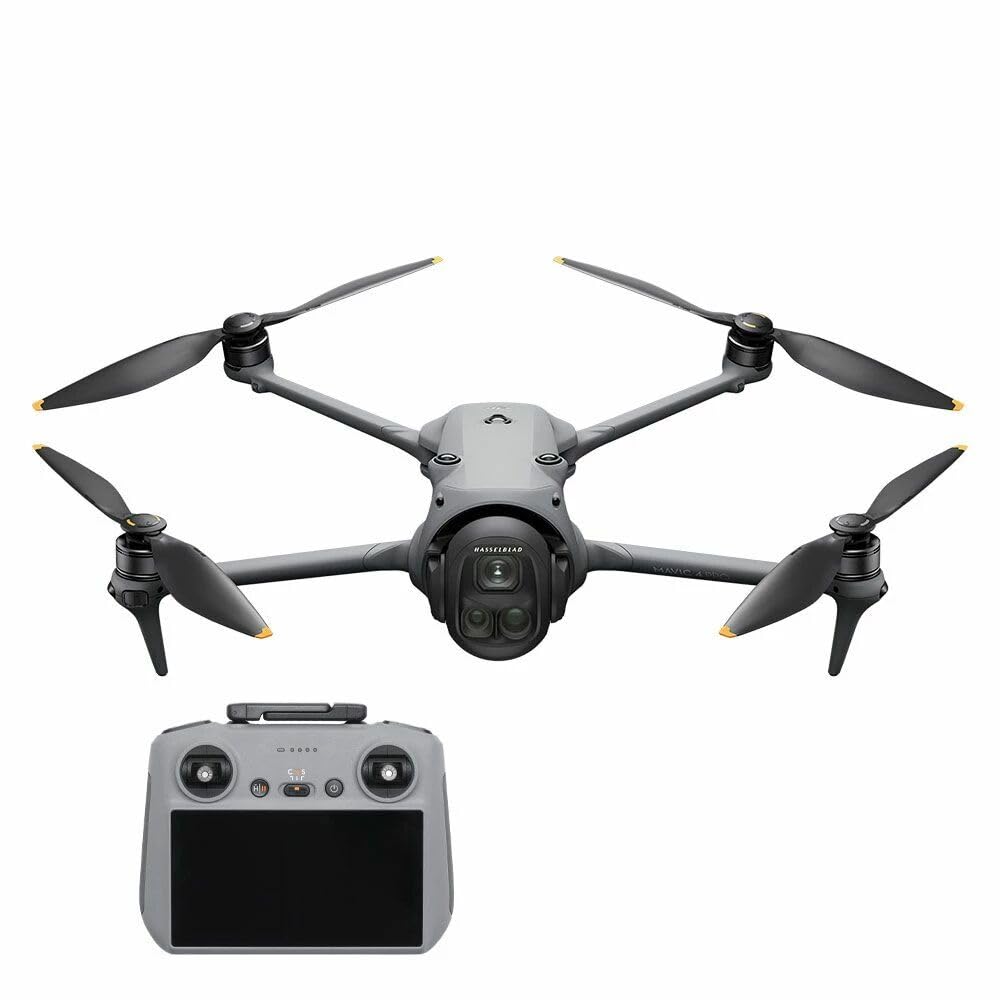
The Mavic 4 Pro sits at the absolute peak of consumer aerial photography with a 100MP 4/3 CMOS Hasselblad sensor that captures more dynamic range than any other drone in this guide. The 360° Infinity Gimbal unlocks camera rotation angles previously impossible on a sub-5-pound airframe, enabling pull-away shots where the subject stays framed while the drone climbs vertically.
Its O4+ digital transmission delivers a stable 10-bit HDR video feed at 30 kilometers in clear conditions, and the 0.1-Lux Nightscape obstacle sensing system allows safe low-light operation that no other model here can match. The 51-minute maximum flight time provides the endurance needed for multi-setup professional shoots without battery anxiety.
This is a heavy investment that delivers a measurable return in image quality—every frame from the Hasselblad sensor carries the color science that made the brand famous. For photographers who bill by the project or demand gallery-grade output, this is the reference standard.
Why it’s great
- 100MP 4/3 sensor with Hasselblad natural color rendering
- 360° gimbal rotation for creative vertical and high-angle shots
- 30km O4+ video transmission with full 10-bit HDR feed
Good to know
- Gimbal is fragile and lacks consumer service plans in the US market
- Premium price point and heavy weight require FAA Remote ID registration
2. DJI Mini 5 Pro
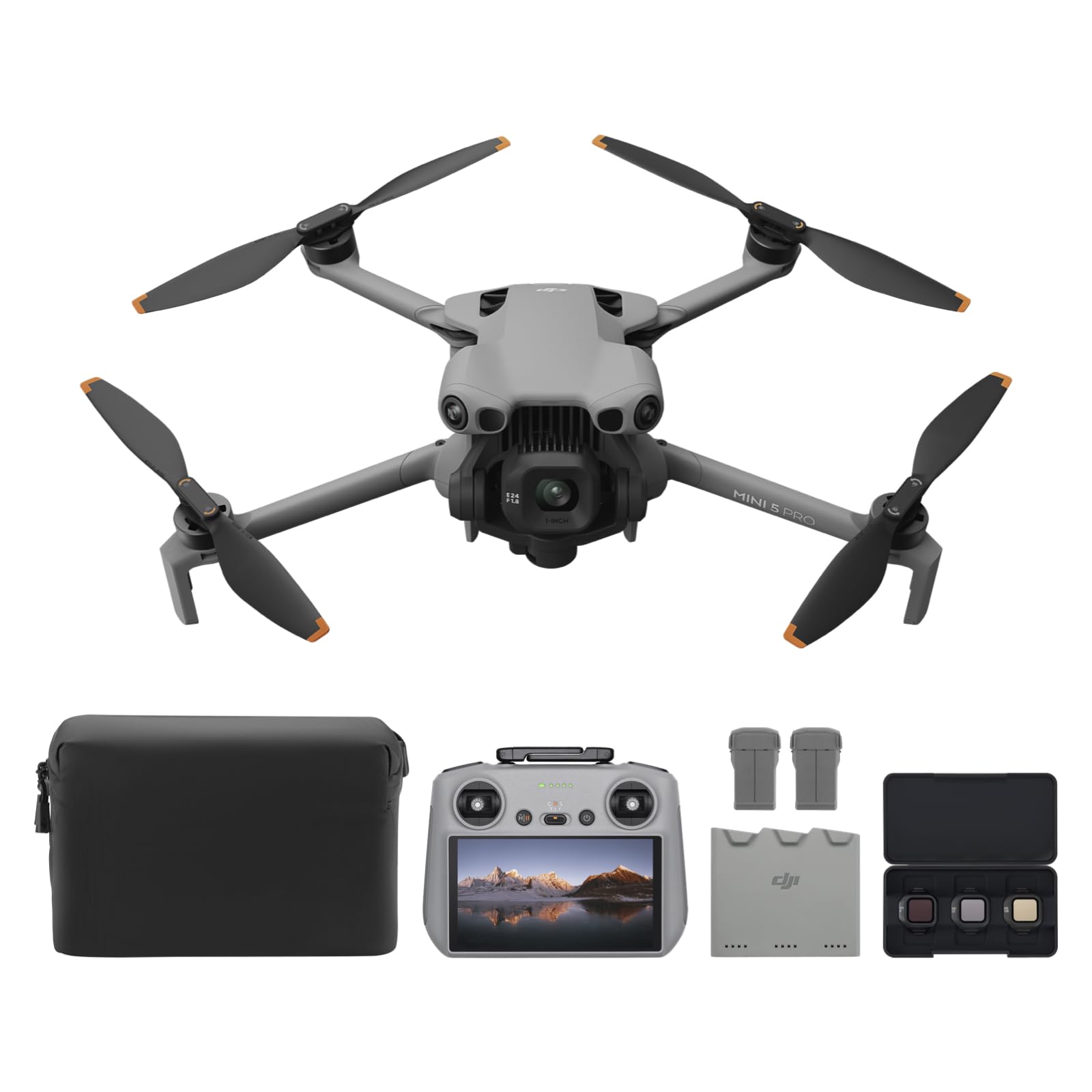
The Mini 5 Pro packs a 1-inch CMOS sensor capable of 4K/60fps HDR video and 50 MP stills into a sub-249g airframe, making it the most capable compact photography drone currently available. Its 225° gimbal roll rotation allows true vertical framing without cropping, which is critical for social-media-first content creators who need native 9:16 footage straight out of the camera.
Omnidirectional obstacle sensing—including forward-facing LiDAR—combined with ActiveTrack 360° means you can trust the drone to follow a moving subject through semi-complex terrain without pilot intervention. The Intelligent Flight Battery Plus extends flight time to 52 minutes, and the Fly More Combo includes three batteries plus ND filters, a charging hub, and a shoulder bag.
The RC 2 controller’s bright built-in display eliminates phone dependency, though adding accessories like the larger battery or prop guards pushes the weight over 250g, triggering FAA Remote ID requirements. For the photographer who wants near-flagship sensor performance in a jacket-pocket form factor, this is the choice.
Why it’s great
- 1-inch CMOS delivers excellent dynamic range and low-light performance
- True vertical shooting without sensor crop for social content
- Omnidirectional obstacle avoidance with LiDAR for safe tracking
Good to know
- No DJI Care Refresh warranty available for US customers at launch
- Firmware activation may require a mobile hotspot instead of home WiFi
3. SKYROVER X1

The SKYROVER X1 delivers features typically reserved for DJI’s upper tiers—360° obstacle avoidance, 4K/60fps HDR video, and 48MP stills—at a price point that undercuts the Mini 3. Its 1/1.32-inch CMOS sensor with f/1.7 aperture supports AI Night Mode for improved dusk and city-skyline shots, and the 96-minute total flight time from three batteries matches the endurance of far more expensive packages.
The SkyBridge transmission system claims a 9.32-mile range with a responsive 1080p/60fps live feed, though real-world line-of-sight limits will likely keep most flights shorter. The bright yellow airframe is polarizing aesthetically but genuinely helpful for maintaining visual contact against tree lines and overcast skies.
It lacks the polish and long-term firmware support of DJI models, and the 360° sensors are less reliable in dense foliage than the LiDAR on the Mini 5 Pro. But for the mid-range budget, you are getting a robust photography platform with genuine obstacle avoidance—a rare combination at this price.
Why it’s great
- 360° obstacle avoidance at a mid-range price point
- 4K/60fps HDR video with AI Night Mode for low-light
- 96 minutes total flight time with the Fly More combo
Good to know
- Yellow color scheme may not appeal to all users
- Lacks the depth of brand support and accessory ecosystem of DJI
4. HOVERAir X1 PROMAX

The HOVERAir X1 PROMAX redefines the aerial photography drone as a flying action camera. It records 8K/30fps video horizontally and 4K/30fps vertically, then folds into a fully enclosed body small enough to drop into a hydration pack. Its 10+ fully automatic flight modes—including Zoom Out, Dolly Track, and Bird’s Eye—allow hands-free capture with zero piloting skill required.
The SmoothCapture 2.0 stabilization couples a two-axis gimbal with electronic image stabilization and horizon leveling, and the rear ToF sensor provides active collision detection during follow-mode at speeds up to 3m/s. The OmniTerrain algorithm permits operation over snow, water, and cliffs without triggering false altitude sensors.
It is not a traditional drone for sweeping landscape cinematography; the fixed camera limits focal length control, and the absence of a standard remote means manual flight requires app-based joystick input. But for solo adventurers who want cinematic follow footage of cycling, skiing, or hiking without a camera operator, it is the most capable option in its category.
Why it’s great
- 8K/30fps recording in a fully enclosed, foldable body
- 10+ automatic flight modes for truly hands-free capture
- Rear collision detection and OmniTerrain for difficult environments
Good to know
- No remote controller included; relies on app or voice commands
- Fixed camera lens limits focal length control and zoom flexibility
5. DJI Mini 3

The DJI Mini 3 remains a benchmark for entry-level aerial photography because it combines the essential features—4K HDR video, a 3-axis mechanical gimbal, and True Vertical Shooting—into a sub-249g airframe that skips FAA registration entirely for recreational pilots. The included DJI RC controller with its 5.5-inch HD display removes the phone-as-monitor compromise entirely.
The Fly More Combo nets you three batteries delivering a total of 114 minutes of flight time, and the Intelligent Flight Battery Plus (sold separately) extends a single flight to 51 minutes at the cost of breaking the 249g weight limit. Level-5 wind resistance and 10-kilometer OcuSync 2.0 transmission provide the reliability needed for confident framing over varied terrain.
It lacks obstacle avoidance entirely—a notable gap that means the pilot must maintain constant situational awareness. The 1/1.3-inch sensor is also a step down from the 1-inch unit in the Mini 5 Pro. But for a first serious photography drone, the Mini 3 offers the most balanced blend of simplicity and image quality in the DJI lineup.
Why it’s great
- True vertical shooting for native 9:16 social media content
- Sub-249g design avoids FAA registration for recreational use
- Included RC controller with bright 5.5-inch display
Good to know
- No obstacle avoidance sensors; pilot must stay vigilant
- Larger battery pushes weight over 249g limit
6. Bwine F7MINI 4K
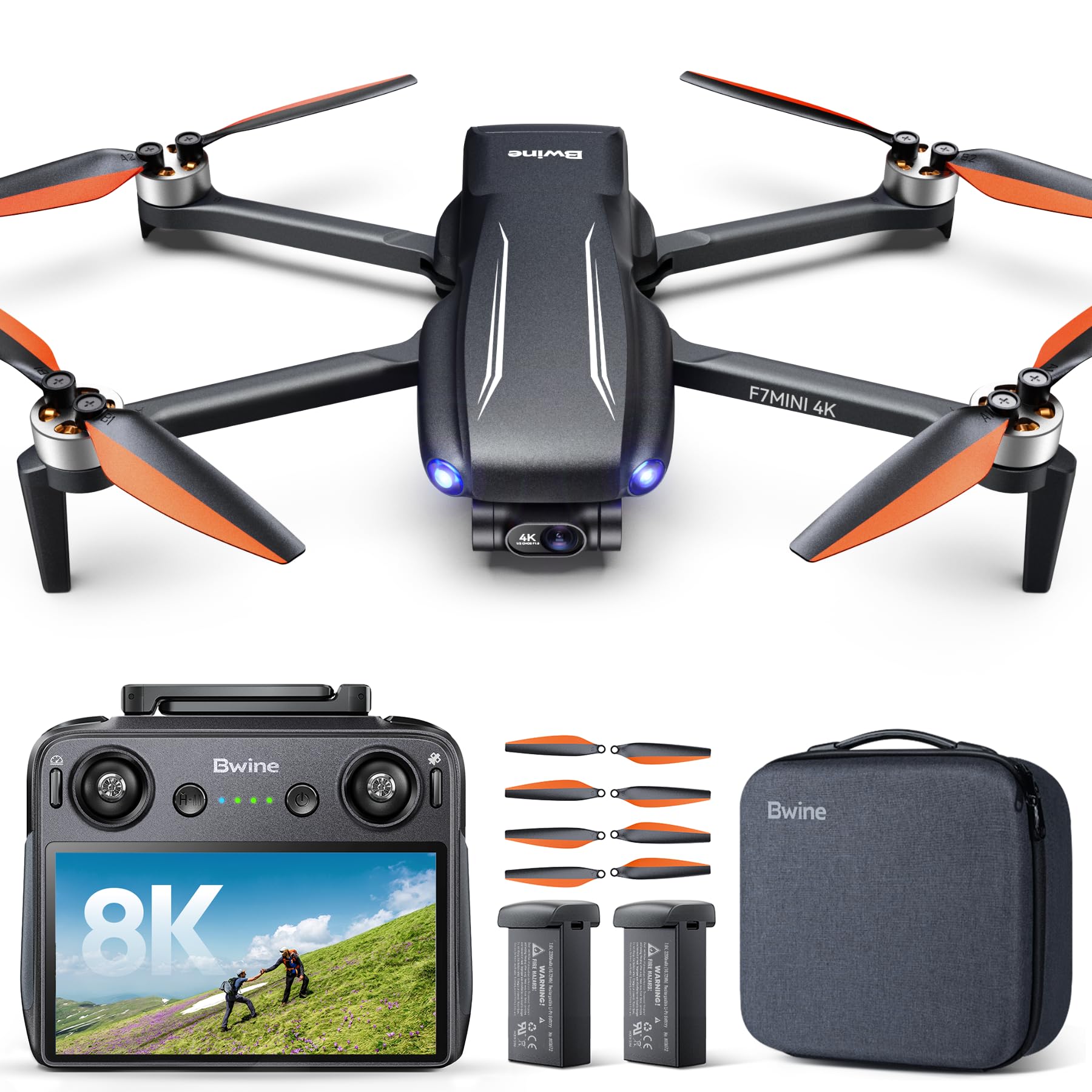
The Bwine F7MINI 4K solves one of the biggest frustrations of mid-range drone photography: phone-as-display dependency. Its upgraded remote features a 5.5-inch 1080p screen with 500-nit brightness and 32GB of internal storage, so you never have to deal with a dying phone battery during a shoot. The 3-axis brushless gimbal with EIS keeps 4K footage smooth at the sub-249g weight class.
The 20,000-foot transmission range relies on a digital system that claims 0.1-second latency in open fields, and the two included batteries provide 32 minutes each for a total 64-minute flight envelope. The Smart Return-to-Home features include a Dynamic Home Point that updates with the controller position, which is useful for follow-mode shooting on hiking trails.
The 8K photo claim is interpolated—the actual sensor captures 48MP stills upscaled—and the Wi-Fi-based connectivity can be less robust than purpose-built digital links on DJI models. But for the price, the integrated screen and solid gimbal stabilization make this a compelling pick for photographers who want to fly without a phone tray.
Why it’s great
- Built-in 5.5-inch 1080p screen eliminates the need for a phone
- 3-axis gimbal with EIS for smooth 4K footage
- Under 249g with FAA exemption and Dynamic Home Point
Good to know
- 8K photo is interpolated, not native resolution
- Wi-Fi-based transmission can suffer interference in urban areas
7. Ruko F11PRO 2

The Ruko F11PRO 2 targets photographers who prioritize a gentle learning curve over top-tier sensor performance. Its 3-axis mechanical gimbal delivers 4K/30fps video and 6K photos with rock-steady stability, and the 70-minute total flight time from two 3200mAh batteries removes the immediate need for a third battery purchase. The 10,000-foot digital transmission range is ample for scouting large properties or capturing distant landscapes.
Beginner Mode restricts altitude and distance automatically, while GPS Auto Return-to-Home triggers on low battery, signal loss, or button press. Smart flight modes include GPS Follow, Waypoint Flight, Cruise Control, and Orbit Mode—all accessible through a straightforward app interface that includes FAA registration guidance.
The camera is decent but noticeably behind the 1-inch-class sensors: fine detail recovery in shadows is limited, and the 19MP effective still resolution trails the competition. The two-battery kit also requires a separate charger for simultaneous charging. But as a first aerial photography tool with genuine gimbal stabilization, the F11PRO 2 is a reliable starting point.
Why it’s great
- 3-axis mechanical gimbal for stable 4K video and 6K photos
- 70-minute flight time with two 3200mAh intelligent batteries
- Beginner Mode and comprehensive GPS auto-return safety suite
Good to know
- Camera sensor resolution trails 1-inch-class competitors
- Charger not included for simultaneous battery charging
8. Bwine F7GB2 Pro

The Bwine F7GB2 Pro is built for high-altitude photography, with a 2000-meter operational ceiling and Level-6 wind resistance certification that keeps the gimbal stable in conditions that ground lesser drones. The 4K camera uses a 120° FOV lens with 5x digital zoom, and the 3-axis gimbal maintains horizon leveling during aggressive maneuvers or gust conditions.
The three 2600mAh batteries deliver a total of 75 minutes of flight time and are UL 2054 certified for safety—a rare specification at this price level. GPS features include Follow Me, Waypoint, and Orbit modes, and the app supports one-click social sharing with built-in editing filters and background music for quick content turnaround.
The remote’s built-in display is difficult to read in direct sunlight, and the SD card compatibility can be finicky with certain brands. The 550-gram weight also requires FAA Remote ID compliance, adding a registration step. But for photographers who need to shoot in high mountain passes or windy coastal cliffs, the F7GB2 Pro’s wind performance at altitude is unmatched in its class.
Why it’s great
- 2000-meter ceiling and Level-6 wind resistance for extreme conditions
- UL 2054 certified batteries for safety assurance
- 75-minute total flight time from three batteries
Good to know
- 550g weight requires FAA Remote ID registration
- Remote screen is hard to read in bright sunlight
9. Potensic ATOM 4K

The Potensic ATOM 4K proves that a capable aerial photography platform no longer requires a premium budget. Its Sony CMOS sensor paired with a 3-axis brushless gimbal records genuine 4K/30fps video—not interpolated upscaling—with horizon-steady results verified in level-5 winds. The 96-minute total flight time from three included batteries sets the endurance standard for the budget tier.
The PixSync 3.0 transmission system provides a 6-kilometer range in open air, and the Fly More Combo includes a parallel charging hub that can charge all three 2230mAh batteries simultaneously in 1.3 hours using 60W input. QuickShot modes—Pull-Away, Rocket, Circle, and Boomerang—automate cinematic patterns for beginners who haven’t mastered manual stick control.
Low-light performance is poor due to the small sensor size, and the gimbal occasionally drifts after firmware updates—though Potensic’s customer service has a strong track record of replacing defective units. The sub-249g weight keeps it FAA-exempt, and the accompanying 64GB microSD card is a welcome inclusion.
Why it’s great
- Genuine Sony CMOS sensor with 3-axis gimbal for real 4K video
- 96-minute total flight time with three-battery combo and fast hub
- Sub-249g weight eliminates FAA registration requirement
Good to know
- Low-light image quality is noticeably poor
- Gimbal drift issues can occur after firmware updates
10. Ruko Drone 4K

The Ruko 4K Drone provides the most affordable entry point to stabilized aerial photography with a 3-axis gimbal and a 1/2-inch 48MP CMOS sensor. The 8K photo mode is interpolated, but the 4K/30fps video is genuine, and the gimbal stabilization keeps footage usable even during moderate wind. The 96-minute flight envelope from three batteries matches the endurance of the budget leader.
The R2 digital transmission system avoids Wi-Fi interference issues, claiming a 20,000-foot range with a real-time feed. The AI Takeoff/Landing system uses quadruple positioning—GPS, barometric hold, ToF, and optical flow—for precise ground operations. A built-in locator beeper helps find the drone after a forced landing in tall grass or brush.
The joysticks are sensitive and require a light touch, and the claimed 8K photo resolution is marketing speak rather than native sensor output. Customer support has a reputation for responsive replacements when components fail. For the absolute lowest cost of entry into gimbal-stabilized aerial photography, this Ruko model delivers the fundamental requirements without major compromises.
Why it’s great
- 3-axis gimbal with 48MP sensor for stable 4K video capture
- 96-minute total flight time with three-battery Fly More kit
- R2 digital transmission avoids Wi-Fi interference and dropouts
Good to know
- 8K photo mode is interpolated, not native resolution
- Joystick sensitivity can feel twitchy for new pilots
FAQ
Do I need FAA registration for a sub-249g drone used for photography?
Why does my 4K drone footage look shaky even with a gimbal?
Final Thoughts: The Verdict
For most users, the best aerial drones for photography winner is the DJI Mini 5 Pro because it compresses a 1-inch sensor, 52-minute flight time, and full omnidirectional obstacle avoidance into a sub-249g airframe that can go anywhere legally. If you want the absolute highest image quality and can manage the weight and cost, grab the DJI Mavic 4 Pro. And for the budget-conscious photographer seeking real gimbal stabilization and long total flight time, nothing beats the Potensic ATOM 4K.