
A 300 watt 12 volt solar panel is the sweet spot for serious off-grid power, but the gulf between rated wattage under lab conditions and real-world output on your RV roof or campsite can be massive. Shade tolerance, cell technology, and connector quality determine whether you actually wake up with a full battery, and too many panels fail to deliver their promise when a cloud rolls in or the angle shifts. Understanding the difference between monocrystalline efficiency, bypass diodes, and MPPT compatibility is the only way to avoid buying a brick that looks good on paper but chokes in practice.
I’m Min — the co-founder and writer behind Gadgets Feed. I’ve spent hundreds of hours analyzing solar panel specifications, cross-referencing customer test data from real rooftop and portable installations, and comparing conversion efficiencies, temperature coefficients, and build quality across dozens of models to separate marketing hype from actual performance in this category.
Whether you are outfitting a van, a cabin, or a camping setup, the right panel turns sunlight into stored energy reliably — and the wrong one leaves you searching for shore power. This guide breaks down the best options on the market to help you find the right 300 watt solar panel 12 volt for your specific off-grid needs.
How To Choose The Best 300 Watt Solar Panel 12 Volt
Choosing the right 300W 12V panel means matching the cell technology and physical form factor to your exact mounting scenario. A portable folding panel built for campgrounds will not survive a winter on a roof, and a rigid glass panel will never fit inside your car for weekend trips. Prioritize conversion efficiency if space is tight, but do not ignore the charge controller your system requires — a PWM controller will waste up to 30% of the panel’s potential compared to an MPPT unit.
Cell Technology: N-Type vs P-Type vs Bifacial
Standard P-type monocrystalline cells degrade faster and suffer more from light-induced degradation. N-type cells use a different doping process that delivers higher efficiency (typically 24–25% vs 21–22%) and a lower temperature coefficient, meaning they produce more power on hot rooftops and lose less output as the panel heats up. Bifacial panels add a transparent backsheet that captures reflected light from the ground or roof surface, boosting total output by 15–30% in real-world installation — but they require clearance behind the panel to work and are best for ground mounts or raised roof racks.
Rigid vs Flexible vs Portable Form Factors
Rigid glass panels with an aluminum frame offer the best durability (up to 5400 Pa snow load) and highest per-dollar efficiency, but they are heavy and require permanent mounting. Flexible panels are ultra-thin (around 2.5mm) and conform to curved RV roofs, but they run hotter and often degrade faster due to trapped heat. Portable folding suitcase panels trade some efficiency for instant setup anywhere — look for built-in kickstands and IP67 waterproofing if you plan to move them frequently.
Charge Controller Compatibility
A 300W panel at 12V nominal voltage pushes roughly 16–17 amps in full sun. A PWM controller simply passes the panel voltage through to the battery, wasting any voltage above the battery’s level — you will see about 150–200W of usable power in practice. An MPPT controller converts excess voltage into additional current, recovering that lost energy and delivering closer to the full 300W. If your kit includes a PWM controller, factor in that you may get 60–70% of the rated wattage depending on conditions.
Quick Comparison
On smaller screens, swipe sideways to see the full table.
| Model | Category | Best For | Key Spec | Amazon |
|---|---|---|---|---|
| Renogy 300W Portable Suitcase | Portable | Camping & RV travel | N-Type 16BB, 25% eff, 18.7 lbs | Amazon |
| PECRON 300W Foldable | Portable | Power station pairing | 23.5% eff, IP67, foldable | Amazon |
| BougeRV Bifacial N-Type 300W | Rigid | Permanent off-grid install | Bifacial, 25% eff, 32.8 lbs | Amazon |
| Renogy N-Type 400W (2x200W) | Rigid | Class B vans & roof install | 25% eff, 16BB N-Type, compact | Amazon |
| Callsun 400W Bifacial (2x200W) | Rigid | Maximum energy harvest | Bifacial, 25% eff, anti-shade | Amazon |
| DOKIO 300W Foldable Kit | Portable | Compact vehicle camping | 15.2 lbs, PWM controller, USB | Amazon |
| WUZECK Flexible 300W (2x150W) | Flexible | Curved roof surfaces | 6.6 lbs, 2.5mm thin | Amazon |
| JJN 300W Monocrystalline Kit | Rigid | Budget-friendly starter kit | 22% eff, half-cut, 40A PWM | Amazon |
| WUZECK 300W (2x150W) Rigid | Rigid | Ground mount & off-grid | PERC mono, 23% eff, IP65 | Amazon |
In‑Depth Reviews
1. Renogy 300W Portable Solar Panel Suitcase
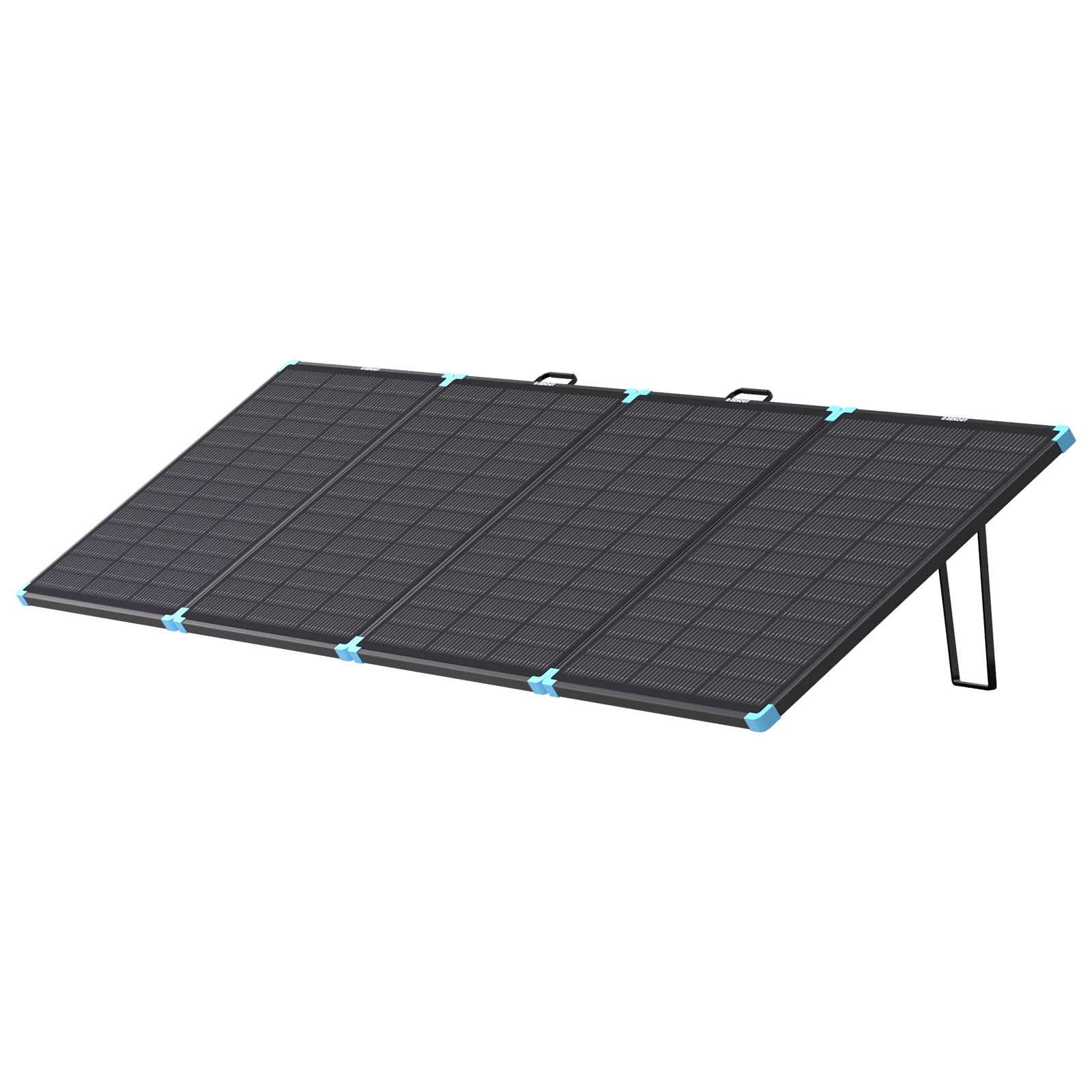
Renogy brings their N-Type 16BB cell technology to a portable suitcase format, achieving 25% conversion efficiency in a package that folds to 23.2 x 29.3 x 3.2 inches and weighs only 18.7 pounds. The parallel wiring design means partial shade on one panel section does not cripple the output of the other section, a critical advantage when you are chasing sun around a campsite. The IP67 waterproof rating and ETFE hail-resistant coating let you leave it outside without worrying about a sudden storm destroying your investment.
Real-world testing shows consistent 250–280W output in full sun, with peak bursts exceeding 300W during optimal conditions according to multiple customer reports. The built-in rust-proof kickstands prop the panel at a usable angle out of the box, though some users note the angle runs steep and may require small blocks for flat-ground optimization. The kit ships without connecting cables, so factor in an MC4-to-your-power-station adapter purchase — but the IP68 connectors ensure compatibility with virtually every major portable power station.
Renogy backs this unit with a 3-year output and workmanship warranty, which leads the industry for portable panels. If you want one panel that sets up in 60 seconds, survives weather abuse, and delivers the highest real-world wattage of any foldable on this list, this is the unit to buy. The only compromise is that you will need to spend extra on cables, but the performance delta justifies it.
Why it’s great
- N-Type cells deliver 25% efficiency, outperforming standard 22.5% panels by a meaningful margin
- Parallel wiring protects output when one panel section is shaded
- IP67 waterproof with ETFE coating survives rain, snow, and hail abuse
Good to know
- No connecting cables included — you will need to purchase MC4 adapter cables separately
- Kickstand angle runs steep and may need manual adjustment for peak performance
2. PECRON 300W Portable Solar Panel
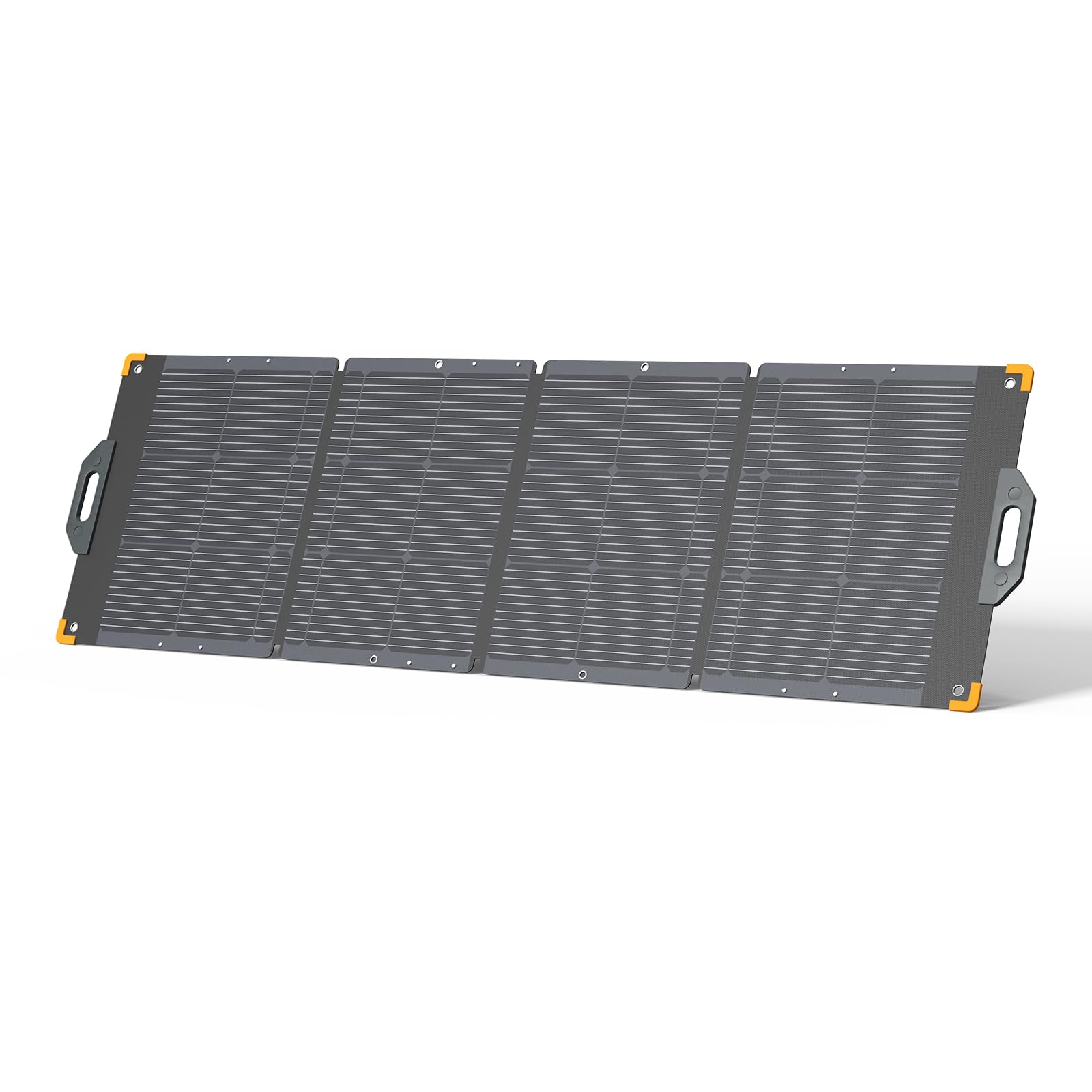
The PECRON 300W foldable panel hits 23.5% conversion efficiency and packs down into a slim, carry-friendly form factor that fits easily into a car trunk or storage locker. The aluminum frame and monocrystalline silicon with tempered glass construction give it a durable feel that leans toward the rigid side of portables — it is not fully flexible, but it folds securely with enough rigidity to resist wind flapping. The included 15-foot cable provides flexibility to keep your power station in the shade while the panel soaks up direct sun.
Customer reports confirm consistent 260–285W output in full sun, with one user measuring 285W after angling the panel with jack stands. The panel pairs naturally with PECRON power stations like the E1500LFP, but the MC4 connectors make it compatible with any standard solar generator. One unit developed a delamination spot below the surface, but the seller provided prompt replacement service — a sign of decent post-purchase support that matters for outdoor gear.
The adjustment mechanism is limited out of the box; you will likely need to prop the bottom edge to catch optimal sun angles. But for the price, this panel delivers class-leading output per dollar and solid build quality. If you own a PECRON power station or want a panel that plays well with the broader ecosystem, this is a top-tier choice that earns its slot.
Why it’s great
- 23.5% conversion efficiency turns more sunlight into usable power than budget options
- IP67 waterproof rating lets you leave it outside in rain without worry
- 15 ft cable allows flexible placement between panel and power station
Good to know
- Limited built-in angle adjustment — plan to use props or jack stands for optimal tilt
- One report of delamination, though seller replaced the unit promptly
3. BougeRV Bifacial N-Type 300W Solar Panel
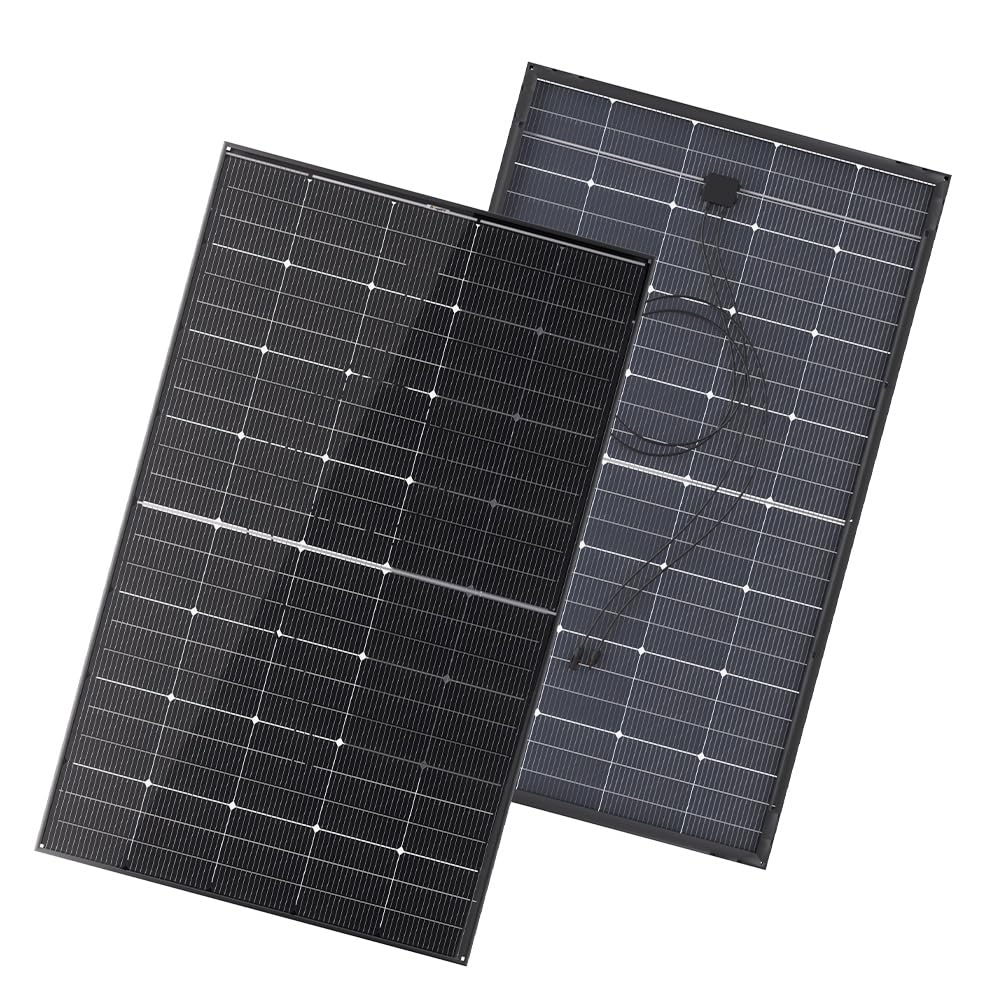
The BougeRV Bifacial N-Type panel uses a transparent backsheet to capture reflected sunlight from the ground or mounting surface, boosting total output by up to 30% over a standard monofacial panel. The 16BB N-Type cell design achieves 25% efficiency, and the panel measures 61.3 x 37.4 x 1.4 inches at 32.8 pounds — large but manageable for permanent rack mounting. The IP68-rated junction box and pre-installed bypass diodes protect against overheating and ensure continued operation even when partial shade hits a portion of the panel.
Real-world testing shows 285–300W peak output from the 300W rating, with bifacial gain pushing it over the rated spec when mounted on reflective surfaces like a concrete driveway or light-colored roof. One reviewer with 6 panels in series/parallel configuration reported over 1300W total from a 1200W-rated array, demonstrating the real-world benefit of the bifacial design. However, the panel is large enough that it may overhang Sprinter or Transit roof racks — it fits Promaster vans well.
BougeRV provides 10 years of product technical support, but the warranty is 12 months, which is shorter than some competitors. Some units shipped with minor soldering inconsistencies, and buying from BougeRV means you may need to engage support for replacements. If your installation site has a reflective ground surface and you want every possible watt from a single panel, the bifacial gain makes this a compelling choice that smaller panels cannot match.
Why it’s great
- Bifacial design captures reflected light for up to 30% more output than monofacial panels
- N-Type 16BB cells deliver 25% conversion efficiency for top-tier performance
- IP68 junction box and bypass diodes protect against shade and weather
Good to know
- Large 61-inch length may not fit smaller van roof racks without overhang
- Warranty is only 12 months — shorter than some competitors in the same price tier
4. Renogy N-Type 400W Solar Panel (2x200W)

Renogy’s N-Type 400W panel set consists of two 200W panels designed specifically for Class B vans, offering 7.5% smaller dimensions and 11.7% lighter weight than the previous generation while delivering the same 400W total output. Each panel uses 16BB cell technology with 25% efficiency, and the low temperature coefficient means they hold up better on hot rooftops where P-type panels would suffer significant derating. The 1.2-inch frame thickness keeps the profile low for aerodynamic roof mounting.
Customers report accurate power ratings, with one user measuring 1189W from a 1000W array in peak sun — a sign that the panels are not overrated. The open circuit voltage of 37.44V means you cannot series these with standard 12V panels without wasting performance, but they work perfectly in series for 24V systems or parallel for 12V setups. The 25-year 80% output warranty gives long-term confidence that budget panels cannot match.
The panels ship as a pair of 200W units, so you get flexibility in mounting orientation and series/parallel configuration. The size is perfect for fitting on standard RV roofs without overhang, and the weight reduction makes single-person installation feasible. If you have roof space and want Renogy’s proven reliability with top-tier N-Type efficiency, this set is the best choice for permanent van and RV installations that need to last.
Why it’s great
- 25% N-Type efficiency with 16BB cells outperforms standard panels in hot weather
- 7.5% smaller and 11.7% lighter than previous Renogy 400W generation
- 25-year 80% output warranty provides long-term performance confidence
Good to know
- Open circuit voltage of 37.44V limits series pairing with standard 12V panels
- Does not include charge controller or wiring — requires separate purchase
5. Callsun 400W Bifacial Solar Panel (2x200W)
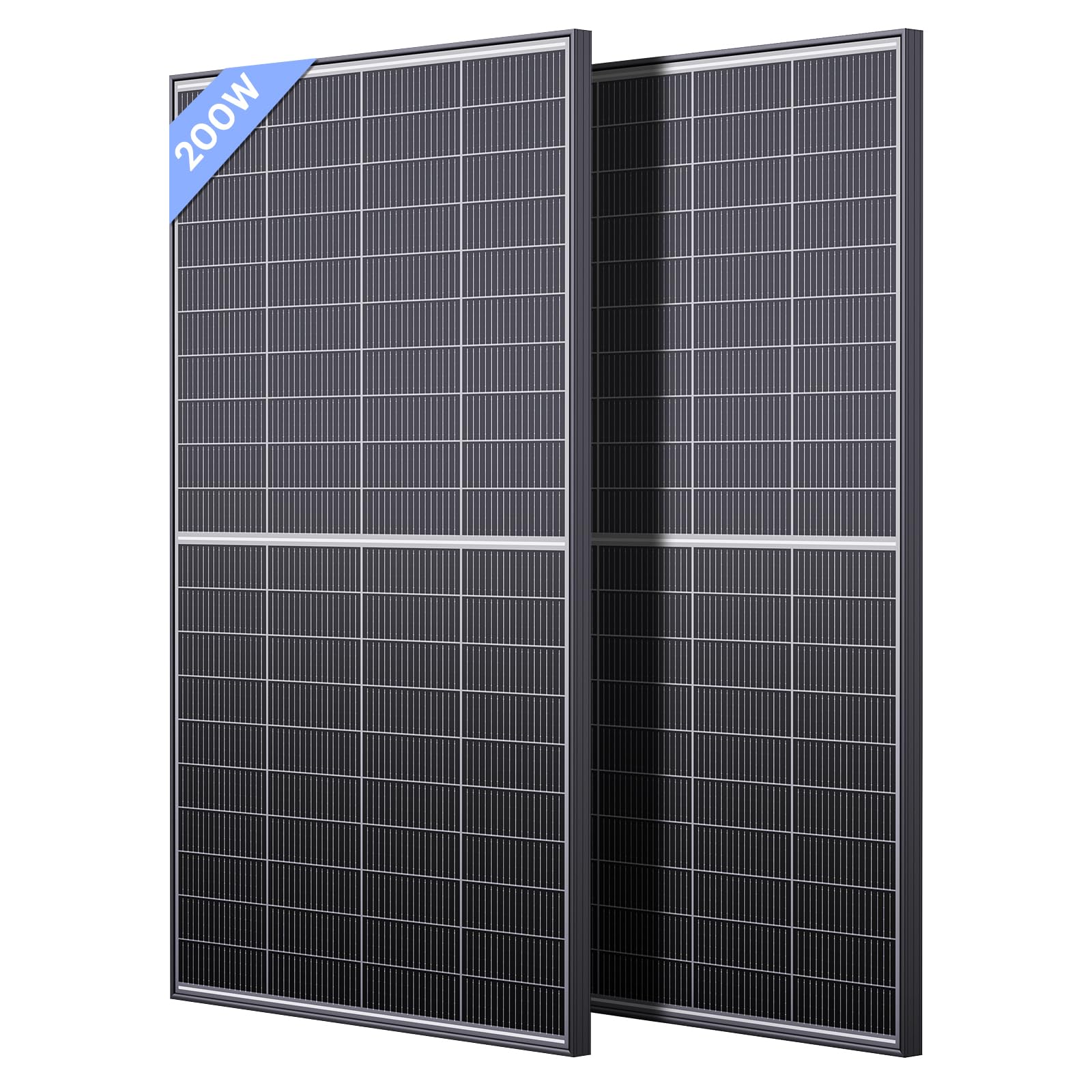
The Callsun 400W panel pair combines N-Type 16BB bifacial technology with an innovative TwinCell anti-shade design that splits each panel into two independent halves. If one section is shaded by a tree branch or roof vent, the other half continues generating at full capacity — a real-world improvement over standard panels that lose half their output from a single shaded cell. The transparent backsheet captures reflected light for up to 30% extra output on reflective surfaces.
Customer data shows consistent peak output exceeding 400W from the 400W rated array due to bifacial gain, with one reviewer measuring over 1300W from three sets of panels in full sun. The IP68 waterproof rating and corrosion-resistant aluminum frame support a 30-year lifespan with 84.5% output guaranteed after 25 years. The pre-drilled back holes make mounting on rail systems straightforward without heavy tools.
The panels measure 51.3 x 30.3 x 1.4 inches each at 23.8 lbs — compact enough for most RV roofs while still offering the bifacial gain advantage. Callsun backs the set with 10 years of technical support and a 25-year performance commitment. The only real drawback is that individual unit output can vary slightly due to the bifacial effect being installation-dependent, but the anti-shade feature alone justifies the upgrade for anyone with partial shade issues.
Why it’s great
- TwinCell anti-shade design keeps half the panel generating power when the other is shaded
- Bifacial backsheet captures reflected light for up to 30% extra output
- 30-year lifespan with 25-year performance commitment and IP68 protection
Good to know
- Bifacial gain depends on reflective ground or roof surface — output varies by installation
- Larger 51-inch length may need careful positioning on smaller van roofs
6. DOKIO 300W Foldable Solar Panel Kit

The DOKIO 300W foldable kit is the lightest complete portable solution on this list at 15.2 pounds, folding down to 19.3 x 37.4 x 1.1 inches — slim enough to slide behind an RV seat or under a truck bed. It uses monocrystalline cells with a PWM charge controller, dual USB ports for direct device charging, and a 9.85-foot cable to keep your controller in the shade while the panel stays in the sun. The kit includes SAE, XT60, alligator clips, and multiple DC adapter tips for broad compatibility.
Real-world testing in overcast conditions produced 113–118W peak (from a 300W panel), which is expected with cloud cover and a PWM controller limiting throughput. Users report good results when paired with an MPPT upgrade and recommend replacing the included 20A PWM controller with a 30A MPPT unit and 10 AWG wire for full power. The panel lacks built-in kickstands, so you will need to rig a prop or purchase stands separately for optimal angling.
DOKIO includes a storage bag and comprehensive adapter kit in the box, making this a true all-in-one starter solution for someone who wants to unbox and charge a power station the same day. The 1-year warranty is shorter than premium options, but the entry-level price leaves budget for upgrading the controller. If portability and getting a complete kit with every connector matters more than absolute wattage, this is the most practical portable choice.
Why it’s great
- Ultra-portable at 15.2 lbs with foldable design that fits in tight storage spaces
- Complete kit includes PWM controller, cables, adapters, and storage bag
- Dual USB ports let you charge phones and devices directly from the 12V battery
Good to know
- PWM controller wastes significant power — upgrade to MPPT for full 300W utilization
- No built-in kickstands, so you will need to prop the panel for optimal sun angle
7. WUZECK Flexible Solar Panel 300W (2x150W)
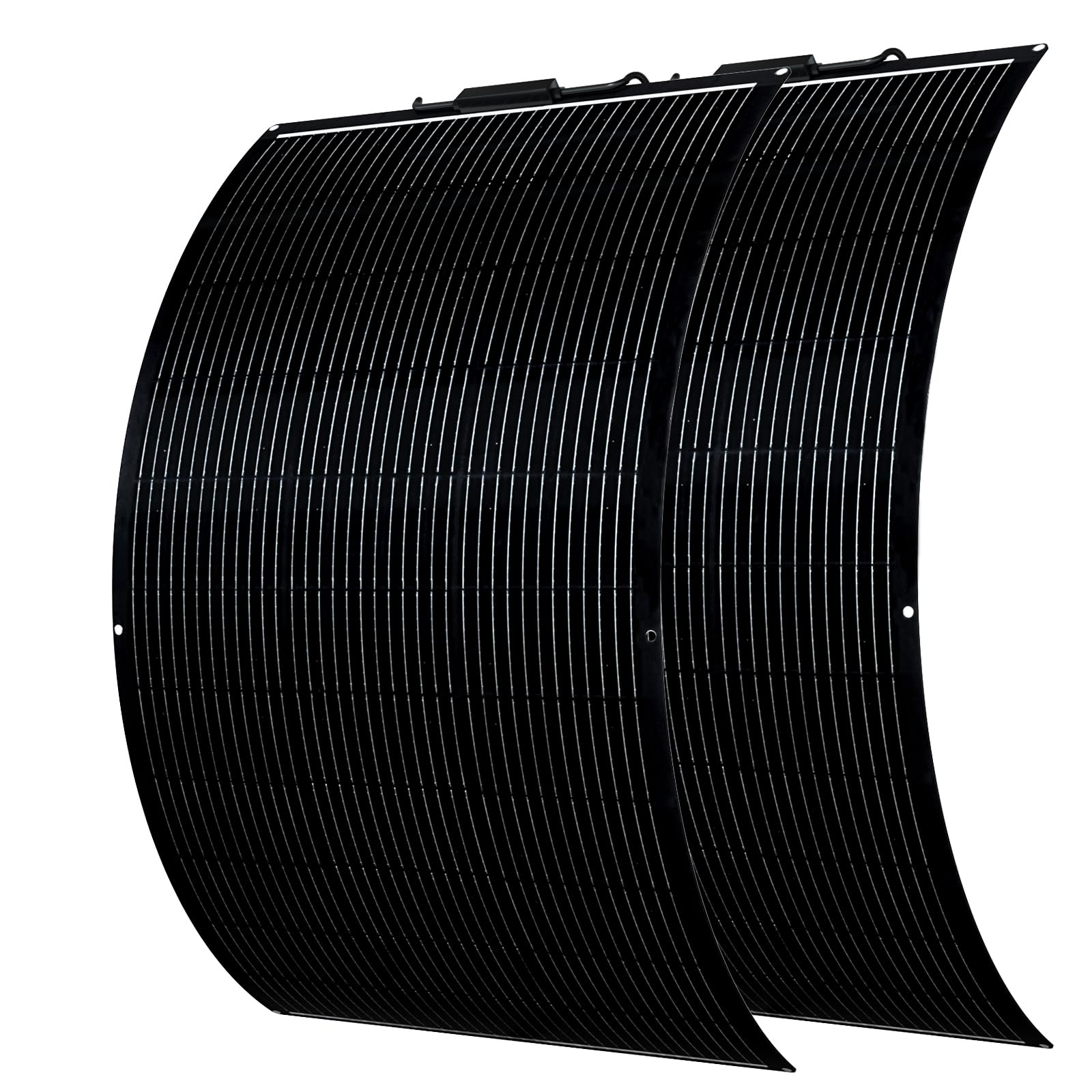
The WUZECK flexible panel set bends up to 240 degrees to conform to curved RV roofs, boat decks, or irregular surfaces where rigid panels cannot mount. Each panel measures 48.6 x 26.7 inches with an ultra-slim 2.5mm profile and weighs only 6.6 lbs — light enough for single-person installation without roof reinforcement. The dual-layer fiberglass composite film enhances impact resistance and protects the monocrystalline cells from minor hail and debris strikes.
Performance data from customers is mixed: most report solid output alongside existing rigid systems, but one reviewer reported a burned spot after three weeks of use, which suggests potential quality control issues with the encapsulation layer. The panels can withstand wind pressures up to 2400 Pa and snow loads up to 5400 Pa, making them durable enough for permanent roof mounting despite the thin profile. The pre-installed waterproof connectors and adhesive backing reduce installation complexity.
Flexible panels inherently run hotter than rigid glass panels because they lack the air gap that glass frames provide, and heat reduces voltage output. If your installation surface is flat and you can mount rigid panels, they will outperform flexible panels per watt. But if you have a curved roof or need to minimize weight on a lightweight structure, these panels solve a problem that glass panels simply cannot address.
Why it’s great
- 240-degree bend radius conforms to curved surfaces rigid panels cannot mount on
- Ultra-light at 6.6 lbs with 2.5mm profile for weight-sensitive installations
- Pre-installed waterproof connectors and adhesive backing simplify setup
Good to know
- Flexible panels run hotter than glass panels, reducing efficiency in full sun
- Mixed quality control reports — some units developed hot spots within weeks
8. JJN Solar Panel Kit 300 Watt 12 Volt

The JJN 300W kit delivers the best per-watt value on this list, packing a 300W monocrystalline panel with half-cut cell technology, a 40A PWM charge controller, two pairs of solar cables, three sets of Z-brackets, and a four-way connector into one box. The 10BB cell design achieves 22% conversion efficiency and the half-cut technology reduces power loss from micro-cracks and shading compared to standard 9BB cells. The panel measures 44 x 23 x 1.5 inches with a 45-pound weight typical for rigid glass panels.
The 40A PWM controller supports Wet, Gel, MF, EFB, and AGM batteries, making it versatile for different 12V battery chemistries. However, the controller’s small non-backlit display can be hard to read, and the included cables are aluminum-core rather than copper, which some users noted as a quality downgrade in recent shipments.
JJN offers an extra-long 25-year transferable power output warranty, which is exceptional at this price point. The thin aluminum frame is adequate for ground mounting but may flex on highway-speed vehicle installations. If you are building a ground-mounted system on a budget and need every component to power up on day one, this kit provides the most complete starting point with a warranty that matches premium panels at a fraction of the cost.
Why it’s great
- Complete kit includes panel, 40A PWM controller, cables, brackets, and connectors
- 22% half-cut cell technology improves shading tolerance over standard panels
- 25-year transferable power output warranty rivals premium brand coverage
Good to know
- Included cables are aluminum core rather than copper — consider upgrading for long runs
- Thin aluminum frame may flex under highway wind loads on vehicle roof mounts
9. WUZECK 300W Monocrystalline Solar Panel (2x150W)
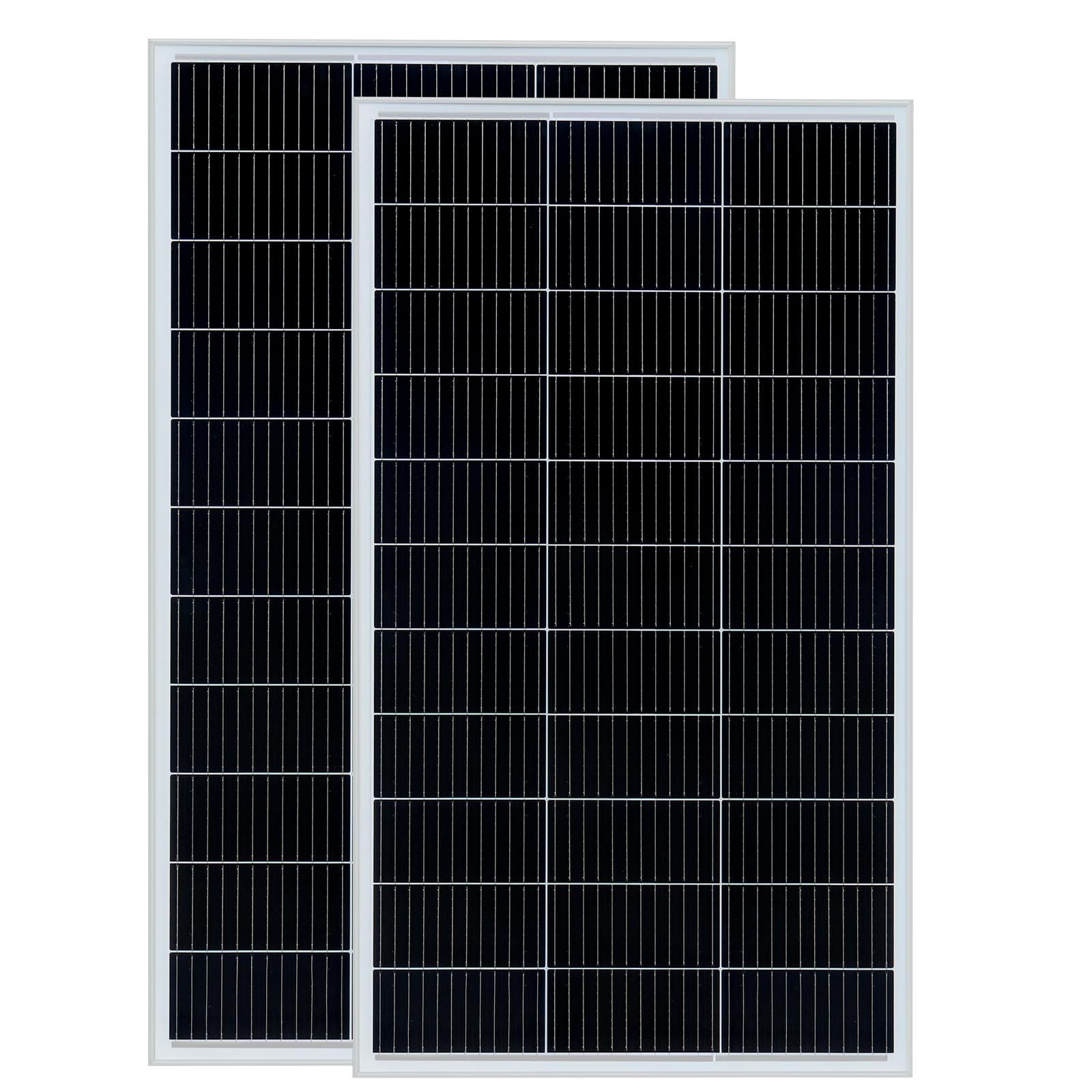
The WUZECK 300W set splits into two 150W panels that can be wired in parallel for 12V systems or in series for 24V setups, giving you configuration flexibility that single-panel kits lack. Each panel uses PERC monocrystalline cells rated at 23% efficiency with an IP65 waterproof rating and corrosion-resistant aluminum frame tested to withstand 2400 Pa wind loads and 5400 Pa snow loads. The pre-drilled aluminum frame accepts standard Z-brackets or ABS brackets for quick mounting.
Real-world output is where this set falls short of its ratings. Multiple customer tests show the panels delivering only 160W from the combined 300W string — about 53% of rated output — and individual panels topping out around 80W even in optimal sun positioning. Some users reported both panels in a set stopping working simultaneously, raising questions about manufacturing consistency. The panels perform well as a budget option for trickle charging or topping off batteries, but they will not deliver the 300W nameplate rating in typical installations.
WUZECK includes only the panels in the box — no charge controller, cables, or brackets. This keeps the upfront cost low, but you will need to budget separately for those components. If you need a pair of panels for a ground-mounted array where precise angle optimization is possible and rated power is not critical, these can work. But if you need reliable 300W output for a power-hungry setup, the performance gap between these and the mid-tier options is significant.
Why it’s great
- Dual 150W panels offer parallel 12V or series 24V wiring flexibility
- PERC monocrystalline cells achieve 23% efficiency for the price tier
- Rated for 2400 Pa wind and 5400 Pa snow loads for harsh environments
Good to know
- Real-world output often reaches only 50-60% of the 300W rating in testing
- No charge controller, cables, or brackets included — requires separate purchase
FAQ
Can I use a 300W 12V solar panel with a 24V battery system?
How much actual power will a 300W panel produce in real-world conditions?
What is the difference between N-Type and P-Type solar cells?
Final Thoughts: The Verdict
For most users, the 300 watt solar panel 12 volt winner is the Renogy 300W Portable Suitcase because its N-Type 16BB cells deliver 25% efficiency in a rugged, weatherproof foldable form that sets up anywhere in under a minute. If you want maximum energy harvest from a permanent roof installation, grab the BougeRV Bifacial N-Type 300W for the 30% output boost from reflected light. And for a complete budget-friendly starter kit that includes everything to charge on day one, nothing beats the JJN 300W Solar Panel Kit with its 22% half-cut cells and 25-year warranty.