
The difference between a blurry smudge and a crisp, detailed image of a distant galaxy comes down to one thing: the quality of light your telescope can gather and focus. Astro imaging telescopes are built for this exact task, prioritizing precision optics, stable mounts, and the ability to resolve faint deep-sky objects over casual terrestrial viewing. Whether you are chasing the Orion Nebula or the rings of Saturn, the right telescope separates a frustrating experience from a transformative one.
I’m Min — the co-founder and writer behind Gadgets Feed. I have spent countless hours analyzing optical designs, mount stability, sensor compatibility, and real-world user reports to untangle the trade-offs in this complex category. This guide is built on that research, not personal testing.
Whether you are a beginner or a seasoned astrophotographer, navigating the spec sheets for best astro imaging telescopes requires understanding aperture, focal ratio, and mount type to make a sound investment.
How To Choose The Best Astro Imaging Telescopes
Selecting a telescope for astrophotography is a different process than picking one for visual stargazing. For imaging, your mount, focal ratio, and optical design carry more weight than raw aperture alone. Understanding these fundamentals will keep you from wasting money on a system that cannot produce the sharp, long-exposure images you want.
Optical Design and Aperture
Refractors, reflectors, and catadioptric (like Maksutov-Cassegrain) telescopes each have strengths. Refractors offer sharp, contrast-rich images with minimal maintenance but cost more per inch of aperture. Reflectors (Newtonians) give you the most aperture for the dollar, making them strong for gathering faint light from galaxies and nebulae. Maksutov-Cassegrains combine long focal lengths with compact tubes, excellent for planetary imaging but slower for deep-sky. Aperture, measured in millimeters, directly determines how much light the scope collects. More aperture means brighter, more detailed images of faint objects, but also demands a heavier, more expensive mount.
Mount Stability and Type
The mount is the single most critical component for astrophotography. An equatorial mount (EQ) with slow-motion controls or motorized tracking compensates for Earth’s rotation, keeping your target perfectly framed during long exposures. A wobbly or under-specced mount will ruin sharp images regardless of how good your optics are. For imaging, skip altazimuth mounts unless they are paired with a field derotator, as they cause field rotation in long exposures. Computerized GoTo mounts drastically simplify finding and tracking objects, but manual EQ mounts can work well at a lower cost with practice.
Focal Ratio and Field of View
The focal ratio (f-number) determines how “fast” your telescope is for imaging. A faster ratio like f/5 gathers more light in less time, meaning shorter exposure durations and less demand on tracking precision. Slow telescopes like f/11 are better suited for planets and the moon where you want high magnification, but require much longer exposures for deep-sky objects. A faster telescope also gives a wider field of view, ideal for large nebulae like the Orion Nebula, while slower ratios are better for small, bright targets like planets or globular clusters.
Quick Comparison
On smaller screens, swipe sideways to see the full table.
| Model | Category | Best For | Key Spec | Amazon |
|---|---|---|---|---|
| SVBONY SV503 102ED | Premium Refractor | ED Refractor Astrophotography | 102mm f/7 ED S-FPL51 | Amazon |
| SVBONY MK127 | Catadioptric OTA | Planetary & Lunar Imaging | 127mm f/11.8 Mak-Cass | Amazon |
| ZWO Seestar S30 Pro | Smart Telescope | Auto Astrophotography | 4K Dual Camera, 160mm f/5 | Amazon |
| Celestron StarSense Explorer 150 | Tabletop Dob | App-Enhanced Visual & Imaging | 150mm f/4.3 Newtonian | Amazon |
| Sky-Watcher Star Adventurer GTi | Mount Kit | Portable Wide-Field Tracking | GoTo EQ Mount, 11 lb capacity | Amazon |
| DWARFLAB Dwarf 3 | Smart Telescope | Ultralight Astrophotography | 3 lb, Dual Camera, Auto-Tracking | Amazon |
| Celestron 114LCM | Computerized Newtonian | Computerized GoTo Beginner | 114mm f/9 Bird-Jones | Amazon |
| Dianfan 150EQ | Value Reflector | Budget Deep-Sky Imaging | 150mm f/4.3 Newtonian | Amazon |
| MEEZAA 150EQ | Value Reflector | Beginner EQ Imaging | 150mm f/4.3 Newtonian | Amazon |
| Gskyer 130EQ | Entry Reflector | Budget Entry-Level Visual | 130mm f/5 Newtonian | Amazon |
| HSL 150EQ | Entry Reflector | Entry-Level Planetary Imaging | 150mm f/4.7 Newtonian | Amazon |
In‑Depth Reviews
1. SVBONY SV503 Telescope for Adults High Powered, 102mm F7 Extra Low Dispersion Achromatic Refractor OTA

The SVBONY SV503 102ED is a serious imaging instrument that punches well above its price point. Its 102mm aperture and 714mm focal length at f/7 deliver a field of view that suits both bright deep-sky objects and detailed planetary work. The heart of this telescope is its S-FPL51 Extra-low Dispersion (ED) glass element, which dramatically reduces chromatic aberration, bringing sharp, true-color stars across the frame.
The dual-speed 2-inch focuser with a 1:10 micro-fine adjustment makes achieving perfect focus straightforward, a necessity for astrophotography. A 360-degree field rotator allows you to compose your shots without rotating the entire tube, and the 90mm of focus travel provides plenty of room for filter wheels and field flatteners. The retractable dew shield is a practical touch for humid nights.
Users consistently praise the near-APO level performance for the price, noting minimal color fringing and excellent build quality. While the OTA weighs under 9 pounds, it requires a robust equatorial mount to handle it for long exposures. This is an optical tube assembly only — you will need to source a mount, eyepieces, and finder separately, but the core optics offer a foundation for years of satisfying deep-sky imaging.
Why it’s great
- S-FPL51 ED glass minimizes chromatic aberration for sharp, high-contrast images
- Smooth dual-speed focuser with 1:10 fine adjustment allows precise focusing
- 360-degree field rotator and 90mm focus travel accommodate astrophotography accessories
Good to know
- Requires a separate equatorial mount, tripod, and eyepieces
- Some users note minor focuser backlash that is adjustable
2. SVBONY MK127 Telescope for Adults Astronomy, 127mm Aperture f/11.8 Maksutov Cassegrain OTA
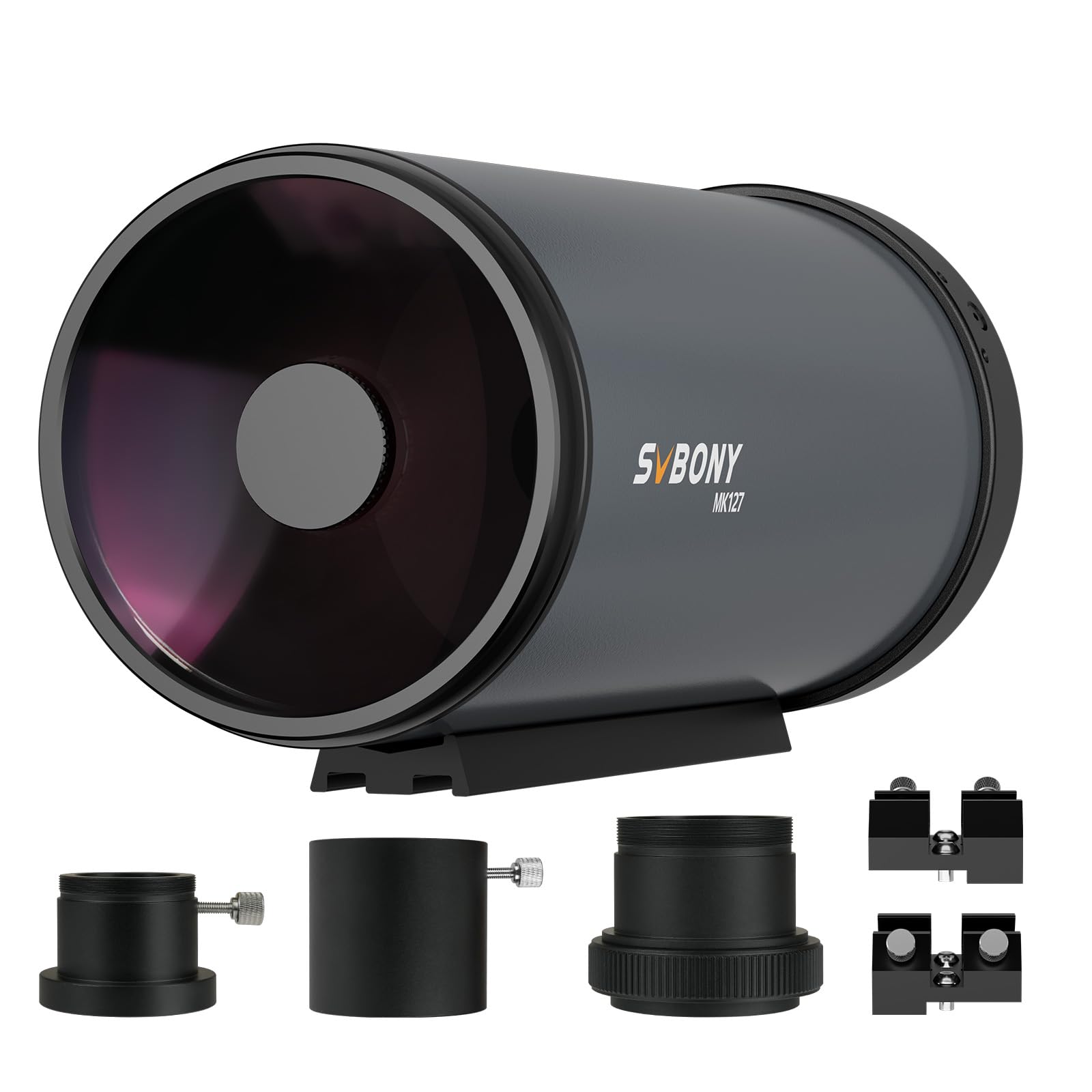
The SVBONY MK127 is a Maksutov-Cassegrain optical tube designed for those who demand high resolution on planets, the moon, and double stars. With a 127mm aperture and a long f/11.8 focal length, it naturally provides high magnification without needing powerful eyepieces, though its slow focal ratio means deep-sky imaging requires significantly longer exposures without a focal reducer.
Build quality is exceptional, with a solid all-metal construction and a smooth dual-speed focuser. The catadioptric design, using a meniscus corrector lens and a spherical primary mirror, is virtually free of chromatic aberration and offers a compact form factor relative to its focal length. This telescope ships as an optical tube assembly, meaning you will need to pair it with a sturdy mount capable of smooth tracking at high magnifications.
Users report excellent star tests, successfully splitting close double stars and resolving fine lunar details. A 0.65x flat-field reducer is included, bringing the effective focal ratio down to f/7.7, which makes it much more practical for deep-sky imaging with a smaller sensor. Some units have been reported with dust spots inside the corrector lens, but this rarely affects image quality. Overall, it is a superb value for planetary and lunar imaging.
Why it’s great
- Excellent for high-resolution planetary and lunar imaging with its long f/11.8 focal ratio
- All-metal construction provides a solid, durable feel
- Included 0.65x focal reducer effectively speeds up the telescope for deep-sky work
Good to know
- Slow focal ratio requires a focal reducer for efficient deep-sky imaging
- No eyepieces, finder, or mount included; sold as optical tube only
3. ZWO Seestar S30 Pro Smart Telescope
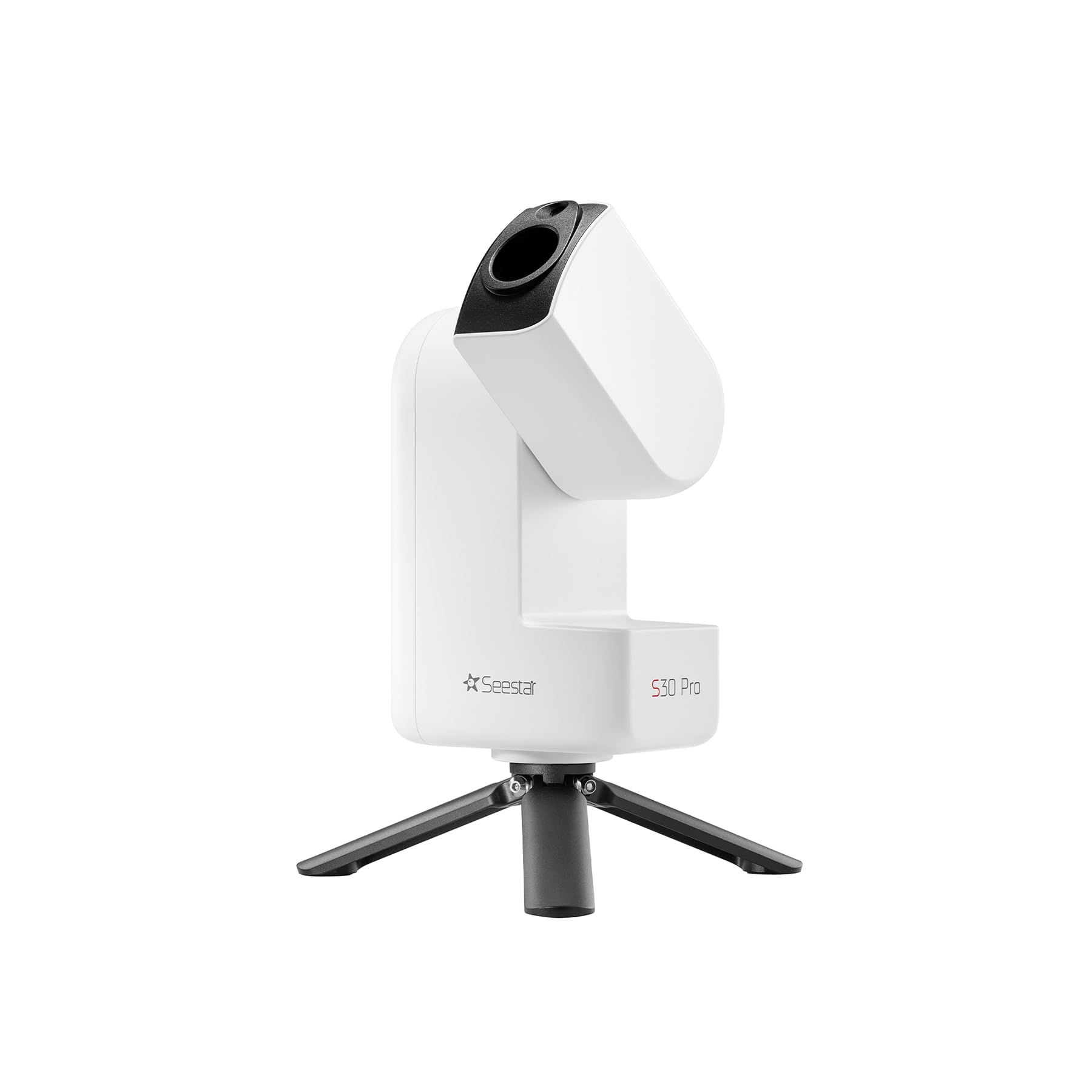
The ZWO Seestar S30 Pro represents a new breed of fully automated smart telescopes that handle the entire imaging pipeline for you. Power it on, connect to the app, and it uses automatic GoTo and tracking to locate and capture deep-sky objects. It features a dual-camera system: an IMX585 sensor for the main telephoto lens and an IMX586 for wide-field views.
This fully integrated unit includes a 4-element apochromatic lens, built-in light pollution and IR-cut filters, and 128GB of onboard storage. Intelligent modes allow one-tap capture of the Milky Way, star trails, and mosaics that stitch into 8K images. The app handles noise reduction and stacking automatically, so you see results in real time without a laptop. Its compact size makes it easy to take to dark sky sites.
User feedback is overwhelmingly positive on ease of use, with many calling it a game-changer for beginners who want beautiful astrophotos without the steep learning curve. The new EQ mode improves tracking for polar-aligned sessions. Night vision mode and anti-dew protection make it suitable for all-night imaging runs. It is not designed for visual observation through an eyepiece, but for pure digital astrophotography, it is one of the most accessible tools available.
Why it’s great
- Fully automatic GoTo and tracking require no manual alignment
- Built-in filters and processing deliver impressive results for beginners
- Compact and lightweight design with 128GB storage for long sessions
Good to know
- Not designed for traditional visual observation through an eyepiece
- App connectivity can occasionally require patience to establish
4. Celestron StarSense Explorer 150AZ App-Enabled Telescope
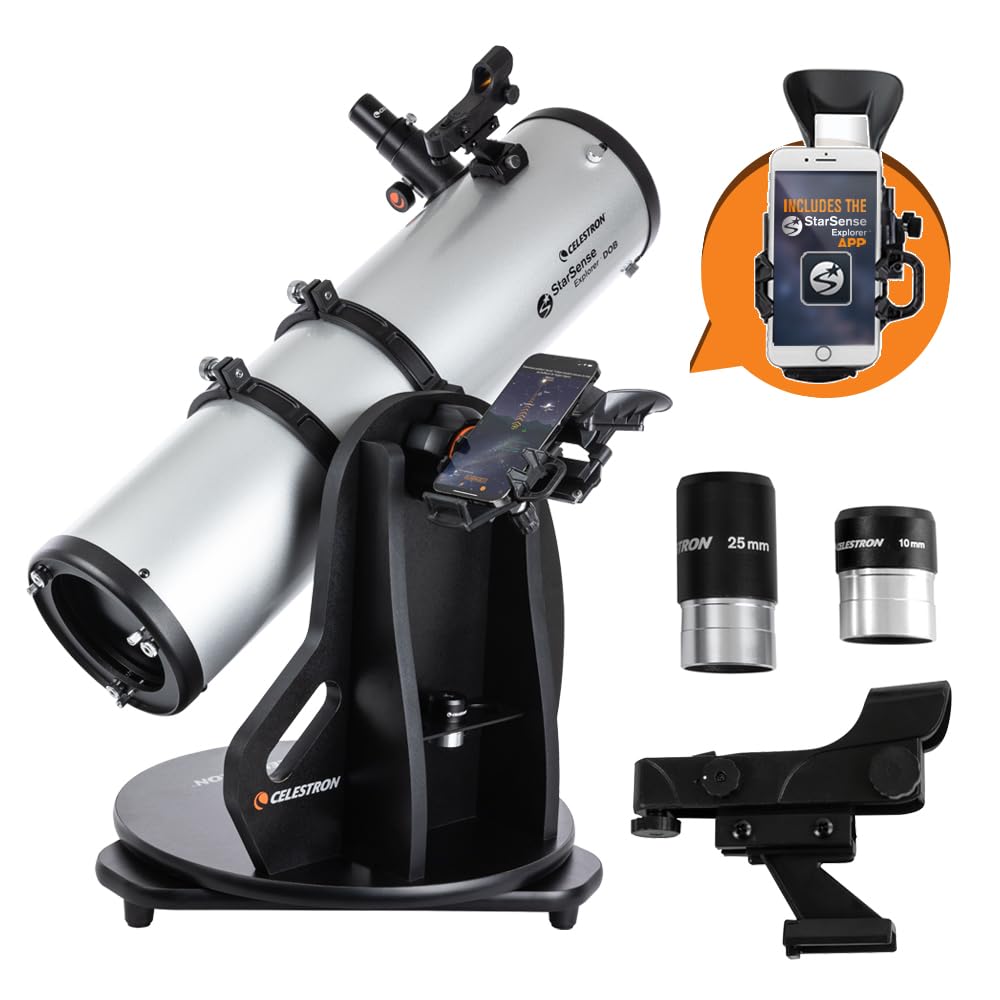
The Celestron StarSense Explorer 150 is a 6-inch Newtonian reflector on a tabletop Dobsonian base, but what sets it apart is the patented StarSense dock. You place your smartphone into the dock, and the StarSense Explorer app uses sky recognition technology to analyze star patterns and determine exactly where the telescope is pointed. The app then guides you with on-screen arrows to find over 100,000 celestial objects.
This is not a motorized GoTo telescope — you move it manually based on the app’s instructions. But the system effectively eliminates the frustration of star-hopping for beginners. With a 150mm aperture, this scope collects 36% more light than a 130mm model, revealing fainter nebulae and galaxies. Its short f/4.3 focal ratio makes it relatively fast for imaging using a smartphone, though a tracking mount is ideal for long exposures.
Users frequently highlight how the app transforms their viewing, turning an unfamiliar sky into a guided tour. The tabletop design is stable but requires a sturdy table or surface. The included 25mm and 10mm Kellner eyepieces are decent for starting out. For a beginner who wants serious aperture with a navigation assistant, this is a compelling mix of old-school light-gathering and modern smartphone integration.
Why it’s great
- Patented StarSense app guides you to objects using your smartphone’s camera
- 150mm parabolic mirror gathers substantial light for detailed views
- Relatively fast f/4.3 focal ratio is suitable for smartphone astrophotography
Good to know
- Requires a sturdy table or surface for the tabletop Dobsonian mount
- Not a motorized GoTo system; manual movement is required
5. Sky-Watcher Star Adventurer GTI Mount Kit

The Sky-Watcher Star Adventurer GTI is a portable equatorial mount kit that brings full GoTo functionality to lightweight astrophotography setups. It includes the mount head, a lightweight tripod with a pier extension, a counterweight bar, and a 5-pound counterweight. Its max payload of 11 pounds is ideal for a DSLR with a telephoto lens, a mirrorless camera, or a small refractor like the SVBONY SV503.
Built-in WiFi connects to the SynScan app on your smartphone, allowing you to control the mount wirelessly. The GoTo system can automatically slew to thousands of objects after a quick alignment, making target selection effortless. The illuminated polar scope simplifies polar alignment, which is crucial for sharp, untracked or guided exposures. Its portable design is a perfect match for traveling to dark sky sites.
Users find the setup process intuitive and the tracking accurate enough for 2-3 minute unguided subs with a small refractor. With guiding, 5-minute exposures are achievable. The main downsides are the flimsy polar scope cover and a battery compartment that requires a screwdriver to access, which is annoying in the field. It is not a heavy-duty imaging platform, but for a compact, travel-friendly GoTo mount, it offers outstanding value.
Why it’s great
- Full GoTo mount in a portable package with wireless smartphone control
- Illuminated polar scope simplifies accurate polar alignment
- Achieves good tracking for unguided and guided subs with lightweight setups
Good to know
- Payload limit of 11 lbs restricts OTA and camera combination choices
- Battery compartment requires a screwdriver to open, inconvenient in the field
6. DWARFLAB Dwarf 3 Smart Telescope
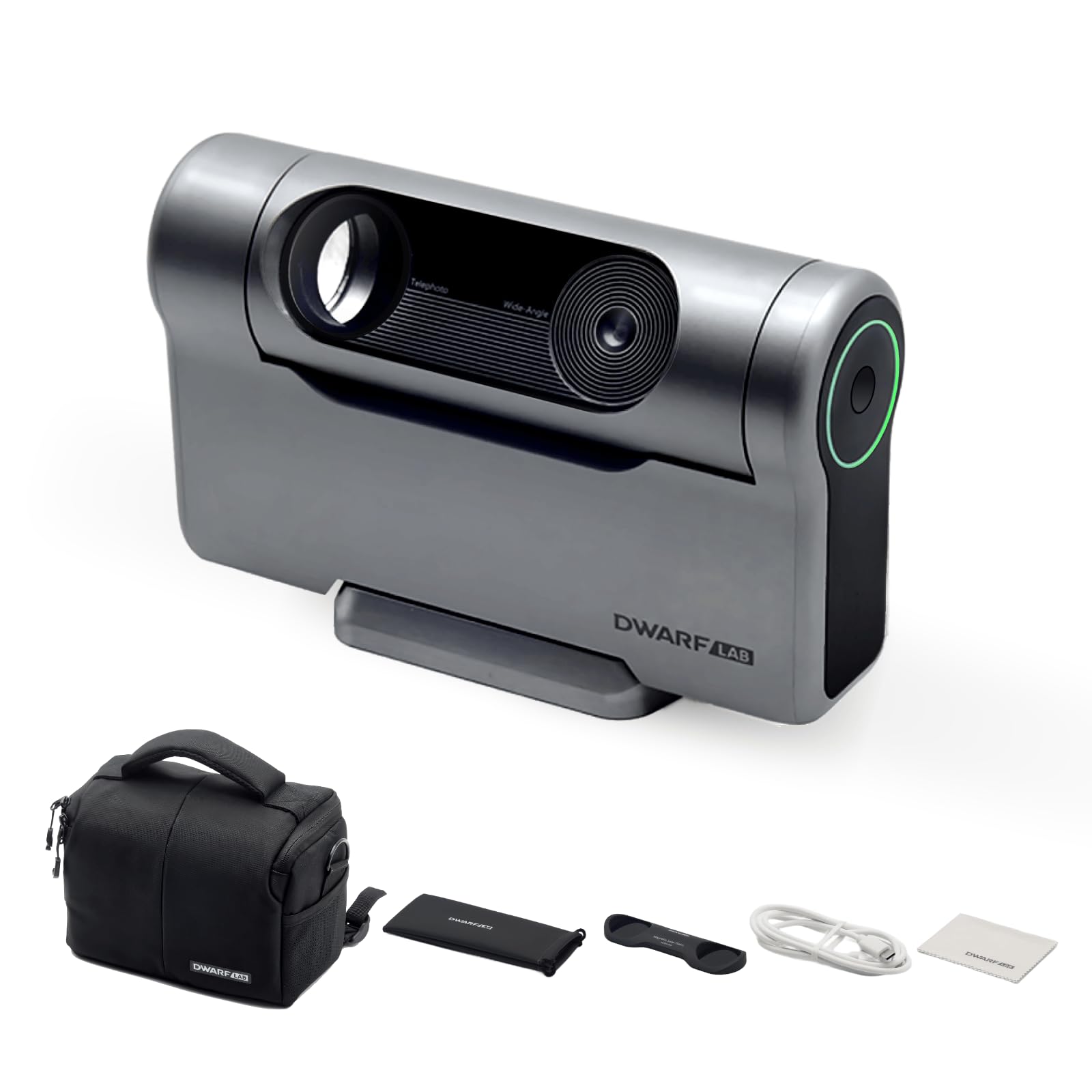
The DWARFLAB Dwarf 3 is an ultra-portable smart telescope that weighs only 3 pounds, making it the most travel-friendly dedicated imager in this guide. Its dual-camera system features a telephoto lens for deep-sky objects and a wide-angle lens for capturing the Milky Way and star trails, all within a single compact body that fits into a standard backpack.
Setup time is roughly two minutes. The telescope uses automatic 4K tracking and cloud-based image processing through the DWARFLAB app. You select a target, and the system handles the rest — capturing, stacking, and processing the image without requiring a laptop or desktop computer. It can operate in both Alt-Az and EQ modes, giving you flexibility based on your location and target.
User satisfaction is very high, with many noting that it brings astrophotography within reach for complete beginners. The built-in dual-band filter helps combat light pollution, and the USB-C power allows for long all-night sessions when connected to a portable power bank. It is not a replacement for a large-aperture system, but for spontaneous, high-quality astrophotography on the go, the Dwarf 3 is remarkably capable for its size and weight.
Why it’s great
- Extremely portable 3-pound design fits in a backpack
- Dual-camera system covers both deep-sky and wide-field imaging
- One-touch cloud processing eliminates the need for a computer
Good to know
- App can occasionally experience connection or processing glitches
- Small aperture limits performance on very faint or small deep-sky objects
7. Celestron 114LCM Computerized Newtonian Telescope
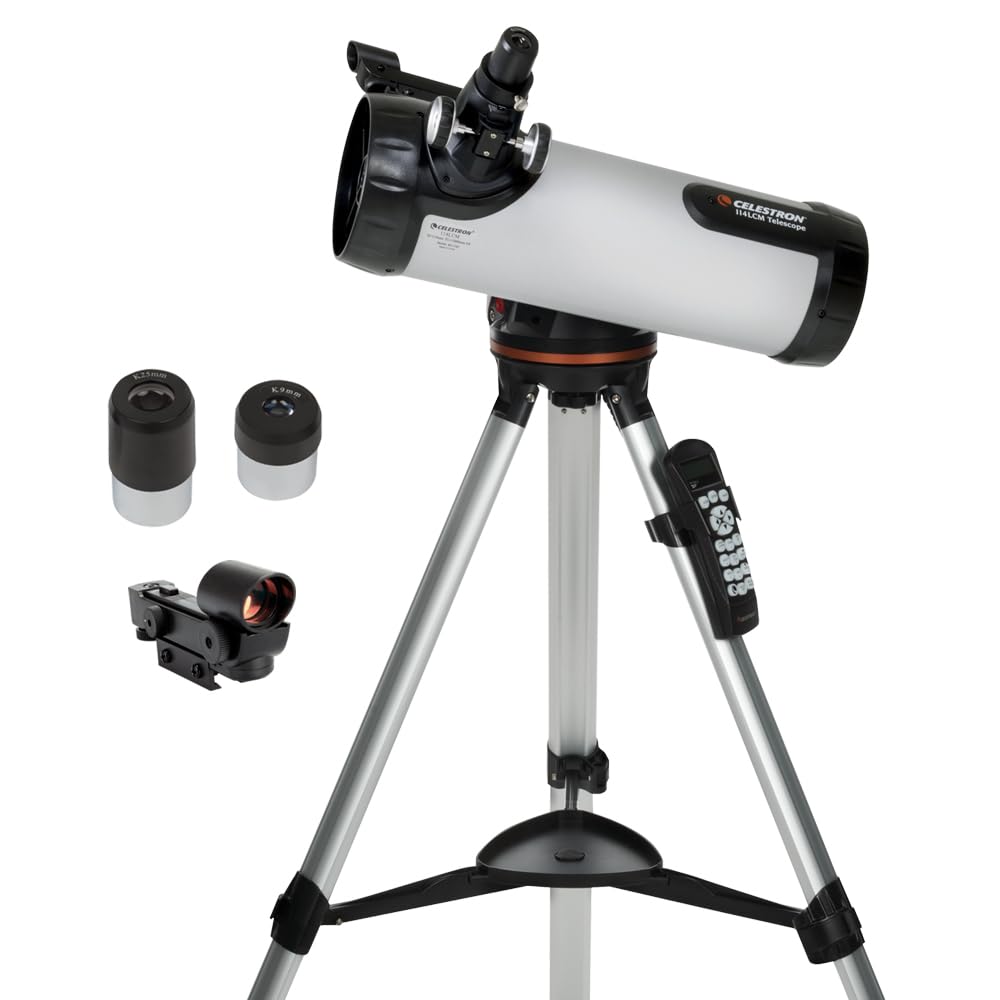
The Celestron 114LCM is a computerized Newtonian telescope designed to take the guesswork out of finding celestial objects. Its motorized GoTo mount can automatically locate over 4,000 objects from its internal database. The Sky Tour feature generates a list of the best objects currently visible in your sky, making it an excellent choice for beginners who want to observe without learning star charts first.
The 114mm aperture is a capable size for viewing the moon, planets, and brighter deep-sky objects like the Orion Nebula. The telescope uses a Bird-Jones optical design, which compacts a long focal length into a shorter tube but can introduce optical compromises compared to a standard Newtonian. It comes with 25mm and 9mm eyepieces for low and high-power viewing. The full-height steel tripod provides a stable platform.
Users find the GoTo system effective for locating targets, though some note that the mount can struggle with tracking accuracy at high magnification. A common complaint is that the included battery pack drains AA batteries quickly; an external power supply is a worthwhile upgrade. For someone who values automated object location over pure optical quality, the 114LCM offers a convenient entry into computerized astronomy.
Why it’s great
- Computerized GoTo mount automatically locates thousands of celestial objects
- Sky Tour feature generates a nightly observing list
- Full-height tripod provides a stable observing platform
Good to know
- Bird-Jones optical design can limit image quality and collimation stability
- Runs on AA batteries that drain quickly; external power recommended
8. Dianfan 150EQ Astronomical Professional Telescope for Adults
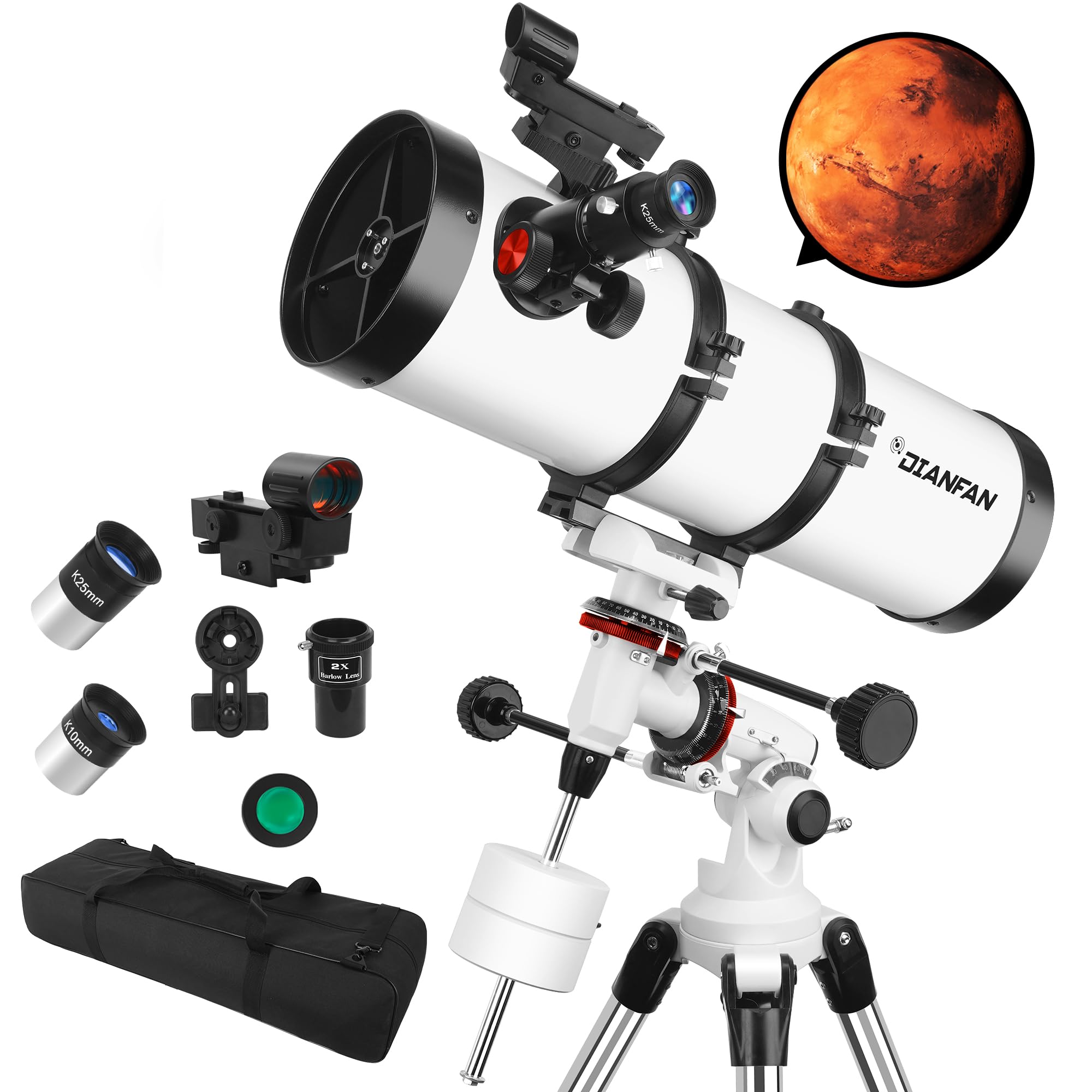
The Dianfan 150EQ is a budget-friendly 6-inch Newtonian reflector that emphasizes large aperture and portability. With a 150mm mirror and a fast f/4.3 focal ratio, it excels at gathering light from faint deep-sky objects and can produce wide-field views of nebulae and star clusters. The mount is a pre-assembled German equatorial mount with slow-motion control cables for manual tracking.
This kit includes two Kellner eyepieces and a 2x Barlow lens, offering a range of magnifications from 26x to 130x. A red dot finderscope speeds up target acquisition. It also comes with a padded carrying bag for transport and storage. The fast optical system means images are bright and the telescope is well-suited for use with a smartphone adapter, allowing you to capture simple lunar and planet shots.
Many users report sharp views of the moon and Saturn’s rings. The mount is described as overbuilt for its price point, offering decent stability, though the plastic locking mechanisms on the tripod are a potential weak point. Collimation is required, and a laser collimator is recommended for best performance. For a budget-minded buyer seeking maximum aperture, the Dianfan 150EQ delivers solid value.
Why it’s great
- 150mm aperture provides substantial light-gathering for deep-sky objects
- Fast f/4.3 focal ratio allows for shorter exposure times and wide fields
- Includes a carrying bag for easy transport
Good to know
- Equatorial mount has plastic tripod locks that can feel flimsy
- Requires collimation, which beginners may need to learn separately
9. MEEZAA Telescope, 150EQ Newtonian Reflector Telescope for Adults Astronomy Beginners
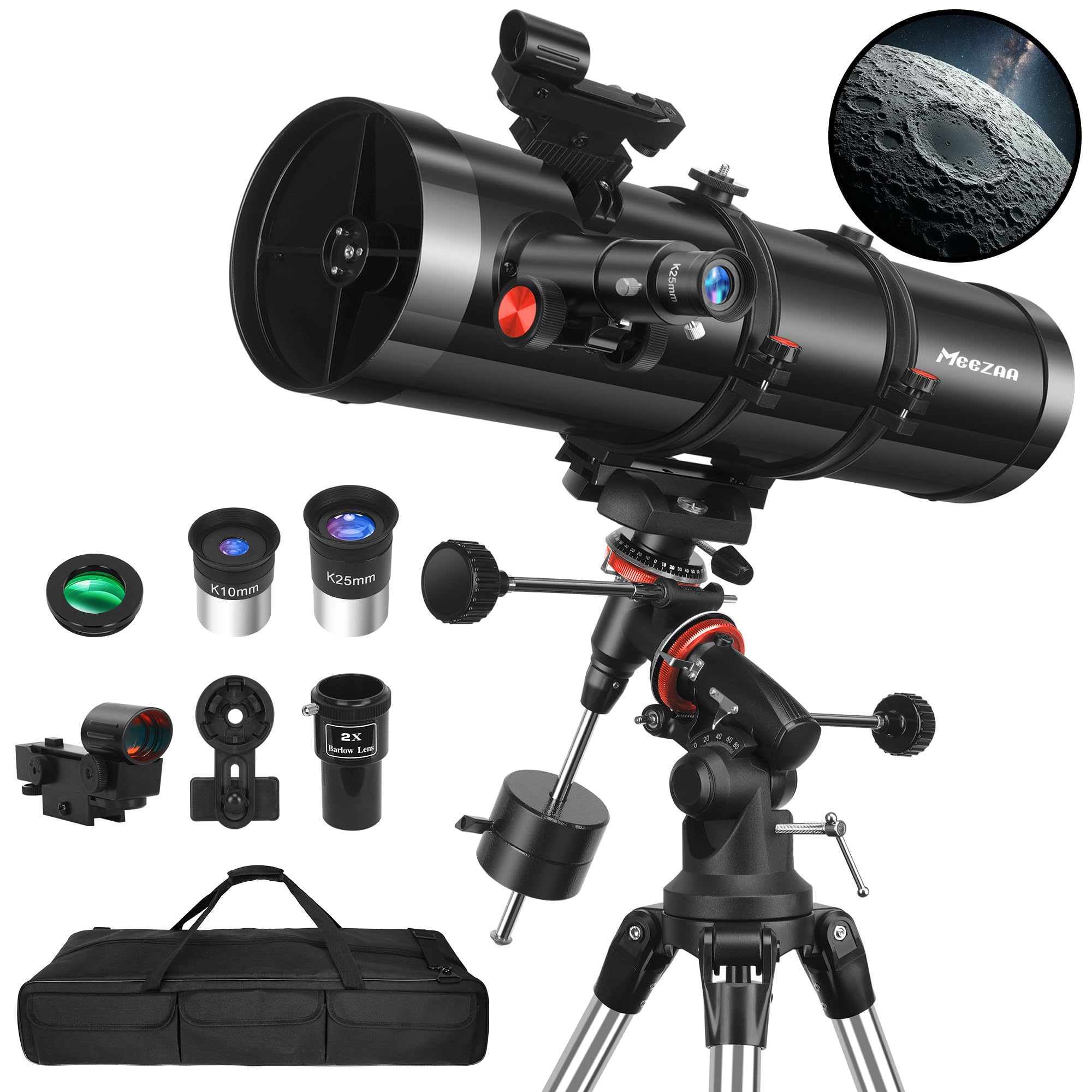
The MEEZAA 150EQ is another robust entry in the 150mm reflector category, designed with beginners in mind who are ready to learn equatorial tracking. The 150mm aperture and 650mm focal length provide the same bright, fast optics common to this class. It includes a pair of Kellner eyepieces and a 2x Barlow lens, covering 26x to 130x magnification. A moon filter is included to reduce glare during lunar observation.
The upgraded German equatorial mount features smooth slow-motion control knobs for precise manual tracking. A built-in accessory tray on the stainless steel tripod helps keep eyepieces organized. The kit also includes a phone adapter for basic astrophotography. The entire setup packs into a large carry bag, making it relatively portable for a 6-inch telescope.
Users often praise the solid mount and stable tripod for the price. The fast f/4.3 focal ratio is noted as a “light bucket,” good for gathering data on deep-sky objects. The included eyepieces are entry-level quality, which is expected, but the scope rewards users who invest in better eyepieces over time. Assembly can be more involved than a simpler Dobsonian, but the manual provides clear instructions. It is a solid platform for learning equatorial imaging techniques.
Why it’s great
- 150mm aperture is excellent for viewing deep-sky and bright planets
- German equatorial mount with slow-motion controls for manual tracking
- Includes carry bag, phone adapter, and moon filter for immediate use
Good to know
- Assembly is more complex than a simple tabletop Dobsonian
- Included eyepieces are adequate but not high-quality
10. Gskyer 130EQ Professional Astronomical Reflector Telescope

The Gskyer 130EQ is a classic entry-level reflector telescope that offers a 130mm aperture and a short 650mm focal length at f/5. This focal ratio is fast enough for decently bright deep-sky views and includes a toothless focusing base that provides smooth operation. It is a well-established choice for beginners who want to move past toy telescopes.
It comes with three eyepieces, a 3x Barlow lens, and a finderscope to help you locate objects. The equatorial mount is a German-style model that allows for manual tracking. A unique inclusion is a Bluetooth wireless remote control for your smartphone, letting you take photos from a distance. The optical tube is lightweight at 30 pounds for the entire setup, though the mount can be a weak point.
User feedback is mixed but largely positive for the price. Many users report excellent views of the moon and planets like Jupiter and Saturn. A recurring criticism is that the equatorial mount lacks the stability needed for smooth tracking at high magnifications, causing the view to slip. The instruction manual is also noted as being difficult to follow, which can be frustrating for beginners. It is an affordable gateway telescope, but the mount may leave you wanting more stability.
Why it’s great
- 130mm aperture delivers bright, clear views of the moon and planets
- Wireless remote control allows handy smartphone photography
- Toothless focusing base ensures smooth, backlash-free focus adjustment
Good to know
- Equatorial mount can be unstable and prone to slipping during tracking
- Assembly instructions are poorly sequenced and hard to follow
11. HSL 150EQ Astronomical Reflector Telescope for Adults High Powered
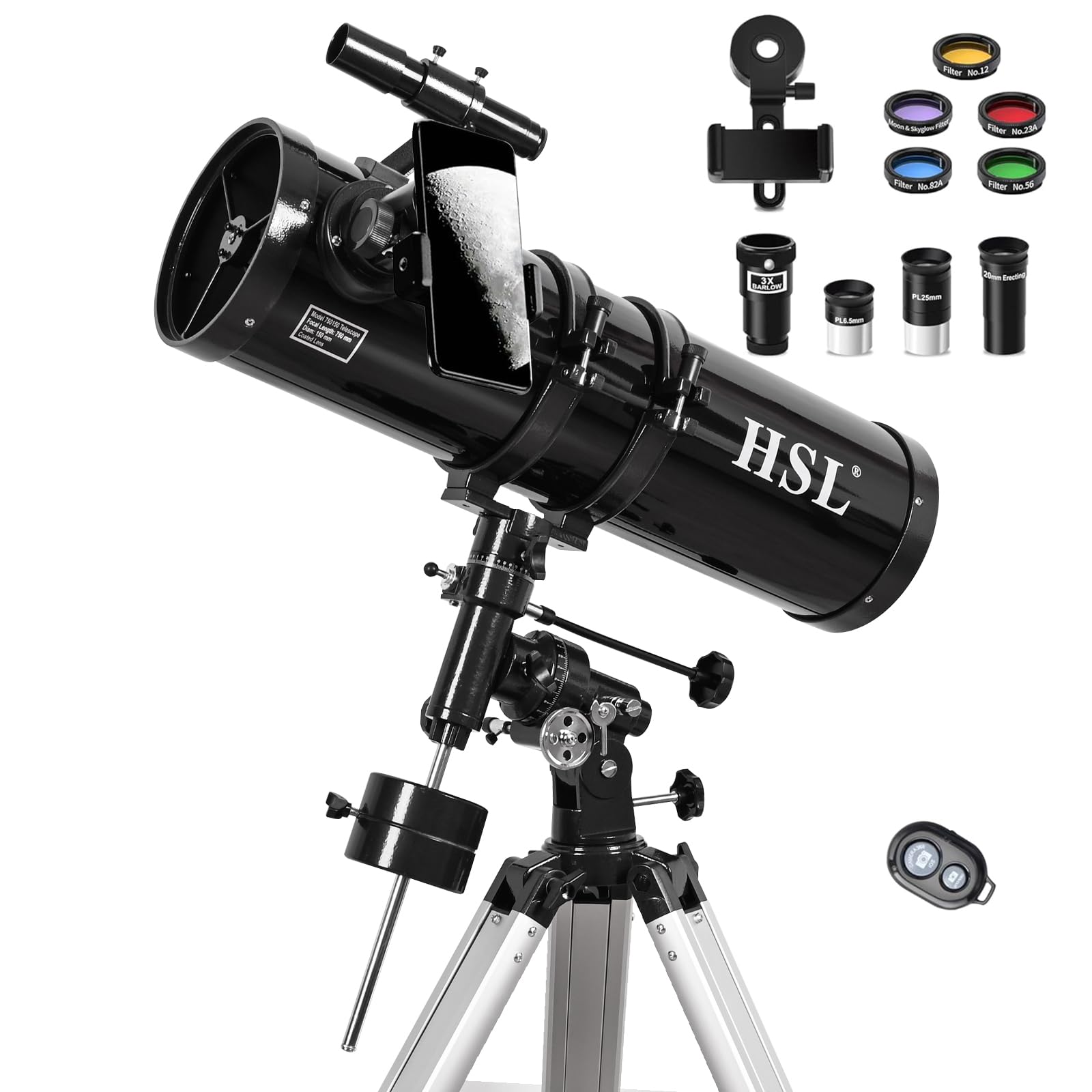
The HSL 150EQ is a large-aperture Newtonian reflector that provides serious light-gathering power for beginners and hobbyists alike. With a 150mm mirror and a 700mm focal length, it sits at a fast f/4.7 ratio. It includes a set of five color filters (red, blue, orange, green, yellow) designed to enhance contrast for planetary details when imaging Jupiter or Mars.
The manual German equatorial mount uses a slow-motion altitude lever for smooth tracking. It includes a smartphone adapter and a wireless remote control for capturing images. The telescope comes with three Plossl eyepieces and a 3x Barlow lens for magnification options. A straight-through finderscope helps with target acquisition. The kit is also relatively portable, as users mention it is light enough to move in a small backpack.
User reviews are mixed. Many praise the affordable price and the quality of the views, especially of Saturn’s rings and Jupiter’s bands. However, some users found the setup very difficult and frustrating, with a small number returning the product because they could not assemble it. The finder scope alignment is also noted as challenging to maintain. It is a high-risk, high-reward entry point for those willing to invest time in learning setup procedures.
Why it’s great
- 150mm aperture provides excellent light-gathering for deep-sky astronomy
- Color filter set aids in planetary observation and contrast improvement
- Plossl eyepieces offer decent-quality viewing
Good to know
- Setup can be very challenging for beginners leading to frustration
- Finder scope is difficult to keep aligned properly
FAQ
Is a larger aperture always better for astrophotography?
What is the best focal ratio for deep-sky astrophotography?
Can I use a smartphone with any astro telescope for imaging?
Why would I choose a smart telescope over a traditional one?
Do I need to collimate a Newtonian telescope?
Final Thoughts: The Verdict
For most users, the best astro imaging telescopes winner is the SVBONY SV503 102ED F7 Refractor because it combines professional-grade S-FPL51 ED optics with a precision dual-speed focuser, offering a perfect balance between deep-sky imaging capability and planetary detail. If you want a dedicated planetary and lunar imaging machine, grab the SVBONY MK127 Maksutov-Cassegrain. And for a fully automated, no-learning-curve astrophotography experience, nothing beats the ZWO Seestar S30 Pro.