
A screaming newborn is the alarm no parent can ignore, and when the trigger is trapped air from every feeding, the search for a solution becomes urgent. Anti-colic bottles use internal venting systems, specialized nipple shapes, and engineered flow rates to minimize the bubbles your baby ingests, directly addressing the root cause of gas and discomfort. Picking the wrong one can turn every meal into a battle, but the right system delivers peaceful, quiet feedings from day one.
I’m Min — the co-founder and writer behind Gadgets Feed. After analyzing hundreds of feeding sessions, parent testimonials, and the internal mechanics of the leading vent systems, I’ve broken down exactly which designs actually keep air out and which ones add unnecessary complexity.
This guide cuts through the marketing noise to deliver a definitive ranking of the most effective anti colic bottles for newborns, based solely on measurable air-reduction performance and real-world feedback from thousands of exhausted parents.
How To Choose The Best Anti Colic Bottles For Newborns
Not all anti-colic bottles work the same way. Some use a physical straw-and-vent tube that runs inside the bottle, others rely on a specialized nipple valve, and a few simply claim the label without any real engineering. Understanding three critical parameters will save you from buying a bottle that still leaves your baby gassy.
The Vent System: Internal Tube vs. Nipple Valve
Internal vent systems, like Dr. Brown’s Options+ design, use a small tube that runs down into the milk and a vent at the top to equalize pressure. This creates a vacuum-free environment so the baby doesn’t suck air. Nipple-vent systems, like Philips Avent’s AirFree, place the vent directly in the nipple itself, relying on a membrane that collapses when no milk is present. Internal tubes are more effective at eliminating air but add cleaning steps. Nipple valves are simpler to clean but can fail if the membrane degrades.
Nipple Flow Rate and Newborn Sucking Strength
A flow rate that is too fast overwhelms a newborn’s oral coordination, causing gulping and air swallowing. Preemie flow and extra-slow flow (Size SS or Level 1) are the only appropriate rates for newborns under one month. Brands like Lansinoh and Pigeon engineer their nipples to match the natural tongue movement of breastfeeding, which reduces the sucking force required and minimizes air intake. Always start with the slowest flow nipple included in the set and size up only when the baby works visibly hard to get milk.
Material: Borosilicate Glass vs. PPSU Plastic
Glass bottles do not absorb odors, stains, or milk fats, and they heat evenly without leaching any compounds. Borosilicate glass specifically withstands thermal shock from boiling water sterilization. PPSU (polyphenylsulfone) plastic is lightweight, shatterproof, and can endure hundreds of sterilization cycles without degrading, but it is more expensive than standard plastic. If you prioritize longevity and chemical inertness, glass wins. If you need a bottle that survives drops and is lighter for the baby to hold, PPSU is the superior choice.
Quick Comparison
On smaller screens, swipe sideways to see the full table.
| Model | Category | Best For | Key Spec | Amazon |
|---|---|---|---|---|
| Pigeon PPSU Nursing Bottle | Premium PPSU | Breastfed baby transition | 5.4 oz capacity, SS nipple (0m+) | Amazon |
| Gulicola Natural Glass 4 Pack | Premium Glass | Full newborn set | 5 oz borosilicate glass, SS nipple | Amazon |
| Lansinoh Anti-Colic Bottles | Plastic, 3-Piece | Easy cleaning, breastfed latch | 5 oz, XS nipple, 3 parts | Amazon |
| Dr. Brown’s Options+ Narrow Glass | Mid Glass + Vent | Maximum air reduction | 4 oz glass, Level 1 nipple, vent system | Amazon |
| Philips Avent Anti-Colic AirFree | Mid Plastic | Upright feeding position | 4 oz plastic, Flow 1, AirFree nipple | Amazon |
| Gulicola Small Glass 2 Pack | Glass, Breast-Like | Preemies and tiny newborns | 3 oz borosilicate, extra slow nipple | Amazon |
| Dr. Brown’s Preemie Flow Bottle Set | Entry-Level Plastic | Premature or slow-feeding newborns | 4 oz plastic, Preemie Flow nipple | Amazon |
In‑Depth Reviews
1. Pigeon PPSU Nursing Baby Bottle Wide Neck
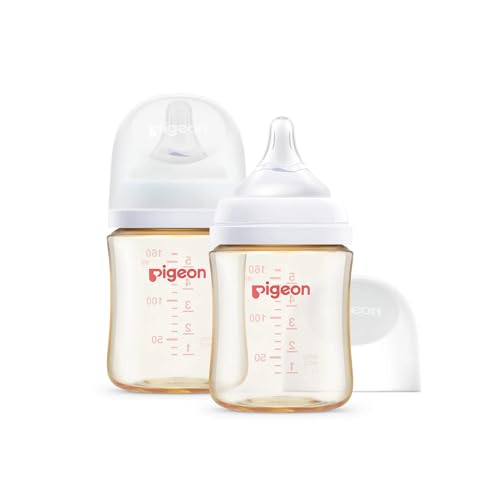
The Pigeon PPSU bottle stands apart because its nipple is engineered based on research into the three natural tongue movements babies make during breastfeeding. The latch-on line and curved slope guide the baby’s mouth into the correct suction position, which eliminates the air gaps that cause colic in the first place. The PPSU material is lighter than glass and withstands hundreds of dishwasher and sterilizer cycles without clouding or warping.
In practice, parents report that babies finish bottles faster because they are not fighting a poor latch, and the SS (super slow) nipple flow is genuinely appropriate for newborns from day one. The streamlined wide neck body is easy to grip and holds 5.4 ounces, which covers feedings for the first several months. Users transitioning from Dr. Brown’s noted a significant reduction in milk leaking from the mouth during feeds.
The anti-colic performance here is passive — it works because the baby latches correctly, not because of a separate vent tube. This makes the bottle exceptionally easy to clean with only a few parts. The primary trade-off is the premium price point, but the durability of PPSU and the precision nipple engineering justify the investment for parents who prioritize a seamless breast-to-bottle switch.
Why it’s great
- Nipple design is based on actual infant oral-motor research, not generic shape
- PPSU material is nearly unbreakable and completely BPA-free
- Minimal parts — no separate vent tube to clean and lose
Good to know
- Price per bottle is higher than most plastic competitors
- SS nipple may still be too fast for some extremely premature infants
2. Gulicola Natural Glass Baby Bottle 4 Pack
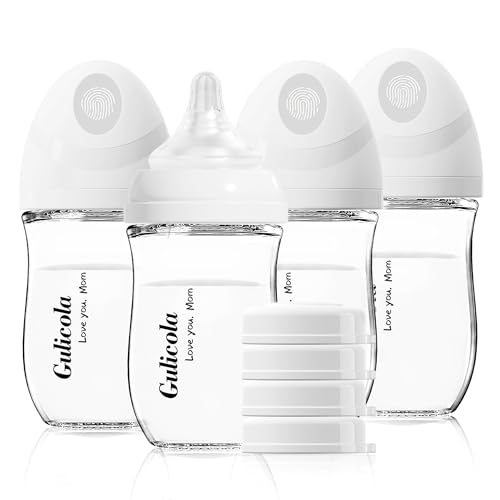
The Gulicola 4-pack delivers serious value for parents who want a complete newborn feeding set without buying single bottles separately. Each 5-ounce bottle is made from premium borosilicate glass that resists thermal shock from boiling water, and the wide neck design makes scooping formula and scrubbing straightforward. The SS (extra slow) nipples are purpose-built for newborns, with a soft silicone that mimics the flex and movement of breastfeeding.
Parent feedback consistently highlights that these bottles require no adjustment period — babies accept them immediately, especially those who are primarily breastfed. The anti-colic vents are integrated into the nipple design rather than a separate tube, which dramatically simplifies cleaning to just four pieces per bottle. Users who dropped the bottles onto tile floors report they survived, which is rare for glass baby bottles.
The 4-bottle count means you can prep a full day’s worth of feedings in one batch. The only catch is that the nipples are delicate and can tear during aggressive scrubbing with a brush, so hand washing with a soft sponge is recommended. Replacement nipples are available separately, and the glass itself holds up beautifully through hundreds of sterilization cycles without clouding.
Why it’s great
- Four bottles in one purchase covers a full day of feeding prep
- Borosilicate glass withstands thermal shock during sterilization
- Wide neck design is easy to fill, clean, and reassemble
Good to know
- Nipples are thin and can tear if brushed aggressively
- Bottle weight is heavier than plastic, which may tire a newborn’s caregiver during long feeds
3. Lansinoh Anti-Colic Baby Bottles
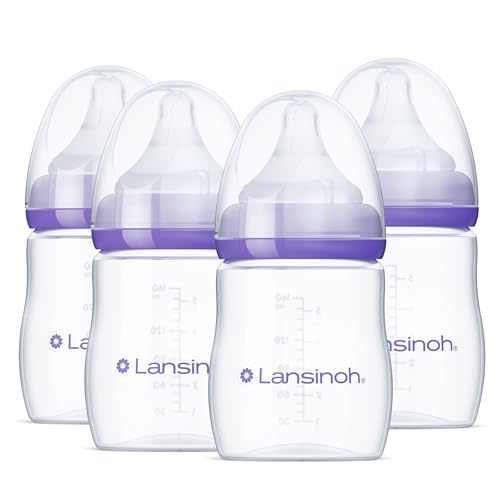
Lansinoh’s Anti-Colic bottle is a favorite among lactation consultants because the nipple passes the “triangle test” — meaning it maintains its shape when squished, ensuring the baby forms a deep, correct latch. The extra-slow flow (Size XS) nipple is specifically designed for newborns 0-1 month, and the air ventilation system works by venting air away from the milk, not by forcing it through a tube. This results in fewer gas bubbles entering the baby’s stomach.
Parents report that even colicky babies who refused other brands took to Lansinoh immediately. The 3-piece design (excluding cap) is the simplest among all anti-colic bottles reviewed here — there is no separate vent tube, no tiny valve, just a nipple, collar, and bottle. Cleaning takes seconds, and the bottles are dishwasher-safe on the top rack. The plastic is BPA-free and durable enough for daily use without clouding.
The biggest advantage is how well these bottles preserve the breastfeeding latch. Multiple users noted that their babies did not develop nipple confusion when switching between breast and Lansinoh. The flow rate is genuinely slow enough for preemies, and the soft silicone nipple stretches with the baby’s sucking motion. The only downside is that the bottles are plastic, so they may retain some milk odor after extended use compared to glass.
Why it’s great
- Nipple passes the triangle test for deep latch every time
- Only 3 pieces to clean — fastest assembly in this guide
- Extra-slow XS flow is genuinely appropriate for premature infants
Good to know
- Plastic material may absorb milk odors after months of use
- Avent bottle lids can bend the nipple if used interchangeably
4. Dr. Brown’s Options+ Narrow Glass Baby Bottles
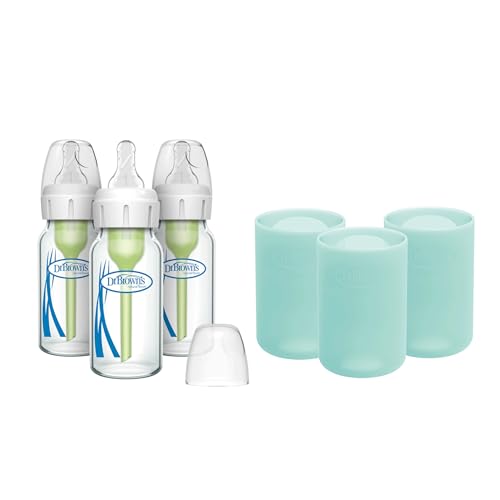
Dr. Brown’s Options+ is the gold standard for clinical air reduction, using an internal vent system with a green tube that runs into the milk to eliminate vacuum pressure. The narrow glass body is made from thermal shock-resistant borosilicate glass that heats evenly, and the silicone sleeves provide grip and protection. The Level 1 slow flow nipple is suitable for newborns, though the brand also offers a Preemie Flow nipple separately for the smallest infants.
Parents consistently report that this bottle produces visibly fewer bubbles during feeding and significantly reduces spit-up compared to any other brand. The vacuum-free design means the baby does not have to fight against negative pressure to get milk, which mimics the natural flow of breastfeeding. The glass heats milk faster and holds temperature longer than plastic, which is convenient for warming refrigerated pumped milk.
The major drawback is cleaning. The vent system has five separate pieces including the tiny green tube and silicone vent insert, which must be washed thoroughly to prevent milk residue buildup. A specialized brush is recommended. Despite the extra cleaning time, parents of colicky babies overwhelmingly consider this trade-off worth it because the reduction in crying is dramatic. The silicone sleeves also prevent breakage when the bottle is dropped.
Why it’s great
- Internal vent system is clinically proven to reduce colic symptoms
- Borosilicate glass with silicone sleeve is highly durable
- Vacuum-free feeding is closest breastfeeding simulation in a bottle
Good to know
- Five separate pieces to clean per bottle after every feeding
- Narrow neck is harder to hand-clean than wide-mouth alternatives
5. Philips Avent Anti-Colic Bottle with AirFree Vent
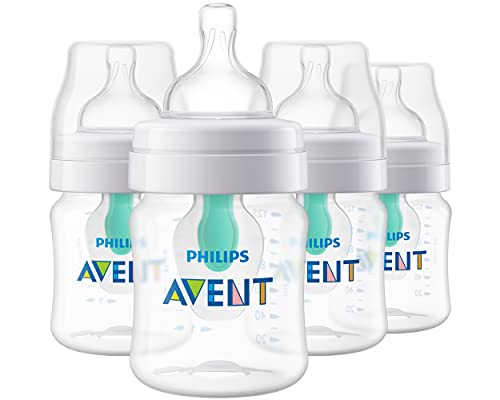
Philips Avent redesigned their classic bottle with the AirFree vent, a membrane integrated directly into the nipple that keeps the nipple full of milk, not air. This allows the bottle to be used in an upright feeding position, which is recommended for babies with reflux. The bottle can be used with or without the AirFree vent, giving parents the flexibility to choose based on their baby’s tolerance. The wide neck is easy to fill and clean, with only a few parts.
Parents who switched from Dr. Brown’s to Avent reported a massive reduction in cleaning time — there are no small tubes or inserts to scrub. The Flow 1 nipple is appropriate for newborns, and the AirFree vent is effective enough that many users noticed less gas and spitting up. The BPA-free plastic is lightweight and durable, surviving daily use and washing.
The AirFree vent works best when the bottle is held at the correct angle; if tilted too far, the vent membrane may not function optimally. Some users noted that the nipple can collapse during feeding if the vent is not properly positioned. For babies who are exclusively bottle-fed, the Avent system is a solid mid-range choice that balances effectiveness with convenience.
Why it’s great
- AirFree vent keeps nipple full of milk, reducing air ingestion
- Works in upright feeding position — beneficial for reflux babies
- Few parts and wide neck make cleaning fast and simple
Good to know
- Vent membrane requires precise positioning to work correctly
- Nipple can collapse if feeding angle is too steep
6. Gulicola Small Glass Baby Bottle 2 Pack

This 3-ounce bottle from Gulicola is purpose-built for the first few weeks of life when a newborn’s stomach capacity is tiny. The smaller size means less wasted milk and a more comfortable grip for tiny hands. The extra-slow flow nipple (SS) is engineered with specific points that guide the baby’s tongue into the correct position, reducing the air gap that causes colic. The borosilicate glass is lightweight relative to other glass bottles and has survived drops onto hard floors without cracking, according to user reports.
Parents of premature babies specifically praise this bottle because the flow rate is genuinely slow enough to prevent choking and gulping. The wide neck design makes filling and cleaning easy, and the bottles are compatible with most standard bottle warmers and sterilizers. The set includes two bottles and extra-slow nipples, which is sufficient for a newborn who feeds every two to three hours.
The nipple design mimics the natural feel of breastfeeding, and lactation consultants recommended this brand to several users whose babies had refused other bottles. The only limitation is the 3-ounce capacity — as the baby grows and feeds more, you will need to transition to the 5-ounce version. But for the critical first month, this is the most appropriate size and flow combination available.
Why it’s great
- 3 oz size matches a newborn’s tiny stomach capacity perfectly
- Extra-slow SS nipple prevents gulping and air swallowing
- Lightweight borosilicate glass survives accidental drops
Good to know
- Limited to 3 oz — outgrown within the first month for most babies
- Nipples are delicate and require gentle washing
7. Dr. Brown’s Preemie Flow Bottle Set

This Dr. Brown’s set is specifically designed for premature infants and full-term newborns who need an exceptionally slow flow rate. The Preemie Flow nipple is the slowest in the Dr. Brown’s lineup, followed by the Level T nipple, which is a transition speed for babies who outgrow the preemie flow. The 4-ounce plastic bottles are lightweight and easy for a caregiver to hold, and the internal vent system is the same clinical-grade design used in the brand’s standard bottles.
NICU parents and neonatal nurses frequently recommend this set because the Preemie Flow nipple dramatically reduces the risk of choking and air intake in fragile infants. The vent system is proven to preserve milk nutrients by preventing oxidation, which is particularly important for pumped breast milk. The bottles are affordable and come in a 3-pack, making this the most budget-friendly entry point into the Dr. Brown’s ecosystem.
The plastic is BPA-free and dishwasher-safe, though it may cloud over time with frequent sterilization. The Level T nipple provides an easy transition when the baby is ready for a slightly faster flow, which extends the useful life of the bottles beyond the first month. The main trade-off is the cleaning complexity — the vent system includes a small tube and insert that require a brush, but the colic reduction makes it worthwhile for preemies.
Why it’s great
- Preemie Flow nipple is the slowest available — ideal for fragile newborns
- Includes Level T nipple for easy flow progression without buying new bottles
- Vent system preserves breast milk nutrients during feeding
Good to know
- Three-piece vent system requires dedicated cleaning time
- Plastic bottles may cloud after repeated high-heat sterilization
FAQ
Do anti-colic bottles actually reduce gas or is it a marketing gimmick?
How many extra hours of cleaning should I expect from a vent-tube anti-colic bottle?
Can I use anti-colic bottles for formula-fed and breastfed babies equally?
At what age should I stop using anti-colic bottles?
Final Thoughts: The Verdict
For most users, the anti colic bottles for newborns winner is the Pigeon PPSU Nursing Bottle because it combines precision nipple engineering with durable PPSU material and minimal cleaning effort — a rare trifecta in this category. If you need maximum clinical-grade air reduction for a colicky formula-fed baby, grab the Dr. Brown’s Options+ Narrow Glass. And for the best value newborn set, nothing beats the Gulicola Natural Glass 4 Pack.