
Your internet is only as fast as the weakest link in your home network, and for millions of cable subscribers, that weak link is the rented modem sitting on a shelf. Upgrading to a DOCSIS 3.1 modem is the single most effective hardware swap you can make — it unlocks your ISP’s full speed potential, slashes latency for gaming and video calls, and kills those monthly rental fees that quietly drain your wallet year after year.
I’m Min — the co-founder and writer behind Gadgets Feed. I’ve spent countless hours studying chipset benchmarks, OFDM channel configurations, and real-world throughput data across dozens of modem models to separate the genuine performers from the marketing fluff.
Whether you’re battling lag spikes on Xfinity or trying to squeeze gigabit speeds out of a Spectrum plan, finding the best docsis 3.1 modem for your specific setup is the fastest path to a faster, more reliable connection you’ll actually feel.
How To Choose The Best DOCSIS 3.1 Modem
Not every DOCSIS 3.1 modem delivers the same experience. The chipset inside, the number of OFDM channels it bonds, and the speed of its Ethernet port determine whether you actually feel the upgrade from DOCSIS 3.0. Here are the critical factors to consider before you buy.
2.5 Gigabit Ethernet Port — The Real Speed Gate
A modem with only a 1 Gbps Ethernet port cannot deliver anything faster than 940 Mbps to your router, even if your ISP plan provides 2 Gbps. Modems with a 2.5 Gbps port, like the Hitron CODA56 or Motorola B12, future-proof your network for multi-gig plans and give you headroom for speed bursts during low-contention hours. If your current plan tops out at 1 Gbps, a 1 Gbps port is adequate today — but it caps any future upgrade path without buying a new modem.
OFDM Channel Configuration
DOCSIS 3.1 modems bond multiple Orthogonal Frequency Division Multiplexing (OFDM) channels to achieve higher throughput and lower latency. Modems with two downstream and two upstream OFDM channels (like the Hitron CODA) handle moderate plans well, while high-split modems with Mid-Split or High-Split support (like the NETGEAR CM3000) unlock dramatically faster upload speeds — often exceeding 200 Mbps — which is critical for heavy video conferencing and large file uploads. Check if your ISP has deployed high-split in your area before buying a mid-split-capable modem.
Standalone Modem vs. Modem-Router Combo
A standalone modem is always the performance-first choice: it gives you the flexibility to pair it with any WiFi router you want and avoids the all-in-one failure point where a router firmware bug takes your entire internet down. Modem-router combos like the ARRIS G54 or NETGEAR CAX30 simplify cabling and save a power outlet, but they lock you into the combo’s WiFi performance, which rarely matches a dedicated router at the same total cost. Choose a combo only if you value simplicity and are willing to replace the entire unit when WiFi standards evolve.
Quick Comparison
On smaller screens, swipe sideways to see the full table.
| Model | Category | Best For | Key Spec | Amazon |
|---|---|---|---|---|
| NETGEAR Nighthawk CM3000 | Mid/High-Split | High Upload Speeds | Mid/High-Split, 2.5 Gbps port | Amazon |
| Motorola B12 | Compact Standalone | Space-Saving Setup | 2.5 Gbps port, AQM | Amazon |
| Hitron CODA56 | Multi-Gig Standalone | Future-Proof Performance | 2.5 Gbps port, 2.5 Gbps max | Amazon |
| ARRIS SURFboard SB8200 | Tried & True | Reliable Dual 1 Gbps Ports | 2 x 1 Gbps ports, Broadcom | Amazon |
| NETGEAR Nighthawk CAX30 | Combo with WiFi 6 | All-in-One Simplicity | Modem + WiFi 6 Router | Amazon |
| ARRIS (G54) | Premium Combo | Ultimate WiFi 7 Coverage | WiFi 7, 10 Gbps port | Amazon |
| Motorola MT8733 | Voice + WiFi 6 | Xfinity Voice + Data | 2 phone ports, 2.5 Gbps | Amazon |
| Arris SBG8300-RB | Combo Mid-Range | Entry-Level Combo | DOCSIS 3.1 + AC2350 WiFi | Amazon |
| Hitron CODA | Budget Standalone | Stopping Rental Fees | 1 Gbps port, 2×2 OFDM | Amazon |
In‑Depth Reviews
1. NETGEAR Nighthawk DOCSIS 3.1 Mid/High-Split Cable Modem (CM3000)

The CM3000 is currently the most future-ready standalone DOCSIS 3.1 modem on the market, engineered specifically for the mid/high-split technology that ISPs like Xfinity are rolling out to push upload speeds past 200 Mbps. It delivers up to 2.5 Gbps downstream and 1 Gbps upstream, with a 2.5 Gigabit Ethernet port that matches the fastest cable internet plans available today.
Users report incredibly stable connections with zero drops after the initial setup, and the compact black chassis runs cooler than many competing units. The modem handles peak-hour traffic without introducing latency spikes, making it ideal for households that run simultaneous 4K streams, competitive gaming sessions, and work video conferences.
Activation is straightforward through most major ISP apps including Xfinity and Spectrum. Just be prepared for a slightly higher upfront investment — this modem is built for the performance tier and it shows in the price bracket.
Why it’s great
- Mid/High-Split support unlocks dramatically faster upload speeds where available
- 2.5 Gigabit Ethernet port future-proofs multi-gig internet plans
- Exceptionally stable connection with no drops or reconnects reported
Good to know
- No built-in WiFi — requires a separate router
- Premium pricing reflects its mid/high-split capability
- Firmware issues were reported by a small number of users
2. Motorola B12 – Advanced Compact Cable Modem
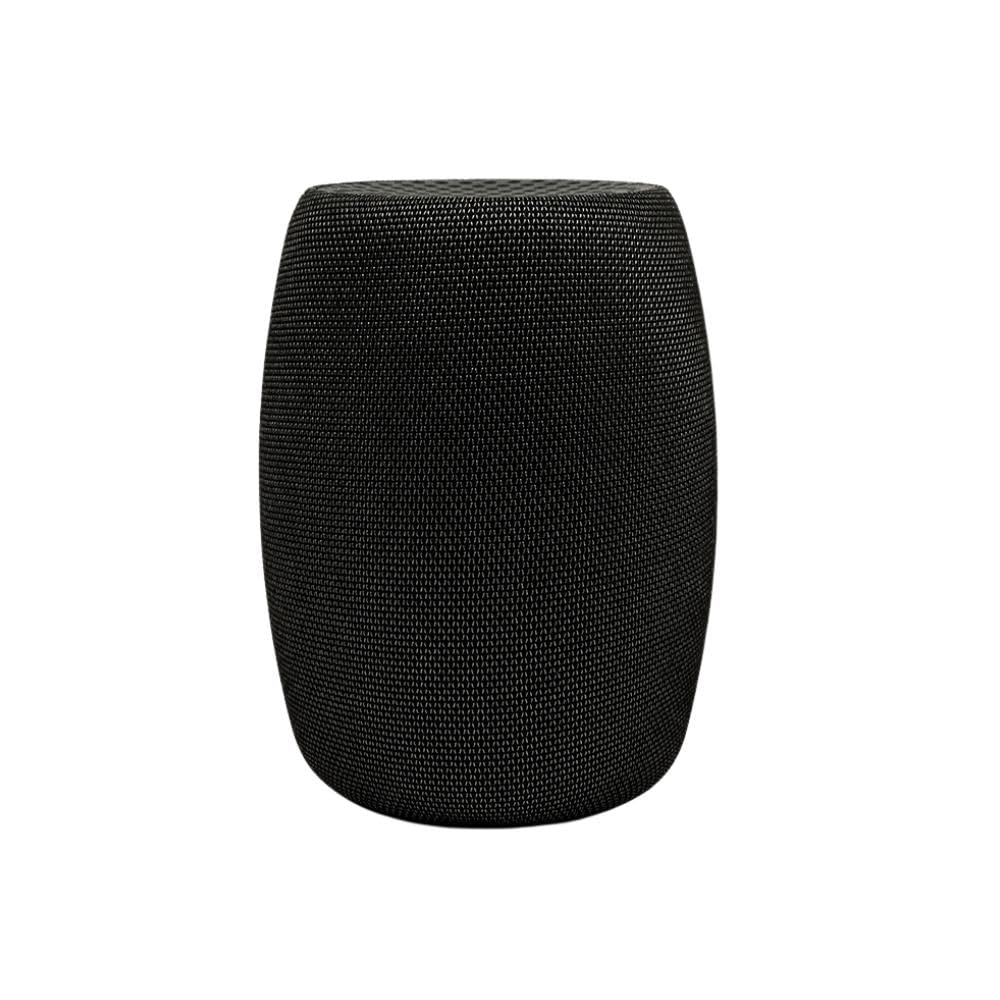
The Motorola B12 brings a 2.5 Gigabit Ethernet port and proven Active Queue Management (AQM) into a footprint that is noticeably smaller than nearly every other DOCSIS 3.1 modem on this list. AQM actively reduces bufferbloat, which translates directly to lower latency during online gaming and real-time video calls — a feature that matters far more than raw speed for interactive use.
This modem is approved for Xfinity, Cox, Spectrum, RCN, and Astound, and supports downstream speeds approaching 2,500 Mbps. Users consistently praise the simple no-app-needed setup, and the unit runs reliably once activated. The compact vertical design means it fits neatly on a desk or shelf without dominating the space.
Some users have noted the chassis runs warm to the touch under continuous load, and the minimal LED indicator panel could be more informative for troubleshooting. If you prioritize a small footprint and low-latency performance over flashy features, the B12 is a compelling choice.
Why it’s great
- Very compact vertical design — frees up desk and shelf space
- Active Queue Management reduces bufferbloat for lower gaming latency
- 2.5 Gigabit Ethernet port supports multi-gig internet plans
Good to know
- Chassis can run warm during extended use
- Limited LED indicators for troubleshooting
- Some users received units that appeared used
3. Hitron CODA56 Multi-Gigabit DOCSIS 3.1 Modem

The CODA56 is a strategically priced multi-gig modem that undercuts many competitors while still delivering a 2.5 Gigabit Ethernet port and support for internet plans up to 2.5 Gbps. It is certified with Xfinity, Spectrum, and Cox, and includes 30 years of Hitron’s engineering behind its DOCSIS 3.1 implementation with 2 downstream and 2 upstream OFDM channels.
Setup is famously simple — users report being online in under 10 minutes after a quick call to their ISP. The modem runs stable even under sustained load, and the white chassis stays noticeably cooler than many black competitors. It’s backward compatible with DOCSIS 3.0 networks, so you can upgrade without worrying about compatibility.
The web interface is stripped down to essentials — advanced users looking for error log access or fine-grained settings will be disappointed. But if your goal is a reliable, fast modem that eliminates rental fees without breaking the bank, the CODA56 hits a sweet spot few other models reach.
Why it’s great
- Excellent balance of performance and price for multi-gig support
- 2.5 Gigabit Ethernet port handles future internet plan upgrades
- Easy setup — many users active in under 10 minutes
Good to know
- Minimal web interface — no advanced diagnostics or settings
- Modem only — requires a separate WiFi router
- Not compatible with fiber, DSL, or satellite services
4. ARRIS SURFboard SB8200 DOCSIS 3.1 Multi-Gig Cable Modem
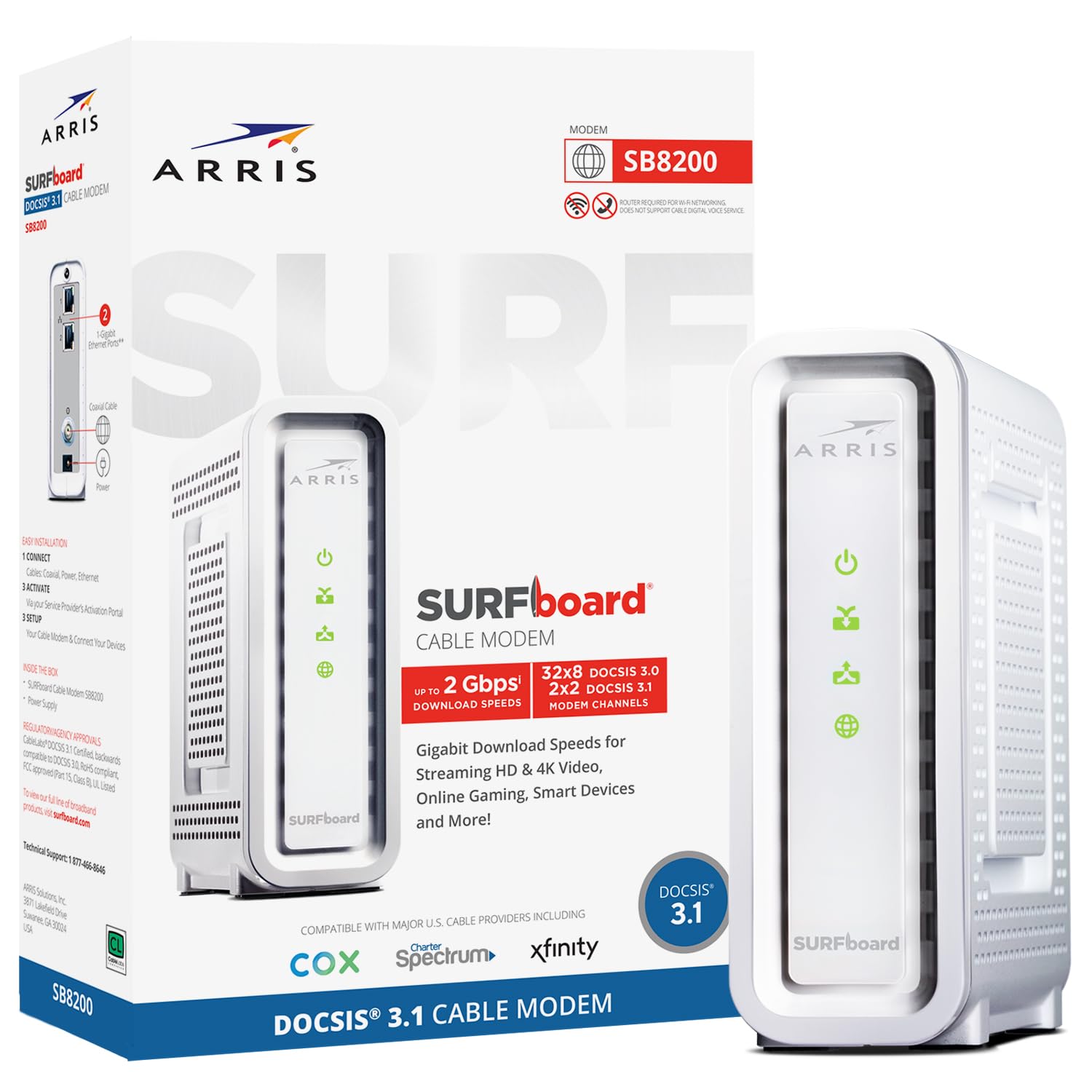
The SB8200 is one of the most battle-tested DOCSIS 3.1 modems on the market, with a Broadcom chipset and two 1 Gigabit Ethernet ports that support link aggregation for speeds up to 2 Gbps when paired with a compatible router. It’s CableLabs certified and works with Cox, Xfinity, and Spectrum, making it a safe choice for the vast majority of cable internet subscribers.
In real-world use, the SB8200 delivers consistent 930-960 Mbps downstream on 1 Gbps plans, and its compact white design with discrete LED indicators fits easily into any entertainment center. Users with clean signal lines report months of uptime without a single reboot, and the Arris support team is responsive when issues arise with ISP-side signal quality.
The SB8200 is known to be sensitive to line noise — T3 and T4 timeout errors can cause spontaneous resets if your coaxial cable plant has issues. If your connection is clean, this modem is rock-solid. If you’re already experiencing drops, you may need a technician visit to clean up the line before the SB8200 can shine.
Why it’s great
- Proven Broadcom chipset with years of reliable field performance
- Two 1 Gbps ports with link aggregation support for up to 2 Gbps
- Compact footprint and easy setup with major cable ISPs
Good to know
- Sensitive to line noise — T3/T4 errors can cause resets
- No 2.5 Gigabit Ethernet port — capped at 1 Gbps per port
- White plastic case feels less premium than some competitors
5. NETGEAR Nighthawk Modem Router Combo (CAX30) – Renewed

The CAX30 is a renewed DOCSIS 3.1 modem and AX2700 WiFi 6 router in one unit, aimed at users who want the simplicity of a single-device solution without compromising on modern WiFi standards. It supports cable internet plans up to 2.7 Gbps, includes a 1 Gigabit Ethernet WAN port, and delivers dual-band WiFi with enough range to cover most average-sized homes.
Renewed units from NETGEAR arrive in like-new condition and set up quickly through the Nighthawk app. Many users report replacing separate modem-router pairs and enjoying fewer dropouts and stronger overall coverage after migrating to the CAX30. The integrated design reduces cable clutter and frees up a power outlet.
The CAX30 does not include a 2.5 Gigabit Ethernet port, so its maximum wired throughput to a single device is around 940 Mbps. If you have a gigabit internet plan and want an all-in-one device that simplifies your network without adding a second box, this is a tidy option — just don’t expect multi-gig wired performance.
Why it’s great
- All-in-one DOCSIS 3.1 modem and WiFi 6 router eliminates clutter
- Renewed units are thoroughly tested and arrive in like-new condition
- Easy app-based setup with good coverage for most homes
Good to know
- 1 Gigabit WAN port — no multi-gig wired throughput
- Renewed product may have cosmetic blemishes
- Activation can require a lengthy call to your ISP
6. ARRIS (G54) Cable Modem Router Combo – WiFi 7
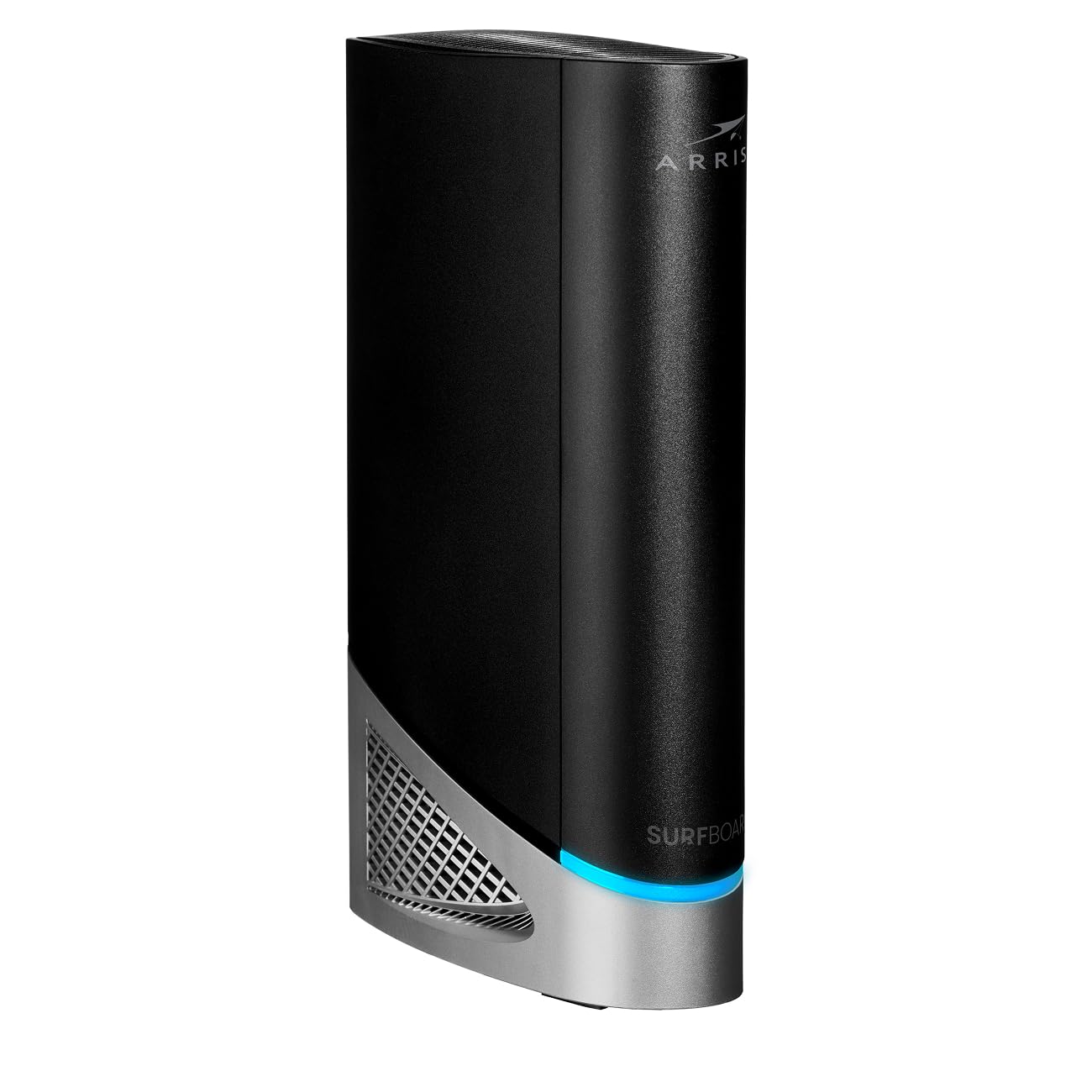
The G54 is ARRIS’s flagship modem-router combo, packing DOCSIS 3.1, quad-band WiFi 7 with speeds up to 18 Gbps, and a 10 Gigabit Ethernet port. It covers up to 5,000 square feet and is built for the most demanding connected homes — think multiple 4K streams, VR gaming, and a house full of smart devices all competing for bandwidth simultaneously.
Users who get it working properly report exceptional range and speed, with the unit automatically selecting the least congested channels for interference-free performance. The advanced auto-reset feature keeps the connection stable without manual intervention, and the 10 Gigabit port makes it ready for fiber-level wired speeds when your ISP eventually delivers them.
There are significant caveats: some users have reported abysmal WiFi range of only 10 feet, Ethernet disconnects every 30 minutes, and firmware that cannot be self-updated — requiring an ISP technician visit. The quad-band WLAN routing implementation has also been reported to isolate devices on different bands from communicating, breaking local network features like printing and file sharing. This unit is only for the technically adventurous willing to gamble on hardware quality.
Why it’s great
- WiFi 7 with quad-band support and up to 18 Gbps theoretical speed
- 10 Gigabit Ethernet port for ultra-fast wired connections
- Advanced auto-reset feature for stable uptime
Good to know
- Highly inconsistent quality — some units have terrible range and frequent drops
- Firmware updates cannot be performed by the user
- Quad-band routing can isolate devices on different bands from communicating
7. Motorola MT8733 WiFi 6 Router + Multi-Gig Cable Modem + 2 Phone Ports

The MT8733 is one of the few DOCSIS 3.1 devices that combines a multi-gig modem, WiFi 6 router, and two phone ports in a single chassis, making it a natural upgrade for Xfinity Triple Play subscribers who want to eliminate separate rental units for internet and voice. It delivers AX6000 WiFi speeds and a 2.5 Gigabit Ethernet port alongside clear voice call support with caller ID.
Setup is managed through the motosync app, and users who successfully activate it report significant speed improvements over older DOCSIS 3.0 gear — jumps from 150 Mbps to 800+ Mbps on 1 Gbps Xfinity plans are common. The dual-band WiFi coverage is adequate for single-story homes up to 2,800 square feet.
The reliability picture is divisive. A significant number of users report constant lockups, 5GHz drops, printer disconnections, and a buggy admin interface that requires power cycling to recover. The most critical issue is that Motorola blocks user-initiated firmware updates — only the ISP can push them, and many ISPs refuse, leaving the device stuck on an old firmware build. If you need Xfinity Voice support and are willing to risk inconsistent stability, this is your only combo option.
Why it’s great
- Xfinity Voice certified with two phone ports for landline replacement
- 2.5 Gigabit Ethernet port and AX6000 WiFi 6 for fast speeds
- Eliminates separate modem, router, and voice adapter rental fees
Good to know
- Firmware updates are locked — only your ISP can update, and many refuse
- Reports of frequent lockups requiring hard power cycles
- Motosync app and admin interface are buggy
8. Arris (SBG8300-RB) DOCSIS 3.1 Gigabit & AC2350 WiFi Cable Modem Router Combo – Renewed

The SBG8300-RB combines a DOCSIS 3.1 modem and an AC2350 dual-band WiFi 5 router in a single renewed unit that costs significantly less than buying a standalone modem and router separately. It’s approved for Xfinity, Cox, and Spectrum, and supports internet plans up to 1 Gbps — enough for the majority of cable households today.
Users coming from DOCSIS 3.0 gear report noticeably less buffering and data delay after upgrading. The setup is straightforward once you navigate the ISP activation step, and the refurbished units generally arrive looking like new. The built-in router is adequate for basic surfing and streaming, and the combo format saves a power outlet.
The AC2350 WiFi is WiFi 5, not WiFi 6 — so you miss out on the efficiency and capacity gains of the newer standard. Some users report frustration with the lack of a physical WPS button, making printer pairing more cumbersome. For the price, the SBG8300-RB offers a practical entry into DOCSIS 3.1 without needing to buy a separate router right away.
Why it’s great
- Low-cost entry into DOCSIS 3.1 with built-in WiFi (no separate router needed)
- Renewed units are tested and arrive in excellent condition
- Supports gigabit internet plans from major cable ISPs
Good to know
- WiFi 5 (AC2350) — no WiFi 6 support for newer devices
- Setup can be cumbersome — no physical WPS button and app issues reported
- No 2.5 Gigabit port — wired throughput capped at 1 Gbps
9. Hitron CODA DOCSIS 3.1 Modem – Renewed

The Hitron CODA is the most affordable path into DOCSIS 3.1, offering a renewed standalone modem that eliminates rental fees without demanding a significant upfront investment. It supports internet plans up to 1 Gbps with 2 downstream and 2 upstream OFDM DOCSIS 3.1 channels, and it’s certified with Xfinity, Spectrum, Cox, CableOne, and several smaller ISPs.
Users consistently praise the CODA for delivering full ISP speeds at a fraction of the cost of competing modems. The unit runs cool, setup is plug-and-play once your ISP provisions the MAC address, and the compact white design is unobtrusive. For budget-conscious buyers on plans at or under 1 Gbps, the CODA delivers the core DOCSIS 3.1 experience without paying for features you won’t use.
The CODA lacks a 2.5 Gigabit Ethernet port, so it cannot deliver multi-gig speeds, and the web interface is basic — no error log access or advanced diagnostics. Some renewed units arrive DOA (dead on arrival), though replacements are generally reliable. It’s a stripped-down, no-frills DOCSIS 3.1 modem that does exactly what it promises: stop the rental fee and give you stable gigabit speeds.
Why it’s great
- Lowest cost entry into DOCSIS 3.1 — immediate rental fee savings
- Reliable performance supporting up to 1 Gbps internet plans
- Compact design, runs cool, and easy plug-and-play setup
Good to know
- No 2.5 Gigabit port — wired speeds capped at 1 Gbps
- Basic web interface with no advanced diagnostics
- Some renewed units arrive DOA — check immediately on receipt
FAQ
Does a DOCSIS 3.1 modem improve my WiFi speed?
Can I use a DOCSIS 3.1 modem with any cable ISP?
What is mid-split or high-split DOCSIS 3.1?
Final Thoughts: The Verdict
For most users, the best docsis 3.1 modem winner is the NETGEAR Nighthawk CM3000 because its mid/high-split support future-proofs your upload speeds as ISPs continue to roll out faster tiers. If you want a compact standalone modem that minimizes gaming lag and fits anywhere, grab the Motorola B12. And for the budget-conscious buyer who just wants to stop paying rental fees without sacrificing reliability, nothing beats the Hitron CODA.