
An 18650 battery that isn’t protected is a calculated risk—one internal short or over-discharge can send your flashlight, vape mod, or portable project into a thermal event you don’t want to hold. A protected 18650 wraps the raw cell in a circuit board that cuts power the moment voltage drops too low or current spikes too high, trading a few millimeters of length for real safety. Whether you’re powering a high-drain LED torch or building a battery pack for a DIY gadget, the protection circuit is the difference between a cell that works and one that fails catastrophically.
I’m Min — the co-founder and writer behind Gadgets Feed. I’ve spent countless hours analyzing the protection thresholds, capacity ratings, and charging architecture across dozens of 18650 protected battery listings to find the units that balance genuine safety circuitry with usable discharge rates.
This guide ranks the top options for anyone searching for the best 18650 protected battery by focusing on real protection IC specs, cell chemistry, and compatibility with common consumer devices.
How To Choose The Best 18650 Protected Battery
A protected 18650 battery isn’t just a cell with extra wrapping—it’s a safety system that must match your device’s current draw and physical clearance. The wrong protection threshold or button-top height can render a perfectly good cell useless for your application. Here’s what to check before you buy.
Button Top vs. Flat Top: Physical Fit Matters
Protected 18650 batteries almost always have a button top because the protection circuit adds length (typically 67–70 mm total vs. 65 mm for an unprotected flat-top). Devices like high-end flashlights, some vape mods, and older Li-ion chargers require the raised positive terminal of a button top to make solid contact. Flat-top protected cells exist but are rarer—always measure your device’s battery compartment depth before ordering.
Protection Circuit Thresholds: Know Your Limits
Every protection PCB has three primary thresholds: over-discharge (usually 2.5V–2.9V), over-current (anywhere from 3A to 15A depending on the board), and short-circuit response. For a high-drain LED flashlight pulling 5A continuous, you need a protection board rated for at least that current—otherwise the battery will repeatedly trip into safe mode. Low-drain devices like clocks or thermometers can use lower-current protection without issues.
Capacity vs. Discharge Rate: The Trade-Off
The highest-capacity 18650 protected batteries (3500 mAh and above) typically use a lower-discharge chemistry like ICR that maxes out around 5–7A continuous. High-drain cells (IMR or INR chemistry) sacrifice capacity—often landing around 2000–2600 mAh—to safely deliver 15A–30A continuous current. Know your device’s average and peak draw before prioritizing capacity over current handling.
Quick Comparison
On smaller screens, swipe sideways to see the full table.
| Model | Category | Best For | Key Spec | Amazon |
|---|---|---|---|---|
| Opus BT-C3400 | Premium Analyzer | Capacity testing & conditioning | 2000mA charge/discharge per slot | Amazon |
| EBL PD4 Universal | Multi-Function Charger | Discharge & test functions | 2000mA fast charge channels | Amazon |
| MC-ELIN Smart Charger | Mid-Range Charger | Multiple battery chemistries | USB-C input, adjustable 2A | Amazon |
| Dlyfull M4S | 4-Bay Charger | Simultaneous multi-cell charging | USB-C, 2A single-slot max | Amazon |
| Swanlake LCD Charger | Compact Charger | Travel & occasional use | Adjustable 0.5A/1A/2A lithium | Amazon |
| Renyqatt 2-Pack | Entry-Level Cells | Low-drain devices | 2600mAh button top | Amazon |
| EBL Universal Charger | Budget Charger | Basic Ni-MH & Li-ion charging | 1000mA fast charge, micro USB | Amazon |
In‑Depth Reviews
1. Opus BT-C3400 Battery Charger Analyzer Tester

The Opus BT-C3400 isn’t just a charger—it’s a diagnostic station for your 18650 protected batteries. It runs charge, discharge, refresh, and capacity test cycles on each of its four independent bays, reporting internal resistance and actual mAh delivered. For anyone who uses multiple 18650 cells across flashlights, power banks, or DIY packs, this unit eliminates guesswork about which cells are still healthy and which need retiring.
Each bay can charge at up to 2000mA and discharge at up to 2000mA, with selectable rates from 200mA to 1000mA in standard mode. The conditioning function runs three full charge/discharge cycles to break in new Ni-MH cells or recondition aging Li-ion cells. The internal resistance reading, while not lab-grade, is consistent enough to match cells for balanced packs—useful for anyone building series battery groups.
The fan is audible when running multiple bays at high current, but it keeps the unit cool during extended test cycles. The display shows real-time voltage, current, capacity mAh, and elapsed time per bay. This is the right tool for enthusiasts who want to verify that their protected cells actually deliver their rated capacity before trusting them in critical gear.
Why it’s great
- Full capacity test and internal resistance measurement per cell
- Independent bay control with multiple charge/discharge rates
- Conditioning mode revives underperforming Ni-MH and Li-ion batteries
Good to know
- Fan noise is noticeable during high-rate operation
- Internal resistance values differ from professional meters
2. EBL PD4 Universal 18650 Battery Charger
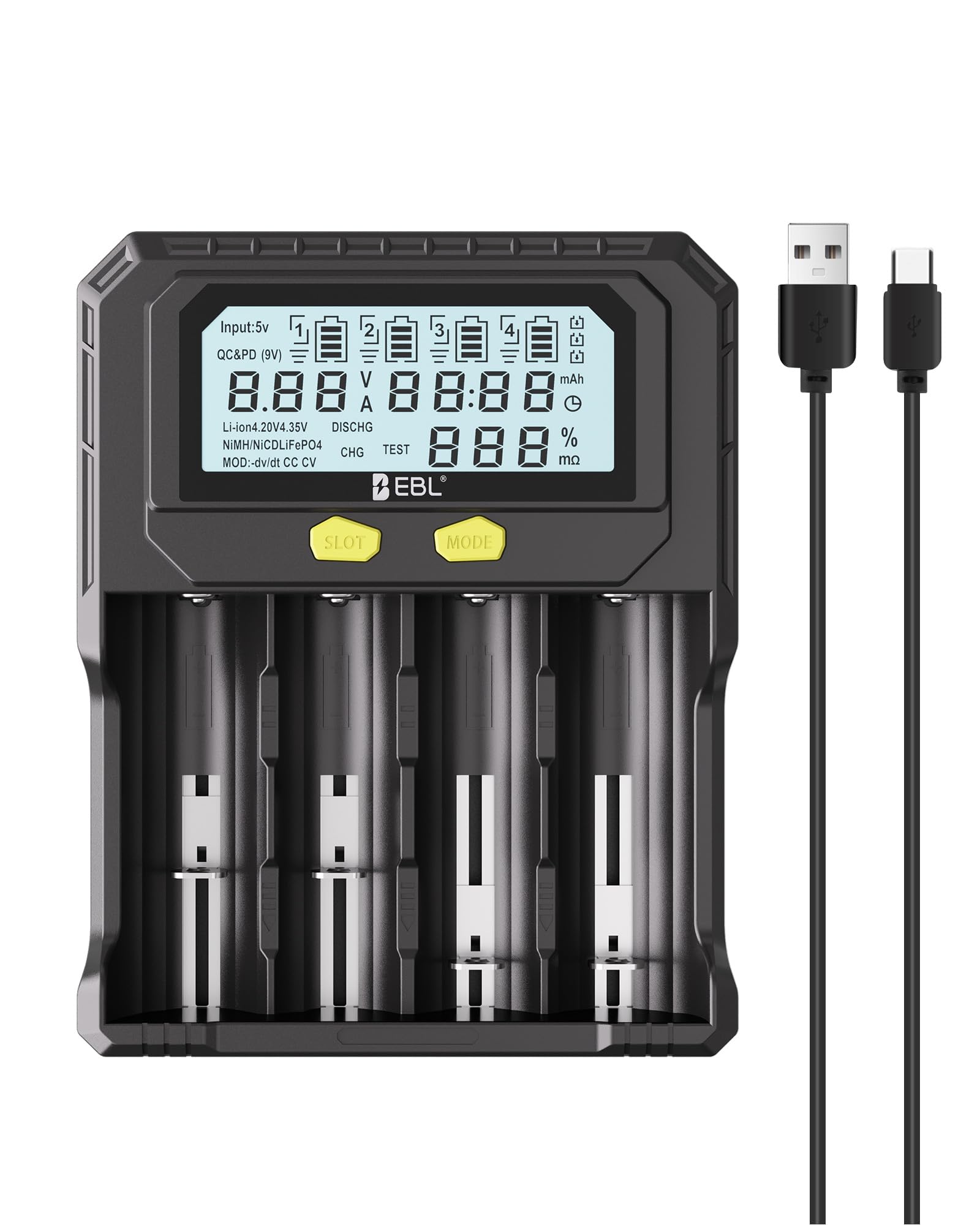
The EBL PD4 brings discharge testing and capacity verification into the mid-range price territory, making it a strong contender for anyone who wants to track battery health without spending for a full analyzer. It handles 3.7V Li-ion, 3.2V LiFePO4, and 1.2V Ni-MH/Ni-CD chemistries across four independent bays, with channels 1 and 4 capable of delivering up to 2000mA each for rapid charging of your protected 18650 cells.
The LCD screen displays real-time charging voltage, current, and estimated time remaining for each bay. The discharge mode lets you drain a fully charged cell to a set cutoff voltage and then report the actual capacity delivered—an excellent sanity check against overrated budget cells. The 0V reactivation feature can sometimes revive deeply discharged protected batteries that other chargers reject as dead.
The unit uses a barrel jack for power rather than USB-C, which means you’ll need the included AC adapter or a compatible 5V supply. The build feels solid, with spring-loaded slots that grip button-top and flat-top cells equally well. For the price, this is the most feature-packed charger available for maintaining and testing a fleet of 18650 protected batteries.
Why it’s great
- Discharge and capacity test mode for verifying real cell health
- 0V activation can resurrect deeply drained protected cells
- Four independent bays with 2000mA fast charge on outer slots
Good to know
- Requires included barrel jack AC adapter, not USB-C
- Occasional need to unplug and reboot when switching modes
3. MC-ELIN Smart Universal 18650 Battery Charger
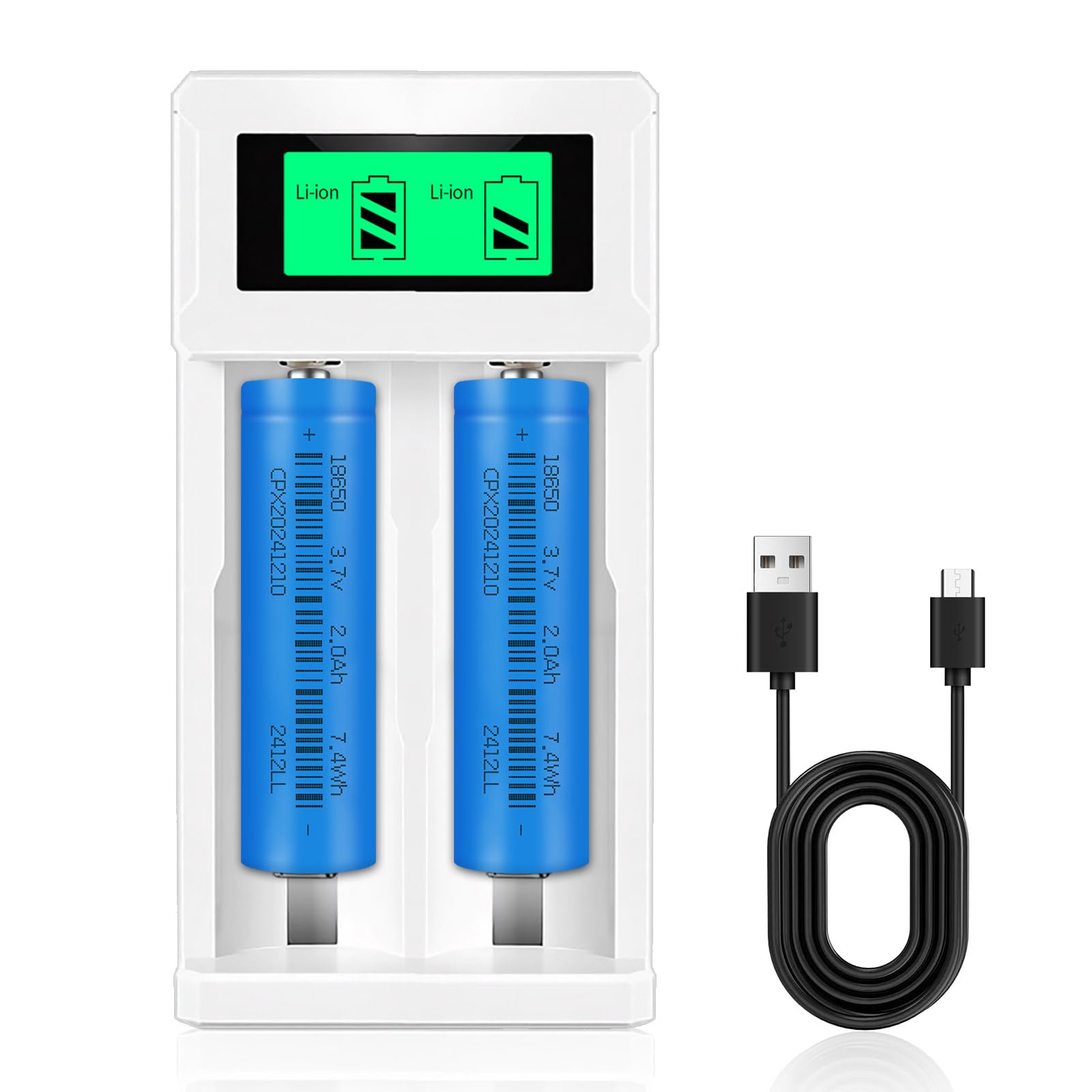
The MC-ELIN two-bay charger strips away unnecessary complexity while keeping the essential features: USB-C input, adjustable charge current (0.5A, 1A, or 2A), and universal chemistry support for both 3.7V Li-ion and 1.2V Ni-MH/Ni-CD cells. The selectable current is a critical feature for protected 18650 batteries—charging at 0.5A extends cell lifespan, while 2A is available when you need a fast top-up before heading out.
The LED bar meters give a quick visual read of charge progress, and the automatic battery type detection switches between Li-ion and Ni-MH profiles without manual intervention. The unit is compact enough to slip into a gear bag for travel, and the USB-C connector means you can power it from a laptop, power bank, or car adapter as long as the supply delivers at least 5V/2A.
One consideration: the charger does not include a USB wall plug, so you need a compatible adapter. The two-bay design limits simultaneous charging if you maintain a large battery rotation, but for most users with two to four protected cells, this charger delivers reliable, safe charging in a small footprint.
Why it’s great
- USB-C input for flexible power from adapters or power banks
- Selectable charge current (0.5A–2A) to balance speed and battery health
- Compact size and LED bar meters for clear charge status
Good to know
- Does not include a USB power adapter
- Only two bays limit simultaneous charging
4. Dlyfull M4S 4-Bay USB-C Battery Charger

The Dlyfull M4S handles up to four protected 18650 batteries simultaneously, with USB-C power delivery and independent charging channels that let you mix different chemistries and sizes in the same unit. Each slot detects the battery type automatically and applies the correct charging profile—a useful feature when you’re charging a protected 18650 alongside a Ni-MH AA from your emergency kit.
The charging current adjusts dynamically: a single battery can draw up to 2000mA in slot 4, two batteries get 1000mA each, and four batteries share 500mA per slot. This current-sharing behavior means you get fast single-cell charging but slower rates when filling multiple cells at once. The LCD display shows battery voltage, current, and capacity percentage per slot, giving you enough feedback to decide when to pull cells for immediate use.
The 0V activation feature can sometimes revive protected batteries that have been over-discharged below the protection PCB’s cut-off threshold—cells that would appear dead to simpler chargers. The build quality is solid with firm spring tension that holds button-top and flat-top cells securely. At this price point, the Dlyfull M4S is a strong mid-range option for users who need four bays and USB-C convenience.
Why it’s great
- Four independent slots with automatic chemistry detection
- USB-C powered for flexible charging from multiple sources
- 0V activation can recover over-discharged protected cells
Good to know
- Charge current drops to 500mA per slot when using all four bays
- Springs are stiff, making insertion and removal slightly awkward
5. Swanlake LCD Display 2-Slot Battery Charger
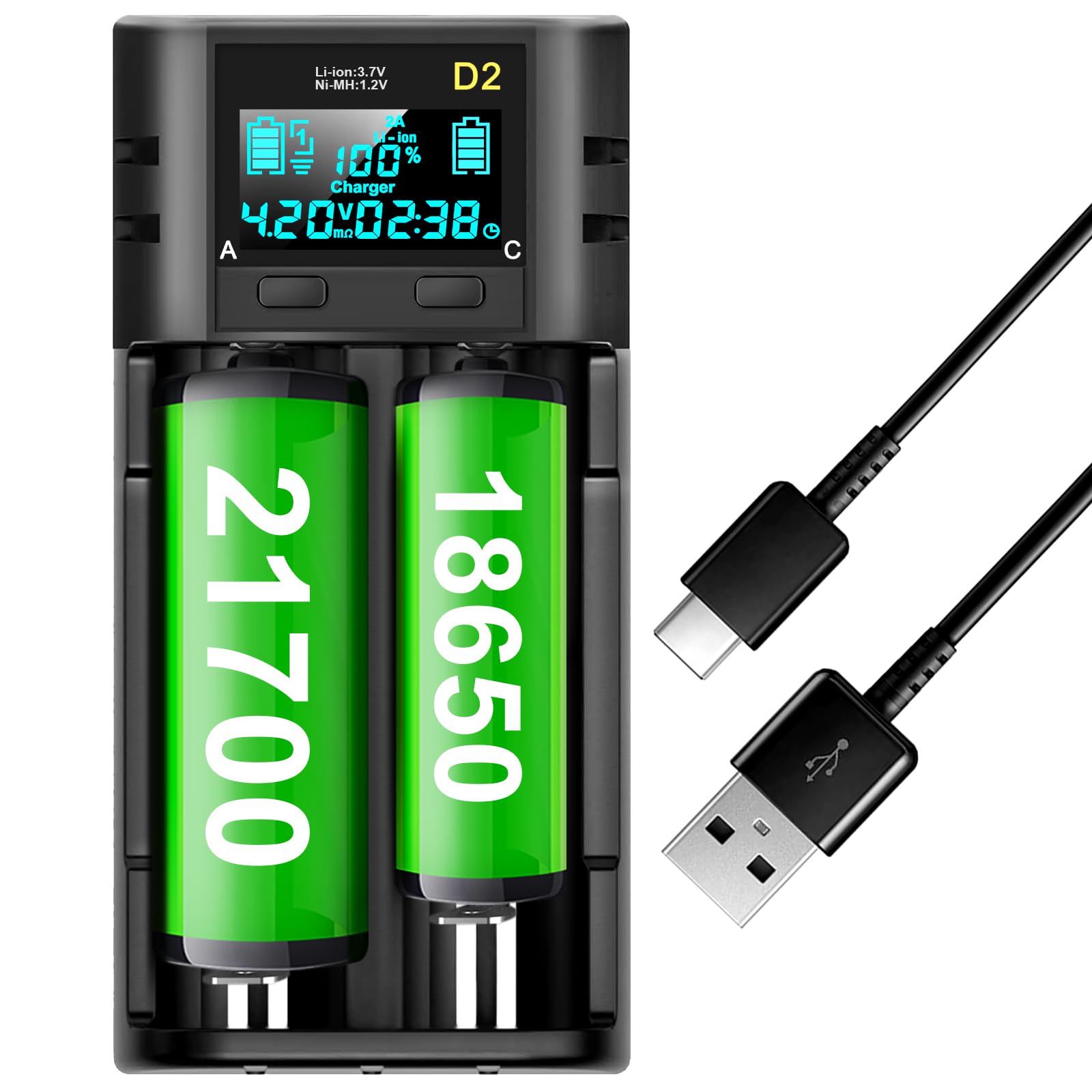
The Swanlake two-bay charger delivers an impressive set of features for its price: an adjustable charging current (0.5A, 1A, or 2A for lithium cells), a detailed LCD screen showing voltage, current, time, and percentage, and independent charging channels that handle different battery sizes simultaneously. For anyone new to 18650 protected batteries, the adjustable current is a forgiving feature—starting at 0.5A reduces heat stress on the protection circuit during the first charge cycles.
The LCD display is more informative than typical budget chargers, showing real-time charging metrics rather than just blinking LEDs. The unit automatically detects whether you’ve inserted a 3.7V Li-ion or a 1.2V Ni-MH battery and applies the correct algorithm. The safety features include over-voltage, short-circuit, and over-charge protection built into the charging IC.
The charger connects via a standard NEMA 1-15P US power cord, so there’s no USB power supply required—just plug it into the wall. The compact footprint (4.82 x 2.34 x 1.1 inches) makes it easy to store in a drawer or toss in a travel bag. For users who don’t need four bays and want a simple, affordable charger that shows you exactly what’s happening, this is a solid choice.
Why it’s great
- Adjustable charge current extends battery life for protected cells
- Informative LCD shows voltage, current, time, and percentage
- Automatic chemistry detection for Li-ion and Ni-MH batteries
Good to know
- Only two bays limit simultaneous charging capacity
- Voltage and mAH readings may have slight inaccuracies
6. Renyqatt 2-Pack 2600mAh Button Top Battery
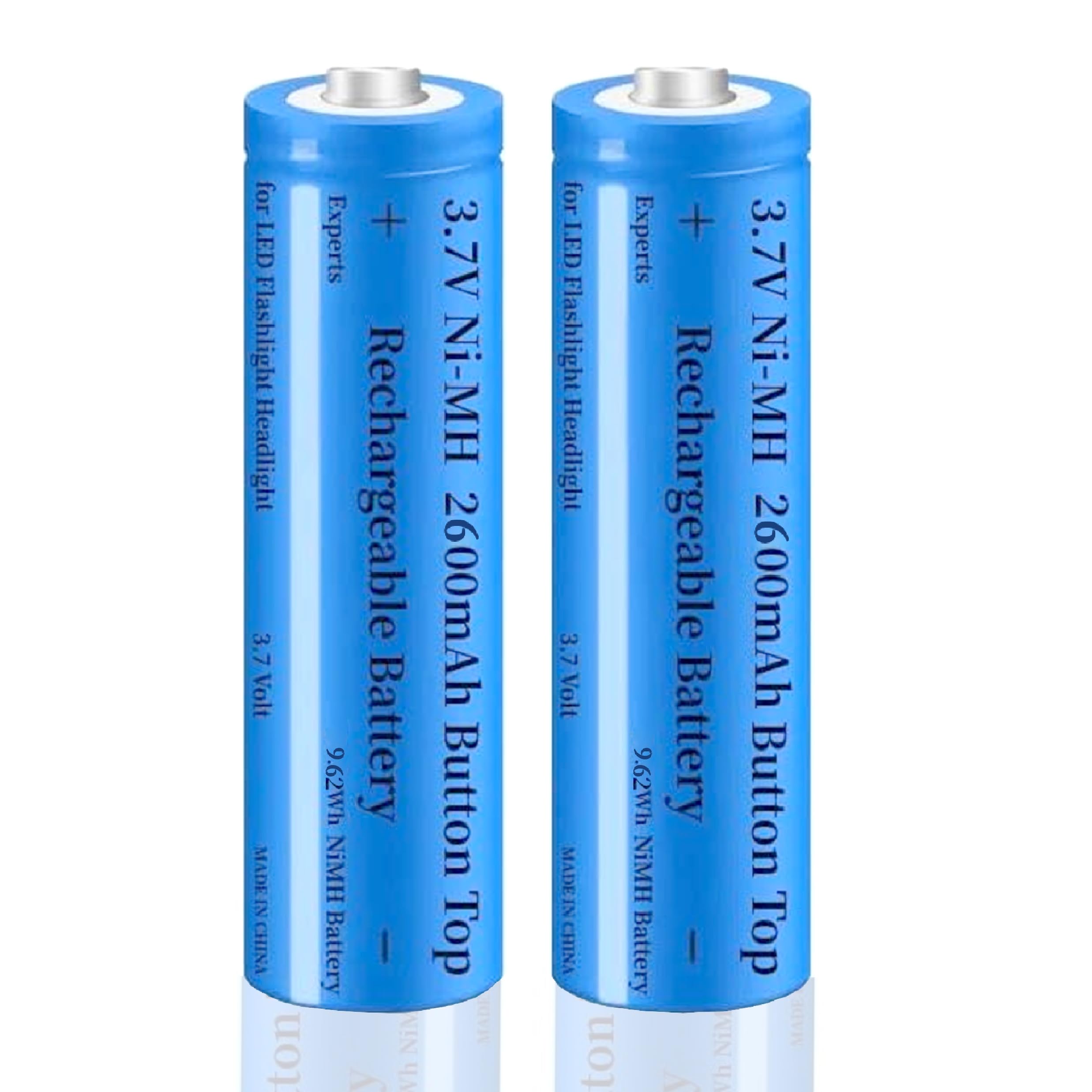
The Renyqatt 2-pack offers a straightforward entry point for users who need protected button-top 18650 cells for low-drain applications like solar lights, doorbells, and remote controls. Each cell is rated at 2600mAh and 3.7V nominal, with a button-top design that ensures contact in devices designed for raised positive terminals. The protection circuit guards against over-discharge and short circuits, making these safer than unprotected bare cells for general household use.
The stated capacity is modest compared to premium cells that reach 3500mAh, but for devices that draw under 1A continuous, 2600mAh is sufficient for extended runtime. The cells measure approximately 67mm in length—standard for a protected 18650—so they fit most LED flashlights and portable electronics designed for protected button-top batteries. The 2-year warranty provides some peace of mind for budget-priced cells.
Note that these are Ni-MH chemistry cells, not standard Li-ion. The voltage profile and charging requirements differ from the 3.7V Li-ion protected batteries used in high-drain devices. Users charging these must ensure their charger supports Ni-MH chemistry—using a Li-ion-only charger can cause improper handling. For low-drain, low-cost applications where Li-ion safety margins aren’t critical, this pack works.
Why it’s great
- Button-top design fits most standard 18650 flashlights and devices
- Protection PCB guards against over-discharge and short circuits
- 2-year warranty adds confidence for budget cells
Good to know
- Ni-MH chemistry requires compatible charger—not standard Li-ion
- 2600mAh capacity is modest compared to premium 3500mAh Li-ion cells
7. EBL Universal 18650 Battery Charger
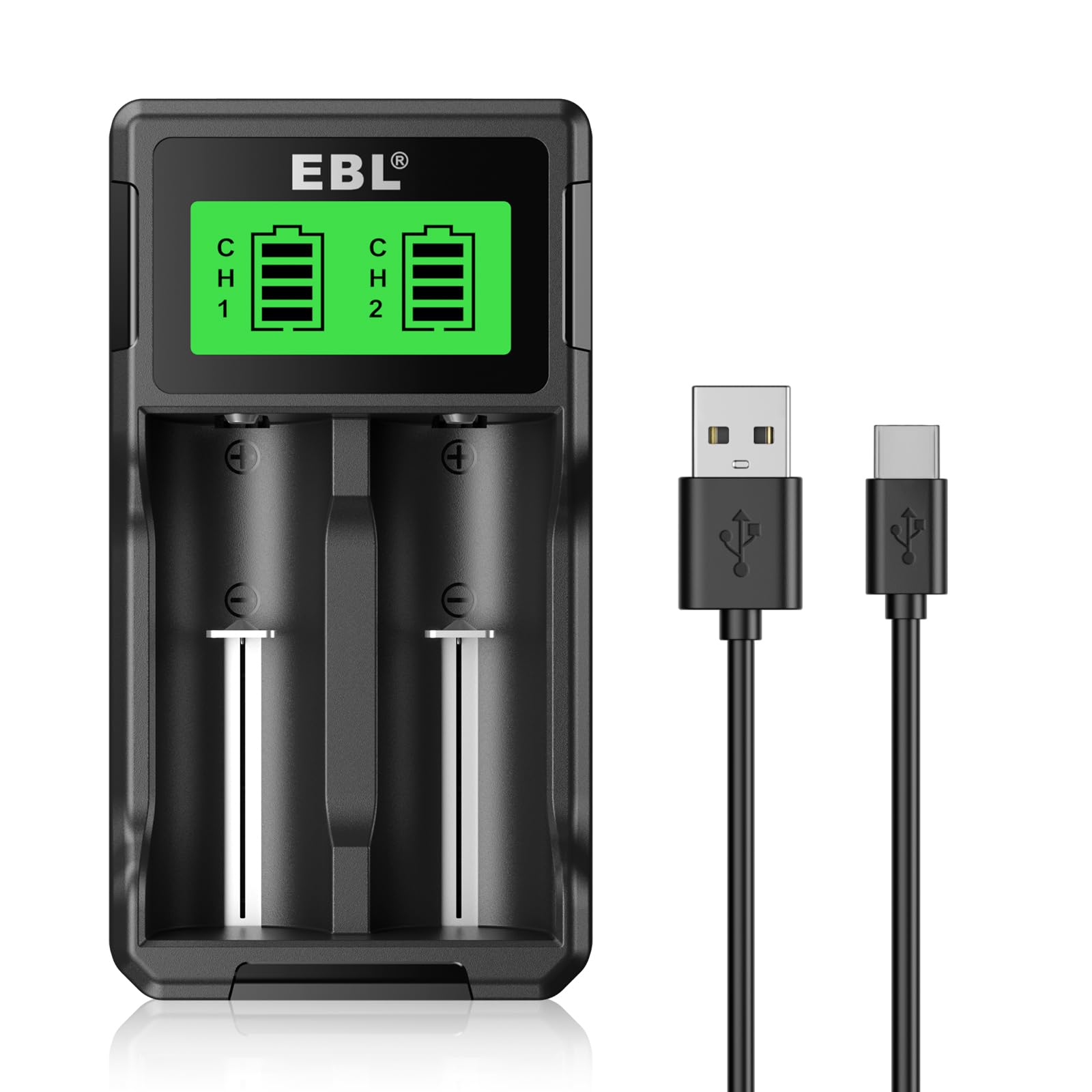
The EBL Universal Charger is the most affordable option in this roundup, providing a simple two-bay solution for both 3.7V Li-ion and 1.2V Ni-MH/Ni-CD rechargeable batteries. It delivers up to 1000mA charging current for lithium cells—roughly twice as fast as basic 500mA chargers—and drops to 400mA for Ni-MH batteries. The micro USB input means you can power it from any standard phone adapter, laptop port, or power bank.
The large LCD display shows battery charge status with a simple bar graph and indicator, though it doesn’t provide the detailed voltage or capacity data of more expensive chargers. The safety suite includes over-heat, over-current, over-voltage, short-circuit, and over-charge protection, plus detection of non-rechargeable and defective batteries—important when dealing with protected cells that might have internal issues.
The build is compact at 5.3 x 1.4 x 3.6 inches, fitting easily into a desk drawer or gear bag. Note that this is a charger only—no batteries are included. It lacks the adjustable current settings and advanced analysis features of premium chargers, but for basic charging of protected 18650 cells for flashlights, fans, and other portable electronics, it gets the job done without unnecessary complexity.
Why it’s great
- 1000mA charging current charges protected cells twice as fast as basic units
- Micro USB input powers from standard adapters, laptops, or power banks
- Multiple safety protections including non-rechargeable battery detection
Good to know
- No detailed voltage or capacity display, only bar-graph status
- Does not include batteries—charger only
FAQ
What is the difference between a protected and unprotected 18650 battery?
Can I use a protected 18650 in any device that takes an 18650?
What does the mAh rating on a protected 18650 actually mean?
How do I safely charge a protected 18650 battery?
Why does my protected 18600 battery read 0V when I test it with a multimeter?
How many charge cycles should a protected 18650 last?
Final Thoughts: The Verdict
For most users, the best 18650 protected battery experience starts with the Opus BT-C3400 because it combines charging, capacity testing, and conditioning in one unit that extends the life of every 18650 you own. If you want discharge testing and capacity verification at a friendlier price, grab the EBL PD4. And for a compact, travel-ready charger with USB-C flexibility, the MC-ELIN Smart Charger covers the essentials without taking up space.