
A numb hand is a useless hand. When you’re building camp at 15°F, fumbling with a zipper, or gripping a trekking pole for the tenth mile, the difference between a great pair and a bad pair isn’t a few degrees of warmth—it’s whether you can actually move your fingers. Most camping gloves fail because they either stuff your hands into immobile oven mitts or leave them so thin the first gust cuts through. The real fight is balancing insulation that actually works with dexterity you need to get real work done.
I’m Min — the co-founder and writer behind Gadgets Feed. My approach to evaluating camping gloves centers on hours of cross-referencing waterproof ratings, insulation material types (Thinsulate vs. fleece vs. wool), palm durability claims, and real-world user feedback on dexterity at sub-20°F temperatures. This guide cuts through brand hype and tells you exactly which gloves hold up when the weather turns.
After analyzing dozens of models across durability, warmth, and functional design, only seven made the cut for the definitive best camping gloves list that balances real protection with real movement.
How To Choose The Best Camping Gloves
Not all heavy gloves are warm, and not all thin gloves are useless. The real selector is understanding your worst-case activity — are you standing still at a campsite or climbing a snow-covered ridge at dawn? Matching the glove construction to your specific scenario prevents the two most common failures: sweating through a non-breathable shell or freezing because you grabbed a fashion item instead of a tool.
Understand the Waterproofing Standard
A “water-resistant” coating wears off after a few hours of contact with wet snow or rain. Look for an integrated waterproof membrane — BD.dry, TEMRES, or a polyurethane insert — that is physically laminated between the outer shell and the lining. This is the hard line between “stays dry for a short hike” and “hands stay dry through a snowstorm.” Check the product specs for the specific membrane name, not just the marketing copy.
Match Insulation to Your Activity Intensity
3M Thinsulate offers high warmth-to-weight ratio and is excellent for stationary camp tasks and skiing. Fleece linings (like the Black Diamond Trail Gloves) breathe better during high-output trekking but lose warmth at rest below freezing. Wool blends (like the DRYMILE Hyla) manage moisture well but are lighter. The golden rule: high-intensity hiking calls for breathable fleece or wool; low-intensity camp building or ice fishing demands Thinsulate or a multi-layer system.
Dexterity Equals Safety
You cannot operate a stove, zip a tent fly, or activate a GPS in a stiff mitten. The best camping gloves use a three-finger “lobster claw” design or articulated knuckles to preserve finger movement. Check for a pre-curved shape and flexible materials (goat leather, thin polyurethane) in the palm and fingers. If you cannot pinch a zipper pull with the gloves on, the insulation weight is too high for your intended use.
Quick Comparison
On smaller screens, swipe sideways to see the full table.
| Model | Category | Best For | Key Spec | Amazon |
|---|---|---|---|---|
| Kinco 1927KWLT | Lobster Claw Mitt | Winter biking & ski pole grip | Grain pigskin palm with Heatkeep insulation | Amazon |
| BLACK DIAMOND Trail Gloves | Trail Glove | Trekking / hiking with poles | BD.dry waterproof insert / goat leather palm | Amazon |
| TRENDOUX Winter Ski Gloves | Insulated Ski Glove | Stationary camp use / deep cold | 7-layer system / 3M Thinsulate / -30°F rating | Amazon |
| SHOWA TEMRES 282-02 | Waterproof Work Glove | Wet snow camp building / ice fishing | 100% liquid-proof / -58°F rated fleece | Amazon |
| Carhartt Waterproof Knit Cuff | Insulated Work Glove | Harsh winter chores / heavy snow | Polyurethane insert / 100% polyester lining | Amazon |
| HANDLANDY HLDD | Waterproof Thermal Glove | Everyday winter outdoor work | 3M Thinsulate / waterproof inner bag | Amazon |
| DRYMILE HYLA | All-Weather Wool Glove | Wet-weather hiking / cycling | Wool blend / waterproof membrane / 37°F+ | Amazon |
In‑Depth Reviews
1. Kinco 1927KWLT Lobster Claw Mitt

This is the rare design that trades one finger for real utility. The lobster-claw configuration groups your index and middle together while leaving the ring and pinky paired, preserving enough dexterity to operate brake levers on a winter bike or snap a ski pole binding while still trapping significant warmth. The golden grain pigskin palm is porous enough to stay soft after it gets wet — a critical advantage over stiff cowhide that hardens in damp conditions.
The Omni-Cuff system is not just a name: you can wear the adjoining wrist material either over your jacket sleeve or tucked inside, giving you temperature regulation without carrying a second pair. The dark blue polyester and elastic knit wrist at the pulse point traps heat exactly where the body loses it fastest. Multiple verified users confirm it works for both snowboarding rope tows and multi-hour winter bicycle commutes without freezing.
One minor trade-off: the wrist closure runs snug for larger wrists, and some users wish it came with a removable liner for easy drying. But at this price point, the combination of breathable canvas back, durable pigskin, and functional three-finger design makes it the most versatile winter glove for active campers and outdoor commuters alike.
Why it’s great
- Lobster-claw design provides warmth with surprising dexterity for zippers and tools
- Grain pigskin remains flexible after wetting, unlike standard cowhide
- Omni-Cuff lets you regulate wrist temperature without removing the glove
Good to know
- Wrist closure can feel tight on larger wrists
- No removable liner — drying takes longer after heavy wet use
2. BLACK DIAMOND Trail Gloves
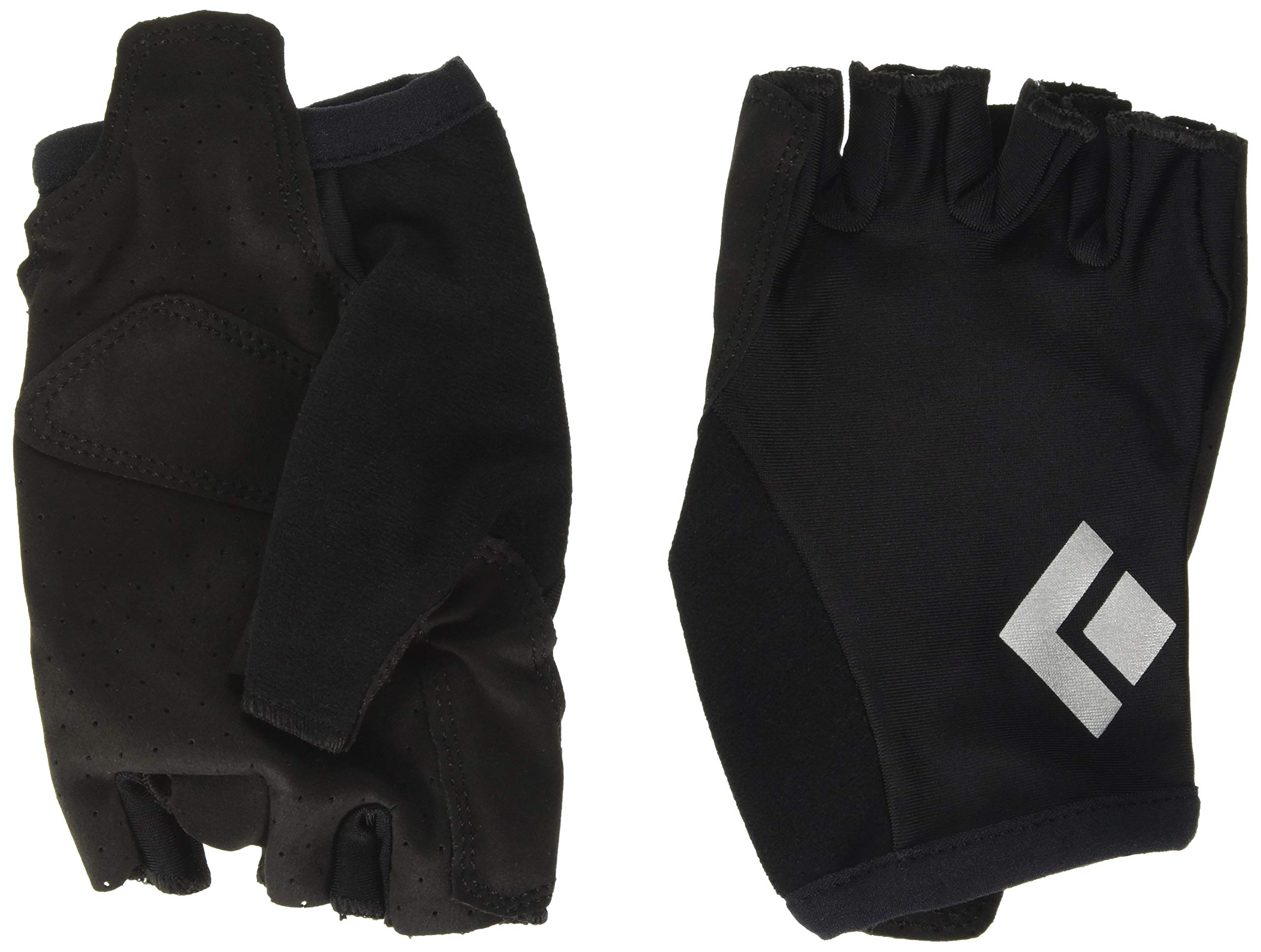
If your primary tool is a trekking pole, this is the glove. The BD.dry insert is an engineered waterproof membrane that breathes well enough for sustained uphill motion without turning your hands into a swamp. The goat leather palm is thinner than cowhide but significantly more abrasion-resistant per gram, which is why it holds up for 40-plus hours of sandy, dusty trail use without developing holes — confirmed by a verified user who wore them on the Marathon des Sables.
The neoprene cuff with hook-and-loop closure seals out grit and moisture without adding bulk, and the fixed fleece lining provides enough warmth for shoulder-season hiking and alpine approaches where you are moving consistently. At only 29.95, this is a premium build at a mid-range price. The streamlined cut ensures you can still operate a carabiner, adjust a buckle, or use a phone with reasonable precision.
These are not designed for stationary camp use at single-digit temperatures. Users report that the insulation is sufficient for moving at 25°F but will leave you cold if you are standing still in a stiff wind. If your camping style is fast-and-light with poles, this is the one to grab. If you sit around a fire for hours, look at a warmer insulated model.
Why it’s great
- BD.dry membrane is genuinely breathable during high-output hiking
- Goat leather palm offers excellent grip and long-term abrasion resistance
- Low-profile cuff and fleece lining allow precise pole handling
Good to know
- Not warm enough for stationary camp below 25°F
- No touchscreen functionality on the fingertips
3. TRENDOUX Winter Ski Snow Gloves

At 110 grams per pair, these gloves pack a disproportionate amount of thermal protection. The seven-layer system combines swan velvet, imported 3M Thinsulate, and an eco-friendly fiber layer that traps air effectively without the bulk of traditional expedition gloves. Users report hands staying warm at 0°F while shoveling, and the waterproof rating of four or higher handles direct contact with wet snow without leaking through.
A practical detail that stands out: the waterproof zipper pocket on the back of the glove lets you stash a hand warmer packet, a credit card, or a car key without needing a separate chest pocket. The thumb scraper clears snow from goggles or glasses, and the adjustable wrist strap with magic tape seals the cuff against drafts. The touchscreen index finger and thumb work reliably for quick phone checks, though extended use in cold temps can be finicky.
The sizing runs small — multiple verified buyers warn that the XL barely accommodates a liner glove underneath. If you plan to layer, order a full size up. The insulation is substantial enough that fine dexterity for tying knots or operating small stove valves is compromised, but for camp tasks like gathering wood, handling cold tent poles, or standing watch, the warmth-to-weight ratio is outstanding.
Why it’s great
- Seven-layer insulation delivers genuine -30°F warmth in a lightweight package
- Back-of-hand zipper pocket is a rare and useful camp feature
- Thumb scraper keeps goggles and glasses clear of snow
Good to know
- Runs small — order one size up for liner compatibility
- Dexterity is limited for fine motor tasks
4. SHOWA TEMRES 282-02 Waterproof Insulated Winter Work Gloves
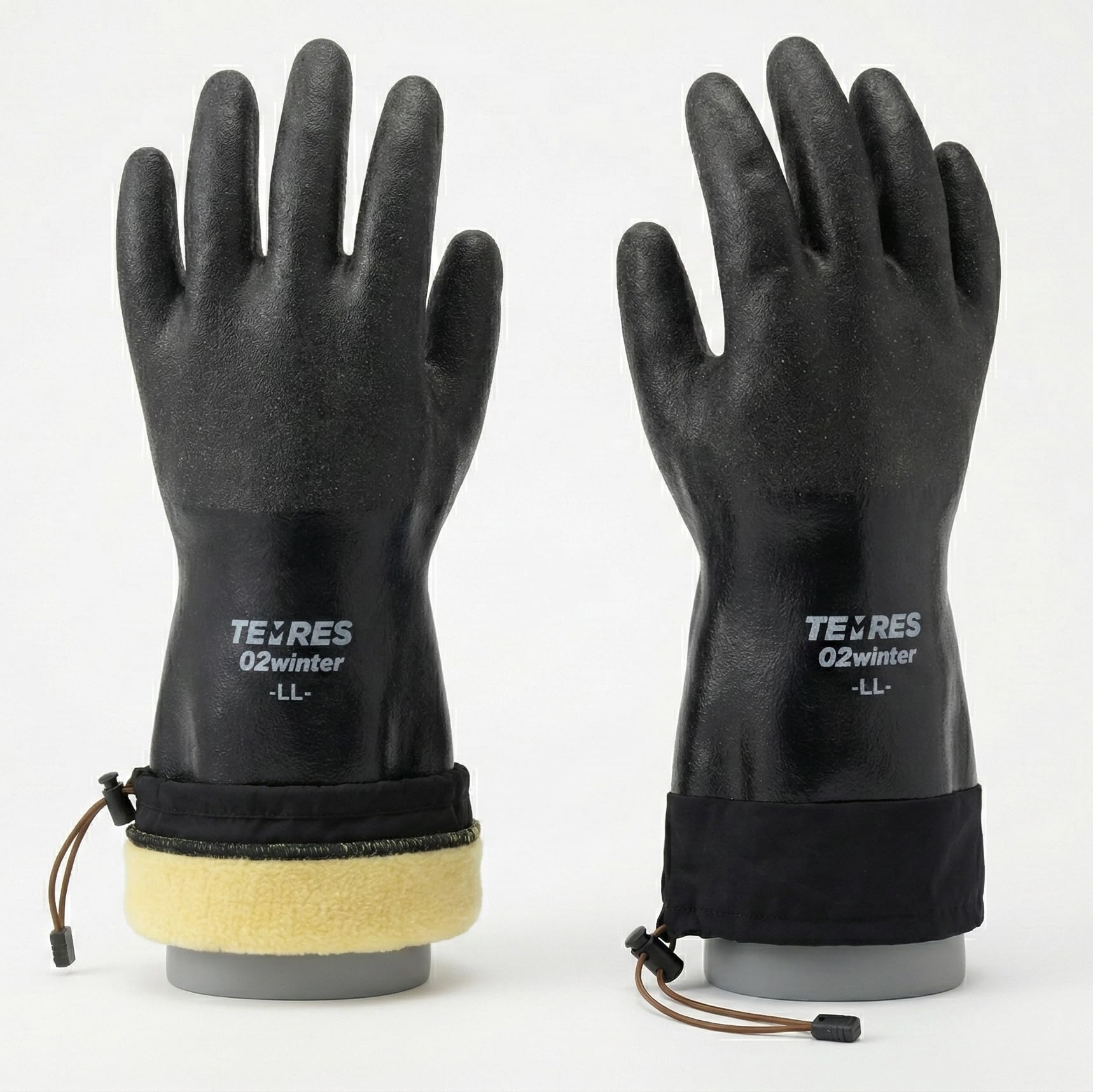
This is the only glove on this list rated for down to -58°F, and it earns that spec through a combination of a 100% liquid-proof TEMRES membrane and an integrated nylon gauntlet with a drawstring toggle. The polyurethane coating stays flexible in extreme cold — it does not crack like many rubber or PVC alternatives — while the textured finish provides a secure grip on wet kayak paddles, frozen shovels, and icy fishing rods.
The anatomical shape follows the natural curve of your hand, reducing fatigue during long camp-building sessions or ice-fishing shifts. The seamless knit liner eliminates pressure points, and multiple verified users on Denali confirm the gloves performed well for camp construction at 15°F. The integrated drawstring gauntlet seals tightly around your jacket sleeve, preventing any snow ingress during deep-snow work. The only catch: you must turn them inside out to dry properly after a full wet-out.
The fit runs small — virtually every user advises ordering 1-2 sizes up, especially if you plan to wear a thin liner underneath. While the dexterity is better than a standard heavy work glove, it is still a thick gauntlet suitable for gripping tools and ropes, not for operating a phone. For campers who need to shovel, cut wood, set up a tent in a blizzard, or fish through ice, the TEMRES 282-02 offers protection that no standard ski glove can match.
Why it’s great
- 100% liquid-proof membrane with extreme -58°F temperature rating
- Integrated drawstring gauntlet seals out snow and debris completely
- Textured PU grip stays flexible and grippy in sub-zero conditions
Good to know
- Must order 1-2 sizes up for correct fit
- Must be turned inside out to dry after heavy wet use
5. Carhartt Men’s Waterproof Insulated Knit Cuff Glove

Carhartt’s GL0511 is the workhorse of winter gloves. The shell is 100% polyester with a polyurethane insert that provides honest waterproofing — not just a DWR coating that wears off after two snowstorms. The built-in knit cuff sleeve extends past the wrist to block snow and wind from sneaking up your sleeve, and the 100% polyester insulation is thick enough for sustained exposure in Midwest winter conditions. Verified users consistently note it keeps hands warm and dry during heavy snow clearing and ice scraping.
The medium-weight fabric has no stretch, but the pre-curved shape reduces the initial stiffness that plagues many new work gloves. The palm is a polyurethane overlay that provides decent grip on shovel handles and plastic sleds, though it is not as supple as leather. The overall bulk is significant enough that using a touchscreen effectively is nearly impossible, and fine dexterity for small zippers or stove controls is compromised. These are designed for heavy gripping, not fine motor tasks.
They run snug — multiple buyers recommend sizing up, particularly if you have larger hands or plan to wear a thin liner. The lack of women’s sizing is a noted gap. But for the price, you get Carhartt’s typical overbuilt durability: extended use reports suggest these gloves last multiple seasons of heavy winter work before the palms start to show wear. If your camp involves chopping wood, managing a sled, or handling frozen tools, this is your glove.
Why it’s great
- Built-in knit cuff sleeve blocks snow and wind from entering at the wrist
- Thick polyester insulation handles sustained heavy shoveling and ice scraping
- Durable polyurethane palm outlasts cheap coated alternatives
Good to know
- Runs small — order up for comfort or liner use
- Poor dexterity for zippers, touchscreens, or fine camp tasks
6. HANDLANDY HLDD Waterproof Winter Gloves
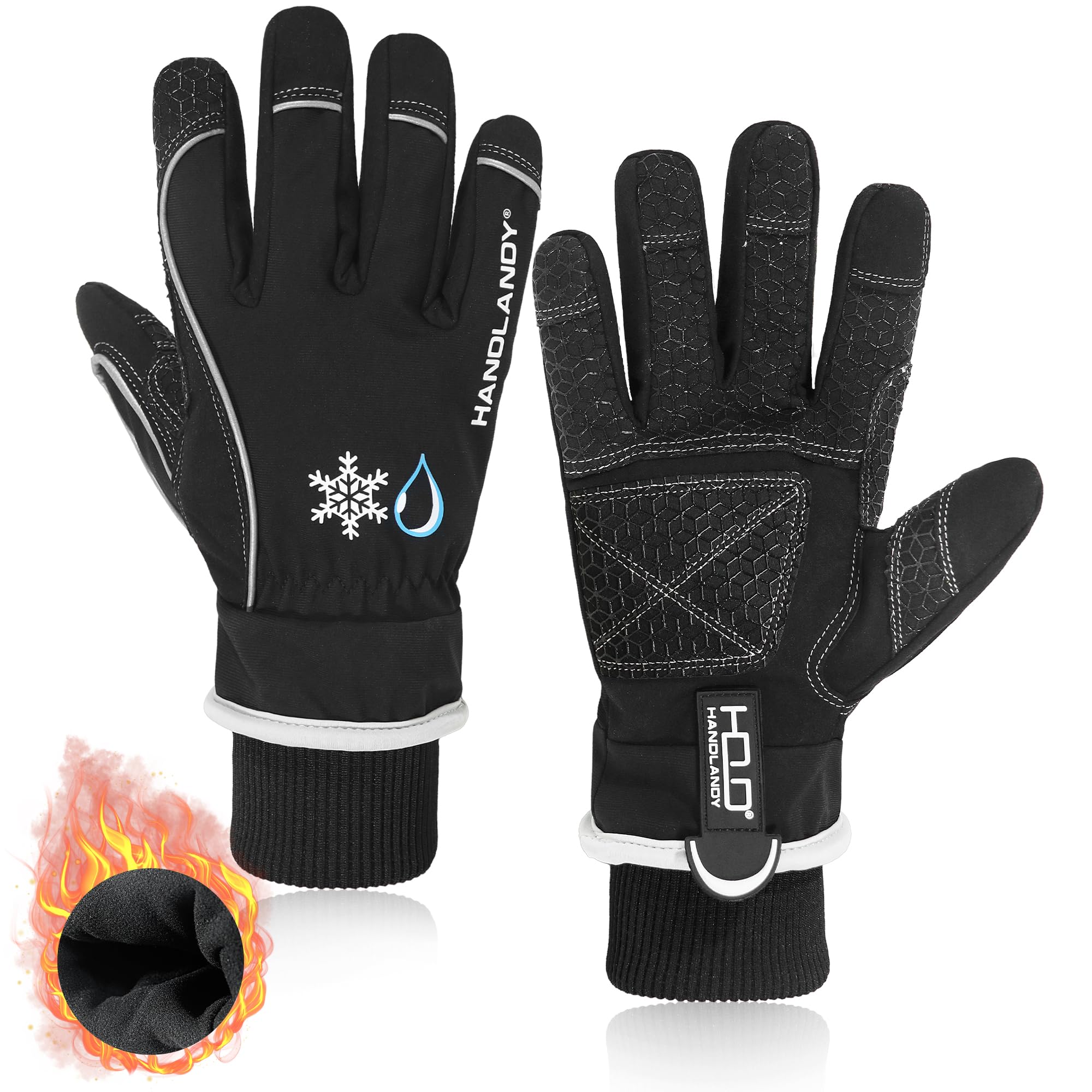
For the budget-conscious camper, the HANDLANDY HLDD packs a surprising amount of performance. The construction uses a water-repellent outer layer paired with a waterproof inner bag — a dual-layer approach that resists moisture penetration better than most gloves at this tier. The 3M Thinsulate lining is lightweight and flexible, providing enough warmth for active use in the 20-30°F range without turning your hands into clumsy blocks.
The reinforced non-slip palm is textured synthetic leather, and the easy pull tab system lets you cinch the wrist one-handed. The touchscreen thumb and index fingers work reliably enough for quick phone checks, and the elastic wrist keeps the seal tight without a bulky gauntlet. Verified users living in Wisconsin confirm that the gloves fit well and keep fingers cozy for everyday winter errands and moderate outdoor activity.
The main caveat: waterproofing is not total. One verified user noted that after two hours in active snow, moisture eventually crept in, and another reported that the gloves are not warm enough for prolonged shoveling at 25°F. The elastic wrist cuff also runs tight for some. For light hiking, running errands, or driving in cold weather, these are a strong entry-level choice, but for sustained deep-cold camping, you should layer a thin liner underneath or step up to a warmer model.
Why it’s great
- Dual-layer waterproof protection resists moisture effectively for moderate activity
- Lightweight 3M Thinsulate insulation keeps hands warm without adding bulk
- One-handed pull tab system allows quick and easy cinch adjustment
Good to know
- Waterproofing is not total — moisture can seep through in prolonged wet snow
- Not warm enough for extended stationary use below 25°F
7. DRYMILE HYLA Waterproof Dexterity Gloves

The DRYMILE HYLA is built for the camper who refuses to take gloves off. The wool blend lining manages moisture naturally, preventing the clammy feeling that plagues synthetic liners during high-output hiking. The waterproof membrane is a specialized lamination that keeps rain and wet snow out while allowing sweat vapor to escape. Verified users who wore these on an Alaska cruise confirmed hands stayed dry through rainy deck exposure, and testing in heavy rain for 60 minutes showed no moisture penetration.
The “snug-fit” design preserves natural hand movement — you can tie a fishing lure, adjust a GPS, or manage a zipper without the glove fighting you. The conductive fibers in the fingertips provide touchscreen sensitivity that works with most smartphones, though some users note it can be clumsy for extended typing. The reflective logo is a useful low-light visibility feature for trail running or road-side navigation in winter.
The major limitation is insulation depth. The wool blend is comfortable in the 37°F-50°F range but lacks the density for freezing temperatures. Verified users report that hands get cold in prolonged exposures below freezing, and that while the outer layer resists water, it can become saturated after extended rain, requiring 2-3 hours to dry. These are ideal for wet fall camping, spring hiking, or winter cycling in milder climates, but they are not a sub-zero stationary glove.
Why it’s great
- Snug-fit design allows natural hand movement and fine-motor dexterity
- Wool blend lining manages moisture better than synthetic fleece
- Reflective logo and conductive fingertips are useful for trail and phone use
Good to know
- Insulation is too light for standing around at sub-freezing temperatures
- Outer layer can become saturated in prolonged rain and takes hours to dry
FAQ
How do I know if a glove is truly waterproof or just water-resistant?
What is the ideal touchscreen in a camping glove?
Should I buy lobster claw or five-finger gloves for camping?
Final Thoughts: The Verdict
For most users, the best camping gloves winner is the Kinco 1927KWLT because its lobster-claw design delivers a rare combination of dexterity and warmth while the grain pigskin palm stays flexible even when wet. If you want a dedicated trekking pole glove with genuine breathability and premium materials, grab the BLACK DIAMOND Trail Gloves. And for extreme-cold camp building or ice fishing where total waterproofing and sub-zero insulation are non-negotiable, nothing beats the SHOWA TEMRES 282-02.