
The 6 GHz band is the Wi-Fi frontier that finally breaks through the congestion of 2.4 GHz and 5 GHz. For homes with a dozen or more devices streaming 4K and gaming simultaneously, a 6GHz-compatible router is no longer a luxury — it is the only way to maintain low latency and full multi-gigabit throughput where it matters most.
I’m Min — the co-founder and writer behind Gadgets Feed. I’ve parsed the dense spec sheets and real-world throughput data for this category to separate genuine 6 GHz performance gains from marketing noise, zeroing in on which routers actually deliver on that 160 MHz channel promise.
This guide dissects nine different 6 GHz routers to help you pinpoint the right upgrade for your home network. You’ll find the most capable 6ghz router options for every use case without wasting time on models that choke under real load.
How To Choose The Best 6GHz Router
The jump to 6 GHz solves one problem above all: spectrum congestion. Before buying, you need to match the router’s Wi-Fi generation (6E or 7), its port speeds, and its band design to your home’s internet plan and device count. A powerful router is wasted if your modem and wiring can’t feed it.
Wi-Fi 6E vs. Wi-Fi 7: The 6 GHz Difference
Every 6 GHz router supports either Wi-Fi 6E or Wi-Fi 7. 6E models are mature, stable, and offer 160 MHz channel widths on the 6 GHz band — enough to deliver multi-gigabit speeds to compatible clients. Wi-Fi 7 routers introduce 320 MHz channels on 6 GHz and Multi-Link Operation (MLO), which bonds bands together for lower latency and higher reliability. If you own Wi-Fi 6E devices today, a 6E router is fully adequate. For future-proofing with laptops and phones coming in 2025, Wi-Fi 7 is the smarter long-term investment.
Port Configuration: 2.5G, 5G, or 10G WAN
The 6 GHz band is fast enough to saturate a 1 Gbps internet connection easily. A router with only gigabit LAN ports becomes a bottleneck because your wired backhaul can’t match the wireless speed. Look for at least one 2.5 Gbps WAN port and preferably a 2.5 Gbps LAN port for your desktop or NAS. For fiber plans above 2 Gbps, a 5G or 10G port is non-negotiable.
Band Count and Mesh Expandability
Tri-band routers dedicate one 5 GHz and one 6 GHz radio to client traffic. Quad-band routers (like the ASUS GT-BE98 Pro) add an extra 5 GHz radio, which dramatically helps when many devices need simultaneous bandwidth. If your home exceeds 2,500 square feet, you’ll likely need a mesh system or EasyMesh-compatible nodes, so verify that the router supports that protocol out of the box.
Quick Comparison
On smaller screens, swipe sideways to see the full table.
| Model | Category | Best For | Key Spec | Amazon |
|---|---|---|---|---|
| ASUS ROG Rapture GT-BE98 PRO | Premium | Enthusiast gaming & multi-device homes | Quad-band, 30 Gbps, dual 10G ports | Amazon |
| NETGEAR Nighthawk RS600 | Premium | Future-proof multi-gig broadband | 18 Gbps, 10G port, covers 3,300 sq. ft. | Amazon |
| ASUS ROG Strix GS-BE12000 | Premium | High-end gaming with wired NAS | 12 Gbps, 7x 2.5G LAN ports | Amazon |
| NETGEAR Nighthawk RS500 | Premium | Strong 6 GHz coverage & reliability | 12 Gbps, covers 3,000 sq. ft., 120 devices | Amazon |
| TP-Link Archer AXE300 | Mid-Range | Quad-band 6E with dual 10G ports | 15.6 Gbps, quad-band, 8 antennas | Amazon |
| GL.iNet Flint 3 (BE9300) | Mid-Range | VPN power users & tinkerers | 9 Gbps, 5x 2.5G ports, AdGuard built-in | Amazon |
| TP-Link Archer GXE75 | Mid-Range | Gaming with 6 GHz acceleration | 5.4 Gbps, 2.5G port, game acceleration | Amazon |
| GL.iNet Flint 3e (BE6500) | Mid-Range | Open-source Wi-Fi 7 on a budget | 6.5 Gbps, 5x 2.5G ports, VPN speeds 680 Mbps | Amazon |
| Linksys Velop Pro 6E | Value | Whole-home mesh simplicity | 5.4 Gbps, covers 3,000 sq. ft. per node | Amazon |
In‑Depth Reviews
1. ASUS ROG Rapture GT-BE98 PRO

The ASUS GT-BE98 PRO is the most powerful 6 GHz router currently available. Its quad-band Wi-Fi 7 configuration includes a dedicated 320 MHz channel on 6 GHz, and the dual 10 Gbps ports ensure no wired bottleneck exists for the fastest fiber plans. The quad-core 2.6 GHz CPU keeps 90+ devices stable with zero reboots over months of use.
Real-world 6 GHz throughput hits around 2 Gbps at close range and holds above 1.7 Gbps at 15 feet through drywall. The Triple-Level Game Acceleration engine reduces ping further for competitive gaming. Guestnet Pro provides IoT subnet isolation, which is critical for smart-home security on the 6 GHz band.
Firmware maturity has come a long way since launch — the current revision (H/W 3.0 with firmware 39262) resolves most early bugs. The router is large and benefits from passive ventilation, but the build quality justifies the premium price for those who demand the absolute highest 6 GHz performance.
Why it’s great
- 30 Gbps aggregate throughput with 320 MHz 6 GHz support
- Dual 10G ports eliminate WAN and NAS bottlenecks
- 98+ device stability with no forced restarts
Good to know
- Large physical footprint — ensure adequate shelf space
- VPN UI complexity may frustrate novices
2. NETGEAR Nighthawk RS600 (BE18000)

The RS600 is NETGEAR’s top-tier Wi-Fi 7 router, rated at 18 Gbps with a native 10 Gbps internet port. In practice, this means a 2 Gbps fiber line attaches directly to the router without a bottleneck, and the 6 GHz radio can deliver those speeds to a Wi-Fi 7 laptop at moderate range. Coverage spans 3,300 square feet with good penetration through walls.
The tri-band design dedicates one 2.4 GHz, one 5 GHz, and one 6 GHz radio. While not quad-band, the 10G port and 2.5G LAN ports ensure wired devices keep pace with the wireless uplink. ActiveArmor security runs without subscription. Setup via the Nighthawk app is fast, and the router handles 100+ devices without noticeable slowdowns.
Some units have shown inconsistent WAN/LAN performance on fiber lines, but for most cable and fiber subscribers the RS600 delivers stable multi-gigabit speeds. The lack of a 10G LAN port alongside the 10G WAN is a minor limitation for NAS users who want full 10G internal transfers.
Why it’s great
- Native 10 Gbps WAN port matches the fastest fiber plans
- 3,300 sq. ft. coverage with high signal penetration
- Handles 150+ devices with consistent throughput
Good to know
- Only one 10G port — shared WAN/LAN role limits flexibility
- Occasional compatibility quirks with certain fiber ONTs
3. ASUS ROG Strix GS-BE12000
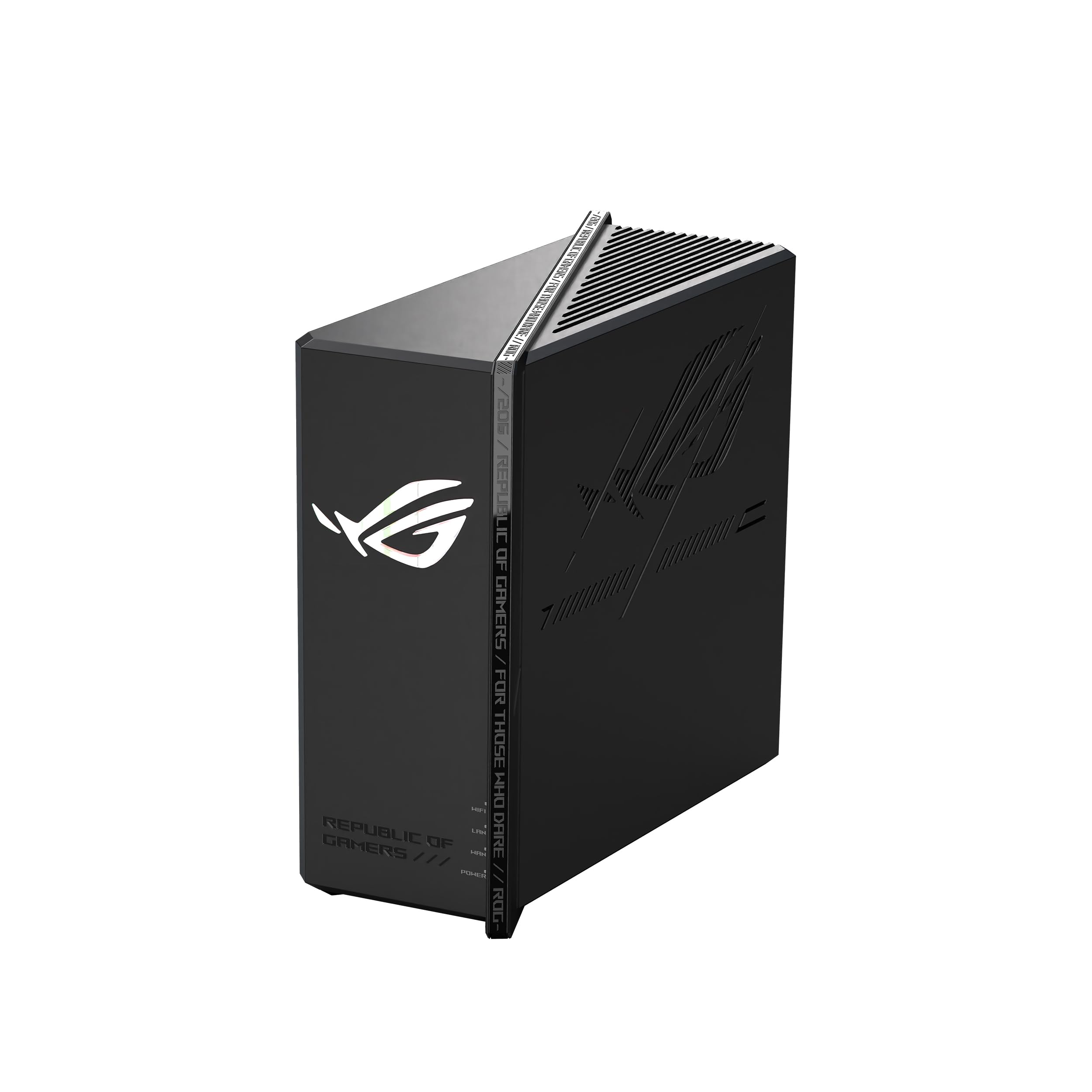
The ASUS ROG Strix GS-BE12000 packs a surprising wired arsenal: seven 2.5 Gbps LAN ports alongside a 2.5G WAN. This makes it the best pick for anyone with multiple wired gaming PCs or a 2.5G NAS that needs simultaneous high-speed access. On the wireless side, the 6 GHz radio uses 320 MHz channels and MLO for latency reduction.
The quad-core 2.0 GHz CPU keeps everything running smoothly, and coverage reaches 3,000 square feet with eight internal antennas. The Smart Home Master feature lets you create up to three separate SSIDs for IoT devices, each with its own VLAN. Triple-Level Game Acceleration prioritizes gaming traffic from the device to the server.
Some users report a finicky initial setup that may require multiple firmware updates. The absence of a 10G LAN port is noticeable for enthusiasts, but for most homes with 2 Gbps or slower internet, the seven 2.5G ports offer far more practical connectivity than a single 10G port.
Why it’s great
- Seven 2.5G LAN ports offer unmatched wired flexibility
- 320 MHz 6 GHz channel with MLO for low latency
- Robust AiProtection Pro security suite
Good to know
- Initial setup can require multiple firmware updates
- No 10G port for future multi-gig wired backhauls
4. NETGEAR Nighthawk RS500 (BE12000)

The RS500 is a more accessible Wi-Fi 7 router that still delivers excellent 6 GHz performance. Its 12 Gbps aggregate speed and 2.5 Gbps internet port are well-matched for cable plans up to 2 Gbps. The router covers 3,000 square feet and handles 120 devices with ease, making it a solid choice for larger homes with moderate device density.
Setup is straightforward via the Nighthawk app, and in practice the 6 GHz radio consistently delivers speeds above 700 Mbps at range through floors thanks to the fixed high-performance antennas. The router supports 2.4/5/6 GHz bands, and the 2.5G LAN port keeps a single wired desktop at full speed.
The RS500 lacks a second 2.5G LAN port or any 10G port, which limits flexibility if you have multiple high-speed wired devices. It also ships without a built-in modem, so it will need a separate cable or fiber modem. For pure wireless 6 GHz throughput at this price range, the RS500 is hard to beat.
Why it’s great
- Reliable 700+ Mbps 6 GHz speeds through floors
- Simple app-based setup takes under 15 minutes
- Handles 120 devices with stable connectivity
Good to know
- Single 2.5G port limits multi-device wired speed
- No built-in modem — separate unit required
5. TP-Link Archer AXE300 (AXE16000)

The Archer AXE300 is a quad-band Wi-Fi 6E router that delivers 15.6 Gbps aggregate throughput through four radios: one 2.4 GHz, two 5 GHz, and one 6 GHz. The two 10 Gbps ports (one RJ-45, one SFP+/RJ-45 combo) provide future-proof wired connectivity for fiber plans above 2 Gbps. The eight adjustable antennas ensure maximized coverage in large homes.
Real-world 6 GHz speeds from this router reach 1.4 Gbps near the unit and maintain 500 Mbps at the far end of a 2,500-square-foot home. The quad-core CPU handles 63+ IoT devices without any slowdown. The HomeShield security suite provides basic network protection and parental controls without a subscription.
The router’s web UI lacks advanced customization options that power users expect, and the Tether app omits connection statistics. There is no Smart Queue Management (SQM) for bufferbloat control. But for raw 6 GHz bandwidth and dual 10G ports, the AXE300 is a strong mid-range contender.
Why it’s great
- Dual 10G ports for multi-gig WAN and NAS connectivity
- Quad-band design minimizes congestion in dense homes
- Excellent 6 GHz range with 1.4 Gbps throughput
Good to know
- Web UI lacks advanced QoS and SQM controls
- Large footprint with eight external antennas
6. GL.iNet Flint 3 (BE9300)

The GL.iNet Flint 3 is a tri-band Wi-Fi 7 router that puts VPN performance at the forefront. WireGuard and OpenVPN speeds both reach up to 680 Mbps, which is far beyond what most consumer routers deliver. The five 2.5 Gbps ports mean your wired devices don’t become a bottleneck, and the AdGuard Home integration blocks ads network-wide without extra hardware.
On the 6 GHz band, MLO technology bonds the 6 GHz and 5 GHz radios together for reduced latency and improved reliability in congested environments. Speeds on the 6 GHz band hit 950 Mbps on a 1 Gbps connection. The router covers up to 2,000 square feet, which is modest but sufficient for apartments and smaller homes.
The setup process is straightforward, and the open-source firmware allows extensive customization. The USB 3.0 port supports external storage, though sustained NAS speeds are around 30 MB/s — adequate for light file sharing. For VPN power users who also want Wi-Fi 7, the Flint 3 offers exceptional value.
Why it’s great
- WireGuard speeds up to 680 Mbps — class-leading for VPN
- Five 2.5G ports for full wired backhaul flexibility
- Built-in AdGuard Home blocks ads without subscriptions
Good to know
- Wi-Fi range limited to 2,000 sq. ft.
- USB 3.0 NAS performance is slow at ~30 MB/s
7. TP-Link Archer GXE75 (AXE5400)

The Archer GXE75 is a tri-band Wi-Fi 6E gaming router that brings the 6 GHz band to gamers on a moderate budget. The AXE5400 rating breaks down to 4804 Mbps on 6 GHz and 574 Mbps on each of the 2.4 GHz and 5 GHz bands. The dedicated 2.5 Gbps WAN port allows full multi-gigabit internet connectivity for plans up to 2 Gbps.
The Exclusive Acceleration feature optimizes routing for specific games and gaming devices. The Game Panel offers a real-time dashboard showing latency, network status, and accelerated connections. RGB lighting adds a visual flair for gaming setups. The router supports EasyMesh, so you can expand coverage with compatible TP-Link nodes later.
Signal strength drops noticeably through walls and floors compared to higher-end models — this router works best in open-concept spaces or when placed centrally. The Tether app lacks advanced connection statistics. For the price, the GXE75 delivers strong 6 GHz gaming performance with minimal configuration.
Why it’s great
- Dedicated 2.5G WAN for full multi-gig support
- Game Acceleration and Game Panel for low-latency play
- EasyMesh expandable for whole-home coverage
Good to know
- 6 GHz range is limited through walls
- Tether app lacks detailed connection metrics
8. GL.iNet Flint 3e (BE6500)
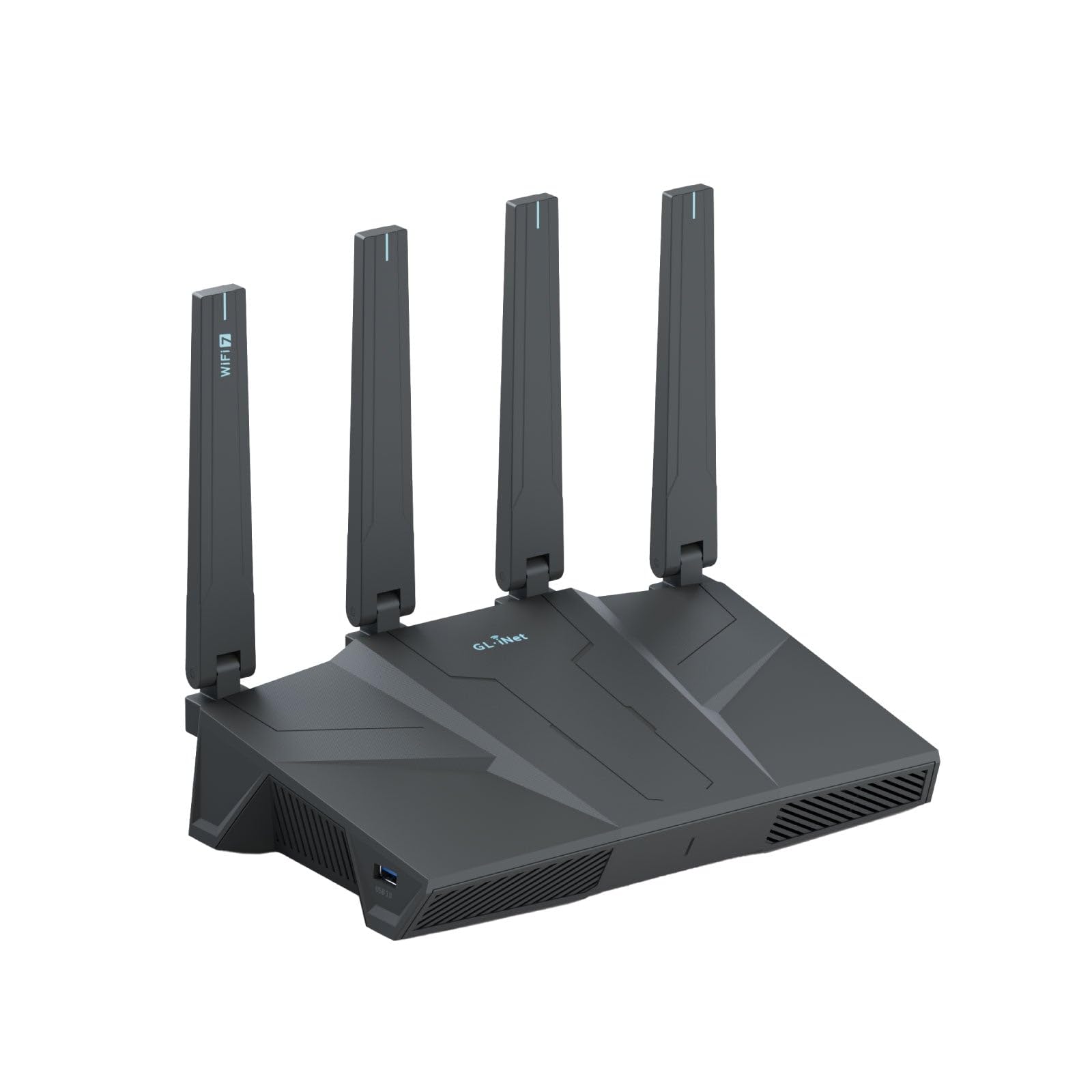
The Flint 3e is a dual-band Wi-Fi 7 router that offers a surprising number of premium features at a budget-friendly price. While it lacks a dedicated 6 GHz radio, it still supports 6 GHz operation through MLO and 4K-QAM, achieving 6.5 Gbps aggregate speeds. The five 2.5 Gbps ports are rare at this price tier and ensure your wired devices aren’t slowed down.
VPN performance matches the more expensive Flint 3, with WireGuard speeds up to 680 Mbps. AdGuard Home is built in for network-wide ad blocking. The router covers 2,500 square feet and supports over a hundred devices. The retractable antennas and compact form factor make it easy to place in tight spaces.
Being a dual-band router, simultaneous 6 GHz and 5 GHz client handling is less efficient than tri-band designs. The initial setup can be tricky for non-technical users, and customer support is email-only. For DIY enthusiasts who want Wi-Fi 7 features and full 2.5G wired connectivity without spending heavily, the Flint 3e is a compelling choice.
Why it’s great
- Five 2.5G ports at a budget-friendly price point
- WireGuard VPN reaches 680 Mbps
- Built-in AdGuard Home for network-wide ad blocking
Good to know
- Dual-band design limits simultaneous 6 GHz + 5 GHz efficiency
- Customer support is limited to email
9. Linksys Velop Pro 6E (MX6200)

The Linksys Velop Pro 6E is a tri-band mesh router that leverages Cognitive Mesh technology to dynamically optimize channel selection and signal routing based on real-time network conditions. This means the 6 GHz band is automatically allocated to the devices that benefit most, maximizing throughput without manual intervention. Each node covers 3,000 square feet and supports up to 200 devices.
Setting up the mesh system via the Linksys app takes roughly 20 minutes, and the single SSID approach blends the 2.4 GHz, 5 GHz, and 6 GHz bands transparently. In testing, the 6 GHz radio delivered speeds above 1,000 Mbps at close range and maintained strong coverage across a 2,600-square-foot home with signal strength consistently above -65 dBm.
WPA3 encryption, auto firmware updates, and a 3.5-year warranty provide long-term peace of mind. The design is sleek and unobtrusive. The main drawback is the limited advanced settings in the app — this is a set-and-forget solution rather than a tinkerer’s playground. For most households seeking reliable whole-home 6 GHz coverage, the Velop Pro 6E is the most straightforward recommendation.
Why it’s great
- Cognitive Mesh dynamically optimizes 6 GHz band usage
- Covers 3,000 sq. ft. per node with strong signal
- Set-and-forget setup with auto firmware updates
Good to know
- Limited advanced configuration options in the app
- Grey model color may appear refurbished
FAQ
Will my existing devices work on a 6 GHz router?
Do I need a multi-gig internet plan to benefit from 6 GHz?
What is the real-world range of the 6 GHz band?
Final Thoughts: The Verdict
For most users, the 6ghz router winner is the Linksys Velop Pro 6E because it combines seamless Cognitive Mesh deployment with robust 6 GHz performance and a hassle-free setup. If you want maximum raw throughput and Wi-Fi 7 future-proofing, grab the ASUS ROG Rapture GT-BE98 PRO. And for VPN-centric networking with exceptional wired flexibility, nothing beats the GL.iNet Flint 3.