
Buying a camera for sports photography means committing to a system that can track a blur of motion, lock focus in milliseconds, and deliver sharp results in light that’s often anything but ideal. A camera that stumbles on autofocus or chokes on burst rate is not a sports camera.
I’m Min — the co-founder and writer behind Gadgets Feed. I’ve spent hundreds of hours analyzing autofocus systems, burst rates, buffer depths, and lens ecosystems to separate the true sports performers from the general‑purpose cameras that just happen to have a fast shutter mode.
Whether you are shooting a weekend soccer match, a track meet, or indoor motorsports, the right camera for sports photography must deliver decisive autofocus and a frame rate that never misses the peak of the action.
How To Choose The Best Camera For Sports Photography
Sports photography demands three core competencies: blazing fast autofocus that sticks to a moving subject, a high burst rate to capture a sequence of action, and a buffer that doesn’t choke after a second of shooting. Megapixels matter far less than frame rate, AF coverage, and low‑light noise performance.
Autofocus is everything
A camera that can’t track a runner cutting across the field is useless, regardless of its resolution. Look for phase‑detection AF points covering at least 80% of the frame, with subject‑detection modes that recognize animals, vehicles, and humans. The Sony a6400’s 425‑point phase detection and Canon’s Dual Pixel CMOS AF II are prime examples of systems that keep focus locked during erratic movement.
Burst rate and buffer depth
Cameras that shoot 10 fps or more are the baseline for action. But raw burst rate means nothing if the buffer fills after 20 shots. A deep buffer paired with a fast UHS‑II or CFexpress card lets you hold the shutter button down through a full play. The Canon EOS R6 Mark II pumps out 40 fps electronic — but you’ll want a card that can keep up.
Quick Comparison
On smaller screens, swipe sideways to see the full table.
| Model | Category | Best For | Key Spec | Amazon |
|---|---|---|---|---|
| EOS R6 Mark II | Full-Frame Mirrorless | All-round sports pro | 40 fps e-shutter / Subject Detection AF | Amazon |
| Nikon D850 | DSLR | High-res action + timelapse | 45.7 MP / 9 fps / 153 AF points | Amazon |
| Sony a7 III | Full-Frame Mirrorless | Best value full-frame hybrid | 693 phase AF / 10 fps / 24.2 MP | Amazon |
| Sony a6400 | APS-C Mirrorless | Compact speed with Real‑Time AF | 425 phase AF / 11 fps / 24.2 MP | Amazon |
| Canon R8 | Entry Full-Frame | Lightest full‑frame AF powerhouse | 40 fps e-shutter / 1,053 AF zones | Amazon |
| Nikon Z50 II | APS-C Mirrorless | Compact kit with dual lenses | 20.9 MP / 4K60p / Subject Detection | Amazon |
| Fujifilm X-T30 III | APS-C Mirrorless | Everyday shooter with film sims | AI Subject Detection / 26.1 MP | Amazon |
| Panasonic G85 | M4/3 Mirrorless | Budget video+stills with IBIS | Dual IS / 4K photo / 16 MP | Amazon |
| Canon T7 | DSLR | Entry‑level bundle with telephoto | 3 fps / 9 AF points / 24.1 MP | Amazon |
| Canon RF 70-200mm | Telephoto Lens | Sports glass for RF shooters | f/2.8 / 5‑stop IS / Dual Nano USM | Amazon |
| Canon RF 100-400mm | Telephoto Lens | Budget reach for field sports | 5.5‑stop IS / Nano USM / 400mm | Amazon |
In‑Depth Reviews
10. Canon EOS R6 Mark II

The R6 Mark II is the benchmark for sports photography in the mirrorless world. Its 24.2‑MP full‑frame sensor paired with the DIGIC X processor delivers 40 fps electronic burst shooting with full AF — enough to never miss the apex of a sprint finish. The Dual Pixel CMOS AF II covers 100% of the frame with 1,053 zones and includes dedicated subject detection for humans, animals, vehicles, horses, and aircraft.
In practice the autofocus is uncanny. Even during erratic side‑to‑side motion the eye‑detection holds on without losing lock. The 6‑stop in‑body image stabilization helps when you shoot handheld with a telephoto, and the 6K oversampled 4K60p video is usable for match highlights. Battery life sits around 760 shots per charge — respectable for a full‑frame body.
The mechanical shutter caps at 12 fps, so the e‑shutter is the real workhorse. Rolling shutter is minimal for the category. No built‑in flash, but for sports you will be using hot‑shoe strobes or natural light anyway. The R6 Mark II earns the top spot because it combines speed, AF intelligence, and build quality that works for both weekend warriors and working pros.
Why it’s great
- 40 fps electronic burst with full subject tracking AF
- 6‑stop IBIS for handheld telephoto shooting
- Excellent low‑light ISO performance up to 102400
Good to know
- Mechanical shutter is limited to 6 fps with full AF
- Single UHS‑II SD slot (no dual redundancy)
- No built‑in flash included
9. Nikon D850

The D850 remains a legend among DSLRs for sports and action. Its back‑side illuminated 45.7‑MP full‑frame sensor delivers exceptional dynamic range and resolution, while the 153‑point AF system (99 cross‑type) provides rapid phase detection across a wide area. At 9 fps with the optional battery grip it keeps pace with many modern mirrorless bodies for burst sequences.
The optical viewfinder offers zero lag and a bright, clear view of the action — a distinct advantage for photographers who prefer an optical path. The body is fully weather‑sealed, has dual card slots (XQD and SD), and the tilting touchscreen is genuinely useful for low‑angle court sports. In‑camera 4K timelapse and focus‑shift shooting are bonuses for pre‑ and post‑game work.
At 2.2 pounds the D850 is heavier than any mirrorless alternative, and the video autofocus is noticeably slower than Canon or Sony systems. Files are also massive — plan on high‑speed XQD cards and plenty of storage. For a photographer who values resolution alongside speed and wants a proven DSLR workhorse, the D850 is still a first‑tier choice.
Why it’s great
- Industry‑leading 45.7 MP with no anti‑aliasing filter
- 153‑point AF with 99 cross‑type sensors
- Weather‑sealed magnesium alloy body
Good to know
- Heavy at 2.2 pounds — significant with a telephoto lens
- Video autofocus is not as reliable as modern mirrorless
- Large file sizes demand fast XQD cards and ample storage
8. Sony a7 III

The a7 III redefined what entry‑level full‑frame could mean for sports. Its 24.2‑MP back‑illuminated sensor, 693 phase‑detection AF points covering 93% of the frame, and 10 fps continuous shooting with AE/AF tracking make it a legitimate action camera. The battery life is exceptional — around 710 shots per charge — and the 15‑stop dynamic range handles harsh stadium lighting well.
Silent electronic shutter is available alongside mechanical, and the 4K video from full‑frame readout remains clean. The real‑time Eye AF for animals and humans, added via firmware updates, keeps the body competitive even years after launch. The a7 III also benefits from the enormous E‑mount lens ecosystem, including excellent telephoto options for field sports.
The kit 28‑70mm lens is adequate but soft at the long end — for sports you will want a dedicated telephoto. The menu system is dense and the touchscreen is poor by modern standards. Still, as a hybrid action camera that can also produce professional stills and video, the a7 III offers one of the strongest price‑to‑performance ratios in the full‑frame space.
Why it’s great
- 693 phase‑detection AF points with 93% coverage
- 10 fps silent/mechanical burst with full tracking
- Excellent 710‑shot battery life for full‑day shoots
Good to know
- Kit lens is limiting for sports — budget for a telephoto
- Menu system is complex and the touchscreen unresponsive
- Rolling shutter is noticeable in fast panning shots
4. Sony Alpha a6400

The a6400 is built around Sony’s Real‑Time Eye AF and Real‑Time Tracking — a system that locks onto a subject’s eye and follows it across the frame instantly. The 24.2‑MP APS‑C sensor and 425 phase‑detection points cover 84% of the sensor area. Combined with 11 fps continuous shooting with live view, the a6400 gives you a fighting chance to capture peak action without the bulk of full‑frame gear.
The compact body makes it easy to bring to any field or gym. The 180‑degree flip‑up screen is great for vlogging but also helps with waist‑level shots in crowded sidelines. 4K video at 30 fps is oversampled from the full sensor width and looks sharp. The battery life of around 410 shots is decent for its size, and the wide E‑mount lens selection includes fast telephoto primes.
No in‑body image stabilization means you are relying entirely on lens IS — a factor when shooting at 1/500s or slower. The body also lacks a headphone jack for video monitoring. The a6400 is not a low‑light specialist compared to full‑frame siblings, but in good daylight it delivers autofocus that rivals cameras costing twice as much.
Why it’s great
- 0.02‑second AF acquisition — among the fastest in its class
- Real‑Time Eye AF for human and animal subjects
- 11 fps burst with live view and AF/AE tracking
Good to know
- No in‑body image stabilization
- Rolling shutter is noticeable in 4K fast motion
- No headphone jack for audio monitoring
6. Canon EOS R8

The R8 packs the exact same DIGIC X processor and 24.2‑MP full‑frame sensor as the R6 Mark II into a body that weighs just 0.9 pounds. That means 40 fps electronic burst shooting with full Dual Pixel CMOS AF II and subject detection for people, animals, and vehicles — at a fraction of the cost. The AF covers 100% of the frame with 1,053 zones and tracks reliably across erratic movement.
Uncropped 4K60p oversampled from 6K produces high‑quality match footage, and the 180 fps Full HD slow‑motion mode is useful for reviewing technique. The vari‑angle touchscreen is sharp at 1.62 million dots, and the OLED EVF runs at 120 fps for a smooth view of the action. For a full‑frame body this light, the AF speed alone makes it a strong candidate for sideline shooting.
The trade‑offs come fast: no in‑body image stabilization, a small battery that struggles to get through a full session, and a single SD card slot. The mechanical shutter is limited to 6 fps. If you can live with short battery life and want Canon’s best AF in an ultra‑light body, the R8 is an exceptional value.
Why it’s great
- Same AF and processor as the R6 Mark II in a lighter body
- 40 fps e‑shutter with full subject detection
- Uncropped 4K60p oversampled from 6K readout
Good to know
- No IBIS — relies entirely on lens stabilization
- Battery life is below average (around 250 shots)
- Single SD card slot with no backup
7. Nikon Z50 II

The Z50 II brings Nikon’s superior subject detection to a compact APS‑C platform. Its 20.9‑MP DX sensor is paired with a hybrid AF system that automatically detects and tracks people, dogs, cats, birds, and vehicles. Dedicated bird and airplane modes sharpen accuracy for wildlife and aviation sports. The 4K60p video with built‑in electronic VR and 120p slow‑motion at Full HD add flexibility for highlight reels.
The bundle includes two stabilized zoom lenses: a 16‑50mm and a 50‑250mm, giving you an effective range of 24‑375mm after crop — enough for most field sports. The built‑in flash is a rare inclusion that helps with fill‑light in shaded sidelines. The SnapBridge app transfers images to a phone in seconds, which is handy for social posting during intermissions.
At 1.1 pounds with the kit lens, the Z50 II is easy to carry for a full tournament. The autofocus is reliable but not as lightning‑fast as the Sony a6400 in low light. The 2.36‑million‑dot EVF is sharp but the buffer depth is modest — about 25 raw frames before slowing. For a lightweight, all‑in‑one kit that covers most sports scenarios, the Z50 II is hard to beat.
Why it’s great
- Intelligent subject detection with dedicated bird/airplane modes
- Two‑lens kit covers 24‑375mm equivalent range
- Built‑in flash and SnapBridge for instant sharing
Good to know
- Buffer depth is moderate — about 25 raw frames
- AF in low light lags behind the Sony a6400
- No IBIS — stabilization relies on lens VR
5. Fujifilm X-T30 III
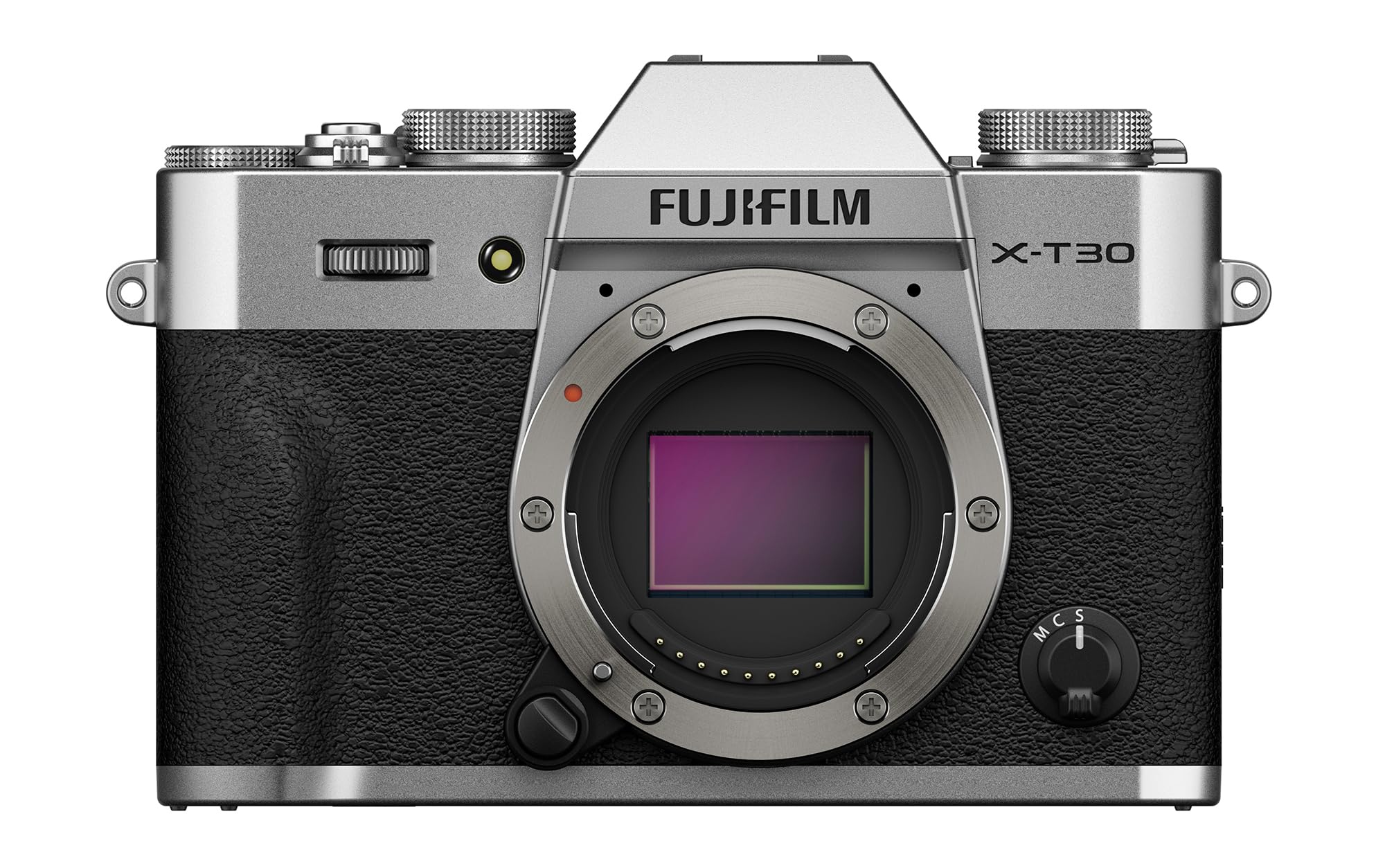
Fujifilm’s X‑T30 III offers a unique blend of aesthetic design and AI‑powered autofocus. The 26.1‑MP X‑Trans sensor uses a hybrid AF system with AI‑powered subject detection that recognizes human faces, eyes, animals, and vehicles. The camera is incredibly compact for an APS‑C body, making it easy to bring to any match without weighing you down.
The 20 built‑in Film Simulations are not just gimmicks — they produce JPEGs with color science that many sports photographers find evocative, reducing the need for post‑processing. The body has a classic dial‑based control layout that gives fast direct access to shutter speed, ISO, and exposure compensation. The Auto mode is smart enough to let beginners point and shoot while still offering full manual control.
The autofocus is good but not in the same league as the Sony a6400 or Canon R8 for fast erratic subjects. The kit lens (XC13‑33mm) is a wide‑angle walkaround lens, not a telephoto — you will need an XF telephoto for field sports. The lack of full weather sealing is also a concern for outdoor events. This is a camera for the photographer who values color and portability as much as raw speed.
Why it’s great
- AI‑powered subject detection for human, animal, and vehicle tracking
- 20 Film Simulations for distinct JPEG color profiles
- Extremely compact and lightweight design
Good to know
- Autofocus is not as fast as top competitors for erratic sports
- Kit lens is a wide‑angle — budget for an XF telephoto
- No weather sealing for rainy sideline conditions
1. Panasonic LUMIX G85

The G85 is a Micro Four Thirds camera that punches well above its price bracket. The 16‑MP sensor lacks an anti‑aliasing filter, which improves fine detail by roughly 10% over previous M43 sensors. The real star is the class‑leading dual image stabilization: 5‑axis IBIS combined with lens‑based Power O.I.S. that delivers remarkably stable handheld video and sharp stills at shutter speeds that would normally require a tripod.
4K video at 3840×2160 is the main draw – the G85 can extract 8‑MP stills from 4K bursts at 30 fps (4K Photo mode) and even refocus after capture using Post Focus. The magnesium‑alloy body with weather‑sealed kit lens makes it surprisingly durable for outdoor field use. The tilt‑and‑touch LCD and OLED live viewfinder (2.36M dots) provide solid framing options even in sunlight.
Autofocus is contrast‑detection based, which means it hunts in low light and struggles to track fast, erratic subjects. The 49 AF points are fine for slower sports like baseball, but not for soccer or hockey. Battery life is also below average at around 330 shots. For a budget entry that includes excellent stabilization and 4K features, the G85 is a compelling starting point.
Why it’s great
- Dual IS (IBIS + lens OIS) for silky handheld shots
- 4K Photo mode with Post Focus refocusing
- Weather‑sealed magnesium alloy body with kit lens
Good to know
- Contrast‑detection AF struggles in low light and with fast subjects
- Battery life is below average at ~330 shots
- No headphone jack for video monitoring
2. Canon RF 100-400mm

The RF 100‑400mm is Canon’s most accessible telephoto for the RF mount, offering a 100‑400mm zoom range in a package that weighs only 1.2 pounds. The optical image stabilizer delivers up to 5.5 stops of shake correction on its own, and up to 6 stops when paired with an EOS R body featuring IBIS. That level of stabilization makes handheld shooting at 400mm achievable in daylight conditions.
The Nano USM autofocus is fast, near‑silent, and smooth — ideal for tracking field athletes. The minimum focusing distance of 2.89 feet at 200mm (with 0.41x magnification) also allows for close‑up detail shots of equipment or celebrations. At the 400mm end, the f/8 maximum aperture limits low‑light performance; pairing with a Canon R6 or R8 body that handles high ISO well mitigates this.
No weather sealing is built into the barrel, which is a notable omission for outdoor sideline work in rain or dust. The zoom ring rotates in the opposite direction to Canon’s usual EF lenses, which takes time to unlearn. For the price, this lens delivers impressive reach and stabilization, making it a solid entry into sports telephoto without breaking the bank.
Why it’s great
- Class‑leading weight at 1.2 pounds for a 400mm zoom
- 5.5‑stop optical IS (up to 6 stops with IBIS bodies)
- Nano USM AF is fast and silent for video
Good to know
- f/8 at 400mm makes it a daylight‑only lens for sports
- No weather sealing on the barrel
- Zoom ring rotates opposite to traditional Canon direction
11. Canon RF 70-200mm F2.8

The RF 70‑200mm f/2.8 L is the gold standard for sports glass in Canon’s mirrorless system. The constant f/2.8 aperture delivers two stops more light than the 100‑400mm, allowing faster shutter speeds in dim gymnasiums and evening matches. The optical image stabilizer provides up to 5 stops of correction, and the Dual Nano USM motors are silent and instantaneous for both stills and video.
At 2.64 pounds it is lighter than the EF version, and the extending design at 70mm makes it more compact for storage. The L‑series build quality is weather‑sealed against dust and moisture, so you can shoot in light rain without worry. Edge‑to‑edge sharpness is exceptional even wide open at f/2.8, with smooth bokeh that isolates the subject beautifully against busy backgrounds.
The extending barrel design invites dust into the mechanism over long‑term use in harsh environments. The control ring is stiff and audible during video recording, making it unsuitable for run‑and‑gun videography. Weight also becomes noticeable after all‑day carrying. For the serious sports photographer who demands the absolute best image quality, there is no better RF zoom.
Why it’s great
- Constant f/2.8 aperture for excellent low‑light performance
- 5‑stop optical IS for sharp handheld shots at long focal lengths
- Weather‑sealed L‑series build quality
Good to know
- Extending barrel may accumulate dust over time
- Control ring is loud and not usable during video
- Heavy at 2.64 pounds for all‑day carry
3. Canon EOS Rebel T7 Bundle
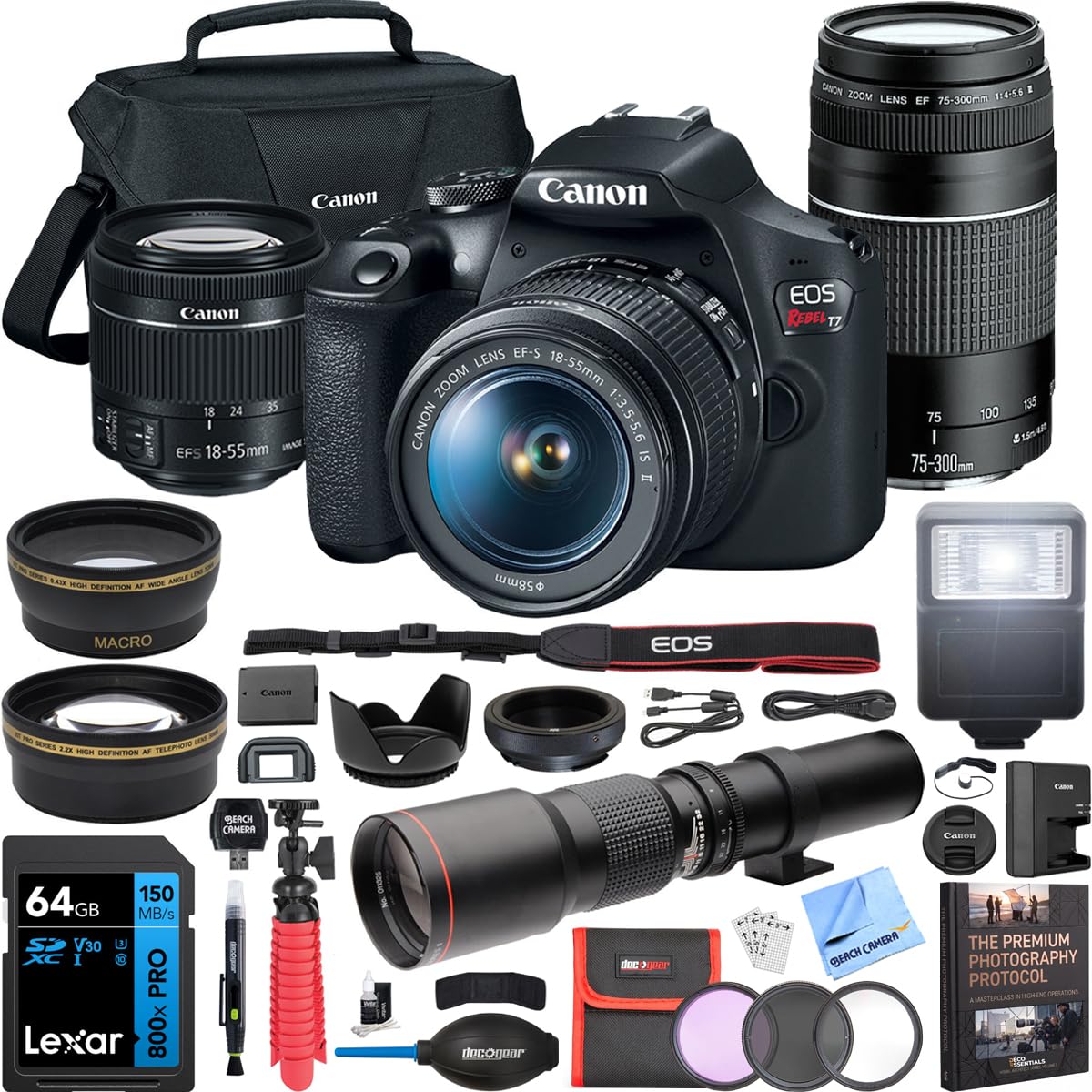
The Rebel T7 bundle is a massive value pack aimed at beginners who want to try sports photography without a deep investment. The 24.1‑MP APS‑C sensor with the 18‑55mm kit lens and 75‑300mm telephoto gives you a starter range from wide to 300mm. The bundle also includes a 500mm preset telephoto (f/8), wide‑angle adapter, flash, tripod, and 64GB memory card — an unusually comprehensive starter set.
The 9‑point AF system with AI Servo tracking is basic by modern standards, but it can handle slower sports like baseball, track events, or youth games where movement is more predictable. The 3 fps burst rate is the limiting factor — you will miss the peak of many fast actions because the camera simply cannot capture enough frames per second. The DIGIC 4+ processor works fine for single shots but feels dated.
Battery life is poor — some users report only 50‑100 shots before requiring a recharge, though the included backup charger helps. The bundle accessories (flash, wide‑angle adapter) are entry‑level in quality. For a teenager or hobbyist shooting casual games and wanting to learn the basics of exposure and composition, the T7 bundle is a viable launchpad.
Why it’s great
- Comprehensive bundle includes telephoto, flash, and 64GB card
- 24.1 MP sensor with Canon’s user‑friendly interface
- Built‑in Wi‑Fi and NFC for remote shooting and sharing
Good to know
- 3 fps burst rate is too slow for fast action
- Only 9 AF points — struggles with erratic movement
- Battery life is extremely limited in practice
FAQ
Can I use a kit lens for sports photography?
Does a higher megapixel sensor help with sports?
What is the best shutter speed for sports?
Why do some cameras overheat when shooting sports video?
Final Thoughts: The Verdict
For most users, the camera for sports photography winner is the Canon EOS R6 Mark II because it combines 40 fps electronic burst, the most advanced subject detection AF, and excellent low‑light performance in a robust body. If you want the best reach for field sports, pair it with the Canon RF 70‑200mm f/2.8 for a professional‑grade combination. And for a compact, value‑focused start, the Sony a6400 delivers autofocus speed that punches far above its price.