
Packing a 4K video camera for travel used to mean stuffing a bulky DSLR into your carry-on, then praying the in-flight turbulence didn’t rattle your gimbal calibration. The landscape has shifted: today’s best travel-focused camcorders and mirrorless bodies pack 1-inch sensors, 3-axis mechanical stabilization, and 4K/120fps capture into housings that slip into a jacket pocket. The trade-off is no longer quality-versus-portability — it’s about which set of trade-offs you can live with at the baggage claim.
I’m Min — the co-founder and writer behind Gadgets Feed. I’ve spent hundreds of hours cross-referencing sensor sizes, stabilization algorithms, battery endurance tests, and real-world travel footage to separate the genuine travel companions from the desk-bound gear.
Whether you need a pocket gimbal camera for smooth walking shots, a superzoom for wildlife safaris, or a compact interchangeable-lens system for creative flexibility, this guide cuts through the marketing noise to identify the best 4k video camera for travel that actually fits your itinerary and your budget.
How To Choose The Best 4K Video Camera For Travel
Selecting the right travel video camera means matching its core specs to the environments you’ll actually film in. A safari in Tanzania demands extreme reach and stabilization. A city-break vlog in Tokyo needs pocketability and fast autofocus. Here’s what matters.
Sensor Size and Low-Light Capability
The sensor is the foundation of your image quality. A 1-inch CMOS sensor (found in pocket gimbal cameras and compact point-and-shoots) offers a great balance of size and light sensitivity. Micro Four Thirds (MFT) sensors, used by OM SYSTEM, add more surface area for better dynamic range and depth-of-field control while keeping lenses small. APS-C sensors deliver even better low-light performance but require larger bodies and lenses. Full-frame sensors (like the Panasonic LUMIX S9) produce the best image quality and shallow depth of field, but the lens ecosystem is heavier and pricier. For true travel versatility, 1-inch and MFT sensors offer the best compromise between carry weight and video quality.
Stabilization: Gimbal vs. IBIS vs. Digital
Shaky footage ruins travel memories faster than a dead battery. Dedicated 3-axis gimbal cameras (DJI Osmo Pocket 3, Xtra Muse) physically float the sensor module, delivering buttery-smooth walking shots without post-processing. In-Body Image Stabilization (IBIS) uses sensor-shift technology inside interchangeable-lens cameras — the OM SYSTEM OM-5 offers up to 7.5 stops of correction, enough to film handheld while hiking. Digital stabilization crops the frame and can introduce artifacts; it’s a fallback, not a primary feature. For run-and-gun travel, prioritize physical stabilization — gimbal or IBIS — over software-based solutions.
Zoom Range and Lens Versatility
Fixed-lens cameras with integrated zooms eliminate the need to swap lenses — a major advantage in dusty, rainy, or fast-paced travel conditions. The Panasonic ZS99’s 30x Leica zoom (24-720mm equivalent) lets you frame a distant landmark or compress a mountain range without changing gear. Superzoom bridge cameras like the Nikon P1100 push to an astonishing 125x (24-3000mm), ideal for birding and wildlife. If you prefer interchangeable lenses, a travel-friendly kit lens like the 14-150mm on the OM SYSTEM OM-5 covers wide-angle to telephoto in one compact package. Know your shooting distance before you commit — a fixed-lens compact travel zoom is far less hassle than carrying three lenses through an airport.
Quick Comparison
On smaller screens, swipe sideways to see the full table.
| Model | Category | Best For | Key Spec | Amazon |
|---|---|---|---|---|
| DJI Osmo Pocket 3 | Gimbal Camera | Vlogging & smooth walking shots | 1″ CMOS, 4K/120fps, 3-axis gimbal | Amazon |
| Sony RX100 VII | Compact Zoom | Pocketable reach & pro features | 20.1MP, 24-200mm f/2.8-4.5, 4K | Amazon |
| OM SYSTEM OM-5 | MILC | Weather-sealed outdoor adventure | MFT, 5-axis IBIS, 14-150mm kit | Amazon |
| Fujifilm X100VI | Fixed Lens | Street photography & film simulations | 40.2MP APS-C, 6-stop IBIS | Amazon |
| Panasonic ZS99 | Travel Zoom | All-in-one wide-to-telephoto | 30x Leica zoom, 4K/30p | Amazon |
| Canon PowerShot V10 | Vlog Cam | Ultra-compact vlogging | 1″ sensor, 4K/30p, built-in stand | Amazon |
| Xtra Muse | Gimbal Camera | Budget-friendly gimbal vlogging | 1″ CMOS, 4K/120fps, 3-axis gimbal | Amazon |
| Canon EOS R100 | Entry MILC | First interchangeable-lens camera | 24.1MP APS-C, 4K/24p | Amazon |
| Nikon COOLPIX P1100 | Superzoom | Extreme telephoto & wildlife | 125x zoom, 4K UHD, 16MP | Amazon |
| Panasonic LUMIX S9 | Full-Frame | Best IQ in compact body | 24.2MP FF, 4K/60p, IBIS | Amazon |
| OM SYSTEM OM-3 | Stylish Rugged | Vintage aesthetics + modern tech | 20MP Stacked BSI, IP53, IBIS | Amazon |
In‑Depth Reviews
1. DJI Osmo Pocket 3
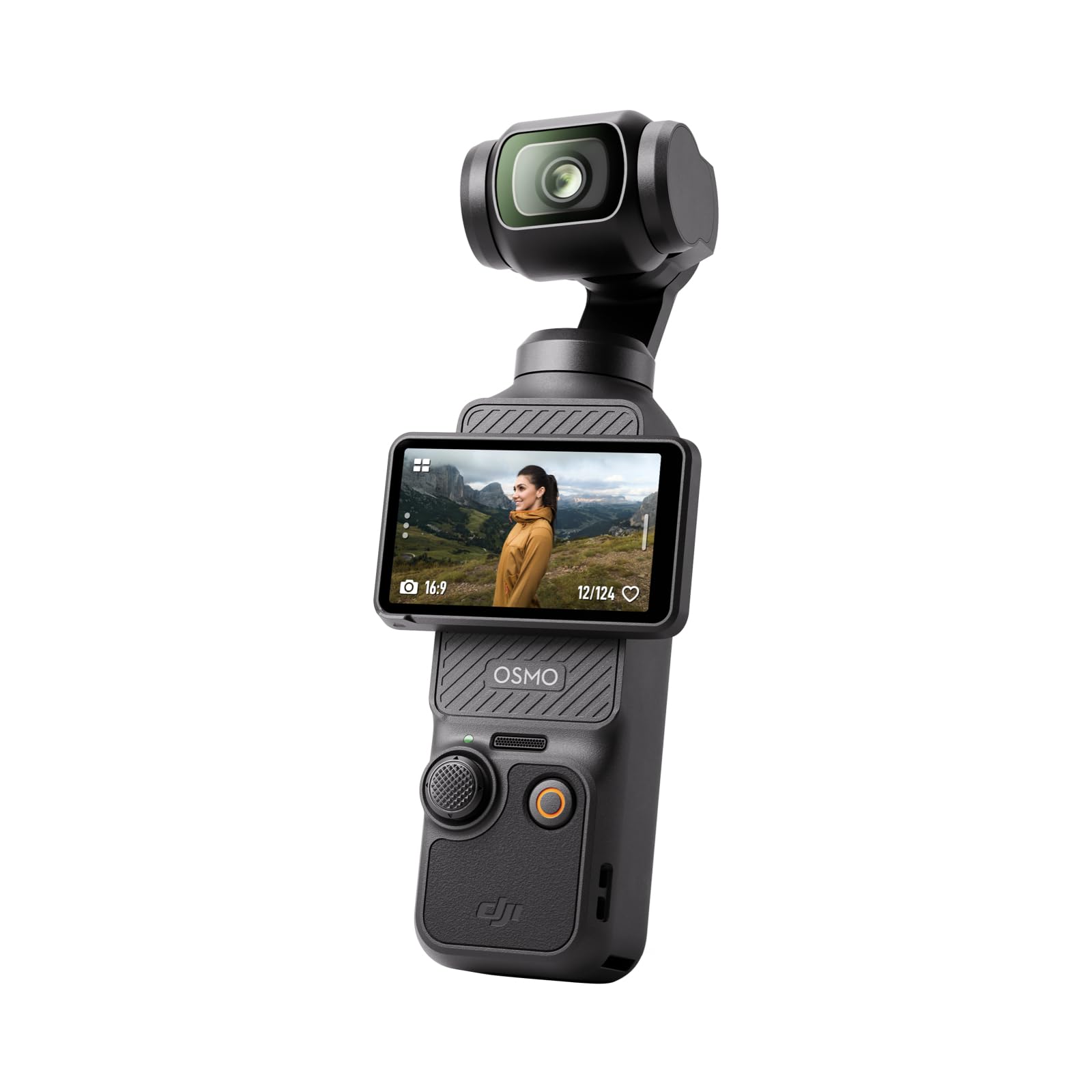
The Osmo Pocket 3 remains the benchmark for pocketable travel video. Its 1-inch CMOS sensor captures 4K footage at 120fps, delivering smooth slow-motion without sacrificing resolution. The 3-axis mechanical gimbal is the star here — walking, jogging, or panning across a crowded piazza yields buttery footage that digital stabilization can’t match.
ActiveTrack 6.0 locks onto subjects reliably, even when you spin or jump, making solo vlogging effortless. The rotating 2-inch touchscreen flips between horizontal and vertical framing instantly, a lifesaver when you need both YouTube B-roll and Instagram Stories from the same clip. DJI OsmoAudio pairs directly with DJI Mic 2 transmitters, bypassing the need for wireless receivers.
Battery life hovers around 166 minutes, and fast USB-C charging refuels the 1300 mAh cell quickly. The only real trade-off is the fixed wide-angle lens — you can’t zoom optically, so get physically closer. For 95% of travel scenarios, this is the one camera to bring.
Why it’s great
- 3-axis gimbal delivers cinema-smooth handheld footage
- Rotating screen for instant vertical/horizontal switching
- Direct connection to DJI wireless mics for clean audio
Good to know
- Fixed wide-angle lens with no optical zoom
- Battery is internal and not user-swappable
2. Sony RX100 VII
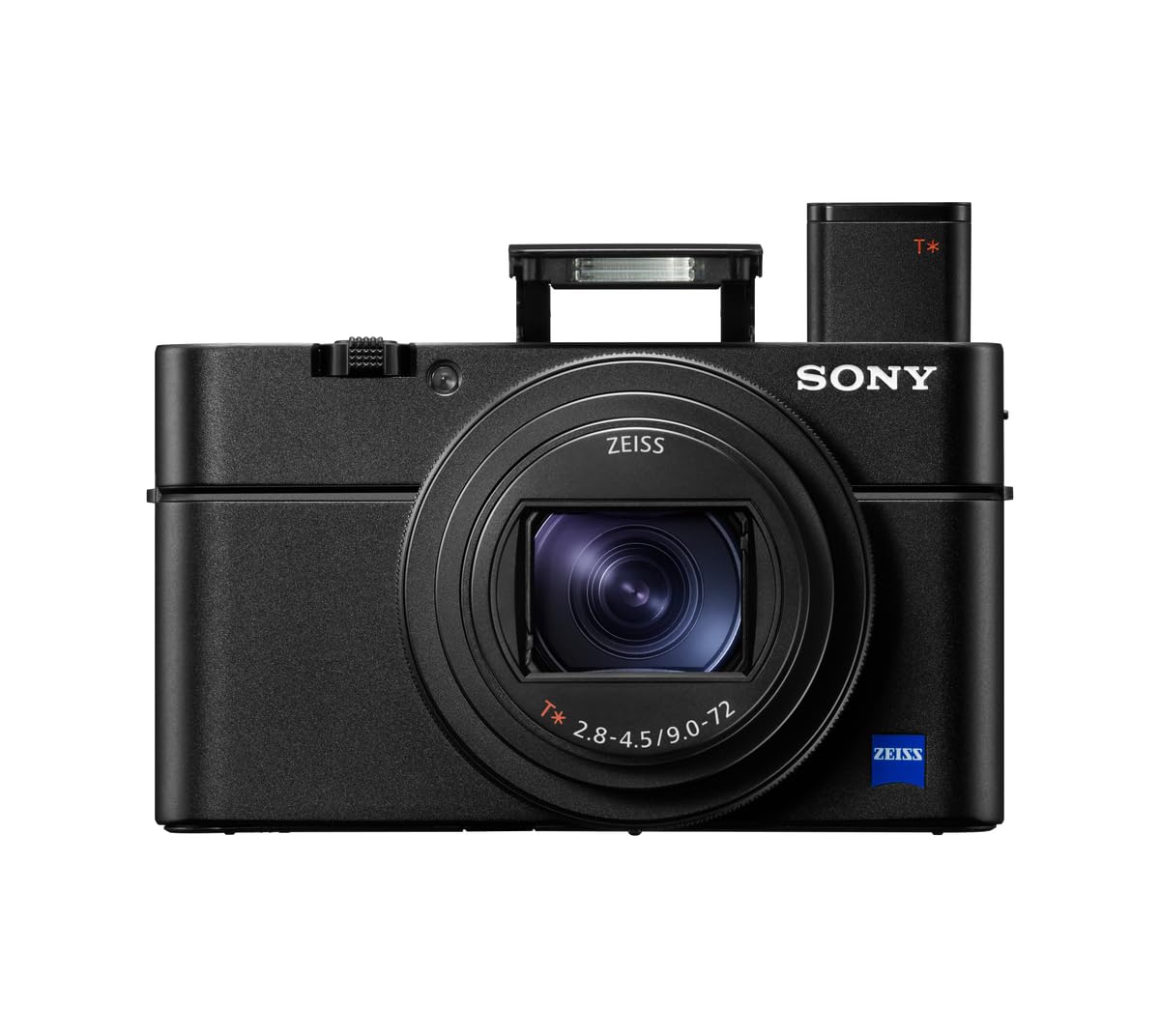
The RX100 VII is the Swiss Army knife of compact travel cameras. The 24-200mm f/2.8-4.5 Zeiss Vario-Sonnar lens covers everything from wide cityscapes to compressed portraits — all in a body that slides into a jeans pocket. The 1-inch stacked CMOS sensor reads data at blistering speed, enabling 20fps blackout-free bursts and Real-time Eye AF for both humans and animals.
Active Mode image stabilization in 4K video produces smooth walking footage without a gimbal, though it does introduce a slight crop. The pop-up electronic viewfinder is a boon in bright sunlight, and the microphone jack lets you attach an external mic without bulky adapters. The 4K HDR with S-Log3 profiles gives color graders plenty of latitude.
The biggest downsides are the slippery body finish (a third-party grip is almost mandatory) and the absence of weather sealing. At this price point, the build quality feels solid but not rugged. For travelers who demand a pocketable zoom with professional-grade autofocus, this is unmatched.
Why it’s great
- 24-200mm optical zoom fits in a pocket
- World-class real-time Eye AF for video
- Active Mode 4K stabilization is highly effective
Good to know
- No weather sealing — keep it dry
- Slippery body requires an accessory grip
3. OM SYSTEM OM-5 Mark II w/ 14-150mm
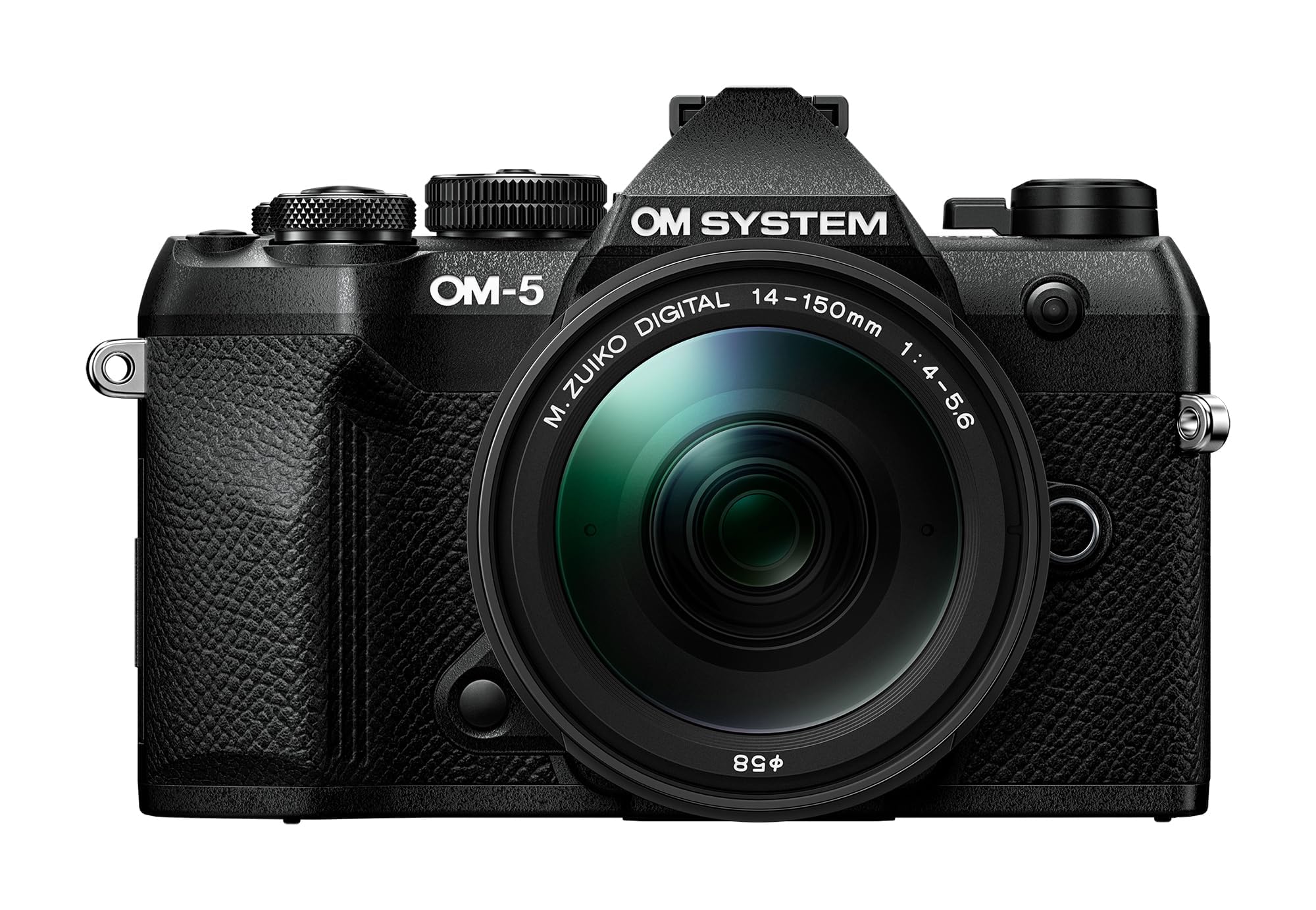
Outdoor adventurers need a camera that shrugs off rain, dust, and freezes. The OM-5 delivers IP-rated weather sealing with a body and 14-150mm lens combo that weighs less than 600g. The 5-axis in-body stabilization, rated at 6.5 to 7.5 stops, is the most effective in any travel camera — you can shoot 4K handheld at night with zero micro-jitters.
The Micro Four Thirds sensor might not match full-frame in absolute dynamic range, but the computational features — Live ND, focus stacking, and High Res Shot — compensate in creative ways. The Live ND filter simulates up to 5 stops of neutral density, letting you blur waterfalls without carrying glass filters. The 14-150mm lens covers ultra-wide to telephoto in a single compact unit.
Battery life is average (about 330 shots), so pack a spare. The menu system is deep and rewards exploration. For hikers, climbers, and anyone who films in unpredictable weather, the OM-5 is the most rugged travel video system at its price.
Why it’s great
- Best-in-class 7.5-stop IBIS for tripod-free video
- Completely weather-sealed body and lens
- Computational features (Live ND) eliminate extra filters
Good to know
- Small battery requires a backup for all-day shooting
- MFT sensor has narrower dynamic range than APS-C
4. Fujifilm X100VI

The X100VI is a cultural phenomenon for good reason. Its 40.2MP X-Trans CMOS 5 HR sensor and 6-stop in-body stabilization produce images that rival pro setups, yet the body is small enough to be a daily companion. The fixed 23mm f/2 lens (35mm equivalent) forces a specific compositional discipline — you zoom with your feet, which many photographers find liberating.
Video is improved but not class-leading: 6.2K capture and Fujifilm’s film simulations (REALA ACE included) give your 4K footage a distinctive look straight out of camera, reducing editing time. The hybrid viewfinder (optical + electronic) is a joy in bright conditions, and the built-in 4-stop ND filter lets you shoot wide open in daylight without overexposure.
Autofocus is improved over the X100V but still trails Sony’s real-time tracking, and the fixed lens means no zoom flexibility. Battery life is modest (around 350 shots). This camera is for travelers who prioritize still-image aesthetics and a tactile shooting experience over versatile zoom range.
Why it’s great
- Stunning 40.2MP sensor with Fujifilm film simulations
- 6-stop IBIS for handheld low-light video
- Built-in ND filter and hybrid viewfinder
Good to know
- Fixed 35mm equivalent lens with no zoom
- Autofocus not as snappy as Sony competitors
5. Panasonic LUMIX ZS99

The ZS99 is the answer to the question “What camera can shoot both a wide-angle cathedral and a close-up of a performer on stage?” The 30x Leica DC Vario-Elmar lens spans 24-720mm, all retracting into a body just over an inch thick. The 1,840k-dot tiltable touchscreen makes low-angle and overhead shots easy, and USB-C charging means one cable for camera and phone.
4K video at 30p is solid, and 4K PHOTO mode extracts 8MP stills from 30fps bursts — handy for fast action. Built-in Bluetooth 5.0 and the dedicated Send Image button transfer files to your phone without fumbling through menus. Image quality is good up to ISO 1600, though the small 1/2.3-inch sensor shows its limits in dim interiors.
Autofocus is contrast-detection based, so it hunts more than phase-detect systems in low light. The zoom rocker is smooth but can be twitchy at full telephoto without a tripod. For daylight concerts, landmarks, and family trips where zoom versatility trumps pixel-level quality, the ZS99 is a compelling travel companion.
Why it’s great
- 30x optical zoom in a truly pocketable body
- Tilt touchscreen for creative angles
- USB-C charging and fast Bluetooth transfer
Good to know
- Small sensor struggles in low light beyond ISO 1600
- Contrast-detect AF hunts in dim environments
6. Canon PowerShot V10

The PowerShot V10 is designed around one specific use case: vlogging yourself while traveling. The built-in stand flips out to set the camera on a café table or stone wall, and the retractable front-facing screen lets you frame your shot without guessing. The 1-inch 15.2MP back-illuminated CMOS sensor captures 4K/30p video with solid dynamic range.
Canon’s three-microphone array with a central unidirectional mic does an excellent job of reducing background noise — conversations and street ambience are balanced well without a wind sock. The 19mm wide-angle lens is ideal for arm’s-length selfie video, though the fixed focal length means no zoom. Image stabilization has three modes (IS Off, IS On, IS Enhanced) via firmware update 1.2.0.
Battery life is the weakest link: a single charge struggles to last a full day of shooting. The lack of a physical lens cover means you’ll want a case or microfiber pouch. For first-time vloggers who want Canon color science in a gadget that slips into a fanny pack, the V10 is a uniquely focused tool.
Why it’s great
- Built-in stand for hands-free tabletop vlogging
- Front-facing screen with retractable design
- Three-microphone array with intelligent background suppression
Good to know
- Battery life is limited — carry a power bank
- No zoom and no lens cover included
7. Xtra Muse

The Xtra Muse enters the market as a direct, budget-friendly challenger to the DJI Osmo Pocket 3. It packs the same core hardware — a 1-inch CMOS sensor, 4K/120fps recording, and a 3-axis gimbal — into a slightly larger body with a 2-inch touchscreen. Face and object tracking work reliably, and the Master Follow mode keeps you centered during solo vlogs.
True 10-bit X-Log color captures up to a billion colors, giving editors plenty of latitude for grading sunrise or city-light footage. The bundle includes a 1/4-inch threaded handle, carrying bag, wrist strap, and USB-C PD cable — everything you need except a microSD card. Battery life is rated at 161 minutes, which matches real-world testing for mixed 4K shooting.
The gimbal locks up during power-off to protect the motors, a thoughtful touch for travel. The main compromises versus the Pocket 3 are slightly less refined stabilization algorithms and no direct wireless mic integration. For travelers who want gimbal-smooth 4K without paying premium prices, this is a strong value proposition.
Why it’s great
- Gimbal stabilization at an entry-level price
- 10-bit X-Log color for professional grading
- Complete bundle with handle and carrying bag
Good to know
- No direct wireless mic pairing
- Stabilization less refined than DJI Pocket 3
8. Canon EOS R100 w/ RF-S 18-45mm

The EOS R100 is Canon’s most affordable entry into the RF mount, and for travelers wanting interchangeable lenses without the weight, it delivers. The 24.1MP APS-C sensor paired with the DIGIC 8 processor produces sharp 4K/24p video with Canon’s renowned Dual Pixel CMOS AF covering 143 zones. Face and Eye Detection works reliably for both stills and video.
The kit lens (RF-S 18-45mm f/4.5-6.3 IS STM) is compact and offers optical image stabilization at up to 4 stops. The body itself is the smallest and lightest in the EOS R series, making it easy to slip into a daypack alongside a second lens. Continuous shooting at 6.5 fps with One-Shot AF is adequate for most travel scenarios.
4K video is limited to 24p and uses the full sensor width — no crop, but also no higher frame rates. The built-in flash is basic, and the lack of in-body stabilization means you rely on lens IS or a tripod. This is a strong starting point for someone building a travel lens collection, not an all-in-one video powerhouse.
Why it’s great
- Lowest-cost entry to Canon RF mirrorless system
- Dual Pixel CMOS AF with face/eye detection
- Very lightweight body for all-day carry
Good to know
- 4K limited to 24p with no higher frame rates
- No in-body stabilization — relies on lens IS
9. Nikon COOLPIX P1100

No other travel camera gets you as close to the action as the P1100. Its 125x optical zoom (24-3000mm equivalent) brings distant birds, mountain peaks, and wildlife stage performers into frame with clarity that smaller sensors can’t touch. Dual Detect Optical VR provides image stabilization equivalent to 4.0 stops, which is essential at full telephoto.
4K UHD video looks clean in good light, and the rotating LCD screen makes low-angle wildlife shots manageable. The dedicated bird-watching mode optimizes settings for feathered subjects, and the macro mode lets you focus as close as 1 cm. RAW (.NRW) capture gives advanced editors latitude to recover shadows and highlights.
The plastic build feels less premium than its + price suggests, and the menu system is dense. At maximum zoom, a tripod is non-negotiable for stable shots. This camera excels for travelers with a specific need — extreme reach in a single lens — and is overkill for general city sightseeing.
Why it’s great
- Unmatched 125x optical zoom for wildlife and distant subjects
- Dual Detect VR stabilization for telephoto shooting
- Dedicated bird-watching and macro modes
Good to know
- All-plastic build feels less durable than peers
- Tripod required at full zoom for steady footage
10. Panasonic LUMIX S9 w/ S 18-40mm

The LUMIX S9 shrinks a full-frame 24.2MP sensor into a body barely larger than a compact camera. The S 18-40mm f/4.5-6.3 kit lens retracts almost flush with the body, making this one of the most packable full-frame systems available. 4K/60p recording with 10-bit 4:2:2 internal capture delivers professional-grade footage.
The Open Gate recording mode captures the full sensor area, letting you crop to vertical or horizontal after the fact — perfect for repurposing travel clips across YouTube, Instagram Reels, and TikTok without re-shooting. LUMIX Lab app integration transfers files at high speed and lets you apply custom LUTs in-camera, giving your 4K footage a unique color signature.
The lack of a hotshoe and electronic viewfinder is a hard pill to swallow at this price. The screen is bright enough for framing, but shooting in direct sunlight will have you cupping your hands. The body also lacks a mechanical shutter, relying on an electronic one. For travelers who prioritize absolute image quality in a tiny full-frame body, the S9 is a niche winner.
Why it’s great
- Full-frame sensor in an ultra-compact body
- Open Gate recording for flexible social media crops
- In-camera LUT application for custom color grading
Good to know
- No hotshoe or EVF for external flash/viewfinding
- Electronic shutter only; no mechanical shutter
11. OM SYSTEM OM-3

The OM-3 merges a vintage silver metal body with OM SYSTEM’s latest computational photography engine. The 20MP stacked BSI Live MOS sensor reads data with exceptional speed, supporting 4K video at up to 60fps, 14-bit RAW stills, and the full suite of computational features — Live ND, Live Composite, High Res Shot (80MP handheld), and focus stacking. The IP53 rating means it’s fully dustproof, splashproof, and freezeproof.
The 5-axis IBIS, inherited from the OM-1 II, delivers up to 7 stops of shake correction, making handheld 4K footage incredibly smooth even with non-stabilized lenses. The creative dial gives quick access to Color Profile Control, Monochrome Profile Control, and Art Filters — ideal for travelers who want distinctive JPEGs straight out of camera. The 2.36m-dot OLED EVF is crisp and clear.
The flat-front design lacks a pronounced grip, which some users find uncomfortable with heavier telephoto lenses. The single SD card slot and slightly lower top shutter speed are notable cuts from the OM-1 II. This is a style-focused camera that doesn’t skimp on performance — ideal for travelers who want their gear to look as good as the footage it produces.
Why it’s great
- Stunning vintage metal design with IP53 weatherproofing
- Best-in-class 5-axis IBIS for handheld video
- Full computational photography suite in firmware
Good to know
- Flat front lacks a substantial grip
- Only one SD card slot; some OM-1 II features omitted
FAQ
Is a gimbal camera like the DJI Osmo Pocket 3 better than a mirrorless camera for travel video?
What is the minimum sensor size I should accept for 4K travel video?
How important is optical zoom for a travel 4K video camera?
Can a smartphone replace a dedicated 4K video camera for travel?
Final Thoughts: The Verdict
For most users, the best 4k video camera for travel winner is the DJI Osmo Pocket 3 because its 3-axis gimbal, 1-inch sensor, and rotating screen deliver professional-quality footage in a truly pocketable package. If you want weather-sealed durability and IBIS that works in a monsoon, grab the OM SYSTEM OM-5. And for extreme optical reach on a safari or at a concert, nothing beats the Nikon COOLPIX P1100.