
A 1-inch hole demands real torque. Whether you are routing cable through joists, boring a stump for disposal, or driving concrete anchors for a heavy shelf, an undersized or poorly matched bit turns a five-minute job into a stalled drill and a ruined afternoon. The difference between a clean cut and a smoking motor comes down to shank type, flute geometry, and material compatibility.
I’m Min — the co-founder and writer behind Gadgets Feed. I spent dozens of hours comparing feed rates, flute designs, carbide grades, and shank configurations across wood, masonry, and metal-cutting bits to separate tools that actually hold an edge from those that give up after a few holes.
This guide covers the seven best options available right now so you can match the right geometry and hardness to your specific material. Whether you are drilling wood, concrete, or steel, this is your definitive resource for finding the best 1 inch drill bit for the job.
How To Choose The Best 1 Inch Drill Bit
A 1-inch bit is a high-displacement tool. The wrong choice leads to overheating, wandering starts, or bit breakage. Focus on three variables: the material you are drilling, the power of your drill, and the shank style your chuck accepts.
Match Bit Type to Material
Spade bits (paddle-style) clear chips fast and work well in softwood and plywood but tend to wander on entry. Auger bits with a self-feeding screw point pull themselves into the work and produce cleaner holes in hardwood and nail-embedded lumber. For masonry, a carbide-tipped SDS-Plus bit is the only serious option — standard twist bits dull instantly on concrete. For metal, a tungsten carbide tipped (TCT) hole saw with a pilot bit handles stainless steel and iron without losing edge geometry.
Shank Compatibility and Torque Demands
A 1/4-inch hex shank fits most impact drivers and quick-change chucks but can slip under high torque in dense hardwood. A 3/8-inch or 7/16-inch hex shank provides more engagement surface and reduces wobble, making it preferable for deep auger bits. SDS-Plus shanks lock into rotary hammers with a spline drive that prevents rotation during hammer drilling. Always check your drill’s chuck capacity — many consumer cordless drills max out at 3/8-inch or 1/2-inch round shanks, while impact drivers accept hex shanks up to 1/2-inch.
Flute Design and Chip Evacuation
Deep, wide flutes clear debris faster and reduce the risk of binding in holes deeper than 4 inches. Double-fluted spade bits and 3-flute auger designs improve dust removal significantly over single-flute bits. For overhead drilling or horizontal boring through studs, a parabolic scoop or extra-large flute channel prevents clogging and keeps the cutting edge cool. Bits with chamfered cutting edges (like the Irwin Speedbor) also reduce friction and extend usable life between sharpening.
Quick Comparison
On smaller screens, swipe sideways to see the full table.
| Model | Category | Best For | Key Spec | Amazon |
|---|---|---|---|---|
| Diablo DAG1130 | Auger (Nail-Embedded) | Nail-embedded lumber, dense timbers | 7/16″ hex shank | Amazon |
| Irwin Speedbor 88716 | Spade (Impact Rated) | Fast boring in framing and studs | Impact-rated 1/4″ hex shank | Amazon |
| Sabre Tools ST-S812 (2-Pack) | SDS-Plus Masonry | Concrete, brick, stone anchors | Carbide tip, 2-flute spiral | Amazon |
| Greycore GCT-3FA-1-12 | Auger (3-Flute) | Clean holes in hardwood, MDF, thick plastics | 3-flute HSS, 1/4″ hex shank | Amazon |
| NICAVKIT NI0023-1P-25 | Ship Auger | Deep holes in landscape timbers and stumps | 1045 high-carbon steel, 3/8″ hex shank | Amazon |
| DECKRKAT DECK-2426 (2-Pack) | TCT Hole Saw | Stainless steel, iron, aluminum | Tungsten carbide tipped, 3/8″ 3-flat shank | Amazon |
| IVY Classic 10750 | Spade (Long Reach) | Running cable through tight crawlspaces | 16″ length, high-carbon steel, 1/4″ hex shank | Amazon |
In‑Depth Reviews
1. Diablo Auger Bit for Wood & Nail-Embedded Wood – 1″ Diameter, 7-1/2″ Length, 7/16″ Hex Shank – DAG1130
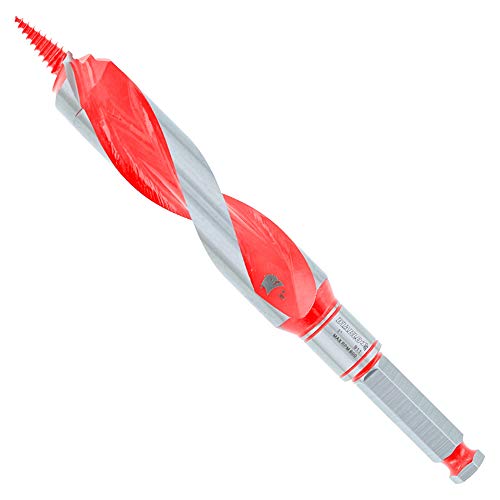
Diablo’s DAG1130 uses a two-step cutting action that shears the outer circumference before the center, producing clean holes through nail-embedded lumber where standard bits lose their edge fast. The Dura-Tip technology is essentially a carbide-infused cutting geometry that handles the occasional roofing nail or drywall screw without chipping — confirmed by users who drilled through railroad ties and stucco with the same bit. At 5-1/2 inches of working length, it is purpose-built for through-stud and joist work rather than shallow plunge cuts.
The 7/16-inch hex shank is significantly larger than the 1/4-inch standard found on most spade bits, which reduces chatter and shank twist under the high torque required to drive a 1-inch hole. That extra engagement surface means you should pair this bit with a 1/2-inch corded drill or a high-torque impact driver — reviewers note that standard 18V compact drills struggle to keep the screw point feeding through dense white oak or pressure-treated timber.
Deep flutes on the DAG1130 do an excellent job evacuating chips, which prevents binding on horizontal passes through thick studs. The self-feeding screw point is aggressive — experienced users recommend drilling a 1/8-inch pilot hole first to reduce the bite and avoid the bit pulling itself through too fast on thin stock. This is a premium tool built for sustained framing and demolition work, not occasional DIY.
Why it’s great
- Dura-Tip technology chews through nails without dulling
- 7/16″ hex shank provides superior torque transfer and stability
- Deep flute design prevents binding in long, horizontal bores
Good to know
- Aggressive self-feed screw point may require a pilot hole on thin stock
- Requires a high-torque drill or impact driver for dense hardwoods
2. Irwin Tools SPEEDBOR Spade Wood Drill Bit 1 X 16 (88716)
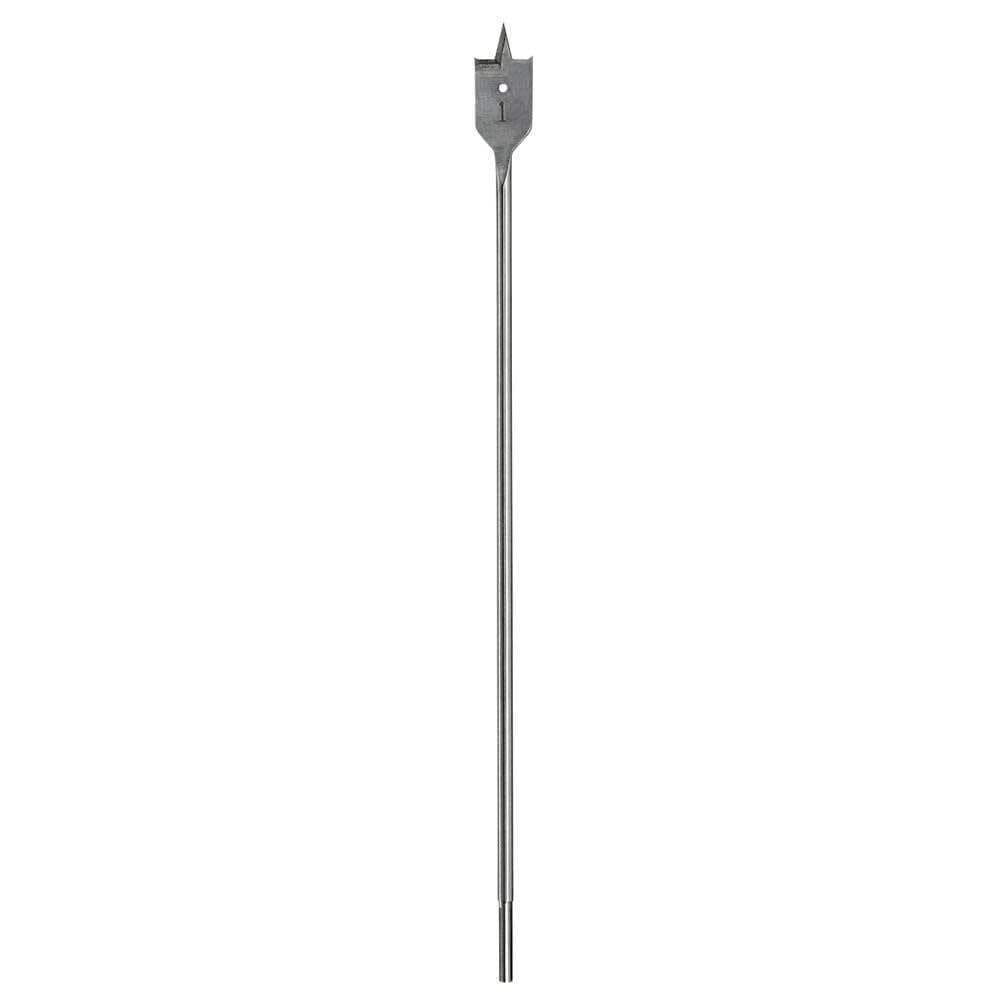
Irwin’s Speedbor line has been a framing staple for years, and the model 88716 delivers on its promise of drilling holes twice as fast as standard spade bits. The patented blue groove parabolic scoop along the shaft is not cosmetic — it actively pulls chips out of the bore, reducing friction and heat buildup during long passes through studs and joists. Users report that a single bit drilled through palm tree stumps and multiple framing penetrations without noticeable edge degradation, which is impressive for a spade bit at this price.
The chamfered cutting edges add durability at the points that take the most abuse, and the 1/4-inch impact-rated hex shank lets you run this bit in an impact driver without worrying about shank deformation. This is a major practical advantage: you can lighten your tool load by leaving the heavy corded drill in the truck for most wood boring. The 16-inch length provides the reach needed for double-stud walls and deep soffit boxes without needing to swap to an extension.
That said, spade bits inherently produce more tear-out on exit than auger bits — the Speedbor is no exception. For rough carpentry, electrical, and plumbing rough-ins, this is the best balance of speed, cost, and durability. For fine furniture work where a clean backside matters, look to an auger or Forstner bit instead.
Why it’s great
- Parabolic scoop clears chips faster than any other spade bit tested
- Impact-rated hex shank is fully compatible with modern impact drivers
- Chamfered cutting edges extend usable life in rough framing work
Good to know
- Spade geometry produces more tear-out on exit compared to auger bits
- Thin shank may wobble in standard 3-jaw drill chucks
3. Sabre Tools 2-Pack 1 Inch x 8 Inch SDS Plus Rotary Hammer Drill Bits, Carbide Tipped
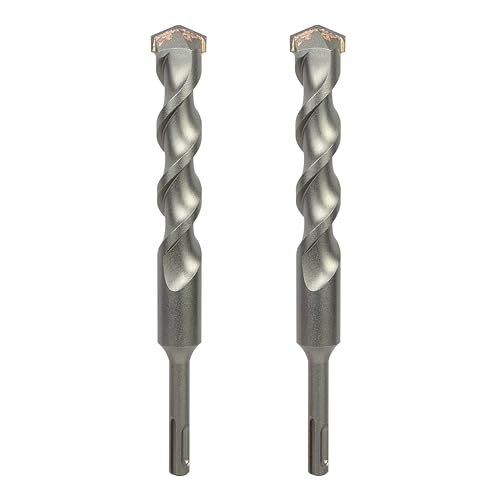
When the substrate shifts from wood to concrete, you need a completely different bit architecture — and the Sabre Tools SDS-Plus pair delivers exactly that. The carbide tip is brazed onto a steel body with a two-flute spiral that channels dust out of the hole while the rotary hammer’s percussion action fractures the aggregate. In real-world use, one user reported drilling nine 6-inch holes in high-density concrete for an auto lift install with barely any visible wear on the tip — a testament to the carbide grade and heat treatment employed here.
The SDS-Plus shank is the universal standard for modern rotary hammers from Bosch, DeWalt, Makita, Milwaukee, and Hilti, but it will not fit in a standard 3-jaw drill chuck. You need a dedicated SDS hammer drill to use these bits. The 8-inch overall length (6-inch working length) is ideal for installing concrete wedge anchors or running conduit through foundation walls. The 2-pack gives you a spare for the inevitable moment you drop a bit down a block cell.
These bits are also effective on brick, stone, and block, but they are not designed for wood or metal — using them on those materials will dull the carbide quickly. For concrete-focused work like shelf anchors, sill plate bolts, or rebar dowels, this set offers professional-grade performance at a mid-range price point.
Why it’s great
- Carbide tip stays sharp through dozens of holes in high-density concrete
- Two-flute spiral design evacuates masonry dust efficiently
- Includes two bits for redundancy on multi-hole jobs
Good to know
- SDS-Plus shank requires a compatible rotary hammer drill
- Not suitable for wood or metal drilling applications
4. Greycore Tools 1 Inch x 12 Inch 3-Flute Auger Bit, Wood Drill Bit – GCT-3FA-1-12
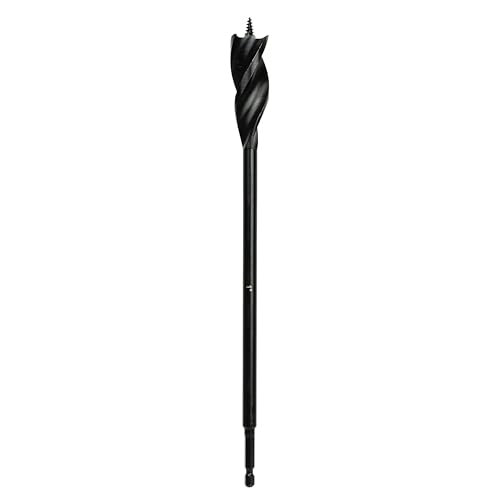
The Greycore 3-flute auger bit occupies an interesting middle ground between spade bits and traditional double-flute augers. The third flute creates additional cutting surfaces that shear wood fibers more cleanly, resulting in noticeably smoother hole walls than a standard spade bit. The high-speed steel construction is ground with razor-sharp cutting teeth that stay sharp through extended use in hardwoods, softwoods, MDF, and plastics — one reviewer used it to bore through palm tree stumps and described the resistance as “hot knife through butter.”
The self-feeding screw point pulls the bit into the work without requiring heavy downward pressure, which reduces fatigue on long boring sessions. The 1/4-inch hex shank is compatible with most impact drivers and standard drill chucks, making this a versatile option for users who do not want to switch tools between rough and finish tasks. At 12 inches overall, it bridges the gap between stubby 6-inch augers and full-length 16-inch spades.
The 3-flute design does generate more friction than a 2-flute bit, so users should clear the flutes frequently on holes deeper than 8 inches to prevent overheating. This is not a bit for nail-embedded wood — the HSS edge will chip if it hits a nail. For clean, precise holes in clean timber, this is one of the best auger bits available at the mid-range price point.
Why it’s great
- Three-flute design produces exceptionally smooth hole walls
- Self-feeding screw point reduces drilling effort significantly
- HSS construction maintains edge through extended hardwood use
Good to know
- Not designed for nail-embedded or demolition wood
- Flutes require periodic clearing on deep bores to prevent heat buildup
5. NICAVKIT 1 Inch x 12 Inch Long Auger Drill Bit for Wood – NI0023-1P-25
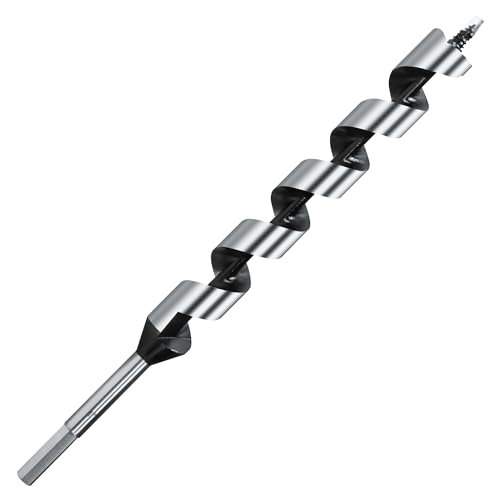
NICAVKIT’s auger bit is made from 1045 high-carbon steel with a separate hardening treatment that pushes the Rockwell hardness well above standard auger offerings. This gives it excellent edge retention in abrasive conditions like pressure-treated lumber and landscape timbers. The single-tooth cutting edge design cuts the outer circumference first, then the center, which reduces tear-out and produces smooth holes suitable for plumbing pipe runs and cabinet pulls.
The 3/8-inch hex shank is thicker than the 1/4-inch standard, providing better torque transfer and less wobble in high-power drills. NICAVKIT recommends using a corded drill or a high-torque bench drill for best results, as compact 12V drills lack the sustained power to keep the screw point feeding. The large chip flute is genuinely generous — even wet or resinous wood shavings clear without packing, which is critical for stump-boring and deep timber work.
Reviewers who used this bit for drilling tree stumps for burning reported clean, straight bores that filled easily with accelerant. The included storage wrap is a thoughtful addition that protects the cutting edge when the bit is not in use. This is a reliable, well-made bit for anyone who works with landscape timbers, railroad ties, or thick hardwood stock regularly.
Why it’s great
- 1045 high-carbon steel with hardening treatment maintains edge in abrasive timber
- 3/8″ hex shank reduces wobble and improves torque transfer
- Extra-large chip flute prevents packing in resinous or wet wood
Good to know
- Requires a high-power corded or bench drill for optimal performance
- Single-flute design is less aggressive than multi-flute augers in nail-embedded wood
6. DECKRKAT 2-Pack 1″ TCT Hole Saws for Hard Metal, Heavy Duty 25mm Tungsten Carbide Tipped Hole Cutters – DECK-2426

When the material is stainless steel, aluminum alloy, or hardened steel, a standard twist bit will not cut it — you need a tungsten carbide tipped hole saw, and the DECKRKAT 2-pack delivers exactly that. The carbide tips are brazed onto the saw body and maintain their cutting geometry through heat-treated steel that would instantly dull a bi-metal hole saw. One reviewer reported cutting through heat-treated steel that had previously destroyed a bi-metal blade, and the carbide teeth still looked like new after the cut.
The set includes two 1-inch hole saws plus spring-loaded pilot bits and a hex wrench for tightening. The spring-loaded pilots are a practical feature — they eject the cut slug automatically when you back the saw out, saving time on repetitive holes. The 3/8-inch 3-flat shank provides a secure grip in standard drill chucks and minimizes slipping during heavy cuts. The included rust-resistant plastic case keeps the saws pre-oiled and protected between uses.
There is one notable caveat: the included pilot bits are widely reported as the weak point. Multiple users experienced pilot bit breakage within the first few holes, especially in harder steel. The consensus workaround is to swap the provided pilots for a quality cobalt or carbide pilot bit. As long as you plan for that swap, the hole saws themselves are excellent for the price, making this a great value for metalworkers on a budget.
Why it’s great
- Tungsten carbide tips cut heat-treated steel that destroys bi-metal saws
- Spring-loaded pilot bit ejects cut slugs automatically
- Pre-oiled storage case protects the cutting edges from rust
Good to know
- Included pilot bits are prone to breakage and should be replaced with cobalt bits
- Shoulder diameter can prevent reaching secondary layers in tight spaces
7. IVY Classic 10750 1 x 16-Inch Swift Bore Wood Spade Bit, High-Carbon Steel

The IVY Classic 10750 is the longest bit in this roundup at 16 inches, making it the go-to choice for running ethernet, speaker wire, or low-voltage cable through tight crawlspace floor joists and deep soffit cavities. The drop-forged high-carbon steel body is electronically heat-treated to Rockwell 47-52, which is a specific hardness range that balances edge sharpness with shank toughness — the bit will not snap under lateral pressure the way cheap cast bits do.
Double-fluted chip removers with sharp spurs cut faster than a single-flute spade while leaving a smoother finish on the hole walls. The 1/4-inch hex shank fits both impact drivers and standard chucks, and the Swift Bore geometry reduces the push force needed to start the cut. One reviewer used it to drill 80 holes through solid railroad ties (7x10x8ft) and only needed a replacement after the third 80-hole cycle, which is remarkable endurance for a spade bit at the lowest price point here.
The trade-off is that spade bits still produce more tear-out on exit than auger or Forstner bits, so this is not the choice for exposed woodworking. For utility boring — electrical, plumbing, networking, and stump treatment — this bit offers the best value per inch of reach in the entire category. If you need a 1-inch hole deeper than 12 inches, this is the only realistic option on this list.
Why it’s great
- 16-inch length is unmatched for deep cavity and floor joist boring
- Drop-forged high-carbon steel with Rockwell 47-52 hardness resists snapping
- Double-fluted spurs improve cutting speed and finish over single-flute spades
Good to know
- Spade geometry still produces noticeable tear-out on exit
- Thin 1/4″ hex shank may require a 2-minute cooling break every 3rd hole in dense timber
FAQ
Can I use a 1-inch wood auger bit in my cordless impact driver?
What is the difference between a spade bit and an auger bit for 1-inch holes?
Why does my 1-inch bit keep overheating in pressure-treated lumber?
Final Thoughts: The Verdict
For most users, the best 1 inch drill bit winner is the Diablo DAG1130 because its Dura-Tip technology and 7/16-inch hex shank deliver the durability and torque resistance needed for nail-embedded framing and dense timber without dulling prematurely. If you want fast, impact-driver-compatible boring at a lower cost, grab the Irwin Speedbor 88716. And for concrete or masonry work, nothing beats the Sabre Tools SDS-Plus 2-Pack.