
Our readers keep the lights on and my morning glass full of iced black tea. As an Amazon Associate, I earn from qualifying purchases.
A half-inch foam board should feel inert under pressure, not crumble or compress permanently on the first contact. The challenge is separating the dense, closed-cell sheets that hold a clean cut and resist moisture from the soft, open-cell varieties that absorb water and disintegrate under load. Every project—whether sealing a window AC unit, padding a tool chest drawer, or crafting a custom gasket—demands a specific density and adhesive strategy that most buyers discover only after the first failure.
I’m Min — the co-founder and writer behind Gadgets Feed. The foam board market is crowded with identical-looking sheets hiding vastly different cell structures, so I’ve spent hours isolating the precise density, adhesive quality, and dimensional consistency that define the products worth your time. This guide ranks only the boards that deliver on their stated thickness and maintain integrity under real-world use.
The real test of a 1/2-inch foam board is whether it can handle compression, moisture, and cutting without fraying. After evaluating seven contenders across adhesive and non-adhesive variants, I’ve built this definitive ranking of the best 1/2 foam board options available right now.
How To Choose The Best 1/2 Foam Board
Buying a half-inch foam board is deceptively simple until you realize the material science varies wildly between brands. The wrong choice means a board that compresses permanently, delaminates at the edges, or fails to seal against air and moisture. Focus on three factors and you will land on the right sheet every time.
Closed-Cell vs. Open-Cell Structure
Closed-cell foam consists of sealed pockets that resist water absorption, maintain their shape under repeated compression, and provide genuine thermal and acoustic insulation. Open-cell foam, by contrast, absorbs moisture like a sponge, offers minimal structural support, and deteriorates quickly when used in gaskets or outdoor sealing applications. Every board in this guide uses closed-cell neoprene or EPDM construction—never settle for a product that does not explicitly state its cell structure.
Adhesive Backing vs. Non-Adhesive Sheets
Adhesive-backed boards save installation time when you need a permanent bond to metal, plastic, or wood surfaces—the peel-and-stick backing on products like the YOGHAVRS or Eunice sheets creates an instant seal on windows, cabinets, and automotive panels. Non-adhesive boards like the NATGAI and AMGSH rolls give you the freedom to reposition, double-layer, or use contact cement for complex shapes without residue. Choose adhesive for quick fixes and non-adhesive for precision fabrication.
Density and Compression Recovery
The best half-inch foam boards maintain at least 90% of their original thickness after sustained compression. Low-density foam feels soft initially but develops permanent indentations after a few weeks under a heavy object or a clamped surface. Higher-density neoprene and EPDM boards resist compression set, making them suitable for automotive gaskets, floor underlayment, and anti-vibration pads where long-term dimensional stability matters more than initial plushness.
Quick Comparison
On smaller screens, swipe sideways to see the full table.
| Model | Category | Best For | Key Spec | Amazon |
|---|---|---|---|---|
| DGSL Neoprene Adhesive Sheet | Premium | Permanent sealing & gaskets | 59″ length, commercial grade | Amazon |
| MYFAMIREA Neoprene Sponge Sheet | Premium | Versatile adhesive padding | 60″ length, thick adhesive | Amazon |
| Artilife Closed Cell Foam Roll | Mid-Range | Sound insulation & cushioning | EPDM material, 13″ width | Amazon |
| Eunice Sponge Neoprene Sheet | Mid-Range | Stick-on insulation & padding | Strong adhesive, 59″ length | Amazon |
| AMGSH Neoprene Padding | Mid-Range | DIY gaskets & floor underlayment | Non-adhesive, 17″ width | Amazon |
| YOGHAVRS Adhesive Foam Padding | Entry-Level | Affordable sealed padding | Closed-cell, 59″ length | Amazon |
| NATGAI Neoprene Foam Roll | Entry-Level | Flexible non-adhesive padding | 17″ width, neoprene rubber | Amazon |
In‑Depth Reviews
1. DGSL Neoprene Adhesive Foam Sheet
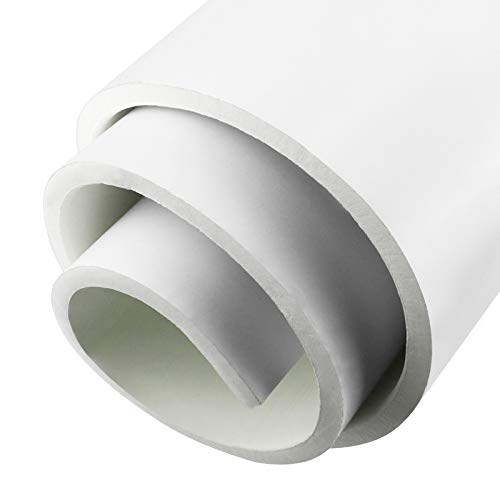
The DGSL sheet earns the top spot because it nails the two things that matter most: a dense closed-cell neoprene structure that resists compression, and a commercial-grade adhesive that sticks aggressively to metal, plastic, and painted surfaces. The white color makes marking and cutting significantly easier than black neoprene—users consistently report cleaner cuts for tail-light gaskets and pool-skimmer seals. At 59 inches long, it offers generous coverage for most home and automotive projects without leaving you short.
The adhesive backing is strong enough to hold on vertical surfaces, yet users note it can be peeled and repositioned carefully if you work slowly. The material itself is slightly stiffer than some competitors, which improves dimensional stability but means you should cut precisely rather than rely on stretch. It handles temperature fluctuations well, holding up inside window AC units and automotive engine bays where lesser foams would degrade.
The only real limitation is the 12-inch width—it works perfectly for drawer liners, gaskets, and window flaps, but larger continuous surfaces like floor underlayment will require multiple strips. The 0.5-inch thickness is consistent across the entire sheet, with no thin spots at the edges. This is the board to choose when you need a permanent, professional-grade seal that will outlast the project surrounding it.
Why it’s great
- Commercial-grade adhesive grips reliably on multiple surfaces
- Clean-cut edges with no fraying for precision gaskets
- White surface simplifies marking and visual inspection
Good to know
- 12-inch width limits use on large-area single-sheet applications
- Stiffer material requires careful cutting to avoid tearing
2. MYFAMIREA Neoprene Sponge Rubber Foam Sheet

The MYFAMIREA sheet stands out for its unusually thick adhesive layer, which creates a bond that users describe as almost permanent on clean, dry surfaces. The neoprene itself has a soft, spongy feel that compresses easily, making it ideal for applications where gentle cushioning is more important than structural rigidity—think instrument case padding, drawer liners, and buffer strips between cabinets and concrete walls. The 60-inch length provides an extra inch of coverage compared to the standard 59-inch rolls.
The closed-cell construction delivers genuine waterproofing and oil resistance, which is why multiple users choose it for marine applications like boat deck padding and jet ski footrests. The material cuts cleanly with standard scissors, though the aggressive adhesive can be difficult to manage on large flat surfaces—pulling the release paper off in sections rather than all at once prevents unwanted sticking. Users report that the neoprene holds up well under repeated foot traffic when used as anti-fatigue matting.
The trade-off comes in flexibility: the board arrives tightly rolled and can be stubborn to flatten completely, especially in colder temperatures. Some users note that trying to force it flat before the adhesive fully cures can cause the material to tear at stress points. If your project requires a board that lies perfectly flat immediately, consider warming it with a heat gun or leaving it unrolled overnight before installation. This is a premium choice for cushioned sealing projects where adhesive hold matters most.
Why it’s great
- Extra-thick adhesive layer bonds aggressively to many surfaces
- Soft neoprene provides excellent cushioning for delicate items
- Waterproof and oil-resistant for marine and outdoor use
Good to know
- Roll memory can make it difficult to lay completely flat
- Aggressive adhesive complicates repositioning
3. Artilife Closed Cell Foam Roll
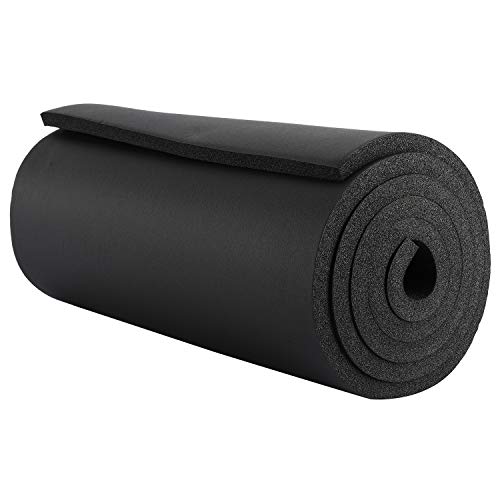
The Artilife roll uses EPDM rather than neoprene, which gives it a distinct advantage in outdoor and automotive sound-deadening applications. EPDM offers superior ozone and UV resistance compared to standard neoprene, meaning this board will not degrade or become brittle when exposed to sunlight over time. The 13-inch width is wider than most competitors, providing better coverage for panels, subwoofer boxes, and studio monitor isolation pads where every inch of coverage reduces acoustic bleed.
The closed-cell density is noticeably higher than budget-friendly options—users describe it as having a firm, cloud-like feel that resists permanent compression even under the weight of heavy tools or generator feet. It cuts cleanly with a utility knife and holds its shape without curling at the edges. Multiple users have used it to wrap water pressure tanks to prevent condensation, line tool chests, and create custom battery wraps for e-bikes, all reporting consistent performance across different climates.
The absence of an adhesive backing means you will need to supply your own contact cement or double-sided tape for permanent installations. This is actually a benefit for complex shapes and multi-layer setups where a pre-applied adhesive would create alignment problems. The 0.29-kilogram weight makes it exceptionally light for its size, reducing shipping weight and making it easy to handle for large-scale insulation projects. For soundproofing and thermal insulation applications, this is the most versatile non-adhesive option available.
Why it’s great
- EPDM material offers superior outdoor UV and ozone resistance
- 13-inch width provides better coverage than standard 12-inch rolls
- Firm density resists permanent compression under heavy loads
Good to know
- Non-adhesive design requires separate glue or tape
- Not as pliable as neoprene for tight-radius wrapping
4. Eunice Sponge Neoprene Foam Sheet
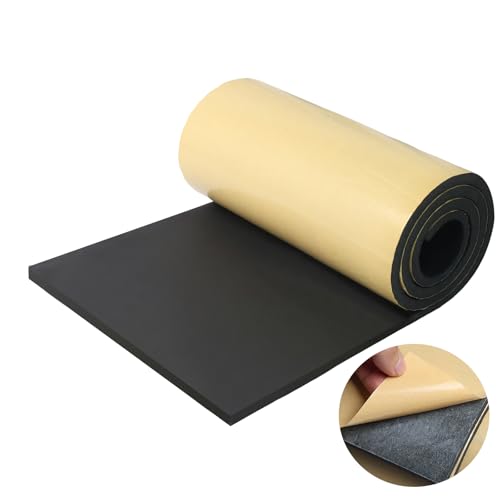
The Eunice sheet delivers peel-and-stick convenience at a price point that makes it an easy choice for home DIYers who need a reliable seal without overpaying. The adhesive backing is genuinely strong—users who applied it to metal bunk-bed ladder rungs found that removing it required rubbing alcohol, indicating a bond that will not peel off accidentally. The neoprene material is flexible enough to conform to curved surfaces yet dense enough to hold its shape when used as a vibration dampener under appliances.
One of the most practical applications reported is using this sheet inside leg braces to prevent ankle rubbing and blister formation—the half-inch thickness provides enough cushioning without adding bulk. The material is also heat-resistant enough to be used in sauna neck pillow covers, where it withstands 150°F+ temperatures without melting or off-gassing. It cleans easily with a damp cloth and maintains its adhesive properties even after exposure to sweat and moisture.
The main consideration is that the foam has limited memory recovery—users stepping repeatedly on the same area, such as ladder rungs or flooring spots, report permanent compression over time. For applications requiring long-term resilience under direct pressure, a higher-density board might perform better. For sealing, padding, and light cushioning tasks, however, the Eunice sheet offers the best balance of stickiness, flexibility, and cost in the adhesive category.
Why it’s great
- Strong peel-and-stick adhesive bonds to metal and plastic securely
- Flexible enough to conform to curved surfaces
- Heat-resistant for applications up to sauna temperatures
Good to know
- Limited memory recovery under sustained compression
- Adhesive residue can be difficult to remove from some surfaces
5. AMGSH Neoprene Closed-Cell Padding
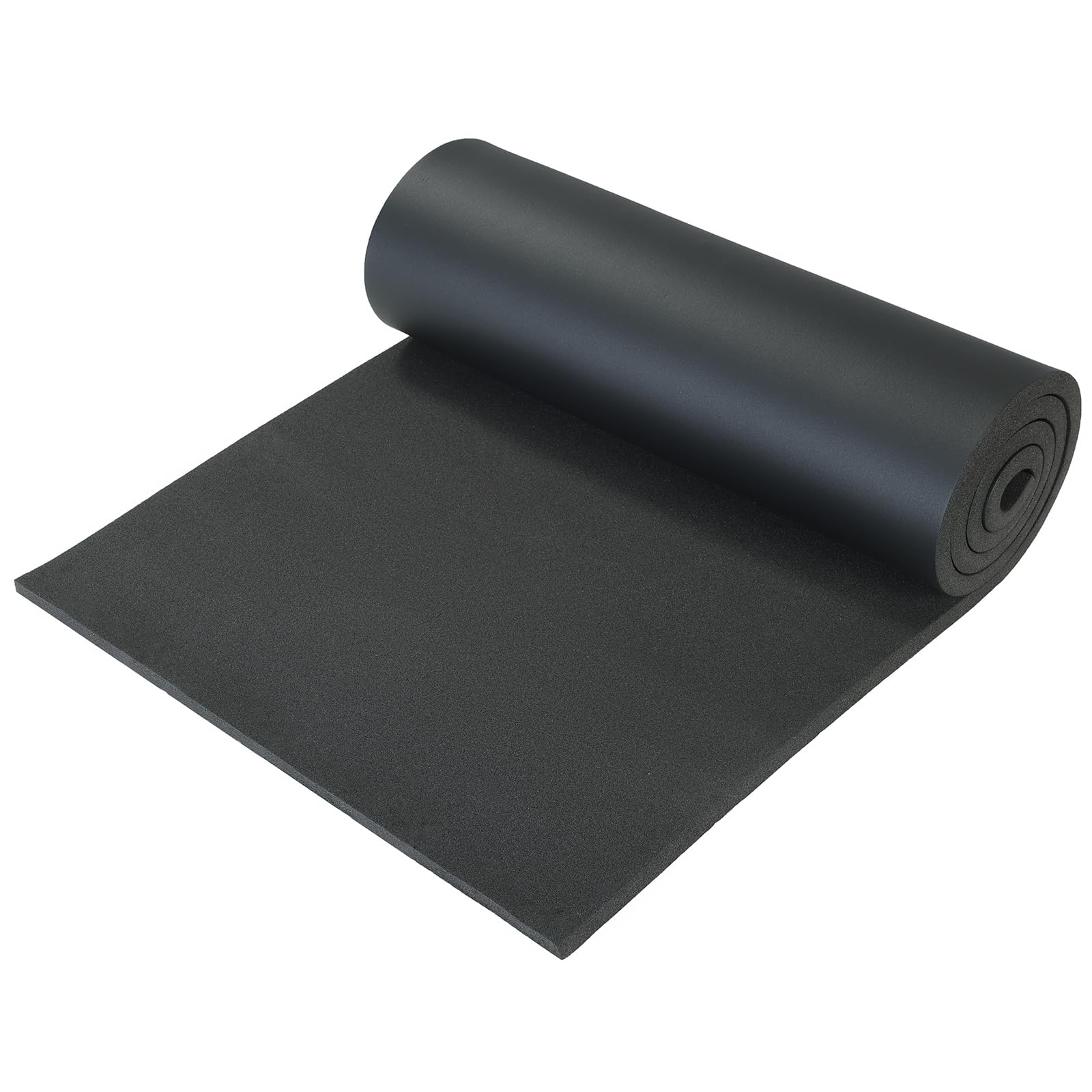
The AMGSH padding offers the widest sheet in this guide—17 inches across—which makes it the obvious choice for applications like RV window protection, laminate floor underlayment, and wide gasket runs where narrow rolls would require messy joins. The closed-cell neoprene construction is dense enough to be used as a protective film against rock impacts on a trailer’s front window, yet flexible enough to wrap around pipe insulation with hot-glue-secured seams.
Users specifically highlight its performance in extreme temperature conditions: one user wrapped it around fuel lines to prevent diesel gelling in subfreezing winter temperatures, and another noted it held up perfectly inside a restoration project car’s interior. The material handles engine oil, diesel, and gasoline without degrading, confirming the manufacturer’s claim of oil resistance. The non-adhesive design lets you experiment with placement before committing, which is invaluable for complex automotive or marine fabrications.
Hand-cut tolerance of ±1 inch means you should expect some dimensional variation, though the vast majority of users report the sheet matches its stated dimensions within acceptable limits. The material is notably softer than EPDM-based boards, which works in favor of cushioning applications but means it will compress more under constant heavy loads. For DIY gaskets, sealing strips, and wide-coverage padding where width matters more than rock-hard density, this is the strongest non-adhesive option.
Why it’s great
- Widest sheet at 17 inches for fewer seams on large projects
- Oil and fuel resistant for automotive applications
- Flexible and easy to cut for custom shapes
Good to know
- Softer than EPDM boards, compresses more under sustained weight
- Hand-cut tolerance of ±1 inch may affect precision projects
6. YOGHAVRS Adhesive Foam Padding Roll

The YOGHAVRS roll proves that entry-level pricing does not have to mean entry-level performance. The closed-cell neoprene material is genuinely flame retardant and non-absorbent, making it suitable for both indoor and outdoor applications where safety codes matter. The adhesive backing is described by users as very sticky, holding securely to jet ski decks and boat surfaces where vibration and moisture would peel weaker foams.
The 12-inch width and 59-inch length provide 708 square inches of coverage, which is enough to line several tool chest drawers, seal a pair of window AC units, or pad a viola case. Users report that the material cuts cleanly with scissors and stays in place once applied, with one particularly creative application involving a custom viola case liner that protects a 200-year-old instrument. The temperature range covers most standard use cases, from freezing garages to warm attics.
The foam is on the softer side of the spectrum, which limits its use in high-compression gasket applications. For its price tier, however, it delivers reliable adhesion, accurate dimensions, and genuine closed-cell protection that outperforms anything in its direct price range. It is the best gateway into the adhesive foam category for cost-conscious buyers.
Why it’s great
- Flame-retardant and non-absorbent for safe indoor use
- Strong adhesive holds securely on marine and automotive surfaces
- Accurate dimensions and easy cutting with standard scissors
Good to know
- Softer foam compresses under sustained clamping pressure
- Not ideal for heavy-duty gasket applications
7. NATGAI Neoprene Closed Cell Foam Roll
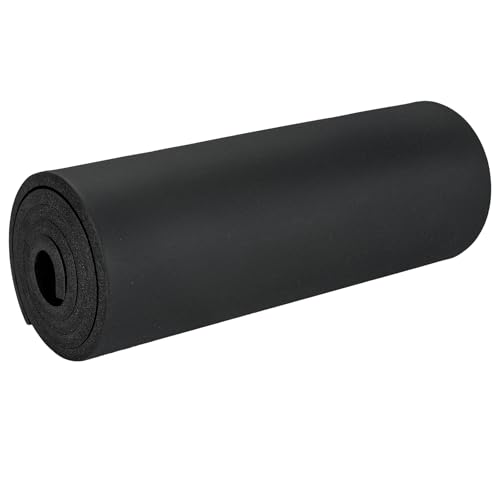
The NATGAI roll matches the AMGSH in width at 17 inches but differentiates itself with a notably softer, more compressible neoprene formulation that feels almost like a dense memory foam. This makes it the best choice for body-contact padding applications—users have successfully cut it into custom knee-pad inserts for tactical pants, lined medical braces to prevent skin irritation, and created aquarium leveling mats where exact floor contour following is required. The glossy surface finish resists dirt and wipes clean easily.
The non-adhesive design gives you complete control over placement and layer stacking. Users report that doubling up the 0.5-inch thickness creates a full inch of ground relief for kneeling pads, and the material compresses just enough to conform to uneven surfaces without bottoming out. It cuts easily with a sharp knife or scissors and leaves clean edges that do not fray. The 60-inch length provides generous coverage for long strips like window seals and door weatherstripping.
The primary limitation is the same softness that makes it comfortable: it will not hold up as well under sustained heavy compression from clamped surfaces or heavy machinery feet. Some users note that the 17-inch width, while generous, can be awkward for narrow applications where you are forced to trim off several inches of material waste. For flexible, body-friendly padding projects where comfort and conformability are the priority, the NATGAI foam delivers exactly what the spec sheet promises.
Why it’s great
- Soft, compressible material ideal for body-contact padding and braces
- 17-inch width reduces seams on wide coverage jobs
- Glossy surface resists dirt and cleans easily
Good to know
- Too soft for heavy-clamp gasket or floor underlayment duty
- Wide sheet may generate waste on narrow-project cuts
FAQ
Can 1/2 inch foam board be used as a gasket material?
How do I cut 1/2 inch foam board cleanly without frayed edges?
Will adhesive-backed foam boards stick to painted drywall or concrete?
Final Thoughts: The Verdict
For most users, the best 1/2 foam board winner is the DGSL Neoprene Adhesive Sheet because it combines commercial-grade adhesive with dense closed-cell construction that handles gaskets, padding, and sealing without compromise. If you prefer a non-adhesive board with wide coverage, grab the AMGSH Neoprene Padding. And for soundproofing and outdoor insulation, nothing beats the Artilife EPDM Foam Roll.