
Our readers keep the lights on and my morning glass full of iced black tea. As an Amazon Associate, I earn from qualifying purchases.
That 15.90 amp rating printed on the spec sheet is a laboratory number, achieved under perfect Standard Test Conditions (STC) at 25°C and 1000 W/m² irradiance. In the real world, your panel will almost never hit that exact figure — it fluctuates with heat, cloud cover, panel angle, and cable losses. The trick is understanding the gap between rated amps and usable amps, and picking a panel that minimizes that gap through better cell technology, busbar count, and temperature coefficient.
I’m Min — the co-founder and writer behind Gadgets Feed. I’ve spent more hours than I’d like to admit running spreadsheets on monocrystalline efficiency tables, bifacial gain calculations, and N-type vs. P-type degradation curves to separate marketing claims from real-world performance.
This guide is built on cross-referencing technical specifications with verified buyer results to help you find the absolute 15.90 amp solar panel that delivers the power you actually paid for.
How To Choose The Best 15.90 Amp Solar Panel
A 15.90 amp panel at 12V nominal pushes about 190W, but at 24V or 48V system voltages, that same current delivers significantly more total wattage. Your system voltage fundamentally dictates whether the panel meets your needs. Matching panel voltage to your charge controller and battery bank is the first step — a mismatch leaves amps on the table.
N-Type vs. P-Type Cells
N-Type monocrystalline cells use a different doping process that reduces light-induced degradation (LID) and improves low-light performance. With efficiency ratings climbing past 25%, N-Type panels maintain higher output in partial shade and high heat. P-Type panels are cheaper but degrade faster and lose more power as temperature rises — a critical factor for summer installations.
Busbar Count and Current Collection
More busbars mean shorter paths for electrons to travel from the cell to the tabbing wire. A 16BB panel reduces internal resistance, lowers hot-spot risk, and captures more current under micro-crack conditions than older 9BB or 10BB designs. This directly translates to higher usable amp output over the panel’s lifetime.
Portable vs. Rigid vs. Bifacial
Portable foldable panels trade some efficiency for convenience — they typically run 22-23% efficient and weigh 20-25 pounds. Rigid glass panels hit 25% efficiency and are built to last decades but require permanent mounting. Bifacial panels add 10-25% energy yield by capturing reflected light from the rear, making them ideal for ground mounts over reflective surfaces.
Quick Comparison
On smaller screens, swipe sideways to see the full table.
| Model | Category | Best For | Key Spec | Amazon |
|---|---|---|---|---|
| Callsun 4×100W N-Type | Rigid | Permanent rooftop arrays | 25% N-Type, 16BB, 400W total | Amazon |
| STAR 400W Frameless | Rigid | Low-maintenance installations | Frameless self-cleaning, 25% cells | Amazon |
| LVYUAN 400W Foldable | Portable | Camping and overlanding | 23% efficiency, 22 lbs, 36V | Amazon |
| DOKIO 400W Mono | Rigid | Garden and shed charging | 49.4 lbs, 9.84 ft MC4 leads | Amazon |
| CTOLITY 400W Foldable | Portable | Emergency backup | 23% efficiency, IP65, kickstand | Amazon |
| Greenmagic 400W Foldable | Portable | Lightweight travel | 21.5 lbs, 4 kickstands, 39V | Amazon |
| Renogy 400W Premium Kit | Kit | Complete off-grid systems | Includes 40A MPPT + Bluetooth | Amazon |
| JJN 400W Bifacial 2-Pack | Rigid | Maximum yield per panel | 25% N-Type, 16BB, bifacial | Amazon |
| Callsun 450W Bifacial 2-Pack | Rigid | High-density rooftop arrays | 25.4% N-Type, 16BB, double glass | Amazon |
In‑Depth Reviews
1. Callsun N-Type 16BB 400W Solar Panel (4×100W)
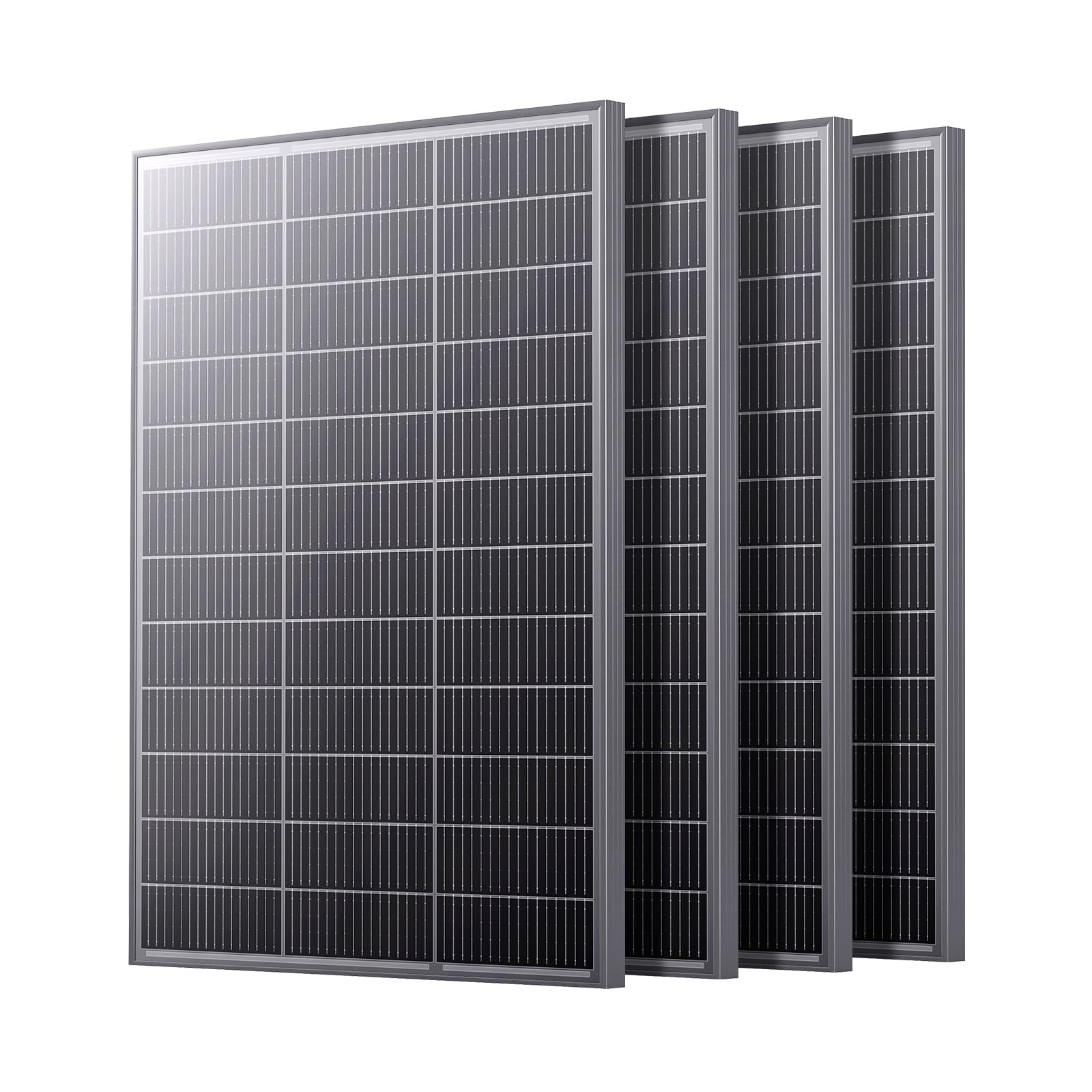
The Callsun 4×100W kit uses N-Type monocrystalline cells with a 16BB architecture that hits up to 25% efficiency — a meaningful jump over the 21-22% common in P-Type competitors. Each 100W panel measures 31.1 x 22.7 x 1.1 inches and weighs just 11.4 pounds, making this one of the most compact rigid 400W arrays available for RV roofs where space is tight. The -0.3%/°C temperature coefficient means you lose less power when summer heat pushes panel temp past 45°C, a real advantage over panels with -0.4 or -0.5 coefficients.
Buyers report 25-30% of rated output even in thick fog, and 125% of rated power in full sun with ideal conditions. The 3.2mm low-iron tempered glass and IP68 waterproof rating make this a 30-year panel, backed by a 25-year performance guarantee maintaining 84.5% output. The 46.8-pound total weight is manageable for a two-person rooftop install.
One buyer received a panel with a dented trim from warehouse handling, though Callsun issued a credit. The 16BB cells also deliver superior shade tolerance — multiple users confirm 92-95% output in partial shade compared to 70-80% with 9BB panels. For anyone building a permanent 12V/24V/48V system, this kit offers the best efficiency-to-cost ratio in the 400W class.
Why it’s great
- N-Type 16BB cells deliver measurable shade and heat tolerance advantages
- Compact panel dimensions enable tight RV roof layouts
- 25-year performance warranty with documented overperformance in real-world tests
Good to know
- Weighs 46.8 pounds total — requires two people for safe roof mounting
- Warehouse handling can occasionally dent frames despite intact boxes
2. STAR 400W Frameless Solar Panel (2×200W)
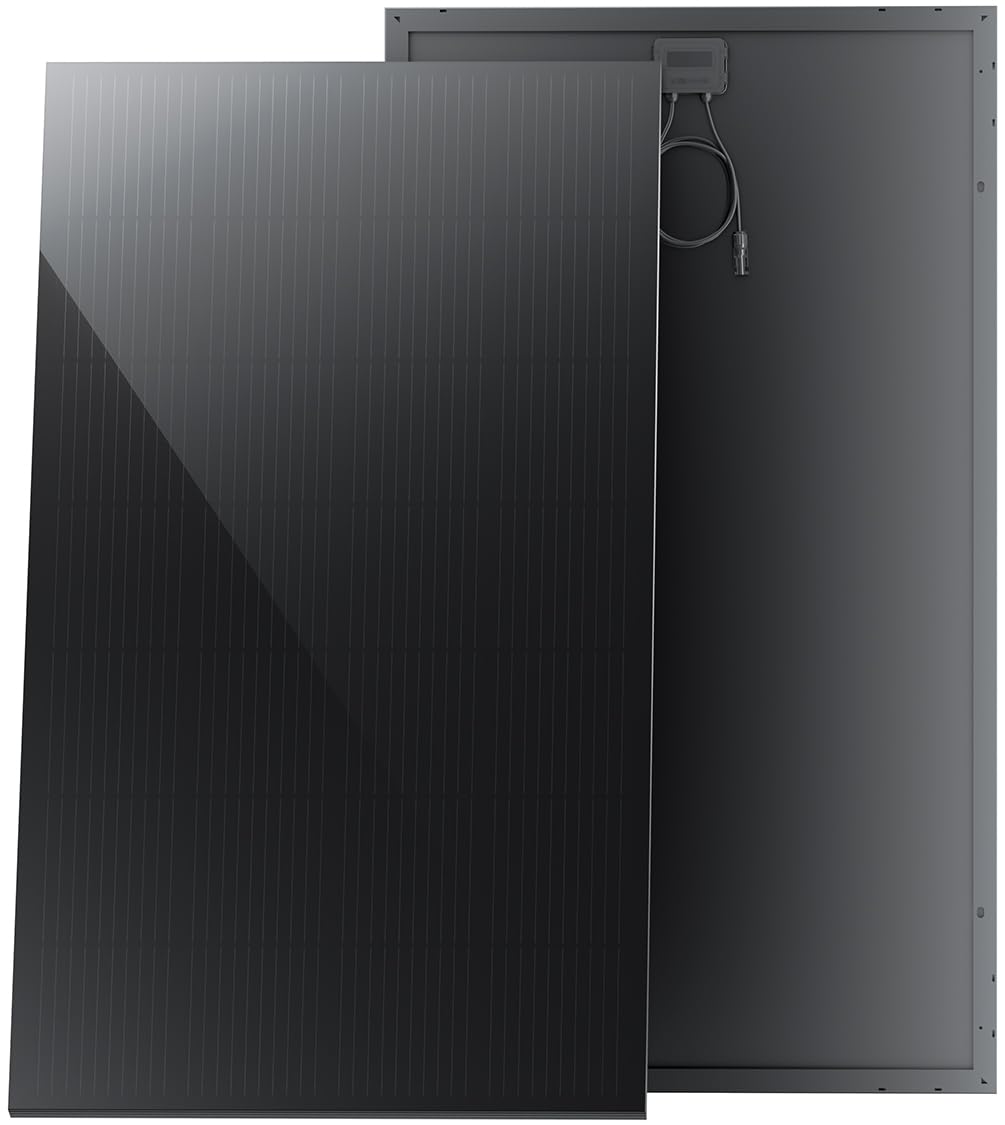
The STAR Cleanedge Series eliminates the aluminum frame to prevent dust and water buildup — a clever engineering choice for installations where maintenance access is difficult. Each 200W panel measures 53.7 x 30.3 x 1.4 inches and weighs 24.9 pounds, with the frameless design shaving off weight while maintaining structural integrity. The 25% high-efficiency monocrystalline cells are ETL and ISO9001 certified, with buyers confirming 940W peak from a rated 870W setup.
The self-cleaning claim holds up: without a frame edge to trap debris, rain washes dirt straight off the glass surface. Users report saving significant time on rooftop cleaning compared to traditional framed panels. The MC4 connectors are well-regarded, and the 9.12-amp per-panel rating stacks to 18.24A in parallel for 12V systems.
Some buyers have noted laminate separation at corners after a few months of exposure, and seller responsiveness appears inconsistent — one reviewer couldn’t reach support about corner delamination. The panels deliver strong output (90% of rated in Midwest April conditions, 123% in peak sun), but long-term durability remains a question mark compared to traditional framed panels with proven edge seals.
Why it’s great
- Frameless design effectively prevents debris buildup and simplifies cleaning
- Measured output often exceeds rated wattage in favorable conditions
- Compact size fits Promaster van roofs alongside AC units
Good to know
- Corner laminate separation reported after several months of use
- Seller support responsiveness is inconsistent based on buyer feedback
3. CTOLITY 400W Foldable Solar Panel
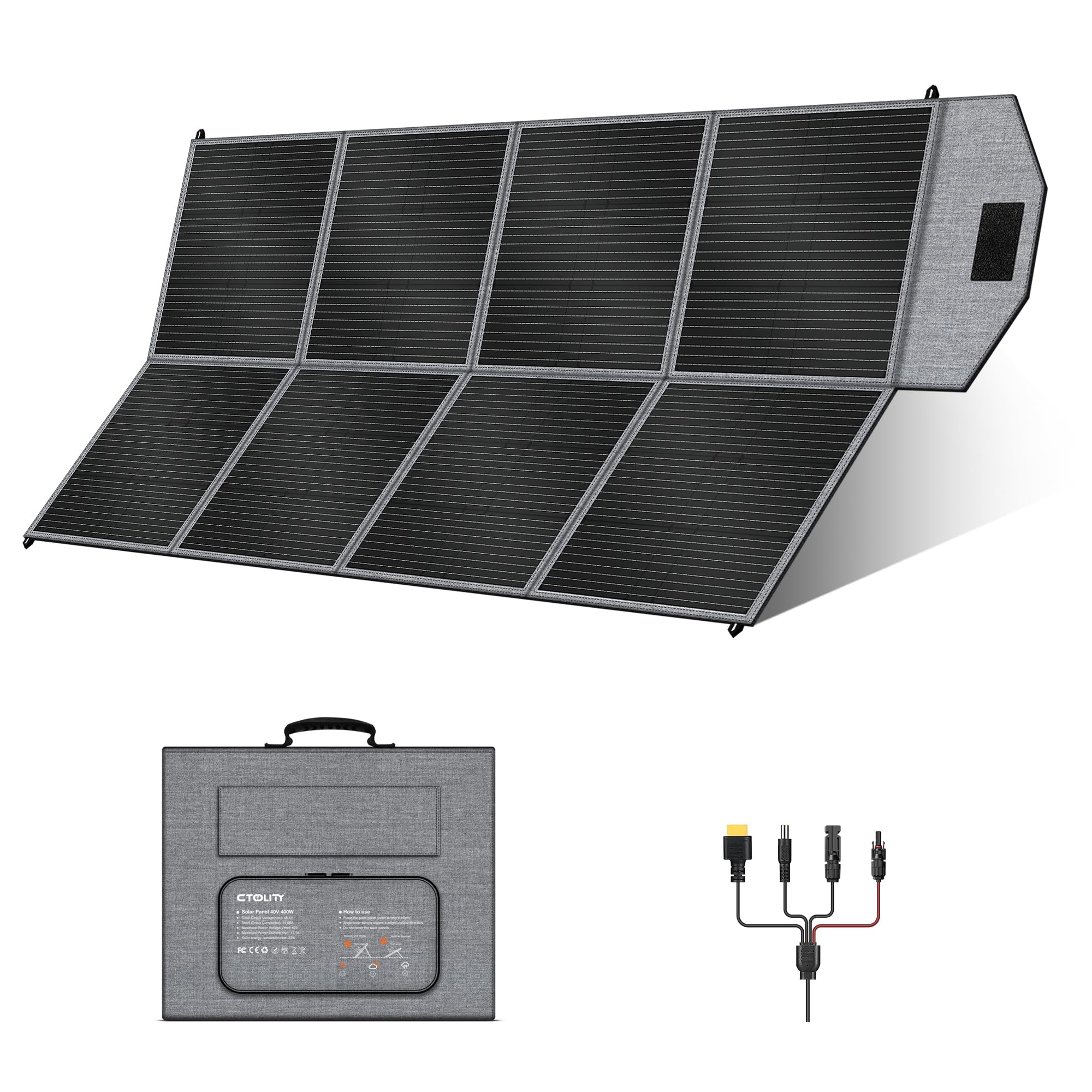
The CTOLITY 400W foldable panel uses monocrystalline cells with a 23% conversion rate and outputs 40V, making it directly compatible with high-voltage power stations like EcoFlow and Jackery without needing a separate MPPT controller in many cases. The IP65 waterproof rating with Oxford cloth and PET lamination protects against splashes and dust, though the junction box is not rated for immersion — keep it out of standing water.
Buyers report 369W immediate pairing with EcoFlow units and 330-431W peaks depending on conditions. The adjustable kickstand allows angle optimization, and the auto-reboot feature adapts to changing light conditions without manual intervention. One Florida buyer hit 431W at 12:30 PM in April, exceeding the rated 400W by 8%. The velcro straps hold tight during folding, and the unit packs down for trunk storage.
The panel is notably heavy for a portable unit — multiple users describe it as “large” and “not lightweight.” It’s best suited for car-camping where you drive to your site rather than backpacking. Some users report output below 400W in less-than-ideal sun, which is expected given the 23% efficiency ceiling. Still, for the price, it competes well with branded options costing significantly more.
Why it’s great
- Direct 40V output pairs cleanly with high-voltage power stations
- Adjustable kickstand and auto-reboot improve daily energy harvest
- Measured output sometimes exceeds 400W rated capacity
Good to know
- Heavy and bulky compared to smaller portable panels
- Output drops below rated in suboptimal sun conditions
4. DOKIO 400W Mono Solar Panel

The DOKIO 400W mono panel is a straightforward, no-frills rigid panel built for ground-mount and yard installations. The standout feature is the 9.84-foot built-in MC4 leads — longer than the typical 3-foot pigtails found on most panels, eliminating the need for extension cables and reducing connection points. Measuring 67.8 x 44.6 x 1.2 inches and weighing 49.4 pounds, this is a full-sized 400W panel that requires solid mounting hardware.
Buyers report excellent real-world performance: 560W from two 400W panels under partial shade, and consistent 90-94W output from the 100W version on hazy days. The packaging includes corner protectors, and panels arrive in good condition. The tempered glass and aluminum frame with sealed junction box handle outdoor exposure well in garden and shed environments.
At this price point, you get a functional 400W panel without advanced N-Type or bifacial features. The 400W is an STC rating — expect lower output in real conditions, especially with PWM controllers. DOKIO recommends an MPPT controller for best results. The panel works for 12V systems when wired in parallel, and pre-drilled holes align with standard Z-brackets and tilt mounts.
Why it’s great
- Long 9.84 ft MC4 leads eliminate the need for extension cables
- Sturdy packaging with corner protectors minimizes shipping damage
- Solid value for a simple, well-built 400W monocrystalline panel
Good to know
- Uses standard P-Type cells — lower efficiency than N-Type alternatives
- Large and heavy at 49.4 pounds; requires substantial mounting structure
5. LVYUAN 400W Portable Foldable Solar Panel
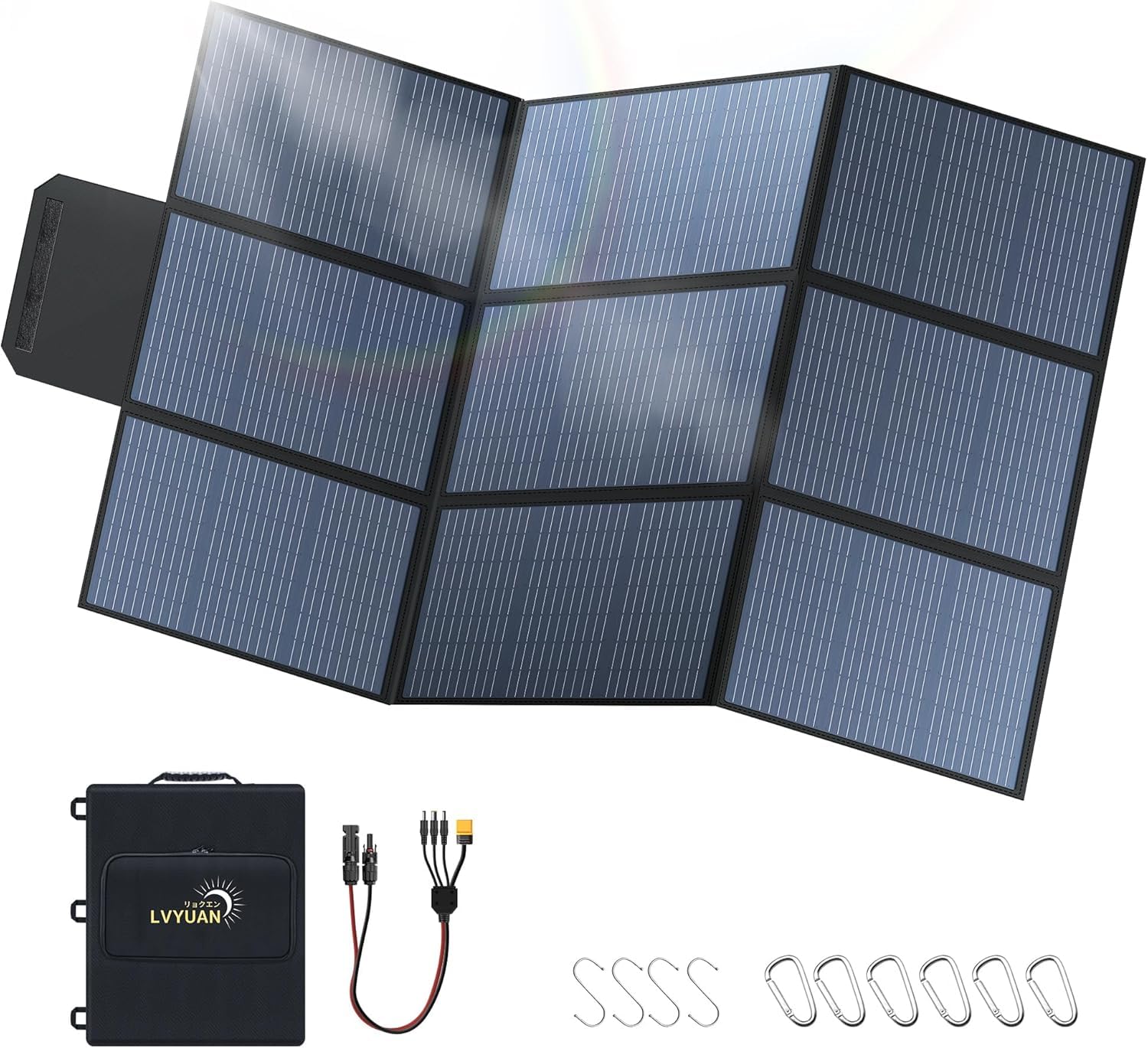
The LVYUAN 400W foldable panel uses a centripetal inward-folding design that compresses to 19.5 x 23.6 x 2.36 inches — a genuinely compact footprint for a 400W portable unit. When unfolded, it spans 84.6 x 57 inches, delivering enough surface area to hit 23% efficiency from its monocrystalline cells. The 12.5-amp rating at 36V makes it suitable for most modern power stations with MPPT controllers.
Buyers consistently report 325-398W peak output, with one user charging a 1024Wh battery in under 2 hours. The heavy canvas build feels durable, and the included adapter bundle (MC4, XT60, DC5521, DC5525, DC7909) covers almost every power station connector. Six carabiners and four S-hooks allow flexible attachment to backpacks, vehicle roofs, or ground stakes.
The 22-pound weight is manageable for a portable panel but heavier than some competitors — one buyer noted it’s heavier than their battery box. The webbing straps for folded storage are described as “loose” and could be improved. Compatibility is not universal: the panel uses a standard MC4 connection, so power stations with proprietary connectors (some EcoFlow or Bluetti units) won’t work without the correct adapter. The VOC must be within your power station’s input range.
Why it’s great
- Folds to a remarkably compact 19.5 x 23.6 x 2.36 inches for transport
- Wide adapter bundle covers MC4, XT60, and multiple DC barrel connectors
- Consistent real-world output of 325-398W from a 400W rated panel
Good to know
- Heavier than some competitors at 22 pounds
- May require adapters for power stations with proprietary charge controllers
6. Greenmagic 400W Portable Foldable Solar Panel
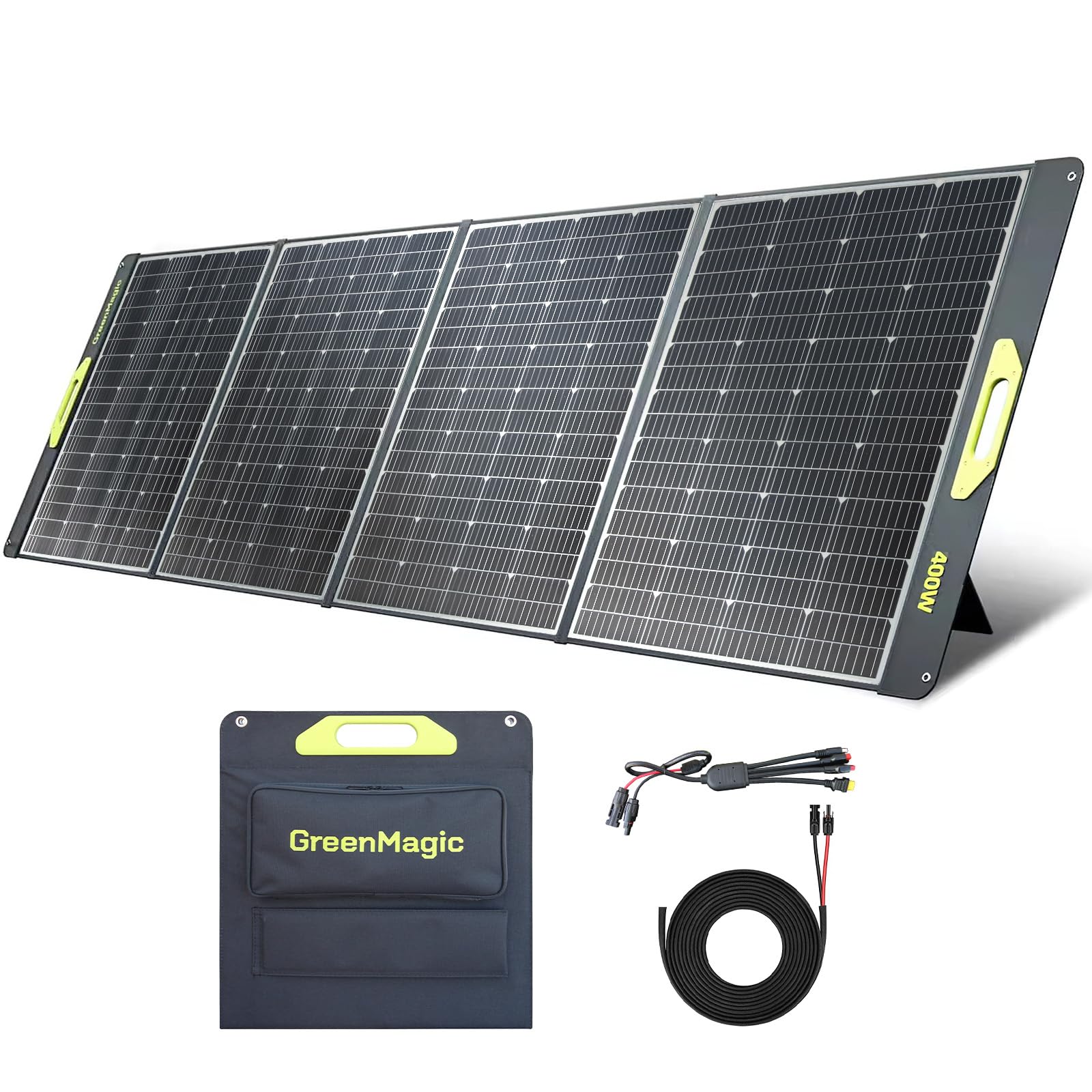
The Greenmagic 400W foldable panel stands out for its weight: at 21.5 pounds, it’s one of the lightest 400W portable options, folding down to 32.09 x 31.30 x 1.97 inches. The 21.5-23.5% conversion efficiency range is competitive, and the 39V output voltage pairs well with high-voltage MPPT controllers. The panel includes four built-in adjustable kickstands for angle optimization and four hanging loops for RV-side mounting.
Buyers report 280-330W output in direct summer sun — lower than the 400W rating due to heat-related voltage drop, which is normal for portable panels. The panel supports parallel/series wiring for daisy-chaining multiple units, with one user running two panels in parallel achieving 480-580W. The 840D Oxford cloth outer and IP65 waterproof rating provide reliable outdoor durability, though the junction box itself isn’t waterproof.
Multiple buyers praise the lightweight build and customer support responsiveness. One reviewer switched from a heavier 400W panel and noted the Greenmagic is noticeably easier to carry and set up. The lack of a stability pole (included with some competitors like EENOUR) means the kickstands must be positioned carefully on uneven ground. The panel has held up well after five months of use with no visible wear.
Why it’s great
- Lightest 400W portable at 21.5 pounds with compact folded dimensions
- Four adjustable kickstands and hanging loops enable versatile positioning
- Parallel/series wiring support for scalable solar arrays up to 800W+
Good to know
- Output drops to 280-330W in hot summer conditions due to voltage sag
- No built-in stability pole for windy conditions on uneven ground
7. Renogy 400W Premium Solar Kit with 40A MPPT

The Renogy 400W Premium Kit is the most complete package in this list: four 100W monocrystalline panels (22.5% efficiency), a 40A Rover MPPT charge controller with 99% tracking efficiency, a BT-1 Bluetooth module for smartphone monitoring, Z-brackets, adaptor kit, tray cables, and ANL fuses. The panels use Grade A+ cells with EL testing and are backed by a 10-year material warranty plus 3-year controller warranty. The 3.2mm low-iron glass and 35mm frame handle 2400Pa wind and 5400Pa snow loads.
Buyers with three-plus years of ownership report zero issues — the kit powers full off-grid setups including gaming PCs, refrigerators, and Keurig machines. The 40A MPPT controller outperforms PWM by 30%, and the temperature sensor adjusts charging based on battery temperature. One user runs their entire gaming PC (180-480W draw) off this kit with a 200Ah battery bank, recharging from 77Ah to 200Ah in 8 hours even with cloud cover.
The kit has practical quirks: the panel-to-controller wiring is short (plan your layout), the included 30A fuse block is bulky, and the Bluetooth module is sometimes slow to connect and unreliable. Some users recommend adding a battery shunt for accurate state-of-charge monitoring instead of relying solely on the BT-1. The panels themselves perform well in cloudy conditions, making this a reliable entry point for anyone building their first off-grid system with minimal guesswork.
Why it’s great
- Complete system with 40A MPPT, Bluetooth, fuses, and mounting hardware included
- Proven long-term reliability — multiple buyers report 3+ years of daily use
- MPPT controller delivers 30% more harvest than PWM in partial sun
Good to know
- Panel-to-controller cables are short and may require repositioning or extensions
- Bluetooth module can be unreliable for consistent state-of-charge data
8. JJN 400W Bifacial Solar Panel 2-Pack
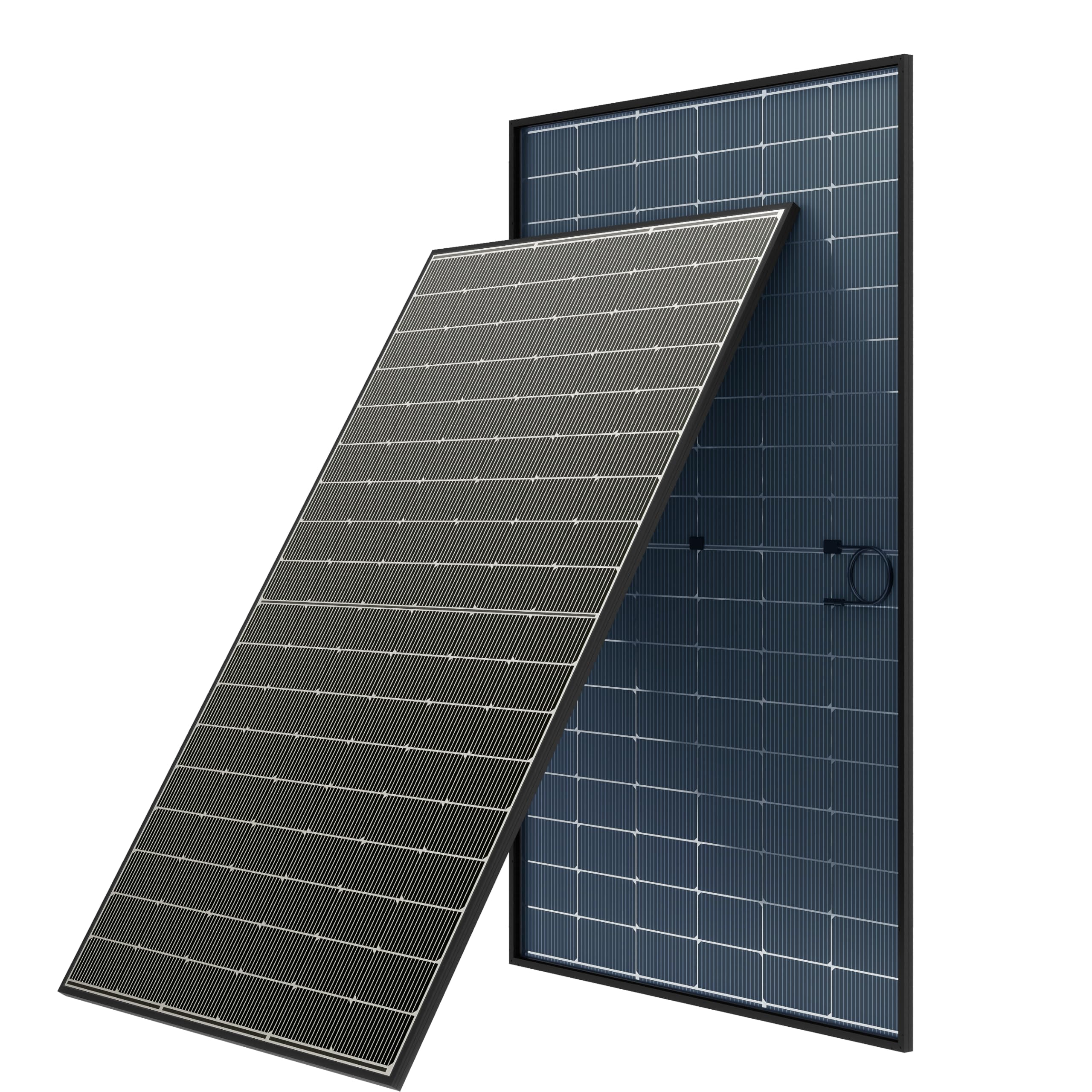
The JJN 400W bifacial panels use a transparent backsheet that captures reflected light from the ground or roof surface, boosting total energy yield by up to 25% compared to monofacial panels. The N-Type 16BB cells achieve 25% efficiency and are specifically designed to reduce shading impact — critical for installs where partial shadow from vents or antennas is unavoidable. Each panel weighs 47.3 pounds and measures 67.8 x 44.7 x 1.2 inches.
Buyers report exceptional performance: one user with eight panels on a camper achieved 106% of rated output (1060W from 1000W) in cool, full sun conditions. Another runs four panels producing 1200-1500W in parallel, covering 6000-10000 Wh/day for baseline home power. The bifacial gain is real — users note 380+W per panel on mobile ground mounts and 100+W even on cloudy days.
Some buyers have noted small micro-cell dot damage on the surface, though output remains unaffected. The 30-year transferable power output warranty from JJN is among the longest in this category. These panels require careful angle optimization — flat mounting on RVs can reduce output to 70-90% of rating. At close to 95 pounds per 2-pack, shipping weight is substantial, and the panels arrive via freight with Amazon logistics.
Why it’s great
- Bifacial design adds 10-25% energy yield from ground-reflected light
- N-Type 16BB cells maintain strong output in partial shade conditions
- 30-year transferable warranty provides long-term investment security
Good to know
- Weighs nearly 95 pounds per 2-pack — requires two people for installation
- Angle optimization is critical; flat roof mounting significantly reduces bifacial gain
9. Callsun 450W Bifacial Solar Panel 2-Pack
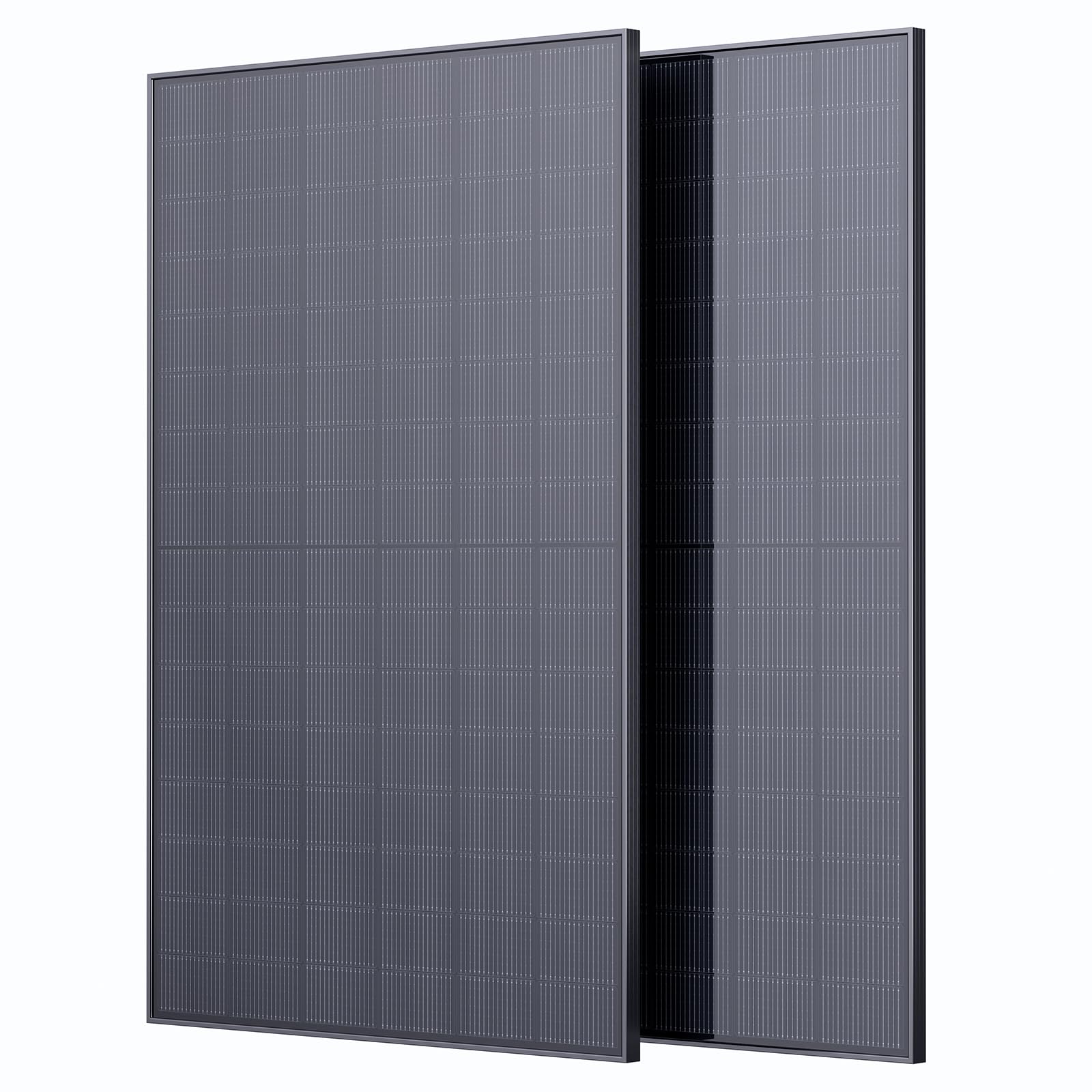
The Callsun 450W bifacial panel packs N-Type 16BB cells hitting 25.4% efficiency — the highest conversion rate in this comparison. The double-glass construction with an anodized aluminum frame and IP68 rating provides extreme durability against hail, snow loads, and wind. The 450W rating per panel means a 2-pack delivers 900W total capacity, reducing the number of panels and wiring connections needed for high-power arrays. Each panel measures 69.37 x 44.65 x 1.18 inches.
The dual-module parallel anti-shade design is a standout: if half the panel is shaded, the other half continues producing near full power — a genuine advantage for rooftop installs where chimney or vent shadows shift throughout the day. Buyers confirm consistent 420W peak per panel (93% of rated) due to bifacial gain from reflected ground light, and 1300+W from 6 panels on concrete surfaces. The 14.97-amp per-panel output at 25V stacks efficiently in series for 48V systems.
One user in Texas reported 380W output at 92°F, attributing the shortfall to heat-related voltage sag rather than panel defect — voltage was spot-on at 54.4V peak, but current was below the 10A rating. The 25-year performance guarantee maintaining 84.5% output provides confidence for long-term deployment. At this price point, these are best suited for serious off-grid builds where maximizing energy per square foot of roof space is the priority.
Why it’s great
- Highest efficiency at 25.4% with N-Type 16BB cells and double-glass build
- Anti-shade design keeps half the panel active when the other half is shaded
- 450W per panel reduces total module count for high-capacity arrays
Good to know
- Price point places it firmly in premium-tier territory
- Output can dip to 380W in extreme heat due to normal voltage sag
FAQ
What does 15.90 amp mean for my solar setup?
Should I choose a rigid panel or a portable foldable panel?
Do I need an MPPT controller with a 15.90 amp panel?
How does partial shade affect a 15.90 amp panel?
Final Thoughts: The Verdict
For most users building a permanent 12V/24V/48V array, the 15.90 amp solar panel winner is the Callsun 4×100W N-Type Kit because of its 25% N-Type efficiency, 16BB construction, and the best combination of performance guarantees and compact panel size. If you need a complete off-grid system with minimal setup complexity, grab the Renogy 400W Premium Kit — it includes everything except batteries and has proven reliability over years of daily use. And for maximizing energy per square foot with bifacial gains, nothing beats the JJN 400W Bifacial 2-Pack, which consistently overperforms its rated output in ground-mounted installations.