
Our readers keep the lights on and my morning glass full of iced black tea. As an Amazon Associate, I earn from qualifying purchases.
Eight thousand horizontal lines of resolution is not a marketing number—it is four times the pixel density of 4K and sixteen times that of Full HD. The moment you punch into an 8K frame in post to reframe a locked-off interview or extract a crisp 33MP still from a video clip, you understand why true hybrid shooters are abandoning the 4K ceiling. But the gap between a camera that *records* an 8K signal and one that *handles* an 8K workflow without thermal shutdown, crippled autofocus, or media costs is where most buyers get burned.
I’m Min — the co-founder and writer behind Gadgets Feed. After analyzing hundreds of hours of real-world user reports across 8K-capable bodies from Canon, Nikon, Sony, Panasonic, and Blackmagic, I’ve mapped the thermal limits, codec bottlenecks, and AF reliability patterns that separate a production-ready 8K rig from a spec-sheet trap.
This guide breaks down the nine most compelling options on the market today, from dedicated cinema boxes to stills-first powerhouses, so you can match the right sensor readout and recording pipeline to your actual shooting environment and find the best 8k camera for your specific needs.
How To Choose The Best 8K Camera
Three variables define your usable 8K experience: thermal endurance during continuous recording, codec and media cost per minute, and the quality of autofocus at high frame rates. Ignore any one of these and your + body becomes a glorified 4K camera with a heat warning.
Thermal Management and Record Time Limits
A camera that can shoot 8K RAW for two minutes before showing a red thermometer icon is functionally useless for interviews, ceremonies, or long-form documentaries. Look for active cooling—internal fans (Canon EOS R5 C, Sony FX3), large heat sinks (Nikon Z 8), or sensor-shift power budgets—over passive designs that rely on metal chassis conduction alone. Check ambient-temperature ratings: a camera rated for 40°C continuous operation will behave very differently in a sun-baked studio versus one spec’d at 25°C.
Codec Depth and Media Backbone
8K at 10-bit 4:2:2 H.265 demands roughly 800–1200 Mbps, which a V90 SD card can just barely sustain. 8K RAW or ProRes RAW pushes past 2500 Mbps, forcing you into CFexpress Type B or external SSD recording over USB-C. The Blackmagic Pocket 6K line, for instance, trades internal raw 8K for a 6K sensor but offers extremely affordable SSD recording; the Sony Alpha 1 II delivers 8K 4:2:2 10-bit from 8.6K oversampling but demands high-end CFexpress cards. Calculate your media cost-per-minute before committing to a platform.
Autofocus Reliability at 8K Resolutions
Pixel-level scrutiny at 8K magnifies every focus hunt, micro-jitter, and breathing artifact that 4K would mask. Phase-detect systems with deep-learning subject recognition—Canon Dual Pixel CMOS AF II, Nikon’s 3D-tracking with EXPEED 7, Sony’s AI processing unit—maintain confidence through 8K clips. Contrast-detect-only systems (older Blackmagic Pocket models) require external monitor and pull-focus discipline. For solo operators, reliable AF is not a luxury; it is the difference between one usable take and five resets.
Quick Comparison
On smaller screens, swipe sideways to see the full table.
| Model | Category | Best For | Key Spec | Amazon |
|---|---|---|---|---|
| Nikon Z 8 | Hybrid Mirrorless | Professional hybrid stills/video | Internal 8K/60p N-RAW, 45.7MP stacked sensor | $3,696.95Amazon |
| Canon EOS R5 C | Hybrid Cinema | Unlimited 8K/60p RAW with active cooling | 8K/60P internal RAW, built-in cooling fan | $2,999.00$3,899.00Amazon |
| Sony Alpha 1 II | Flagship Mirrorless | 50MP stills + 8K oversampled 4K | 50.1MP sensor, 8K 4:2:2 10-bit, 30fps burst | $6,998.00Amazon |
| Canon EOS R5 | Hybrid Mirrorless | High-resolution stills and occasional 8K | 45MP, 8K RAW internal, 20fps electronic shutter | $2,599.00$3,298.01Limited time dealAmazon |
| Sony Alpha FX3 | Cinema Line | Pro video with extreme low-light and fan-cooling | 4K 120fps, 15+ stops DR, active fan | $4,298.00Amazon |
| Panasonic LUMIX S1RII | Hybrid Mirrorless | 8K video with high-res stills and AI AF | 44.3MP, 8K video, AFC 40fps burst | $2,997.99$3,299.99Amazon |
| Nikon D850 | DSLR | High-res stills with 8K time-lapse capability | 45.7MP BSI CMOS, 8K time-lapse output | $2,433.94Amazon |
| Blackmagic 6K Pro | Cinema Camera | High-end production with internal ND and RAW | 6K Super 35, 13 stops DR, built-in ND filters | $2,835.00Amazon |
| Blackmagic 6K | Cinema Camera | Budget cinema rig with EF lens compatibility | 6K Super 35, 13 stops DR, SSD recording | $2,375.00Amazon |
In‑Depth Reviews
1. Nikon Z 8

The Nikon Z 8 packs the 45.7MP stacked BSI sensor and EXPEED 7 processor from the flagship Z9 into a body that is 30% smaller, yet retains internal 8K/60p recording in 12-bit N-RAW and ProRes RAW. The stacked sensor delivers a readout speed that virtually eliminates rolling shutter in 8K, while the deep-learning AF algorithm detects subjects down to -9 EV and tracks birds, planes, and cars with 3D consistency that mirrorless shooters previously only got from Sony.
In practice, the Z 8 handles 8K/30p clips of around 30 minutes before thermal management kicks in—longer than most event coverage requires, though hot-climate users report earlier throttling. The shutterless design is silent and wear-free, and the dual card slot (CFexpress Type B + SD UHS-II) gives flexibility, though CFexpress cards remain expensive. The 120fps JPEG burst mode at reduced resolution is a bonus for sports sequences where you need extreme slow-motion reference frames.
Real-world image quality from the 45.7MP sensor rivals medium format for color depth and dynamic range. Skin tones are natural, highlights roll off smoothly, and the internal N-RAW grade retains exceptional latitude. The learning curve is real—the menu system is deep and the user manual has errors—but the output is unmistakably pro-grade. For hybrid shooters who need one body for high-res stills and RAW 8K video, the Z 8 is the most complete package.
Why it’s great
- Internal 8K/60p N-RAW with minimal rolling shutter
- Reliable deep-learning AF with 3D tracking down to -9 EV
- Excellent dynamic range and color from the 45.7MP stacked sensor
Good to know
- 8K record times limited by heat in hot climates
- CFexpress Type B cards are expensive
- Deep customization menu has a steep learning curve
2. Canon EOS R5 C

The Canon EOS R5 C solves the original R5’s most infamous limitation by adding an internal cooling fan, enabling unrestricted 8K/60p recording in 12-bit RAW without thermal shutdown. This cinema-hybrid body shares the same 45MP full-frame sensor and DIGIC X processor as the R5 but runs a dedicated cinema OS with waveform, false color, timecode I/O, and 13 assignable buttons that mirror professional camcorder workflows.
The dual-pixel CMOS AF II with ITR X tracking remains among the most reliable in the industry, maintaining confidence even during 8K/60p clips. The 8K oversampling to 4K produces exceptionally clean, aliasing-free footage, and the XF-AVC broadcast-friendly codec is a welcome addition for productions that require standardized deliverables. The body is compact and comfortable in the hand, though battery life is poor in video mode—a V-mount rig or battery grip is essential for full-day shoots.
On the stills side, the R5 C captures 45MP RAW at 20fps with full autofocus, making it a capable event camera. The trade-off is the lack of IBIS (the R5 C relies on lens-based stabilization) and the absence of internal ND filters. The mini HDMI port is fragile and requires a clamp for studio work. For filmmakers who need unlimited 8K RAW recording in a body that doubles as a high-res stills camera, the R5 C is the most thermally honest option available.
Why it’s great
- Unlimited 8K/60p RAW recording thanks to active fan cooling
- Best-in-class Dual Pixel CMOS AF II for video and stills
- Cinema OS with waveform, false color, and timecode
Good to know
- No IBIS—relies on lens stabilization only
- Mini HDMI port is fragile; use a cable clamp
- Battery life in video mode is short; external power recommended
3. Sony Alpha 1 II

The Sony Alpha 1 II sits at the top of Sony’s mirrorless lineup with a 50.1MP Exmor RS stacked sensor and the BIONZ XR processor, enabling 8K 4:2:2 10-bit recording oversampled from a massive 8.6K readout. The result is 4K footage with exceptional spatial resolution and color depth, and native 8K files that hold up to aggressive grading. The dedicated AI processing unit delivers class-leading subject recognition—people, animals, birds, insects, vehicles—with 759 phase-detect points covering nearly the entire frame.
Continuous shooting at 30fps with full AF/AE tracking at full 50.1MP resolution makes this the fastest full-frame stills camera on the market, and the blackout-free EVF keeps you locked on fast action. The 8K recording is limited by thermal management to around 30 minutes at room temperature, which is sufficient for most A-cam applications but not for long-form interviews. The body has been redesigned with a deeper grip and improved button layout compared to the original A1.
The downsides are the price point, which places it firmly in flagship territory, and the media cost—CFexpress Type A cards are less common and more expensive than Type B. The variable-angle LCD is a welcome addition for video framing. For professionals who need 50MP stills at 30fps combined with 8K oversampled video that grades beautifully, the A1 II is the most technically accomplished hybrid camera money can buy.
Why it’s great
- 8.6K oversampled 8K produces spectacular detail and color
- 30fps full-resolution burst with zero blackout
- AI-based subject recognition tracks virtually any moving target
Good to know
- 8K record time limited to ~30 minutes thermally
- CFexpress Type A media is expensive and less common
- Flagship price may be overkill for non-action shooters
4. Canon EOS R5

The Canon EOS R5 was the camera that made 8K accessible to serious enthusiasts and working pros when it launched, and it remains a compelling option. Its 45MP full-frame stacked BSI CMOS sensor and DIGIC X processor deliver internal 8K RAW at up to 30fps, plus oversampled 4K HQ mode that is noticeably sharper than native 4K. The Dual Pixel CMOS AF II with 1,053 points and deep-learning subject tracking—people, animals, vehicles—is fast and sticky even at 8K resolution.
The infamous overheating issue is real: 8K/30p RAW clips hit thermal limits after roughly 20 minutes in moderate ambient temperatures, and 8K/60p is not available (the R5 does 8K/30p max). However, many users find that for event highlight reels, interviews under 15 minutes, or gimbal work, the heat limit is manageable. The 4K/120fps mode is excellent for slow motion and does not overheat. The 45MP stills at 20fps electronic shutter with full AF are still best-in-class for the price.
The build quality is excellent, with a weather-sealed magnesium-alloy body, effective IBIS, and a bright 5.76M-dot EVF. The 3.2-inch articulating touchscreen is useful for vlogging and low-angle work. The R5’s value proposition today is simple: you get near-flagship 8K and 45MP stills capabilities at a price that undercuts the R5 C and Z 8 by a substantial margin—provided you accept the thermal guardrails.
Why it’s great
- Internal 8K RAW at 30fps for a mid-range price
- Outstanding Dual Pixel AF II with animal/bird detection
- 45MP stills at 20fps with IBIS and weather sealing
Good to know
- 8K recording limited to ~20 minutes before thermal shutdown
- No 8K/60p—maxes out at 30fps
- Smaller body runs hot faster than the R5 C
5. Sony Alpha FX3

The Sony FX3 is technically a 4K camera, but it earns its place in an 8K discussion because of its 8K potential through external 16-bit RAW output and its role as a dedicated cinema companion to the A1 II. The full-frame sensor delivers 15+ stops of dynamic range and an ISO ceiling of 409,600, making it the undisputed low-light champion among compact cinema cameras. The built-in fan keeps recording unlimited in 4K/120fps, and the body is compact enough for gimbal and drone work.
The top handle with dual XLR inputs and physical audio controls turns the FX3 into a self-contained production rig without external recorders. The S-Log3 and S-Cinetone color science grade extremely well, and the 10-bit 4:2:2 internal recording at 600 Mbps is clean. The autofocus is Sony’s reliable Real-time Tracking with human and animal eye detection, though it is phase-detect rather than the AI-driven system in the A1 series.
The main limitation is the native resolution: you cannot record 8K internally. The FX3 is best used as a professional-grade B-cam to an 8K A-cam, or as the primary camera for low-light documentary and event work where 4K/120fps with extreme ISO performance is more valuable than 8K resolution. The pricing, with the bundled accessory kit, makes it a strong value for serious video-first shooters who prioritize sensitivity over pixel count.
Why it’s great
- Extreme low-light performance up to ISO 409,600
- Active fan cooling enables unlimited 4K/120fps recording
- Integrated XLR top handle with physical audio controls
Good to know
- No internal 8K recording—outputs 4K only
- External 16-bit RAW requires additional recorder
- Autofocus is phase-detect, not the latest AI system
6. Panasonic LUMIX S1RII

The Panasonic LUMIX S1RII marks Panasonic’s first entry into 8K mirrorless territory, combining a 44.3MP full-frame sensor with LUMIX’s distinctive color science and a new Phase Hybrid AF system that finally competes with Canon and Sony for reliability. The 8K video recording uses wide dynamic range LOG capture, and the camera supports 4K slow motion with high frame rates. The AFC 40 burst shooting mode is engineered for sports and wildlife, maintaining focus on fast-moving subjects.
Early reports highlight the lifelike color reproduction and the effective AI-powered human recognition that handles multiple intersecting subjects. The handheld high-resolution mode creates massive files without a tripod, useful for landscape and product work. The body is ruggedly built and features a large EVF, dual card slots, and a deep grip comfortable for all-day shooting.
However, thermal performance in 8K mode has drawn criticism—some units have overheated and shut down within two minutes of entering video mode, suggesting early firmware or hardware variability. Low-light autofocus has also been flagged as less confident than the competition, and the lens ecosystem for L-Mount, while growing, trails Canon RF and Sony E in volume and native 8K-capable glass. The S1RII is a promising debut that needs a firmware maturity cycle to fulfill its potential.
Why it’s great
- First Panasonic 8K with distinctive LUMIX color science
- Phase Hybrid AF with AI subject recognition
- Handheld high-res mode and robust build quality
Good to know
- 8K overheating issues reported on early units
- Low-light autofocus less reliable than competitors
- L-Mount lens ecosystem is still maturing
7. Nikon D850
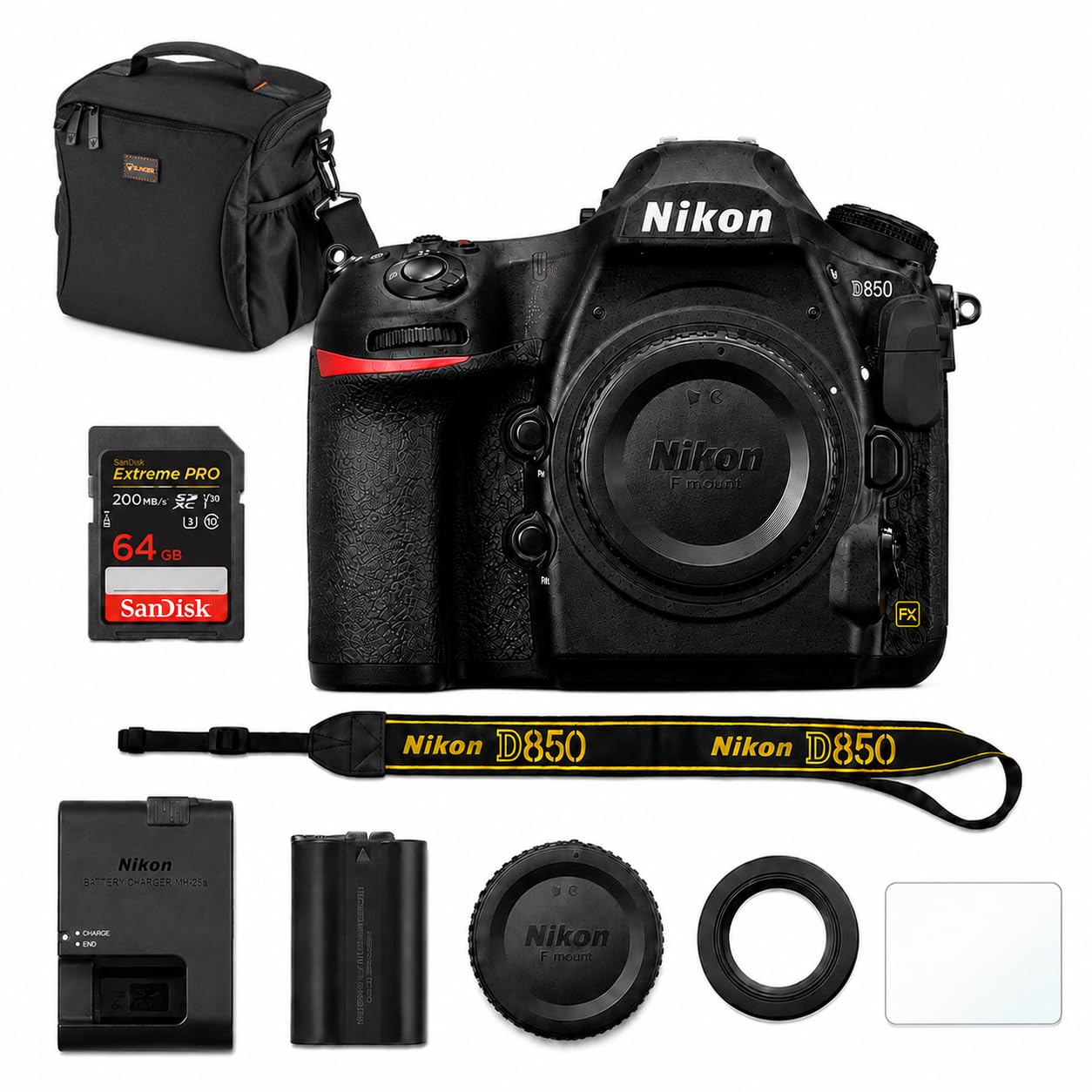
The Nikon D850 is a DSLR, not a native 8K video recorder, but its 45.7MP BSI CMOS sensor and EXPEED 5 processor can output 8K time-lapse movies through the Focus Shift Mode, making it a unique option for photographers who want 8K motion from a stills-centric workflow. The 153-point Multi-CAM 20K autofocus system remains one of the best phase-detect systems ever built, with reliable performance down to f/8 for wildlife and sports shooters using teleconverters.
The stills image quality is legendary: 45.7MP with exceptional dynamic range, low noise at ISO 64, and rich color depth that rivals modern mirrorless sensors. The 7fps burst (9fps with the optional battery grip) is modest by today’s standards, but the buffer depth of 51 RAW frames is impressive for the era. The 3.2-inch tilting touchscreen and SnapBridge Wi-Fi/Bluetooth for tethering make it workable for studio and location shoots.
The bundle includes a 64GB SD card and shoulder bag, adding practical value for first-time D850 buyers. The D850 is heavy compared to mirrorless alternatives, and the optical viewfinder lacks the exposure preview and AF point overlay of an EVF. For photographers who primarily shoot stills but want the ability to create 8K time-lapses in-camera, the D850 delivers outstanding value at a mid-range price point.
Why it’s great
- Legendary 45.7MP stills image quality and dynamic range
- 8K time-lapse output from Focus Shift Mode
- Excellent 153-point AF system for sports and wildlife
Good to know
- No native 8K video recording—time-lapse only
- Heavier than modern mirrorless bodies
- OVF lacks live exposure and focus point preview
8. Blackmagic Design Pocket Cinema Camera 6K Pro

The Blackmagic Pocket Cinema Camera 6K Pro operates at 6K resolution, not 8K, but it is a mandatory consideration for any 8K buyer because it offers an alternative philosophy: lower resolution, higher bit-depth, and greater production value per dollar. The Super 35 sensor captures 6144 x 3456 with 13 stops of dynamic range and dual native ISO up to 25,600, producing clean, film-like images that grade as well as cameras costing three times as much. The built-in 2/4/6-stop ND filters are invaluable for outdoor cinematography.
Recording options include 12-bit Blackmagic RAW up to 60fps in 6K, as well as Apple ProRes for easy post-production. The included DaVinci Resolve Studio key makes it a complete color grading package. The 5-inch tilting HDR LCD is bright and color-accurate, reducing the need for an external monitor in many scenarios. The dual card slots (CFast 2.0 + SD/UHS-II) and USB-C SSD recording give flexible media options at reasonable cost.
The trade-offs are significant for hybrid shooters: no autofocus worth depending on (contrast-detect only), poor battery life (the included NP-F570 is a start, but you will need multiple spares), and the ergonomics are cinema-camera-first, not handheld-friendly. The auto exposure system has been criticized for harsh iris adjustments during lighting changes. For dedicated filmmakers who manual-focus and power their rig externally, the 6K Pro is a value powerhouse; for run-and-gun shooters, it requires more discipline.
Why it’s great
- 13 stops of dynamic range and 12-bit Blackmagic RAW for excellent grading
- Built-in 2/4/6-stop ND filters for outdoor control
- DaVinci Resolve Studio included; affordable USB-C SSD recording
Good to know
- 6K resolution only—no 8K sensor
- No reliable autofocus; purely manual focus
- Poor battery life; requires multiple NP-F spares
9. Blackmagic Design Pocket Cinema Camera 6K
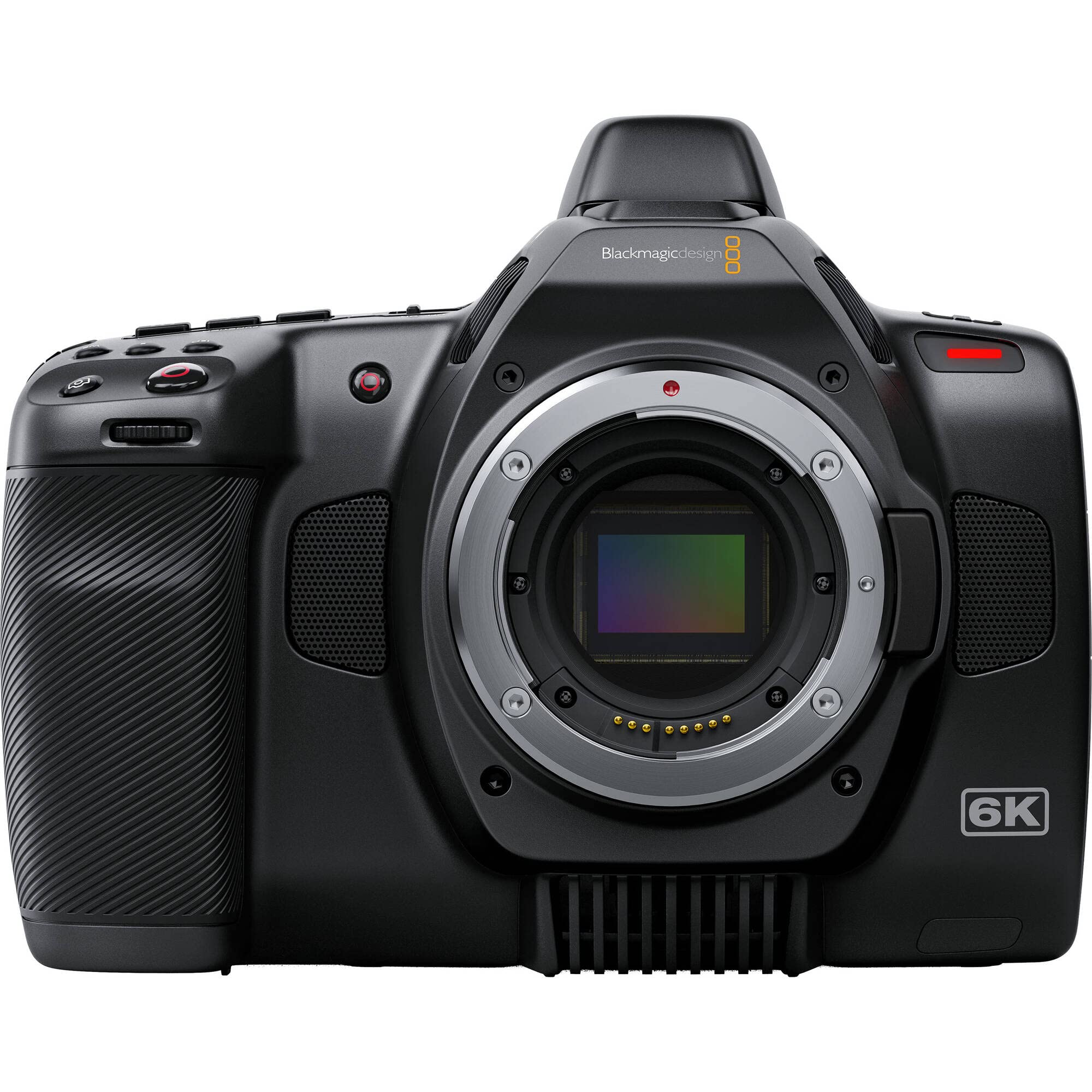
The original Blackmagic Pocket Cinema Camera 6K shares the same Super 35 sensor, 13 stops of dynamic range, and Blackmagic RAW/ProRes recording as the 6K Pro, but without the built-in ND filters and tilting HDR screen. It uses the same EF lens mount, giving it access to a vast library of Canon EF glass at auction prices. Recording up to 6K 50fps and up to 120fps in 2.8K windowed mode, it is a capable entry point into serious filmmaking.
The lack of internal ND filters is the biggest functional difference—outdoor shooters need a matte box or screw-on variable ND. The LCD is smaller and less bright than the Pro’s, though it remains usable. The camera records directly to SD/UHS-II cards or external SSDs via USB-C, keeping media costs low. The included DaVinci Resolve Studio license again adds substantial value for color grading and editing.
User reports highlight soft images with some zoom lenses but noticeably sharper results with primes, a limitation of the sensor’s optical low-pass filter design. A small number of early units had overheating issues, though this appears to be unit-specific rather than systemic. The 6K is best for indie filmmakers and students who want RAW recording on a budget, who will manual-focus anyway, and who do not mind adding external ND and monitoring gear.
Why it’s great
- Affordable entry to 6K Blackmagic RAW with 13 stops DR
- Low-cost USB-C SSD recording media
- EF mount gives wide access to affordable used glass
Good to know
- No built-in ND filters—requires external solution
- Images softer with zooms; primes recommended
- Smaller, less bright LCD than the 6K Pro
FAQ
Do I need 8K if I only deliver in 4K?
What is the difference between 8K DCI and 8K UHD?
How much storage do I need for an 8K project?
Final Thoughts: The Verdict
For most hybrid shooters, the best 8k camera overall is the Nikon Z 8 because it balances internal 8K/60p N-RAW, class-leading stills resolution, and reliable autofocus in a body that is compact enough for field work. If your priority is unlimited 8K/60P RAW recording with active cooling for long-form production, the Canon EOS R5 C is the more filmmaker-friendly choice. And if you need 50MP stills at 30fps combined with the most advanced autofocus on the market, the Sony Alpha 1 II delivers the highest technical performance, albeit at a flagship price.
Product prices and availability are accurate as of the date/time indicated and are subject to change. Any price and availability information displayed on Amazon at the time of purchase will apply to the purchase of this product. As an Amazon Associate I earn from qualifying purchases.
CERTAIN CONTENT THAT APPEARS ON THIS SITE COMES FROM AMAZON. THIS CONTENT IS PROVIDED "AS IS" AND IS SUBJECT TO CHANGE OR REMOVAL AT ANY TIME.
Amazon and the Amazon logo are trademarks of Amazon.com, Inc. or its affiliates.