
An abstract board game strips away theme and luck, leaving only pure spatial logic, pattern recognition, and the cold, satisfying pressure of outmaneuvering an opponent with no dice to save you. The best examples create deep strategic tension from a handful of simple rules, delivering a fifteen-minute brain burner or a multi-layered forty-minute puzzle where every move carries weight. Whether you prefer the geometric grind of tile placement or the branching branches of area control, the right choice transforms a quiet evening into a duel of wits.
I’m Min — the co-founder and writer behind Gadgets Feed. I have spent countless hours analyzing the rule sets, component quality, and long-term replayability of dozens of abstract strategy titles to identify the ones that truly reward repeated play.
This guide cuts through the crowded market to highlight the real contenders for the best abstract board game for your table, whether you play solo, head-to-head, or with a full group of four.
How To Choose The Best Abstract Board Game
The beauty of abstract games is their minimalism, but that same simplicity means small differences in mechanics dramatically alter the feel. The right game for you depends on player count, session length, and how much you value a shifting battlefield versus a fixed setup.
Player Count and Scalability
Many pure abstracts are designed for exactly two players, maximizing direct conflict and perfect information. If you frequently host game nights with three or four, look for titles that include a modular board that scales — such as Battle Sheep — or variable rules that keep all players engaged without awkward downtime. Games that play well at both two and four are rare and significantly more versatile for a growing collection.
Component Quality and Portability
Abstract games often rely on tactile feedback — the heft of a wooden pawn, the satisfying click of a tile, the smoothness of a playing piece. High-end components like solid wood or dense acrylic elevate the play experience and can double as table decor. If you travel, look for mini editions like Quoridor Mini or Quarto Mini that shrink the board and pieces without sacrificing legibility or grip.
Quick Comparison
On smaller screens, swipe sideways to see the full table.
| Model | Category | Best For | Key Spec | Amazon |
|---|---|---|---|---|
| Dimension | Real-Time Puzzle | Simultaneous 3D speed puzzle | 60 multi-colored spheres | Amazon |
| Harmonies | Tile Placement | Solo or family creative puzzle | 120 wooden tokens, animal cubes | Amazon |
| Project L | Engine Building | Fast tactical tile-matching | 90 acrylic pieces, 9 shapes | Amazon |
| Lanterns: The Harvest Festival | Set Collection | Accessible family with shared turns | Tile-placement hand management | Amazon |
| Battle Sheep | Area Control | Modular board with high replay | 16 pasture boards, 64 sheep chips | Amazon |
| Quoridor Mini | Maze Construction | Portable two-player duels | 20 wooden fences, 4 wooden pawns | Amazon |
| Quarto Mini | Pattern Formation | Four-in-a-row variant, deep logic | 16 unique wooden pieces | Amazon |
In‑Depth Reviews
1. Dimension

Dimension breaks the turn-order mold by having every player build simultaneously, racing a timer to satisfy a set of spatial constraints printed on task cards. The 60 colorful spheres and four individual playing boards create a frantic, tactile experience where you must balance structural stability against scoring requirements — no waiting, no downtime, just pure real-time logic.
The constraint cards dictate how spheres must be placed on a three-dimensional grid, forcing you to think in height, color pattern, and adjacency rules all at once. This simultaneous play means a four-player round finishes in roughly twenty minutes, making it an ideal opener or a quick filler between heavier games. Experienced players can double the count to eight with a second copy, expanding the chaos.
Winning requires reading the task cards quickly and executing a plan under pressure, which rewards both spatial reasoning and rapid decision-making. The replayability is strong because the card combination changes every game, and the relatively simple acquisition cost places it firmly in the premium-accessible sweet spot. It is one of the few abstract games that genuinely works as a party brain-burner.
Why it’s great
- Simultaneous play keeps everyone engaged with zero downtime
- Three-dimensional puzzle adds unique spatial depth beyond flat tiles
- Quick setup and tear-down plus a solo-compatible scoring system
Good to know
- Scoring can feel a little bookkeeping-heavy during the first two rounds
- One-score tokens run low in high-player-count games
2. Harmonies

Harmonies dresses abstract tile placement in a stunning nature theme, but the core is pure spatial puzzle. You build a three-dimensional landscape by stacking wooden tokens on your personal board, then place animal cubes onto matching terrain tiles to score. The rulebook fits on a single page, yet the branching tactical decisions — which terrain to build, which animal to attract, when to use your limited Nature’s Spirit cards — deepen with every round.
The 120 wooden tokens and 79 animal cubes have a satisfying heft, and Libellud’s art direction makes the tableau a genuine tabletop centerpiece. Each player operates on their own board, so interaction is limited to the shared animal card market and the occasional blocking of desired terrain types. This makes it an outstanding solo game and a peaceful competitive experience for groups who prefer parallel puzzle-solving over direct conflict.
Harmonies supports up to four players and includes a dedicated solo mode with its own scoring targets. The three difficulty levels built into the animal card deck keep the puzzle fresh long after the first dozen plays. If you want a meditative, high-component-quality abstract that works brilliantly as a solo wind-down, this is your best bet.
Why it’s great
- Premium wooden components with gorgeous illustrated cards
- Excellent solo mode with scalable difficulty
- Three-dimensional stacking creates a satisfying physical puzzle
Good to know
- Very low player interaction — feels like multiplayer solitaire
- Game can end abruptly if the animal card deck runs out early
3. Project L

Project L distills the essence of an engine-building puzzle into a fast, tactile tile-matching race. You start with two basic pieces and use three actions per turn to acquire new shapes from a central pool, then use those shapes to fill puzzles on your player mat. Filling a puzzle earns points and unlocks more powerful pieces, creating a satisfying growth curve that can explode in the final two rounds.
The 90 acrylic pieces in nine distinct shapes are smooth, colorful, and click together satisfyingly. The puzzles — 32 white and 20 black — offer a clear difficulty gradient, and the black puzzles introduce smaller holes and tighter tolerances that demand precise piece management. The solo mode mirrors the competitive feel, challenging you to beat a target score across a set number of rounds.
Game length is roughly 30 minutes regardless of player count, and the clean iconography means you can teach the rules in under two minutes. It scales cleanly from two to four players and works equally well as a family-weight game or a quick strategic warm-up. At the mid-range price point, the component quality and replayability are exceptional.
Why it’s great
- Tactile acrylic pieces create a satisfying physical puzzle experience
- Engine-building progression feels rewarding and explosive
- Solo mode is robust and replayable with variable puzzle layouts
Good to know
- Experienced players can quickly outpace newcomers, creating a skill gap
- Some black puzzle configurations can feel luck-dependent based on available pieces
4. Lanterns: The Harvest Festival
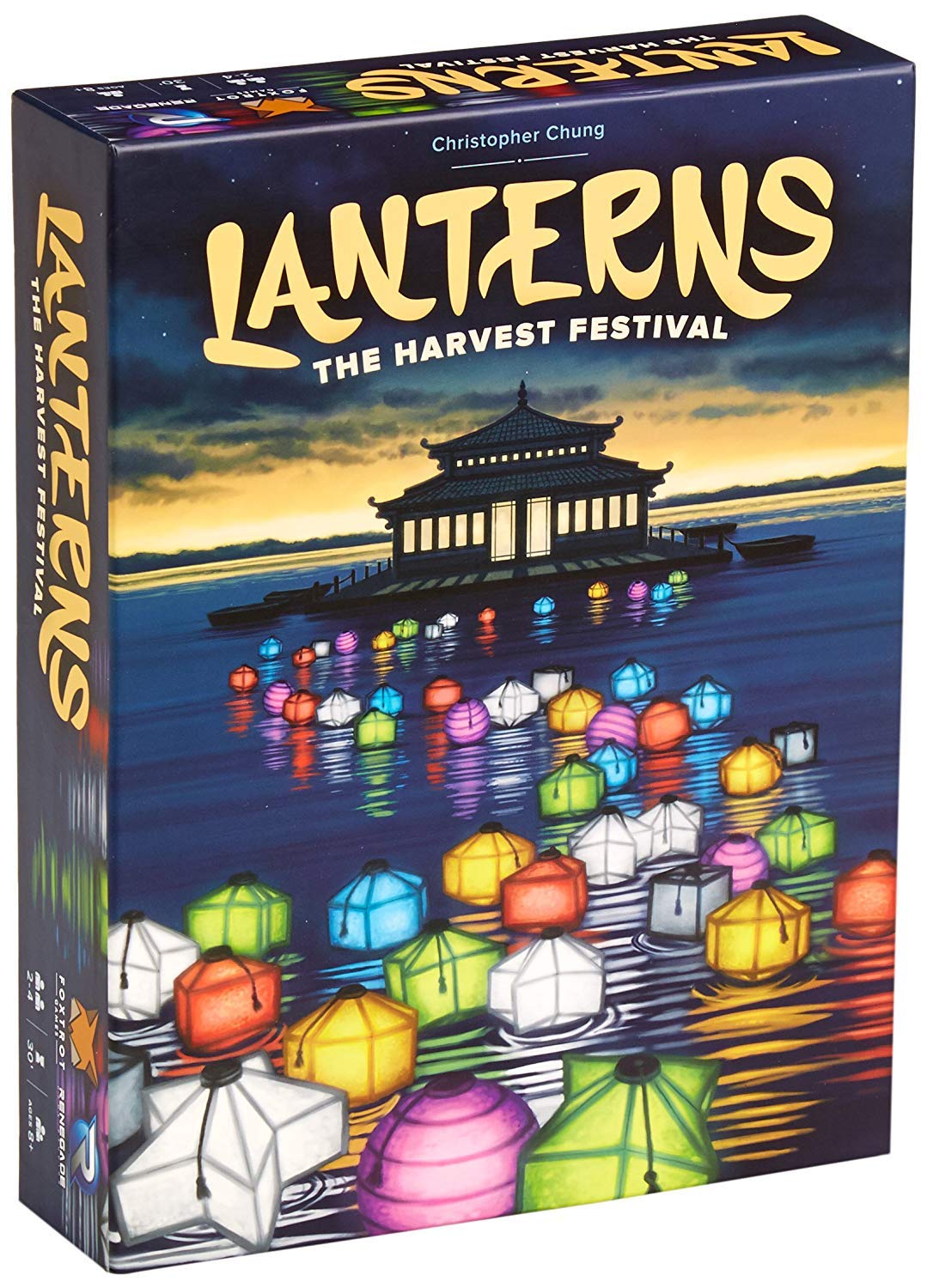
Lanterns: The Harvest Festival is an abstract strategy game built around shared incentives: when you place a tile, every player — including you — receives a card matching the color of the lanterns on that tile’s edges. The elegance of this system is that it forces you to consider how your placement benefits your opponents, turning each move into a careful trade-off between self-interest and giving someone else a scoring opportunity.
The tiles feature beautiful watercolor-style artwork, and the wooden coins and honor tokens add a premium feel that matches the premium price point. On your turn you can either place a tile from your hand or exchange one for a new draw, and you can spend coins to swap out unwanted cards. The victory-point tokens diminish in value as they are claimed, so timing your first major set purchase is critical.
With an estimated playing time of 20 to 40 minutes at two to four players, Lanterns hits a sweet spot for family game night. The rule set is light enough for an eight-year-old to grasp, yet the tactical depth of managing shared card generation rewards repeated plays. It is the best choice for groups that want everyone participating on every turn, not just the active player.
Why it’s great
- Unique shared-card mechanic keeps everyone involved all the time
- Beautiful tile art and high-quality wooden components
- Diminishing VP tokens create tense timing decisions
Good to know
- Game length can vary significantly based on player decision speed
- Younger players may struggle with the concept of diminishing scoring opportunities
5. Battle Sheep
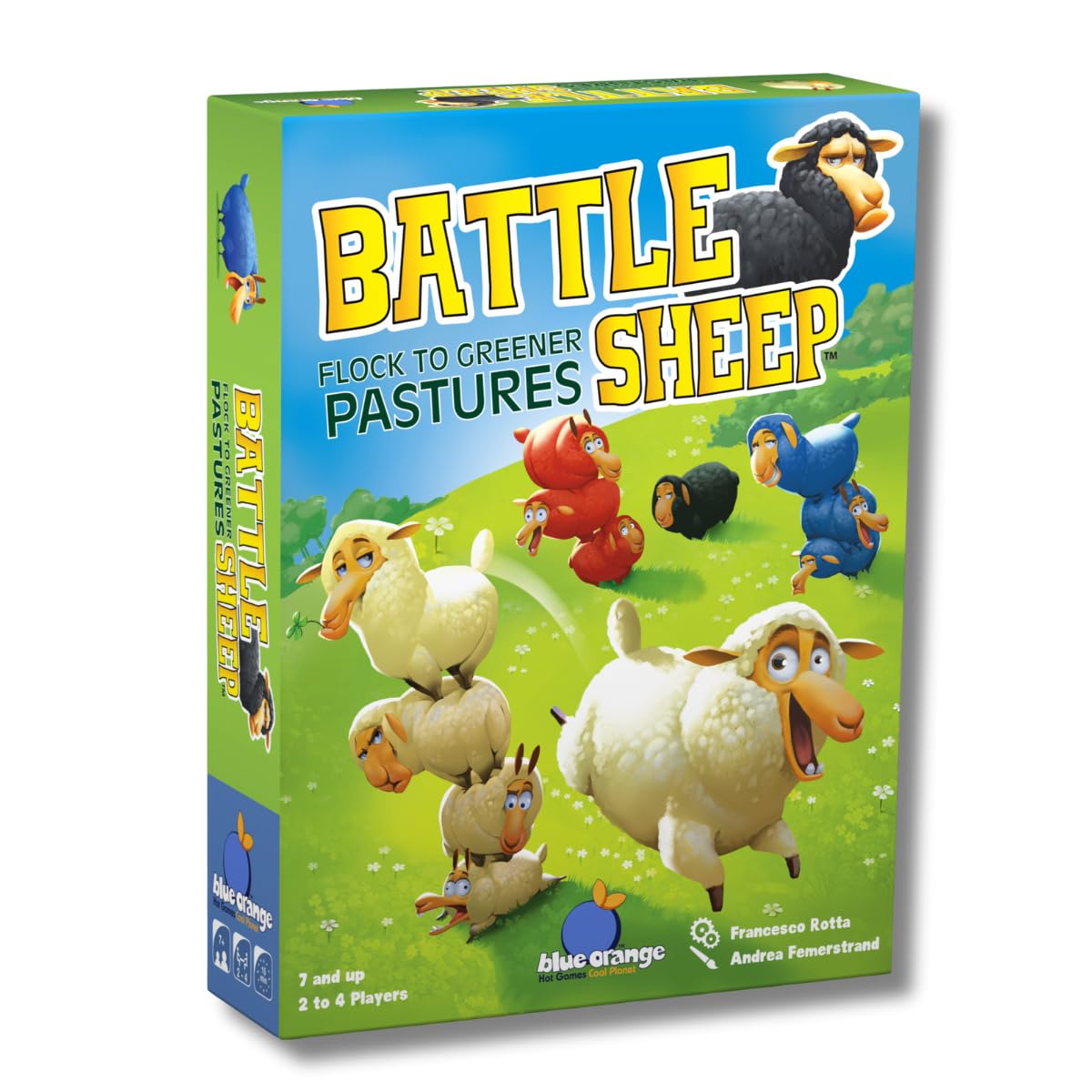
Battle Sheep pits two to four players against each other on a board built from sixteen identical four-hex pasture tiles, meaning no two games ever look the same. Each player starts with a tall stack of sixteen sheep discs on a border hex. On your turn, you take the stack, split it, and move the new stack as far as possible in a straight line, leaving at least one disc behind. The board fills up quickly, and soon you are blocking opponents’ paths while trying to secure the largest territory.
The sheep chips are impressively thick and heavy, and the pasture tiles interlock snugly to stay put during play. The rules are simple enough for a seven-year-old to execute, but the strategic depth — choosing when to leave a token behind, which direction to push, how to trap an opponent — keeps adults fully engaged. A typical game with four players wraps up in about 20 minutes, making it easy to run multiple rounds.
The modular board is the star here. Each new arrangement changes the geography of bottlenecks and open plains, so a winning strategy in one game may fail completely in the next. If you want an abstract that teaches spatial reasoning and reads the table of an eight-year-old, Battle Sheep delivers tremendous value at the entry-level price range.
Why it’s great
- Modular board guarantees near-infinite replayability
- Thick, grippy sheep tokens feel premium and durable
- Very easy to learn but genuinely challenging for all ages
Good to know
- Tall stacks can be unstable for small hands when moving them
- Some players find the cutthroat blocking frustrating
6. Quoridor Mini

Quoridor Mini shrinks the classic abstract to 70 percent of the original board size without sacrificing playability. The premise is brutally simple: move your pawn across the 9×9 grid to the opposite side, or place one of your twenty wooden fences to block your opponent’s path. The catch is that you only have a limited number of fences, and every barrier you place can also be used against you.
The stained wooden pieces — fences and pawns alike — have a warm, natural feel that painted plastic cannot match. The mini board fits neatly into a cloth bag, making it a strong candidate for travel, camping, or pub sessions. Rounds average about 15 minutes, and the Mensa Select certification highlights the quality of the rule set and educational value.
The two-player restriction is the main limiting factor, but within that frame Quoridor offers near-infinite variety. Each game becomes a shifting maze where you must balance forward progress against defensive fence placement. It is an excellent introduction to abstract strategy for newcomers and a reliable staple for seasoned duellists.
Why it’s great
- Stained wooden pieces feel premium and last for years
- Ultra-portable size fits in a bag for travel
- Deep strategic duel despite just two rules
Good to know
- Strictly two-player only — no multiplayer variant
- Can become repetitive if played for extended sessions
7. Quarto Mini

Quarto Mini flips the four-in-a-row formula on its head by forcing your opponent to choose the piece you place. The game includes 16 unique wooden pieces that vary by height, color, shape (round or square), and solidness (hollow top or solid). If you can line up four pieces sharing any one of these four attributes, you win — but you never control which piece you set down.
This inversion of agency creates a unique strategic tension: every time you select a piece for your opponent, you must anticipate what they can do with it, and every time you receive a piece from them, you must find a way to minimize its damage. The mini edition retains all the depth of the full-size version at a more accessible price point, with a board and pieces that fit comfortably on a small café table.
The Mensa Select award underscores the quality of the design, and the wooden components are beautifully finished with grooves to help identify orientation. Children as young as six can learn the rules, and adults regularly lose to younger players who see the pattern threats more clearly. It is the purest example of a perfect-information abstract on this list.
Why it’s great
- Unique opponent-chooses-piece mechanic creates deep psychological play
- Beautiful stained wooden pieces with clear tactile differentiation
- Very affordable entry point into premium abstract gaming
Good to know
- Strictly two-player with no official multiplayer variant
- Can feel overly punishing for beginners against experienced players
FAQ
What is the difference between an abstract game and a thematic board game?
How important is component quality in an abstract board game?
Can abstract board games be played solo?
Final Thoughts: The Verdict
For most users, the best abstract board game winner is the Dimension because it combines real-time simultaneous play with genuine 3D spatial problem solving, keeping every player fully engaged while the timer ticks. If you want a meditative solo-puzzle experience with premium wooden components, grab the Harmonies. And for a family-friendly modular area-control game that scales from kids to competitive adults with near-infinite variety, nothing beats the Battle Sheep.